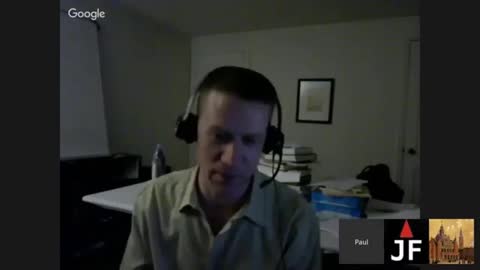
0:00 This episode of Epicenter Bitcoin is brought to you by Ledger, makers of the Ledger Nano 0:17 hardware wallet. 0:18 Half peace of mind in knowing your private keys are protected by industry standard physical 0:22 security. 0:23 Go to LedgerWallet.com to learn more and use the offer code EB09 at checkout to get 10% 0:28 off your first order. 0:30 Hi, welcome to Epicenter Bitcoin, the show which talks about the technologies, projects 0:36 and startups driving decentralization and the global cryptocurrency revolution. 0:40 My name is Siva Sankuchil and today we're doing things a little different. 0:44 It's been nearly two years that Brian and I have been producing Epicenter Bitcoin together 0:50 and we're very pleased to bring on a new host, a new guest host to the team, who we'll introduce 0:56 in just a minute. 0:57 But first, I'd like to take a brief moment to explain how we got here. 1:01 So when we first started doing Epicenter back in late 2013, you know, it was a side project. 1:10 I was working a full-time job in a digital agency. 1:13 Brian was looking to get involved more into Bitcoin after starting the Bitcoin Startups 1:18 Berlin Meetup group. 1:20 And back then we did everything ourselves. 1:22 We did our social media strategy ourselves. 1:24 We did production ourselves. 1:26 We did the editing ourselves and it showed because things were really, I mean, when I 1:30 look at them now, pretty bad quality. 1:34 And at some point we realized that if we wanted to do things right, if we wanted to really 1:39 take the show forward and bring a quality product and quality content to our listeners 1:44 that we would need help. 1:46 And at that point we started to build a team and we brought in some new team members. 1:52 So Vedran, our audio engineer, Connie, our production and social media manager, and recently 1:59 Sheenaj, who joined us as our cover designer, and we've been getting a lot of great feedback 2:04 on our covers. 2:05 And also Sean Jones, who regularly enlightens us on regulation. 2:10 And now it may be a surprise to some of you that, well, Brian and I don't live off of 2:15 Epicenter Bitcoin. 2:17 It's not our full-time job. 2:19 Although we do have advertising, we use that to pay for production. 2:23 And Brian recently joined Aeris Industries as head of business development. 2:28 And I'm a full-time independent digital consultant and that takes time. 2:34 And recently it became obvious to us that it would be difficult to keep doing the show 2:39 and keep the same level of quality and keep consistently putting out episodes every week 2:45 without some help. 2:46 So we sought out to find a third host and pretty quickly we converged on one person 2:55 and someone that we both respected, that we had spoken to before, heard about, heard on 3:02 podcasts before, and that we knew would bring a high level of understanding and really critical 3:07 thinking to the topics we cover. 3:09 So I'm really thrilled to introduce our third co-host today, Mehr Roy, who is going to be 3:18 joining us regularly on episodes. 3:21 And today is the first time that he's joining us. 3:22 So Mehr, welcome to the team. 3:26 Thanks a lot, Sebastian, for the introduction. 3:29 For the listeners, hi, I'm Mehr. 3:32 I am a biochemical engineer by education and I work at a pharmaceutical company called 3:37 Novartis. 3:39 I discovered Bitcoin two years ago and it changed my life. 3:43 I started digging into Bitcoin more and more and it consumed my life to the point that 3:49 I spend all of my free time now searching through technologies related to Bitcoin. 3:54 I want to take the cryptocurrency revolution forward and being part of Epicenter Bitcoin 4:00 is important to me because I learned a lot through the show and I hope I can help other 4:10 people learn more about the decentralized technology revolution. 4:13 Thank you. 4:14 Well, you know, we're certainly really happy to have you on. 4:18 So the way this is going to work is sometimes Mehr and I will be doing episodes and sometimes 4:24 it'll be Mehr and Brian and sometimes it'll be Brian and I and who knows, sometimes we 4:29 can have like podcast parties and just be all three of us and kind of shoot the shit 4:32 about what's going on in the Bitcoin world. 4:35 Yeah. 4:36 That would be great. 4:37 It's going to be cool. 4:38 I think it's an important step in the life of Epicenter and I think you'll be a great 4:46 addition to the team. 4:48 So without further ado, we'd like to now introduce our guest. 4:52 Today's guest is Paul Sztorc. 4:56 And so Paul is the chief scientist at Truthcoin. 5:00 He's an economics researcher at Yale University and he writes quite extensively. 5:05 And I say that without any hesitation about Bitcoin, crypto economics, prediction markets 5:11 and all kinds of important and interesting things on the Truthcoin blog, Truthcoin.info. 5:17 And he's here to tell us today about prediction markets and, you know, the mechanisms behind 5:23 predictions markets, how they work and specifically Truthcoin. 5:25 So Paul, thanks so much for joining us today. 5:27 Thanks so much for having me. 5:31 So let's get started and, you know, dive into this idea of a prediction market. 5:35 I mean, we've talked about prediction markets before on the show quite a while back, actually, 5:40 and also dove into oracles. 5:45 And, you know, Truthcoin is one of those projects that I think sort of people in the 5:50 Bitcoin space, you know, they know about it, they've heard about it, but it's not necessarily 5:55 the project that gets the most attention when people talk about prediction markets. 6:01 People have an idea, I think, of what prediction markets are. 6:04 But, you know, what we really want to do today is bring a higher level of understanding of 6:12 what is a prediction market and how a decentralized prediction market is different from sort of 6:16 traditional ones. 6:17 So can you give us a brief overview of what a prediction market is? 6:21 Yeah, absolutely. 6:22 I'd be happy to do that. 6:23 So yeah, I think you're right. 6:24 A lot of people know about the project. 6:27 It suffers a little bit because of the name, the Truthcoin name. 6:30 So people are kind of, they feel uncomfortable. 6:32 They think it's an altcoin and they feel uncomfortable maybe talking about it, but a lot of people 6:38 know about it and will be renaming it. 6:41 So you'll get like, you'll be happy to have it on a shirt, the new name at some point, 6:46 but you know, it's not quite important while it's still being totally fleshed out among 6:52 like the technical experts who are reviewing it. 6:55 But yeah, so a prediction market is basically a market for buying and selling predictions, 7:02 just like you can buy and sell anything you want, you know, orange juice or milk. 7:07 You can buy all kinds of stocks, bonds, and this is for buying and selling predictions. 7:12 And it used to have probably a better name, which was called event derivatives. 7:16 So like some event would happen and then this thing would pay out cash. 7:20 So that's maybe a little easier to understand. 7:22 I'm not sure. 7:23 The concept is a little foreign to people, but just as you can go on the stock market 7:28 and buy stocks, you can go on the bond market and buy bonds, or you can go to the supermarket 7:34 and buy food. 7:36 This is just another thing for ideas. 7:38 It was also called idea futures. 7:40 So these different names maybe will help people understand, I don't know. 7:46 But yeah, event derivatives in finance, idea futures, they were called in academia a long 7:52 time ago. 7:53 So futures are of course a contract, a piece of paper that entitles you to money in the 7:59 future based on something that happens. 8:02 So if there are idea futures, they would be on sort of these concepts. 8:08 Can I simplify it by saying that a prediction market is basically something where you can 8:15 spend half a dollar and gain a dollar if a particular event comes to pass? 8:21 Like let's say the market is for whether Hillary Clinton becomes the president of the United 8:27 States in 2016. 8:30 And a prediction market is a construct that will allow me to go and spend a half a dollar 8:36 to buy a prediction. 8:38 And if she does become the president, then I get back one dollar. 8:42 If she doesn't become the president, then I'd lose the half a dollar I put in the market. 8:48 Would that be accurate? 8:49 Yes. 8:50 So examples are very helpful. 8:52 So that's a very good example. 8:54 I would say, you know, people compare them to betting, but I think that's actually more 8:59 confusing to people because just about everything is a bet. 9:04 And what you've described, it's half a dollar to a dollar. 9:07 So the transformation, if you're correct. 9:11 And in this, this is an actual market environment where market forces will move that price around. 9:17 So the contract is fundamentally a piece of paper that is worth one dollar if Hillary 9:24 Clinton is elected. 9:25 And so the question is, what's that piece of paper worth? 9:28 The piece of paper is worth a dollar if Hillary Clinton is elected, but if people are trading 9:32 it around themselves today at 40 cents or 30 cents, then you know she's probably not 9:40 likely to be elected, right? 9:41 So why is this thing trading for like 12 cents, 7 cents, 3 cents? 9:46 You know, if people are buying a piece of paper, it's going to be worth a dollar if 9:49 she's elected, but it can only command 3 cents. 9:56 What does that say? 9:57 It implies this unanimous expectation that she will not be elected, which is totally 10:04 different from the way people talk about elections today. 10:07 There's no, you know, it's all about who can go over the top. 10:14 You know, Karl Rove, the last election, he was still trying to, even after every place 10:19 had called it, he was still trying to convince people that Mitt Romney still had a chance 10:24 in the United States. 10:25 And that was like, so it's completely non-unanimous in conversations about politics today. 10:32 But in a market environment, everything is unanimous because anyone can move the price. 10:37 So if someone disagrees with the current market price, there's expected value for them. 10:41 You know, they can form some kind of a team or a hedge fund or something, or sell that 10:47 information that they have to someone else. 10:50 And so it's a very different way of doing things. 10:55 And I would say that it's a little confusing to imply that the price has to be 50 cents 11:02 though, because the price can be anything. 11:04 So yeah, I may start at 50 cents, but these, yeah, you have these markets where things 11:09 can either happen or not happen and you get money as a result of whether or not they do. 11:13 So that's in a nutshell, that's how it works. 11:16 So how does that then, I mean, so what does that say about the sort of power of group? 11:25 Yeah, the wisdom of crowds. 11:30 Yeah. 11:31 What does that say about the wisdom of crowds then? 11:33 Yeah. 11:34 So this is not, yeah, so the cool thing is that what this market does is anyone can update 11:42 the price. 11:43 So you only get the updates. 11:47 So this takes a crowd, and a crowd, you know, many times a crowd, I mean, think about all 11:52 the knowledge in a vast group of people, it's immense knowledge, very useful. 11:59 But the problem is that there's too much noise. 12:01 So a conversation wouldn't really scale, right? 12:04 You'd have to talk to every single person, compare everything they said to itself, and 12:09 then you'd have to report back, and then meanwhile everyone else would have to do that, 12:13 and then they'd all have to compare these reports, and they would, you know, a conversation 12:17 is a very difficult way. 12:18 You can't have a conversation with, for example, 100 million voters in the United States, it's 12:23 not going to happen. 12:26 And yet, there's lots of important information, right? 12:28 There's all these people who know lots of stuff, very savvy people with a lot of experience 12:32 in politics, you know, professors and mathematicians and people who are kind of like good at telling 12:38 who's lying, and there's all this vast information locked up. 12:42 The cool thing about markets is that you only get the updates. 12:44 So you get all the signal, but you really don't get, you get almost none of the noise. 12:49 So these markets can very quickly extract all of the important information from a crowd, 12:56 because if people agree with something, they just don't trade. 12:58 So there's an implicit agreement by everyone who doesn't trade against the current market 13:06 price. 13:08 In a way, what we can say, can we say that in many of the discussions that happen on 13:13 the internet today, generally, anyone can create a profile and write a comment. 13:19 And because of this nature of the internet, you have comments coming in from anonymous 13:24 people, people who have no idea about what is actually being debated. 13:29 So it is almost like it is a civil attack of opinions. 13:34 Anyone can create a profile and there's no cost to creating an opinion. 13:39 But in a prediction market, what is happening is, in order for me to move a price about 13:44 something, about an event, I need to put actual money to move the price. 13:49 So this kind of prevents a civil attack, and I will only put my money in buying a prediction 13:58 only if I'm sure that I have some information that the market doesn't. 14:03 So only people who have real information end up trading, and that makes the market 14:08 a better judge of the future than a Reddit forum post, for example. 14:13 Yeah, absolutely. 14:15 I really like the civil attack concept in this context. 14:21 So what's great about the markets is really that they filter out the noise. 14:27 It's not so much that there's this reward that you can win the bet. 14:32 But prediction markets, why they really work, and they do work, there's an amazing history 14:38 of them. 14:39 They are much more accurate than anything else that has ever been devised or tested 14:46 by man. 14:47 There are these amazing things, they'll get every single academy award, they'll get every 14:51 single state's electoral votes, they'll get everything long before they'll call election 14:57 results years before the election even takes place. 15:01 So there's a lot of questions you can break down why are they so accurate, but one of 15:07 the major reasons is that you're correct is that it imposes a cost on the person who wants 15:11 to change the signal. 15:13 And people worry like, oh, I really believe that, I don't agree, but I'm not willing to 15:18 put money on it. 15:21 But that's exactly the point, right? 15:22 It's like, good, we don't want you, and we don't want anyone else like you. 15:27 You may lose some people who actually have information that are just actually uncomfortable 15:34 placing some kind of bet, but what you gain is that lots of people who really didn't know 15:43 anything are just filtered out completely. 15:45 So you get all the signal attack immunity because it costs, every time you want to move 15:51 the forecast, it will cost you in proportion to how much you want to move the forecast 15:55 from what it was. 15:56 So you're completely correct. 15:58 You've made a meta-knowledge contribution. 16:01 You're saying, I know this is wrong, and I know, not only do I know that it's wrong, 16:05 but I know enough about this whole system that I know why every other person is incorrect. 16:11 So they're saying that I know that I think I'm the number one guy on the planet. 16:16 And so the market only consists of these people who honestly believe, possibly mistakenly, 16:22 they honestly believe that they are the number one expert on the planet. 16:26 And so that's why they're so accurate, because you've basically got the people who have self-selected 16:33 as being experts on whatever the topic is. 16:37 And even from a group, anyone can join. 16:39 It's very permissionless, peer-to-peer. 16:42 This whole group where anyone can join, you don't need to have any kind of administrative 16:46 red tape or anyone's permission. 16:48 People just show up. 16:50 It's a very neat thing. 16:51 It's a very powerful thing. 16:53 So we mentioned the example of politics that often gets thrown around when we talk about 17:00 prediction markets, the weather, these types of things. 17:02 Are there any types of facts that prediction markets are just really bad at finding the 17:09 truth? 17:10 Well, I would say no on principle. 17:14 There are these cases where it depends on how valuable the information is and how few 17:21 people have it. 17:23 So a concern is that people will want to know something. 17:29 For example, they'll want to know if a certain research project will work out or not. 17:37 But only a very few number of people even have the ability to figure out if it will. 17:44 And there's a question of if the market isn't liquid enough, will these people even bother 17:47 to trade at all? 17:48 And this has been something that we've seen in Bitcoin prediction market websites. 17:53 And also not Bitcoin, but in general. 17:56 This happened in trade, for example, where markets would just not have the liquidity. 18:01 People would not be buying and selling. 18:03 And so there would be no reason for someone who had the expertise to actually contribute 18:07 there. 18:08 And so you're talking about liquidity of predictions, essentially. 18:13 Yeah, that's sort of what I mean. 18:16 Just like in any other market, you have buyers and sellers. 18:19 And it works better when there are a lot of buyers and sellers. 18:22 So it's kind of easy. 18:24 The politics is something that in trade kind of got famous for. 18:28 And so people would just go there and it was just like a very, it was a big thing. 18:31 It was on CNBC all the time. 18:34 And so other things like sports, like there's a trade sports website in Europe. 18:41 And so people like those things. 18:42 So it's easy to get the liquidity up and that those things kind of help. 18:48 Betting on obscure things is a little difficult, but it's still possible. 18:52 If you ask someone to help subsidize, they basically put up some money that they know 18:57 that will be lost, which is not totally inconceivable because there are many instances where someone 19:03 would like to buy information that they don't possess. 19:07 For example, I think the Bitcoin block size debate is a perfect example of where I think 19:12 there are people who, I mean, why spend all this money to go to Montreal and have everyone 19:16 stay at a hotel and have all these sponsors and pay for the venue and have everyone travel? 19:21 And it's like, I think people would just, they would rather just buy this information 19:25 if they could. 19:26 Regarding prediction markets, I can imagine how you could have a market in which the event 19:34 is a yes or no event, like Hillary Clinton becomes the president of the United States. 19:39 Either it happens or it doesn't. 19:41 What would happen if we wanted to have a prediction market for something that is not a yes or 19:46 no event, like the price of Bitcoin in 2017? 19:50 Can we have markets that are not for yes or no events, but have results which vary over 19:58 a wide range of outcomes? 20:00 Yes, absolutely. 20:03 That's very easy to do. 20:04 So the Hillary Clinton example is the piece of paper is worth a dollar if she is elected 20:10 and it's implied and correct that it's worth zero dollars if it does not happen. 20:15 It's only worth a dollar if she is elected. 20:17 But you can also create something that says there are 538 electoral college votes in the 20:24 United States, so the presidential candidates are competing to win those electoral college 20:30 votes and there are 538 of them, and so the most you can ever get is 538 and the fewest 20:38 you can get is zero. 20:39 So you can create something else that instead of being worth one dollar if Hillary Clinton 20:44 is elected, that's worth one 538th of a dollar for each vote, for each electoral college 20:52 vote that she gets. 20:55 And so it's basically the same thing. 20:57 Instead of fixing the final prices at one or zero, you just fix them at some number 21:02 that's in between one and zero, and you just rescale that to whatever you were interested 21:07 in doing before. 21:08 So one way of just simplifying it would be to just say that it pays one dollar for each 21:16 electoral college vote and then you just invest more or less as desired, and it does the exact 21:22 same thing. 21:24 The market price of one would be the actual likelihood of the thing happening, but the 21:29 price of something else that's this continuous range, that price would just represent the 21:37 actual estimate of that actual number. 21:40 So it's just saying this is going to pay a dollar for every electoral college vote that 21:45 Hillary Clinton gets, and it's trading for about $400, then anyone who thinks she's going 21:50 to get more or less can go in there and pick these things up, and they should be happy 21:54 to do so. 21:58 So yeah, it's very easy, and way more stuff than that is possible, way more. 22:03 Yeah, so in the white paper you describe, the Truthcoin white paper, you describe the 22:11 binary prediction markets and the scale prediction markets, which is what you just explained, 22:15 and then you can have sort of hybrid models where you would have multiple dimensions of 22:22 predictions. 22:23 So for example, well could you give us an example because I'm not sure I can come up 22:25 with one right now. 22:26 Yeah, it's pretty complicated to most people I suppose, but there's this very simple math 22:33 that relates these joint probabilities to conditional and marginal probabilities, so 22:38 maybe someone can Google that and if they're really interested, learn all about it. 22:42 But basically what you do is you place a bet that's, to simplify, you basically place 22:48 a bet that's something like, if we elect Hillary Clinton, if we do, that's dimension one, this 22:57 will pay $1 if, this is the second dimension, so if Hillary Clinton is elected, this will 23:03 pay $1 if the unemployment rate is low, like if it's below 5% in 2017 or something, right? 23:12 So 2017, that'll be a year in, that'll be basically Hillary Clinton's fault or her, 23:19 to her credit, or she'll have some administrative control over events that are related to United 23:26 States unemployment, right? 23:27 So you'd want, you want unemployment to be low, you want people to be employed, so this 23:34 thing is paying, this is $1, this is sort of estimating the likelihood if you elect 23:40 Hillary Clinton of achieving that goal. 23:42 So again, to really kind of simplify all the details, you're just looking at what's the 23:48 likelihood of hitting this thing, Hillary Clinton or not Hillary Clinton, and you can 23:52 just look at those two numbers, and since all kinds of finance people will be trading 23:56 in these markets and trying to earn profits for themselves, you can just sort of say, 24:02 oh look, Hillary Clinton is bad for this thing, you know, and we all, now we all know that, 24:09 so now we won't elect her, or vice versa, you could say, oh maybe she's really good 24:14 for this. 24:15 But yeah, you can chain all kinds of crazy things together, and each dimension is sort 24:19 of like controlling, it's like a statistical control, you could say like controlling for 24:23 age, controlling for whatever, education and height and all these things, what's the effect 24:30 of X on Y? 24:32 So it's, I guess I would say that you can use these markets to not only predict the 24:38 future but also to compare different futures. 24:41 So since you put us in the Hillary Clinton future, what are we going to get? 24:45 You put us in the non-Hillary Clinton future, what are we going to get? 24:49 And then you can say, which one of those two futures do I think is better? 24:53 And then try today to move things more in that direction. 24:58 So like to take another example, so what this means essentially then is, let's say if we were in 2007, and we could have had a two-dimensional prediction market, will Barack Obama be elected as president in 2008? And the other one is will Guantanamo Bay be closed in 2010? 25:18 So this kind of prediction market, I guess, would have given an answer about what is the market's opinion about if Barack Obama is elected, then what is the chance of Guantanamo Bay being closed? 25:37 And if the market thought that the chance was low, then it would reflect in the prices. And if the market thought the chance was high, that would also be captured in the prices. And the voters in the election can look at the prices and have an opinion about what the market thinks Obama will do once he is elected as president. 26:02 So it allows them to make a better decision regarding their vote. Is that correct? 26:07 It's absolutely correct. So it's a totally new way of having information spread. And so it's possible, as maybe people know, it was a big campaign promise of Barack Obama's that he would close Guantanamo Bay, and yet it's still open today. We're still waiting on that. So not very expectantly. 26:28 And so it's possible. What's very interesting is that when he was just a senator from Illinois, it's possible that he actually didn't know information. Like maybe when he was elected, people pulled him aside and said, a couple of days later, they said, by the way, you can't close it for some secret but important reason. 26:50 But whatever the case may be, or maybe he just straight up lied to people, gasped, a politician lying. It's like obviously that is totally plausible. But whatever the case may be, there were probably some people, possibly including Barack Obama himself, possibly including his close associates and aides and things like that. 27:15 There were people who knew, even in 2007, how unlikely this campaign promise was to be met. So they would just have picked up all this easy money in the market. The market would have started out in kind of an ambiguous place, and these people would have said, I'll take $20 or $5,000 or whatever it is in the market. 27:38 They'll say, I don't care. I'll pick up this money because I know there's no way that thing is getting closed. And so the cool thing is that these markets allow—there's a little bit of math that I don't want to get into—but these markets let you do things where you bet. If Barack Obama is elected, some bet, but if the thing doesn't happen. 28:01 So if Barack Obama is not elected, you can do different ways of getting your money back or actually earning money, depending on—there's some weird math involved. But these people can make a totally nice bet that doesn't affect them at all. 28:18 They can only bet on what they know about. So if Barack Obama is elected, they can bet on that. But if it turns out that that didn't happen, they're not really affected. So these people will have every incentive to reset the price to what it really should be, which is the actuarial likelihood of these campaign promises being fulfilled. 28:39 And so this technology is kind of yearning for a world where we don't have to even listen to these campaign promises, where you can just list the stuff in markets and then you can just show up on the election night and just having no idea who these people even are or even what their names are, you just look it up on your phone while you're waiting in line. 29:03 Good for unemployment, good for life expectancy, bad on—I don't like their foreign policy, likely to take us into war, et cetera. You don't even need to know these people's names. That's sort of the ideal thing because these prices will be set by—as is done in the stock market today, they'll be set by these people who are teams of people who research this actual stuff and the actual likelihood. 29:34 Let's take a short break so I can take you to Paris. I dropped into La Maison du Bitcoin, the house of Bitcoin, in the heart of Silicon Sentier, home to many startups, including Ledger. And I spoke with Eric Larchevêque, Ledger's CEO, about what we can expect in the coming months. 29:50 A lot of our customers are asking for solutions compatible with mobile using NFC or Bluetooth, and we are working on that. In September, we plan to release the Ledger Unplugged, which is a Java card NFC compatible. At the end of the year, we will release the Ledger ODT, which is a hardware wallet with a screen, Bluetooth, NFC, and a keyboard. 30:17 And also in September, November, we are going to release the Ledger HSM for enterprises. And finally, the Ledger Trustlet, which runs in the trusted execution environment, is almost available now in beta for mycelium and green address, and which will be released hopefully also in September. 30:39 In the future, we really see ourselves as the leading company in securing all the Bitcoin solutions for customers, but also for enterprises. We want to be the Cisco of the Bitcoin. 30:53 So definitely look forward to exciting and innovative new Ledger products to be released in the coming months. In the meantime, you can always count on the Ledger Nano to keep your Bitcoin safe. So don't delay in getting a secure setup today. Go to ledgerwallet.com and use the offer code EB09 to get 10% off your first order, and that offer code is valid until September 30th of 2015. We'd like to thank Ledger for their continued support of Epicenter Bitcoin. 31:17 Before we get into talking about Truthcoin specifically and the project, I want to keep on this idea of information availability, because it's often, and you write about this, it's often thought that we live in this age of information abundance. And you write that the problem is not the abundance of information that we have access to, but it's the aggregation of information that is sort of lacking in our society. 31:44 I'd like to know if you think that prediction markets perhaps present sort of a holy grail of the new information age in the coming years. 31:54 Yeah, I've previously compared them to the invention of the printing press. And that it's sort of like, the internet is kind of like the printing press and prediction markets are sort of like, almost kind of like critical reading or something. 32:08 Where, you know, people were writing all this stuff, but the first stuff that was printed was just copies of the Bible that were just sort of saving time. It kind of didn't occur to people that they could have their own thoughts and write them down and then circulate them for their friends far away and then they could comment back and then there'd be this trail of dialogue that would be like kind of helpful. 32:28 So I think the internet just, you know, the internet kind of turned on and people were struggling. It's sort of a nervous system for society, but the nervous system was doing these very boring things, you know, sending email kind of before. 32:44 And that was, that email's great. Everyone loves email, including me. But, you know, it was doing like IRC chat. It's like, that's not what the nervous system is about. The nervous system, it does those things, but everything that has a nervous system has like a brain that takes all these signals and interprets them as information and then reacts, causes the entire system, the entire organism to react in a very coordinated way. 33:09 And that's the real purpose of the internet. It's not so that two people can email each other. It's so that we can like achieve this concept of every single person having all these diverse values and thoughts and beliefs and knowledge and experiences and having them all pool up and then having it all broadcast back out as something simple that, okay, here's what we should all do. 33:39 It's the broadcasting is where the real benefits are. So that's a really, really cool thing that I think prediction markets do enable because they, you know, one interesting thing is that, you know, lots of things don't scale very well, like communications in general, but also just sort of talking to people doesn't scale because talking takes a lot of time and you just don't have enough time. 34:04 There's a lot of people, but markets actually have like a negative scale. They scale super well because the more people get involved, the more liquid the market is. And that's like a really, really, that's like a really powerful thing when you have a world full of billions of people who many of whom are very, you know, educated, very smart, have a lot of important experiences to contribute. 34:29 You need something that scales and markets not only scale, but they like, they really scale. They have like a, they have an extra benefits with more people. 34:38 I like this idea of the crowd having perfect knowledge that you just mentioned. And to me, that's sort of resembles sort of like a hive intelligence or what you might want to call like an artificial intelligence. How closely is AI related to perfect knowledge of the crowd? 34:59 Yeah, so AI is very similar to this concept, but it's also very different. So it's a similar kind of, it's a similar kind of promise and similar kind of operation. So AI is all about, there's a lot of people, you know, you have all this, that you have this thing that does all of your thinking for you. 35:18 And you don't really need to worry about the thoughts because this thing is just much smarter than you are. And so of course its thoughts will be better. Although you might be worried that its thoughts are too good and that it plans to like destroy human civilization or something and replace it with itself or something like that. 35:37 But it's a similar concept with prediction markets. You want, you have this thing that kind of does the thinking for you and you kind of contribute to it. Unlike an AI, that's a difference. You are, the prediction market is sort of like a very human kind of organic AI, sort of a more decentralized AI. 35:55 It's like a different, it's like a big crowd of people who are kind of all linked together and they come up with these decisions that are greater than anything that any one of them could have contributed. 36:09 But it's different to AI in the sense that traditional AI is just like a kind of a computer somewhere that does everything. And this is like a very organic thing that can like add new people, drop people. It's very kind of biological almost, very human dependent. 36:30 So they're very similar, but they're also very different. And the other thing is that although prediction markets will always be, will be as smart as the smartest person in the crowd and in many times, many ways much smarter, they won't do this thing that AI kind of claims that it will do, where AI kind of claims that it will be able to understand itself and then improve itself a lot. 36:56 And that's kind of a serious science fiction territory. But that's something that AI, even though it's science fiction today, that we'll probably get there at some point. But prediction markets won't do that. 37:12 But I do see prediction markets as kind of the next step. There's something very doable that you can do today that gives you a lot of the benefits of the AI really at kind of a low cost because you only need to have everyone aware of this thing. You don't need any ongoing maintenance really, just a way of interacting. 37:31 So if we extrapolate in this sort of science fiction scenario, I always like those. How does this work on a macro scale? If everybody has access to prediction markets, imagine that in some future, all decisions are subject to prediction market and people have perfect information all the time. What does that look like, having perfect information all the time? I have a hard time wrapping my head around this. 38:01 I don't think you'd have, you know, you wouldn't have like perfect information all the time, right? But you would, no one would know more than anyone else. So you would kind of have common information the whole time. That would be kind of neat. But yeah, a lot of things would be a lot easier. I mean, you'd know more about the effect of a given law. 38:17 You wouldn't need, you'd know more about the effect of a given candidate. You know, who should we have as the president? Who should we have as the CEO? Who should we have on the board of directors? You know, which laws should we pass? A lot of those things would be much, much easier. And that's a great thing. We'd know, you'd even be able to know certain things like, should we do some kind of military operation? 38:41 You might know whether or not that'd be good. And there might be like all kinds of classified information that it doesn't, you know, the information itself is still secret and doesn't leak, but it kind of informs these bets made by anonymous people. 38:55 And so you could say, hmm, you know, maybe for some reason, you know, we do need to do this thing, this maneuver, this invasion of some kind, you know, but we don't really know why, but you know that it is in fact reliably kind of a good idea. 39:11 So the possibilities are very, very extreme. I think it's just the simplest thing is just that it's better governance. So a lot of people who are kind of, you know, the leaders, it's all about choosing. If you choose the right leader, a lot of great things will result. 39:28 And the world needs leaders, and those leaders have a relationship to society as a whole, like the president sort of versus the voters in many ways. And that relationship between the voters and whoever they elect is a very confused one currently, but it could be a lot better. And that would make a big difference. 39:52 Today's magic word is predict. P-R-E-D-I-C-T. Head over to letstalkbitcoin.com to sign in, enter the magic word and claim your part of the listener award. 40:23 What that would enable is, let's say there's an entrepreneur who's trying to figure out which city to move to, whether he should go to Silicon Valley, New York, London, Bangalore, or Amsterdam. And he wants to build a Bitcoin company. And there's a prediction market that predicts how many unicorn companies based on Bitcoin will come out of each city. 40:47 So he can basically look at the prediction market, and that prediction market has aggregated information about regulations, venture capital, money, etc. And he can just look at those values and then say, okay, the market thinks Amsterdam is the best city to move to to build a Bitcoin company, so that's where I'll go. Is that kind of an imagination for the future we could have? 41:11 I do like that. I think the big benefits are where there's a dispute, because this is the central question of government as well as the use of force and sort of ethics. It's like, but who resolves the dispute? And currently there's this hierarchy, and there's someone on top, or there's a group of people on top. 41:33 You have these different branches or different kind of courts or something. So I think the question you've raised is almost a little too small in scale. I mean, there could plausibly be people disagreeing like, oh, is Amsterdam better than whatever Berlin or something? 41:49 But I don't think the disagreement is really as important. I mean, I think people would know something like, it's probably going to be Amsterdam. It wouldn't be kind of worth bringing out this weaponry for something like that. 42:08 This kind of thing is about getting really interesting stuff done, things that we couldn't get done before because of the way that people, the friction caused by certain ideas being too hard to understand. 42:24 So something like privatized unemployment insurance is something that I think would be a really great idea. But since it involves cutting existing entitlement to unemployment insurance, it would be a very, very, very difficult thing to do. 42:43 And the election of a third party candidate, impossible in the United States. But with prediction markets, if the thing, the number says, elect the X, Y, Z person and all these things will move in a beneficial direction, then that becomes entirely possible. 43:03 And so there are these big disputes, huge disputes, like on a national or international level. Like, how should we coordinate global overfishing or something like that? 43:21 As long as you have some way to measure the outcome, you can have these markets about that outcome. There can be derivatives on that event, these event derivatives. And so it's this really, really big stuff that I think is really where all the chief benefits are. 43:41 I think you only need, maybe only need like a very small number. Small is arbitrarily like a thousand per year or something. But you may only need a few of these things. And then once you get the good leaders, right, and then it almost won't matter, right, because Amsterdam will be the place by choice. 44:00 So maybe they'll all be equally good to the point where it doesn't make much of a difference. Maybe you'll be able to start a business anywhere because no one, everyone will know that as soon as you do these mistakes, your numbers will go down and then you won't be able to be elected as easily. 44:15 So I think it's almost too small. It's like it's going to solve every problem. I mean, I hate to make such a bold claim, but it certainly will not solve every problem. But there's a lot of these problems that just come from, they come from the top and the top is where you have to aim because that's where everything is the most screwed up at the moment. 44:40 Yeah. So perhaps you're trying to say that instead of this, prediction markets could be used to understand who should be made the next CEO of a giant Fortune 500 company, right? The Coca-Cola employees, etc., could use this to figure out which is the next, which is the best person to be our next CEO, for example, or have reason to fire the existing CEO if he's not doing well. 45:07 Right. So think about all the gains that come from large firms, right? Like firms like Apple, GE, like these people, they have control over serious resources, like which projects get funded. They control a lot of stuff, like lots of people's jobs, lots of innovation, like all the innovation comes from these like big monopolists type super firms. 45:32 And even if they're not monopolists, just like big firms that just have a lot of influence and a lot of direct control over resources, right? And so right now, when the firm gets big enough, there's too many people involved. The CEO is a powerful guy. He's done all these sort of mergers, right? And he's built like an empire of all these big companies that only he understands. 45:55 And there's no way, the CEO is often friends with everyone on the board of directors who's supposed to be his boss. The employment package comes with all these things, these golden parachute things, these like poison pill items are all written into all these contracts so that people can't just like improve value for the firm, let alone even know what action would improve value for the firm. 46:23 And if you work for the CEO, if you report to the CEO and you're right beneath him, it's sort of like, what are you going to do? If you start asking questions about this type of thing, like you could get fired or something. 46:36 And why should you, if you're a shareholder, you own like one thousandth or even less of Coca-Cola, you don't care. There's no way you're going to be able to vote for which board members you should have on the board of directors. 46:51 That is going to impact you very minimally. So it's very similar to voting where you have these things, farm subsidies, whatever, that make a big deal. They're super corrupt, but they make a big deal to the people who are involved in a very small deal to you as the guy who will ultimately result. 47:11 So the CEO makes it very difficult to tell when he should be fired or not. And there's no one in a better position to know if he's doing a good job than him and the leadership, the people who work directly beneath him. 47:25 But all those people who work directly beneath him are biased, right, because it's his boss. So they can't go behind the boss's back and go to the shareholders and say, this guy sucks. He's doing a terrible job. Fire him and I'll make the stock price go up. You can't do that. You could get fired yourself. You could get harassed. You could get anything that your career could be over. 47:48 So that's not going to work. It's the exact same problem in politics, of course. Everyone's just sucking up to everyone else. And people know – in the United States people know the politicians are sort of a joke and they don't really even care, right, because people know they'll say like, okay, sure, XYZ candidate just said one of the most ridiculous things I've ever heard. 48:14 But they'll say, I know, that guy, he's just saying that to win. So they don't even care what these people even say. They just want them to win. It's like this whole thing is kind of a waste of time to even expect this to work. Yeah, it's really our fault for expecting something like this to work. 48:30 We only have ourselves to blame for bad politics. 48:33 You can't blame a politician for lying, right? It comes with the job. 48:36 Exactly. So let's move on then to Truthcoin specifically. 48:43 So, I mean, obviously there are some sort of obvious things that Truthcoin does differently from something like Intrade, which is the fact that it's decentralized, that it relies on blockchain technology to work. 48:57 It has censorship resistance. It's sort of permissionless. It carries all the same things that Bitcoin would carry. 49:06 Can you talk about other ways that it's innovative in its functionality and what it can provide? 49:13 Yeah, well, Truthcoin aspires to be peer-to-peer version of Intrade. 49:19 So there's no central authority in any way, including for the resolution of the outcomes. 49:25 In other words, the software has to determine whether or not Hillary Clinton was elected, and it's a very difficult problem to do that without a central authority. 49:38 But that's the problem that Truthcoin solves. 49:41 Intrade itself was censored. In fact, it's still being harassed today for things that happened a long time ago in kind of a very unsportsmanlike way, and it's very unfortunate. 49:55 But the idea is that it's very similar to Intrade. 49:59 But the idea is that it's very similar to things like eGold, which were similarly closed down for not being compliant with the laws of the country that they happen to be in. 50:08 This is on the Internet. It's totally information-based, so there's no physical commodities. There's no physical presence of any kind. 50:18 There's not even any entity of any kind. It's just a set of rules that people use to interact with each other. 50:25 So in this way, it is censorship-resistant, and no individual has the ability to disproportionately affect what's going on. 50:38 The censorship resistance is what it's all about. Everyone is equal in the eyes of a protocol. 50:45 A protocol is just a set of rules, and that's what Bitcoin did, and that's what this does. 50:52 There's a lot we could talk about how it does those things. 50:54 Well, yeah, I'd be interested to find out specifically how—because I think we understand the mechanism of a prediction market by now. 51:01 I'd be interesting to find out how exactly it determines whether or not a prediction has occurred or not, like the outcome of a prediction, without having to resort to some sort of central authority, an oracle, or something like that. 51:18 Yeah, so the one insight is that the information becomes easier to find over time, but money can be locked away in this blockchain universe, not for free, but there's no computational complexity to locking money away. 51:36 So time is a net benefit to every honest person, so that's kind of the major insight upon which the strategy is built. 51:46 So you have—another thing that I do differently is that instead of having one person just throw a switch on one thing, I have a whole group of people throw lots of switches at once for everything that resolves in a given period. 52:04 So quarter one might end, January, February, March might end, and all the things that were being bet on that ended up happening in that three-month period will be resolved upon the conclusion of that quarter one. 52:19 And I have lots of people bet on lots of things, and I cross-reference those things with each other to see if anyone is being sort of aberrant or kind of deviant, and then those people are punished using this second coin type. 52:35 So it's kind of a very complicated thing to explain. I really look forward most of all to just turning it on so that it will just run, and then—it's sort of similar to Bitcoin in that way where there's really no—Bitcoin, you know, you try to explain it to people, right, and it's not until you just send or receive Bitcoin that you can actually understand kind of what's going on. 53:00 But, you know, Roger Ver paid Peter Todd and Andrew Polstra and other people to look at this and review it, and no one caught any problems with it. 53:13 So I guess, you know, if you want to read about it, there's an 80-page white paper on Truthcoin.info, and it's like at some point the—you know, there's a white paper for Bitcoin as well, but reading Bitcoin's white paper doesn't really help a lot of people understand what Bitcoin is or how it works. 53:35 They just have to turn it on, and so that's what I look forward to doing very soon. In fact, you can actually go to Truthcoin. You can get—it's older. We have the most up-to-date stuff ourselves, but you can go to Truthcoin.info and just kind of download it and just kind of look at it, and you can even make test trades in there. 53:54 We made a bunch of things about who will win various, you know, football games in the United States and what the price of various things will be, and you can make test trades in there. 54:05 But ultimately, it's not—I don't think the explanation is going to fit into one radio show question in any coherent—I've failed at explaining this in words like many times, and there are a lot of figures in the white paper that I think make it a little easier. 54:23 And you can—if you download the software, you can go to File, Resolve, Matrix. 54:26 Let's not go into too much detail about how it works, but I think for our listeners, it would be interesting to understand the mechanism between the Bitcoins that you're betting and the vote coins and how they operate. 54:41 I read once that you used the analogy that a person could buy vote coins and become the employee in a corporation, and the job of the corporation is to put real-world information into the blockchain. Would that be an accurate analogy? 55:04 Yeah, that's a really good point. So there are two coin types in this, and a lot of people think that, like, the coin types exist, you know, so that I can crowdsale one and, like, make a lot of money or something. 55:17 Like, that's not why. The second coin type is this vote coin, and it exists for the same reason that Bitcoin exists, because you need a different dimension of this digital scarcity. 55:27 So if you want—there's this theorem in microeconomics. If you want people to report honestly in a mechanism—and this is called mechanism design in theoretical microeconomics, if anyone's interested in that—you need to overpay people for them to be honest, because if there's an incentive for them to be dishonest today, the only way you can get them to report honestly is by coordinating a more profitable joint future. 55:55 So this is usually why people get along with people that they meet and they're going to spend a lot of time with. You know, you meet these people, and you, you know, like, you just show up to your first day of college, and you want to be very friendly to everyone because you're going to be spending some time with them. 56:09 But it's very different when people realize that they'll never see each other again. You know, they say a goodbye, but then there's really—there's nothing kind of for them to talk about anymore. It's like a very—so that's kind of a really short sketch of, you know, you need to overpay these people, but how can you overpay these people if there's no forced digital scarcity? 56:31 So this is the second coin type exists to allow these people really to be overpaid, but it serves a completely separate function that it's a corporation that resolves the outcomes, and so it grants this Sybil attack immunity because you, you know, because you have to buy in in order to report. 56:52 So you can't report for free, so you cannot Sybil attack this thing. You either own 1% of the corporation, or you own 10%, or you own 70%, but whatever it is, you've got to buy this stuff, and you have to forego the option to sell this stuff. So you've kind of transformed money into reputation, and then you can transform it back. 57:13 So it's—it serves multiple purposes, and the second coin type is redistributed if people misbehave. It's something that they can lose, unlike Bitcoin, which just stores value. So the second coin type serves a lot of purposes, something like five. 57:30 Different—completely different purposes that are all overlapped with having a second coin type, and anyone who's more interested should really read. It's going to be—it's still going to be very difficult to explain in a short amount—in a short amount of time, but it is, in fact, the simplest way of doing things that will actually work. 57:48 It's very unfortunate that the simplest way of doing things is slightly complicated, and it involves introducing a second coin type and blocking the reports the same way that transactions are blocked in Bitcoin, where they're assembled into a big block transaction. 58:05 The resolutions in Truthcoin on how to know if an outcome happened or not, they're blocked into these huge time periods spanning multiple months, and there's all kinds of logical and technical reasons for that that are very difficult to convey quickly, unfortunately. 58:26 But it's much easier, I think, if you look at the figures, and I have a chance to get it all written down exactly the way that I want on the website and in the documentation. So it's much easier, I think, to do it there. You can kind of skip through reading anything that you think is—that you already know or that is boring, and you can reread things that are confusing to you. It's probably a better medium. 58:53 So basically, Truthcoin does open like a business opportunity for a lot of people around the world. They can go and when your system becomes live, they can go and buy these vote coins. And then every month or every week, they have to put what events happened in the real world. For example, there's a prediction market about next presidential election. They have to put information about who won the election. 59:19 And in exchange for putting this information into the blockchain, they will get rewarded by some kind of trading fees. So basically, it's like a business opportunity where you can buy vote coins, put information into the blockchain and get paid for it. Is that right? 59:36 Yeah. The real business opportunity is in—these people will own these coins, and as I said, they will get overpaid. So they will have to do this very simple stuff, and they will get overpaid. So they will get paid for the time and the concentration that they have to submit these reports. But the real thing is that they get overpaid for their honesty. And so, just owning these coins is a tremendous—it is like a business opportunity in a way. 1:00:04 It's like each of these people is an owner-operator of the corporation. And I could imagine—it depends on a lot of different things, but I could imagine that someone could make almost a full-time job out of just doing these submissions once a month or once every few months or maybe a few times, maybe 10 times per year on different schedules. 1:00:25 And these people would get—depending on how much of the corporation that they own, they could get potentially enough money to make a decent living. It, of course, depends on a lot of factors. 1:00:55 If I report correctly and many, many traders use the information my corporation is providing, then I get more trading fees as a dividend. So I have an incentive to make sure that this corporation puts good results into the blockchain, and that raises the value of my vote coins and makes the corporation—and makes more traders use the results the corporation is providing. 1:01:23 Is that the natural incentive? 1:01:26 Yeah. The honesty incentive takes place on different scales. So there's a figure on like page 25 of the white paper or something that goes into this in a little bit more detail. 1:01:37 So if your attack is very small in scale, it will fail outright, and you will be flagged in the thing as like an aberrant guy who did not conform to what everyone else submitted. When I mentioned that you cross-referenced those votes with each other, you kind of just fail outright, and your vote coin holdings will be reduced. 1:01:59 And so you'll be punished, and you have no reason to act in this way. But then sort of on a more medium scale, if more people—if the attack succeeds, the vote coin market capitalization will be wiped out, right? Because it was only useful because it resolved these outcomes. But if it can't do that, it's not worth anything. 1:02:19 So there's this big—like I said, you have the option. If you want to defect, so to prevent like what Guern and other people call the exit scam, you can just—if you don't want to do this anymore, you can just sell the vote coins. And instead if you attack, you will lose the ability to sell the vote coins because no one will want to buy them. They'll have a market value of zero because they didn't do what their only purpose is, which is to resolve outcomes. 1:02:49 But then on a larger scale, if you have this big matrix of these blocked things, if lots of people lie about lots of things, then you have this—it's sort of a very obvious, huge lying conspiracy. And at that point, you can do more complicated things involving delaying the resolution. 1:03:12 Miners can sort of pause this thing and ask people to do it again. And it will be very easy for the miners to see that they have to do that because this matrix will be filled 100% with everything that is exactly the opposite of what happened. And so I'm even experimenting with some other ideas that I think are very cool and don't introduce any malicious incentives that I've been thinking about for a long time. 1:03:37 Can you tell us about the current status of Truthcoin? I believe it's still sort of in beta right now. It's not fully implemented. 1:04:08 And we have that person's code being reviewed, and we have the design being reviewed. And it's sort of—since it requires the two-way peg, the sidechain's two-way peg, it sort of doesn't really matter. 1:04:23 The real bottleneck is whenever Dr. Back finishes his peg sidechain thing because there's kind of no point in releasing this software until people can actually use it with Bitcoin. But we probably will release— 1:04:37 Right, because it's just important to mention that Truthcoin will be implemented as a sidechain. So you're sort of waiting on that to take shape for— 1:04:45 So we have a version that is just kind of with what we call Bitcoin, but it's fake. It's not real. It's not even tested at Bitcoin. It's just fake Bitcoin. Just for testing purposes and for no real—something like that. 1:05:01 But I don't know. Probably by the time this airs, I don't know when it will, but probably by then there will already be newer versions of kind of what is currently on the website. 1:05:16 But what's on the website is already like a—it's sort of a sketch of what—I would say it's like—it's hard to say when software is finished, right? So lots of things are finished, but it doesn't matter because the real bottleneck is review and editing and the two-way peg. 1:05:35 So none of those things—those questions—it's not like on date X you'll be able to use the software because date X is like—it's kind of out of my hands. It's really in the sidechain people's hands. 1:05:50 So in the prediction markets, like the upcoming field of prediction markets, decentralized prediction markets, I see that Truthcoin is building on Bitcoin through a sidechain, and then there are these other approaches that are utilizing Ethereum, like there's Augur, then there's Group Gnosis. 1:06:11 So the competition seems to be really heating up between Bitcoin as a platform and Ethereum as a platform in the prediction market space. What's your view on that, and why did you choose Bitcoin? 1:06:24 Yeah, well, I don't really think that there is any competition whatsoever. So Augur is an organization that was working on Truthcoin a long time ago, and Roger Ver called me on the phone and asked me who was doing the best work, and it wasn't them. 1:06:40 It was someone else who wanted to be kept anonymous. So I told Roger who that person was, and he hired that person. And so really everyone has just been building either Truthcoin or something that doesn't work. And so there really isn't any competition whatsoever. 1:06:59 I don't really see Ethereum as a competitor to Bitcoin in any sense. It's very, very new. The market capitalization of Ethereum is barely 1.5%, 2% of what Bitcoin is. 1:07:22 At technical conferences, people make jokes about Ethereum. Ethereum is very, very experimental. It's a very academic project. I don't think people really take it seriously who are doing actual software development. 1:07:41 You're also known to criticize Ethereum's choice in going towards the proof-of-stake direction. Can you tell why that's the case? What's the basic problem with proof-of-stake? 1:07:55 I object to a lot of things about proof-of-stake. One of the things that has been outright false since forever, and that a lot of this stuff was proposed in Bitcoin a long time ago, 2009. Very, very, very long time ago. 1:08:15 These similar ideas, these proof-of-stake type ideas, they're very, very old. And the reason that no one, none of the experts, these brilliant, brilliant developers in Bitcoin, the reason that no one tried to switch to them is not because they like having the W in proof-of-work or something. 1:08:38 It's like these really big problems with proof-of-stake. And one thing in particular that I strongly objected to, and that it was happening at Ethereum all the time, which is that you had all these people saying that proof-of-work is bad for the environment, and that it's bad, it wastes energy, and wastes money, and you're just burning all this money. 1:08:57 And that is categorically false. It's 100% false. And it was being said with such bravado that I just knew that everyone at Ethereum really didn't know what they were talking about in general when it came to this proof-of-stake, proof-of-work difference. 1:09:11 If you go back to what people have written before, it's obvious. If you go back to what Satoshi wrote when he published Bitcoin to the original mailing list and tried to get people's attention about it. 1:09:25 If you go back to Satoshi's White Paper where he describes what the purpose of mining is, it's been explained by him and by lots of other people that proof-of-work is hash cash for money. 1:09:39 So what's the purpose of hash cash? It's a speed bump. It slows things down. It's to slow the distribution of coins. It was reused in a very clever way, but a very secondary way. 1:09:54 It was reused to secure the blockchain, and that is a really intelligent thing to do, and that was a really clever double use of that technology, but proof-of-work does not waste any money. 1:10:08 25 Bitcoins are being released every 10 minutes, and 25 Bitcoin are going to be spent. The value equivalent, the purchasing power parity of 25 Bitcoins are going to be spent every 10 minutes trying to get those things. 1:10:27 That's just equilibrium behavior, and it doesn't matter if it's proof-of-work or proof-of-stake or proof-of-storage or proof-of-bandwidth or proof-of-unicorns. None of that has anything to do with why the money is being, quote, wasted, end quote. 1:10:45 And that was something I just thought was ridiculous, that that was getting so much airtime on Ethereum, and it was just so obviously false that I just – and the other thing is that there's a lot of burnout. 1:10:58 All these people, Greg Maxwell and Andrew Polstrad, they have been explaining why proof-of-stake doesn't work for a very long time, and they just get burned out. 1:11:11 They've been saying it for years, and you know how it is when you join the Bitcoin world. Time just slows down. Can you really believe it's only been – I feel like each day is like a month once you get involved with Bitcoin. 1:11:25 It's just like the day is just – it's a magical thing. It's like being able to live for like 10,000 years because time is just so much slower now, which is kind of cool. 1:11:37 But it's also kind of like people propose – I mean, stuff that happened in – even things that happened in like 2012, that's like ancient, ancient history. 1:11:47 It's like might as well – might as well have happened like 100,000 years ago. So, it's for people to keep saying these things, and they bring up these things again, and it's just – you know, it's hard to say because people have every right to do whatever they want with their own money. 1:12:01 And no one wants to interfere with that, which is very admirable. But I mean, at the same time, there is some – it's just like – the problem is if someone says, you know, X, I think X is a good idea, and you don't say anything, there's like an implicit endorsement. 1:12:20 So, it's sort of like, oh, I brought this up in front of Paul Sztorc, and he didn't say anything. You know, it's sort of like, did he agree or not? And so, at some point, you are kind of obligated to say like, please just stop doing this because it's not correct. 1:12:34 This is kind of a weird thing that Ethereum has done, right? It's just sort of this kitchen sink blender strategy of just every single buzzword you can find, and you just put them all in, you know, right? Ghost, small amount of inflation, it's just sort of, yeah, tiny block times. So, like, just put everything in, and just – it's like, it's really kind of – 1:12:56 Sounds like a good use case for a prediction market then, you know, whether or not Ethereum will or should switch to proof of stake, or based on this – according to you, this evidence that proof of stake doesn't work. 1:13:11 Well, my primary complaint was that proof of stake, it doesn't save any money. And so, I tried to establish that originally with the blog post that I wrote, it was long-lived proof of work. But I brought it back later with a much bigger blog post that was nothing is cheaper than proof of work. 1:13:32 And although, you know, I'm really confident that that one is correct, the one about nothing being cheaper than proof of work. It's just, I have an immense amount of confidence. And it was immediately attacked by people from proof of stake and from Ethereum, but the attacks in the comments section were weak, and they were rebutted. 1:13:53 So, I don't think that – I think now it's not disputed. I haven't heard anyone – since I wrote that article, I haven't heard anyone from Ethereum claim that proof of stake is cheaper than proof of work. So, I hope that I succeeded in convincing people of that. But I'm sure that, you know, it's just one of those things where, I mean, there are only so many times that people can – you know, it is unfortunate. 1:14:18 But, you know, people do something, and they'll get rewarded for it economically. And then everyone who's watching, they'll say something like, oh, that guy just made a ton of money, you know, doing that thing. I should hype up my own thing and just, you know, have a crowd sale. 1:14:32 And it doesn't matter how many times people lose money or how many times you tell people, like, you really shouldn't do that. You really shouldn't do that at all, because you don't even know, like, what you're buying, and you don't even know, like, if the product will ever exist, and you should really wait until, like, the project's finished and all this other stuff. 1:14:49 And, you know, you can just tell people this stuff a million times, but ultimately they're just going to ignore you, and there's nothing you can do except just sit back and watch people lose all their money. And that's kind of a sad thing, but that's like – this type of thing has been going on for so long, only in slightly more refined forms of kind of obfuscation. 1:15:14 Like, people just saying, like, throwing all this stuff out there, and you just think, like, you know, what – I mean, how much time am I going to take out of my day to write – like, it took me a really long time to write that blog post about nothing being cheaper than proof of work. 1:15:29 I could have spent that time doing all these other things, but, you know, I tried to make this tiny dent in this thing that was just truly unacceptable, and I just – all these times, people on the internet saying all this stuff about, you know, we're going to achieve magical nirvana for all, because proof of work will be dead, and, like, all this stuff that's just, you know, just wishful thinking of the worst kind. So, that's kind of how I feel about that. 1:15:56 And so, we'll link to that blog post in the show notes, so people can read it. We'll also link to the Truthcoin white paper and all the other great articles that we talked about today. I see Mayer laughing there. I think you struck a chord with him. I don't know what he's laughing about. 1:16:13 But, yeah, Paul, thanks so much for coming on today. It was really interesting to learn more about prediction markets and Truthcoin, and I look forward to seeing the project take shape whenever, you know, if and when sidechains become a reality. And, Mayer, well, thanks and congratulations for your first Epson and Bitcoin episode. It was really great. I thought it was fantastic, and I hope our listeners will like it as well. How did you find it? 1:16:40 Yeah, it was great. I have no idea how I've done. So, any comments from the listeners are welcome. I'll try to improve. 1:16:49 I thought it was fantastic. But, yeah, I'm looking forward to hearing what our listeners have to say about Mayer joining us as a new co-host. So, yeah, thanks so much for joining us today. We do episodes of Epicenter Bitcoin every Monday. You can subscribe to the show, of course, on iTunes, SoundCloud, or wherever you get your podcasts. 1:17:09 And you can also watch the video version of the show on YouTube.com slash Epicenter Bitcoin. And if you enjoy the show, of course, you know we're doing this t-shirt contest. So, if you leave us a review on iTunes and just send us an email to let us know that you've sent us a review on iTunes, we will send you a t-shirt. You know what? We're not even doing the contest anymore. We're just sending t-shirts to everyone. 1:17:33 So, you want a free Epicenter Bitcoin t-shirt? The secret's out. You can just give us a review on iTunes and you'll get a t-shirt in the mail. And we'll keep doing that for a couple of weeks until our t-shirt inventory depletes completely. So, of course, if you like the show, you can always send us a tip and the tipping address will be in the show description. So, thanks so much for joining us and until next time. 1:18:03 Epicenter Bitcoin 1:18:05 Epicenter.com 1:18:07 Epicenter.com 1:18:09 Epicenter.com