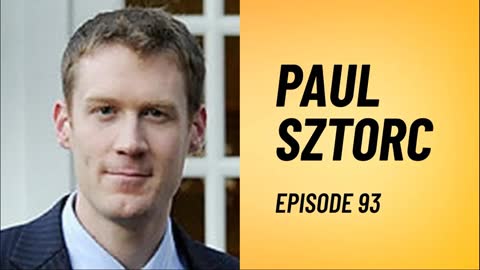
0:00 Hello and welcome to the Australian Bitcoin Podcast. 0:11 My name is Daniel Wilczynski. 0:15 So I'll be taking over hosting of the podcast from Justin. 0:22 Justin has left out him at hardblock. 0:25 If you're listening to this, you already know he done a great job with the podcast, but 0:31 he's moving on to other things within the Bitcoin space. 0:34 You can still find him at Mission Bitcoin on Twitter. 0:41 Justin was particularly, he had huge knowledge about Bitcoin and especially about privacy. 0:47 I don't have such a big knowledge on the privacy related matters in Bitcoin, but I have been 0:56 in Bitcoin for a while and I'm always trying to learn more about Bitcoin. 1:03 And this is the aim of the podcast for me to learn about Bitcoin and create content 1:09 that you, the listener, can learn from also. 1:15 So for today's guest, we have Paul Sztorc. 1:20 Paul Sztorc is a longtime Bitcoiner and he's also a longtime advocate since around 2014 1:28 of something called Drivechains. 1:31 So Drivechains is a type of sidechain for Bitcoin. 1:37 In the show, we talk about what exactly are Drivechains and sidechains, however, an improvement 1:46 to Bitcoin, the potential of the technology, which hasn't really been utilized much yet. 1:53 But Paul really makes some compelling arguments of why sidechains are something very interesting, 2:01 very exciting, and why there's a lot of potential there, and why his proposal for implementing 2:09 Drivechains, why that's an improvement to the existing sidechains. 2:15 So because this is my first time doing, hosting the podcast, there were some issues. 2:22 Mainly, I had some issues with my microphone, which wasn't working, so I had to use a different 2:29 microphone so the sound quality was not that great, unfortunately. 2:35 But I think the content was still pretty good. 2:39 And if you don't know much about sidechains or Drivechains, I think you'll get something 2:44 from it. 2:46 This podcast episode is brought to you by Hardblock, Australia's oldest Bitcoin-only exchange. 2:55 We make it really easy for you to have dollar cost averaging with payments going from your 3:01 bank account, automated into your hardware wallet. 3:06 If you haven't, give us a shot. 3:09 So let's move on to the show. 3:12 Okay. 3:13 Hi, Paul, welcome to the Australian Bitcoin Podcast. 3:20 How are you doing? 3:21 I'm doing great. 3:23 Thanks for having me. 3:24 Yeah. 3:25 So I've been listening to a lot of your material lately and I heard that you don't like to 3:31 do introductions. 3:33 You like to just get straight into it. 3:35 It's kind of a waste of the audience's scarce time. 3:38 You know, the audience, they only have so much time in every day and they can decide 3:44 after they hear the meat if they care about who the person is. 3:49 Okay. 3:50 Fair enough. 3:51 But I think there's some value in that. 3:53 So should we get into it? 3:55 Should we get into the meat and potatoes? 3:59 So maybe you can explain to us, what are sidechains? 4:05 How did they originate? 4:06 Where did the idea kind of come from? 4:11 Well, the idea is normally said to have originated with Blockstream's October 2014 paper. 4:21 The actual idea is like slowly evolved, like Satoshi invented merged mining in 2010. 4:30 And that was in relation to the invention of Namecoin. 4:34 And Satoshi understood that they could, in fact, both use the same miners, different 4:40 nodes, same miners. 4:43 And that was kind of, that was not sidechains, but that was still pretty close. 4:48 Because the sidechains get really cool because of merged mining. 4:52 That was 2010. 4:54 Then altcoins started to come out. 4:57 Most of them sucked, but some of them were interesting. 5:00 And the question was, what do we do about this? 5:03 So it was a solution to the problem of altcoins because you had like, people wanted to try 5:08 different things. 5:09 zk-SNARKs, Ring Signatures, Schnorr Signatures, SegWit, all these stuff you couldn't try on 5:15 Bitcoin because people hadn't figured out how. 5:18 And they were like, well, we'll try it in a different piece of software. 5:22 But then people were like, that's not good because now we have more and more new coins 5:27 coming out and we don't want that. 5:28 We want everyone to be unified in one team. 5:33 And so the idea is you send Bitcoin to a different piece of software. 5:37 So the coin, so a sidechain is an altcoin, but without the coin. 5:41 So it's a sidechain, it's an altcoin, but with Bitcoin. 5:44 So a completely different piece of software, but same 21 million Bitcoin. 5:48 OK, and you mentioned Merged Mining. 5:51 So we're going to be talking a lot about Merged Mining. 5:54 So what is Merged Mining? 5:57 Merged Mining means that someone can work on, instead of just trying to find a Bitcoin 6:04 block, they can do something very easily where they try to find the block of two different 6:11 blockchains at the same time. 6:15 That does not require them to do any extra hashing at all. 6:20 But if they find the block, they find a Bitcoin block and they find a bunch of other blocks 6:25 for free. 6:26 And they collect, since they find all those blocks, they collect all the transaction fees 6:29 and all the block rewards. 6:32 So they get no money in exchange for doing basically nothing. 6:35 And everyone's blocks are united by the same huge mining network. 6:41 So the naive, they're very secure against a naive 51% attack from outside because they 6:49 have all Bitcoin's hash rate. 6:52 There's a debate over whether or not that actually, when push comes to shove, that matters 6:56 because the Bitcoin miners only care about the Merged Miners to the extent that they 7:01 contribute revenue. 7:02 So if the revenue is like one one thousandth of the Bitcoin revenue, then they presumably 7:07 would only care one one thousandth as much. 7:10 But to an attacker who's just going to try to rewrite the chain is as if these other 7:15 altcoins, for example, Namecoin, it's as if they have like a huge amount of hash power, 7:23 way more than, you know, it's basically a tie with Bitcoin, is the idea. 7:27 So basically when a miner is doing Merged Mining, he's mining on both chains, he's doing 7:36 the same mining, but he gets a reward from both chains at the same time. 7:41 That's it. 7:42 OK. 7:43 And do current, do side, do all sidechains have to do Merged Mining? 7:48 No. 7:49 And in fact, it's not possible for this, the Merged Mining, a counterintuitive thing about 7:55 Merged Mining is you would think like you have like the host and then you have a bunch 7:59 of guests and you think like the host has to like do something to invite the guests 8:04 in, but that's not what happens at all. 8:07 So when Namecoin Merged Mining was invented, what they actually do is they're actually 8:10 finding the Namecoin block, but the Namecoin block is assembled in such a way that part 8:16 of the Namecoin block is a Bitcoin block header, so to speak. 8:20 This is very hard to explain, so I'll do my best. 8:23 But basically the point is they switch to a different piece of software. 8:27 So actually Bitcoin Core BTC cannot do anything to stop Namecoin from being Merged Mined with 8:35 it at all. 8:36 And in that sense, it actually has no idea whether or not how many coins are being Merged 8:41 Mined. 8:42 So the Merged Mining, and that's for an altcoin. 8:45 That's a situation where you have an alt, Namecoin is an altcoin, it is not a sidechain. 8:49 So an altcoin can do Merged Mining or it cannot do Merged Mining and there's nothing that 8:53 Bitcoin can do to stop it or cause it to happen or even know whether or not it's happening 8:59 or do anything about it. 9:01 It's a very independent thing. 9:02 It comes from the guest. 9:04 Right. 9:05 So basically Namecoin has, there's a reference to Namecoin blocks on the Bitcoin blockchain 9:12 and obviously the Bitcoin blockchain is open. 9:15 So anybody is free to put whatever they want in there and there's a reference to the Namecoin. 9:23 Namecoin. 9:24 Namecoin. 9:25 Yeah. 9:26 So is that correct? 9:27 Is my understanding correct? 9:28 The actual detail in Namecoin Merged Mining, as I understand it, is there's a Coinbase 9:34 output that has a hash and that hash is stuff that wouldn't be in a normal Namecoin block 9:41 header if there was no Merged Mining. 9:43 And then the entire Namecoin block header is actually, includes Bitcoin header, that 9:48 Coinbase output, the Coinbase, you know, the Merkle branch leading to that output. 9:53 And so basically the Namecoin block contains the Bitcoin header, but not the rest of the 10:01 Bitcoin block, only the header, which is 80 bytes plus, you know, a little bit else. 10:06 Like the Merkle branch is like whatever, like 50 bytes. 10:09 Depends. 10:10 Well, it could be like, it depends, like a couple, maybe a couple of hundred bytes. 10:16 But this is tiny, you know, the one Bitcoin block is between, you know, and now they're 10:21 like about 2 million, 2 million bytes. 10:23 So this is nothing at all compared to the rest. 10:26 Did you say the Namecoin block chain contains the Bitcoin header? 10:31 Yes. 10:32 Okay. 10:33 Okay. 10:34 So I didn't know, but I thought it was only the Bitcoin block chain that contains the 10:37 reference to the... 10:38 The Bitcoin block chain contains a Coinbase output. 10:42 So in the first transaction of the block, there is a little hash. 10:48 So there is something inside the Bitcoin, but the merge mining kind of turns a couple 10:52 things upside down. 10:53 So I hope it's not too confusing. 10:55 It's a very confusing topic. 10:57 It's very, it's very unexpected. 10:59 It's as if you are like pulling a tow cable or something and you start clipping more stuff 11:04 on and it becomes easier to pull. 11:06 It's a very bizarre and unusual situation. 11:12 But what it's really doing is, well, I don't want to keep saying different things and maybe 11:18 just more confusing than helpful, but basically the Coinbase pulls off a different strand. 11:26 And in that transaction, there's a whole, there's a new block header and there's a new 11:29 block and, but only the people who run the Namecoin software see that. 11:34 Everyone else just sees a bunch of scrambled stuff in the Coinbase. 11:38 Okay. 11:39 Okay. 11:40 So back to the motivations for sidechains. 11:43 So there's an interesting quote, which you said about Satoshi, which I assume it's true, 11:50 but I heard in one of your talks and where Satoshi said something that in the future 11:55 there will be many different blockchains with different characteristics and purposes. 12:01 And he said, but old coins are not inherently evil, but in practice, most are wise. 12:07 And I agree with you. 12:09 In practice, most are wise and like a type of kind of Bitcoin maximalists. 12:17 But we don't want to get too... 12:18 I agree with you. 12:19 I think like it's interesting for Bitcoin maximalists, maybe some of them aren't aware 12:25 of Satoshi's quote about that. 12:28 And I guess there is something to consider is, are some of the old coins, do they actually 12:40 do something useful? 12:42 I like what you said, also you said something where we keep the Bitcoin buy slayer very 12:47 simple and secure, and then we can use sidechains for experimenting with more, with less secure 12:57 and less secure blockchains and less secure and more bloated ideas. 13:06 So is that, does that, yeah, so just what's your comment on that? 13:09 Do you think that's part of the motivations of sidechains? 13:12 I think the thing to read is the thread called the BitDNS and generalizing Bitcoin. 13:18 That's where they invented merge, Satoshi co-invents merge mining. 13:23 And he says a number of interesting things there. 13:26 He says that space in Bitcoin's chain will be expensive in contrast to the merge mine 13:34 chains, because he says there's going to be an unlimited number of those. 13:38 And he is very okay with them being different. 13:41 It's clear from the context, he doesn't say all this stuff directly, but you should read 13:45 for yourself and just, it's clear that he's saying the Bitcoin chain will be small and 13:53 have high fees because it will be, it will be superior. 13:57 It will be a hierarchically superior, but there will be lots of other stuff. 14:03 And he, he talks in a way like he knows that people can add new chains. 14:09 So he knows that some will be low quality. 14:11 So he knows that it has to be designed so that we ignore the low quality networks. 14:18 And so he clearly has in mind this, this big heterogeneity, this big difference that 14:23 there'll be a lot of stuff out there. 14:28 And he, he clearly thought this merge mining thing was kind of a no brainer, but in practice 14:34 we have seen people want to compete more, compete with Bitcoin and they have their own 14:40 mining. 14:41 It's very, you know, Ethereum or whatever, it doesn't do merge mining with Bitcoin. 14:45 So it was a very interesting, it's a very interesting thread because you can see what 14:50 he was thinking in 2010. 14:53 And so that's what everyone should read that. 14:55 And then, you know, they'll see that he co-invents Namecoin sort of. 15:00 And so obviously that's, that's a little bit of a, it's a little bit of a kind of a, if 15:07 you think about Bitcoin maximalism, it's kind of bizarre that Satoshi would invent basically 15:12 the first altcoin. 15:13 And that is something that everyone should think about because Satoshi was just a guy 15:16 into really cool ideas. 15:19 And he set immediately to work, not to discredit Namecoin, but he was like, how can we fit 15:24 it in? 15:25 How can we fit it into the Bitcoin project? 15:27 Right. 15:28 Yeah. 15:29 Right. 15:30 I think part of the problem is a lot of shitcoiners, their idea isn't really to experiment and 15:36 do innovation. 15:37 The primary motivation is for them to get rich by creating their altcoins. 15:41 At other people's expense, basically zero sum or negative sum game where it's the competition 15:47 is not helping anything improve. 15:51 So that's too bad. 15:52 Yeah. 15:53 And that's, that has made people feel annoyed and that has made, and rightly so. 15:58 I mean, something I often say is that there's a big difference between Litecoin, which is 16:02 just big. 16:03 There's a big difference between going from nothing to Bitcoin, where Satoshi had to do 16:07 an enormous amount of work, marginal effort to make Bitcoin from a blank piece of paper. 16:13 But then to go from Bitcoin to Litecoin, it's just a couple of lines of code that are changed. 16:17 And so it's quite offensive to just say this is a new thing because it's not, there's no 16:22 actual novelty. 16:25 And so that's annoying. 16:26 And that has made people close ranks around the Bitcoin software, which now has actually 16:30 cut against sidechains because now people have been trained to think that the Bitcoin 16:34 software is just a priori, just the superior software. 16:39 And now they are closed minded and they can't imagine going to some other piece of software 16:45 for any reason, which is too bad. 16:49 One huge victim of this is the large block, like a scaling sidechain idea, because people 16:55 have been trained to think the large blocks as bad and if anyone who advocates them as 17:00 very naive. 17:02 But really they are bad, but it's bad as like if you could only pick one, you would pick 17:09 the large block. 17:10 It's like saying first class is better than coach, you know? 17:13 Yes, it is. 17:15 But maybe not everyone can afford first class. 17:18 So coach should still be around, you know, on an airplane. 17:21 So coach should still be around. 17:24 If you could get it for free, the plane can tack on a bunch of coach seats. 17:30 They're not as good, but it's very irrational for people to oppose that because there's 17:35 no downside. 17:36 Whereas changing the layer one block size and increasing it is an enormous downside. 17:40 So it's a night and day difference. 17:43 But that has been a big casualty of this idea and of the, you know, the anxiousness of the 17:48 shift coiners to release low quality, poorly thought out projects and just shove them on 17:54 people and corrupt all the dialogue around that. 17:59 So that is unfortunate. 18:00 Yeah. 18:01 I think also part of the problem is I feel if as Bitcoin Maxis, if we say there is some 18:09 value in experimenting with altcoins, if we say that shift coiners, we would like, oh, 18:19 so there's some value. 18:20 So my shift coin number 5,073, Shiba Inu Classic is like, you know, it's like, you know, it's 18:29 like a private Evercoin. 18:30 We will season that to say, okay, so you see these guys assign like altcoins are good and 18:38 release them to push the altcoins. 18:41 Yeah. 18:42 Right. 18:43 That's a hundred percent correct. 18:44 So that's too bad because the people who want sidechains, we are constantly, we're in between 18:53 two worlds sort of, because if people want to try something new, they say, I'll do it 18:57 as a sidechain for a little while. 19:01 Vitalik Buterin, well, that's a bad example, but David Vorek, we was going to do like a 19:07 bit, like a storage file coin type thing, but there is no, there's no Bitcoin sidechain. 19:13 So he made his altcoin and there's nothing else you can do. 19:16 So then once people make their altcoin, now they feel responsible for it. 19:21 It pulls people right out of the coalition. 19:23 So unfortunately the coalition constantly loses people, which is a big political problem. 19:30 And, okay. 19:32 But going back to the history of Bitcoin. 19:34 So I believe in 2014 there was the sidechain White Piper released and it, at that time 19:43 it was a pretty big deal. 19:45 I remember everybody tweeting how they're reading the sidechain White Piper in the epiline 19:51 and yeah. 19:53 So maybe like you can explain, but what was in that sidechain White Piper and what was 19:58 new in there? 20:01 Well, it kind of laid out, I'm not exactly sure what they were going for specifically, 20:08 but I think they were trying to put a lot of big names behind it because the number 20:12 of coauthors is enormous. 20:14 So like when I write something, it's just me, but that paper is like, whatever, everyone, 20:19 Greg Maxwell, Adam Back, Luke Dashjr. 20:22 I don't know. 20:23 I don't, Peter Weill, all these people, really big names, Mark Freidenbach, whatever. 20:28 These very huge names are on the paper, especially at the time. 20:33 And they were, I think they were just trying to like put out some definitions of things 20:37 and they were just trying to get the concept into the Overton window. 20:40 And they succeeded completely with that. 20:44 They had a lot of like, you could do this or you could do that, which I didn't like 20:48 because I thought they should just say exactly what to do. 20:51 It should be like a spec, but they said like, you know, they could be symmetric or asymmetric 20:56 or they could be merge mined or not merge mined, or they could be whatever, something else. 21:01 And then they had a proposal in appendix B for something called the skip list. 21:06 And that was the sort of the invention, I guess, but that never came to pass. 21:12 That was never done. 21:15 Okay. 21:16 So what were some of the options they talked about and from those options, which one? 21:24 Because we have different ways to do sidechains. 21:27 What are some of the different ways to do sidechains? 21:29 And what's your opinion? 21:30 Which is why we should be doing them? 21:32 There's appendix B, but appendix A, I think there's appendix A was just like this idea 21:39 of the federation. 21:41 And if you go back and if you read carefully, and if you also, you can go back and watch 21:46 talks given by people from Blockstream around the time, including especially Greg Maxwell, 21:53 who they did this big Blockstream video, and then Greg is introduced as the author of the 21:59 two-way peg. 22:02 If you go back and look at it in a historical context, this multisig thing was supposed 22:06 to be like a very temporary stopgap thing. 22:11 They were like, we can't do the new technology of sidechains yet, but we can do this where 22:18 we just have a group, basically a multisig wallet. 22:24 And they said, we can do that until we get the real, the true sidechain. 22:33 But they never did that. 22:34 They stuck with this federation thing. 22:36 But then over time, because of marketing reasons, because of the block size war, because 22:43 of Samson-Mao related reasons, they started to flip this. 22:47 This idea took root in people's heads as the multisig wallet being a real sidechain. 22:53 And now that is probably how people use the term. 22:57 So the term's definition has changed, which is fine. 23:03 But the new definition is kind of like anything that is moving Bitcoin, not on layer one. 23:13 So by that definition, lots of things are sidechains, including every exchange, like 23:20 Coinbase is a sidechain, if they have their money in a multisig wallet, which they do. 23:27 So the definition, unfortunately, has been kind of beaten up, which is too bad. 23:34 So when you said the federated multisig model, so basically for the audience, so tell me 23:42 if I'm saying this correctly. 23:44 But my understanding is basically the sidechain is essentially a kind of multisig where there's 23:53 a few parties, maybe six, seven or eight central parties, but part of that multisig, 24:00 and so that's kind of a federated model, and they control, basically, they have to agree 24:06 to the next block. 24:09 Is my understanding correct there? 24:12 Well, in this context, it refers to the fact that the coins are locked to them. 24:19 There's a different thing about how the next block is found, but it happens to be basically 24:24 that same idea. 24:28 So there's two separate things. 24:30 There's the peg in, peg out, there's the coin thing, what locks the Bitcoin, and then there 24:39 is how the blocks are found. 24:40 And so that one would be merge mining. 24:43 The other one would be something like BIP300 or the multisig output or something else. 24:53 So the multisig thing in the case of Liquid is, I'm pretty sure, 8 of 15 multisig. 24:59 And they also have, it's unclear how anyone knows if this is true or not, but they're supposedly like HSMs, like these little boxes that hold the keys, and you can't copy the keys off of them, I mean, supposedly, there's no real way to audit any of that, or prove any of that, or prove that the keys were generated only on the box. 25:21 So I don't really know why, you know, who they think they're kidding when they keep saying that, but I guess that's the thing they say, so. 25:32 Okay. And just to explain, for the audience, Liquid is probably the most famous implementation of a sidechain, the most active one, at least. And it's by Blockstream, and uses that federated model. 25:51 Okay, I'm still not 100% sure. So the federated models, they don't control the creation of blocks, but they decide when you want to transfer coins between the Bitcoin blockchain and the sidechain. 26:07 Yes, particularly when you want to take them out. You say, I want them back on layer one. I'm a new owner on the sidechain. But layer one isn't looking at the sidechain. So layer one will just be like, it can't look at the sidechain to know what happened, but it has to look at something to know who should get the coins and who should not. And what it does in this case is it asks 15 people, basically. 26:31 Okay, okay. Who should, who gets the voice? 26:33 It's a big contrast between mining, where there's no fixed list of miners. It can constantly change. The mining world can constantly change. And if all the miners died, new miners could show up without any modification to the Bitcoin system. 26:51 But in the liquid multisig world, it is a fixed list. I mean, there's ways of updating the list. But I don't think any of that has been implemented yet. And I don't think, I'm not sure exactly how. I'm pretty sure to update the list, you need the 15 people to update it. So it's kind of circular. Whereas none of that is the case in finding a Bitcoin block or moving Bitcoins. So it's very different in that way. 27:21 Okay. And you also mentioned something called 2iPEG. And so what does that mean exactly? When we even say pegging in and pegging out and 2iPEG, is 2iPEG a different module than the federated module? 27:34 No, this is a weird phrase, I guess. It comes from, I'm pretty sure it just comes from like foreign exchange, like forex markets, because it's referring to the idea that you can have a currency peg. So I'm pretty sure like the EC, the Caribbean dollar is like 2.5 of those always equals one American dollar or something like that. So there's a fixed relationship. So you don't have to really worry about, it's kind of interoperable. 28:04 It's kind of like, you know, if you take money out of an ATM, your checking account balance will go down by a certain amount, $100, and you get $100 in cash. So it's saying they exchange at par. And that means you don't have to worry about, you don't have to think about the relevant issues or the risks. 28:26 You don't have to think about like, what's the difference between paper currency and the checking account? Well, nothing really, because you can put $20 into the ATM and get $20 in the checking account, or you can take $20 out of the ATM. And so you don't have to like worry about anything. You're just in the same system. 28:44 And so the idea is you don't have, you have an altcoin without the coin. How do you do anything over there? You send seven Bitcoin into it. And then you lose seven coins on the main chain, Bitcoin Core. And then you gain seven coins on the sidechain. So they are, that's the idea of it's pegged. 29:09 When I come back, they pay. So there's no like, there's not like a fluctuating exchange rate where there's like Coinbase. 29:15 Okay. So it basically means the exchange rate is static. So we have the Bitcoin and let's say Bitcoin sidechain and one Bitcoin exchanges for 10 Bitcoin sidechains. And that exchange rate is static. 29:33 Right. If you did that, then time would be even when it came back. Right. 29:37 Yeah. And so that's called a two way peg. 29:42 Correct. Because there was originally something called one way pegging, which is all these are silly names, of course. But the idea was, you can have the coins move in one direction, where if you wanted them to go on like on a one way street, there was a block and you could have a situation where you moved like eight coins in and you got eight coins over there, but you could never get them back out. 30:10 But people liked that at first because they were like, this is a cool idea. We can put new stuff. We can have like Bitcoin 2.0. We could have whatever we want in here. And the only issue is we have to, as long as we keep making it better and better, no one will want to go back to the old version. 30:25 But people were like, people were kind of like, this is now this depends on an assumption, you know, because when it's a one way street, you get real nervous about putting coins in in the first place because you think, now I'm doing something that I can never undo. So that's no good. 30:42 So that's no good. So the two way peg concept just gives you the undo button. You put coins in the sidechain, you're like, wait a minute, you take them out and you're worse, you're no worse off than you were before. And you can see how that would be appealing. 30:57 Okay, I understand now. And in the federated model, is the exchange rate controlled by the federated nodes? 31:17 Okay, so now moving on to Drivechains. So that's your idea of how sidechains should be done. Is that correct? 31:29 Yes, it is. 31:30 So what is Drivechains? How do they differ from the current implementations like Liquid? 31:38 Yes, well, it's not, they don't use the fixed member, they just use the set of Bitcoin miners as the, the, the authenticators of which coins go where. So that's for a variety of reasons. One reason is already, miners have a lot of power in Bitcoin, believe it or not, they, they don't have a lot, but they, they, they have kind of enough like to the point where a 50% 32:06 of miners were just evil per se, they would, you would be doomed, no matter what the lightning network would be doomed, sidechains would be doomed, and the regular chain would be doomed. So you already have, you're already kind of assuming that they are, if you lose that, then you're losing a lot. 32:25 Now the question is, maybe they would be persuaded because the design is bad. Opportunity makes the thief, as they say. So am I inducing them to steal a bunch of coins? Well, I say that risk is up to the user to take. So same with Liquid, like they could, those people could steal their Bitcoin, the, the members of the multisig. 32:47 So I say, we'll just, we'll, well, this is up to the user. And if the, if the chain is well, the sidechain is well designed, it will increase mining transaction fees, and it will increase the exchange rate of the coin. So miners will want to keep it around. 33:01 But yeah, so the history of that was Blockstream came on the thing in 2014. In 2015, it was became clear to me that they were not, they weren't, they were going very slow, they were not actually releasing the decentralized sidechain technology that just the multisig bandaid, that was the temporary stopgap. 33:23 And so I wrote this post in November 2015. And it was a good, I thought it was a perfectly good idea because the scaling war was happening and the large blockers, they were very okay with something called SPV mode. 33:38 And that was one something where there was a vulnerability in SPV mode where miners can steal coins from you if you are only SPV and you're not in a full mode. But I thought, okay, listen, that we can if they are already willing to assume that, then it's going to cost them nothing to switch to the large block sidechain. 34:02 So I was like, the large blockers will be happy. And the small blockers will be happy because we're not going to change the block size on mainchain Bitcoin core at all, it'll stay low. So we have small blocks and large blocks at the same time. 34:15 So in 2015, I thought this will be, this is the way to go. This fixes the block size dilemma, because we just have, we have one of each of the things that we want, and so that everyone's happy. So that's what I was thinking when it came out. 34:35 Unfortunately, the timing wasn't great, because there's scaling one and scaling two, September 2015 and December 2015. And my idea came out in the middle, but scaling was set teeing up segregated witness, and then lightning, which was people thought would be and it was said that would be done by April 1st or something. 34:57 I don't know why anyone said that. But they said, we'll do SegWit will be done by April 1st, and then we'll have lightning, and then everything will be fine. And so that's what they said. And then that what people focused on that, and they did not focus on my idea until much later. 35:12 Okay, so your idea was during that big block debate, it was about using Drivechains to give the big blockers what they want, which is a big block sidechain to Bitcoin. And if they want big blocks, they can just transfer over the Bitcoins to big blocks, which is like letting the market decide in a fair way. 35:34 Yeah, the user can do whatever they want. If they run the large block software, then they have to process the larger blocks. But if they don't want to do that, then they just don't have to. 35:45 Okay. So, and I'm still like, don't fully understand. So the difference between the Drivechains and the current sidechains like Liquid is that you don't use the federated Drivechains, but basically, really, is that the only main difference? 36:05 Well, it's kind of a big difference, because you have a little bit of a not your keys, not your coins problem with Liquid, because it is a federation, but it's like they have the money. 36:18 So in Drivechain, also, the miners have the money. But that's what I was trying to say before is that mining is like a process. So there's no names, there's no fixed owners. And so Drivechain, the miners sort of own the coins, but they're kind of already on the coins, to some extent. 36:36 So in Drivechain, the miners own the coins. And what I do instead is I throw a bunch of stuff in the way of the miners, so that it's very difficult for them to coordinate to steal the coins. 36:50 But if anyone wants to use the system, in an honest way, that happens very quickly and reliably. So I tried to set it up so that the withdrawals are very slow, they take months. But this doesn't matter because users can swap the coins without using PIP 300. 37:10 They can swap them out on exchange or using HTLCs or something. So there's no disadvantage to them. And so the only people who will walk the coins back across will be very patient people or the miners themselves. And so those people are, they're unlikely to steal from themselves. 37:29 So the whole thing is designed. But there's an important difference versus the miners. Again, the mining is a process. So mining means that no one can stop you from adding a new sidechain. If someone killed all the miners, new miners would show up without anyone doing anything. 37:50 So with Liquid, there's a multisig. But if you want to, let's say instead of Liquid, you wanted to do something else, like Zcash sidechain. In the Liquid model, you have to find 15 new people. And then you have to say this is a new, excuse me, this is a new federation. 38:12 And then that has no reputation on day one. So people have to decide whether or not they trust that multisig thing. And so it's difficult to start up something new. But in PIP 300, we already have the mining network. So you can just spin up a new sidechain whenever you want. 38:33 There's also, I think, a better incentive alignment, because in PIP 300, and in everything, really, all the money is going to go to the miners, because they can gate, they can filter anything they don't like. So in PIP 300, the miners get all the fees. In Liquid, all the fees go to a wallet controlled by Blockstream. 38:54 So the miners don't really lose very much if Liquid goes offline, and they don't really gain a lot if Liquid is popular. In fact, they kind of lose out because the fees are going down. 39:07 So the idea is to align the incentives better. Have miners just be like, miners are very, they're driven by profits, they want revenue. So they can do this, if they have an optional activity, where if they want, they can add a chain. 39:29 And then there's more revenue for all of them. And then if the chain is badly behaving, or if there's something wrong, then they lose money. And so that is designed to keep the miners as cheerleaders and champions of all the sidechains of the system. 39:50 And it's also like, it happens to be the fact that, you know, with mining, it's unclear the physical location, it's unclear the identity of the miner. So mining is really a lot, is much better than the multisig idea, because the multisig, you take out the multisig people, and it's over. But with mining, it is unkillable. 40:08 Okay. So does that mean the federated Liquid, it doesn't use emerging mining? 40:15 Well, again, it doesn't. But we're talking about the coins. So there's a difference between the coins, which is the escrow, the account that holds coins that you move in, custody of the coins. And that's different from how blocks appear. So for example, Liquid, the blocks are once every minute, I think. 40:35 So they, but whereas bitcoins are once every 10 minutes, so that would not be easy, you could do that with merge mining, but it'd be convoluted. So it's not very, that was a kind of a giveaway that it's, they do, I don't remember exactly what it is, but it's some kind of like, like Paxos, some kind of older consensus thing that doesn't even use mining. 40:59 Okay, so we don't really use merge mining on the federated, but the Drivechains do use merge mining? 41:06 Well, yes, because Drivechain is 300 plus 301. And that's the type of merge mining. But I think you're crazy if you don't do merge mining, because you're already trusting the miners, no matter what you do, even if you use lightning network, 51% can still screw you over. 41:28 So that's not good. But if you're already going that far, then you kind of lose nothing by putting the, if you merge mine, then it's the same group. And then this is in Drivechain 300, the 51% group can move the coins. And so you're really not losing anything at all by doing merge mining. But what you get is you get all the mining for free. 41:50 Whereas there's also something very bad in sidechains where the sidechains have no block reward, so they don't make any new coins. So the only thing they have is their fees. That's the only thing the miners can earn. 42:02 So in Bitcoin, we get whatever it is, six and a little minted. And but then we also get the fees. So it could be like seven Bitcoin total. But on the sidechain, you only get the fees. So there's a bad situation where the reward is extra volatile on the sidechain. 42:25 Because it can like go to zero, for example, the whole reward 100% of it can go to zero, whereas it was Bitcoin, it could just go down from seven to 6.25 or whatever. So then when it's volatile, you don't maybe you don't know when will another block be found? Will it ever be found? You have an issue. 42:44 But if it's merge mining, then all the blocks are just coming in for free. So you don't have to think about that. You just think how much extra money am I getting? Oh, 10 cents? Well, that's another 10 cents in my pocket, you know, for free. So it doesn't really matter as much. You just leave everything running. Okay. 42:59 That's why I think you're crazy if you don't do merge mining. But people can do it. They can do on the sidechain, they can make whatever mistakes they want, and no one can stop them, including me. 43:08 That makes sense. So again, tell me if I'm understanding this correctly. So the federated model, obviously, the federations could get together to steal money on the sidechain. And in theory, in your model, if you have more than 50% of the hash power, the miners could in theory, steal the funds? 43:38 The funds that were deposited to the sidechain, yes. 43:40 Yeah. And that's different because in Bitcoin, normally, 50% of miners, some people aren't aware of this, but they wouldn't be able to really steal the coins. They can stop transactions on the Bitcoin minechain and they can censor, but they can't steal people's coins. But on the sidechain, like a Drivechain, 50% of miners could in theory steal the coins. So that's kind of the argument. 44:06 It is different. 44:07 But it's still much better. What you're saying is it's still much better than the federated model, because 50% of miners is much better than eight federations, where you need like four of them to steal coins. 44:22 The federation has, well, one again, one problem with the federation is that they don't, they're not punished by stealing, they just make away with the coins. Whereas the miners, if you have a situation where there's a base mainchain, and then there's like four or five really popular sidechains, and then there's like another sidechain or something. If they steal from that, then the users may all panic. And they may say, well, the sidechain idea is dead. 44:50 And now all this whole stream of revenue that they would have been getting for every sidechain, and the gain to the exchange rate, because now instead of being a coin that only does one thing, it's a coin that can do anything. But then if the sidechain idea is not supported, then that would all be obliterated. So they at least are punished for stealing. 45:16 They have some incentive to keep stealing. 45:20 Right. 45:21 And yeah, so that makes a lot of sense to me. 45:24 It's not like they can just steal. The BIP300 idea is designed around stopping them from stealing. So what I kind of assume is the sidechain is going to spit out sidechain full nodes, which are not mandatory. 45:40 No one has to run them. But if you do, you get like four hashes a year, every three months. The sidechain will calculate what the withdrawals should be, what the TXID should be, basically. 45:51 And it's very rare. And that's on purpose. That's to make it easy for people to pay attention to them. 45:59 So you have one hash. With your human eyeball, you can just see the hash and understand exactly the state of the sidechain. 46:08 And when they want to withdraw on layer one, that hash is the thing that's introduced to everyone. It makes its big debut. 46:19 And then it has to make progress over the three months to reach the finish line. 46:27 So everyone can easily see if that's not right. 46:30 And then they have until then to call the miners and assassinate them or plead with them or start up different miners or do something else. 46:40 So it's not perfect, but for the miners to steal would involve at least a lot of shame and possibly other feedback involving the price and involving other things. 46:56 And involving people's ability to react. It's possible to do a UASF to block the transaction. Many things are possible. 47:05 And so the design of BIP300 is to amplify anyone's ability to reply to the miners' theft by making it as easy to detect as possible, easy as possible to do something about, easy as possible to prove that something is going wrong to other people. 47:24 Other people out there may point and laugh, but other people may be sympathetic and may say, well, this isn't right. This isn't a good idea. This isn't going well. 47:34 We want everything to be going well. What's going on? 47:38 So it starts a feedback loop to try to correct the problem. 47:42 And so I don't just say maybe the miners will never take the coins. 47:46 There is like a plan. And again, it's not that it's supposed to be perfect, but the way the plan works is you can only be stolen from if you choose to put your coins into the sidechain. 48:00 So we allow the user to do whatever they want with their money. 48:05 So I don't know. I'm not saying it will certainly be a big success, but the coins will like we allow people to sell Bitcoin and buy Solana or something, you know, like we can't stop them from we can't stop them from just destroying the coins. 48:23 They can send them to one Bitcoin either don't send or they can send them to they can sell them for fiat or they can sell them for goods and services. 48:31 So there's nothing we can do to interfere with the user's sovereignty. 48:38 So I say, hey, I give them this option. I say, listen, you could have you could have Zcash technology, you could have Ethereum technology, you could have whatever you want prediction market technology. 48:48 And, you know, like take it or leave it, you know, if you want to try and, you know, people will try with a small amount of money first, the money that they're willing to lose. 48:56 And then depending on what happens, all of us will learn about what the exact limit of this is. 49:03 Yeah. And yeah, that makes sense. And it's part of the model of Bitcoin. Bitcoin is about giving people more power and more responsibility. 49:11 And right. They have the responsibility to make their own choices. 49:16 That's the whole point of Bitcoin. If we don't respond. Yeah. 49:21 Otherwise, we might as well if you don't think people if somebody should make decisions for them, then might as well go back to the central banking system. 49:30 Right. That's not freedom at all. That would be, you know, parentalism or something. 49:34 So that is. But yeah, like we when push comes to shove, they're allowed to destroy the coins, you know. 49:42 Yeah, they can just destroy their computer. So it's kind of like, what are we going to do? 49:48 What are we going to do? There's nothing we can do like. So it's kind of like, again, like that's the design is the design is not just free for all miners. 49:58 Grab the coins. The design is like, OK, these are some things that almost everyone agrees on. 50:04 Like overt 51% percent attack and can destroy the network and users are free to make their own choices and also layer one Bitcoin should not have to look at or care about anything on the sidechain. 50:17 So we have some basic ingredients that make up the design. 50:21 And then from there, try to make it really, really difficult for the miners to steal and try to make it really convenient for the user. 50:27 Because, again, the user doesn't have to do the three month thing, the user can say, I have a 20 sidechain coins and instead of if I did the three month thing, I would get 20 main chain coins, but maybe I don't want to wait three months so they can go online and they can just sell them. 50:44 They say, I'll sell these 20 sidechain coins for whatever, 19.9 or 19 and a half layer one coin that happen instantly and they'll have they'll have nothing to do with BIP300. 50:59 But because BIP300 is there, the market price will be locked into a little channel. 51:06 It just in practice because it can't go too far beneath a one to one thing. 51:11 Otherwise, people will just say, well, I mean, I'll just wait three months. 51:14 So as long as you have someone in the whole system that is very patient. 51:19 Everyone in the whole system is as patient as that person, because that person will just buy up people's coins and then wait. 51:27 Yeah, so that's the idea. 51:29 And the three month thing you're referring. 51:31 So that basically means it takes three months to peg in or peg out. 51:38 Peg out. 51:39 Pegging in is instant. 51:40 But if you want to peg out, it takes three months to peg out from this Drivechain into Bitcoin. 51:52 Back to the Bitcoin core, right. 51:54 And is that part of the reason also to prevent the stealing of the coins? 51:59 Is that really the motivation for that? 52:02 So you have three months. 52:04 Withdrawal is uniquely identified by a hash. 52:08 And that's the hash that the sidechain is going to say. 52:11 It will be shouting the hash the whole time. 52:14 So you have three months to do something about the... 52:17 Right, if the hashes don't match. 52:20 So it's pretty simple. 52:22 Ask. 52:23 Obviously, it's dangerous when you say, well, people will pay attention and then they'll do something. 52:28 Like that's kind of vague. 52:29 But what I'm saying is, at least it's very, very easy for anyone to tell whether or not something is going wrong. 52:35 And if somebody does, let's say like we detect. 52:37 Okay, I detect the miners are doing something dodgy about three months. 52:42 Yeah. 52:43 So you can be on vacation. 52:45 You can be on vacation. 52:46 That's because the three months is also key because people take vacations. 52:50 They don't want to watch all the time. 52:52 They're going to be asleep. 52:53 They're busy. 52:54 So they can just be like on vacation. 52:57 Someone can call them up and say, emergency. 53:00 And they can be like, well, in two weeks when I get back from vacation, I'll look into it. 53:04 Because they still have plenty of time. 53:06 So that's the whole thing is that the easier it is for them to react, the more comfortable they are. 53:12 And the more of a deterrent it is. 53:15 Because if you break into someone's house at like 4am, you can maybe break in and steal some stuff and get out before they even get out of their bed or whatever. 53:25 They'll be confused. 53:26 And that means you might want to try it. 53:29 But if you break into their house and all of a sudden you slow down, you become really, really, really slow. 53:35 And they have a whole 24-hour period to whatever it is, take out a fire poker or a kitchen knife or something and take care of you. 53:48 Then you say, well, I'm not going to break into that house because that's a magic house where I'm going to slow down. 53:53 So that's kind of the idea. 53:54 Now, the things you would do, they would be like, you want to make sure there's no like, is there some kind of misunderstanding? 54:01 Is there a bug in the software or something like that? 54:03 That's very unlikely, but that's always possible. 54:06 And then you would say, are all the miners doing this? 54:09 Like, is this planned? 54:10 Is this intentional? 54:11 You know what I mean? 54:12 Because if it's slow, again, slow means it has to be intentional. 54:17 Because again, it's like you break into someone's house, but you have to stay there for a long time. 54:22 Like if you accidentally break into someone's house, as soon as you realize that you've done that, you'll get out. 54:28 You'll be like, whoa, whoa, whoa, this is a mistake. 54:30 I have to get out of here. 54:32 But if you're willing to just keep doing it day after day, every block, you know, every block, then it's kind of like, well, this is intentional. 54:42 So at least you know that you can assign blame. 54:46 You know, it's not like something was like misconfigured or misunderstanding. 54:51 So you have all that. 54:52 And then one thing you can do is you can just say, this is very straightforward. 54:57 Since the hash is going to be more or less, I'm skipping a little bit of technical detail here. 55:02 But the hash is more or less the TXID of the withdrawal. 55:06 And that's the only withdrawal that can be included. 55:08 So you can just say, I'm going to not allow. 55:12 In the future, after the three-month thing is over, and this transaction, that's when the withdrawals put into a block. 55:20 So you can say, when that happens, I won't allow any block to be mined on my node that contains this TXID. 55:30 This is a banned TXID, because this is bad. 55:33 And again, people can do this at completely different times, because it has no effect until the very end of the road. 55:38 So in particular, it has no effect if the miners change their mind and give up. 55:43 So nothing bad can ever happen to you if you do this. 55:49 And so it's basically a UASF to block the theft. 55:54 So you have a long time to coordinate it. 55:55 And this is, again, the one I had in mind when I was thinking about this was, 55:59 there were two instances in Bitcoin's history where there was a genuine emergency. 56:05 And stuff had to be changed. 56:08 In particular, in one sense, a lot of code, a lot of engineering had to be done. 56:12 And decisions had to be made. 56:13 People had to be called. 56:15 And they had to shut down. 56:16 So one was in July 2015. 56:20 The other was earlier. 56:22 I don't remember exactly when, but I have this. 56:24 I think I put this somewhere in the DriveShame post. 56:27 And in both of those instances, I think it was six hours and five hours, 56:32 where people would actually write new code and patch the software without anyone doing anything. 56:40 So I was thinking five, six hours to write new code. 56:43 But this is a very simple thing where someone can just say, 56:47 they can right-click on something and say, ban this. 56:50 And again, they have three months to do it. 56:52 And everyone can do it at a different time. 56:54 And there's no software upgrading. 56:56 There's no downloading new software. 56:58 There's no doing anything different. 56:59 It's just like, do you click the switch or not? 57:02 So I was thinking this compares very favorably because you have way more time. 57:06 It's way simpler. 57:07 Nothing bad can happen to you. 57:09 The only bad thing that can happen is, if a lot of nodes reject the transaction 57:13 and the miners just plow straight through, 57:16 and they say, we're determined to include this transaction, 57:18 then what will happen will be your node will stop receiving blocks. 57:23 But that's the only bad thing that will happen to you. 57:25 And you can just wait at that point. 57:27 And if you wait a day or two, then you may decide to give up. 57:33 Because they put the transaction in the chain and you aren't following it. 57:37 But then you right-click on it again. 57:38 And you say, OK, I unbanned this transaction. 57:43 And then basically, you're allowing the miners to steal. 57:46 But the mere fact that this is so easy and so possible, 57:50 again, it's like you're robbing a house and it's slow. 57:54 And the person has an enormous gun above the fireplace or something. 57:59 And it's very easy to use. 58:01 They just press a button and it just blows the whole doorway to shreds. 58:07 And so the fact that it's there may be a deterrent. 58:11 No one knows for sure. 58:12 Maybe all these ideas will be terrible. 58:13 And everyone will think that this will never work. 58:15 But the fact that it's there is a deterrent. 58:17 The miners might say, we tried to steal. 58:20 But they ran a successful sympathy campaign in time. 58:28 And now we're not going to win because 80% of the nodes 58:30 are determined to block this TXID. 58:33 So that's one thing you can do. 58:34 Another thing you can do is try and figure out, 58:36 call the people who are in charge of the big mining pools. 58:40 The pools have another thing. 58:42 They're very vulnerable because the pools can be very easily replaced. 58:46 The hashers are spending hundreds of millions of dollars on equipment, 58:50 electricity, and they just want a return on their investment. 58:54 You know, they're simple people. 58:56 They don't include transactions and blocks. 58:58 Most of them don't know anything about what there's a good scaling to. 59:04 They had like a minor panel. 59:06 The miners were very confused about the block size. 59:09 Someone just said on the panel, can someone just tell us what to do? 59:13 They live in a completely different world, 59:15 where they're just trying to find cheap power. 59:19 Something funny about them is that sometimes they're sort of mercenary-like, 59:23 where they'll just switch from BTC to BCH, 59:29 just based on the day and who pays more money when. 59:32 So they kind of like, what's the phrase? 59:37 It's kind of just like, it's anyone's business. 59:41 They'll work for anyone. 59:42 They don't even know what the block is. 59:45 They get the template. 59:46 The template doesn't have any transactions in it except the Coinbase. 59:50 So they don't even know what's going on. 59:52 The pools do all the thinking for the miners. 59:57 But the problem with the pools is, the problem for them, 1:00:00 and what's good for sidechainers such as myself, 1:00:04 the pools basically have a brand. 1:00:06 They have a brand name, and that's basically it. 1:00:09 So they get a tiny fee in exchange for organizing all this stuff and diffusing the risk. 1:00:16 So they have special software and stuff. 1:00:19 These would be the people who do the merge mining and everything. 1:00:21 So they have special software, but they get a tiny sliver of a fee. 1:00:26 They get a little bit of money, and they have to attract the hash rate. 1:00:34 They plug in the physical miner, and it makes a bunch of noise, 1:00:37 and they point it at a pool. 1:00:40 And those miners can just point it at a different pool, 1:00:42 you know, at the drop of a hat. 1:00:43 Like, it takes seconds, and they can just bail on the pool 1:00:48 if the pool does anything that they think is not in their own best interest. 1:00:53 So of course, perhaps the pool will say, 1:00:56 we're going to steal from the sidechain and give 99% of it to you guys, the hashers. 1:01:01 But, you know, it's just, like, more stuff to organize. 1:01:04 They have to, like, coordinate. 1:01:05 They have to find out lists. 1:01:07 Whether or not someone hashes, this is another kind of cool thing. 1:01:12 They have to pick the destination of the sidechain funds when they start the attack. 1:01:16 So day zero. 1:01:18 But it's three months later, day 90, or what have you. 1:01:23 That's when it actually pays out. 1:01:24 So they have to make a deal with the current group of hash rate here. 1:01:29 But then if those miners, like, drop out, 1:01:31 they can drop out and go to a different pool. 1:01:33 Now they're already in. 1:01:34 They're already locked in to get some of the theft. 1:01:37 And they just say, well, I'm locked in on the theft, 1:01:39 but now I'll mine somewhere else and get the rewards over there. 1:01:44 And so the sidechain theft can't change the destination of the funds once it starts. 1:01:53 So maybe if anything happens over the three months, 1:01:56 if there's misunderstandings or miscoordination 1:01:59 or just bad leadership of whoever's trying to do this attack, 1:02:03 this would, again, just make people tend to think, 1:02:05 I don't know if this is worth it. 1:02:10 Again, nothing's perfect. 1:02:11 So you have the mining pools. 1:02:12 So the pools are easily replaceable. 1:02:14 You start up a new pool, like, you know, in a day. 1:02:18 You attract hash rate. 1:02:20 So if a pool just goes rogue and tries to steal the coins, that won't work. 1:02:24 For certain, it certainly will not work. 1:02:26 Right. Okay, I get it. 1:02:29 So in terms of implementing Drivechains, 1:02:32 so Drivechains are a better way to do sidechains 1:02:37 and to implement them, to have them within Bitcoin, 1:02:41 we need BIP300/301. 1:02:47 Is that correct? 1:02:49 Yes. 1:02:50 Yes. 1:02:52 Okay, so what's up with BIPs? 1:02:56 Why do we need them? 1:02:58 Well, what enforces this three-month-long gauntlet thing, 1:03:04 that is what BIP300 does. 1:03:06 So it will reject a block that does not, 1:03:09 that tries to withdraw from the sidechain 1:03:11 faster than the three-month thing, basically. 1:03:14 So what the BIP300 does, what the soft fork does, 1:03:19 is it says we put coins into a spendable zone, 1:03:25 but they can only be spent according to these new rules that we add, 1:03:28 the BIP300 rules, 1:03:30 which are this thing, this three-month-long hallway 1:03:33 that you have to go one block, you know, at a time. 1:03:38 And so that's what enforces the long, delayed, slow withdrawal. 1:03:45 Okay, and so is that part of the reason why we haven't implemented that? 1:03:54 Because obviously with Bitcoin development, we're very conservative. 1:03:57 Exactly. 1:03:58 When I proposed it in November 2015, it was not a big deal. 1:04:01 And in fact, I think in the next month, 1:04:03 we activated three soft forks or something. 1:04:06 But unfortunately, you know, for historical reasons, 1:04:08 the development, the overall, 1:04:15 the project has become more slow moving and conservative. 1:04:19 And also there was a lot of misunderstandings about this idea. 1:04:22 I think that still persists, 1:04:24 even among the absolute elite expert tier in Bitcoin. 1:04:31 For a while in the Blockstream paper that I mentioned before, 1:04:34 there is this idea that basically that merge mining 1:04:38 is, has an effect, a significant effect on which miners are profitable, 1:04:45 which I regard as a complete misconception. 1:04:49 But that made people think, 1:04:51 well, anything that can be merged mined is actually bad. 1:04:55 So sidechains are bad. 1:04:56 That was a temporary thing. 1:04:58 But a lot of people still believe that. 1:05:01 But I think that's just a mistake, you know, 1:05:04 because think about it, like lots of things determine 1:05:06 whether or not a miner, some group of miners is profitable or not. 1:05:10 You know, like the invention of that whole natural gas flaring thing 1:05:14 that made some miners more profitable, some less. 1:05:17 I could, you know, I could publish a, 1:05:20 I could make an announcement and say, 1:05:23 if miners register on my website, I'll give them a dollar every year. 1:05:29 That might affect, you know, in quotes, 1:05:31 that might affect which miners are having that additional dollar of revenue. 1:05:38 I could call it merge mining.com, Paul's merge mining site.com. 1:05:41 And then I could say, I'll give, you know, I'll give $10 a year 1:05:44 if the miner gives me their fingerprints or something, 1:05:49 or their retinal scan of their eye, or, you know, I can say anything I want. 1:05:53 And whether the miners make money is sort of up to them. 1:05:57 So I thought this whole thing was a big, huge derailment of the whole conversation. 1:06:05 And I think it is a huge mistake. 1:06:06 In fact, I think it's Bitcoin's biggest setback. 1:06:09 There was this paragraph in the Blockstream sidechain's white paper. 1:06:16 So there was a lot of misconceptions about the idea. 1:06:18 But in general, I think it's just because things are slow. 1:06:20 People like the Lightning Network. 1:06:23 People thought after the scaling war was won, 1:06:27 people thought miners were just evil people who had to be kept on a short leash. 1:06:31 So miners, mining became way out of favor. 1:06:33 It wasn't until like Marty Benton, like the kind of great American mining, 1:06:37 like that even the Bitcoin culture started to like turn back towards mining as being cool. 1:06:42 There was like a long period of time, because there was a SegWit2x, 1:06:44 which had 83% or whatever it was of the hash power, 1:06:50 signed this sort of agreement, so to speak. 1:06:52 So everyone hated the miners. 1:06:53 That was like 2017, 2018. 1:06:55 That was a big setback for anything related to mining, which this project sort of is. 1:07:01 So that was bad. 1:07:03 Then, I don't know, like people wanted Taproot, I guess. 1:07:09 So that was... 1:07:10 People were more interested in Lightning type things. 1:07:12 Taproot was sort of like a Lightning thing, was the cooperative close, some other stuff. 1:07:16 But people kind of got really into Lightning. 1:07:19 And Lightning was like the big... 1:07:21 After the scaling war, it was like Lightning is the victor. 1:07:24 Large blocks, etc. is the loser. 1:07:27 And also changing Bitcoin was seen as... 1:07:30 After the New York agreement, after the SegWit2x, 1:07:33 anything that changed Bitcoin at all was seen as like very heretical. 1:07:41 Which is ironic, because SegWit was, of course, a block size increase. 1:07:44 But, you know, there's a lot of ironies. 1:07:46 But these are some of the factors that made it slow. 1:07:49 Also, I proposed the idea in 2015. 1:07:52 But I just kind of assumed other people would understand how great the idea was 1:07:56 and help write the software or just write it anyway. 1:07:59 But then in like 2016, 2017, I realized that they won't. 1:08:04 So I did software myself. 1:08:06 And I was just taking my sweet time with it, going very slow. 1:08:10 Me and the other people who are collaborating with me, 1:08:13 we're just kind of taking our time and going really slow. 1:08:15 And then, you know, recently I've been like, 1:08:18 let me put out some example sidechains so that people understand what this is for. 1:08:24 They see it with their own two eyes. 1:08:25 So we cloned Zcash into a sidechain and we cloned Ethereum to a sidechain. 1:08:31 So all that stuff didn't even happen until recently. 1:08:33 It was just I was sort of being... 1:08:35 I'm partially responsible because I was going very slow. 1:08:38 Okay, so when you say recently, we've been the last year or so? 1:08:43 The Zcash sidechain, we sort of started it in 2020. 1:08:48 And then we sort of finished it last year. 1:08:52 And then we sort of, we had a big upgrade to it this year. 1:08:56 Because we changed the sidechain template around to make it very easy, 1:08:59 minimal changes to copy the latest version of an altcoin. 1:09:01 So an altcoin, so for example, we had Zcash 4.0. 1:09:05 They spent like a year and a half doing Zcash 5.0. 1:09:08 But in one weekend, we could switch the sidechain from 4.0 to Zcash 5.0. 1:09:13 So we're making it very easier to copy. 1:09:15 And we reuse that technique for Ethereum. 1:09:17 But the Ethereum was like, you know, like the last month or something. 1:09:21 That's pretty recent. 1:09:22 So now it's easier for people to see exactly what they would get out of BIP300. 1:09:29 Whereas before, there was nothing like that. 1:09:31 And before the writing of the BIPs was not... 1:09:34 I mean, I wrote the first part, but it wasn't... 1:09:36 I was like very philosophical. 1:09:38 And now I deleted all that. 1:09:39 And it just says exactly what the software does. 1:09:42 And it's very short. 1:09:44 Okay. 1:09:45 And so a lot of it, this is like we're explaining the arguments against BIP300. 1:09:51 It's talking about the merits of Drivechains. 1:09:55 And some people think there's merits in it. 1:09:58 And some people think there's less merit. 1:10:00 But if we agree that... 1:10:04 I mean, to me, it seems like it has merit. 1:10:06 And it definitely seems a much better way to do things 1:10:09 than the current model of federated sidechains. 1:10:12 That seems pretty obvious to me. 1:10:18 So if we can do sidechains better, that's just a win. 1:10:23 Yeah. 1:10:24 The two big misconceptions were the miners can steal situation. 1:10:28 And what I call miner side hustle. 1:10:31 This idea that merge mining is actually bad. 1:10:34 And again, unfortunately, the miners can steal 1:10:37 was kind of like put forward by Peter Todd in 2015. 1:10:40 But he was doing the right thing because everyone was saying sidechains, 1:10:43 as you said, everyone was saying sidechains are perfect, 1:10:46 the holy grail, blah, blah, blah. 1:10:47 And Peter Todd found like a negative thing to say, 1:10:50 which is always very important. 1:10:51 You always need someone to do that. 1:10:53 But again, the miners can steal critique is dealt with by just saying 1:10:58 the user can observe and they can just say... 1:11:01 They can wait and watch and they could say, 1:11:03 is this right for me or not? 1:11:05 But there's a lot of evidence suggesting it would be because, 1:11:08 again, the large block, the whole large blocker community, 1:11:11 which was a part of the Bitcoin community, 1:11:14 they were very happy with SPV validation. 1:11:17 And that's what the sidechain security model is exactly the same. 1:11:20 So we had a huge number of people who clearly were earnest 1:11:23 in their willingness to downgrade to that security level 1:11:29 in exchange for larger blocks. 1:11:30 So we had like, customers were lined up basically for the idea. 1:11:35 So that's why I think... 1:11:36 And then you look to see today, like how many people use Solana 1:11:39 where you can barely even run a node. 1:11:41 And are these short-lived things? 1:11:44 Yes, but the sidechain can also be short-lived. 1:11:45 So it doesn't even make any difference. 1:11:47 We can just have a sidechain and then it could just die off and who cares? 1:11:50 It would be like a fad, but it doesn't even make any difference. 1:11:53 So that's dealt with with that. 1:11:54 And then this miner side hustle thing, unfortunately, again, 1:11:56 it was endorsed by this secret idea that merge mining is bad. 1:12:01 It was endorsed by the smartest of the smart people 1:12:06 and the most high status people. 1:12:09 So despite the fact that it was not correct, it was very popular. 1:12:13 And I think still people believe it. 1:12:16 But as I said, it's not very relevant 1:12:19 because anything can happen in mining that will tilt the playing field. 1:12:23 Mining is very... 1:12:24 People are going bankrupt all the time in mining. 1:12:26 So some people, some miners use leverage to get an advantage. 1:12:31 But then in a bad unlucky period, they go broke immediately. 1:12:35 There's a natural gas flaring thing. 1:12:37 There's this. 1:12:38 They have to make a million decisions. 1:12:40 And the idea that this software would be a significant cost 1:12:48 because the benefits, anyone gets the benefits. 1:12:50 You understand that, right? 1:12:51 It's like they just... 1:12:52 This money is just there for the taking. 1:12:54 And in proportion to your hash rate, 1:12:55 you just get the benefits. 1:12:56 And then the difficulty goes up as more profits go. 1:12:59 But the idea that the costs could be significant is also very far-fetched 1:13:04 because it's just running more node software. 1:13:06 And that can be expensive. 1:13:09 But the real, the kind of key with that is regular users, 1:13:13 like a regular full node user, they're basically a 0% miner. 1:13:20 So they have to run the node and they get nothing. 1:13:22 So whoever's designing this software, 1:13:24 they need some people to be running the node. 1:13:26 So the network just won't exist. 1:13:28 So there's something, there's a natural feedback loop, 1:13:31 keeping it clamped down. 1:13:34 And if it's too expensive, then the network will just die. 1:13:37 The other thing is if it's too expensive, 1:13:39 miners don't make a profit by running the sidechain. 1:13:43 If it costs more, then they just won't do it. 1:13:44 And then everyone's left exactly the way we are today. 1:13:47 So no one is worse off. 1:13:49 So, but those are the two big, 1:13:52 what I think of as misunderstandings and setbacks. 1:13:56 And that's just too bad because I designed it 1:13:58 with all that in mind from the beginning. 1:14:00 Because I said already we can, 1:14:02 with the miners, with respect to the miners can steal, 1:14:04 I said people can already destroy the coins. 1:14:07 They can already sell the coins for altcoins, 1:14:09 which is the whole point of the sidechain 1:14:10 is to be a superior alternative for the altcoins 1:14:13 as the buyer's decision, consumer sovereignty. 1:14:17 And then with the other case of the minor side hustle, 1:14:21 I designed BIP300 with that in mind. 1:14:23 Because I was saying, well, listen, 1:14:24 we want to protect the full node costs. 1:14:26 When you run a full node, we want that to be cheap. 1:14:28 That's decentralization. 1:14:30 But we do nothing at all to make mining cheap. 1:14:33 Mining is like a, you know, it's just, 1:14:34 it's a runaway train of being, 1:14:36 going wherever it wants and nothing can stop it. 1:14:39 So, and I have a counter argument in a post that I wrote, 1:14:44 second security budget post that I wrote, 1:14:46 where I said, if anyone still believes this, 1:14:49 that merge mining is bad 1:14:51 because it may make it more expensive for miners 1:14:55 or may change, you know, profitability, 1:15:00 scale economies of profitability of mining. 1:15:02 Then I say, you know, why not just remove the upward difficulty adjustments from Bitcoin, because those are what really make the blocks hard to find. 1:15:08 So that's doing way more to make the blocks hard to find than anything though, the validation is doing. 1:15:15 So I say, listen, we'll just make the, we'll set the difficulty to its, to its minimum value and just keep it there forever. 1:15:21 But then everyone can see that that would be a bunch of nonsense. 1:15:24 Maybe not everyone, but the experts that I'm talking about would see that, that, that is, that's jumping out of, that's jumping straight into a disaster, but that's all it is, is it because that's what the difficulty adjustment is doing is constantly firing the bottom half of the mining industry. 1:15:46 So it's constantly doing, it's constantly causing some people to go out of business and it's constantly making some things mandatory. 1:15:52 You know, I give you, you can't, you have to use an ASIC now, it's mandatory. 1:15:57 So what's the difference between that and saying that ASICs are mandatory versus GPUs versus CPUs? 1:16:03 What's the difference in saying ASICs are mandatory and saying natural gas flaring is mandatory or saying that merge mining, a lucrative sidechain is mandatory? 1:16:13 To me, there's absolutely no difference at all. 1:16:15 It's like, you know, it's, so I regard the whole idea as a, just a mistake. 1:16:20 And I think it's a prejudice, in fact, that the developers live in the world of blockchain software and that misleads them into thinking that they can opine on merge mining when really it's no more of their business than the natural gas flaring economics would be. 1:16:39 Everyone knows what I'm talking about with that, right? 1:16:41 Like this idea that the natural gas is flared off. 1:16:43 I understand. 1:16:45 Yeah. 1:16:47 This produces a flame, this produces energy. 1:16:49 So people said, well, we have to do that anyway. 1:16:51 Yeah. 1:16:53 So we'll just put a Bitcoin miner with like a generator there and then we get free Bitcoin mining. 1:16:57 So that's a great idea. 1:16:59 But that's no different than merge mining or any other source of miner profitability. 1:17:05 Okay. 1:17:08 So I get voiced to arguments and actually you personally convinced me on them too. 1:17:12 I have another, a third argument, possibly against it. 1:17:16 And I have actually no idea if it's valid. 1:17:18 But so assuming Drivechains have merit, which I believe they do. 1:17:26 And in any case, it's pretty much an optional feature for users to use. 1:17:31 And the mining thing, I think if miners, some miners get more income, but I don't see a problem with that. 1:17:39 But even if something has merit, it's not always worth it to change the Bitcoin code base. 1:17:49 Because if everybody, a lot of people have good ideas, but we can't implement everything in Bitcoin. 1:17:55 We don't want the software to be bloated. 1:17:58 So I guess my question is, but like is BIP301, is that a big change? 1:18:04 Is there any implications for the code base? 1:18:08 Because you see what I'm saying? 1:18:10 Like we can't implement everybody's ideas. 1:18:12 Yes, of course. 1:18:14 Well, it's hard to actually say because you don't know the parameters of that assessment. 1:18:23 Like at one point we had on the front page, we had like a diff, like a code diff where you would see here's all the essential code that was changed. 1:18:33 And I don't know, that was like, I think that was like 60 pages long if you printed it out or something like that. 1:18:39 I don't know if that's, you know, I don't know if that's accurate or if that's like anymore. 1:18:43 We did a lot of GUI stuff too, because we made like a little GUI thing where you can, the user can send the coins in a little tab. 1:18:50 So all that stuff wouldn't really count because that's cosmetic. 1:18:52 So that's not really part of the, it's not a part of like Bitcoin D. 1:18:56 But that is like, you know, it's like a kind of, it's a difficult question to answer without knowing what people's parameters are. 1:19:06 But a couple of things I can say are that it's actually an optional feature. 1:19:10 So SegWit was a mandatory block size increase to run a full node and stay with the UTXO set. 1:19:18 You needed to, well, in order to stay at full validation, you needed to switch the software. 1:19:23 The software actually had a completely different block when SegWit came out. 1:19:27 And that was also a block size increase. 1:19:29 So that was very burdensome. 1:19:31 You know, it doubled, well, it really moved it from one megabyte to four megabytes. 1:19:35 But in practice, it sort of more than doubled the block size. 1:19:39 And that was more of a resource, excuse me, more resource consumption, certainly than Drivechain would ever do. 1:19:48 Because Drivechain is counting a little integer up. 1:19:50 The other thing is that, so not only is it small relative to that and relative to SegWit, but it's also optional. 1:19:58 You can just not run it. 1:20:00 And all you'll see is, you'll see a bunch of UTXOs accumulating a bunch of coins that you think you can spend. 1:20:11 But every time you try to spend it, you never make a block. 1:20:15 Your block is never included in the blockchain. 1:20:19 So in that sense, it's pretty much, it's a very light touch compared to things that have been done in the past. 1:20:27 You know, it's not really, I don't think anyone makes that criticism because they would have to actually go into the weeds and say, 1:20:38 here's the CPU usage, here's the whatever, and here's... 1:20:42 And I think if they did that, it would be... 1:20:44 Yeah, we probably should do that. 1:20:46 I mean, we did it again at one point, like a couple of years ago. 1:20:48 But it's like, it's very, it's insignificant in this. 1:20:52 Because when each new version, new versions of Bitcoin Core are released, then there's performance improvements each time. 1:20:58 And then if you have just something simple like CheckLockTimeVerify, 1:21:05 you know, that adds a tiny little thing. 1:21:09 But none of this is as anywhere near as significant as like, you know, 1:21:13 having 500 kilobyte blocks versus 1 megabyte blocks versus 2 megabyte blocks. 1:21:17 Like those things are, that's huge. 1:21:19 Because checking the signatures is very intensive. 1:21:23 And so each, as you have more space, you have many more transactions. 1:21:27 And they have to check every transaction. 1:21:29 They have to update everything. 1:21:31 They have to hold the UTXO set in RAM. 1:21:33 Because there's just 256 sidechains total. 1:21:35 And each one is only one UTXO. 1:21:37 And so there's some, you know, there is overhead. 1:21:41 But there's no way that it is significant in terms of the software performance. 1:21:47 Where it may be, some people might be able to say something. 1:21:51 Or they might say, well, we just don't want, we have the code organized a certain way. 1:21:55 And we don't want it to be organized the way we organized it. 1:22:00 But, you know, that's kind of like a whose ox gets gored kind of situation. 1:22:04 Where it's like, it's either like this or it's like that. 1:22:07 Or, you know, I don't really see myself as responsible for that particular part of what it is. 1:22:15 So that's what I'll just say. 1:22:17 It's very low on the resource intensity. 1:22:19 Like very low. 1:22:21 And SegWit was a thousand times worse. 1:22:25 But we did that. 1:22:27 So, but yeah, people are conservative. 1:22:31 And also we shouldn't do anything in Bitcoin without the user's consent. 1:22:36 And consent, in order to really be true consent, it has to be informed. 1:22:41 To some extent it will never be perfectly informed. 1:22:43 But, you know, if your doctor tells you something. 1:22:46 They are required in the United States. 1:22:49 And hopefully, you know, in Australia or something. 1:22:51 They're required to try to explain, give you some idea of what they're about to do. 1:22:55 You know, they say, we are going to cut out your liver and put someone else's liver into your body. 1:23:00 You know, they tell you, like, you understand, like, this is a, here are the risks. 1:23:04 You'll never, you're not a doctor, so you'll never know what they know. 1:23:08 But you're supposed to have some idea. 1:23:12 So the point is we shouldn't have BIP300 unless people have some, they have some idea of what's going on. 1:23:19 Okay. 1:23:21 So I agree with that. 1:23:23 And we can go slow. 1:23:24 I think we're going too slow. 1:23:25 But I guess this is 2015, the idea. 1:23:27 So people should really make time in their weekend for this. 1:23:32 So I think it's time for that. 1:23:34 But, yeah, in general, it should go slow. 1:23:39 It's possible that Bitcoin already wants to be totally ossified, as it's called, where it won't change anymore. 1:23:48 I think it would be a mistake to do that before this because this allows it to change an unlimited degree in a safe way in the future. 1:23:54 So this is the one thing you'd want to bank. 1:23:57 You'd want to get this in before the ossification. 1:24:00 But, yeah, you never know. 1:24:04 That type of argument, I think it would be better if people who are very into computer science have a specific thing, like a specific line of code or a specific file or something where they say we don't think this file should be like this. 1:24:22 Because then you can just say, well, okay, can I just change the file, but it does the exact same thing? 1:24:27 Then I would do that, of course. 1:24:29 But I don't think anyone has any real objections of that form. 1:24:33 Okay. 1:24:34 And so one last question I have for you before we finish up. 1:24:39 So what if I put kind of my devil's advocate shitcoin hat on? 1:24:46 So what if I say, why do we need, like, a sidechain anyway? 1:24:53 Why do we need a peg? 1:24:55 We do agree that there's potential merits in some, that there might be a potential merit in experimenting with characteristics and making altcoins. 1:25:07 Why have it pegged to Bitcoin in the first place? 1:25:09 Why not just create a completely separate coin not linked to Bitcoin? 1:25:14 Well, why not do an altcoin instead, is what you're saying. 1:25:17 Yeah, yeah. 1:25:18 Like, why not just do an altcoin instead of a Drivechain sidecoin? 1:25:23 Well, again, when sidechains were first proposed, the answer to that question was very self-explanatory. 1:25:29 Because the whole point was, I have Bitcoin, but now someone invents whatever, Monero. 1:25:36 And now my coins are no good. 1:25:39 I have to sell them and buy Monero. 1:25:42 And if I time it wrong, then Monero will get popular. 1:25:45 And maybe Monero will get more popular than Bitcoin. 1:25:48 The Bitcoin project will just be destroyed because they're very rivalrous, the projects. 1:25:52 No one wants to be the smallest coin because that's a precarious situation. 1:25:59 You're on death's door. 1:26:00 But once that one dies, then there'll be a new one that's the smallest one. 1:26:03 And so then you don't have to be a chess grandmaster to see that. 1:26:09 It's really nice to be on a big coin because you don't want to worry about losing all of your net worth. 1:26:15 So in the past, that was very apparent. 1:26:17 I mean, today, I guess I would say there's a meme I have somewhere in the FAQ, the Drivechain FAQ, 1:26:23 where it's like the 20 years later and all these fit in your pocket or something. 1:26:28 Where it's got the guy with the boombox and he's got a video camera and he's got a fax machine. 1:26:33 He's got a camera and he's got all this stuff, headphones. 1:26:37 He's got a radio. 1:26:39 He's got all this stuff. 1:26:40 He's got a VCR player and stuff. 1:26:43 So he's got all this stuff. 1:26:44 But now you have a cell phone, and it's just easier to have one thing that does everything 1:26:49 than to have all this other extra stuff because you want your one coin to be able to do every single thing. 1:26:57 And that means that your investment is never imperiled by technological progress or innovation 1:27:03 because there's no limit to how good of an idea that someone could have. 1:27:06 Tomorrow, if there's the sidechain world, then you wait for the person to have the idea, 1:27:11 and then eventually you just make a sidechain, and then you're fine because you have the idea no matter how good it is. 1:27:16 I mean it could always be so good that it would just blow Bitcoin completely out, but that's unlikely, right? 1:27:20 So it's just something that's so good that you would never even start there, 1:27:24 and it's so good it defeats the proof of work or something. 1:27:28 But ignoring that, or a different idea. 1:27:34 So it doesn't have to even be better. 1:27:35 It can just be a fringe idea. 1:27:37 For example, on Bitcoin right now, with only one chain, no sidechains, the blocks either have to be big or small. 1:27:47 So someone has to be turned away. 1:27:51 If you wanted them small, then if they're big, then you're out. 1:27:54 But if you wanted them big and they're small, then you're out. 1:27:57 So you're turning people away. 1:28:00 But in the sidechain world, you can just have everything. 1:28:02 So you can have a really fringe idea that most people don't like, but that a few people do like. 1:28:06 This is called the long tail on the internet. 1:28:09 Not a lot of people like whatever obscure thing. 1:28:14 But on the internet, they can all find each other. 1:28:16 So they have a community. 1:28:20 So anything that's really fringe or whatever it is that you like. 1:28:27 I don't know. 1:28:28 I can't think of a good example right now. 1:28:29 But like an ocarina of time randomizer or something. 1:28:31 So something that's obscure. 1:28:33 On the internet, everyone's there. 1:28:36 So you can find the other 500 people who are into that thing. 1:28:40 And you go there. 1:28:43 When you go to YouTube, you go to ocarina of time randomizer. 1:28:46 And then millions and millions and billions of other people do not. 1:28:49 But everyone's on the same YouTube. 1:28:52 So it's pretty apparent, I think, why you would want to do that. 1:29:00 The altcoin is also like it's just those people always need to do shilling of the coin. 1:29:05 Because it's news. 1:29:06 They always have an announcement. 1:29:08 And then people say, like, will it pump? 1:29:10 And then it's like, will it get listed? 1:29:12 It creates this whole circus. 1:29:14 So there's a lot of reasons. 1:29:19 Okay. 1:29:20 And also, I guess you would give the security of Bitcoin's hash power, right? 1:29:24 Right. 1:29:25 You would. 1:29:26 As far as mine would. 1:29:27 But sidechains in particular would. 1:29:29 Okay. 1:29:30 Cool. 1:29:31 Well, I mean, thanks, Paul, for explaining that. 1:29:34 I think, like, the more I've been reading about sidechains and Drivechains, I've heard about it many years ago. 1:29:41 But I never looked into it too much until recently. 1:29:45 And the more I learn about it, it definitely seems something that has merit. 1:29:50 So thanks for explaining and helping me. 1:29:53 My pleasure. 1:29:55 Yeah. 1:29:56 If somebody wants to learn more about you or about the Drivechains, where should they go? 1:30:04 There's a drivechain.info site. 1:30:07 And I have, like, a Bitcoin blog at Truthcoin.info. 1:30:14 So Truthcoin.info. 1:30:15 I have drivechain.info. 1:30:17 The drivechain.info, the front page, has links to lots of stuff. 1:30:21 So I have videos. 1:30:22 I have, like, a YouTube playlist there. 1:30:24 I have the software. 1:30:25 So those are the best things is to either watch YouTube videos, which most people find easy enough. 1:30:32 But also the best thing to do, of course, would be to try to download the software and watch with your own two eyes everything that's happening, 1:30:39 because we did work pretty hard on the GUI so that it would try to explain to people what is going on. 1:30:46 So those are good. 1:30:47 And then we have links to the BIPs. 1:30:48 We have the FAQ. 1:30:49 We have, like, a peer review section. 1:30:51 We have, like, other articles. 1:30:54 We have memes. 1:30:56 We have everything. 1:30:57 So we have stuff on drivechain.info has all the media, presentations, talks that I've given, 1:31:05 links to different blog posts I've written about this topic. 1:31:08 So there's lots of info on there. 1:31:12 Okay. 1:31:13 Cool. 1:31:15 Yeah. 1:31:16 Thanks, Paul, for coming on, and thanks for all your work towards Bitcoin and trying to improve Bitcoin and pushing these ideas. 1:31:25 And, yeah, hopefully talk to you next time. 1:31:30 Okay, great. 1:31:31 Hey, thanks for having me.