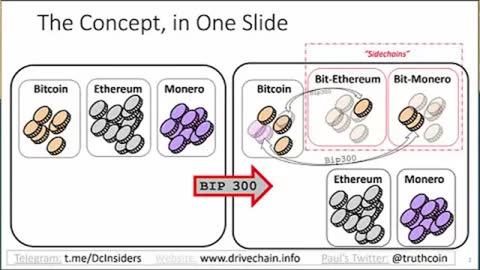
0:00 It's definitely going to take that long. 0:02 I hope that's enough time. 0:04 Okay, I think it's on. 0:06 Okay, it says live. 0:07 It says live, yes. 0:08 So if people didn't hear my complete sentence, you were saying that we could broadcast for up to eight hours, 0:14 and I was saying probably not going to be enough time, but hopefully we'll be able to get through everything. 0:20 Okay, let's tweet it out now. 0:22 I mean, I'm sure we've confused everyone. 0:24 Yeah. 0:25 I'm just going to tweet it right now, but that's okay. 0:28 This is so really—this is really dumb. 0:30 I mean, if anyone wants to watch live, of course, everything will be preserved painfully for all eternity. 0:37 Yeah. 0:38 Which is— 0:42 Okay. 0:45 Thank you for your time live on YouTube. 0:47 Okay, so this will be the most painful intro. 0:50 Probably not, honestly, but a pretty painful one by most standards. 0:55 But now—okay, very informal, though. 0:58 We like low effort. 1:00 I like to keep it real. 1:01 Yeah. 1:02 Keep it very real. 1:04 Okay, so if anyone, for some mysterious reason, decides that they really want to watch this live, they can do that. 1:13 So good for them. 1:14 So now they're watching live, and I don't know exactly—it's unclear to me how I manage the chat and talk to you at the same time, 1:21 so I think I just won't do that. 1:22 Okay, I'm going to retweet your link there. 1:29 Okay, great. 1:31 So, I mean, probably, if anyone cares at all, some people have already begun talking in the chat. 1:37 Okay, so for those of you who don't know anything, we just—neither of us have used YouTube Live before ever. 1:47 Like, none of us have been the admin, and Dan Krawitz just found out that he can't—he was going to be the admin, 1:53 but he found out that he can't for an obscure parochial reason that none of us know anything about. 2:01 But that's the setup. 2:03 So here we are. 2:06 We're definitely going to have to put a thing in, like, the description that says, 2:08 actual thing begins, like, at time code, three minutes and 40 seconds or something. 2:16 Sure. 2:18 So, well, why don't you start by telling me about who you are and Drivechain and Hivemind? 2:33 Okay, great. 2:34 Let me give you some context. 2:36 Like, basically, you are someone who I think says intelligent things on Twitter. 2:43 And that is basically—oh, and I read an article you wrote about prediction markets. 2:51 So that's basically what I know about you. 2:55 Okay, that's pretty good. 2:57 Well, you know, I try—you know, Twitter, it's hard because so much social media is useless, 3:03 but Twitter is, like, the least useless. 3:05 So I've been hanging out there. 3:07 But, yeah, so I have this long background. 3:10 I mean, in an alternate universe, I'm probably getting, like, an economics Ph.D. somewhere 3:16 and not messing around with this. 3:19 But what bothers me is that there's a lot of stuff that you can't really fix in the real world 3:24 unless you go through this very disruptive software world. 3:28 So I was working at Yale as, like, sort of a pre-doc job. 3:33 And then I've always loved prediction markets my entire life, and I've always thought they're really, really important. 3:39 And so I designed this—I love Bitcoin. 3:41 I got into it in about 2012. 3:44 And I designed this new thing for doing—for solving the Oracle problem for Bitcoin. 3:52 So in other words, like, there's this outside information in the world that we need to get into the blockchain somehow. 3:58 It has to be right. 4:00 And so I tried to tackle that problem. 4:02 And when I'd done that, I had ended up creating—this was, like, December 2013. 4:08 I'd ended up creating what I called Truthcoin at the time, which is now HiveMine. 4:12 And that unfortunately put me on kind of a collision course with, like, NXT, BitShares, Counterparty, 4:19 these other things that were getting going at the time in 2014. 4:23 So I kind of—I took it upon myself to try to explain, you know, the Bitcoin 2.0 space on my blog 4:31 because I thought that I had done it really right and everyone else had not done it right at all. 4:36 And now my quest to bring prediction markets to Bitcoin has just intersected with everyone else in the Bitcoin community 4:44 because it's so intertwined. 4:47 There's a lot of—there's a lot to say about that, like, the consensus nature of Bitcoin. 4:51 But so my project wanted to be a sidechain, and now I'm working on sidechains because no one else was, 4:57 which is itself a long story. 4:59 But that's kind of the short version of it. 5:03 I'm not sure— 5:04 Okay, wait. 5:05 You just triggered my PTSD when you said Bitcoin 2.0 5:09 because I have really terrible memories of having just the worst discussions surrounding that term 5:18 because I had almost forgotten that term existed. 5:23 Yeah, and I'm sorry for bringing it back. 5:26 I've only been back to that state of dreary oblivion on that particular issue. 5:34 But, see, you and me both, though, because that was my problem was, like, 5:37 I put all this work into something that I thought would actually do something useful, 5:41 whereas everyone else just kind of made up a bunch of nonsense. 5:46 That is exactly what happened. 5:49 Oh, my God. 5:50 I just remember, like, oh, they were just all so terrible. 5:54 There was, like, MasterCoin and, like— 5:57 It was awful. 5:59 Yeah, and so I was, like— 6:01 Now I'm doomed because I was, like, in this category of, like, almost entirely devoid of any merit. 6:07 And I was, like, trying to say things like, well, this is a very ambitious project. 6:11 It might work. 6:12 It might not. 6:13 But it was really unfair to me because I'm trying to, like, hedge or, say, make, like, guarded statements. 6:19 But in context, I mean, like, what I really could have said in context was that, like, 6:24 this is much better than this giant pile of nonsense. 6:28 But it was, like— 6:29 So I was in a very annoying— 6:31 I was kind of gutted from both ends, right, where it was clearly way more risky than Bitcoin 6:36 and, like, much more kind of fringe. 6:38 And that was something that I never wanted to deny. 6:41 But it was, like, rock solid compared to, you know, like BitShares, 6:45 which I thought was, like, the biggest joke possible. 6:48 And I could never understand why anyone would say that. 6:50 Oh, my God. 6:52 When I first heard about BitShares, this was sort of before I had reached the point 6:58 where I just assumed everything was a scam just to start off. 7:02 And I was, like, wow, that's amazing. 7:04 Like, how did they do that? 7:06 And then I looked at it, and I was, like, oh, they just didn't. 7:09 They just didn't. 7:10 Right, exactly. 7:11 Right, exactly, yes. 7:12 And so that was annoying for me because one of the things that I did was exactly what they didn't do, 7:16 which is that I had some reason for how this thing would synchronize with reality at some point. 7:21 And it would check in, and it would say, like, and that was, like, a really long, complicated thing 7:26 that was, like, involved, like, you know, lots and lots of thought 7:30 and 20 or 25 pages of this giant white paper that was even bigger than that 7:36 and, like, all this big stuff that I put a lot of thought into. 7:38 And then it was, like, Dan Larimer was just, like, well, it is a prediction market 7:43 or that, you know, like, it will synchronize because otherwise it wouldn't have any value. 7:47 And I was, like, no, it's the second. 7:49 It's the latter one. 7:50 It just won't have any value. 7:51 It's, like, it's not guaranteed. 7:53 No, that is exactly what happened, yeah. 7:57 It's, like, some kind of quantum, it's, like, some kind of, like, quantum multiverse thing 8:01 where it's, like, you just destroy all the universes where it didn't work 8:04 and you just keep randomizing until you've teleported into paradise or something. 8:09 So there's a lot of stuff, you know. 8:11 And so this is, like, the journey, the beginning of my journey, 8:15 and it was a weird way to start the journey off. 8:18 But I loved it. 8:19 So let me kind of reverse it a little bit and just say what I know about you, 8:22 which is that you wrote a lot of stuff at the Nakamoto Institute that I like. 8:25 And also I really like the – you have a very interesting, like, communication style 8:30 where you aren't afraid to make it. 8:33 You're kind of smooth. 8:34 It reminds me a little of Mirka Popescu or whatever, 8:38 where you're, like, you're not afraid to make it, like, really, really hard to understand, 8:41 like, for the select few people that you're trying to communicate to. 8:45 Like, I noticed that when you were talking to Richard Hart, I was, like, a lot of the stuff, 8:49 he thought a lot of the stuff was going over your head, 8:52 but I was, like, some of the stuff was actually going over his head, I thought. 8:57 Oh, my God. 8:59 That discussion was crazy. 9:02 Well, okay, I appreciate some things about the comparison to Mirchia, 9:09 but overall I do not like that guy. 9:12 I think his articles are very funny, and, you know, you and me, usually I agree with him. 9:20 But he is a cult leader, okay? 9:23 So anybody who don't like him too much, okay, you've got to stay away from him. 9:29 I definitely don't want to be a cult leader. 9:32 Oh, yeah, I think I completely agree. 9:34 See, but this is another example of what I like about you is you're really not afraid to ‑‑ 9:38 you have, like, a really strong kind of scientific spirit, I think, 9:42 where you just, if you think something is not totally 100% correct, you just say it, 9:47 and that's very rare. 9:49 It's, like, one in 5,000 people or something. 9:54 So I'm not sure. 9:55 So, I mean, that came to light recently when we started. 9:57 I mean, do I just start jumping into, like, the fork theory and, like, futures markets? 10:04 I don't know where you want to take this, but we can take it anywhere. 10:06 Honestly, I think it will just be funny. 10:09 Like, we'll just be talking about whatever, I think. 10:13 I mean, I'm really worried about the sanity of a lot of people in this space, including myself, 10:18 and I'm not sure if it will hold up under this atmosphere of polarization much longer 10:24 where people will just ‑‑ I don't want to say that they'll quit, 10:27 but the productivity will fall and people will just get interested in other things, 10:31 and there's just a lot of stuff that I kind of wonder about. 10:35 So we can just talk about it. 10:36 We can talk about whatever you want, honestly. 10:38 I just think it will be ‑‑ 10:39 Productivity can be deceptive. 10:41 I mean, you know, it's easy to work a lot on something that then you can't finish 10:51 and then you actually weren't productive that whole time. 10:55 So, well, I would like to ‑‑ well, first of all, thanks very much for, you know, 11:02 mentioning my communication style because that's really something that I have worked on a lot over the years. 11:09 That's something that I've consciously developed, so I really appreciate that. 11:13 Now, speaking of communication style, 11:16 I want to bring up something that you sent to me privately on Twitter just now. 11:24 Where is it? 11:25 You said ‑‑ oh, my God. 11:30 I should have ‑‑ 11:32 I'm trying to remember, even. 11:33 Oh, it's talking about a couple of things. 11:36 Well, I couldn't find the quote quick enough, 11:39 but you said that I should repent for my sins. 11:43 Oh, yes, for the Lightning Network. 11:44 Right, because I didn't understand the Lightning Network when I was talking with Jimmy. 11:48 So since then, I have read the Lightning Network paper, 11:52 and, you know, I really didn't understand just what you could do with it. 11:57 And so it sounds great. 12:00 It sounds very complicated and something that is a long way off to me. 12:07 Do you know anything about that? 12:09 Well, it's a really cool idea, 12:11 and so it's kind of a categorical improvement on speed and privacy in addition to scalability. 12:17 So people are very excited about it. 12:19 Sorry to interrupt, but first of all, I just wanted to talk about sin first. 12:23 So my investment strategy is that when I am speaking as, you know, 12:30 in my official capacity as a Bitcoin investor, I can do no wrong. 12:35 So no matter how much I embarrass myself, that does not lower my social standing one bit, 12:42 and I have no need to apologize. 12:44 But I did read the paper because I do want to keep up on stuff that's important. 12:50 It's just that there's so much terrible stuff. 12:53 It's hard to figure out what I should know, you know. 12:57 Yeah, well, that's the tragedy that I sort of discovered when I was working on – 13:02 even when I published Truthcoin, I happened to publish it at the same time as a bunch of other junk. 13:06 So I was like I kind of have to start a blog talking about Bitcoin 2.0 if any, 13:11 because I feel the exact same way that there's no – you know, the attention economy is like 13:16 there's not enough time at all to read all this stuff. 13:18 But the Lightning Network is one thing that people really like a lot, 13:22 and they have been working on it for a while, and there are a lot of different teams working on it, 13:28 including this team from France that made a lot of unexpected progress. 13:31 So it is kind of far off, but it's not – it's being actively worked on by a lot of really productive people. 13:40 And first of all, I also would like to say that I'm a big fan of interruptions. 13:45 I think like it's a lot worse. 13:48 The gish galop is a lot more intolerable where someone can lead the conversation afar afield, 13:54 and then it takes a huge amount of effort to return to it. 13:57 So I think I'm pro-interruption. 14:00 Oh, okay. Well, yeah, feel free to interrupt me too if you need to jump in on something. 14:05 So, you know, in the Lightning Network you have like – you can have like an arbitrary graph of, you know, 14:18 basically addresses, right, and each – well, the nodes are addresses. 14:24 But you have these sort of hot wallets. 14:27 I think what people are more concerned about is not really – 14:30 I think people are more concerned about like this is something that gets a lot of discussion in the kind of public discourse. 14:37 And so when you say that you're not interested in it, I think it made people very nervous, 14:41 which I thought was something that I thought was very funny, which is why I kind of referred to it that way in the message. 14:46 I said that you might want to repent your sins and talk about like why you weren't paying attention to it or something. 14:53 I mean it speaks to a difference between your – like what interests you and what interests like the current kind of popular kids. 15:04 Sure. Well, okay. Let me talk a little more about my investment strategy, okay? 15:09 So I would – you know, I recently wrote an article called How to Face Bitcoin Forks. 15:17 And in that article I said that investors should act basically like a nature spirit who is asleep most of the time, 15:29 but wakes up and has a temper tantrum, you know, every so often. 15:34 So yeah, I want to make people nervous. I'm awake and I'm making my temper tantrum now. 15:41 But anyway, back to what you were saying. Oh, okay. Well, let me finish what I was saying, what I learned about the Lightning Network. 15:49 So you have a graph of – the nodes are addresses, and the edges are payment channels. 16:02 And we – each side, each – on an edge, the two nodes at each side, they are maintaining a series of new transactions 16:22 as they agree to send Bitcoins in one direction or another. 16:28 And this is the part that I thought was great. They can invalidate every previous state each time they make a new state. 16:39 So if I send an old state into the network, the other person is able to send something that eliminates something like a surety bond basically. 16:57 Like we have to have money in the channel in order to use it, and I lose all of it if I cheat and send an invalid state. 17:07 That's what makes the state invalid. And the invalidator also becomes invalid as we make new states. So that's really cool. 17:17 Well, you see, this is the point. I don't think it's really about what – I mean, it's not really about – as I was trying to say before, 17:25 I think it just made people nervous that you weren't aware of this thing and that you were sort of commenting on what should be done 17:32 without knowing about it until now. So I don't think it's about the – you see what I mean? That's why I bring it up. 17:41 Oh, people should be nervous. Yes. 17:44 So you know, you and I don't completely agree. So we agree on the big things, but I'm against the hard fork for a couple of reasons, 18:00 and even the split because it makes the network sort of difficult to use as money during the contentious period. 18:08 But I've gone ahead and solved that problem as of July 2015 with my futures market, and so I don't know if – 18:16 Oh, wait, wait. You've already figured this all out because I've been thinking about futures market. Wait, wait. 18:21 But you had a prediction market. Is that the same thing? 18:24 Yes, prediction markets, and you could talk about them as event derivatives or idea futures. Those are – 18:31 Oh, okay. I need to understand that because what I was – I was thinking of a futures contract that basically says if a fork exists 18:43 and the price is a certain amount, then I transfer units from chain – or we exchange units at a certain exchange rate. 18:54 Yes, so that's what I wanted to do in July 2015, and that's what I presented at Scaling Montreal. 19:02 Oh, no, I want that. That's great. No, that is exactly – that's exactly what I was thinking of except you figured everything out already, 19:10 so I don't have to. That is great. That is perfect because I don't really want there to be forks all the time. 19:19 What I want is for – 19:21 To be some mechanism. You want some mechanism in place. Exactly. 19:25 Only do a fork when we can predict that the price is going to be high enough that it justifies the switching cost. Exactly. 19:35 No, that is amazing. 19:37 Yes, but the other thing is that what I was certain of, even when I published the piece in July 2015, I was like, 19:43 I'm certain that if I do this thing – because the big thing was Bitcoin XT at the time, and I was like, 19:48 well, probably what will happen is it will turn this futures market on, and it will just say that XT is worth almost nothing in the future, 19:55 whereas Bitcoin is worth basically the same as it's worth today in the future, 19:59 and so then that will bring an end to this conversation, and we won't have to talk about it anymore. 20:05 But I remained silent on that issue on purpose because, of course, this is supposed to be a little bit of science, 20:10 and I don't want to bias the instruments. 20:14 It wasn't totally surprising given what I know about prediction markets, and I know an awful lot, 20:20 and Robin Hanson has written a lot, and he's sort of a big influence on me, 20:26 and so we can talk about that in a moment about why I wasn't really surprised. 20:31 But I was still a little surprised to notice that no one really cared about this at all. 20:38 They were just thinking like, oh, okay, we'll have this futures market, but I don't want to do that 20:43 because then the futures market might force me to do something that I won't want to do. 20:48 It's like two people in two little camps, right? 20:52 And then I bring them a thing, and I say, look, you don't have to fight. 20:55 This thing will tell us which camp is right, and both of the two camps said, well, what if it says that my camp isn't right? 21:01 Oh, my God. I can't believe that. That is so stupid. 21:06 But it's like the 99% view. I got this over and over again from almost everyone. 21:13 No, that is exactly what I want. That is exactly the thing. 21:17 Man, I'm so – I just knew that there had to be – like somebody had to know how to do this somewhere. 21:24 Oh, this is the greatest. Oh, man. 21:26 So even what I was doing in presenting at Montreal, I was like, we can do like a much faster – 21:32 it's kind of like quick and dirty version of this that just involved like getting together some weird panel, 21:37 and I was like, we shouldn't rely on this because it's not a good process, 21:40 but just for this one time since we've got this crazy thing going on with Bitcoin XT, 21:45 and people are worried, worried enough to hold this giant conference in Montreal, et cetera. 21:49 I was like, we can just get this weird panel of like seven or nine people, and we can do this multi-sig thing, 21:55 and all you need is for the multi-sig people to sign this little message that says, 22:00 did the fork happen, yes or no, and what is the current Bitcoin price, 22:04 and they would have to do that in the future. 22:06 And that would resolve the markets in like a very, very, very simple way, 22:10 and we wouldn't need to build anything weird. 22:12 We just need to basically trust those seven or those nine people. 22:15 And again, I'm not advocating that – I was not at the time advocating that we make this like a recurring thing. 22:22 I was just saying, well, we can do this one-off thing while I finish. 22:25 But my project, which is Hivemind, which is designed to just do all of this without trusting anyone, 22:31 and there's a lot of cool things about it that you might like, 22:35 but the one thing in particular that is that it's actually possible to do – 22:40 you do a market just by pretty similar to how Bitcoin does each transaction 22:46 where you select the previous state, and then you update it, 22:49 and kind of like this little line of state updates. 22:52 You just need like one weird thing, which is that someone has to put some amount of money, 22:58 which can be arbitrarily small. 23:00 They need to kind of basically sacrifice the first whatever, 10 cents, 23:04 or it depends on how liquid you want the market to be at first. 23:08 But if you do this, then people can make trades that are atomic, that aren't with anyone. 23:14 So even though they are betting against each other, 23:16 each individual trade is just betting against this giant – it's kind of like a weird scale. 23:21 It's a little bit difficult to describe, but people are kind of like betting on the scale going up and down. 23:25 So I was like this is a really cool thing, and almost all of it doesn't need any human beings at all. 23:30 It just doesn't need any code. 23:32 But the Oracle part can be – we have seven or nine people just sign this thing. 23:37 But this is exactly what Robin Hanson found 23:40 when he tried to get prediction markets going for like the last 20 or 30 years, 23:43 which is that people aren't interested because – well, there's a lot of speculation about why, 23:48 but I think the real reason is that it's just a prediction market is too rational, 23:53 and it's not loyal to you at all. 23:55 It's only loyal to the truth. 23:57 So people come up with all kinds of reasons why they don't like it. 24:01 Sorry, that is really for me. 24:04 But you see, this is why my project, Hivemind, is important, 24:08 because the prediction markets have to have inherited the blockchain's immortality and immutability, 24:17 because people don't like them around. 24:20 So they are constantly trying to get rid of them or discredit them or something. 24:24 So I need something in order to get them to work, 24:26 in order just to get prediction markets to work in general like in the real world. 24:29 You need to be some way of doing all the market stuff and letting people earn money 24:34 and preferably earn money anonymously, because it's not going to really work if – 24:40 in order for all the greed-based game theory stuff to work, it has to be like cash that they get. 24:45 They can't get like vouchers or some weird thing that may cause their tax bill to change 24:54 or some weird other thing. 24:55 Maybe they may get harassed or just marginalized. 24:58 It's got to be like anonymous cash. 25:00 It's got to really work. But you need that, but more importantly, someone needs to just be able to create some market about something and just challenge all kinds of third parties and other people to kind of bet in them, and that's why it really needs the uncensorable properties of the blockchain. 25:18 But then, of course, I was totally scammed by fate, because I was trying to introduce this idea next to like Ethereum, which is going to be like the world computer and power AI and everything. 25:30 Oh, my God. 25:31 How am I supposed to compete against that? 25:38 Yeah, right. 25:39 Exactly. So for a while, I had the Bitcoin Uncensored podcast, but then that went away, and now it's just been a sad – I mean, there's been a lot of trends in the Bitcoin community, but one of them that you pointed out recently was that there's this kind of dev worshipping going on, which is – it's not the absolute worst thing that could happen, but it's getting a little weird. 26:09 I'm not sure where it leads. 26:12 Well, to me, look at how much work was put into creating Ethereum, and when I think about it, there is nothing that I would ever want to use it for. 26:24 Any way that Ethereum is useful, there's just a different thing that's way better. 26:32 Well, except for scamming people with the ICOs, because it pre-sorts the community for gullibility. So that's definitely by far the most… 26:43 Actually, here's a great idea that anybody can make. Just go and do it for me, anybody watching. You should have an Ethereum-based artificial intelligence that automatically creates new ICO scams. 27:01 That was like the DAO, though, right? See, what's funny for me is they will retreat to abstraction where I didn't even think it was even possible to get any – I already thought Ethereum was basically the most abstract thing, so it resisted criticism because no one could even talk about what it was, because it was just everything. 27:23 But then the DAO was like, it will be everything again. Because they're raising all this money, and they're like, what are you going to spend that money on? And they don't even know. It's a free idea. 27:37 The ICO is like, we've done no work, but here's our weirdo idea. 27:42 Lots of developers in Ethereum did lots of work, and as far as I'm concerned, it is totally wasted. So much better things that they could have done if they had an idea. 28:01 Well, it's true that I also kind of contrast – I'm not sure how much of – I mean, it's true that the people who work on Bitcoin work really, really hard, and they're very smart, and kind of in some sense irreplaceable, but not completely. 28:19 But there is also kind of a glamour, though, to it. People do get flown out to conferences in exotic locations that they don't have to pay for, and they get this cool stuff. 28:32 I'm not exactly sure where this is going. I mean, I don't think – it's just one of the many weird trends that I sort of see in Bitcoin. I'm not exactly sure what – it's something that wouldn't have happened, I think, if there was more of an emphasis on these futures markets. 28:51 I mean, people – no one even knows – the interest is very, very low. I mean, some people came up to me after my talk in Montreal, and they were interested, but they were like not the elite decision makers. They were all like the young people with a very open mind. 29:08 Because if you aren't an elite decision maker, why would you want to be replaced by a better decision maker? 29:14 Right, exactly. That's the problem. And I've written extensively – at BitcoinHiveMind.com, there's like a sequence I wrote, and if you read the first one in the sequence, I talk a little bit about the tradeoff between loyalty and accuracy, and how it's like – this is why no one likes prediction markets, I think. 29:37 Which is that lots of people do like them, but they're just not – those are not the powerful people. They're the guy who would be CEO, right? 29:47 Like what if you go to the CEO, and you say we can do a conditional futures market. We can say, what would the share price be if we fired the CEO or not? 29:56 Sounds like a terrible idea. You're fired, right? It only benefits the guy who's next in line to be the CEO. 30:06 But in a way, this is a microcosm of the entire human struggle, though, is it not? I mean, this is like mankind's struggle against conformity, and against tradition, and struggling, reaching towards science and progress. This is like a microcosm of everything, I think. 30:27 Can I tell you something that I was thinking about, about prediction markets? So here's something that's in my imagination. Now, did you see my video about how Bitcoin investors should act like Yahweh? 30:46 Okay, so to me, if we had a prediction market that people follow, it would make intelligent decisions. It could be like something that has a discernible personality. I mean, there would be many different people interacting. 31:09 It would be like the representative investor, maybe. 31:12 See, one thing I want to say is that there's a difference. People don't appreciate the difference between this and the coin voting. So coin voting is kind of not that bad, and just regular polling. 31:25 So like regular polling, like on Twitter, we know why that is no good. That's because if that were useful for anything, there would be simple attacks, and that goes down a bad road that doesn't really lead anywhere. 31:35 But then there's like what used to be called, I think, Bitcoinocracy or something, or vote.bitcoin.com. Now Roger Ver is hosting it there. And that's where people can vote with their coins, and you can see who the big holders, what their preferences are. 31:51 And that's fine, but that doesn't really appreciate… people don't appreciate the difference between that and a futures market, which is that… 31:58 You mean it's skin in the game. 32:00 Yes, exactly. You bear no private costs to you for voting wrong at vote.bitcoin.com. So one is like Plutarchy, where it's like rule of the wealthy, and they just decide what to do. 32:11 But it's the futures market that's more like capitalism, where you have to have a lot of money, and you have to be willing to risk it. 32:18 And so even people who are very rich, like Bill Gates, they don't get to decide how much crude oil we make or something, because they'd have to buy those companies or speculate in those spot markets, which they just don't do. 32:32 Instead they buy a diversified portfolio, or they do their charity things, or they do some other… they do the stuff that they actually care about, which is the stuff that they know about. 32:41 And so people don't appreciate that difference between the futures market and just the coin voting. 32:49 And in particular, this is the second time I'm going to make this point, I really don't think… this whole time I've thought that… 32:56 I don't think the market would… the most important thing is I'm open to having my mind changed by the prediction market. 33:04 But in my opinion is that I don't think that investors would really go for, you know, just la-da-da, we're going to hard fork. 33:11 And why are we hard forking to 8 megabytes? Well, you know, it just seemed like a good number. 33:16 I mean, I feel like the investors would just shoot that down like so quickly. 33:22 And so I think, you know, the point is, like I said before, both of the camps should have been very happy to go with this, but really neither of them were. 33:31 And I don't know if I attribute that to me not explaining it very well or just the bias that everyone has against something that's not loyal to them. 33:41 Or if it's just plain like economic ignorance, which it may be, which would be a very sad state of affair, but hardly unusual. 33:52 To me, like, you can build a dumb thing out of intelligent pieces, or you can build an intelligent thing out of dumb pieces. 34:01 And I will always go for the intelligent thing made out of dumb pieces. 34:05 It's always better to me, like, but that is the opposite of most people. 34:11 Yeah. So I was like, I'm in like a weird, to just take a step back again. 34:16 So I was like, I proposed this idea and I was like, well, you know, what I was hoping for was that enough people would, you know, they would be willing to do kind of what you might call the right thing and say, okay, well, I think that this is a cool thing. 34:28 And so even though I'm going to run the risk that the prediction market will disagree with me, which if you think about it, you must do for anything that, well, that's a whole nother conversation. 34:39 But you, the epistemology of like what, like prediction markets aggregate all available knowledge. 34:45 So unless you're saying that you know everything about the entire world, you always have to be like, like, open to having new information show up, which is the only reason that being alive is interesting at all. 34:54 It's a whole nother story though. 34:56 But so I was kind of like, this isn't really going to work. 34:59 And so it's, so I think that was like late 2015. 35:06 And I kind of was like, okay. 35:07 So then I went to scan Hong Kong in December 2015. 35:11 And by in the intervening time, I invented this other thing called now called Drivechain, which is like the sidechains technology. 35:20 And so I'm in like even weirder position where I have two things that I think would just instantly decapitate the scaling conversation like perfectly. 35:31 That's sort of the futures market idea, which could have been done like quick and dirty. 35:36 But you see, if you do the quick and dirty version, you need a little bit more community buy in that I thought I was ever going to get. 35:41 So I was like, well, I'll just give up on that. 35:44 And then I had the second thing, which is the sidechains path. 35:47 And then I have a really they add up to my own project, which is Bitcoin hype mind, which is itself a sidechain of Bitcoin that does all these futures markets automatically. 35:58 But I'm in kind of a weird position where I can't like finish all of them. 36:02 So I've kind of switched away from that, because you may be wondering, like, why didn't I push more on this as I thought it would work? 36:08 And I honestly did believe it would work. 36:11 And the answer is that I just happened to find this new thing Drivechain that I also think would work. 36:16 But it's being met with resistance for a lot of the similar reasons, really, which is that it lets everyone get what they want. 36:22 And I just feel that at this point, some people are just so upset that they're not not everyone, but some people are just so upset that they don't even want. 36:34 They're worried about people are worried about like control and these other things, and they're just like, oh, give give some control away. 36:40 And then it will be the end. 36:44 The culture in Bitcoin is absolutely mad. 36:47 So, you know, I deliberately decided to go crazy in order to deal with it now. 36:57 So, yeah. 36:59 Yeah. 37:00 So, yeah, I think, well, you could use a prediction market for anything, for directing any organization that has, you know, owners like a stock. 37:13 You need a measurable outcome, which is the difficult part. 37:17 But for a corporation, it's perfect because you have the stock price, which is just it's actually not perfect. 37:21 I've noticed because, you know, you have weird like stock splits and like weird other stuff that like threatens to make it. 37:28 But you can easily tame that and smooth it over and just say, OK, this is how we're going to do things. 37:34 And what I've actually Robin Hansen's goal is to and my goal as well, I've inherited from him, I guess, which is that you try and eventually set these up. 37:43 And then you do some you a little research project over a few years and you see, OK, here's all the here's the class of corporations that followed the prediction markets advice and fired the CEO. 37:53 And it said they should fire him. 37:55 And here's the class is like the group that did not follow the advice. 37:59 And you see whether or not you can demonstrate that there's a much larger return, which I hope that you would be able to demonstrate this. 38:08 The you know, that the shareholders get a better return on investment if they follow the prediction markets advice, which I think you and I would agree follows pretty clearly from theory. 38:16 But it would be nice to have some kind of experiment to validate this as well. 38:20 Because what you then do, this is the last part, is you then go to the board of directors and you threaten to sue them for mismanaging the company because they have a fiduciary duty to optimize the share values. 38:33 Then you go to them and you just say, you have to follow the advice in this thing or we'll imprison you for fraud or something like that. 38:40 And that is, you know, you're keeping your friend on as CEO and we know that he shouldn't be. 38:45 So that's so that is a goal of mine. 38:48 It's a little bit more difficult. 38:50 And my goal is I mean, my real goal is to actually I think it's like the congressional elections. 38:56 Most people don't know their their senators names or their representatives name. 39:01 And so there's I think people rationally choose to stop voting there. 39:04 But I think if people had a little more advice, all the people who don't vote could be turned into a strong weapon for like optimizing these, whatever you want to make. 39:14 But there's like another layer, which is that you need something measurable. 39:18 But otherwise, I'm like 100%. 39:20 I love prediction markets. 39:22 So we need all the help we can get on this team. 39:24 So we'll spread the gospel. 39:26 Well, to me, like if you were to use a prediction market to manage a company and you would say like, you know, should we fire the CEO or whatever? 39:38 It's not a prediction market. 39:40 It's a direction market. 39:42 It's like the investors are directly giving orders and the company should follow it because it's their company. 39:50 Sometimes a distinction is drawn between the markets that are used to make decisions and the ones that are just used to make predictions like who will win the Academy Award or whatever. 40:00 But I think I'm not really sure there's a big difference between those. 40:05 And other people have agreed that there's not. 40:07 But when the distinction is drawn, sometimes those are called decision markets. 40:10 So that is actually a phrase that people use. 40:13 Sure. 40:15 But I would say that there really isn't a difference. 40:18 It's just that if we're talking about people who own a company and they are making predictions about what the board of directors should do, it would be bad if the board of directors didn't do what the market said. 40:36 I agree. 40:37 But, you know, there's a lot of people come up with all these excuses all the time. 40:42 They say, blah, blah, blah, manipulation. 40:44 Oh, my God. 40:46 Those traders don't know anything. 40:48 They're not experts. 40:50 You know, it's all the stuff that you've already been hearing from people about. 40:52 Yeah, yeah. 40:54 You know, as if you would make a trade without being informed by some knowledge from yourself or something. 41:00 Sorry. 41:02 Sorry. 41:04 Are you familiar with quantum mechanics at all? 41:05 A little bit. 41:07 It's quite difficult. 41:09 But, yeah, I am a little bit familiar. 41:11 Do you know about statistical ensembles? 41:13 You may have to refresh my memory. 41:16 So, one thing that we do, you know, we can have, when we're shooting a beam of particles at a target, we describe the beam of particles via a statistical ensemble. 41:36 It's a matrix that says what kinds of states the particles are in. 41:42 So, an individual particle, it is like a vector in a linear space. 41:49 It's called a Hilbert space, but it's a vector in a Hilbert space. 41:52 And there's one, there's one, just imagine there's one linear space. 41:57 I'm slightly familiar. 41:59 I know about like the, what is it, the Mach-Zelda or interferometer or something. 42:03 So, I'm sort of familiar with what you're talking about, where they're watching the photons go through. 42:07 They always come out one side, and they are, that is evidence of multiverse or something. 42:13 So, I'm a little familiar with that. 42:15 Well, but, okay, that's not the part that I wanted to talk about, though. 42:18 The point is that the particle is in some state, and it's like a, it's like a probability vector, squared, and then it becomes a probability, but whatever. 42:28 It's a vector, and, but there's a matrix that describes the beam as a whole. 42:36 Because not every particle is exactly in the same state, and we don't know what each individual particle is like. 42:45 So, what you can, so now let's talk about like an election result. 42:52 Okay, so say, you know, it's either, you know, Trump or Clinton, and there's going to be a percentage for each of them. 43:03 And let's say there aren't any third parties or independents, everybody's forced to vote. 43:08 So, it's, the numbers add up to 100%. 43:11 And, but we could have a, we could describe people qualitatively, and we could say, like, people are more polarized or less polarized, and that wouldn't change the result of the election. 43:34 Does what I'm saying make, does that make sense? 43:37 Like, if people, like, it could still end up like 51%, 49%, even if, like, people are on, mostly on both ends, or if they're mostly in the center. 43:50 Does that, does that make sense? 43:52 It does, but I'm struggling to see the relevance to when people complain about, because I've listened to people complain about prediction market accuracy for years. 44:00 But see, I think that if you had a futures market, you would be able to tell what people are thinking in a much more, you know, attuned way. 44:18 So, it's not like just for or against, but like, how many, how much are people polarized versus how much are they indifferent? 44:28 Does that make sense? 44:30 I think it does. I mean, you could, what you could do is you could run the conditional parts in a different way. 44:36 So, like, with Bitcoin, it's like, if Bitcoin forks, will the exchange rate go up? 44:40 But you could do something weirder with the election. You could say, like, if the Republican Party ran Ron Paul, would he actually win? 44:48 Like, if he got debate time, would he win the nomination? If he won the nomination, would he win the election? 44:53 And so, even though his probability of winning the nomination might be, like, 1% or something, you could then split that. 45:02 You could say, like, okay, but if that happens, then he's guaranteed to win the general election or something like that. 45:08 And then you could draw, like, weird evidence from that. 45:10 But I think the way I would use prediction markets would be a different way in, like, a civic sense. 45:18 It would be something like, what do you want the unemployment? Here's what the unemployment rate would be if we elected the Democrat. 45:25 And here's what the unemployment rate would be if we elected the Republican. 45:29 And then you kind of turn the two-party system against itself a little bit, where they're each trying to stab each other in the back to try and get this number down. 45:36 And they end up converging to, like, you know, a rational. 45:38 Oh, that's a great idea. 45:41 Well, sorry, that was probably a very roundabout and confusing way to ask my question just now. 45:47 But I'm just going to have to read all of your stuff for next time. 45:53 But I think that I haven't figured out how to do the math yet. 46:00 But I think that with a futures market, you could get basically a statistical ensemble of the people. 46:09 And, like, not just for or against, but, like, how much, like, how radical are they? 46:16 See, again, the trick with the prediction market, in my view, if you ask me, is that you have something that will be really easy to measure in the future, but it's really hard to measure now. 46:27 So, like, now we all know that Donald Trump won in the future, but we don't know who would win. 46:32 We didn't know who would win, like, last year or, you know, years or whatever ago. 46:36 I like how you're, like, now in the future. 46:38 Yes, people of the past. 46:40 No. 46:42 Exactly. 46:44 And so all you need to do, though, is you need to tag. 46:46 It's a little bit like quantum, like, entanglement or something, where it's, like, you have these pieces of paper. 46:50 One is worth a dollar if Hillary Clinton wins, and one's worth a dollar if Donald Trump wins. 46:54 And it's cheap. 46:56 You're going to entangle it with something in the future that's really easy to get. 46:59 But in return for doing that, you get kind of like a time machine where it's broadcasting backwards in time, like, what all the information is about whether or not this will happen. 47:08 Well, next you need to invent a blockchain that does time travel for me. 47:15 And then how much – I could definitely do – I could do an ICO, and then I could time travel to before I had done that ICO, and I could do it again. 47:24 Perfect. 47:26 Infinite series of ICOs. 47:28 Yeah, yeah. 47:30 Yeah, I would like to see an infinite series of stupid ICOs that just happen until the idea is totally beaten into the ground. 47:39 So what do you think, like, is the right – let's talk about that. 47:42 Like, what do you think should – is the strategy for killing the ICO nonsense? 47:48 Is that just, like, if you can't beat them, join them, and you just, like, do, like, some – and we just, like, exhaust the space of, like, uninformed capital? 47:57 And, like, what is the – what's the deal with that? 48:00 Or do we just wait for, like, someone to go to prison? 48:02 I mean, why is – like, why is Eric Borg, who's running ShapeShift from the United States? 48:08 It seems like you can say they're stupid as much as you want. 48:12 It doesn't matter. 48:14 We just have a lot of, like, cheerleaders saying, like, oh, like, pink coin is going to do great, or whatever. 48:22 I just remember that was something somebody invented in 2014, I think. 48:27 Didn't you just say – I just saw Preston Byrne. 48:30 It was like Ferrari coin or something. 48:33 You get to take home a Ferrari if you participate. 48:36 You get to enter into a lottery. 48:38 To me – like, here's what I say about that. 48:42 Like, it's risky to make a stupidity play, and you shouldn't lie to yourself if you are making a stupidity play. 48:51 But I don't think that it is wrong to make an investment that is a stupidity play. 48:57 I think it's something that I would want to avoid generally, because I can't predict stupidity. 49:03 But I think if I could get a lot of guaranteed money out of an ICO, I would do it, and I would not lie about why I was doing it. 49:18 I would say I am taking advantage of stupid people, and I have a great opportunity, so that's what I'm doing. 49:24 I would not say, like, oh, you know, whatever coin is going to turn the universe inside out or whatever. 49:32 No. 49:34 Yeah, no, I think you're right. 49:36 See, this is where – so I think almost everyone in the Bitcoin community thinks that the ICO should be, like, legal, 49:43 and that you shouldn't, like, use force to, like, kind of suppress this absurd phenomenon. 49:49 But I think there is a crime against the truth almost always when the ICO – 49:54 and it creates – it makes the space just so much more confusing, because it's impossible to – 50:00 go anywhere or try to review anything or even just exist in any public capacity without getting emails constantly from all kinds of people who are trying to ask you to, like, endorse this or whatever. 50:12 I mean, I just – I can't believe, like, how often someone in Bitcoin enthusiastically, you know, tells me about something, and I'm thinking, oh, my – that idea is just terrible, and then it makes a billion dollars. 50:29 Yeah, I know, right? 50:30 It doesn't make any sense. Like, all of these things are so dumb. Like, do you remember Steam? 50:36 Oh, my God, that was ridiculous. 50:39 That was just the worst. I can't believe people were pumping that. Like, it was just – it just seems like you think about this for – well, like, look at how many people are fooled by multilevel marketing schemes. 50:53 But it's so obvious. It's like, well, it's hierarchical. Well, it's not exactly. It's like a tree, right? And the root of the tree gets almost all of the money, and the leaves don't get very much. But you're not allowed to just come in at the root. You have to be a leaf, you know, whatever. 51:17 That's the thing is the tokens – that's in my opinion, because I've been trying to wrap my head around this issue for a long time, and I think one of the major factors is that all of the token-based stuff, for good or for ill, it comes with kind of an MLM scheme built in. All the token stuff does. 51:34 So you pump the token. You own – you become an owner. You've got skin in the game. You want to pump this token, and so then you hand it off to people who want to pump the token. And so then it becomes like an MLM scheme. And so it's similar like it does in Bitcoin as well. But so that's not – but I'm just saying that's the dominant factor that makes some of this – that fuels a lot of this, I think. 51:58 So it's another reason to be wary. But yeah, I don't know like why – it does bring me back to something else I was going to say about the Dao, which was that it was like another level of abstraction. And then right when I thought, okay, this is the dumbest it could possibly get. 52:14 Like I literally – I sat down, and I tried to think like is there a way to – because I was literally thinking like, okay, if these people are this dumb, like I might want to like try and like make like a fake account somewhere and throw my hat in the ring and just get like whatever, like $200 million or something somehow. 52:30 And I was like, can I make it even more abstract? And I thought, no, there is no possible way. But like a week after that, someone right before the Dao got hacked and everyone kind of sobered up, someone did – do you remember this? Someone did the Dao of Daos. And I was like, that's it. All I did was the word of and the second Dao, and I would have been there. 52:54 Wait a minute. 52:56 I'm pretty sure that wasn't that high. 53:01 I mean I don't know like how people even thought of that. It's just like their minds work a different way than yours. Somehow they have some way of thinking of the next like bigger thing. And then fortunately the Dao hacker. 53:15 Yeah, yeah. No, the Dao hacker is one of my heroes. 53:20 I'm so happy. I campaigned a lot. 53:23 I said that on one of my articles. But I mean how can you not admire the guy? His hat was great. 53:30 That was amazing. And when you pointed out in your article about Ethereum is doomed, I had no idea that that quote that was in the code that said like to the extent that you think that you may interpret this differently. It said like the terms and conditions are the code and that's it. And if anything unexpected happens at all, that's what we wanted to happen. 53:54 Do you remember when you put that in? I was like this is unbelievable. I was like is this real? 53:59 They removed that from their page. 54:05 I heard an episode of Bitcoin Uncensored where they described the Dao as a way of spending money on things that you don't want. 54:17 Because you put the money in and then they vote on it. 54:23 It's a way of tying up your money to do something that you can't control. 54:32 It has no revenue model. So theoretically, the tokens shouldn't be worth anything different than the money. 54:42 Well, they should be worth less because you can do less with them. 54:46 They should be worth less. If they were worth less than the money that you put in, they're not like an investment at all. Well, none of this stuff is. 54:55 I know. But that's it. 54:58 So Coindesk asked a bunch of people, including myself, for opinions on the Dao and what Ethereum should do. 55:05 And one of the things I said was that, well, I think people did some of that reasoning, but the Dao told them, the people who programmed the Dao and everything, 55:15 they told them that, well, if you don't like what the Dao is doing, you can withdraw your own money at any time. 55:22 But that turned out to be the attack vector that the Dao hacker used to just withdraw his own money multiple times and just emptying it of cash, 55:33 which is very funny. It was really truly a black swan type thing where all that the Dao really was was a way of removing the key pair security of your money 55:46 and instead making some weird other security. 55:50 Whoever this hacker was, he knew Ethereum inside and out. But it was great. It was like he had to exhaust the program stack and it was just crazy. 56:06 If it wasn't an inside job, it was somebody who was really studying everything and it really worked out for him too. 56:20 I didn't think it was a good idea to study Ethereum, but I had because I could have thought of the hack. That's a great investment. 56:33 It's funny because in equilibrium, Ethereum would just be worth zero and you would have been right not to study Ethereum. 56:41 I really think it probably was an inside job, but I don't know. Just think about how easy that would be if you see the ICO stuff. 56:52 Just look at what happened with the Parity wallet recently as well where they just emptied it. 57:00 If you see this ICO fever and there's all this money, you know how it is. When you are the guy working on the code, you know where the bodies are buried. 57:14 Other people know nothing. They could never know as much as you did. So it's probably an inside job, but we'll never know I guess. 57:24 Yeah, I mean I would be surprised if it wasn't. You know what else I like about Ethereum? 57:30 I like how the board of, well, whoever is in charge, the Ethereum gods, they decided that they were just going to erase the transaction of the hacker that stole the money 57:49 without any regard to their conflicts of interest in the project. 58:01 It is clearly better for Ethereum that we should not have our money stolen, so we'll just change the rules and that's better. 58:13 But you see actually it was smart because, and this is something I pointed out in the CoinDesk thing if I remember correctly, 58:18 because I think the only way Ethereum can really differentiate itself from Bitcoin is to be more, it's just about being different I think. 58:28 They're just like we have better leadership, which is to say, I'm not sure how to translate that, but it's something like more leadership or centralization or something. 58:39 And they like, I think they have to be different. You see like it would be a mistake if they, because they don't want to be too much like Bitcoin because they can't compete with Bitcoin. 58:49 Yeah, well I guess that does kind of make sense now the way you put it that way. So yeah, I mean, but any way that they can be different than Bitcoin would be bad. I mean almost anything. 59:02 But they are doing, they're doing like, I mean for a while I was just very confused, but it started to become clearer to me like a year and a half ago. 59:10 Like they're doing like a weird kind of, they're kind of like redoing the Ripple thing where they're compromising a little bit and they, you know what I mean? 59:19 Like they're getting people like Congress people, like the governor of Delaware or whatever and like Larry Summers who was at Consensus 2016. 59:33 Yeah, he's a speaker. 59:37 And getting all these people to be like excited about blockchain and so they're kind of like doing a little bit of a half and half. 59:43 And I really don't think it will work, but I kind of get it a little bit more now, even though I still think it's… 59:49 Okay, there is nothing to get. They're just like, they're just randomly doing things and you know selecting whatever is kind of working out a little better. 1:00:00 The one thing, they do everything. That's one thing that's funny to me about Ethereum is that they don't just like, you know like it's rational in all science and all thinking. 1:00:08 And especially in computer science to like do like modular, like one little change at a time, right? 1:00:14 But Ethereum of course, they do like the proof of stake, sharding, it's going to be 2% inflation forever. 1:00:23 It's like every weird thing that you could find in the past a lot of times, they put it all in there. 1:00:28 And that makes it harder to criticize because you can't like one thing. 1:00:32 It's like, it's perfect that they're getting involved with government because Ethereum could have been a government project. 1:00:40 It's like something designed by somebody who had no connection to like real world uses at all, you know. 1:00:52 I mean, I don't even know. I'm not sure. 1:00:58 Well, certainly it's been said that like stuff from the government is like, what's it called? 1:01:04 I think it's called like waterfall or something where there's like the feature matrix. 1:01:07 They just have to build it to like, okay, will it have proof of stake? Check that box. 1:01:12 Will it have like whatever, monetary policy, you know, check. 1:01:16 So, it like checks all the boxes but it ends up being like some weird thing because it was always about checking boxes and not about like solving like a real world problem. 1:01:26 So, I think that that is a phenomenon that is known in government computer science versus Agile, which is like Silicon Valley, which is just like iterate constantly. 1:01:35 Do you believe that proof of stake could actually work in some way? 1:01:41 Well, I've published numerous times that it destroys just as much value as proof of work does. 1:01:49 So, it seems to me to be totally pointless. 1:01:51 And one, I have an interesting story about that, which is that I convinced Vlad Zamfir of that in early 2016. 1:01:57 And so, I ran into him at Consensus in 2016, which is again like now this is like more than a year ago. 1:02:03 And I was like, you know, hi Vlad, how are you? And he was like, hi. 1:02:07 And I was like, so why are you still working on proof of stake? 1:02:14 And I was like, didn't you agree with me that it's just as wasteful as proof of work? 1:02:18 And he was like, yes. 1:02:20 And I was like, so why are you still working on it? 1:02:23 And he was like, well, you know, some people think like it has different better security properties or whatever. 1:02:29 They were treated like some weird thing like that, you know. 1:02:31 And this is the same thing that Jay Kwon did when I made the similar demonstration to him. 1:02:35 So, I mean, I don't think people really even thought it through like what it would mean. 1:02:44 I think I could have done a better job, even though I've already explained it like three different times, 1:02:48 about how proof of stake, you're just locking up a bunch of capital that is like destroyed in an indirect way. 1:02:55 I don't think if you really try to imagine what it would be like if people were earning as much money as the Bitcoin miners are, 1:03:01 for doing almost nothing, just leaving their money kind of sitting there. 1:03:05 Then I think it's not – people don't really know that like everyone would be locking up their money for like, you know, a year. 1:03:12 It's like a long lockup period. 1:03:14 So it's like the sheer amount of just capital that would just be trapped here is going to be like, you know, 1:03:19 two or three hundred times all the capital spent on Bitcoin mining. 1:03:22 It would just be locked up somewhere. 1:03:25 I mean, but see, the bigger thing is that it's not really about whether it works or not. 1:03:32 This is just the thing to make it more abstract and more confusing to like take investors' money from them. 1:03:38 So I think by the time they even figure – and it's like a hot potato thing. 1:03:40 I think by the time anyone figures it out, like everyone has already jumped ship. 1:03:44 Like look, Gavin Wood already left. 1:03:46 Like everyone already left, right? 1:03:48 Like I think even Vitalik is like going to leave like very soon, the Ethereum project. 1:03:53 So this whole thing is just like a weird kind of – 1:03:56 We'll grab Dan Larimer where it was just like one thing after another thing and then now out the door. 1:04:02 It was like BitShares, like AngelShares, BitShares. 1:04:05 Then it was like Steam and then EOS. 1:04:08 So what do you think, like what's your prediction on like five years from now, 1:04:12 do you think Dan Larimer will be on his like 15th blockchain project? 1:04:16 Oh man, I don't make predictions. 1:04:18 But I thought it was interesting that your criticism of proof of stake isn't one that I've heard before. 1:04:26 But I mean if there is a fork, it's like you have the same power on both chains. 1:04:40 Yes, but what they claim, which I think is incorrect, is that you can – 1:04:46 so they claim like a lot of weird things, but a lot of it is difficult to explain. 1:04:51 But what they claim to be able to do is prove that you double signed ever. 1:04:55 And so they claim to be able to enforce. 1:04:59 I think my view is actually that the appropriate way to attack the argument of proof of stake is to actually – 1:05:08 they draw this weird distinction, the Ethereum crowd currently, 1:05:12 draws this distinction between a short-range attack and the so-called long-range attack. 1:05:16 And so they say within short-range, they have some kind of way of resolving the fork, 1:05:23 which sort of like uses bootstraps off of some longer-term thing that they just assume is there. 1:05:30 And then the long-term thing, they just get some other way where you just – 1:05:35 you have to – somehow you have to find like the little critical hash somewhere 1:05:41 and that has to match the thing, and then you get that – you get something to work that way. 1:05:47 I think really the appropriate thing to do is try to get the critical hash, the valid one, 1:05:54 the one that Vitalik says is right, from – I think this is the best way to attack proof of stake, as you say. 1:06:00 I have the real hash that Vitalik says is the correct one from the genesis block or from whatever when we started proof of stake. 1:06:07 And then you move from there, and you rebuild the history from there, 1:06:11 and you do that like a million times using your supercomputer, 1:06:14 and you replay every single transaction that has ever existed. 1:06:19 And then you have all the histories that are exactly the same, and I think that's the way to do it. 1:06:24 It's not – don't fall for their trick of the long-range versus short-range. 1:06:27 Just go way back to the genesis block because this is all free. 1:06:30 Oh, wow. That's a great idea. I love that idea. 1:06:33 I've been dealing with this proof of stake stuff for a very long time, and you don't want to be fooled. 1:06:38 Either they add – what they want to do is sometimes they want to add, 1:06:42 oh, we'll randomly pick people to be the next block leader, and that's a different version of proof of work. 1:06:49 You can just regrind that. 1:06:51 It sounds like they're just lying about having proof of stake. 1:06:56 It sounds like there's like a – like proof of stake is like a formality, 1:07:00 but it's not really what's happening at all. 1:07:04 Yeah, it's like asking Vitalik's house. 1:07:06 Yeah, it's just proof of Vitalik. 1:07:09 Yeah, you call him up on the phone, and you type in your product key, 1:07:14 and he gives you back the nine digits or whatever to activate, to become Microsoft whatever it's called. 1:07:22 But it's not – that's a little bit unfair. 1:07:26 I mean they have – there's like some legitimate theory to it, 1:07:29 but it's devoid of its actual – it's the solution in search of a problem 1:07:36 because as I've tried to demonstrate, it will – 1:07:40 there's no way of getting around the fact that the next block is going to be worth like $5,000 to someone. 1:07:46 So they're going to be fighting over that to the tune of $5,000, 1:07:49 and they're not going to fight over it for more than $5,000, 1:07:51 but they're not going to fight over it for less than $5,000 either. 1:07:54 So if it only costs them $4,000 to rewrite the entire blockchain from the Genesys block 1:08:00 with their supercomputer and just roll a couple things in their – 1:08:04 I hope my monitor stopped working. 1:08:06 Okay. 1:08:07 If they just want to roll a couple things in whatever the parts that are random, 1:08:13 and random is not proof of work in the magical thinking of the Ethereum community, 1:08:18 they will do that. 1:08:20 And so if that only costs $4,200, then they'll do that every time, 1:08:26 and then everyone will do that, and then they will just have regressed to proof of work 1:08:29 exactly as Andrew Polstra wrote about in like 2013, 1:08:33 which is where this conversation should have ended. 1:08:35 The actual rubric for this is like how do they trick – 1:08:38 how do they make it more abstract to trick investors into thinking that 1:08:42 it's an incredibly deep revolutionary idea, 1:08:45 and in reality it's just like a more confusing idea. 1:08:47 Yeah, no. 1:08:48 To me this is exactly like how Catholics say like, yeah, Thomas Aquinas, 1:08:54 he was a great philosopher. 1:08:56 And then people are like, oh, well, his book is 3,000 pages long. 1:09:00 I'll just believe them. 1:09:01 And when you actually look in it, it's like this is utter drivel. 1:09:05 It's the same thing except with cryptography. 1:09:08 Yeah, there is a kind of – it's funny. 1:09:10 There is a kind of like a one-way hash function. 1:09:14 It's like this exhaustion. 1:09:16 It's like a denial-of-service attack on the reviewer because it's just like 1:09:21 they can permutate the scheme faster than you can review it. 1:09:26 Unfortunately. 1:09:28 A permanent disadvantage to the defender or whatever. 1:09:32 Yeah, exactly. 1:09:33 That's too bad. 1:09:36 And then all of the good ideas get drowned out in the noise, the nonsense. 1:09:43 Anyway, I think that I have to get going now. 1:09:46 But it was really great to talk to you, 1:09:48 and I definitely want to read everything on your blog now. 1:09:52 All right, cool. 1:09:54 Let's keep in touch. 1:09:56 If you want – it's like the blog is about like it's just me – 1:09:59 it probably has not very much that you don't already know. 1:10:01 But it's mostly the beginning. 1:10:03 I just complained about 2.0 projects and proof of stake and stuff, 1:10:07 which you may find interesting. 1:10:08 But my project on Bitcoin Hivemind is like more about blockchain futures markets 1:10:14 than you could probably ever want to know, 1:10:16 when I imagine you'd want to know quite a bit. 1:10:18 So there's a lot of cool stuff over there. 1:10:20 Oh, okay. 1:10:21 I want to read that first. 1:10:23 Send me that. 1:10:24 Okay. 1:10:25 I will. 1:10:26 Okay. 1:10:27 Okay, great. 1:10:28 Well, talk to you later. 1:10:30 Bye, anybody who's watching. 1:10:32 Yeah, some people will find this interesting. 1:10:35 I don't know if they will or not, though. 1:10:37 So thanks, everyone. 1:10:39 Thanks to Dan, Daniel. 1:10:41 And so maybe we'll do this again sometime. 1:10:44 And good luck, everyone, out there in the Bitcoin world. 1:10:48 May you live in interesting times, yes. 1:10:52 Yeah. 1:10:53 Okay, see you. 1:10:54 All right, cool.