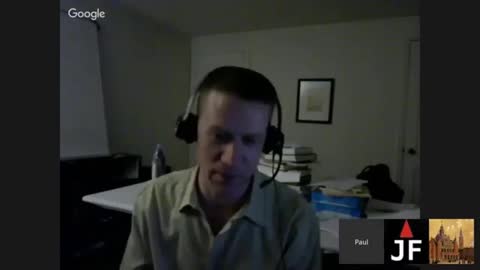
0:01 Hello, everyone, and welcome to another edition of Crypto Scam. I am your host, Tone Face. My blog is LibertyLifetrail.com. 0:11 And today, I am joined by Paul Sztorc, and we will be discussing our thoughts on Augur in a little fireside chat. 0:22 So, Paul, why don't you go ahead and give the audience a brief intro to yourself, your background, and how you ended up doing research on Augur. 0:33 And then we'll get into the details. 0:35 Okay. So, I have been interested in prediction markets for basically my entire adult life. 0:41 I was introduced to them on Robin Hanson's blog, OvercomingBias.com. 0:47 And separately from that, I got around to kind of learning about Bitcoin in 2011, late 2011, late 2000, early 2012. 0:58 And I kind of, around the time I was learning about Bitcoin, Intrade.com, which was a big prediction markets website, it had to close down following the 2012 election. 1:11 And it just kind of occurred to me that there might be a need for software that was like Intrade to be decentralized and kind of immortal in the same way that Bitcoin was immortal. 1:23 And I saw kind of a parallel between Bitcoin and like Liberty Reserve and eCash and these other things, and kind of a parallel between that and Intrade and what I think could be done. 1:34 Because to make this kind of long-winded, I had also been interested in some statistical methods at the time that were related to how to like measure things that were very abstract, things like honesty or reliability of sort of data and things like that. 1:52 So I kind of tried to put all these puzzle pieces together. 1:55 And over 2013, I designed what would eventually become the Bitcoin Hivemind, but what I called Truthcoin at the time. 2:03 And I published the white paper in early 2014. 2:06 And then I was contacted by some other people, some of whom went on to create Augur in late 2014. 2:16 So in early 2014, I was contacted by a variety of people. 2:19 And one of the groups of people that contacted me ended up becoming Augur, if that makes any sense. 2:24 The other people either ended up contributing to Bitcoin Hivemind, or they kind of went and did something else, or they lost interest. 2:31 In 2014, there was kind of a big germination period of some kind. 2:38 And then the end of 2014, that's kind of when Augur kind of got big onto the scene in 2015. 2:47 So it was Ethereum, and then we had that sort of… 2:50 And we'll get into those as individual bullet points. 2:53 Yes. 2:54 And your academic background was… 2:57 So I had studied as an undergraduate economics and psychology, as well as math and statistics. 3:05 And then I stayed on. 3:07 In five years, I did an undergrad and then two master's degrees, one of them in finance and the other one in operations research, which is a branch of applied math. 3:20 And so after doing that, I worked in consulting for a little while, but then I changed to work in academia at the economics department at Yale. 3:29 And that's what I was doing, inventing what would become TriCoin slash Augur slash et cetera, decentralized prediction markets concept in 2013 and 2014. 3:44 And that is sort of my background. 3:47 Roger Ver hired me at the end of 2014. 3:51 I worked for him to make the technology a reality. 3:57 And then in 2016, Jeff Garzik hired me at Block, where I mostly do the same thing, but I'm focusing on the sidechains technology itself in 2016, 4:08 because I actually made so much progress on Hivemind that I surpassed what was required, the foundation, the sidechains foundation that was required to run it. 4:20 And so that ended up setting me behind. 4:24 So kind of as a project management detail, I had to switch from my own project to the project beneath it, which is sidechains. 4:30 So we can talk about all that. 4:31 All right. Well, maybe we'll save that for another podcast. 4:34 So right now I'm doing a screen share. 4:37 I know for only the audio listeners will not be able to see this. 4:40 And one of the things I wanted to focus on here is Paul wrote this amazing summary titled The Case Against Augur. 4:50 And all the links will be in the description below the video. 4:53 And so maybe we can highlight a couple of things. 4:59 So you believe that Augur team basically was at the very first principles were trying to follow your vision of what you wrote in the Truthcoin white paper in order to bring prediction markets into this crypto world. 5:15 That was your initial view when you've met with the members of the Augur team in the very, very early days. 5:21 And did you think that was going to be cool? 5:23 Did you think that, oh, great, someone likes it, they're going to try and turn it into something? 5:27 Yeah, that's exactly what I thought. 5:28 And there are a lot of people who were interested in the idea and interested in working on it. 5:32 And that was my original plan was really to actually just kind of publish the idea and let other people kind of just kind of take it to the next level. 5:43 And so initially it was sort of perfect. 5:46 And there was nothing about them specifically that was perfect. 5:48 But just this idea of it moving to the next level of moving from just kind of a design to something more real, that was very ideal. 5:59 And I was totally satisfied with that and happy that people were doing that. 6:04 And how did that initial interaction go? 6:06 You don't even have to name names, but how did that initial interaction go? 6:11 Did you find them to be interested? 6:15 Did you find them to be – oh, I should get to that part later. 6:18 So at which point did you realize that they were not taking their project into the scientific direction, which I'm sure you were intending, but you started to see it more as like a crowd sale, get rich token? 6:33 When did you first realize this and how did those conversations come about? 6:38 Or were you upfront with them, like this is not what I was looking for, this is not what I wanted, and you no longer wanted to be associated with the project? 6:49 Okay, so that's like late 2014 if I'm getting the years correct, which I think I am. 6:55 But at any rate, it was after I – so I think really actually Vitalik is kind of a lot to blame for this. 7:03 I don't blame him personally, but Vitalik has this attitude about the crowd sale and about it not being a big deal to do this or do that. 7:13 He had a very successful crowd sale of a token that did not even exist. 7:20 And we will be covering Ethereum in this series of podcasts, but Ethereum is a more complicated beast to tackle. 7:30 But not to go on a tangent of Ethereum, but Vitalik was very successful in a crowd sale, which I was against from the beginning. 7:39 How can you sell a token that doesn't exist? 7:41 I vaguely knew the SEC rules because of my experience in the financial world. 7:46 I didn't realize the loophole on selling security was, well, what if the security doesn't yet exist? 7:52 Yeah, it's even faker than fake. 7:56 It's like you're literally just selling columns in an Excel spreadsheet or something. 8:01 Correct. 8:02 It's really amazing. 8:03 And we will be covering Ethereum. 8:04 I'm still looking for which experts I would like to do a Fireside Chat on Ethereum with, so we will not go into detail on Ethereum. 8:13 So let's talk a little more about this crowd sale. 8:15 When you realized that the crowd sale was happening, what were you thinking? 8:18 What did it look like to you at the time? 8:21 The biggest problem was that they were going to do the crowd sale. 8:24 Vitalik was kind of exactly as you were saying. 8:27 He was saying that they could do the crowd sale first, effectively first. 8:34 And I thought that was total nonsense, and I'm very against that for a variety of reasons that we could go into. 8:41 But to answer your question, that is when I was really like, oh, this is going to end up being a disaster. 8:47 Because they were never the best out of all the people who were interested, actually. 8:53 And so I was fine to have a lot of people working on it, of course, and competition is great, and there's nothing wrong with any of that. 8:59 But the crowd sale move is really a kind of juke to kind of intimidate people or get them to flinch and get them to kind of silence all the dissension. 9:14 It's anti-competitive, I think, because it wants to concentrate the influence in one project or something like that. 9:22 And I really didn't want it to be in this project. 9:24 But the interesting thing about that is since Vitalik was leading them into Ethereum and I knew – 9:29 See, the core questions are this, right? 9:32 Like how do we know that Augur is a scam or why do we believe that? 9:35 And so what is a scam? 9:36 It's something I think that we know. 9:38 It's kind of the core of the definition. 9:41 Everyone has their own definitions of what a scam is. 9:44 And we're not here to – we're just saying our case as to why we are not fans of Augur for the many reasons we're going to get through on this show. 9:55 And it's up to the listener to decide if it is or isn't a scam. 10:00 But obviously neither myself nor Paul are fans of Augur, and we will lay out our case for that. 10:08 So also on that note, so what did you think of the competency of the developers in Augur and how easily they were convinced to do it on Ethereum and integrate Ethereum in there? 10:21 Well, I think if you want to write blockchain software, your technical competence is not a really – 10:29 And I think that's the big difference of opinion that I have with a lot of people, which is to say that the design is really not very technical. 10:39 And it's not even very cryptographic. 10:41 The stuff that was in there, the cryptography in there is very old and it's relatively simple. 10:47 It's not – it was just stuff was combined in a new way. 10:50 And I think the technology is really game theoretic more than it is computer scientific or more than it is cryptographic or even more than it is macroeconomic. 11:00 I don't think it's like a monetary policy experiment. 11:02 I don't think it's a software experiment. 11:04 It's an experiment on getting people to send you the right version of the UTXO set effectively. 11:12 It's a version of getting people to provide you with some information when they could theoretically provide you with any amount of information. 11:19 They could say you have three coins, you have 13 coins, you have zero coins. 11:23 They could say anything, but the Bitcoin experiment is how can you get everyone to be passing around only valid messages. 11:31 And I think that that is game theoretic because it's about what people can and aren't motivated to do. 11:41 And so I think even though I thought the technical skills were very low, there was really only one person who was actually like an actual C++ developer, A. 11:49 But I don't think it really matters. 11:51 What was more concerning to me was that they were not – they did not totally get the design and very similar to the way things work in Bitcoin. 11:58 People show up and they just think we can change this, we can change that. 12:02 Why not a one-minute block time? 12:04 Why not whatever? 12:05 Why don't we fix the deflation problem or something? 12:08 People just did not get why these decisions were made in Bitcoin. 12:11 And that led them to take kind of cavalier risks. 12:14 And so in that domain in particular, I thought that they were kind of dangerously unaware of the – and unwilling to just kind of – and it's a normal disagreement to have. 12:26 I just say just do it the way I wrote it down. 12:28 And people would say, no, we want to always make it better and think everything through. 12:32 But I did get tired after a period of six to eight months of just kind of correcting their mistakes. 12:39 So you weren't trying to consult with them. 12:41 You weren't trying to build a project for a good six months at least, right? 12:45 Yes. 12:46 While I had a job, I would help them. 12:49 And what about some of the other people that they were saying that had good things to say about Augur, some of the other academics, some of the other important people? 12:57 How did you feel that they were utilizing them? 12:59 And did you think that that was a fair representation of other academics helping to pump this crowd sale? 13:06 Well, you should really ask them. 13:08 But as I write in that post that you linked, I mean a lot of the – most of the endorsements are friends of mine. 13:14 And they only have them in the Rolodex because I already knew them. 13:18 And they had to then – those people. 13:22 And a lot of the endorsements, like they're happy to help anyone, but it's hard. 13:29 As you know, it's very easy for things to be misconstrued if you have a certain – if you lend an endorsement to this or you say some comment like this. 13:38 So as I point out, a lot of the people, especially the very intelligent people like Dr. Hanson and others, they had to like very cleverly word the endorsements so that it would be accurately general to just say prediction markets are great. 13:50 Everyone who works on them is great, both of which are true. 13:53 And so that's – but I think a lot of the – I mean whenever anyone has a marketing department, there's always a big risk that the marketing department will kind of just go ahead and kind of go off. 14:05 It always worries me when your project that involves a coin of value or a token representing some kind of a currency has a marketing department. 14:15 And we've talked about this or this might air before or after the video about Dash, and that's the same issue that we pointed out in some of these other crypto tokens. 14:26 Okay, so let's jump on from there. 14:30 Because again, I wasn't really – I wasn't paying attention to Ogre in these early stages, so I don't really have much to add. 14:36 All I know from those days is Jeremy Garner at every seminar, at every conference – I go to a lot of conferences. 14:43 And I enjoy it. 14:44 I pay my own way most of the time. 14:46 If I'm lucky, the venue will cover some travel because I'm one of the speakers. 14:51 I go to a lot of conferences, and I'm watching – I'm constantly seeing the presentations for Ogre as they're getting ready for their crowd sale, and I was never a big fan of it. 15:01 But that was the other thing with all of the promotion going into the crowd sale. 15:08 Yeah, I think the promotion is a good point. 15:11 This is going to be very interesting. 15:13 I'm wondering, since you're doing this interesting scam tour of scams, I'd be interested if you find that they're all different or they're all very similar or that they're similar in some ways or different in others. 15:27 I'm not sure, but one of the reasons why I did this is because a lot of people are asking me what my thoughts are on a coin, and I don't know everything. 15:35 I have my opinions, and I wasn't around for the very beginnings of those coins, and other people have done research on the beginnings of those coins, whether they were or weren't around for them. 15:46 In your case, you were there front and center for the grass roots of Ogre, and this is why this is a very good conversation where I also get to learn a lot, but I also read some of that research in order for us to have a more intelligent conversation. 16:00 The interesting thing is why wouldn't you like it, because it is my kind of idea, so I'm kind of attacking myself. 16:07 Yeah, and that happens, and this is why I might… 16:11 We have a lot of opportunity to continue to clarify exactly why that is, but what I get is this scam might be different than other scams, so I think it is a good idea, but it's a scam on Ethereum for technical reasons, and no one should do anything on Ethereum because Ethereum is itself a scam. 16:28 And we will break down Ethereum in this series as well. I'm still trying to consider all the best people to do so. 16:35 All right, so let's talk about the crowd sale itself, and this is what maybe you might be able to educate me on this one, because I remember the headlines, Ogre made how many millions in the crowd? 16:48 Five million. 16:49 Five million, or don't hold us to the numbers, please. I know it's easy to look up. Like five million in the crowd sale, yet those headlines were like what, six months ago? Nine months ago? 16:59 Yeah, I think so. 17:00 They were a while ago, right? 17:01 Or maybe I think it was last… 17:04 This is what's weird. No, I don't really want to look it up, but again, this is the people thinking about Ogre, and I don't want to look it up on purpose. What I am going to show is the market cap and price of Ogre. 17:15 Ever since it actually started trading. 17:16 Right, so it appears that, and again, this is not for the audio will not show this, it looks to me like there was a price target. 17:25 There was pre-trading. 17:26 There was price on Ogre going all the way back to October of 2000, and it was like October of last year, I would say. 17:38 Yeah. 17:39 Oh no, two years ago. 17:41 2015. 17:43 Oh, we have years here, right? February, January. 17:46 This is embarrassing. 17:47 Right. 17:48 So this is 17… 17:49 2015, it's up there. October 2015 is when there was a price on Ogre, yet the market cap popped right here on October… 18:00 The very first day. 18:01 On October 5th of last year. So the crowd sale took place here when there was already a market cap, or the crowd sale took place back there? 18:09 The crowd sale took place in 2015. 18:12 Yeah, I remember it was a long time ago. 18:14 It was pre-trading, and so this is trading that was all liability side, so there was no actual token. 18:20 Correct. 18:21 So we're making it even more abstract. 18:23 So again, they followed the Ethereum model of you pre-sell a token that doesn't yet exist. 18:28 And they couldn't even launch the product until October. 18:32 Right. So that's when the product finally went live. 18:36 So you see, as soon as you actually could trade, you see that what has happened is that it's just precipitous decline. 18:42 Right. Well, the first day it could trade, the price was $10, and then it had fallen all the way down to $2. 18:48 The market cap, $110 million, and it never has been anywhere near that. 18:52 And right now, we're looking at about – so it's lost over 50% of its value since the launch. 18:57 It's a classic scam pattern of just popping and then not coming back. 19:01 So that was the launch, and the moment the launch happened, we're not going to get into people, 19:06 but a lot of the people that were involved in that project took the money and immediately left, 19:11 which is one of my biggest problems with ICOs. 19:15 And again, we will be covering most of these ICOs, and I might do one of these episodes for the ICO in general as a concept 19:24 because a lot of these need to be defined. 19:27 So now let's talk about the use. 19:29 I have a little comment on that because I think it's very similar to the retroactive financing of the banker bailouts. 19:37 Bankers have these bonuses that they get paid all through the 2000s, the aughts. 19:43 Bonus, bonus, bonus, and then 2008, everything blows up, and we bail out the banks, 19:49 and it's kind of retroactively kind of – there's like a skin in the game problem with that 19:53 where a lot of the people were being paid a lot at Augur to do way more than I was being paid full time, 19:59 and then they would do this thing, and then they'd just leave. 20:02 Really, as soon as the times would roll up, they'd just leave and do actual work. 20:06 As soon as that time arrived, they would leave, and it's kind of – what do you say to something like that? 20:11 That's not what we signed up for, I think. 20:14 All right, so let's change gears and talk about the current state of Augur. 20:19 I think we went through a little bit of the history, and again, I know there will be comments. 20:23 There will be complaints saying that we haven't done enough research on Augur and especially these little details. 20:29 But again, we have 700 – I want to get through as many of these crypto coins as possible. 20:34 We have over 300 that people think are valuable and not to mention other projects that don't have a tradable token. 20:42 So there's only so much research one person can do to even come close to covering all of them. 20:49 So we are doing the best we can. 20:51 So let's talk about the current state of Augur. 20:54 Have you actually seen any use cases where the Augur rep tokens are useful for anything other than speculation? 21:03 Well, it's a function of – design requires the tokens to be kind of secure against someone bribing the oracles to. 21:11 So it depends on whether or not the markets are useful. 21:13 But I don't know if – I mean for me it's all a completely moot point because the token itself, it only exists to have a market cap, 21:21 which is such that it's very difficult. 21:24 It costs money if you want to bribe the oracles and flip the market state. 21:28 So is this making sense to you? 21:30 At the end of the market, someone has to throw a switch. 21:32 Okay, it's making sense. 21:33 I was going to talk about this in the future state. 21:35 It makes sense that you want to have a financial component to prevent the bribing of oracles. 21:42 My problem with this is, and I think we're going to jump a little bit ahead, is that why does it need to be its own currency? 21:49 As opposed to a currency that people already know and like. 21:54 It doesn't even have to be Bitcoin. 21:56 No, but when I use Hivemind, it will be just with Bitcoin. 22:01 It will also have its own token, which I don't even know what I'm calling it now. 22:05 I guess I'm calling it the vote coin. 22:06 Would it be pegged to Bitcoin? 22:07 No, this has to be its own thing because this has to be something that you buy. 22:11 First of all, you don't need this token in order to use the markets. 22:15 The markets, this token is only for employees. 22:17 Right, so it's an internal token like coin system. 22:20 It's for employees. 22:22 So what you need is you need an incentive for someone to buy in a job and then be compensated. 22:28 They need to be able to sell in the future at a higher price theoretically too. 22:31 So the token is kind of like a corporation share in a way, in a metaphorical sense. 22:37 Because you want something where if the better the market resolution technology is, the more valuable all that is. 22:46 But the reason this is all a moot point for me is because in Ethereum you can trivially, whereas in sidechains you cannot. 22:55 But in Ethereum you can trivially corporation set up that just copies that corporation. 23:01 And that one will always be able to undercut on price. 23:04 And as a result, the entire market cap of reputation is like there is no equilibrium for that existing. 23:11 Because it exists, as you know since you're a finance guy, maybe we'll explain for the audience. 23:17 A company's market cap is like a function in theory of the dividend payments in the future kind of discounted and brought back to the present. 23:25 Right, and the dividends are determined obviously by the revenues. 23:28 Right, and so with this, the revenues are fees that you charge people who trade in these markets. 23:34 But my point is that you can set up a competing corporation that does the exact same markets for a very small fraction of the cost. 23:42 And then it can just provide the exact same service because it's just going to copy what the other corporation is doing. 23:48 So as a result, the revenues of the more expensive corporation should be zero. 23:51 And so the market cap should always be zero. 23:54 Well, I think we can do a whole separate show because for what you just explained with the tokens in Hivemind, I might debate you on that one as well. 24:06 Or maybe that wasn't explained to me correctly. 24:09 But the way I see it right now is that these tokens are really only there for that initial market cap for people to exit. 24:18 And there could have been a way to run a project like that without the speculative nature on the company itself. 24:26 And I always try to throw this example out there because it applies to like 90 plus percent of all of these tokens and ICOs. 24:36 Imagine the tech bubble or the tech rising up in the late 90s and all of these projects like Amazon was expecting people to go buy Amazon stock to buy from Amazon. 24:50 And then Netflix was encouraging people. 24:54 You need to go and buy Netflix stock, something openly traded in the open market and then speculate on the price of that at the same time as using it for our service. 25:04 I completely agree with you. I don't think – so let me explain it one more time. 25:07 That is the point of sidechains and you actually, you stole my example because that's what I was writing about. I was just writing about Walmart bucks. Did you actually say Walmart? 25:15 I didn't use Walmart. I've been using eBay. My favorite is to convolute this even more and we were about to talk about the convolution. 25:25 My favorite is the convoluted example of this saying, well Netflix needs you to buy Netflix stock to buy Netflix movies. But where do you buy Netflix stock? 25:35 Well you can go buy Netflix stock on E-Trade, which is another dot-com startup which has its own stock. 25:41 And the New York Stock Exchange also has its own stock. 25:46 So imagine this chain. So now I have to go buy E-Trade stock in order to use E-Trade stock to buy Amazon stock in order to use Amazon stock to buy things on Amazon. 25:55 That's the world we're currently living in. It feels like it. 26:00 You're 100% correct. But the metaphor is 100% correct. But in this case, you are not fully applying it. 26:09 So you're right. The whole point of sidechains is that we shouldn't have to use Walmart bucks at Walmart. We should be able to use fucking Bitcoin at Walmart or Bitcoin at Circuit City or it doesn't exist anymore or whatever. 26:21 Subway sandwiches or something. You don't need Subway or something. 26:25 So when I do Bitcoin Hivemind, you will be using Bitcoin to participate as a customer. 26:32 But in order to be an employee, this thing has to do work. It has to do a job. 26:39 You understand that it has to throw a switch that says whether or not Donald Trump or Hillary Clinton was elected if you want to bet on that. 26:45 At the end of the market period, someone has to decide whether or not it's a one or a zero. 26:50 So that's labor that someone needs to do and that is why you need to have a second dimension. 26:56 So let's see. Maybe we will jump right into that part. 27:00 So that oracle, why isn't that oracle? You used to say CNN but considering what's been coming out of the CNN, they might be losing that oracle status. 27:10 So why can't it be something like a CNN, like Fox and not just one of them. 27:19 You would basically have a matrix or even Twitter and you would need backups on top of backups. 27:28 And the results of something like this, they don't have to be in real time. 27:33 I know everyone wants instant payments and transactions. 27:36 But just like in sports, it's more important to get it right than to get an answer quickly. 27:43 I know you're 100% correct. 27:45 I guess this is going to be my future initiative. 27:48 There's going to be a third issue. 27:50 There might be a third issue. 27:52 And why do we need a decentralized oracle? 27:59 That's going to be our first issue again. 28:02 Why do we need to decentralize the oracle? 28:06 What needs to be decentralized is the big question. 28:09 I'm so happy that Bitcoin has given us decentralized money. 28:14 But that doesn't mean that everything now will be more efficient because of decentralization. 28:19 I got the question. I get it. 28:20 It's a great question. 28:21 I'm just saying. 28:22 If you start the sentence, I kind of have it in my mind. 28:25 I wonder what questions you might be asking. 28:27 That was in my library of potential. 28:30 This is a question. I get this question sometimes. 28:33 First of all, I feel like I've been scammed by the entire universe. 28:37 Because I did this project. 28:39 When I gave it the truth, it was just like the normal thing to do. 28:42 There was just like DevCoin. 28:43 Everything was coin. 28:44 But no, it was like right exactly when the whole tidal wave of just like stupid coin project. 28:49 And then it's like I decentralized this thing right when Ethereum and BitShares were doing like the decentralized everything nonsense. 28:56 So I really feel like I completely understand the motivation of the question. 29:00 I've just been very unlucky with the timing. 29:02 I've been drowning it in. 29:04 So first question, why decentralize the oracle? 29:07 Or what will be the final state? 29:08 Or what will be going on there? 29:10 And so the reason is someone's going to throw this switch on whether or not Hillary Clinton or Donald Trump wins in the election betting example. 29:18 So they've got to throw the switch. 29:20 And that means that however much money is being bet in the market is effectively the amount of max minus min or whatever it is. 29:29 There's amount of like free money in there that you could steal by making the trade in the opposite direction and then throwing the switch the other way. 29:37 So let's say it's worth a dollar if Hillary Clinton is elected. 29:41 But Hillary Clinton is trading at one cent because it's November 10th and she obviously didn't win. 29:47 And so then you can buy in all those up for one cent on the dollar, throw the switch, and just withdraw all the money. 29:54 So that makes sense to you, right? 29:56 Whoever is throwing the switch controls the money. 29:59 But if the switch is being thrown by an algorithm that looks at CNN and Fox and NBC, how can someone – why do we need reputation tokens? 30:11 The algorithm will be thrown by something that's reported by CNN and Fox and NBC. 30:16 It will just be – there will just be an intermediate layer of humans that are watching those shows and reporting in. 30:22 And the reason why you don't want to have – you can do it that way. 30:26 I mean that's – it's interesting. 30:28 It's an interesting question to me, but to me it's very similar to the way we have exchanges. 30:34 And they always get hacked because it's content under pressure as the BU guys would say. 30:38 There's this X amount of money there. 30:40 As the project gets more and more popular, there's more and more money. 30:43 And you just have to be that one disgruntled employee at Fox or the one guy at CNN or the one guy who interferes with the network. 30:51 I think it's a little more – it's not that simple because I have Alexa. 30:57 I have Google. 30:58 I can go, Google, who won the election? 31:00 Google, who is projected to win the election? 31:03 And there's no humans involved. 31:05 It aggregates actual news. 31:07 What's the difference between just having a human look it up on Google before typing it in? 31:11 And you can have software to automate that. 31:13 I'm not against that at all where there are a bunch of questions and you just press some button and your computer automatically fills them in and you just read them through. 31:20 Actually, I will tell you why because the difference is that human most likely is not participating in that bet where under these reputation tokens, 31:30 that human may be participating in that bet and that human is bribable. 31:34 But when you ask Google and it aggregates globally, it's a monster pool that isn't even covered by rap tokens. 31:42 Think about what you are actually technically when you zoom in requiring the software to do. 31:49 The software has to run. 31:52 You're on like a line of code, whatever, 1158. 31:55 It's running and it says – what does it say? 31:59 Look up Google, whatever, and search the question. 32:04 Because think about this. 32:05 It's going to be arbitrary questions, right? 32:07 So someone is going to be able to type in stuff that's potentially nonsense or potentially in a different language or potentially just a bunch of random characters. 32:13 And don't we trust Google and Amazon to decipher this properly with their AI? 32:18 I agree with you that we do. 32:20 I'm telling you that they are ultimately going to be, but there's going to be humans in the middle. 32:23 Okay. 32:25 So we might disagree there. 32:27 I think we should talk about it more. 32:29 Ultimately, Google will be deciding as will Twitter, but someone will be going through to make sure that the wording is right. 32:36 And then the benefits and costs will accrue uniquely to them. 32:40 But do you think a human is going through and doing this now? 32:43 Well, I mean I don't know what you mean by that. 32:46 When we decide whether or not Donald Trump won, we are as humans doing exactly that. 32:51 Right, but who is aggregating that into a single answer? 32:55 But we do aggregate. 32:57 When we decide what's real in our world, we aggregate information. 33:02 But no human is capable of aggregating it into a single answer that is trusted. 33:08 But we do trust Google's algorithm to aggregate all of the answers into a singularity that we then trust. 33:16 This is the best way I could think of getting Google's answer into a smart contract, for lack of a better term, into the blockchain or the sidechain in this case. 33:26 Because I want you to tell me how you would actually do it. 33:29 Your line of code is running. 33:31 I have actual code that gets reports from humans, but you want to do something else. 33:36 Is the code just going to dump the question text into Google and then do some kind of word analysis on the results to see what the answer is? 33:47 That's what you're going for. 33:49 But I think that's what we already have. 33:51 No, I don't think it is. 33:53 Because if we did something like that, people can, you know, they will manipulate the Googles. 33:58 If it's worth enough money, if it's worth $100 million, people will try to manipulate the Google search. 34:03 You could be an employee at Google who changes it like at a certain time or something. 34:07 Because if the block is just going to evaluate at whatever… 34:10 That seems a little too conspiratorial for me. 34:13 No, we will have, like Rick Santorum added a new definition of his name and all this other stuff. 34:19 And it's now normalized. 34:21 That definition is now the definition of that word. 34:24 I know, but that might not have been the definition that people, if someone placed bets on that, that might not have been what they had in mind. 34:29 You know, this is a vulnerable point in my view. 34:32 And so I think it's similar to exchanges where there's a lot of money if you can just flip this bid one way or another. 34:39 And you have to do something to address the fact that you have only one reporter. 34:45 We might have to do this episode for Hivemind in the future. 34:50 But let's get back to Augur here for a minute. 34:54 So this was a side discussion as to whether the prediction markets themselves are useful or not. 35:02 And I am still not convinced that prediction markets are useful. 35:06 And this is where Paul and I might disagree. 35:09 But where we do agree is that Augur's implementation of this type of decentralized prediction markets was definitely not the right way to go. 35:20 So let's talk about their token specifically, the rep token. 35:24 Do you know much about the mechanics? Is it a proof of work token? Is it a proof of stake token? 35:30 What is the distribution like? Do they get burned? Do they get infinitely created? 35:35 Yes, I can. Because I think you're still confused there. 35:38 This is the same metaphor as using Walmart bucks to shop at Walmart. 35:45 But this is using Walmart shares to vote on the Walmart board of directors or something or who should be hired to work as cashier at Walmart. 35:55 So the tokens just exist the way Augur chose to do it, which is one way among a few. 36:03 But they just basically 100% pre-mined, for lack of a better word. 36:07 They just have them all out and they circulate like shares just as if someone had done a – I don't know. 36:16 I'm not really familiar with this particular thing. But if someone had done like an IPO and that was all the shares they were going to issue. 36:22 But those are two very different things, right? Like the internal Walmart bucks that are used to decide internal things. 36:29 Or shares. Shares at Walmart. 36:32 Okay. So they're openly traded equity shares. Okay. 36:36 Well, metaphorically. 36:37 So do you know? So 100% pre-mined. So they will not create any more or they can create more if they want to? 36:45 I don't know. I have no idea. 36:46 Nobody knows. 36:47 Theoretically, they could not. 36:49 And do these rep tokens get burned in any way kind of like the Ethereum gas? 36:54 Or are they around forever unless you lose them by losing a private key? 36:58 Well, I had a certain design in mind that they slowly started moving stuff there, stuff there. 37:04 But assuming that they kept this part the same, there's a total – what they really represent is a percentage. 37:09 So there's 100% of them. And if someone votes in a way that's not very consistent, they will lose some of theirs. 37:17 And everyone else will gain a little bit more. 37:19 So it's a fixed pie and it's being redistributed. 37:23 Based on misbehavior. 37:24 But they are bearer instruments. 37:27 They should be. I don't see why they shouldn't be. 37:29 Okay, because remember Bo Shen got famously hacked recently for his Augur tokens, right? 37:36 So they do appear to be bearer instruments. 37:40 So you could burn and lose your private key and then you lost your reputation. 37:45 Yeah, if you don't vote, you also slowly start to lose yours. 37:47 See, this is why – because this is a negative reputation problem as Nick Szabo and others have pointed out. 37:52 This is why you need the second token because you need something to take away from people if they don't do a bad job. 37:57 Because you can't give people a negative reputation. 37:59 They just create a new identity. 38:01 Right. 38:02 So this is kind of the impetus for the second dimension. 38:06 So this is why I'm interested in your scam thing. 38:08 I want to know if you learned all the scams are different in a totally different way. 38:11 I believe they're all going to be different. 38:14 I think I would really get bored with this podcast if they all turned out to be exactly the same. 38:18 There's got to be one core, I think, of selling a dream to people or ignorant people or something. 38:22 I think that it is. 38:24 It is that core that you will be rich kind of. 38:28 Yeah, I'm really interested in learning. 38:30 I'm going to watch the whole thing. 38:31 I really want to know the conclusions at the end. 38:33 We're getting there. 38:35 We're getting there. 38:36 So, again, to me – so do you think this token is secure? 38:40 It's on Ethereum. 38:43 I know what happened with the Bo Shen situation is that, yeah, you keep your tokens on an exchange and you can get socially engineered. 38:50 That's not the kind of security we're talking about, right? 38:53 We're talking like blockchain security energy going in, like in the case of Bitcoin. 38:59 And for the moment, in the case of Ethereum, right, there is mining going on. 39:03 There is security. 39:04 It's when you get to this proof of stake model that I don't know where the security is. 39:08 Yeah, I think proof of stake is stupid, and we can talk about that. 39:11 There's so much to say. 39:12 But I'll just briefly comment. 39:14 So this token is kind of free-riding in Ethereum land, just as mine would free-ride within the sidechain land, 39:22 and the sidechain land would be MergeMine, so it would itself be free-riding off of Bitcoin land. 39:27 And so the token is not its own like proof-of-work token in that sense. 39:34 And in that sense, it should be as secure as your ability to keep your private key the same, assuming that there are like no bugs and stuff. 39:40 But obviously, with the case of BoChen, what apparently happened was someone was just not securing their private key. 39:48 And you have to buy all of these initial rep tokens from Augur themselves. 39:55 Yeah, they just 100% sold them all. 39:58 So this is a very decentralized way to create a decentralized environment. 40:05 That was when I was like, this project is not – these people are crazy, 40:09 when they were just going to do that sale of all of them kind of immediately before really doing any work. 40:14 And kind of just that's the core of the mistake is just to take all the money up front and not do the work, I think. 40:27 Okay, so we covered this already. 40:30 And again, maybe I'm not following because I still have – my biggest problem with these prediction markets is why do you need – 40:40 I just don't see a reason to decentralize the oracle because I find decentralization to be fairly inefficient. 40:48 And perhaps we can do another show. 40:51 We can talk about it. 40:52 How much time have we been doing? 40:53 We are about – 40:56 Yeah, we're about 40 minutes in. 40:57 We have about 20 minutes to go. 40:58 We are towards the end. 40:59 So it's not that bad. 41:00 I think it's a good thing. 41:01 So I'm still not convinced that we need to decentralize an oracle because I think that the trusted third parties will rise to the top. 41:13 And remember, it's not a single trusted third party. 41:16 It's a combination of perhaps 50 trusted third parties. 41:22 And now you're looking at a majority of trusted third parties being corrupted, and you can set that majority threshold to anything you like, 55 percent, 60 percent, 70 percent. 41:35 And if there is major contention, then it goes to some additional processes because guess what? 41:42 If you want something – if there is real better instruments on the line, perhaps instant payments is not the best way to go. 41:51 You might have to get paid out on your bets on a delay when you have a very complicated bet that isn't – it's a little bit subjective. 42:00 Well, I think that was the second part of your thing that we didn't get to before, which is that I don't – there is no instant. 42:08 They're all resolved in the future at once, but you could potentially be betting on something where the election happens on November 10th or whatever, and then it's not resolved until January 1st a few weeks later. 42:21 Or like in 2000 when it took like when they tried to go to the Supreme Court. 42:25 Who knows when it would have gotten resolved? 42:28 Well, I think someone resigned, and they – I guess they didn't resign. 42:32 No, we're not going to get into what happened in 2000, but they missed their time window. Let's put it that way. 42:37 Okay, but I agree with you, and it's not designed that way for that reason. 42:41 But you're asking why does it need to be decentralized, and you're saying that instead basically Google can run the prediction markets or someone else can run the prediction markets or some consortium of information providers. 42:51 Right. I mean what I'm looking at basically you can't have a third party that is trusted to build an algorithm with open source code that aggregates certain specific third parties. 43:06 This is. 43:07 That have been trusted, but then where does the wrap token come in? 43:11 It weights people by – what if there's – 43:15 But I don't think it should be individual people dependent. That's my issue. 43:19 But you see – okay, so I know that's what we should really talk about instead, but you understand – so like why was – do you know why Intrade was closed down in 2012? 43:27 Intrade, that was where people can like bet on – they make any questions and they can – 43:32 Not even any questions, so we're not even there. It was only elections and there was some oil futures and some other things. 43:38 I don't know why they were closed down, but I'm curious now. 43:41 Yeah, well, it was regulatory pressure from the – well, it's actually kind of ambiguous, but they also had some accounting irregularities, so that may have also contributed. 43:50 Also, their CEO, Client Matt Everston, died. 43:53 Well, I see. I don't buy the argument that something like that had pressure from the government, because I think Wikileaks had pressure from the government for a long time, and they can still publish whatever they like without decentralization. 44:05 It is decentralized, though, what they publish. 44:07 It's not – they don't go to like Google and say release all this together. 44:11 It's not Bitcoin decentralized, right? It's decentralized in that they have enough servers that they won't be shut down at once. Wikileaks. 44:21 I guess. I don't know. 44:22 It's decentralized to a point, but it's internally decentralized. 44:27 Well, there are a lot of ways of answering this question. One is to just go back and say every time prediction markets have been tried in the past, they have, in fact, been forced to close. 44:37 And it's arguable why, but I would argue it's for regulatory reasons. 44:41 It is for regulatory reasons, but it's also because the people putting them together are like visible people. 44:46 I'm sure if Assange got to do it all over again, no one would know his name. 44:50 Only the visible people. You want it to only be Google and CNN that are the oracles. 44:54 Well, not the – 44:55 That's even more visible than one individual. 44:57 Well, the website, Intrade, they could have still kept going. 45:02 There is only regulatory pressure to shut you down if there is a point where that regulatory pressure can go to. 45:13 Yeah, but there is if it's CNN and Google and whatever. 45:16 Well, they can't shut them down from not telling you who won the election. 45:19 Yeah, but okay. So what you want is something that parses – okay, so actually I think maybe we're zooming in more on your question. 45:30 My view of the world, yeah. 45:31 So the questions, you want them to be machine readable. 45:35 Correct. 45:37 But I'm not sure that that's possible because they are – I mean it depends on how – 45:43 if we have artificial intelligence software that's comparable to human reading ability, then it wouldn't really be a big difference. 45:51 The questions might not – I think there has to be a reliability to the mapping of the question to the answer, 46:05 which is actually more reliable if humans are doing it than computers are doing it. 46:08 So I guess we probably don't agree on that. 46:10 We don't agree on that, right, because in my mind, who in the world is betting on a question that isn't machine readable? 46:17 How much of a gambler are you that you are focused on – if you are placing a bet on a question that is not machine readable in today's age 46:27 and now extrapolate that in five years or ten years when we have computers driving our cars, flying our planes, 46:34 you want to start gambling on questions that are not machine readable? 46:39 You understand it's worse than that though because what if Google – again, we have to go zoom into what you actually want. 46:46 So the line of code is executing. 46:48 I mean what if Google changes their IP address or what if someone interferes with the – 46:52 what if there's like a denial of service between this blockchain and it's trying to reach Google? 46:57 What if Google goes out of business? 46:58 So this is going to be something that's going to run for maybe 10 or 20 or 30 years. 47:03 I mean there was no YouTube in 2005 or whatever. 47:06 There was no Twitter. 47:07 Agreed. 47:08 So Twitter could be here. 47:09 It could be gone. 47:10 I don't think Twitter makes any money. 47:12 I don't know what their plan is. 47:14 It's not just easy to just say type this into the search engine of the time and get the answer back. 47:22 But if you want to write that, I think that may be – 47:26 No, I don't want to write it. 47:27 I think that's been written many times by Amazon and by Google and by all the speech recognition software. 47:34 No, no. 47:35 It's got to get into a database in the blockchain. 47:38 So you have to have this – turn on some algorithm. 47:40 Well, I'm not sure you need a blockchain here. 47:42 Again, now we're getting into the philosophical discussion of prediction markets in general, 47:46 so we are slowly moving away from Augur. 47:49 That's fine. 47:50 I think it's good. 47:51 Yeah, no. 47:52 It is a good discussion. 47:53 We can keep going with it a little bit longer. 47:55 I think we should keep going with it. 47:56 Yeah. 47:57 Okay, we can talk about why it needs a blockchain, which is a separate conversation. 48:02 But I think it's actually taking us afield of the original question, which is how to actually do this. 48:08 And conditional on you wanting to do this, you need some algorithm for producing the answer, 48:15 for the bits that are flipped at the end. 48:17 So I think you would agree on that. 48:19 Maybe we should switch to your other question, which is why do people want to have basically bearer instruments 48:26 that are instead of Bitcoin, there are some token that's either worth some amount if Hillary Clinton is elected or some amount if not. 48:33 Why do we need an additional token? 48:36 No, it's not an additional token. 48:38 Each market is its own – their own shares. 48:40 So it would be millions of – well, not millions, but thousands of tokens. 48:45 One could be worth a dollar if Hillary Clinton is elected or zero dollars, U.S. dollars worth of Bitcoin if she's not. 48:52 And you can have synthetic markets that replicate the Dow Jones Industrial Average, 48:57 but they would be in – this is sort of like a synthetic derivative or something that is worth the S&P 500 49:06 that would be as private and fungible on a blockchain as Bitcoin is. 49:13 But it would be – whatever price it would have today would be exactly what the Dow Jones Industrial Average is. 49:17 You could have it in dollars. You could have it in yen or something else. 49:20 You can do all kinds of extremely fancy things. 49:22 But the major application of prediction markets is fixing collective action information aggregation problems, 49:30 so like basically voting on the CEO or voting on the president where – and there's a lot we can say about this, 49:38 which is its own thing, but people have tried for years to get something like this to work, 49:42 and this is like the closest that I think I'm aware of anyone coming to having an actual way of advising people 49:52 on who to vote for that's not like inherently biased in one direction or another. 49:57 So I have a lot of use cases for this project specifically, and we can talk about that. 50:03 That's a different – if you go to the bitcoinhivemind.com, I have an applications paper that's like several pages long about what I would use this for and why people might use it, decide to use it. 50:15 But that's a separate question from how does it work, why does it work, or why would we want it. It's a different question from how to get it to work. 50:22 How to implement it. 50:23 Right, and how to implement it is actually confusing if you want it to run for a long time or be robust to something like Google changing its IP address or going out of business or something like that, 50:34 or if someone can't connect to Google but someone else can or they connect on different days or something. So that was the best way I could think of to do it. 50:45 I do see your point, we just do philosophically disagree there. We both agree that Augur's implementation of this is unlikely to work and terrible. 50:56 We also slightly disagree in that I don't use this case for a decentralized prediction market in general, but Paul clearly does. 51:06 So we might save that for a future discussion. But going back to Augur, where do you think Augur goes from here? 51:14 I think it's the same path that everyone has taken where the market cap just slowly fades away and eventually the people who are involved, since they're smart people, 51:23 they'll find other things to do and as you said, a lot of people left immediately as soon as they got the payday. 51:30 It's like you cram for the pop quiz, you cram for the exam and then you take the exam and then you just forget about it. 51:35 Now that I think about it, we should throw the names out of the people originally involved with Augur and programming because we'll need to know if these people surface again in other projects in the future. 51:46 We all know Jeremy Gardner was one of their big promoters that went around doing presentations. 51:53 Yeah, he was kind of young. I feel like Vitalik kind of… 51:56 And Joey Krug is the current CEO. Was he one of the founders? Was he the CEO from the start? 52:04 Yeah, he was one of the people who really understood it better or maybe one of the only people who understood it at all. So there's that angle. 52:12 And who was their lead C++ programmer? 52:15 Jack Peterson. 52:16 Jack Peterson, is he still with them? 52:17 I think so. 52:18 Okay, so we're not even joking. 52:21 I think he's still in charge. 52:22 Was there anybody else that was critical to it from the beginning that may or may not still be there? 52:28 Other than Vitalik. They had some marketing people. 52:32 Yeah, but marketing people. I don't blame marketing people for a lot of the stuff. 52:39 I agree with you completely. 52:41 And a lot of them don't even have to know what a Bitcoin is. They're just being paid. It would be nice to have some checks and balances on that. 52:48 Who are the people who are really responsible for the scam taking shape would probably be Vitalik, actually. 52:55 And even I would say Eric Voorhees a little bit because no one would give them any money, but then Eric decided to give them money. 53:03 And at the time, it might have been difficult to understand why Eric would be involved in something like this. 53:10 But he is running ShapeShift, so it's possible that he wanted that inventory to be moved. 53:16 He wanted more pumping for Ethereum, I don't know. 53:20 Or any coin, right, for that matter. Any coin that could get popular. 53:24 To keep up his point of view of the multi-token marketplace world or something. So that's possible. 53:34 So it's unfortunate that people do a fake capitalism where building anti-capital is seen as terrible. 53:43 On a final note, only because I do have it in my notes, my view has always been, and again, Paul might disagree with that last note, 53:50 is that to me, you have to understand what you are trying to decentralize. 53:55 And payments are a major thing that need to be decentralized. 53:59 But again, payments in things that may be censored. 54:03 And gambling in general is censored in some part of the world and is not censored in other parts of the world. 54:09 So where gambling is not censored, you don't need any of it. 54:15 If you are gambling on something that the thing you're gambling on is censored due to regulation, 54:23 Bitcoin gives you an avenue to get around that. 54:27 If gambling is legal in your area, let's say sports, you don't even need Bitcoin. 54:32 You can just use other means, though credit cards are still a problem because of chargebacks. 54:37 But wire transfers are not. 54:39 So now we're getting into a thing. 54:41 Okay, so what if gambling on itself is very, very illicit? 54:49 Like you're gambling on whether somebody will successfully CryptoLocker the CEO of Microsoft. 54:58 So something like that. 55:00 So some kind of a question where… 55:02 In the crime markets. 55:04 Right, some kind of an illicit market. 55:06 So basically, if let's say, for example, the U.S. government legalizes gambling, 55:10 but then they go, uh-uh, not that question. 55:14 Gambling is legal, but not on that specific question. 55:18 So to me, this is where decentralization plays a very good role, 55:23 where not just the currency that is used to gamble needs to be decentralized, 55:29 but the question itself is in danger of being censored and removed. 55:37 So I guess this is the potential of in-trade where the questions themselves were under scrutiny of regulation. 55:44 But that also has to do with, well, they just didn't start their centralized company correctly. 55:49 They could have structured their company, their website, like Wikileaks did, 55:56 in a way that can't be shut down and there's nowhere to send your subpoenas. 56:02 I guess that's kind of ambitious. 56:04 That would be nice. 56:05 But again, Wikileaks doesn't somehow, right? 56:07 I would have liked if someone would do that. 56:08 I'm not willing to take that level of risk personally and set up the Silk Road version. 56:12 I don't think that… 56:13 Right, but somebody always is. 56:15 Someone could do it. 56:16 Well, you see, this is the same problem, though. 56:18 If you have a tradable reputation token and you build a business, like you build Silk Road, 56:24 you can then sell the reputation and cash out all the goodwill you've engendered. 56:30 You can cash out on it without blowing the system up. 56:32 So this is another advantage of the reputation token. 56:34 So that might be true. 56:35 But again, even if you do that, that question has to be posted somewhere on the web, correct? 56:41 It goes into the blockchain, literally. 56:43 Which blockchain? 56:44 In my case, the sidechain. 56:47 Okay, so in your case, the sidechain of the Bitcoin blockchain. 56:50 Someone will broadcast an actual message that has this question in it. 56:52 Okay. 56:53 Oh, and one last question I totally forgot. 56:56 Since Augur is… 56:58 And I always wanted to know this. 57:00 Since Augur is built on top of Ethereum and Ethereum hard forks… 57:07 Yeah, I know. 57:08 It's totally stupid, right? 57:09 And how do you even… 57:10 The thing is, there's so many ways we can… 57:12 I mean, I would love to have like a whole other hour. 57:14 I can maybe even do the Ethereum one if you're interested. 57:16 Because there's so many aspects of Ethereum that are not conducive to anything at all stable. 57:22 Because even assuming that Ethereum's design is finished and the implementation is finished, 57:28 neither of which are correct at all. 57:30 Agreed. 57:31 Especially because they're going for like this open heart surgery of like proof of stake. 57:34 But open heart surgery and like putting in like a frog or something instead of a heart 57:38 and just kind of like hoping that it will work or not change back to what it was before, 57:41 making it all pointless. 57:43 So we can talk a lot about that. 57:45 But even assuming it's all stable and it works, 57:49 then the contracts that are more efficient use of the Ethereum blockchain resources, 57:55 those will tend to just crowd out. 57:57 They'll make the gas price go higher and higher and they'll tend to just crowd out all the other smart contracts on Ethereum. 58:05 And eventually, they will only have like the one optimal contract will just be expressed like X times or whatever. 58:11 And that's sort of desirable, but it's also not at all what was promised 58:15 or what kind of a lot of people's expectations are that it's like some super computer or something. 58:20 It's a 90s phone level computer and it is at best. 58:25 And there's just like so many things about it that are just absurd. 58:29 It's a 90s level computer with 2025 levels of data storage capacity. 58:36 Yeah. 58:38 Yeah. 58:40 Well, I mean, the only way to kind of describe Ethereum is to say that a bunch of people got their hands on something evolved, right? 58:51 Like we had like the first multicellular fish evolved out of the primordial soup, 58:56 and they got their hands on it and they opened it up and they looked at the DNA 58:59 and they just threw it all out and they just started from scratch with like little, 59:02 what are they, A, T, G, C, or whatever. 59:05 And they just started plugging that in. 59:07 And then they just turned that on and they tried to grow a new fish. 59:10 And then like, I don't know, that sounds like a totally pointless endeavor to me. 59:13 Well, we'll leave it on that note. 59:15 I just realized that doing one of these for Ethereum is going to be way more complicated than potentially Ethereum itself. 59:23 So expect multiple parts. 59:26 Perhaps we can get Paul back. 59:28 And we will talk about the idealized prediction market some more. 59:34 And perhaps we can go into that issue in the near future. 59:36 All right. 59:37 So we will wrap this up. 59:38 I hope you enjoyed our little fireside chat on Augur, which turned into the prediction markets in general, which is good. 59:46 We had some agreements. 59:47 We had a few disagreements. 59:49 Paul, why don't you tell everyone where they can find you and your work. 59:52 And please send me any additional links that I will put below in the description. 59:57 I will. 59:58 Thanks. 59:59 You can find me. 1:00:00 I'm Truthcoin on Twitter. 1:00:01 So it's easier than spelling my name. 1:00:03 And Truthcoin.info is my blog. 1:00:05 And the project is bitcoinhivemind.com. 1:00:08 It's linked from Truthcoin.info. 1:00:10 And that is if you thought Augur was a good idea, then bitcoinhivemind is what you probably really wanted. 1:00:16 And if you're a Bitcoin user, you will not have to. 1:00:20 In order to use it, you will not have to participate in any weird Ethereum or Augur crowd sales. 1:00:26 You can just use it with your Bitcoin, so there's no need for anyone to even think about that. 1:00:31 I'm going to do that the right way, so you don't need to worry about that. 1:00:35 Thanks very much, Tone, for having me on. 1:00:37 I had a great time. 1:00:38 Thanks for being on the show. 1:00:40 And once again, my name is Tone Vase. 1:00:42 You can find me on Twitter as Tone Vase. 1:00:45 My blog is libertylifetrail.com. 1:00:47 I do podcasts on the World Crypto Network. 1:00:50 And, of course, this channel where you just saw a part of this Crypto Scam series, in addition to my regular economics and trading videos, which I try to do at least once a week. 1:01:02 All right. 1:01:03 On that note, we will get back to the conference here in Miami. 1:01:07 We're at TNABC. 1:01:11 And we'll catch you on Crypto Scam. 1:01:20 Thank you.