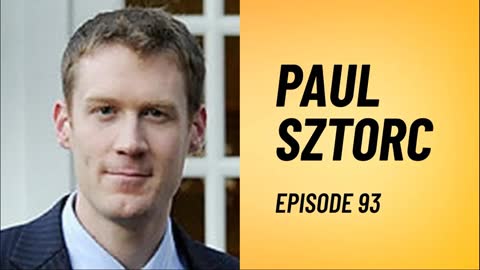
0:00 Welcome back to The Mining Pod. 0:01 On today's show, we're joined by Paul Sztorc and Austin Alexander of LayerTwo Labs, a new 0:05 Bitcoin company that raised $3 million to bring sidechains to Bitcoin through an implementation 0:11 of BIP300/301, often referred to as Drivechain. 0:15 This is a fairly technical conversation we did not do a whole lot of edits to. 0:19 We talk a lot about Drivechains themselves, how Bitcoin miners can earn more fees through 0:25 Drivechains, the history of sidechain implementations, and how this whole thing works with the Lightning 0:30 Network. 0:31 The future of digital asset mining calls for top technical talent. 0:35 Enhance your ASIC education with Foundry's hands-on courses. 0:37 Led by veteran industry instructors, Foundry's three-day mining intensive and five-day mining 0:42 technician academy programs cover a range of topics, from identifying issues and troubleshooting 0:47 common hardware failures to coursework covering Bitcoin's global impact. 0:51 And to enthusiasts and professionals alike, visit www.foundryacademy.com to learn more 0:56 and sign up for the course that's right for you. 1:10 Paul, welcome to The Mining Pod. 1:13 Big news for you both, announced a $3 million seed round for LayerTwo Labs to bring hopefully 1:19 an end to the altcoin shenanigans in other worlds by implementing Drivechains for the 1:24 masses. 1:25 But welcome to the show. 1:26 Thank you both for joining. 1:27 Hey, thanks for having us. 1:28 Cool. 1:29 So we'll start off with a little intro. 1:31 I don't think a lot of this audience, and we even said this before we started, you guys 1:35 don't know a lot of miners, or maybe you do know a few here or there who are mining at 1:39 home. 1:40 But our audience is probably not familiar with you, so I'd love to get an intro from 1:44 both of you. 1:45 So Paul, I'll hand it off to you first for an intro, and then to Austin, then we'll talk 1:49 about LayerTwo Labs. 1:50 Okay. 1:51 I got into Bitcoin a long time ago, like 2012, 2013. 1:58 And I started blogging about... 2:01 People were discussing all kinds of topics and I wrote once a famous essay called, Nothing 2:05 is Cheaper Than Proof of Work. 2:09 So I started this blog, Truthcoin.info in 2014. 2:11 And I did that both to talk about Bitcoin concepts and also to promote this peer-to-peer 2:16 Oracle software that I had written. 2:19 That was called Truthcoin, actually. 2:22 And that was supposed to be for Bitcoin prediction markets, which is a whole different thing 2:25 that we can discuss. 2:26 But that was how I got in. 2:29 And then I was actually hired into the industry to work on that, which I did. 2:34 And while I was doing that, I presented at Scaling Bitcoin, I got into sidechains. 2:39 And eventually I authored these two BIPs, 300 and 301, which are about sidechains and 2:45 merge mining. 2:47 And now that has led us here, basically. 2:49 To this podcast. 2:50 Awesome. 2:51 Hand it off to you, though, for an intro before we jump into LayerTwo Labs. 2:54 Thank you. 2:55 Yes, I first became aware of Bitcoin in 2011 and was just a hobbyist on the periphery of 3:06 my interests. 3:07 And then in 2013, there was a Bitcoin conference in New York. 3:17 And I went to that and I started getting really, I would say, obsessed at that point. 3:26 And so at the time I had been working, we were doing election consulting. 3:36 And I basically told my boss that I wasn't going to do anything but Bitcoin anymore. 3:42 And it was the only thing that mattered, the only thing that was important. 3:45 And so at first, obviously, he didn't take that very well. 3:47 But after a few weeks, I think he came around and I convinced him, saw the light. 3:54 And we, towards the end of that year, opened the Bitcoin Center in New York. 4:00 And we had plans in place to open an exchange and such. 4:05 But the regulatory situation in New York kind of got a little dicey. 4:11 And sometime the following year, I joined Kraken. 4:18 And I was working at Kraken in various roles for the last eight years until a short time 4:25 ago when Paul and I kind of formalized this new business. 4:31 And now we're here. 4:33 So Hivechain enables a new tech stack to be built on top of Bitcoin that allows for more 4:37 inclusivity of different projects. 4:40 So in essence, I'd be able to build my Ethereum product on top of Bitcoin, perhaps, or something 4:46 of that nature? 4:47 Yes. 4:48 And we already have a clone of the latest version of Ethereum that we made as the BIP300 4:53 Hivechain. 4:54 So anyone can test this out on our testnet software, and you can run it and you can actually 4:58 connect it to, you can connect it to like Ethereum.org, like they have like little tools 5:04 and stuff. 5:05 And it will not notice that, it won't even notice that it's, it's not connecting to the 5:09 real Ethereum. 5:10 No, it's only connected to our sidechain version. 5:13 So we have an exact carbon copy of, we have Zcash and we have Ethereum, and because that's 5:20 because those are things that people might actually want to use. 5:24 So this is true that it's unfortunate in the sidechain, if you're in the sidechain business, 5:29 you have to like, people think you're like an alt coiner or something, which is the opposite 5:32 of the truth. 5:33 But so 99% of the projects are terrible, but there's like 1% are, maybe half a percent 5:39 are fringe and half a percent are maybe good. 5:42 You know, like whatever happened to Namecoin, huge lost missed opportunity, prediction markets, 5:49 I think is big. 5:50 I think, you know, so we have lots of ideas that could be really big and we have some 5:55 that are fringe and the idea that we could have a Zcash level privacy, you know, it just, 6:02 I don't know, like if you're familiar with how Bitcoin is used today, there's lots of 6:06 privacy issues. 6:07 It's a lot of hard work to maintain privacy. 6:10 There's lots of phishing when, when Bitcoin is used in commerce, people don't like, they 6:16 have to give a new address every time, whereas in Zcash, the addresses are reusable. 6:21 So the idea that it has no merit and that no one would find such a thing to be interesting, 6:26 I just think cannot possibly be the case, but you know, who knows, but that's the thing 6:33 is we're going to build this option for people and if people don't like it, then they can 6:36 walk away unharmed. 6:40 And if, as I suspect, I mean, just look at the huge growth of the, all these, like all 6:47 these Ethereum products. 6:49 I think a lot of them are not, are not genuine. 6:52 Of course, I think a lot of them are just people trying to pump Ethereum and they have 6:55 a project and they, they fund each other and then they degenerate what looks like activity. 6:59 But again, that's, that's a big bet to bet you're betting on a hundred percent of the 7:04 alternatives being having no value. 7:08 And I think that is an unwise risk. 7:10 Okay. 7:11 So let me just get a question on how Drivechain helps mining through and then explain 7:16 merge mining as well. 7:19 Yes. 7:20 So merge mining is a very old idea that was invented by Satoshi. 7:23 It was sort of like co-invented by him, but he, it's this idea that you do the same number 7:28 of hashes, do the exact same amount of effort, but you can collect the block reward, the 7:34 fees and the new coins potentially from many different chains. 7:39 And the counterintuitive thing about this is the, you can't really stop it from happening 7:44 actually. 7:46 So like Namecoin was designed in 2010 to do this. 7:51 And there's nothing that the Bitcoin network actually can't really censor it out. 7:55 But traditional merge mining had a disadvantage that the miners had to run the Namecoin, the 8:03 second piece of software as well. 8:05 So you had to run basically the altcoin node and the altcoin node could be a buggy, it 8:10 could be a buggy piece of software and it could crash. 8:13 Maybe it wouldn't be as good. 8:15 And also you got paid in Namecoin and Blind Merged Mining is this BIP301. 8:22 You should read the BIP if you want to know exactly how it works, but what it does is 8:26 it changes that around so that miners don't even have to do anything. 8:31 They just collect all the transactions that pay the highest fee. 8:35 And one of those is one that nets the fees over. 8:39 So they get paid with layer one BTC coins and they do not have to run, this is the blind 8:45 part, they do not have to run any new node software. 8:49 So miners basically have to do absolutely no extra work at all and they just get paid 8:55 all the transaction, the sum of all the transaction fees of all these other chains, which could 9:00 potentially be, I mean, this is not going to happen tomorrow, but there's no limit to 9:05 how high that can go. 9:07 That could be, that could increase mining revenues, you know, wow, like a thousand times 9:11 or 10, even 10,000. 9:13 When you factor in the increased usage from fees and also like increased price because 9:20 the coin can now do anything, that could go directly to Ethereum. 9:24 Ethereum fees are, I think today, literally about 10X or near enough to 10X Bitcoin fees. 9:33 So let's just say even a fraction of Ethereum fees, like let's say we were in a post drive 9:41 chains world and there was a chain or a number of chains that were usurping part of the usage 9:50 of the Ethereum, even a small part, let's say a 10th, it would double the fee revenue 9:56 for miners today with a 10th of the Ethereum usage on a Bitcoin or a number of Bitcoin 10:04 sidechains. 10:05 And they're doing no additional work at all. 10:09 The history of sidechains is definitely something that I've seen in the Drivechain chat, spoken 10:13 about a lot, Blockstream's name gets tossed around a little bit, but the history of sidechains 10:18 is something I think we should talk about a little bit before we dive more into the 10:22 benefits of Drivechain and how it works on the mining side. 10:26 So Austin, I'll throw it over to you. 10:27 What's the history of sidechains and Bitcoin and how they've been interpreted and how we've 10:31 ended up with Drivechain in the seed round? 10:35 So when you first, first, I think I had heard of it was in 2014, early 2014. 10:43 And it was, I think, just prior to the big announcement of the blockchain having had 10:50 raised that largest funding round in the industry at the time. 10:56 And at the time, it was quite something. 10:59 It was really impressive. 11:02 It was almost jaw dropping to hear that they had raised $21 million was unheard of. 11:09 And then Gavin Andreessen made that tweet, he was like, if this amazing company offers 11:13 you a job, take it or whatever. 11:15 So the hype was huge. 11:16 It was huge hype. 11:18 It was huge hype. 11:19 And part of the hype surrounding it was that I think there was the beginning of kind of 11:24 a nervousness or a stress around all coins in that, you know, obviously, if an all coin 11:34 comes and supplants Bitcoin, then all of the work and all of the investments are for naught. 11:45 And so I think, you know, now we've seen that tension grow into what we have today, where, 11:52 you know, it's quite obvious these factions and, you know, there's down the line there, 11:59 they turn into nearly cults just mention any all coin, you know, the trading symbol and 12:07 Twitter and you'll see the cult come right into your mentions really quickly. 12:12 But that wasn't that didn't exist back then. 12:15 And it was still a very much us versus them, us as in, you know, everyone was Bitcoiners. 12:20 Even if you were using Peercoin or Feathercoin or, you know, speculating on even the most 12:26 obscure coins, in fact, even Ripple back then, I think that first and foremost, they were 12:35 Bitcoiners and it was all thought of as kind of one thing. 12:39 It was us versus the banks. 12:41 It was be your own bank or was us versus the central banks or, you know, us versus the 12:45 world. And, you know, I really don't know how exactly that fizzled out where Blockstream 12:57 pivoted. And they've definitely done a lot of it's done a lot for Bitcoin and they have 13:05 some great products. 13:07 And I think the company's been very successful and has become quite valuable. 13:15 But. Abandoning sidechains, I think was very detrimental for Bitcoin because it's like 13:24 Paul said. sidechains on Bitcoin are a coalition building mechanism and it kind of 13:36 it's something that unifies all the tribes. 13:38 And so it can it can really be powerful. 13:43 And, you know, not only does it does it unify it also something I think that's really 13:53 important aspect is if you had a post sidechain world, liquidity would be aggregated. 14:00 The fee markets would be aggregated and you wouldn't see this kind of a disbursement of 14:10 liquidity across all these these random coins. 14:13 I think it would be the Bitcoin markets themselves would be a lot more liquid. 14:17 And when you've asked me about the history of sidechains, so that was the the beginning 14:22 of it. And, you know, I think that obviously the block size war was a was a big turning 14:29 point in the politics and the culture of Bitcoin. 14:35 It would have been a really important thing for sidechains to have had existed prior to 14:41 the block size war for because of that coalition building aspect of sidechains. 14:47 And we could have maybe avoided all of that drama. 14:51 And in fact, all the big blockers, they could have created their own sidechain or 14:55 multiple sidechains and continue to hold Bitcoin. 15:00 And all of that value would have accrued to Bitcoin. 15:03 All of the value and all of the tension and stress that was went off and all these all 15:07 coins would have stayed in with Bitcoin. 15:10 And maybe Paul can interject with maybe those middle years of the sidechain history. 15:18 Well, yeah, I mean, I'd be happy to tell everyone exactly what I experienced firsthand, 15:23 which is that I got into Bitcoin. 15:25 I was like Bitcoin is super cool. 15:27 I happen to be into prediction markets separately. 15:29 And prediction markets are also they're actually subject to failure in sort of a similar 15:34 way. So I designed this thing. 15:36 I didn't I wanted it to be prediction markets on the block chain. 15:38 So you might today it might be called smart contract or whatever. 15:42 And I wanted to have this peer to peer Oracle thing. 15:45 So I started designing this and I was like, there's no way you can bolt this onto 15:48 Bitcoin. It's just like an opcode or something. 15:50 You need all this custom stuff to be happening. 15:52 And it's very convoluted. 15:54 So I designed my own block. 15:56 I designed what was basically an altcoin. 15:58 And I called that project Truthcoin. 16:01 But I was a big Bitcoiner at heart, so I never even like I never considered launching an 16:05 altcoin. I was just doing it for the tech, of course. 16:07 And and then Blockstream came out with this idea, the sidechain. 16:11 And I was like, oh, perfect. 16:12 And I wrote to them about it. 16:14 They wrote back. We were talking about a partnership on the idea. 16:18 We were talking about all this, like how the right way to do sidechains, what to do, 16:22 et cetera. They came out with this paper in October 2014. 16:27 The paper had an idea called the skip list in Appendix B. 16:33 That as far as I am aware, it was never built by anyone. 16:36 And they had in Appendix A, they said, if you just send it to a multisig wallet 16:42 controlled by us and we can we can like simulate the sidechain and then we'll give 16:47 you your money back. We promise. 16:50 And we'll have lots of other people be in the multisig. 16:53 So this is a very, very naive idea that did not involve any technology and did not 16:57 involve anything new. It was not a way to simulate the altcoin. 17:01 But they were like they were being realistic from an engineering point of view. 17:05 And they were saying this, we know that's a lot of work to build that other thing. 17:09 It's like kind of like how they have the astronauts practice in like a centrifuge or 17:13 something before they build the actual rocket. 17:16 So they had this thing and it was explicitly mentioned several times. 17:22 And I have the video and all the bookmarks there. 17:24 It's explicitly many people made it very clear that this was kind of like a test type 17:28 of a thing. That was 2014. 17:33 I got I got I was I was looking at maybe working with Blockstream more formally to 17:40 work on this prediction markets thing. 17:42 Instead, I met I met Blockstream in November 2014. 17:45 I met Roger in December the next month, and he just paid me immediately to quit my job 17:50 and start working on it. And which I did. 17:52 And that became what was on BitcoinHiveMine.com now the software that is. 17:57 Sort of, you know, software is never completed per se, but so I was working on all 18:02 that. And then the block size war started to happen. 18:07 Scaling Bitcoin one was that was in September 2015. 18:12 And then I was like reading more carefully because I was finishing the project, the 18:17 sidechain project. So I was finishing the software. 18:20 For the prediction market, this prediction market, this fringe kind of prediction 18:23 markets idea, there's a weird idea and I don't expect I never expected anyone to like 18:28 get a huge buy. I was like, this is just my weird pet idea. 18:31 But I was like, how do I turn it on as a sidechain? 18:34 And I thought that the Appendix B thing was actually a little bit overcomplicated. 18:40 And it also had some detrimental features that you could erase if you made the 18:44 sidechain asymmetric and this other stuff. 18:47 So then I wrote this Drivechain thing in 2015. 18:49 And then I kind of I did sort of presented at scaling to in like they're like have 18:55 these these informal things. 18:57 I don't get too into the weeds on that, but I kind of presented this idea. 19:00 And there was this kind of folk idea that within Blockstream, like there was just it 19:05 was this thing that people believed and spoke about, which was that you could not use 19:11 sidechains for scaling. 19:13 And this idea had just entered the culture somehow. 19:16 And I was checking and double checking it because I was like, huh. 19:18 And the thing that I designed, you know, the layer one nodes don't have to look at 19:25 anything the sidechain is doing at all, because otherwise how would it work? 19:28 And so I was like checking and rechecking this. 19:30 And I was like, you know, there actually is no there is no reason why they cannot be 19:34 used for scaling at all. 19:38 And so I made this long, these huge presentations in 2016. 19:42 In June and September, about all of that, and then I presented at scaling three in 19:46 October 2016. 19:48 And then in January 2017, this is where things started to go awry because I was doing 19:53 all these theoretical presentations. 19:54 And then I went to Construct, which is the San Francisco conference, and their Blockstream 20:00 presented on this strong federations thing. 20:03 And that meant that they had spent all the intervening years doubling down on the 20:10 practice, temporary idea, and that for some reason they had given up on actually 20:14 building the new technology idea. 20:17 So then I was very dismayed and I thought, I don't know what's going on. 20:21 Like maybe they found some kind of problem or maybe they are giving up or maybe they 20:28 just want to do the easier thing. 20:29 And I don't know. I still to this day have no, you know, I don't know exactly what's 20:33 going on with that. To be completely, 100 percent honest with you, I don't know why. 20:37 But I did look into it and I think they have just a mistaken view on merge mining. 20:42 They have there's something where they believe something that's the opposite of the 20:45 truth. And I wrote about that last October. 20:49 And just to interject and clarify here, what we're discussing is the Liquid Federated 20:55 Network, which operates more or less as like a very convoluted multi-sig in order to 21:00 you peg in your Bitcoin, you hand it over to Blockstream's federation, and then you 21:04 have Liquid Bitcoin, which can interact on the Liquid Blockchain Network, interact with 21:09 its dApps. But it doesn't have the trust assumptions or the parameters that a lot of 21:14 people wanted for Sidechain to actually have. 21:16 And I think you've even said at some point that's not really a sidechain, just a 21:20 multi-sig. 21:21 Well, it lacks the I would think the distinguishing feature would be like you have 21:26 something like Monero or whatever. 21:29 And so the question is, how do you how do you, quote, use Liquid to have like a bit 21:35 Monero, like a simulated Monero, like you're using these ring signatures and bullet 21:41 proofs of Monero, but you're spending Bitcoin. 21:45 And the answer is with Liquid, you have to like find a new you have to find your own 21:49 federation. But you see, that's the entire content of the idea is the federation. 21:55 So you have to do all the work yourself. 21:57 It's not really doing anything. 21:58 The idea is not doing anything for you, whereas instead it should be like a process 22:02 where. You just say, I want I click this button and I now here it is, so I don't. 22:12 And. It's it's kind of a little bit of a circular reasoning, it says that the but, 22:19 you know, they have they have a strategy behind that, what they try to do is they try 22:22 to say, listen, on Liquid, what we're going to do is we're going to make everything so 22:26 private and we're going to geographically distribute the signers and it will be 22:31 private. And this will these people, they'll just be like blind. 22:35 Signers of just this, they'll just be blindly executing the software, but that doesn't 22:39 change the fact that whoever has the multi-sig keys can just leave with the money. 22:45 And that is the that is what it is. 22:47 So around that time, I'm condensing history around around a little bit. 22:51 We had blockchain building Liquid, which was probably like the most notable sidechain 22:55 design for Bitcoin. 22:57 There's a few other things out there like rootstock stacks, et cetera. 23:02 But the main focus shifted to Lightning around that time and has continued to build up 23:07 where Lightning is the de facto layer two of choice for most Bitcoiners. 23:12 And Drivechain implicitly would be a competitor to Lightning or an alternative 23:17 Lightning or make Lightning obsolete. 23:20 Curious to get your take on it. 23:22 Not asking necessarily for any hot takes on Lightning, but just some context for how 23:28 Drivechains and Lightning fit together in the Bitcoin stack. 23:31 There are ways in which it would compete and there are ways in which it would cooperate. 23:35 I think the Lightning network has a distinctive advantage in the fact that the payment is 23:44 instant. Whereas this has a relative disadvantage because with merged mining, the best 23:51 you can do is one block every 10 minutes, you can do weird other things where you can 23:56 change the you can try to speed up the block time using these weird hacks, which is 24:03 possible, but not really as meaningful. 24:05 So in a sense, the confirmations are slower on the sidechain. 24:11 So that's one way in which Lightning is superior as a competitor. 24:15 One way in which they might collaborate is that Lightning cannot onboard without the use 24:21 of bytes on whichever blockchain you onboard to. 24:25 So the layer one block size is not large enough to onboard the entire planet's Lightning, to 24:31 say the least. But you could have people on board, the coins could go to the sidechain 24:35 first and then onboard to Lightning there. 24:37 And so then it would be onboarded to Lightning in a different way. 24:43 There's all kinds of ways in which there are advantages and disadvantages. 24:50 And the key thing is really that the end user should really be the one who decides what 24:55 they use and why. 24:57 I think it's a big mistake to. 24:59 Obviously, as an engineer or scientist, you'd want to make an intelligent guess at what the user would probably want. 25:03 But this is a case where they would be pretty different. And you would think there'd be a lot of... there would be a big appeal. 25:10 So the one thing that I think a lot of people get wrong, which is very disappointing, because it's so important, 25:18 which is that different people are very different and different transactions are very different. 25:23 So like you're going to have Ross Albright, when he goes and buys his coffee, he might use something completely different. 25:29 He might use a large block sidechain or something, but that doesn't have super strong privacy or super strong decentralization because he's buying coffee. 25:41 And he's walking into Starbucks and his face is on the security camera or whatever. 25:46 And then when he goes home and he does Silk Road or whatever, you may want to use something completely different. 25:52 So people are different. Transactions are different. And that is why. 25:59 But, yeah, there are big differences between the onboarding is the biggest difference. 26:03 The biggest advantage sidechains have over Lightning and the speed is the biggest disadvantage. 26:08 Awesome. I'm curious to get your take on this. And Paul, again, if you want to jump in, 26:13 Awesome. I'm curious to get your take on this. And Paul, again, if you want to pick it up. 26:16 What is the cultural difference here? I think with sidechains, they kind of got batted down. 26:23 We saw Vitalik boot up Ethereum. It's taken a lot of those transactions. 26:27 People have wanted sidechains, but the Bitcoin culture has not wanted them. 26:31 They've chosen more or less Lightning. So Drivechain seems to be a rebellion against pushing back against the grain a little bit. 26:39 We've even seen that in some Twitter interaction so far since you guys made the announcement on Tuesday. 26:45 Do you guys see it in that lens? Do you see it as something that's like kind of pushing against the grain? 26:50 And do you think that there is a chance of something like this getting implemented in Bitcoin with such a strong push and dominance on Bitcoin ossifying as it is right now? 27:01 The culture of Bitcoin, first of all, obviously, it's not monolithic, as many of us know, and no one person or even one faction or kind of, you know, I don't know how they describe these days. 27:21 Obviously, in the past, we had the big blockers and the small blockers. But in the current moment, it wasn't so clearly defined. 27:30 Once you move forward from that, you look back and think, oh, that one, he was a big blocker and he was a small blocker. 27:36 But, you know, as that was all kind of developing, it was a little bit more ambiguous. And so the factions that are around today, I don't think, you know, I think they're a little they're fluid. 27:49 And I definitely completely disagree with any assessment that that Bitcoin culture is is against is against Drivechains. And I think that the Drivechains day is coming up. 28:07 And it's just the more you understand it, and when you really understand the implications and the power of it, and, you know, the potential that it has to, to strengthen Bitcoin and to improve the industry, to improve the relative position of all stakeholders, businesses, miners, developers, users. 28:36 I think you'll you'll see more and more people get on board. 28:39 Yeah. Paul, any follow up thoughts on that based on my earlier question or awesome thoughts about like how difficult it may be? I mean, I think, you know, like, I would give up on the idea. 28:49 Like, I searched, like, intensely to find, like, why shouldn't I do the idea? Like, that was what I was mostly doing the whole time. I was like, but but it's really just the case that that that the people who don't like the idea is really just as the case that they they don't know anything about the idea, which I don't even really blame them because so much happens in Bitcoin, right? 29:11 Like in a given week that you there's no possible way you can look into every single thing, but people really do not the any of the critics really don't know. And even the people with an extreme amount of expertise. 29:25 They are just mistaken about there is this the idea they're kind of fear grew in the mind of the developers that miners would get too professional and they a lot of people clung desperately to this idea that each person would have one CPU and they would all be equal strength. 29:45 And it'd be a kind of democracy or something. And and this this, you know, and that that idea was very old and people have clung to it desperately, despite the fact that the reality that the theory was always never that was never going to work because the difficulty adjustment fires the bottom half performers every two weeks. 30:09 So it was always going to be rapidly evolving mining situation, but also in practice, we see the ongoing specialization of miners, miners. Now they have to find cheap power. 30:21 They have to find they have to find like tax credits. Now they have to find the best basics. They have to manage their balance sheet. They have to do all this stuff that the enormous number of a very specialized things. 30:33 And that is what people were always afraid would happen. And they always thought that maybe merge mining would contribute to that. But now we see that that I was right when back in 2015, when I said, merge money has almost nothing to do with that. That's happening anyway. And the merge mining part is a tiny, tiny, tiny. 30:51 Microscopic drop in the bucket compared to just the ongoing quests to have to do more hashes at a cheaper price. And so that that the idea also this this idea was linked to an idea that mining is like part of Bitcoin, whereas really my miners are actually users of Bitcoin. 31:13 So the miners need to run the Bitcoin protocol. But if you run the Bitcoin protocol, if you run a Bitcoin node, you don't need to mine. So it's just unfortunate this somehow in the culture, this idea arrived backwards. And it's I don't know, for some reason that that was all it took to make this this idea languish. 31:34 I think, I think there's another more practical part of it is that people join, they get excited about sidechains, then they become impatient, and then they just leave and they start start their altcoin project or something. So they leave and they start, they work on Namecoin, the altcoin, or they work on Monero, the altcoin. And now they hate sidechains. Now the last thing they want is so they flip 100%. And then people join or they you know, they join, they go to Bitcoin cash or whatever. 32:02 So now they now they flip. And similarly, who stays in Bitcoin and who, who rises up in status? You know, what's what's a better sell the idea that we're the we're God's chosen people, and all you have to do is nothing and you're going to be welcomed into the citadel and everyone else will be your personal slaves and blah, blah, blah, and you'll get all the women and etc, etc. 32:26 I'll just for doing nothing just because you bought you bought in versus someone that says the user, we need to make sure that we win the users transaction, we need to make sure that we actually this is a useful thing that takes a lot of work. And so that's just naturally a harder sell. It's very easy for people to just say, Oh, everything's, everything's going perfectly. 32:52 Yeah, there's definitely some antagonism against any changes to Bitcoin. I've done a few interviews this year with a few different people. You mentioned Jeremy Rubin, we did one with him beginning of the year, he definitely received some pressure for his covenants idea. The Starkware team is working on some validium proof ideas or zk role based ideas for scaling Bitcoin, more or less ignored from what I see so far, I think it has some promise or potential. 33:19 But at the very least, like talking about it, but it seems to me and not to generalize, but crypto, Twitter, and Bitcoin, Twitter, seem to dismiss a lot of these scaling ideas, even though there seems to be a large benefit, and there's a decent argument for it. Just like you were mentioning there. 33:37 Yes, it's well, that's just because the Twitter is biased towards people who can get likes and retweets. So that's not biased towards the truth. And that's, that's much easier to get a like, you only have whatever 280 characters. So you know, if you want to just say something simple, like whatever, like a few understand this, and then you just get the likes. I was with Adam back on at Bitcoin Amsterdam. And we were talking about this issue. I mean, we're, we're talking about 34:07 how to make sidechains happen faster. But we're talking about like the how long does it take for something to get through. And from what I remember, he was like, he didn't flinch at all at the idea that a new soft fork would take another five years or so, like he was talking about simplicity or whatever. So. So that's like a very slow speed. 34:27 I think it would be better if we just had, we had a sidechain idea, we had the 300, then more or less instantly, you could spin up the new sidechain. And you wouldn't need to move slowly. In fact, you could ossify Bitcoin completely, the layer one part forever, which would be great. And then you could also have the flexibility and the upper layers, which I think is what, what that's just going to be. 34:55 I think this just has to be the future, because there's no way to get everyone to agree. Like I was saying at the very beginning, you have people who want different things. A lot of people will say like the current, the current thing to say in Bitcoin, you know, the conventional wisdom is just to say, well, people are, they, they're going to learn to love it the way it is, and whatever, they're not going to have a choice. And they're, they're going to, whatever it is, is, that's what they're going to learn to love. 35:25 I'm not sure if that is, you know, they might be right. If so, then that's great for all of us as Bitcoiners, because it means Bitcoin is going to succeed, whether or not this company does anything. And so that's great. Good for us. But if, if, if there's any chance that something else could become more popular, that's an existential risk to Bitcoin. And so we should at least keep an eye on it. 35:53 I think the user is going to decide what they are going to use. And a lot of people are going to use like whatever Venmo or something. So we've got to get, we have to compete for the user. That's what I think is a neglected topic. We, everyone's just saying, well, well, they'll be forced to come in. Well, maybe, I mean, okay, if that's the case, then everything will be fine for Bitcoin. 36:17 So then if you believe that, then you don't need to worry about anything, right? Because so then why you, why you listening to a podcast? Why you, why you have to just, you know, go for a walk and just wait for everything to work out perfectly without anything changing. But I don't know if that's in the cards. 36:33 Yeah, it's a fairly deterministic way of looking at Bitcoin. Just to wrap up here, let's talk about the BIP process, what you guys are expecting for that. In a minute or two, Austin, just want to throw it up to you. What is your guys' thoughts right now on using LayerTwo Labs to push forward with the BIPs? And are you guys worried about that whole process? I mean, the BIPs have been out there for quite a while. There's testnets. There's ways to practice with them. The software is out there and has been for quite a while. But what is your thought with LayerTwo Labs? 37:03 Well, I'm just going to interrupt and say, I think it's education or whatever. I mean, Austin, you can, you can say, but I think we're going to try to do that education, communication, idea, coalition building, and, you know, demonstrations. We're going to release more software that does this stuff. But so yeah, but I am worried about it. Yeah, I think it's, I don't know, like, even what, but I just, again, the idea, the only reason that people don't like the idea is because they don't understand it really. 37:32 And the idea is very, I designed it from the ground up to have no risk to the Layer 1 base chain. But this, to this day, there's still confusion about that. So, and I, in the original 2015 post, I wrote about why it, why it could not negatively affect. And then I presented in 2016. So, but still that's confusing thing. So I think that's what we're going to try to do. I think, Austin, if you... 37:59 Yeah, a big goal of the formation and formalization of the company and this effort is to kind of push forward this education initiative in a much stronger and more effective way. 38:14 You know, it is, it is complicated, but from a technical aspect, I think it is a lot less complicated than many other, many other bits or kind of blockchain technology. 38:36 You know, things like roll-ups and stuff like that are far more complex than once you actually dive in and understand the mechanism and the security of Drivechains. I think it's, I think a lot of people will be able to grok it, I think a little more quickly than some of some other, some other concepts. 38:58 But, but, you know, from being on the periphery of it for years and even going through the process myself of, of through various stages of understanding, because when I first heard of it, I, you know, I didn't immediately understand. I definitely wasn't immediately a proponent. 39:18 I was quite skeptical, like I am of, of everything in this entire industry. Drivechains has been one of the few things that, that I think on every time I look back on it, it, I kind of, it becomes more legitimate in my mind, in my eye, as opposed to like everything else where you look back and be like, oh, you know, things that, you know, you had open been open minded towards and close up. 39:46 Yeah, I think it's very important that we just kind of present the, how it works and the benefits of it in a way that is digestible and, and explains all these things very simply. 40:04 That's probably one of the main focuses of the company and kind of our first stages as far as like worrying about the bit process. I mean, I'm sure it's not going to be easy, but I think the best thing we can do is just try to build out that coalition and we'll see what happens. 40:26 Um, you know, even if I'm still very, very bullish on Bitcoin longterm, um, with or without Drivechains, I just, you know, I think that I've come to believe that if Drivechains were in Bitcoin today, it would be a very different industry and a very different picture on a lot of fronts. 40:50 And I think Bitcoin would be far more valuable to be perfectly frank. Um, I think it would be far more liquid and I think it would be far more valuable. And it's one of the main reasons I'm such a big proponent. And, you know, there's a lot of people out there. I'm sure that would like to see Bitcoin become much more valuable, uh, more secure and, and more liquid. 41:15 And I think Drivechain is just sitting there on the table, ready to be deployed. And it's one of the most powerful tools that, um, Bitcoin has there and its potential arsenal. Uh, you know, it's one of the most powerful arrows in Bitcoin's quiver that has yet to be fired. 41:35 Uh, so actually apart from being worried, I'm, I'm, I would say the opposite because I'm bullish on Bitcoin without it, but I'm ultra hyper mega bullish with it. So if we even have a small percentage chance of getting, um, these bits merged and, and Drivechains implemented, I think it's, it's, it's, it's very, it will, it will be a very, uh, 42:05 you know, I don't want to talk in investment terms, but I think it would be, it's going to be a very beneficial thing to all stakeholders. And so, yeah, let's say I'm, I'm actually quite excited about it all. 42:15 Oh, hopefully this podcast can be a great first step in towards educating people about Drivechain. Uh, let's get last thought. Where can people find your work? Drivechain, telegram, Twitter, is there a blog post, things like that? All first to you and then back up to Austin. 42:32 Well, we have a, we have Drivechain that info, which is like, that's kind of like the gray matter. That is like a site with all of like the, all my technical presentations and all my thoughts and things like that. Uh, I'm not, I think we're going to have to build something that's a little more digestible to the lay person that is going to probably be a completely different, uh, thing. But drivechain.info is like, that's like what I built to try and show it to the Bitcoin technical community. 42:59 Uh, and so there's enormous amount of stuff there, including there's a cool YouTube playlist where tons of videos and you can just click through. And if you don't like one, you can just click to the next one or whatever, do whatever you like. There's presentations, there's debates, there's me on a podcast, there's me on a panel, there's all kinds of stuff. So. 43:19 So we've got lots of that and we have the software is there too on drive chin, that info. So we have software that you can download and you can see for yourself, it's test net software. So the Bitcoin isn't real, but, uh, that's only because it hasn't activated. So you can see what it would do if it were, if it, if it were real with your own two eyes. 43:40 And then that's great too, because we actually put a lot of effort into the GUI and to try to make it help explain, um, what's happening. But yeah, that's, uh, that's like its own thing. And we want to work more. That's one of the other things we want to do is want to work more on making that easy to make it very easy for people to download and try the software for themselves. That's the only way anyone will really know what it's doing. 44:03 And it's very well done. It's, um, far from vaporware. This software has been, uh, actively worked on for, for years now. And so I think, um, for people that have that level of interest, uh, I would, I would recommend to download and try it out because it does work very well and, and, and definitely drives home. Uh, I think an understanding of, of Drivechains and what it, what it could be when it's. 44:34 There's also, there's, there's, there's some, uh, fan sites, um, Drivechain dot X, Y, Z, and, and we're working on, uh, kind of a LayerTwo Labs. Um, right now we have just a, uh, like a placeholder site with our company mission and such, but, um, we're working on a more extensive site that will explain these things in layman's terms. Uh, and that should be up shortly soon in the next few weeks. 44:59 Awesome. You guys, awesome. Twitter account, medium, any place to follow people for people to follow you? 45:05 Yeah, I have a Twitter account is a BTC is money. Um, I'll probably try to be a little more active there now than in the past. 45:14 Awesome. Well, thank you both so much for joining the mining pod today. Uh, be sure also to check out the Drivechain telegram channel. It's pretty good, pretty lively conversations there every day. But again, thank you both so much for joining. 45:25 Thank you much. Appreciate it. 45:26 Thanks for having us.