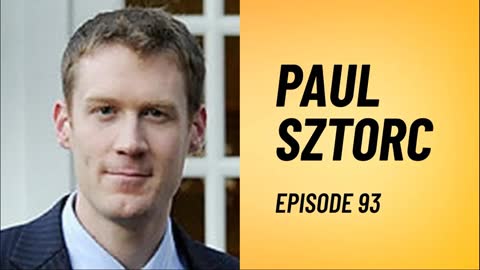
0:00 Our regular host Blake is in a different time zone right now, so I will be doing this by 0:14 myself and Blake will be back shortly. 0:19 So before we begin, I have a bit of a spoiler. 0:22 We're going to start a new show on the ShakeCoin.com podcast network with a celebrity from crypto 0:30 Twitter. 0:31 I'm not going to name his name, you can try to figure it out. 0:36 He is a former professional poker player and richer than all of you combined. 0:42 And yeah, I'm not going to spoil anymore, we'll write about it on Twitter. 0:48 So back with me and the show today is Paul Sztorc. 0:54 Paul Sztorc is a statistician, an economist, a game theorist. 1:01 You have worked under a Nobel laureate until you quit academia and turned a full-time Bitcoin 1:10 developer. 1:11 Paul speaks at pretty much every Bitcoin developer-focused conference for, I don't even know, let's call 1:19 it eight years. 1:21 I don't even know. 1:25 You are not a libertarian, you're not a carnivore, you're not crazy, you're quite reasonable. 1:31 And you are currently the smartest person I know and the only true Bitcoin Maxi. 1:39 I know. 1:40 I don't know how that circle shrank so much from how big it used to be, but there it is. 1:48 Yeah, it's impossible because it's one of, I forget what the name is, but it's one of 1:53 those things where you don't get new Bitcoin Maxis, you get fake ones that try to make 2:01 some money, but it's a shrinking population, right? 2:06 I guess so. 2:08 There was a time when it was much more reasonable, like 2015, it was very reasonable. 2:15 There was nothing in Bitcoin's way, it was just going to succeed and it was going to 2:20 take everything over. 2:23 And now it does seem like there's something like a three or so percent chance that Bitcoin 2:31 is completely replaced by something else. 2:34 Oh, I forgot, there's a disclaimer here. 2:38 So we're going to be talking about a new venture you're doing and I am an investor in that 2:42 venture. 2:44 So we'll get to what that venture is later. 2:47 So I mean, we already talked about it. 2:49 So Bitcoin today, January 23. 2:56 Where are we? 2:57 Like, what is the good? 2:59 What is the bad? 3:03 What do you think? 3:04 Well, I mean, we've got a lot going on, as we always have. 3:08 Bitcoin is a great idea and it is good to have discipline and say no to people who want 3:16 to screw it up. 3:17 And that we're very good at that. 3:19 I think we have gone completely off the deep end in terms of Drivechain or BIP300 was designed 3:27 to be the exact opposite of what the mandatory block size increase that everyone was talking 3:32 about back in 2015, 2017, 2018, whatever, that whole period. 3:38 That was like a mandatory thing that everyone would have to do and you'd have to coordinate 3:41 the switch. 3:43 But BIP300 is a soft fork, it doesn't affect anyone's full notes, it was designed to be 3:47 the opposite and it was designed not to have any negative impact or really any observable 3:53 impact at all on the people who didn't opt in. 3:57 I was going to get to the BIPs later, so I was going to think about what do we have today 4:01 on Bitcoin. 4:02 We have El Salvador, have you heard of El Salvador? 4:07 Yes. 4:08 Have you heard of Michael Saylor? 4:09 Yes. 4:10 He has a great intern doing his tweets or whatever. 4:14 I don't know, maybe he is a future of Bitcoin because we have, I mean, it is good probably 4:21 that we have attracted some boomer, a very greedy boomer with many, many bankruptcies 4:27 in his past. 4:28 We want greedy people. 4:31 Who has weaponized the leveraged financial system and Wall Street allows you to use completely 4:37 leveraged it against itself by buying Bitcoin in a company, public company and using the 4:44 shares in a public company to leverage up and buy more Bitcoin, which I think is great 4:48 for Bitcoin. 4:49 I agree. 4:50 But also it's created. 4:51 Hopefully that's where the government bailout. 4:54 That would be amazing. 4:55 Oh my God. 4:56 That would be amazing. 4:57 I love that. 4:58 Organized by the Fed. 4:59 That would be beautiful. 5:02 So I think that's a feature of Bitcoin. 5:04 He has understood how to leverage Bitcoin against. 5:07 And remember, people wanted, they wanted, remember the Bitcoin ETF? 5:12 Like this is just a weird idea that just, it keeps orbiting. 5:15 Like we've gone, it's like a Schrodinger's ETF, like we sort of have it and we don't 5:20 have it. 5:21 But when MicroStrategy just buys all this Bitcoin, then you just, if you want to own 5:25 shares of MicroStrategy, buying Bitcoin, it's a Bitcoin ETF. 5:31 If a boomer asked me how to buy Bitcoin, honestly, I can just tell them by MicroStrategy because 5:35 I mean, how much, how much overhead can they have and is leveraged. 5:39 Yeah. 5:40 Right. 5:41 I agree. 5:42 So that is a feature. 5:43 And what is the, what is the bad? 5:47 Well, unfortunately I think stuff has been settling in a little too much. 5:52 You have the so-called static society, you know, things don't change. 5:58 Don't you usually say that a static society is a dead society? 6:00 Yeah. 6:01 Right. 6:02 It's not good. 6:03 We don't want that. 6:04 It's the kiss of death, honestly. 6:05 So people have an idea that is a good idea, which is we want to make the network reliable, 6:14 but they forgot that, um, like a naive reliability, uh, like, so there's a big difference between 6:23 like Gutenberg standardizing the alphabet on 26 letters, but you being able to print 6:31 an infinite variety of books on top of that, so you need the second layer that the stability 6:37 at one layer is all about the flexibility on the upper layer. 6:41 So it's similarly when people want Bitcoin to be reliable and simple, very dumb, they 6:46 don't want to do anything. 6:48 What they have in mind is that I, when I transact with it, no matter what I want to do, if I 6:55 want, if I want to like, you know, um, do whatever, uh, go shopping on the darknet market 7:01 or whatever I want to do, ransomware, weird exotic thing, capital flight, then I won't, 7:09 we're not going to mess that up. 7:10 So the stability at one layer is all about flexibility at the upper layer, not about 7:16 just stopping everything in the way it is. 7:18 And in particular, where people really think is they just think we, uh, we're going to 7:25 succeed no matter what, nothing can stop Bitcoin success. 7:30 And it's when you think that, that actually you're doomed. 7:36 And, um, and you talked about this before, but what it's done, I mean, Bitcoin has always 7:42 been very dismissive of Ethereum. 7:44 I was one of them. 7:45 Uh, I, like I bought the, I bought the Ethereum ICO because it was very exciting. 7:50 It was like the first time that was done, uh, and then was completely dismayed by the 7:54 amateurness of the development process, uh, the way this squandered the funds and lawyers 7:59 and many things. 8:00 But over the years, uh, you cannot say that that is Ethereum anymore because simply, uh, 8:07 it is not the same thing anymore. 8:09 And, uh, everything has improved, including the coin distribution, you know, most of the 8:14 wells have gotten wrecked by themselves. 8:15 So this is solved itself. 8:16 Uh, so what, what do you think is the big problem as you say, but as you also say, since 8:22 these people were terrible people, they, they, they lost it. 8:26 Yeah. 8:27 So what is the, what is the risk? 8:30 I mean, on Ethereum and you'll have people like Udi probably saying Ethereum is a ultrasound 8:36 money because it's, uh, you know, the money supply is shrinking, which, uh, I'm guessing 8:42 you will say is irrelevant, uh, because it's short term and not so much, but what about 8:48 the amount of fees people are paying on Ethereum compared to how much fees they are paying 8:53 on Bitcoin? 8:54 What does, what are the numbers and what does that mean? 8:57 Well, there's a very disturbing trend because of how reliable it is. 9:02 You can take all the available data and put it on a log scale. 9:05 So you get this big, you know, big view of everything and you can see that it goes up, 9:13 uh, uh, you know, first it doesn't go perfectly steadily, but overall it goes up on a straight 9:19 diagonal line from being 1000. 9:22 This is the ratio of all Ethereum, the purchasing power in U.S. dollars. 9:26 So this is all the, the amount of money that regular users are spending on Ethereum fees 9:32 divided by the ratio of Ethereum to Bitcoin in terms of transaction fees. 9:37 So this is who's paying more to use the blockchain. 9:41 And it's going up a straight line on the log scale. 9:43 Up and up and up and up and it passes being equal a long time ago and there's now, you 9:48 know, 10 to a hundred times. 9:51 Does that mean that everyone in the world is stupid or does that mean that Ethereum 9:57 is overtaking Bitcoin in, I don't know, could you say security? 10:04 Could you say, I don't know. 10:06 Well, it has more paying customers. 10:07 Ethereum also sort of cheats somewhat to get this because it's not a completely apples 10:13 to apples comparison because there are different block times and things. 10:17 But mostly it is an, mostly it is an apples to apples comparison. 10:20 Like it's, it's not perfectly, but it, there's no way that that could happen in a world where 10:26 no one cared about Ethereum. 10:29 They care about it as least as much. 10:30 The people actually use it. 10:32 So again, this is the intrinsic value. 10:36 This is the big thing that someone has to do is someone has to like make a movie called 10:40 intrinsic value or like a short, like a little YouTube short, like a little animated thing 10:45 or like better. 10:46 It would be really good if it had real actors, you know, someone, someone, people using the 10:52 Bitcoin, excuse me, the Bitcoin, you know, the, any blockchain for something. 10:57 So like these would be like broadcasting a message, it could be someone on the run and 11:01 they broadcast a message in the blockchain with Opportunity through their like their, 11:05 their public key, you know, like someone like, and yeah, that was what you, that's what you'd 11:10 have to do is write this story so that like these, this young couple are reunited and 11:15 otherwise without the blockchain, they would never have been able to find each other or 11:19 something like the refugees or something like that, you know, we have the Ukraine thing 11:24 in there, we've all the stuff in there and it'll be that emotional stuff so that people, 11:29 but that is again, but people have an enormous anxiety about this topic of what does the 11:34 blockchain actually do in the real world? 11:36 But there's lots of things. 11:38 I mean, I think, I think what you said is I'm going to use that. 11:42 I think that's really good. 11:43 It's, it has more paying customers, because in anything else in this world, if you say, 11:51 you know, if you tell me that a certain, a certain product is better than another, 11:58 because you're some kind of a hipster or I wouldn't even know. 12:01 But if you say, well, if you look at it, people do prefer this one over that one. 12:05 It's pretty, it's pretty simple if you just say like, what do people prefer? 12:10 OK, anyway, and yeah, because with Bitcoin, I don't know if this is real, but to me, it's 12:15 felt like a bit of an issue with the static block size that if the fees are low, we have a 12:23 problem because that means we have no users. 12:26 And if the fees are high, we have a problem because there's problems with using it. 12:33 So Ethereum has, I mean, Ethereum has a solution to this, which is all this moon technology 12:41 that may or may not be invented, but they're already offloading a lot to these layer twos. 12:45 I know because I'm an Ethereum user. 12:48 So, for example, if you want to, if you want to invest in a decentralized, if you want to 12:54 invest in a pretty like, in a pretty even safe basket of crypto, there's a service called 13:02 GMX. I'm not ref coding this, I'm just mentioning. 13:05 There's a service called GMX that maintains, maintains an index like this. 13:10 You put money in and it's like it's divided across like Bitcoin, Ethereum and some fiat. 13:17 I don't know, stable coins and just maintains this. 13:19 And when you put your money in there, you get the appreciation of the underlying assets and 13:25 also you get a cut of the profit from people trading against this pool. 13:31 So, but that smart contract cannot run on Ethereum because it's using too much gas. 13:36 So it runs on like an L2, which means the base token is also Ether called Arbitrum, which I 13:42 know very little about, but I use it every day. 13:44 I know a lot of people use it. 13:46 So this offloading is happening. 13:48 I'm not going to claim Arbitrum has the security of Ethereum because it clearly does not. 13:52 But it's like shit is working, you know. 13:55 We don't want to live in a world where people have to justify something. 13:59 So what you said was very important, which is that you use it, but you don't understand it. 14:03 Everything that is good works like that, actually, believe it or not. 14:08 You know, Frederick Hayek, when he won the Nobel Prize, he gave this speech about the use of 14:12 knowledge in society and he said, we're supposed to think, we're often advised to think about 14:17 what we do. But if everyone did that, we would only be able to do very, very little. 14:23 We would, you know, we would all be our own farmers. 14:25 We would be our own plumbers. 14:26 We would be our own everything. 14:28 And it would, everything was, you know, mostly when you buy clothes, you have no idea how 14:33 they were made, really. 14:34 You have no idea where the thread came from. 14:36 When you use a computer, you have no idea about the operating system. 14:39 You have no idea about the silicon. 14:40 You have no idea who's generating the power or why. 14:42 And that is the same. 14:44 That is the same as Bitcoin. 14:45 I mean, the first time I use Bitcoin, I download the exe file. 14:48 It's like a graphical user interface on Windows. 14:50 It's got three tabs. 14:51 Overview shows your transaction history and there's a tab called receive, which shows an 14:56 address you can share with people so they can send you funds. 14:59 And there's a tab called send where you paste an address in the amount, click send, and it 15:03 appears in the transaction history in the overview. 15:05 And like this shit could have been PayPal, you know, when I was downloading it. 15:09 I literally didn't know it could just run on Satoshi's server in his basement. 15:16 But like, I don't know, somebody said it works. 15:18 And I looked into it later when I had more staked on it. 15:23 So moving on. 15:25 No, but it's a very important point because it is about what's wrong with Bitcoin today is that 15:31 there's a need to like justify everything. 15:33 So, for example, my my BIP300, you know, I just you have to field questions from it all the 15:38 time. And it doesn't matter, like, you know, like in the in the real world, people would just 15:42 use it in a functioning thing. 15:45 They would just try it and use it. 15:46 And if it didn't work, then they would not learn about it from using it. 15:53 But I guess I guess an issue on Bitcoin that we have today is that we're we are and this will 16:00 lead to the next point, which is we're not able to build on it like we're we have no way of 16:08 establishing these layers like the Arbitrum or the DeFi and Lego pieces. 16:13 We always thought we would, but we don't. 16:16 And it's not that it's not that people don't want to do it. 16:19 It's like they don't have a way to express that, which leads to what is and you have to 16:28 promise to keep this very short. 16:29 What is Drivechain, BIP300/301? 16:33 OK, my plan for sending coins to a different piece of software and back. 16:41 So this is my sidechain BIP. 16:43 That's so so so pretty much how I use Arbitrum. 16:47 Right. Well, that would be the ideal thing is like, you know, no one could be a specialist in 16:52 everything. So you have to be a layperson and something, as I just said, it's like this is very 16:58 desirable for someone. 16:59 The issue is really like it was designed from the ground up to have this property where it 17:04 doesn't affect anyone who's not using it at all. 17:07 But people just kind of don't they decide they just don't believe that. 17:10 And and the other thing is it can be added with a soft fork that's optional and it can also be 17:15 later erased by a soft fork. 17:18 So there's literally no downside whatsoever. 17:22 But still, this is what has happened in the Bitcoin community is, you know, it's not as you 17:27 say with people. 17:31 There's just there's no will to actually do anything because everyone thinks that everyone 17:37 this is my view is that everyone because of the scaling war, people got xenophobic, resistant to 17:42 all change, and they just think that Bitcoin success is preordained. 17:45 Now that we kicked out, we had to just kick out Roger Ver. 17:47 And then it was that was it. 17:48 That was that was the test. 17:50 And now we passed and we will be rewarded in the afterlife or whatever. 17:55 Yeah, I mean, I guess I guess the problem is like say this kick out Roger Ver thing, but like 18:01 and and get left with who. 18:04 So there's some maybe there's like a I guess it's like a vacuum. 18:08 There's no there's no like we don't have a vitalic what's at all. 18:13 We have no one. 18:16 Well, yeah, Vladimir decided to step down and he did so in a way that he did not name who would now 18:24 be the owner of the Bitcoin repository on GitHub for what that's worth. 18:31 So it's very unclear exactly what happened with that. 18:35 So at least to me, if anyone knows, tweet it to me. 18:40 I mean, so Drivechain is sidechains for Bitcoin. 18:42 Actually, it's so easy to explain these days because so many people use like Optimism or 18:49 Arbitrum and they don't really they just know that it's cheaper. 18:54 So people are actually using they're using sidechain technology today on other chains. 19:00 I know this like Cosmos has something I'm a bit unclear how it works, but so people actually 19:06 use it today. But I guess the difference with Drivechain is that the creation and also 19:11 destruction of the sidechain is itself decentralized. 19:15 Right. Which is a huge difference because it's a company. 19:20 Optimism is a company. 19:22 You know, the zero knowledge chains on Ethereum, they are companies with offices in New York 19:27 City and lawyers like this is this is not some utopian libertarian dream. 19:32 And often they have like the backup key or whatever, like the the dev key that can like 19:38 whatever, just like reset everything or something. 19:40 At least halt the chain. 19:41 Yeah, for sure. So so what is what is the progress of getting this? 19:50 This, I promise, is the last sad thing. 19:52 So what is the progress of getting Drivechain deployed on Bitcoin today? 19:58 Yeah, well, I mean, I think in the past I was more interested in I wanted to like do the 20:04 right thing and like try to explain it to people because I thought, you know, there's no 20:09 consent without informed consent. 20:11 And I want people to understand what's going on. 20:13 People clearly didn't know anything about SegWit when that was activated. 20:17 You know, nothing about it years afterwards. 20:19 So I was like, I didn't really want that to happen. 20:22 Now, I kind of think like that's a big issue, because when you try to explain it to people, 20:29 then you're beholden to how much effort they're willing to put in. 20:31 And I have learned that an enormous percentage of people are not willing to read the BIP 20:37 text or try the software or read anything or they won't even read the titles. 20:42 Many of the people don't know the titles of the BIPs or whatever. 20:45 So but mostly I think it actually has been going very well over the last two years. 20:49 You know, I get invited to more and more and more conferences. 20:51 I get invited on more and more podcasts. 20:54 People seem to be getting the idea. 20:56 But as I said before, we don't want to live in a world where everyone actually understands 21:00 everything. No one actually wants that. 21:03 But that's kind of what I was trying for at first. 21:06 Separately, though, I did since none of the critics have ever had any idea what they're 21:13 talking about. And all the proponents agreed with me about the potential. 21:18 My main strategy has just been to build the useful stuff. 21:21 So the Zcash sidechain. 21:24 They will come. Yeah. 21:26 And so so they have a tangible demonstration of what it's for, but the prediction market 21:31 software, the scaling sidechain. 21:33 So we built like an NFT sidechain, a bit asset sidechain, basically. 21:37 And so we have a bunch of stuff going on. 21:40 And, you know, I'd like to do more. 21:41 I'd like to do a Namecoin thing. 21:43 We haven't really found the right person for that yet. 21:47 But I would love to do that because I think that idea is great. 21:51 And we're going to copy Seacoin. 21:54 And we're going to go. I've always liked that project. 21:57 Yeah. So the goal is to copy the projects that are actually useful so that no one can ever 22:03 have this intrinsic value anxiety again. 22:06 So they people when because this is this is horrible to watch, you know, when you've been in 22:11 Bitcoin for a long time and people go on whatever Joe Rogan or they go on whatever it is, a 22:15 big a big television show and they just think this it doesn't do anything. 22:19 And you're like, no, it does a lot of important things that only it can do. 22:22 But but that you have to teach something like that by example, I think. 22:27 And so that leads us to the next one, which is. 22:33 What what is LayerTwo Labs and. 22:39 And why are you attacking Bitcoin? 22:42 Right. I think, well, you know, as a lot of people have said over the years, including you, 22:47 but including other people, friends of mine, they've said, you know, Paul, you have to start a 22:50 company and blah, blah, blah. 22:52 You're you're so great, et cetera. 22:53 People send me up, sell these nice things. 22:56 Are they true? No one knows. 22:57 But the the company is an attempt to actually kind of get something serious because for a 23:04 while I kind of do what I like, enjoyed the criticism of Drivechain because I come from 23:09 like academia where like criticism is like really serious and you just you just dwell in the 23:15 seriousness and you you just nothing affects the real world. 23:18 So you can just be like you can just be like, ah, you know, and you can just be like this 23:22 idea. You can you can you can sit around with all your other academia friends and jerk each 23:27 other off. Yeah. 23:28 And that's like criticizing each other. 23:31 It's like the jerk, an S&M thing. 23:33 You're like, oh, like this footnote, such and such believe. 23:38 And I was kind of just like, I don't know, like, OK, let's just like get this for real. 23:43 So it's a lot about building a team. 23:46 It's a lot about building a lot of people with skin in the game, people who would benefit as a 23:51 result. What are you what are you made? 23:53 What is LayerTwo Labs making? 23:54 What is its first product? 23:56 We have the making this demo software. 23:59 So we're making the sidechains. 24:00 We're making the we're making improved improvements to the Bitcoin node software, which 24:07 many of which you can see right now already. 24:09 If you go and download the software, the drivechain.info software. 24:14 Yeah, I'll show the banner here still on the bottom of the screen. 24:17 You can download. 24:18 We're making these sidechains. 24:20 We're making this we're making the Zcash clone and making the Ethereum clones. 24:23 We're making up the sidechains that that's what we're going for. 24:26 And we want to demonstrate the potential of all this technology by actually building it. 24:32 So that's the best way to teach people. 24:35 So, yeah, I don't think it's I don't think we need to talk so much about like how sidechains are 24:41 created and destroyed and where the fees go and all this stuff, because that's that's already 24:48 been done a lot. But perhaps you can talk about the different sidechains you guys will be 24:56 making at LayerTwo Labs and so what they are. 25:00 And what the functions are. And maybe for the copy ones, what will happen to the original? And so, like, will we have smart contracts? Will we have prediction markets? Just give it up. 25:12 Yes. OK. So we're going to copy, first of all, like Zcash and Ethereum, because Zcash has extremely useful privacy technology. And also the Zcash protocol has kind of weird, has like attacks and stuff. So we're just going to delete that and copy the what what makes it great, which is all that research that R&D into the Zk protocol. 25:42 Privacy technology. So because we want that and we want Ethereum just because it's the number one competitor to Bitcoin. So we want to just show that no one is safe, basically. And we're going to have large blocks are bad on layer one, but on layer two, they are perfectly harmless and very good thing. So that's very easy to do. We're going to do that. 26:04 We're going to have lots of optimizations so that that's a very sane and simple idea for payments. We're going to do the prediction markets. My prediction markets project that was originally Truthcoin is now at BitcoinHiveMind.com. The purpose of the prediction markets project is very important because it has this peer to peer Oracle that tries to figure out what is happening in the real world. 26:27 And that means you can wager on that as long as you know about that. So that means that this entire world of derivatives is open to you, including these very important conditional markets, such as should we keep this CEO or not? Or should we keep this president or not? And you can just not only can you use them to easily figure out what an organization should do, like what you should vote for or whatever. 26:54 But you can also if people if you know that someone is going to be a good president, but they'll never get elected, or if you know that someone is going to be a bad president and they will get elected, you can use these markets to just make money off of everyone else who doesn't believe you. 27:10 Yes, we've actually done an episode. We've done an episode before on this. So we're going to link to that episode. I know which one you talked about conditional markets. If you give me more than two drinks, I will force you to watch the whole presentation you gave on conditional markets on YouTube. I've shown it to so many people. They've been very reluctant. They want to listen to dance videos on YouTube. But I forced them anyway. 27:35 So there's a privacy chain. So it's basically, if you want to make the perfect Zcash, all you have to do is remove the token because the economics are awful and people hate it. 27:49 Exactly. One thing that sidechains won't copy. It's the thing that people don't like. So technology is great, though. The fact that the privacy accumulates, it scales, like that you're in the pool, the more users you have, the more people you're mixing with. So it's desirable that way. 28:09 And so there's the privacy chain. And there is the storage chain, you mentioned, which is inspired by SIA. 28:19 Yes, we want that. 28:21 And there is the Ethereum chain. 28:25 Ethereum, yeah, large block. 28:27 So Ethereum, you can plug, you connect your Metamask like you're connecting to some other EVM network. But it's on Bitcoin. 28:38 Right. You can get this. This is like an Ethereum clone, but there's no ether there. It's zero. And you can send BTC from layer one into it and you get credited with stuff, Gui or whatever over there. 28:56 And, you know, and that's where it comes from. And then you can send it back. When you're done using it in Ethereum world, you send it back. This is the whole point of sidechains. 29:05 Okay, so I can... 29:06 RSK, they've said, you know, they plan as soon as physically possible. They want to turn their project from the federated model that it is into BIP300 sidechain, but it's just not possible yet. 29:23 And, yeah, so I can basically clone all my favorite smart contracts onto this EVM sidechain. 29:31 Yes. In fact, we made it by cloning the latest version of Ethereum and then just adding a couple changes into that. So now when we make the clones, we have ones that we make from scratch. And then we have ones that we clone. 29:42 Now when we clone, we start with the altcoin node and we change it from there back and we have like a little module. So we just change it to like, we make it like, we turn it from altcoin to sidechain and then it's mostly their technology that we, it's almost all their work. 30:00 So you have a fork of GoEthereum? 30:04 Yes. 30:06 Oh, but you know, that's how all of these other EVM chains work. They're just like even Binance Smart Chain, they're all forks. I think even Tron is an early fork. 30:16 Yeah, I think that's very, I mean, this is the idea of horizontal scaling, which gives us the large block sidechain idea, which is very different. Having one layer one block that fills the whole world is very different from having one small block main chain and having a team of different large block optional layer two sidechains. 30:37 And you could mostly stay and your fraction, you're the one that you actually use, ignore the rest. And then you're mostly immune to any kind of problems that happen on there, you can recover and go back to the small block main chain at any time. 30:53 And have you thought of the possibility of ending up like Avalanche, where Avalanche has its own chain, I believe it's called the X chain, which might be the governance chain, and there's like a staking chain. But when people use and think about Avalanche, they think of what is called the Avalanche C chain, which is an EVM fork, which is the only one that people use. Have you thought that this could actually happen? 31:23 Well, I think, you know, it should be up to the users, whatever the user likes, whatever the customer likes, that's the thing, you know, at the end of the day, I mean, obviously, if you, there are people out there, like who, it's their job to be like an executive, like a Steve Jobs or something, you know what I mean? Like their job is like, like, like, Ford said about if I asked the customer, they say they wanted a faster horse or something. So people out there have to decide what they think the customer is going to like, but 31:53 at the end of the day, the customer gets the last word. And if they like something, then that's what's going to be used. But I have a lot of ideas about what people will like. I mean, Namecoin is another example of something where I just think the, the potential is enormous. And the way we currently use the internet is so annoying compared to what it would be like if we had just, we just had Namecoin out in the world, it would be like impossible to deplatform people. 32:23 You would have the same screen name on every single website, you would never have any passwords again, you would just have a username. And it's something else, something, some app or something that would give you the six digit PIN to log in. And that would be gated by the 12 word seed or something. And so we have, there's an enormous amount of improvements to everyday life that are possible just from the Namecoin sidechain idea. 32:53 That just is like not, we just never got around to like, no one never got around to like finishing. So. 33:23 You can do like old school, old school crop insurance. You can figure out how much your house is worth, maybe, like, I don't even know. 33:38 You can, I don't know the sum, the liquidity. 33:40 Not your house, but the area, the area, the city you live in, you can figure out what the property prices are like that. 33:49 The key is betting on the future and then comparing two different futures to say if we, if this was the mayor, what would be the value of all the land in whatever, Chicago, and it versus if this person was the mayor. 34:01 Yeah, it's like, if I put on this shirt, and I go out, what is the probability that I'll find a date? 34:13 That's theoretically possible. Sure. It does. Prediction markets can't aggregate any knowledge that doesn't exist. 34:20 So if you bet on what's this coin flip going to be while the coin is still in the air, it can't do anything magically. 34:27 But in theory, all that is possible with the right management of liquidity, which I think is another thing that unfortunately is very misunderstood. 34:35 And that explained what to do a long time ago, but people just don't listen and it has to be shown by example, I think. 34:42 Yeah. So to finish this off, everybody needs to download and test your software. 34:49 That's what you want. It's on the bottom. And like I said, 34:55 easier and easier over time, where eventually there will be no, there will all be one, there will only be one launcher application. 35:03 And eventually, maybe, hopefully, you'll even be able to just run the software from far away, like through a web browser or something, we're going to try to make it as easy as humanly possible for people to run. 35:13 But right now, it's not that easy. So you will. But that is the best way to, to really figure out what we are up to. 35:20 And as I mentioned, we have a new show coming up with a new host, an anonymous Bitcoin crypto celebrity. 35:32 And Paul, where are you speaking this year? Where can people find you in meatspace? 35:39 I was invited to a lot of stuff. I think I'm going to be at, I'm going to be at the big Miami conference. 35:45 I'm going to be at MIT Bitcoin Expo. I'm going to be some other places. I think there's the Texas one that is like a layer two one. I'm going to be at that one. I think I'm going to be all around. 36:01 Okay, okay. And everybody, you should follow Paul on social media. We're going to have links to that in the in the show notes. 36:12 And of course, follow Chikunicom on Twitter, and subscribe to the weekly newsletter, which is all memes and no alpha. 36:21 And thank you for coming on the show, Paul. 36:24 Thanks for having me. I love the newsletter. It's the best, the best newsletter, I think out of every newsletter I've ever even heard of. So thank you.