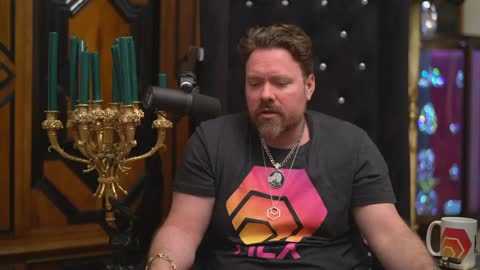
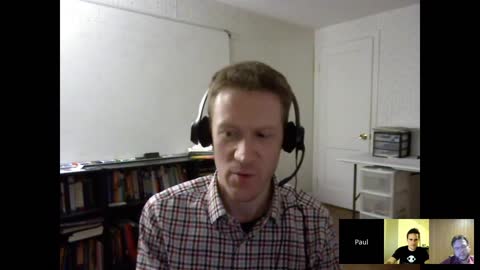
0:00 Alright everybody, welcome, welcome here, we've got another great episode, special guest 0:17 Paul Sztorc, Paul, many of you no doubt know, he is the main guy behind the Drivechain and 0:25 Bitcoin Hivemind protocols, also does a lot of blogging, a lot of work in Bitcoin, very 0:32 happy to talk with him today about Drivechain and a bunch of topics during these pretty 0:37 interesting times. 0:38 Paul, thanks a lot for joining, welcome. 0:41 Thanks for having me. 0:42 Yeah, appreciate it, just kind of a little funny thing to start, we were talking pre-show 0:46 how I should introduce you, you don't like the word founder, as in founder of those protocols, 0:51 is that correct? 0:52 Yeah, I think that conjures this metaphor of the Silicon Valley startup, and I've always 0:59 thought that that metaphor was a mistake and a sort of illusion, and that there are these 1:07 people out there and they're all starting this, they're like the founder, they're the 1:10 king of their little startup, and then they're going to make a lot of money. 1:13 And I don't like, yeah, people would do their like, when you see like the shirts, people 1:16 make like the shirts that have whatever on it, I don't want to call anyone out specifically, 1:21 but you know what I mean, like, like an Ethereum shirt or something, something like that, in 1:27 the early days, and then they're like, this is going to be really big. 1:30 The founders will make a lot of money because they own a lot of coins. 1:34 And I'm still an adherent to the old, like, Bitcoin uncensored world where there's a tremendous 1:42 emphasis on keeping your head down and regulatory arbitrage. 1:48 And it's kind of, when they use the phrase, the Bitcoin users, that was always a kind 1:54 of joke. 1:55 And there was a euphemism for like, people buying hard drugs and prostitutes or something 2:02 on the internet. 2:03 And so that was what they, whenever they said, well, but what about the Bitcoin users? 2:08 That was a joke. 2:09 Like the audience knew they were talking about sort of unsavory characters, the dark part 2:14 of the world that we try not to look at or talk about. 2:18 But then sometimes their guests wouldn't know, they would think that it would just be someone 2:21 downloading an app or something. 2:23 And so I've always, I've always hated the metaphor of the startup. 2:28 And I think the founder kind of, founder kind of tilts it too far in that direction. 2:32 But we didn't quite even resolve it. 2:33 And I think I said the main guy, what would you prefer? 2:36 The main guy is fine. 2:38 That's why he asked me before, what do you want to say? 2:40 And I was like, I don't know, just say the guy behind Drivechain or whatever. 2:42 Isn't that, that's good enough, right? 2:44 It's fine with me. 2:45 It's fine with me, man. 2:46 Yeah. 2:47 Drivechain.info, everyone. 2:48 Yeah. 2:49 We'll plug it enough, I'm sure, during this episode. 2:51 A lot, I'm sure. 2:52 But yeah, that's definitely where I wanted to start. 2:55 We talked about it. 2:56 We interviewed you actually about two and a half years ago. 2:58 I was checking. 2:59 Yeah. 3:00 A long time ago. 3:01 Yeah. 3:02 I think we'll talk about some of the same topics, some other different ones, of course. 3:04 But I know you've been working on this a long time and I know that it was sort of a means 3:07 to an end for the Truthcoin project. 3:09 I know. 3:10 Oh my God. 3:11 It's been going on forever. 3:12 How deep do we want to go on just an update? 3:15 Well, yeah. 3:16 I mean, we have in the last, over the last two and a half years, it's obviously been, 3:20 I mean, there was no software before and now we have pretty decent software that has like 3:25 sort of a, I don't want to say a slick user interface, but it's almost, it's just a couple 3:33 more, a couple more things and then it will be possible for a random person to just download. 3:39 I mean, soon, we almost, we just got like Windows binaries, but they won't be here. 3:47 So we're like, we were kind of like Linux only for a long time, but very soon, maybe 3:53 even by the time, I don't know when this will air or a week afterwards or something, it 3:58 should be possible to, for regular people to just download this testnet software and 4:06 then make, send coins from the first piece of software to other pieces, the test side 4:14 chains that we have. 4:15 We have some test ones and you can send coins to other chains and then use them over there 4:20 and then send them back. 4:22 And in so doing, you'd be able to see for yourself exactly how Drivechain works, which 4:27 I think at this point is the way that 99.9999% of people who ever understand it will come 4:38 to understand it. 4:39 So that's the route that most people, I mean, I try very hard to explain it, but it just 4:45 doesn't seem to work, but I'm not deterred because when people respond, it's just clear 4:50 from what they say that they have not taken in what I have tried to describe, which could 4:58 be my fault. 4:59 But the point is working on the software and particularly trying to make the software work 5:03 really well and try to have it have this GUI that explains what's going on or just lets 5:12 you see what's going on. 5:13 That is my new strategy for advocating for the project to basically finish it, but also 5:21 finish it in a way where you can kind of see what's going on. 5:23 I think that, I mean, another thing, this is similar to what happened with Truthcoin 5:29 or Hivemind, which is that how well it parallels what happened with Bitcoin, where you would 5:35 read all these explanations and then I was like, okay, I did tons of reading and I was 5:42 excited. 5:43 The first thing I read was the Silk Road piece about people who are drug addicts have successfully 5:50 been using this to buy drugs. 5:52 And I was like, okay, those lay people could figure it out and merchants needed it because 6:01 they couldn't accept credit cards. 6:03 So I was like, oh, I thought it was too late. 6:06 Everyone has figured it out already. 6:09 So I was kind of gung ho about it and I downloaded the software at that point just to try and 6:16 see if I could figure out how it worked. 6:19 And I got some coins from Gavin's Faucet and then I waited for the six confirmations and 6:26 then I was like, good, I have six. 6:28 And then I closed the window and then I went about my day and like, I don't know, a day 6:34 and a half later I opened it up and then it was like, oh, I have somehow now I have like 6:39 250 confirmations or whatever, you know, instead of six. 6:43 And I was like, where did these extra confirmations come from? 6:45 Like, I had no real idea about how it worked until I used it. 6:50 So that's kind of where I'm thinking now about taking Drivechain. 6:54 You got to do it that way, right? 6:55 Back to the using joke, I mean, I think once you do start, once you try it, once you go 7:00 through the steps, whether you're, I guess, a developer or even just the user, once you 7:05 start using it, you really do start to understand sort of the why and how it works. 7:10 The software is there, it's available. 7:12 I have to admit myself, I haven't tried it. 7:16 I know it's like testing that still like very like, oh, that's fine, you know, and we constantly 7:20 improve it. 7:21 So, of course, every version is now very shameful in respect to the current version. 7:28 And even the current version is the one that Patrick and I are tinkering on is that we 7:33 have the newest version, which is even better, and it's shameful for people to download 7:38 the old version. 7:40 But it does work and you can send coins to different pieces of software and back, which 7:44 is the goal. 7:45 And you can mostly see what it's doing. 7:49 So that's nice. 7:50 Using it would obviously be the best way for people to learn. 7:52 But for those that haven't, and I know you've done this a thousand times, can we just quickly 8:00 provide an overview why Drivechain and sort of what would be the benefit of using Drivechain? 8:07 Yeah, well, OK, it's weird because for some reason it's much more challenging to explain 8:14 than I originally had thought. 8:17 And I think there must be some kind of social or emotional reason for this, because the 8:21 objections people have are all ones that I anticipated when I wrote the original November 8:27 2015 blog post about this idea. 8:31 And every objection I've gotten since, it's kind of surprising to me. 8:37 If I reread the old post, I'm just like, yeah, I knew exactly where the stumbling would be, 8:43 but I've done apparently not enough to. 8:46 But yeah, what it does is one thing, the problem it tries to solve is that people are very 8:51 different and we all disagree about what Bitcoin should do or what it should be. 8:59 And for the most part, we don't disagree enough for it to be problematic. 9:05 But eventually you have stuff like Ethereum, Bitcoin Cash, et cetera, Zcash. 9:14 So there are these disagreements among people. 9:18 So there's one school of thought says that, well, everyone can just deal with it and, 9:23 you know, we'll just, we don't, everyone, Bitcoin is preordained to win and everything 9:32 else is a scam that will collapse into the dust in ruin. 9:37 And everyone will be saying, please let me into the Bitcoin Citadel, please, you know, 9:44 whatever, be a good servant or whatever it is. 9:48 So that's this one view that people have. 9:51 But I think that that is pushing it just a little too far. 9:56 And so I've gone with this Drivechain idea, which is the original concept behind side 10:00 chains, which is that if you really want Bitcoin to do something else, you should be able to 10:04 start a completely new piece of software that has no coins on it, no Bitcoin. 10:11 And you can send Bitcoin from Bitcoin Core over there and over there you can do whatever 10:18 you like and the coins can change hands an unlimited number of times in an unlimited 10:23 number of ways. 10:24 And then the new owners can redeem them. 10:28 This is the trick. 10:29 The new owners can redeem them back for original layer one Bitcoin Core BTC. 10:36 So Drivechain is a layer two, like the Lightning Network. 10:39 And sort of the two, well, I'm sure there's more, but the two benefits that I'm hearing 10:44 from the answer and what I understand anyway, is that one, it can help with scaling over 10:49 time because you're not doing everything on the main chain. 10:52 And the second is that you can sort of do what you want. 10:54 You can be creative. 10:55 You can do other things. 10:57 Not talking about any risks or problems, but those will be the two main benefits. 11:00 I think it discharges this negative energy that builds up when people say they want, 11:08 you can see it with the scaling war. 11:10 Some people said they want, and you even see it now about what was the last, we had this 11:14 absurd dust up over that variable name being changed from blacklist to blocklist or whatever. 11:21 So people disagree. 11:22 We live in a world where people disagree. 11:24 And I think it was only because the Bitcoin community was small and had a unified purpose 11:29 that it made it like the first five years. 11:33 And then if people disagree and you see what happens when people disagree, well, they either 11:39 try to change Bitcoin into what they want or they have to leave or they do a fork or 11:45 they do something else. 11:46 So whatever it is, I see it as this ominous threat to Bitcoin and also a lost opportunity 11:52 because who's to say that the new thing is better? 11:56 It could be better. 11:57 It could be worse, of course. 11:59 And so this is the key with the original sidechains concept, it just says, well, if 12:04 people want to try the new thing, they can. 12:08 And if they're happy with that, then they're happy. 12:10 The old people don't have to put up with the new thing. 12:12 So they're firewalled, they're safely ignoring everything that's happening. 12:19 The design, the chief design consideration of Drivechain is that the main chain be able 12:24 to ignore as much as possible, to the greatest possible extent, everything done by the sidechains. 12:34 So it is first and foremost conservative, actually. 12:37 And it's much more conservative than, for example, SegWit, which is a mandatory block 12:43 size increase. 12:45 And I think it's even more conservative than actually doing nothing because then going 12:48 without Drivechain and doing nothing at all because there will be this problem growing 12:54 beneath the surface as people's dissatisfaction or misunderstanding or whatever you want to 13:01 call it will slowly be rising up. 13:04 So I actually think it is the sort of the premier Bitcoin maximalist project. 13:10 But a lot of them don't feel that way. 13:15 Instead, it's often cast as like this weird, risky project, which is a very interesting 13:20 misinterpretation of it. 13:21 We can talk about that a little bit. 13:22 I mean, first of all, I definitely recommend people to look at your blog, of course. 13:27 I was listening to our last interview. 13:28 I said this at the beginning. 13:29 I'd say it again for sure, like definitely a wealth of knowledge in all of your various 13:33 blogs. 13:34 Yeah, that site drivechain.info has like tons of like, there's like memes, there's explanations, 13:41 there's links to giant videos. 13:43 I have like the YouTube series of videos that you can find in there in the literature section. 13:47 There's like blog posts, there's answers, I think, to pretty much every question one 13:51 might have. And you have the FAQ. 13:53 I have a part where I respond to expert critiques, the peer review section. 14:00 Yeah. Yeah. That's where I wanted to go next. 14:02 In fact, the risk tradeoffs you just mentioned are listed on the main page, which I 14:08 definitely encourage people to read, which I think you just you just touched upon. 14:12 But we can we can still talk about the benefits as we go on. 14:14 But I think just in the interest of time, I'm curious to see if there's any updates or 14:18 any latest, because, you know, two critiques you basically have mentioned. 14:22 Do you want to go through those and maybe if there's any sort of latest thoughts? 14:25 Well, I think it's better if people read them, I think, because it's the type of thing 14:30 that should be considered carefully. 14:31 But as I say, if you read them on the site, I even say at the beginning, I say both of 14:38 them are so tangled up that they're false in like so many different ways and for so 14:47 many different reasons that when I try to explain it in person, I often trip myself up 14:53 because there's just so many every aspect of them is false. 14:57 Let me just read them, though, in case someone's like jogging and listening to this. 15:00 Yes, I think they will now they want to know what they are. 15:03 Yeah. You're talking about the miners can steal. 15:05 And then this super obscure one about minor centralization censorship. 15:10 Yeah. Mining centralization. 15:12 The data gets too too heavy on the main chain because you have to bring data back from the 15:18 sidechain on the main chain to make sure they're reading each other. 15:21 I guess you want to start with that one. 15:23 Sure. The second one about onerous requirements, as I said, this is just one version of the 15:29 misinterpretation of the whole design is so that everyone should be able to ignore the 15:35 sidechains as much as possible. 15:36 Right. So this is a critique that says that I haven't lived up to that. 15:43 And it says that it says wrongly that even though use regular users don't need to 15:49 download the. sidechain. 15:53 Blockchain or run any sidechain full node software, it's still the case that miners 15:59 need to do that, which isn't even true. 16:02 So that's not even true because of this other thing called Blind Merged Mining that I 16:08 invented. But and it's also not true. 16:11 I mean, it's again like everything. 16:12 The whole stack of concepts is completely false. 16:16 But it's not even true that I mean, today we just have hashers who just shot to 56 hash, 16:21 whatever they're given. And then we have the pool mining pool operators who give the 16:27 hashers the thing. And so the real story isn't even isn't anything like there being 16:32 miners that would need to do anything. 16:35 But people say that that's how we should think about it. 16:37 Or what if that was that way or etc, etc. 16:40 So so that's the first leg of the misunderstanding is that that this is a 16:47 requirement. Just one question, though, I mean, how does that compare to to what happens 16:52 in merged mining today? 16:54 Because it happens. 16:55 That's a good point, as we have for a while, we had we still have as far as I'm aware, 17:01 but we had Namecoin being merged mined with Bitcoin, Dogecoin and Litecoin. 17:08 And if I'm I'm not sure that you should definitely talk to an actual miner. 17:12 But my understanding was actually what happened was miners would run they'd have to 17:17 run the Namecoin software because it was this weird way of mining a Namecoin block such 17:28 that you also happened to produce a valid BTC block. 17:34 So that was really the software you had to run. 17:37 And so it was even more invasive, the regular merge mining. 17:41 This is much less invasive because you don't even need to run the sidechain node at all. 17:44 But in both, you do have to have the Merkle root on the main chain. 17:48 Yes, but you have the the Merkle root is in a coin based transaction on the main chain. 17:52 But of the old chain, I mean, now you only need the the coin based transaction on the main 17:58 chain, which you have in every case, no matter what, as long as you have the blockchain, 18:03 especially if you're a miner. 18:04 So what data comes from the auxiliary chain? 18:07 There is an entire blockchain over there. 18:09 So there's a whole block, but it could be in any format you like. 18:11 But we have a kind of sidechain template to make it easy for people to, as easy as 18:18 possible for someone to fork and just make a new Drivechain or a new sidechain. 18:23 I call them sidechains, but I'm still fighting this war over the terminology, but no 18:28 one else is. So they might call these the sub chains, the child chains. 18:35 You might call those Drivechains. 18:36 I did want to ask you about that, too, but just on the point then about the data, the way 18:39 that sidechains would work is the data that would get back to the main chain. 18:44 As far as I understand, you posit it's less data that would have to be stored on the main 18:48 chain describing the sidechain than would happen in regular merge mining with an altcoin. 18:54 Well, there are a lot of variations, so I'm not sure that I could totally commit 100 18:59 percent to like exactly how many bytes this or that is required. 19:04 But all of that stuff, the point is that everything the sidechain is doing that 19:12 Drivechain cares about, Drivechain V, which is BIP300, to be a little more clear, 19:20 like BIP300, that only all that's just looking at stuff in Coinbases and then checking 19:27 to see if certain the withdrawal transactions, which are very rare, it sort of flips the 19:37 switch on whether or not those are valid or invalid. 19:40 But it's all looking it's only looking into the Coinbase of main chain Bitcoin blocks, 19:45 which it already has, because that stuff is that that got into the main Bitcoin chain 19:53 blockchain fair and square, just like everything else. 19:55 So so you every node has to download all the transactions. 20:01 And so this is just when something's in a Coinbase transaction, it's just, you know, 20:05 that miners put it there. 20:09 So that's a common convention. 20:10 SegWit also does that. 20:11 A lot of things do that type of thing. 20:13 Any other thing to add then on that? 20:15 Yeah, I think it's better. 20:16 You know, this is like a complex technical argument, and I think it is. 20:21 I'm happy to talk about it, but I would prefer because, you know, when I produce a piece 20:26 of writing, I have an opportunity to like really sit down and sort of try to edit it 20:32 and then make it good. 20:34 And then people ask me about it and then maybe I tinker with it some more. 20:37 And so I think it's better if people read it on that site. 20:40 But yeah, you can go to if you go to Drivechain.info and just scroll down a little bit, you'll 20:44 eventually see a part where it says, you know, where I respond to common critiques. 20:50 I have that FAQ and I have a peer review, Common Critiques, and you can click the link 20:54 and it will take you to that site. 20:56 And at the bottom of that site where I have the two arguments, I have I haven't finished 21:01 one of them, but one I did finish. 21:04 I have a post about why Drivechain is harder to understand than other soft forks. 21:11 So if you are familiar with the history of soft forks, it may be more difficult for you 21:17 to understand Drivechain because it's very different. 21:19 And this kind of never occurred to me before. 21:23 But then it did occur to me, and so I wrote that piece, which has six or so reasons why 21:28 it's very, very different than SegWit, you know, like all the soft forks that Satoshi 21:35 was initiating. 21:36 Yeah, very different from like check, lock, time, check, lock, time, verify. 21:43 We have a lot of words, I was just noticing that we have a lot of words in Bitcoin where 21:46 it's like they start validate, verify, you know, blockchain, Bitcoin, mainchain, we have 21:51 a lot of words that are like very similar to each other. 21:53 I'm trying very hard to only say the right word, but it's finding it difficult all of a 21:59 sudden. But yeah, check, sequence, verify, check, lock, time, verify, those type of 22:04 things. What are some other soft forks? 22:07 P2SH, right? 22:09 That was a soft fork at some point. 22:11 The UASF would be a different type of fork then, though, right? 22:15 Well, that was a different style of activation of a fork, but to activate SegWit. 22:21 But SegWit, SegWit's pretty different in itself, since it was really kind of a hard fork, to 22:28 be honest with you, since it's the regular Bitcoin blockchain was kind of obliterated from 22:33 that point forward and this new one was created. 22:38 So it's actually a very violent change to the blockchain, but not a lot of people know. 22:43 So few people know anything about that, that I think if I worry that if I even talk about 22:48 it, this will be flagged as like SegWit flat-eartherism or something and I'll be 22:53 unpersonate or whatever you want to call it. 22:56 No, well, anyway, we can we can keep moving on that then. 22:59 But I mean, I was still curious because of the two critiques that you mentioned, sort of 23:04 the latest feedback and update from other developers. 23:08 I mean, you listed a lot at the bottom of that page as well. 23:13 Well, I haven't really. 23:14 There's been no like I've been going less and less interested in going to Bitcoin 23:20 conferences over time, in part because I think the quality has declined a lot and a lot 23:27 of like sociopaths have moved in, I think, and sort of captured them, which is this is 23:32 this geeks, mobs and sociopaths essay that everyone should be familiar with. 23:37 You've linked to that. Yeah, I really think that's very important for 23:42 Bitcoiners to read. 23:45 But the other thing is, you know, because of Covid and everything, a lot of that's been 23:48 shut down. And so there just hasn't been a lot of talking. 23:51 But, yeah, I have spoken to people in person. 23:58 You know, like as recently as last year, and yeah, a lot of people, you know, I've said 24:03 I don't know if I should name them by name, but I know you don't have to drop names. 24:07 I was just curious. I have a lot of people named in the list and so that I can sort of 24:12 say, like, this is a real list. 24:13 It's not like some stupid list. 24:17 And those are some of the people I've talked with. 24:18 And, yeah, some of them will say things like, if Bitcoin had it, I would use it. 24:26 But I don't think that Bitcoin should add it or something like that. 24:30 Or one person said, these are like very elite people that I respect. 24:34 And so you should respect them, too. 24:36 And they say, but they say these things that are very silly to me. 24:39 One of them said, one of them said, I think it's too much of a risk for the users. 24:48 And I said, well, do you think the users should be able to sell their Bitcoin for fiat 24:55 currency? And I said, yes. 24:56 And I said, do you think they should be able to sell their Bitcoin for altcoins? 25:00 And they said, yes, of course, because what are you going to say? 25:03 You can't say no. And then I say, well, what do you know? 25:06 This is just this is basically just this is less risky than that. 25:11 This is just sending your Bitcoin to a certain kind of script on the main chain and then, you know, hoping to get it back from the script. 25:21 That's that's definitely as big as the risk could ever be. 25:25 I do also think that some of the stuff on there is a kind of death cult in Bitcoin or something, a kind of there's a kind of weird fringe that is very sort of religious and is very conservative. 25:40 And I think that's behind the second critique is just like anything that could possibly ever contaminate Bitcoin must be exterminated. 25:47 And the Bitcoin is perfect and preordained to take over the world. 25:51 So if you believe that type of thing, then you cannot obviously come around to my point of view. 25:59 I think a lot of it also is that I'm giving people what they want, which some people don't like. 26:04 I'm saying Roger Ver could get what he wanted on BTC. 26:08 I'm saying even Vitalik Buterin could get what he wanted on BTC. 26:11 A lot of people find that to be abhorrent, like emotionally. 26:14 I think it's a lot of the critiques are are irrational. 26:19 Hey, just a quick break to remind you that this show is sponsored by HODLHODL. 26:24 HODLHODL is the fastest and most secure way to buy or sell Bitcoin without verification and with the lowest fees on the market. 26:31 Trade in any country in the world for any payment method and any currency. 26:36 So go ahead and sign up with the link HODLHODL.com join crypto voices and get a discounted trading fee forever. 26:45 HODLHODL.com join crypto voices when you sign up, you won't regret it. 26:51 Thanks again to Max, Roma and everybody over at HODLHODL for the support. 26:55 And a reminder, they also organized the very well run and fantastic Baltic Honey Badger Bitcoin conference every fall in Riga. 27:03 So head on over to HODLHODL.com join crypto voices. 27:08 Thanks again and back to the show. 27:10 You're making me think about another question I had, which I hadn't asked yet. 27:16 Taking a step back, I wanted to ask you this, like you've been in Bitcoin a long, long time. 27:21 If you looked back at all of the various scaling proposals, how they have been activated or not been activated, what is your sort of general summary today like towards Bitcoin? 27:34 I don't know, like something as simple as like positive, negative. 27:36 How do you feel? 27:38 Just bird's eye view. 27:39 How do you think it's gone? 27:40 Are you surprised? 27:41 Are you surprised? 27:42 Oh, I think still positive. 27:44 I am. I'm very concerned, but I think it is still positive. 27:48 I think that the I mean, for instance, I don't support like the decision to just jump ship suddenly to BCH in 2017 was something that I did not think would work. 28:06 And obviously, right now, it looks as though I was right about that, as were many people. 28:14 And I certainly don't really support leaving for altcoin land. 28:20 So that's that's something that you have to bring up, because a lot of people say, like, how do you feel about this or that? 28:27 And it's like, well, what's your what's your plan? 28:29 You know, this is like when I was talking with the Krayowitz debate, it's like the Snowpiercer train. 28:34 It's like, well, you can complain, but what's the plan is to just leave the train and just die immediately from frostbite, you know, like. 28:41 So in many ways, it's a failure of the dissidents to come up with anything enticing as an alternative. 28:51 So a lot of the plans are terrible. 28:54 These these other projects. 28:56 So but about scaling, I mean, I think the summary is just that Bitcoin is it is a type of programmable money. 29:05 And it has since it is programmable and controlled by computer software, it's different from the US dollar and gold in that it has the property that you could design ways of moving it that, you know, that produce these these other layers. 29:30 So you can't really you can do it with credit. 29:36 You can do that with any money, which is how the US dollar does it. 29:39 I know this is something that interests you, this hierarchical structure of with the base money and broad money, M1, M2, M3, euro dollars. 29:49 I know that you are very interested in that. 29:51 So maybe we can talk about it. 29:52 But that is all achieved with credit, with people agreeing to do act a certain way. 29:57 They could act otherwise. 29:59 It's just that since it's all tied up in extremely formal and important, you know, legal contracts and governments and, you know, the army, Fort Knox, et cetera. 30:13 Yeah. In de facto, it does not break down. 30:18 It does work as designed, producing the side effects, of course, that, you know, the government can force banks to do basically be police officers and the sort of deputized is the term right where the bank is supposed to be watching for illegal activity instead of just being the best at moving your money around. 30:38 It's supposed to not just specialize in doing that, but also specialize in law enforcement. 30:46 Which is obviously different from like Panera Bread or something where they just they they're interested in whether or not you paid for your bread, but they are not very much interested in anything else that you're doing. 31:00 Obviously, like anyone, they would if you shot someone in their store, they would report a crime. 31:04 But that's very different from what banks are supposed to be doing. 31:07 Supposed to be doing a lot to enforce laws. 31:12 So that's the credit world. 31:15 So you can do anything with credit, but then you get into all this political stuff. 31:19 Bitcoin is already doing that, by the way, and they have for a long time. 31:21 I mean, yeah, of course. 31:22 Absolutely. Everything. 31:23 Well, yeah, almost everything. 31:26 Once anything of value exists, there's usually a complex nexus of stakeholders in that thing. 31:35 So even if you have a car, you might own the car, but maybe someone else drives it, your friend or children or something. 31:44 I don't know. 31:45 But so you have different users of the car and people who operate the vehicle. 31:50 But then you also have this concept that there's a risk if you drive a car that you might hit other people. 31:56 So there's driver's license. 32:00 And even then there's all this other stuff about the brand of the car, suppliers of the car. 32:06 So even just once something exists, there's this complicated world of, are you allowed to just junk the car? 32:15 In some states, you cannot leave a junked car in your driveway because it's an eyesore. 32:20 So the life cycle of the car. 32:22 So this is a very complicated situation. 32:25 I like where you're going, actually. 32:26 It's interesting. 32:27 I don't want to completely derail the Drivechain discussion, but I think we'll come back to it. 32:32 Because this is one of the things I always think is interesting. 32:34 There's definitely no problem scaling Bitcoin. 32:37 As Hal Finney said, possibly Bitcoin banks and obviously exchanges today are Bitcoin banks. 32:43 Just sort of a real world question as of late. 32:45 What do you think, in the span of two weeks, you had Kraken in the state of Wyoming being granted a banking license, 32:55 which is quite incredible as far as I'm concerned. 32:58 A real United States banking charter. 33:01 And then two weeks later, the DOJ goes after BitMEX, which isn't even in a United States jurisdiction. 33:09 And at least theoretically, we know this is theoretically, is not open to US customers. 33:15 What did you think about just that juxtaposition? 33:18 That's fascinating. 33:19 I thought you were going to say, and then PayPal did the reverse where they were a bank and it sort of became an exchange. 33:25 Really, did they not? 33:26 They did. 33:27 Because you can't move the coin. 33:29 You can't redeem the coins. 33:31 Embarrassing side product. 33:33 Isn't that weird? 33:34 PayPal became a Bitcoin exchange. 33:36 PayPal is the third one. 33:37 Let's get to PayPal in a second. 33:39 Yes, this is a fascinating world of credit. 33:43 And with credit, you can do anything because you just have a blank piece of paper. 33:47 You just write, I will do this. 33:48 You will do that. 33:49 And then you both sign it. 33:51 You can do anything as long as the courts allow you. 33:57 They'll enforce the contract and they won't use the contract. 34:01 So if you say, I will sell you cocaine or something, that would be evidence of illegal activity. 34:07 So the government controls what contracts can be written. 34:12 But what is subject to that important proviso, you can then do whatever you like as long as it's a valid contract. 34:20 So you can do whatever you like. 34:21 And what do I think about it? 34:23 Well, I don't know. 34:24 Let me kind of answer your earlier questions. 34:25 How do I feel about scalability? 34:26 And all I'm saying is Bitcoin is programmable. 34:29 So it has the property that you can build these other things on top of it that are also programmable. 34:38 So if you have any kind of cool software thing, whatever you want to call it, lightning network, Drivechain, state chains, you can kind of inherit upwards. 34:52 You don't have to go into the credit world. 34:55 So this is like you're trying to go across the room without touching the ground because the ground is lava or whatever. 35:02 It's like you're trying not to touch the credit world. 35:04 The credit world is cheating because you can do whatever you like there. 35:07 Right. 35:08 But you are then in the political world and money is supposed to be individualist and is supposed to subvert collectivism. 35:18 It's supposed to be private. 35:20 So money, it doesn't actually doesn't have a great. 35:22 It's weird. 35:23 I was going to say the money doesn't have a great relationship with credit. 35:26 That's obviously that sentence makes no sense whatsoever. 35:29 But I take your point. 35:30 It's kind of like the core concept of money is one that is distinct from it's very different from like owing someone a favor or having prestige in a group. 35:42 Money is this like kind of private thing. 35:44 You don't care where other people got their money as long as they pay you. 35:47 They say they're going to pay you ten thousand dollars or whatever. 35:50 You don't ask any questions about where they got it. 35:52 And no one asks you any questions about you. 35:55 So there's I think one good way of putting it. 35:58 Money is how we take care of the people we don't know. 36:01 So it's something that scales. 36:03 Money is inherently a scale thing. 36:06 If I can make this one. 36:08 This is a very important tangent to go on, which is that I made this point a few weeks ago, which is that if you had five or six or seven people on a desert island stranded. 36:22 But they were immortal and they lived for thousands of years. 36:26 They would eventually invent a lot of things. 36:29 They would invent electricity eventually. 36:32 They would invent roads. 36:35 They would invent insulation. 36:37 They would invent windows. 36:39 But if there's only seven people on the island, I think they would never invent money. 36:44 They just wouldn't need it with seven people. 36:46 No. 36:47 It'd just be a very simple credit system, just like you have with your brother and sister, you know, taking out the trash one night. 36:53 The other person does it the other night. 36:55 They would have contracts where they say, you owe me this. 36:57 I owe you that. 36:58 Yeah. 36:59 I make the fire. 37:00 I use the example all the time. 37:01 I make the fire today. 37:02 You make the fire tomorrow. 37:03 That's for sure preceded. 37:04 Reciprocity is obviously huge. 37:06 And it's in all throughout Mother Nature as well as many precedents. 37:10 Sidney Homer made that point actually in his tome, History of Interest Rates. 37:14 Like credit in all times and all places definitely has preceded money for sure. 37:20 Yeah. 37:21 I would agree. 37:22 Money is a technology for fix. 37:26 Well, money has the property that it works even if you don't know the other person. 37:30 Yeah. 37:31 So that's the clever thing about it. 37:32 And it works if the other person dies, if you die. 37:35 So that's its benefits. 37:37 Yeah. 37:38 Once you go away, if you're an early settler, if you're traveling away from a place, you're 37:45 going to have to leave with either some sort of barter or with money. 37:49 Yes. 37:50 It's always been connected to travel. 37:51 Yeah. 37:52 Think about it. 37:53 You have to travel with money. 37:54 And that's because you're away from the people who you know, your friends and family that 38:00 would protect you or vouch for you or whatever. 38:03 Yeah, for sure. 38:04 I like that tangent. 38:06 We cycled into too many. 38:07 What were we originally talking about? 38:08 Oh, yes. 38:09 You wanted to ask about not PayPal, but the divergence in how people were treated, Kraken 38:16 and BitMEX. 38:17 BitMEX. 38:18 Yes. 38:19 Well, yeah. 38:20 I mean, with BitMEX, obviously hindsight is 20-20, but BitMEX was, I don't know. 38:29 I don't know what to say about it. 38:30 I mean, it was always going down this road. 38:34 The exchanges always had problems with getting banks to help them since the days of Mt. 38:41 Gox. 38:42 Right. 38:43 This has always been a problem. 38:44 And so what can you do except get a cozier and cozier relationship? 38:48 I mean, so that was always like the Coinbase was always going to be reporting to the IRS. 38:55 I thought that was a good thing when they started doing that. 38:57 Not necessarily a good thing for their customers. 39:01 Not necessarily convenient for them as employees or managers. 39:07 Not necessarily good politically or whatever. 39:10 I just thought this is the evolution. 39:12 It's a natural evolution of the enterprise. 39:16 So they all have to be. 39:18 The idea of Kraken being its own bank, I don't know. 39:23 How different is that from just having a really good relationship with an existing bank? 39:27 I mean, I think that's probably superior because you don't have to explain all this stuff to the centralized regulator. 39:33 Yeah. 39:34 So, I mean, Kraken now will have a reserve account at the Fed. 39:38 Yeah. 39:39 You know, people say gentrification of Bitcoin in some disparaging way, some in a good way. 39:48 I think that's something to keep your eye on. 39:52 How would Amir Taki feel about people mostly, you know, about the way, I don't know. 40:01 I think that's an important thing to watch. 40:05 Is it going to lose some of its subversive quality from which it ultimately derives its uniqueness and its value? 40:17 There is no way. 40:19 I agree with the people who say that Bitcoin should not scale. 40:23 Like the BSV people, I just saw, because I don't know why I do this to myself, but they had a weird series of presentations. 40:33 And they want you to know who your miner is. 40:38 That miner has like a fixed ID. 40:40 So this is like undoing the whole point of mining, which is that the ID is fluid. 40:46 Yeah. 40:47 The ownership in the set is fluid. 40:49 Yeah. 40:50 But they want that to be fixed so that you can just connect to them via, it's basically just like client server. 40:55 And they're just the server. 40:57 And you're the client. 40:59 So they unpeer to peer it as well. 41:01 So they, you know, they kind of flip it all around. 41:03 And then they say, probably correctly, as far as I know, that they can get better. 41:09 They can get immense scale and a great user experience. 41:13 And I agree with that. 41:16 I mean, I don't know why that wouldn't be the case. 41:18 But obviously you can do that with Venmo or with PayPal or whatever. 41:23 And that is, you know, then you're back in the world of credit. 41:29 I mean, you are explicitly when they say we want to know who the miner is. 41:33 So that's a good way of making this framework that we introduced do a little bit of work in your head. 41:41 You know, as you in the audience can use that framework on this BSV strategy, 41:48 which is that it is crashing into the credit world where you can, again, you can do anything very easily. 41:54 With client server, it's very easy to say that server decides what happens. 41:59 And we just agree. 42:02 You just obey the server. 42:03 Yeah. 42:04 It's interesting, too. 42:05 I remember years ago, I can't remember who was saying it. 42:07 It was around the times of the XT and classic implementations. 42:11 But I don't think it was people from there saying it. 42:13 But this idea of miner centralization and identity being attached to it has definitely been thrown out a lot over the years. 42:21 Yeah, I know. 42:22 I heard know your miner at some point. 42:24 Was that a thing that I heard? 42:25 It might have been. 42:26 That's one of the weird days of 20s. 42:28 I think, well, Bitcoin XT was 2015, was it not? 42:30 Yeah. 42:31 But that's what I'm talking about. 42:32 Five, six years ago. 42:33 And then I think 2016 was the year of all the blockchain without Bitcoin. 42:38 That was just crazy. 42:40 That was the craziest. 42:42 That was the most stupefying year. 42:45 It just couldn't make any sense. 42:47 Yeah. 42:48 And then Ethereum taking off and so on and so forth. 42:50 Well, anyway, I want to keep a focus on these scaling issues. 42:54 I just can't help myself, though, because I think there's just so many interesting events that are taking place. 43:00 Obviously, it's, you know, pretty heady days, scary days for a lot of people around the world and whatnot. 43:05 But like one more with what just happened then, like PayPal, you mentioned it. 43:10 I think it's part of the natural progression of these companies are becoming big if they want to operate. 43:18 If they want to move U.S. dollars around, they need an account at the Fed. 43:21 They either need to get one from a bank or they need one themselves. 43:25 Would it be better if they all just like declare bankruptcy and close down for Bitcoin? 43:29 I don't think so. 43:30 So I think it just is what it is. 43:32 I was doing another interview and the PayPal news was like there were hints of it for a long time and it was coming. 43:37 I didn't even read. 43:38 I was asked someone like, oh, you know, PayPal now and Bitcoin. 43:40 What do you think? 43:41 And like we're mid show is like, oh, actually, are they going to allow withdrawals or not? 43:45 And I looked it up. 43:46 I was like, yes, of course. 43:47 Well, that was funny. 43:48 They should. 43:49 I thought they would. 43:50 But then, you know, again, that's the bias of us. 43:52 We're Bitcoiners. 43:53 So we just think, of course they will. 43:55 Oh, yeah. 43:56 I'll be able to get my private key and everything. 43:58 And it'll be it'll be like blockchain, blockchain that info. 44:01 Of course. 44:02 And I'll be like, I'll be able to just have it. 44:04 Right. 44:05 It's exactly revolute over here. 44:06 Yeah. 44:07 That is absolutely. 44:08 Can you even send Bitcoin? 44:09 I think you must be able to. 44:11 Right. 44:12 You can send it. 44:13 Well, I'm going to go off of now. 44:14 I'm going to go off of revolutes rules because it's the same over here. 44:17 But like you could send it to like other I'm sure you can send it to other users of PayPal. 44:21 Yeah, that would be a good question. 44:22 See, that's what obviously other Bitcoin user, other PayPal people with a PayPal account. 44:27 It's just a bookkeeping transaction behind the scenes. 44:29 As far as they're concerned, it's no different than switching from, you know. 44:33 Right. 44:34 British pounds to euros or whatever. 44:36 So that's easy for them. 44:38 But withdrawing, you cannot withdraw to your own wallet. 44:40 But I was wondering about the big pay thing. 44:42 Like, can you use PayPal to pay? 44:44 That would be just amazing if you could not. 44:47 You know, that's like how it is with revolute. 44:49 Like it's a purely synthetic instrument. 44:52 And I don't know. 44:53 Good, bad is what it is. 44:54 I mean, they got, you know, 300 million plus users. 44:58 Well, we're in the credit. 44:59 This is the credit world. 45:00 So we're back in the credit world now. 45:01 So now you have to. 45:04 Yeah, I think it's good for Bitcoin, of course. 45:06 Again, it's part of this natural progression. 45:10 But, yeah, I think this is something that I think I definitely think that money and banking just mystifies people. 45:18 And I certainly, you know, I've learned a lot of new stuff just this year. 45:23 And, yeah, it's difficult. 45:25 But I think that if you want to be involved in Bitcoin, you have to know a little bit about. 45:31 If you don't, if you have no idea what I'm talking about when I say the credit world, then that could be my fault. 45:37 But I think that you should definitely try to figure out what I'm talking about with that. 45:43 And I think what programmable money allows is to do things where you don't have to take it on faith. 45:48 You know, you don't have to have that pool of cash and then that pool of IOUs. 45:52 Can you summarize your sort of lay of the land for what different L2 technologies look like then with Bitcoin? 45:59 Yes. 46:00 So sidechains are one, you know, a collection of multisigs, i.e. lightning is another. 46:06 Is there another kind? 46:08 Well, there is state chains. 46:10 There are a few that have been suggested. 46:12 Some are, there's that one obscure one that a few people have played around with that was related to hardware. 46:21 Right. 46:22 There was like a weird trusted thing. 46:25 Opendime? 46:26 That's not what I was thinking of. 46:28 But I was thinking of like, I think Evan Goodsire posted something about it at some point. 46:33 T-chain or something. 46:34 Oh, yeah, yeah. 46:36 So there's been, I bring that up as an example because there are a lot of like small ones that people aren't very interested in. 46:42 Yeah. 46:43 But the big, obviously the big one is lightning. 46:45 Lightning is, lets you create off-chain transactions, a set of them that have the, it's interesting. 46:55 You can reinterpret them however you like. 46:57 I mean, every lightning transaction is a valid Bitcoin transaction, but many of them you don't need to broadcast. 47:04 You can go from in a big sequence from one to the other. 47:07 Lightning has a disadvantage in that you need, it's absolutely required. 47:15 I mean, in practice, you really need two Bitcoin transactions on layer one in order to onboard people to the lightning network. 47:23 But you could make a lot of crazy improvements, which we won't make anytime soon. 47:32 But I think you could chop it down. 47:34 I don't know how, what the theoretical limit is, but it's probably something like, I don't know how you could possibly get any better than, maybe it'd be 32 bytes on-chain per person. 47:48 And each transaction is like, for a regular transaction is like 250, 225 bytes or so. 47:55 So already it's like 500 bytes. 47:59 But even if you did the craziest science imaginable, you could only chop it down to like a tenth of that. 48:09 And in practice, that's probably going to be, just in practice, you need people to like get Bitcoin somehow. 48:16 And then they need to open a channel. 48:22 So in order for the lightning network to work, it needs to know where to pay you if everyone else, their computers are all struck by asteroids or something. 48:35 And so what I'm trying to say is it's not great for onboarding. 48:42 It is really good for, it's phenomenal for people who interact a lot who don't trust each other. 48:49 It's phenomenal for speed. 48:52 So I think it's great. 48:54 I think for point of sale, it may be the ultimate lightning niche. 48:58 Because when you buy the coffee or whatever, one thing is that you can't wait. 49:06 You can't wait at all. 49:07 I mean, you definitely can't even wait like for one confirmation. 49:11 That would take forever. 49:13 So that won't work. 49:14 Already I complain. 49:15 Before you could just swipe the credit card and run through. 49:18 And now you have to put the stupid chip in. 49:21 And then it beeps at you. 49:23 And you have to take it out and put it back in. 49:25 Then it beeps at you for leaving it in for too long. 49:27 It's like this weird song and dance with the chip cards, which already is too long. 49:34 A lot of places do the apps now. 49:37 First world problems, Paul. 49:38 Yeah, first world problems, certainly. 49:41 Some places like Breakfast Style Place, they want you to pay in their app, which obviously is better for them. 49:49 It's like they're kind of a credit card. 49:52 You have kind of a credit relationship with them. 49:54 Maybe they bill you at the end of the month or maybe you pay up front like the gift card type world. 50:00 So the gift cards are great for these. 50:04 The gift cards are phenomenal for any company because, of course, they can easily with software just debit the gift card account behind the scenes. 50:13 And then they don't have to pay for any of the credit card services, which are expensive. 50:19 You know, that's why those places, you try to get Chinese food and it'll say like minimum five dollars, minimum ten dollars, whatever it is to use a credit card. 50:28 Because the card stuff is expensive. 50:32 It's like whatever it is, like seventy five cents plus like two percent or something. 50:36 Yeah. So the credit cards cost a lot and these places are trying to get out of it. 50:41 So they have all these various schemes. 50:44 One is this gift card sort of pay in an app scheme. 50:50 So that might be a future with that. 50:52 But with Lightning, it's great because Lightning transaction will settle instantly. 50:57 You can just go there and settle. 51:00 Some people argue that zero conf is actually safe. 51:03 This is a debated point. 51:05 If you go in person and your face is on their security cameras and your phone is there, it connects to their Wi-Fi or something. 51:13 And then you steal by reorging the transaction out, you replace by fee or you do whatever, phony attack or something. 51:27 You buy the coffee, but then you don't pay for it. 51:31 Obviously, the computer will know immediately, their computer will know, and they could just call the police and just say this person stole his coffee. 51:40 So I don't know if so. 51:45 Some people argue that zero conf on chain is actually pretty safe. 51:48 I know that BCH obviously pushes that in their user experience. 51:52 They push that. 51:53 I know that Roger has worked really hard to make his app like work really fast when people pay. 52:02 It doesn't seem, you know, doesn't have that many users, of course, but you don't like see a bunch of stories in the news about people constantly double spending each other, you know, that you think that you might see if that were a problem. 52:16 So maybe zero conf is safe. 52:17 I don't know. People have to experiment, right, in a big thing like that. 52:20 So that's Lightning Network. 52:23 But Lightning Network, you know, the concern with Lightning Network is how irrational the supporters have become. 52:29 The people who work in the Lightning Network are very sane and grounded, and they are doing a lot of hard work. 52:39 A lot of supporters are crazy. 52:40 You know, they just like it doesn't make it, you know, they think Lightning is the messiah and it's going to save BTC. 52:48 And if anyone complains about anything, you just say, oh, Lightning, whatever. 52:52 So that's kind of annoying. 52:54 I think it's pretty early, too. 52:55 I mean, like the the growth of the channels was pretty fast in 2018, 2019, this year, not as much. 53:05 Like you said, if we get to that place where it's like ubiquitous and e-commerce and point of sale, I don't know if you have thoughts. 53:12 It seems to me it'll be a long way away. 53:13 And that's actually kind of what I was trying to tie it together with just sort of the state of Bitcoin's scaling, because it's interesting. 53:21 You know, who would have thought, I don't know, you have all these like crazy occurrences like Mt. 53:26 Gox and whatnot, like, you know, six years ago and forward, all these hacks, all these issues. 53:32 But as far as I can tell, I mean, for sure, the most and we just talked about it with PayPal, right? 53:36 Like the most onboarded, like ubiquitous form of of sort of scaling up Bitcoin has been via the centralized exchange. 53:46 Yeah, I don't think that a lot of people buy. 53:50 And leave the coins on the exchange because they don't know what to do. 53:55 And they do know correctly that if they move the coins off the exchange, there's some chance that they will not do it the right way or they'll do it in an insecure way. 54:06 And then the coins will be lost. 54:08 So a lot of people treat it like plus most people are familiar with a brokerage account. 54:12 Yeah. Maybe not most people, but most people who invest. 54:15 Right. So they know that how does a brokerage account work? 54:18 You know, these days, the last 30 years or whatever, you open a web browser, you go to the broker site, you deposit cash, you move the cash, different lights on your screen turn on. 54:34 You have now you have whatever you have shares of Apple instead of cash. 54:41 And then one day you I mean, you look at all the numbers on the screen and then you hope that you'll be able to withdraw cash later and have more cash than when you started. 54:52 But even when it's cash, it's just checking deposits. 54:55 Yep. It's all an IOU. 54:57 It's not literally cash, but it's U.S. 54:58 dollars. So most people are familiar with that setup. 55:02 They're not. No one is familiar with like taking the Apple shares off the brokerage account and in their house by writing down a mysterious seed phrase. 55:14 And, you know, most people are not very familiar with that. 55:17 They're like, what? 55:18 Yeah. And I'm definitely not criticizing or like not thinking that it's not going to work. 55:23 These other layer two solutions, just by stating that, obviously, exchanges are the way that we've scaled, even though everyone that's really hardcore Bitcoin doesn't want them to be the way that we're scaling. 55:34 It just seems that, you know, like you said, that that is the easiest way. 55:37 Well, that has been the point of least resistance or path of least resistance, I should say. 55:43 Yeah. Exchanges have a very interesting relationship with Bitcoin, though, actually, as Dan Krawitz pointed out a long time ago, I think like many years ago. 55:54 There will come a time when they will be the natural enemies of Bitcoin, actually, because they will prefer to live in a world where people are switching back and forth, where Bitcoin is kind of a niche thing that is still subordinate to the U.S. 56:14 dollar. And so it's when the when or when slash if the moment comes where Bitcoin could take over the whole world, if that could ever possibly happen, exchanges would be natural enemy of that moment, actually, because then they'd be immediately out of business. 56:34 Many people would probably even say Coinbase has already become that. 56:38 Some people, yeah, do wonder about that. 56:40 Yeah. I don't know. 56:41 Yeah. And Drivechain Drivechain is kind of like an on protocol like exchange system where they have to exchange a par. 56:51 So I guess it's very different in that way. 56:53 But it's still similar in this kind of like this concept of there being different places. 56:59 Well, yeah, I mean, self-sovereign and all those things. 57:01 So that's kind of where I was hoping to. 57:03 We took the long way, but I think we can get back to it, like to come back to the sidechain concept, come back to Drivechain. 57:10 Yeah, sure. I'm happy to talk about that. 57:12 It seems to be a little self-indulgent at some point. 57:14 I thought it'd be at least nice to talk about. 57:15 You have to talk about lightning and you have to talk about I mean, there are these other things of state chains is another layer to there. 57:21 Anything could be a layer. I mean, credit is layer two, of course. 57:24 Sure. As we were saying. 57:25 But that's the then you're in the political world. 57:28 Yeah. But yeah, Drivechain is layer two, where it's the weakness of Drivechain is that it. 57:37 It relies on the sidechain being popular and that their users will be using it. 57:45 Transaction fees will be generated over there and people, everyone around will be happy that they have the option to use the site, each specific sidechain. 57:58 So but but in its favor is that Drivechain doesn't need all of the different little sidechains to be popular. 58:04 If one is unpopular, it can just collapse on its own and be defeated. 58:08 So this is why some people levy various critiques with Drivechain is kind of a little bit like you're opening a big beachfront boardwalk or something where a lot of different restaurants can compete. 58:21 And then people will say, well, some of the restaurants will fail. 58:25 And you're like, oh, yeah, but that's kind of the whole point, though. 58:27 The threat of failure is what enforces quality. 58:31 So that's the thing that but but that is a way that so but then, you know, the freedom to try anything you like, even things that will fail. 58:41 That is what allows for the innovation and creativity. 58:45 So that is all by design. 58:46 And a lot of it is extremely, it's certainly, you know, like what they say with lightning, with the reckless meme, certainly the same for Drivechain, but like it's exactly the same as lightning, where if you don't want to use it, you can just ignore it. 59:06 And certainly, if we're really taking a proper account, the changes required, the changes that were made to Bitcoin to accommodate the lightning network, which is SegWit, right, that is a much, that is a much crazier change than BIP300. 59:23 Can you describe that? 59:24 Why that is the case? 59:26 Well, the blockchain used to be a vector of transactions. 59:31 So there's this big list starting with a Coinbase transaction. 59:35 And then if you took a Merkle tree of those, there was this root and the root was in these little 80 byte headers. 59:45 And that used to be how it all worked. 59:48 And the transactions were referred to by TXID, which was their hash. 59:52 Yeah. 59:53 And that was all very tidy. 59:57 Now, it's almost difficult to even articulate the image of what you'd have to draw, but there is instead at least two different versions of the blockchain that are very different from each other. 1:00:12 And the SegWit one is the one that is the real version now. 1:00:19 So it changed drastically. 1:00:22 But one of the most obviously perceptible changes is the increase in the block size, the violation of the one megabyte block size limit. 1:00:31 That's something that anyone should be able to understand that the blocks, they're really very small. 1:00:37 block size limit. 1:00:38 That's something that anyone should be able to understand that the blocks, there really was a cap on the block size before. 1:00:46 And now there really is not. 1:00:48 I mean, excuse me, it's still kept at four megabytes. 1:00:51 And in practice, it's kept at around 2.3, 2.7 or so because of this complicated interaction with weight. 1:00:58 But you see, the fact that this is so difficult to explain is part of why you and the audience should be able to easily tell that this is like something weird happened here. 1:01:12 Because there is no longer even a block size, there's a block weight. 1:01:16 The weight is kept at four megabytes. 1:01:19 And I think it's Sergio Damon Lerner or someone, I don't want to misspeak. 1:01:22 I think he did show, or someone showed, it is theoretically possible to produce like a 3.99 megabyte transaction that would fill up the block almost or something. 1:01:37 But since the new transactions are counted a different way, they have to also be counted the old way. 1:01:44 They're counted by weight, but they have to also be counted the old way. 1:01:47 The signatures are separated. 1:01:51 This is the way SegWit works. 1:01:53 Yeah, you see, like, this is horrible to explain, but it's like there's one megabyte of total of the old data, which in the new versions of the transactions, as measured in the old way, have no signatures. 1:02:07 Yeah, but you see, like, this is what I'm saying, though, the explanation becomes very convoluted. 1:02:11 And this is like, you know, Drivechain doesn't make any of these weird demands about completely changing the transactions or the fact that the Merkle root, the Merkle root in today's Bitcoin headers is not the Merkle root of the Bitcoin transactions, which is, you know, yeah, that was how it was very tidily designed before. 1:02:35 With like a little, there was like a giant, there were like a bunch of little squares. 1:02:38 Those are the headers. 1:02:39 And then there was like a little triangle and there was like a long rectangle. 1:02:44 That was how it was before. 1:02:45 Now it's like something very strange with at least two triangles. 1:02:50 Yeah, definitely. 1:02:50 Anyone who's who's interested should should keep learning about those differences. 1:02:54 But maybe I was wondering if I had perhaps teed up something the way that you just described the SegWit activation. 1:03:00 What would be the difference then? 1:03:03 Or, as you would say, I think much better with the BIP300 activation. 1:03:07 Oh, you're talking about activation now. 1:03:08 Well, yeah, obviously. 1:03:10 So I have a very that's interesting that you ask that because I have a very different interpretation of the 20s, like scaling three was October 2016. 1:03:24 That was the third scaling Bitcoin conference in Milan, Italy. 1:03:30 And that was presented there. 1:03:32 But the reason I bring it up is to all those two big things about it. 1:03:37 One is that the scaling Bitcoin conference was a resolution to this problem that I mentioned before that people disagree, the Drivechain problem, basically what I mean in my head, that it's a Drivechain problem. 1:03:50 But to everyone else, it's the scaling Bitcoin problem. 1:03:53 Which is really not about scale. 1:03:55 And it's really about humans disagreeing with each other and not being able to decide what to do because they need to work together because the blockchain enforces this teamwork where every single person's software will report the exact same blockchain down to every single byte is identical. 1:04:11 So we had this problem, the scaling problem, as you may know, and that 2015, it started to get very nasty. 1:04:20 I mean, it's always been nasty, but it's been getting nastier and nastier over time. 1:04:25 By 2015, there was XT and there was Mike Hearn, Gavin, and these other maneuvers were being attempted behind the scenes. 1:04:35 There was this and that going on. 1:04:37 So they said, we'll have this conference in September 2015. 1:04:40 And then again, December 2015, separated only by three months. 1:04:46 In the December conference, the general, there was a wide agreement among everyone, including me, that the prudent thing would be to finish SegWit. 1:04:59 One of the SegWit just happened to increase the block size, which no one thought was bad at the time. 1:05:06 In fact, everyone at the time thought this is just further evidence of how great SegWit is or how great the Bitcoin developers are. 1:05:12 They're such geniuses or that it was fate that Bitcoin triumphed over the world because this thing happens to show up that fits all the criteria. 1:05:22 It does all these things and enables Lightning to work better, fixes transaction malleability. 1:05:28 And it also is the two megabyte block size increase plus a little bit of extra. 1:05:35 So this was just like, oh, my God, who could disagree with this? 1:05:38 It was like it fell out of heaven. 1:05:40 It almost sounded like you're talking about SegWit2x when you say that. 1:05:42 I'm not talking about SegWit2x. 1:05:43 I'm talking about the fact that it passively increased from one to four. 1:05:48 But in practice, it increases the block size to like 2.3 or 2.7 or something. 1:05:53 Yeah, just so. 1:05:54 But that was kind of a lot of what. 1:05:55 Yeah, right. So I would not want anyone to be confused. 1:05:57 This had nothing. This was long before SegWit2x. 1:06:00 It had nothing to do with that. 1:06:02 And now we went a long time until 2016. 1:06:04 So the first important thing is that this was a kind of this was Scaling 3. 1:06:10 This was the moment that a lot of large blockers, SegWit was promised for April 2016. 1:06:18 But you know how software development is that was, you know, it was delayed and it wasn't ready and it wasn't finished until the hackathon directly after Scaling 3. 1:06:28 Milan, which was October 2016. 1:06:30 So that's one of the reasons why I bring it up. 1:06:32 It just happened to be when SegWit was finished. 1:06:34 So that's a very important date when it was sort of shipped and said, this is what you have to do to activate it. 1:06:42 But of course, it was also important because it was the third Scaling Bitcoin conference and people wanted to know about, you know, there was Ethereum was getting big that year. 1:06:52 ICOs were getting big. 1:06:54 Weird experiments were happening. 1:06:57 So people wanted to know about what are we doing next? 1:07:01 And most of the presentations at Scaling 3 weren't even about scaling. 1:07:06 A lot of them were about fungibility or kind of like governance philosophy. 1:07:12 So a lot of them weren't about anything. 1:07:14 And there was only really two. 1:07:15 There was just Schnorr signature aggregation and the one that I presented about was Drivechain sidechains. 1:07:26 And those were the only two really that had anything to do with. 1:07:29 A lot of them were about Lightning, or I think three or so, but Lightning was already, you know, that was like, that wasn't an innovation anymore, because that was already the plan from 2015 that we'll add SegWit and then it'll be, we'll have this Lightning thing. 1:07:50 This was the, I'm just trying to speak like as if I were some general aggregation. 1:07:54 All the people there, a lot of them had fiercely different views, but I'm just trying to speak as though I'm this like layperson who could understand everything, which is a weird position to be in. 1:08:06 So, because a lot of people there had extremely different views. 1:08:12 And in fact, a few people left, after they got the program, they complained that there was not enough about scaling. 1:08:22 And a few, at least one Chinese miner, like changed his flight and left like the same day and didn't even stay for the conference. 1:08:29 Right after the conference was the, so the two reasons that I'm trying to get at were SegWit shipped at scaling three, but also the blockade of SegWit began at that time. 1:08:40 And this is this contentious SegWit activation that you refer to. 1:08:46 And I think it had very little to do with SegWit itself. 1:08:52 I think probably the miners liked SegWit actually and wanted it to activate. 1:08:58 But almost no one agrees with me. 1:09:01 I don't know what people think, honestly. 1:09:02 I think it's this weird, but I really do think that miners honestly believed that larger blocks would be good for BTC. 1:09:10 And they honestly thought that if they withheld SegWit, they could convince developers to help them increase the blocks, increase the kind of intellectual and cultural leadership. 1:09:25 I think that actually is controversial. 1:09:27 A lot of people just think that to say the miners would want bigger. 1:09:30 A lot of people thought that the miners were like, well, at the time, there was a weird theory about the Chinese government is controlling the miners and trying to sabotage Bitcoin. 1:09:40 I remember that being that was articulated by people, just like weird thoughts like that were happening. 1:09:48 And a lot of people just assumed it was almost everyone was assuming bad faith at the time. 1:09:53 A lot of people still do. 1:09:55 Almost no one would even be willing to say something like miners wanted what's best for Bitcoin and what's best for Bitcoin is whatever large blocks are. 1:10:07 Or what's better for Bitcoin is a scaling conference that is run a little bit differently. 1:10:14 I had a very different conception of it personally. 1:10:17 I thought of it as a kind of like a summit where there's a bunch of people, a bunch of armies nearby, and you invite the world leaders to kind of see what you can work out. 1:10:29 But it became with scaling three, it became extremely academic. 1:10:33 And, you know, it's like share your share your technically impressive idea. 1:10:39 Like there was Mimblewimble was presented there. 1:10:42 But what did that really have to do with scaling Bitcoin? 1:10:44 That could have been and it ultimately became an altcoin. 1:10:48 It's just strange is far too strange to attach to Bitcoin by any strategy other than Drivechain would have been the only even way that you could have articulated it. 1:10:59 But, you know, that would never have been articulated at the time. 1:11:02 And so that but just like why does that so that I remember that Andrew Polster gave a wonderful presentation. 1:11:08 I remember Mimblewimble and it was I really do mean that he explained it very well. 1:11:11 The presentation is very cool. 1:11:13 I encourage people to watch it. 1:11:14 Yeah, I agree. 1:11:16 But why exactly does that get an hour? 1:11:18 It's why should there be anything at scaling Bitcoin other than people? 1:11:23 So I had a completely different interpretation of basically scaling Bitcoin and a lot of what happened throughout the entire 2015, 2016 period. 1:11:37 In my view, it's just a bunch of people who, you know, couldn't communicate to each other and couldn't measure things. 1:11:42 And so that's why I was trying to shill this the fork futures idea that we can have people bet on which coin will have a higher price. 1:11:51 And that way we'll all know which one has the highest price. 1:11:54 And so I had a lot of stuff about trying to measure what would be good for Bitcoin, you know, publicly and transparently. 1:12:04 But really it just separated into these two groups that became very insular. 1:12:11 And yeah, there was there was there was basically no good faith assumptions as of after scaling three. 1:12:21 That was the end of that. 1:12:22 Even during it, it was like people, you know, Samson was giving out the hats and Roger was giving out stickers and all kinds of shenanigans were being done. 1:12:33 The hat said, well, you know, I don't know. 1:12:35 Well, moving forward then. 1:12:36 So when August of 2017, SegWit finally did get activated. 1:12:41 Yes, it did. 1:12:42 Bitcoin Cash fork happened split. 1:12:45 Happened to be on the same day. 1:12:46 Isn't that weird? 1:12:47 I don't know if there was supposed to be like some strategy for that. 1:12:51 It's weird because if there was, I can't I just can't believe that because then they did with SegWit2x, the large block, the what you might call the extremist large blocker coalition. 1:13:02 I don't know exactly how to describe them, but, you know, the people who prefer large blocks and they kind of want to brazenly charge forward. 1:13:12 Well, with hindsight, you can see that it truly was much more brazen than. 1:13:18 Yeah, I mean, they really did think I was talking to them a lot of the time. 1:13:22 A lot of these people, they would say stuff like the miners are already running. 1:13:28 I don't remember what it was called. 1:13:29 It was the Jeff Garzik version that had 2x. 1:13:32 It was a different thing, like Bitcoin, whatever. 1:13:35 Yeah. 1:13:35 What was it called? 1:13:36 I don't even remember. 1:13:37 It's on the tip of my tongue. 1:13:38 Maybe it was Bitcoin version 1.0 or that was part of it, but that wasn't what it was called. 1:13:42 But they'd say miners already running that. 1:13:44 But they were telling me that this is in the run up to November 2017. 1:13:50 So this is like October. 1:13:52 Actually, I think it was in August. 1:13:53 So it was after SegWit activated because I remember it was during the eclipse. 1:13:56 Remember? 1:13:56 There was that crazy eclipse. 1:13:57 Yeah, yeah, I do. 1:13:58 I do. 1:13:59 So that was when I was around that time. 1:14:02 And yeah, this person said this one thing to me. 1:14:05 They said like, no, they're already a very influential person. 1:14:07 They said they're already running the version of the software that upgrades to two megabytes. 1:14:14 And I could not get them to understand that there's no measurable difference 1:14:22 between that software and the real software until November, until the two megabyte thing. 1:14:30 I said, there's no difference. 1:14:31 You have no way of knowing that and it doesn't even matter. 1:14:34 They were hung up on this idea that they had shaken the various hands and 1:14:42 they'd achieved this thing. 1:14:43 And I was like, even that doesn't matter because it won't have any effect on them at all. 1:14:49 I remember telling him about the cheap talk. 1:14:51 It's what we in the game theory business call cheap talk. 1:14:54 Yeah. 1:14:55 Because it doesn't have any effect on anything until the two megabyte activation. 1:15:00 And then it could have a big effect and they could easily. 1:15:03 Switch back within four hours or within eight hours. 1:15:04 And so the victory is not guaranteed at all and up to a week before there was some buggy, there was some buggy thing. 1:15:09 There was a bug. I think people bring that up a lot. 1:15:11 It's worth bringing up, but I think people do. 1:15:14 You know, if the thing is, if SegWit2x were more popular, the bug would have been found earlier. 1:15:20 And even if it wasn't, it would have been patched quickly. 1:15:23 So there wasn't off by one bug, but I actually don't think that's the case. 1:15:27 There wasn't off by one bug, but I actually don't think that's that's that wasn't like what was fundamentally driving the situation. 1:15:34 It wasn't like an increased four billion bitcoins. 1:15:36 Yeah. And really all it's all it demonstrated was that it was so the software was not was already unpopular before the activation. 1:15:47 Timeline ended. So before November, the two megabyte part, because people hadn't even looked at it, people would look at it. 1:15:54 Right. If you're like, let's say you work at Kraken and they say we have to upgrade because there's going to be this two megabyte thing. 1:16:02 It's your job, you know, if you're like, you will read it to see, you know, what Jeff Garzik did. 1:16:11 Maybe you wouldn't catch the off by one error, but you would. 1:16:14 And then you would run it in like reg test mode or whatever. 1:16:17 And you would someone would have found it. 1:16:22 So it's just because that is an effect and not really just a knock on effect of how doomed it was from the start. 1:16:31 It's interesting we've gone on this path because I remember because I was listening to our last episode before this interview. 1:16:37 And because we interviewed you, I guess, was like April of twenty eighteen. 1:16:41 We'd interviewed Trace Mayer maybe September of twenty seventeen. 1:16:44 So it's after we had activated it before the 2x fork date. 1:16:49 And he made the same point that you said about this three month difference in the scaling conferences was although that was a couple of years before. 1:16:57 Like he said, you know, in September of twenty seventeen, like we're well past the point where Bitcoin's like this collegial, you know, community based sort of project that everybody's trying to, I don't know, collegially share ideas. 1:17:09 Yeah, a lot of goodwill had disappeared by the time scaling three had started. 1:17:14 And that was. Yeah, that was already that was already twenty sixteen. 1:17:16 So so it's interesting that you bring that up during this pod now, because that's sort of what I wanted to bring it back to was, I mean, take a point. 1:17:25 They're saying about SegWit activation being quite a bit more complicated than BIP300. 1:17:30 So what what would be any changes required with BIP300? 1:17:35 Well, the problem now is that we have BIP300 does require a soft fork to enforce traction. 1:17:42 So it's in a similar position to where the lightning network was before SegWit requires something. 1:17:47 Yeah. I think the real problem now is I kind of wonder if like like will BTC ever activate a soft fork again? 1:18:01 I mean, yeah, because it has been a while. 1:18:04 If you can look at there used to be many there used to be many soft forks starting from Satoshi. 1:18:11 And Satoshi did many. 1:18:13 Satoshi even did, I think, at least two hard forks. 1:18:20 One was when he added all the opnops. 1:18:24 When we repurpose an opnop, that is a soft fork. 1:18:29 But when he added the first ones, it was a hard, hard fork. 1:18:33 And he even had like a post on Bitcoin Talk that was like, please upgrade by this date or something. 1:18:40 But of course, back then, it didn't matter. 1:18:42 Anything released by Satoshi is obviously blessed to be the canonical thing. 1:18:46 So obviously creating Bitcoin from scratch from a blank piece of paper is a hard fork. 1:18:50 So but and the other one was he changed the counting rule from heaviest change to the from the longest chain to the heaviest chain inflation. 1:19:01 The the thing about the inflation bug that was reorged out so that never that in the version that that your software will download now, that never happened. 1:19:10 And that was a long reorg. 1:19:12 That was a different kind of failure. 1:19:13 Ah, OK. 1:19:14 I thought I've heard people describe that as a hard fork. 1:19:16 But I guess so do I. 1:19:18 But I don't think that they're right about that. 1:19:20 First of all, it doesn't exist now. 1:19:22 So there was a block that was once valid. 1:19:27 And now that's a soft fork, though. 1:19:30 There are two things. 1:19:32 There is one. 1:19:32 There are two. 1:19:33 There's a couple that have funny exceptions, but they are soft forks. 1:19:36 There's the one about you can't have the exact same TXID and you think that would never happen because the hash. 1:19:42 But what everyone overlooked was that the coinbase can be blank. 1:19:47 And so then it will be the same. 1:19:49 And then so that was fixed. 1:19:51 But there's two instances where it's there's two UTXOs. 1:19:56 You can find these funny UTXOs that are the same and they are manually flagged in the code as being valid. 1:20:04 They're typed out like this output in this block is valid or it's very funny. 1:20:10 It's a kind of quirk. 1:20:11 I think if bugs happen in the future, they might have some similar quirks. 1:20:14 Right. 1:20:15 But I don't want to interrupt your train of thought or want to get back to your train of thought. 1:20:17 You said this time might be different. 1:20:19 Oh, yeah. 1:20:20 So it's about activation. 1:20:21 Yeah. 1:20:21 So there used to be a lot of soft forks. 1:20:24 Then we had this nightmare. 1:20:27 It should have been. 1:20:28 I mean, by should, I mean, if it were following the same timeline as previous soft forks, then after scaling three hackathon, SQL would have been released. 1:20:39 It would have been activated via miner hash rate signaling, BIP9 version bits. 1:20:47 And like there would have been like a month of kind of like figuring out what to do. 1:20:51 The signaling would have been then at 95 and then it would have activated like, you know, by December, by the end of the year, it would have been active. 1:20:58 Instead, some miners started signaling like 9% or something started signaling for Bitcoin Unlimited, which was pointless in itself. 1:21:10 But the 9% meant that it wouldn't get to the 95% that have historically been required. 1:21:16 So it was the kind of the Bitcoin Unlimited software didn't really do anything other than threaten a vague hard fork for which the hash rate signaling would have been. 1:21:28 Superfluous. 1:21:30 Yeah, so we had a lot of activations before. 1:21:33 Then normally this would have activated in keeping with the timeline in December 2016 ish, something like that. 1:21:41 Instead, we had to do this weird other thing. 1:21:44 SegWit activates in August 1st, 2017. 1:21:50 Now that's 2017 with a 7, right? 1:21:52 So that's actually a long time ago. 1:21:54 And there have been nothing since. 1:21:56 Yeah. 1:21:58 No soft forks have activated. 1:21:59 That's not to say there's been no R&D and no, there have been many Bitcoin releases since then. 1:22:06 But there have been no changes to the protocol. 1:22:11 So when will the next one be? 1:22:15 What does the timeline look like? 1:22:17 Is it now going to take three to four years per soft fork? 1:22:23 So that's the real question now is like, how long does it take to solve fork? 1:22:27 It may take forever because it may literally take forever because people may decide, well, you know, taproot, Schnorr is cool, but not cool enough to care because maybe people just don't care. 1:22:41 Certainly now that this is the other side of that gentrification concept we brought up before, which is like now more and more people join Bitcoin, but they are not the same as the people who adopted it first. 1:22:52 People who care about technology, innovation, blah, blah, blah, cryptography. 1:22:57 So they may not care about anything. 1:23:02 And so I don't know. 1:23:06 And the other thing is that it was such a traumatic activation and it raised this specter, this question of who controls Bitcoin, which is a terrifying question to people. 1:23:20 So the question, no one wants it to go back to the way it was, to that contention and to be asking that question, does Vladimir control Bitcoin and why not? 1:23:33 Who does? Do the ideas in the culture around Vladimir control Bitcoin? 1:23:39 Is that how it works? 1:23:40 Do miners control Bitcoin? 1:23:42 And then people try to kind of shove it somewhere else, maybe, or they say, do the economically significant nodes control Bitcoin? 1:23:52 But then is it circular reasoning, you know, do the exchanges control? 1:23:55 They control the ticker. 1:23:56 So they control Bitcoin, like, so then it opens this Pandora's box and people don't want that. 1:24:05 And people don't want, you know, just it was just kind of a terrible thing. 1:24:13 So no one wants it to be like that. 1:24:15 And as a result, many people, prominent leaders, intellectual Bitcoin leaders, have taken the view that they should just not talk about activation. 1:24:28 Yeah. So they've adopted that strategy. 1:24:31 So that's kind of interesting. 1:24:32 But it means that activation is very slow. 1:24:34 Certainly want to stay away from the term like roadmap and timeline. 1:24:38 Right. Yes. 1:24:39 That was originally considered a normal thing. 1:24:41 There was. Remember, there was like an official roadmap that was published on Bitcoin Core at some point. 1:24:47 Yeah, I do. 1:24:48 About scaling. 1:24:49 But then then there was talk about updating it. 1:24:53 That was all shot down, like violently shot. 1:24:56 Is that's a that's an excellent example. 1:24:57 That the first roadmap, the the kind of it was like before. 1:25:05 When exactly was that? 1:25:06 It was like before. 1:25:07 It wasn't that long ago, actually. 1:25:08 I mean, it was one roadmap that was like that was around the era of scaling, too. 1:25:14 And then there was another one that was like. 1:25:17 After scaling three, maybe, maybe that's the one that I'm thinking of, but then it was all the you know, the reaction was totally different, but that never came to fruition, that was just discussed on the mailing list. 1:25:27 But it was like that was the whole point is it didn't go anywhere. 1:25:31 And everyone was like, there is no roadmap. 1:25:32 There is no Bitcoin Core. 1:25:36 It's just nothing. 1:25:37 Nothing exists. 1:25:38 So where does that leave us then? 1:25:39 I mean, Taproot, Schnorr on the one hand and then Drivechain on the other. 1:25:43 Yeah, well, Drivechain would be optimistically it would be like third in line after what is the next thing? 1:25:52 SigHash no input, right? 1:25:53 That would be second in line after Taproot, Schnorr, Graftroot, EverythingRoot, whatever, you know, Mast, etc. 1:26:05 They wrote a lot of things into this. 1:26:09 Yeah, I don't know what the future holds for this particular concept of, I mean, I'm fully in favor of just trying BIP9 activation, but a lot of other people are not. 1:26:23 I mean, so I don't know if this, I don't know exactly like what to make of this situation because we don't know like, I don't know, I think a lot of people are in the situation where they just don't know exactly what to do next. 1:26:38 They're just like going to talk about how to activate Taproot for a long time. 1:26:45 But yeah, even I like some of the stuff that's talked around now is like, okay, what we'll do is we'll put this, this is like what other people say. 1:26:56 And it makes some of it makes sense, but it's like we'll put this big thing on where it'll be like after three years, it will activate via UASF or on a certain day. 1:27:06 It's gonna be a mandatory activation, you have to upgrade your software by then. 1:27:12 So force the user, you know, at gunpoint to upgrade the software, which I always don't like. 1:27:18 But they'll say we'll do that. 1:27:19 That's any upgrade is like that, though. 1:27:21 So they'll say we'll do that. 1:27:23 And then it will say optionally, they can activate it with 95% signaling at any time. 1:27:31 And that will, the theory is that since it will be inevitable, they'll just say why not activate it earlier. 1:27:40 And then, because a lot of this is framed around like the miners being evil and trying to withhold or thwart, you know, thwart Bitcoin and withhold Taproot, because that's what happened with SegWit. 1:27:56 Obviously, I think it's situation is completely different right now. 1:27:59 And so I'm not sure that that's still, you know, I don't think that's the right way to think about it. 1:28:05 I don't know if there's, I don't know if the right way to think about it is the pre-SegWit, you know, the pre-SegWit way where they just run whatever they're given. 1:28:17 Maybe it won't go back to that. 1:28:18 But I mean, there's no reason for them to, they're not trying to get anything anymore. 1:28:23 There's no like Jihan Wu trying to get block size increase on BTC. 1:28:28 In fact, if you really think about it, now that these other things exist as distinct projects like Bitcoin Cash, it's really their worst nightmare that BTC would hard fork to like have like an 8 megabyte block size or something, right? 1:28:42 Isn't it? I mean, so. 1:28:44 I definitely agree with that. 1:28:45 So that angle of it is reversed. 1:28:48 The other angles, I think mostly are just, you know, they don't apply anymore. 1:28:52 Some do, I guess. 1:28:54 So anyway, I think try BIP-9 to see what happens. 1:28:57 But I'm really worried. 1:28:58 It does seem to be a cultural paralysis, as I said, like people don't know. 1:29:03 They won't even like release the, no one like wants to even bring up one particular kind of strategy. 1:29:14 So that's a weird thought. 1:29:16 I'm not exactly sure what to do with that. 1:29:18 And what it may mean, since I think you have to, with something like technology, I don't think that view that I articulated earlier about Bitcoin being preordained to win. 1:29:33 I think that, you know, the Bitcoin UTXO set is sort of preordained for greatness. 1:29:38 But I think that the, just say the owners, you understand what I mean by that? 1:29:43 Like, you know, Bitcoin is the thing you want to own. 1:29:48 But I think with technology, it's just too difficult. 1:29:50 If you can't ever react to what other people are doing or take advantage of innovation, there will eventually be some kind of competitor, some kind of altcoin or hard fork that would threaten and ultimately displace it. 1:30:07 If it really was just determined to never react at all. 1:30:15 So I think you do have to have these upgrades. 1:30:18 And I don't know if, you know, the last time with the UASF, there was like a, there's this guy, Shaolin Fry, who was like an anonymous person. 1:30:28 Maybe you need like these weird, and who is explicitly non-core, because core, the official stated political position of Bitcoin core, quote unquote, like as far as to the extent that that sentence makes any sense. 1:30:43 But if you'll remember that a lot of people, they were against the UASF. 1:30:46 Greg Maxwell was, yeah, the most notable. 1:30:48 That's what I'm trying to say. Like a lot of people like Greg Maxwell or something, they would say like, they would, people would say, prominent people would say like, I don't think the timing is right. 1:30:57 I don't think that this is appropriate. 1:30:58 This is mob rule. 1:31:00 So a couple people were against it. 1:31:05 But there was no like mainstream, like Bitcoin core says that you should UASF. 1:31:11 The UASF was in fact, and UASF was actually not ever used. 1:31:16 The miners folded at the last minute and activated SegWit with BIP9 anyway, right before the UASF were forced them to do it. 1:31:25 So it's kind of like someone who's on death row, like killing themselves like the day before or something, which is sort of a common thing. 1:31:32 Did you know that the people do that? 1:31:33 They work out weird ways with like a radiator to like kill themselves the day before they're going to be executed. 1:31:38 Is it more more common than not that they die the day before? 1:31:40 I don't think it's more common than not. 1:31:42 But I think that it happens. 1:31:44 And it's an interesting little window into human nature. 1:31:47 But whatever way, similarly, they activated it without the UASF before the UASF would have forced them to. 1:31:54 So that's kind of a weird little thing to bring up. 1:31:56 It's a tease up another, I think, apparent question, especially for a listener that's listening to this, trying to follow along. 1:32:02 And maybe someone doesn't know the history as well of, you know, these various upgrades and some of the force that happened. 1:32:08 They might be listening to this and then wondering the obvious question to you would be like, if you're third in line. 1:32:15 Right. And that's optimistic. 1:32:17 Are you positive about the way things are with Drivechain, sidechain, you know, being merged in or? 1:32:24 Well, I don't think it's appropriate to think about it like as if it as if it's in a passive way. 1:32:32 Like what I I think. 1:32:36 People's opinion about it would change rapidly. 1:32:41 So I'm focused on finishing it and making sure that, you know, the user experience is good so that people can give it a try. 1:32:50 And again, that means we would need to have the people use the testnet. 1:32:58 We need like a little windows.exe that people could click if they are willing to do that. 1:33:06 But, you know, most people are like that. 1:33:07 They just like will download the exe and click it, not verifying any binaries. 1:33:12 And we need some other things. 1:33:14 Yeah, I know people probably won't, but we'll have all the stuff there for them to do deterministic build and verify the binaries and whatever. 1:33:23 But so hopefully they will do that, but many of them will not. 1:33:28 And so that's what I mean. 1:33:29 Like we have to like it has to get to that point. 1:33:32 It has to get to the point where people have a better understanding of what it is doing. 1:33:38 Yeah. So I think that is what I'm mostly interested in. 1:33:43 And I don't think that it is like some kind of static thing, like as if like as if you had asked if I go to the casino tomorrow, how do you feel about like getting red on the roulette wheel or something? 1:33:57 You know, I would say I feel like 50 percent on that. 1:33:59 But give us another analogy that it is like, well, it is about ideas in people's heads that change and people are persuaded in various ways. 1:34:10 So what would it be like? 1:34:15 I don't know. I mean, I think one thing I would point out is that a lot of people, when people first heard about Bitcoin, they almost always think it's a stupid idea. 1:34:24 Certainly I did. I was like, this is the stupidest thing. 1:34:26 I got some kind of weird libertarian like email about Porkfest and they were like, we now have Bitcoin. 1:34:32 And I was like, these fucking libertarians. 1:34:34 I was like so in such a bad mood when I first read about it. 1:34:37 And I was like, this is so embarrassing. 1:34:39 I literally I think I unsubscribed from the the like the Porkfest like mailing list, like because of that, because of that. 1:34:47 So like, you know, I was like, this is so stupid. 1:34:52 You can't make your own currency. 1:34:53 There's too much network effect. 1:34:55 Yeah. So why would they even try this? 1:34:57 Embarrassing. So that's something I would say is that is something where a lot of people's opinion was a certain way and then it flipped around immediately. 1:35:09 And we see that that happens a lot. 1:35:10 Oh, it happened with with gay marriage in the United States. 1:35:14 I think it's going to happen with drugs at some point in the United States sort of already is. 1:35:20 You know, whatever, like 10 years ago, smoking marijuana was like this heinous thing that you could never even talk about. 1:35:30 Yeah, people have totally different attitude towards it now, you know, similarly, like, you know, the 90s, the 80s. 1:35:39 So you see, like people's ideas can change suddenly. 1:35:43 So it's a little bit more like that. 1:35:46 But but I think that everyone in Bitcoin should be concerned in general about the fact that there hasn't been any soft fork at all. 1:35:53 If if you if you just ignore SegWit, then the last one was like December 2015. 1:35:58 So that's that's the length of time it took to clear one and move on to taproot. 1:36:05 So that's five years ago, a long time, five years. 1:36:10 You know, I hope that's not the new rate, right, because what the heck is that? 1:36:14 That's slow. 1:36:15 Yeah, it's actually I never thought about that way, because on the one hand, really, the main thing is transaction malleability. 1:36:21 Right. And it wasn't the only thing. 1:36:23 But the way you said that, I never thought about it. 1:36:25 If you just ignore SegWit and look back to December 2015. 1:36:29 Well, I mean, I wouldn't I certainly don't say ignore SegWit. 1:36:31 I'm just trying to say, what is the rate? 1:36:32 Like one soft fork every whatever. 1:36:35 That's all I was trying to do. 1:36:36 So you have to have at least one. 1:36:37 But I was saying, if you ignore that, like, I mean, you can count it. 1:36:41 But then it's the rate would be, you'd have to go back to August. 1:36:46 And that's one every three years and change or three and a half years. 1:36:50 So I would say, like, is that good? 1:36:54 Is that bad? Some people definitely say it's good because they say, don't mess with my Bitcoin. 1:36:58 Certainly, I empathize with that point of view. 1:37:01 That's one of the purposes of Drivechain at all, is to just allow the main chain to just completely ossify and just say, if you want to change anything, 1:37:11 go somewhere else and we can have all these places that compete. 1:37:17 And even better, those people, those places can compete with a blank slate. 1:37:20 They can redo Bitcoin. 1:37:22 They could do redo Bitcoin a sidechain where just the glitch of malleability is just fixed from the beginning. 1:37:29 But the TXID doesn't cover the signature. 1:37:32 There'll be nothing messy at all about that. 1:37:34 You can do a different version where you're working heavily with someone who designs hardware or something so that they can have like in a Bitcoin ASIC or a signature verification ASIC or something. 1:37:48 You're going to have all these people do these weird ideas, but away from the layer one chain. 1:37:52 But, yeah, the idea of when could I use it? 1:37:56 I would say if people want to use it, they should just use it on this testnet that I have and learn about it. 1:38:03 But, yeah, when would it come to BTC? 1:38:07 That is a very interesting question, but certainly it won't come to BTC at all if people don't understand what Drivechain is and if they don't like it. 1:38:18 So obviously those are two hurdles that you have to jump first. 1:38:22 I don't think that it's like I don't think it is a mechanical time based thing like wait every five years for the next soft fork. 1:38:34 I think it's a function of how Bitcoiners feel about this and that. 1:38:40 I think the real reason why there haven't been soft forks as you know, since SegWit was that most of the R&D development went to Lightning and people did not there just there haven't been as many ideas in BTC. 1:39:02 Part of it, I think, is this culture also did take over about the BTC is perfect and we defeated culturally. 1:39:12 It was all about defeating SegWit2x in November of 2017. 1:39:17 So that happened and then the culture just reorganized completely. 1:39:22 This was always a part of Bitcoin, the Bitcoin user not affected meme that you can't be pushed around by whoever. 1:39:31 So that was always part of Bitcoin. 1:39:32 But the culture of Bitcoin reorganized around this idea is like its central operating principle that Bitcoin would resist all attempts to change it. 1:39:43 And that the people who argued for staticity, keeping things the same, those people were guardians and protectors of Bitcoin so that all that culture reorganized to put maintaining status quo. 1:39:59 As the most important thing. 1:40:01 So I think that's the real reason it was this cultural thing. 1:40:04 I think that well, I think that's a you know, that has good aspects. 1:40:10 But I think in general that that would be the you know, that would be the downfall of Bitcoin is if it cannot make improvements over time. 1:40:20 Of course, never, never say never. 1:40:22 But you must think that possibility is quite a bit lower than than higher. 1:40:26 Oh, I'm very optimistic about Bitcoin. 1:40:28 I own tons of Bitcoin. 1:40:31 I think Bitcoin is great. 1:40:32 Certainly, though, it's a lot like what I said before about it's not like a roulette wheel. 1:40:37 It whether or not Bitcoin is great, it depends on what people do. 1:40:40 And so I think that they will do the right thing. 1:40:44 Eventually, the right thing being come up with better ideas for how to improve Bitcoin and how to talk to other people who disagree or who want things that people want, whatever, say cash, no input, coming up with better activation methods that are like that don't lead to either minor blockade or like kind of 1:41:13 a Twitter mob rule or having like benevolent dictator people come up with better ideas. 1:41:20 I mean, I kind of weirdly think that Drivechain is such an idea for because the Drivechain handles adding and removing the sidechains from like the list of sidechains that you can send and receive from. 1:41:33 So weirdly, actually, is a kind of like a meta point. 1:41:36 But but whatever, I mean, Drivechain is also just like some weird thing that I dreamed up with and like worked out with some other person. 1:41:43 So why should that just automatically be on the timeline to get shoved into BTC? 1:41:49 So it won't that can't happen unless people. 1:41:55 Sort of learn a little bit, you know, to learn everything about it, but they do have to learn about it, about what Drivechain is doing and what it especially what it's 1:42:06 not doing to the regular mainchain Bitcoin. 1:42:12 So, yes, in order for that to be the case, there has to be there have to already be some cool sidechains. 1:42:16 That's the other thing is, in addition to getting it to work, I'm then going to turn my attention to getting we're going to get like a Zcash sidechain and we're going to get a large block sidechain. 1:42:29 Probably, you know, the stuff that the software I was working on with Truthcoin, Hivemind, I'll try to turn that I'm kind of a perfectionist. 1:42:37 So I'm actually switched my attention away from that to work on Drivechain. 1:42:41 But when it returns to it, I have like a little list of improvements I have to make to to Bitcoin Hivemind to what was Truthcoin, the peer-to-peer Oracle 1:42:54 event derivatives prediction markets thing that so I'd want that stuff to exist on the testnet first so that people can see, oh, I, you know, just send coins around. 1:43:08 I can do things so that so that would be important as well. 1:43:12 Nice. Certainly, if you want to, you know, if you're just out there listening, you always have to wonder like you don't want to be like too early unless there's something in it for you. 1:43:21 Right. You know, like if you're an investor, you want to be the earliest. 1:43:24 But if you're just a regular person, you want to always be like, you know what I mean? 1:43:30 You can't be like the first guy. 1:43:31 What's a good example of this where? 1:43:36 I don't know, I can't think of anything off the top of my head, but you never want to like be like this is something too soon. 1:43:42 You always have to like look around. 1:43:43 You mean like the fast follower idea? 1:43:45 Yeah, exactly. Once it starts to become trendy, you want to be like, oh, yeah, I was always into Drivechain or whatever. 1:43:52 That's interesting, actually. 1:43:54 But I didn't expect the conversation to go sort of down the different paths that we took. 1:43:58 But but I think it's sets up how difficult it is to merge something into Bitcoin. 1:44:05 Truthcoin was definitely on the list of stuff I wanted to get an update on. 1:44:08 But with Drivechain still, if people still don't quite know and just for the simplified sort of synopsis for for listeners, Drivechain, the idea is truly to be able to try anything that you want. 1:44:21 And it won't affect basically the wealth or the security of anyone on the main chain. 1:44:26 Well, it won't negatively affect it. 1:44:28 I think this would be essential for the hash rate security in the long run. 1:44:32 I'm also thinking about the tangentially as well. 1:44:34 Sorry, just to interrupt the Ethereum. 1:44:36 Yeah. DeFi madness that has occurred as of late. 1:44:39 Fees have really skyrocketed on Ethereum. 1:44:41 Hashrate has as well. 1:44:42 But fees have gotten perhaps. 1:44:45 That's important point. 1:44:46 And the congestion has gotten perhaps too high for some of these dApps on Ethereum. 1:44:50 Well, with fees, there is something to be said about. 1:44:53 So the way merge mining traditionally worked, you could mine two blocks at once. 1:44:59 You could mine a Bitcoin block and a Namecoin block. 1:45:02 Namecoin would pay you in Namecoins and they would be worth Bitcoins. 1:45:08 And so there was a time when a miner would earn like three thousand dollars from a Bitcoin block back in the day. 1:45:16 And they would also earn like five bucks worth of Namecoin. 1:45:21 So be like three thousand plus five. 1:45:24 And but with the way I've set it up with Blind Merged Mining, the miners earn, all the BTC they earn is on the main chain. 1:45:33 So they just earn a big glob of the one coin of BTC, not layer one. 1:45:41 And they get that from someone on the main chain who pays themselves the transaction fees over in the sidechain world. 1:45:51 But the reason I bring this up is because there is a there's a fees like dilemma, which is that some people want fees to be low or they say. 1:46:03 If you say, well, Bitcoin fees are they're up, they're five dollars, ten dollars. 1:46:06 They'll say, well, you know, just wait for the weekend and they'll go down or they'll say they are ten dollars anymore. 1:46:12 They're only whatever, nine dollars, you know, or they'll say they're back down. 1:46:18 They'll say they'll make a tweet where they say something like, well, they've been ten cents for the last four days. 1:46:24 So so blah, blah, blah. 1:46:27 But the point is, all these arguments imply that it's good for the fee rate to be low. 1:46:36 And they say, OK, it's true that high fees is inconvenient, but often the fees are actually not high, so don't worry about it. 1:46:46 But paradoxically, the reverse is also stated, which is that the aggregate amount of money collected in fees by BTC miners that must go up in order to ensure the long run hash rate security. 1:47:06 So people have this kind of they're trapped in this dilemma and they need to have it both ways. 1:47:13 In the world where there's no Drivechain and in the world where there's no merge mined alt coins or sidechains, so in the world where there's only this one block size that's that was one megabyte, it is now sort of four megabytes, but it's complicated. 1:47:30 If there's only four megabytes of space, that's a fixed amount. 1:47:34 And it's going to be best case scenario, it's going to be four megabytes multiplied by the average fee rate will be the total area of that rectangle. 1:47:44 And they want the area of the rectangle to be very large. 1:47:49 Because we want total fees to be very high for security, for hash rate security, but people want the height of the rectangle to be very low, they want the average fee paid to be cheap. 1:48:04 And this has gotten sort of silly to the point where I think some people don't even realize that they have these two different thoughts in their head at once and they, I'll get it from both ends, you know, if I even try to talk about this, because I'll just some people will say, well, you know, fees will be high or they'll say fees aren't even that high or they'll say like the opposite thing, but there's this giant dilemma about what to do about that. 1:48:32 But the point I was trying to make is that with Drivechain, all these transactions are happening over in the sidechain world, but just the total amount of money paid in fees shows up as one transaction on the BTC layer one main chain. 1:48:49 And so it doesn't matter if there's a million or a billion or a trillion on a given sidechain, all of that fees show up efficiently on layer one BTC. 1:49:03 Is that a lot of the reason behind the statement you made earlier about how you think that Bitcoin would be much better off with a sidechain feature than without? 1:49:11 Well, yeah, it's the only way I know of meeting all these criteria at once, because you want to have the amount of money coming in and fees to be very high. 1:49:22 And yet there's a natural limit, I think, on how much people will tolerate. 1:49:29 I've gotten in trouble for arguing with this, but I don't know of any, you know, I still don't really see any refutation to this idea that I've published an idea. 1:49:40 I wrote an essay, Hashrate Security in the Long Run, I think it was called. 1:49:45 But the. 1:49:49 And well, in it, I say that probably fees won't go up in a sustainable way, so I argue that the fee rates won't go above like maybe five, ten. 1:50:00 So I could be wrong about this empirical question, but I say they won't go above like five, ten, fifteen dollars for a significant length of time. 1:50:09 And this is where I think the point is sort of misunderstood or taken cheaply. 1:50:14 People will say, well, look here during this one part where the Bitcoin price was skyrocketing by 20x or something, people put up with these fees. 1:50:23 Yeah, of course, they don't care then because the amount of money they're earning in Bitcoin appreciation more than compensates them for their stupid fifty dollar fee. 1:50:33 So when the price of Bitcoin is mooning, no one cares about the fees. 1:50:38 That's not a representative situation. 1:50:40 What you need for Hashrate Security, 365 days a year, 24-7. 1:50:48 You know, you need every, on average, every half can be above, but half can be below and half have to be above. 1:50:57 On average, people have to be paying like a lot of money for fifty dollars, two hundred dollars per transaction. 1:51:07 So that's a lot. 1:51:10 Some people say we'll get that. 1:51:13 And they may be right, as you said earlier, that how Finney, he had a kind of view that was Bitcoin will be the layer one, but he couldn't articulate. 1:51:24 I think this is my guess, because he was speaking long ago in 2009, like 2010 or 2010. 1:51:31 It may have been a long time ago. 1:51:35 And he he he couldn't really articulate any layer two other than the credit one. 1:51:41 So he had the idea of the bank, Bitcoin bank, Bitcoin would be used to settle. 1:51:47 I think it's I think it's very clear that. 1:51:52 You would prefer these technical layer twos that inherit the trust, minimizing properties of layer one to the greatest extent possible. 1:52:04 But he was trying to articulate this idea of the layers. 1:52:08 And so obviously, if there are many layers, then who cares about no one will care about a fifty dollar fee, that would be very inexpensive. 1:52:20 So I think that all that is accurate, but that assumes that there will be these layers on BTC. 1:52:27 So BTC needs to make the right progress on those layers if it does not. 1:52:33 So, you know, because it can't be completely reliant on Lightning, I think, because Lightning can't onboard. 1:52:40 You can't onboard people to Lightning without layer one, so it doesn't do anything for onboarding. 1:52:47 It does, once people are onboarded, they may not need to touch the main chain again for a very long time. 1:52:55 But the path to Lightning is through layer one. 1:52:58 You need some other thing, ideally, where with Drivechain, you can, it is possible to onboard people without well, many people and people, a million people can be onboarded with just one. 1:53:14 You have someone like Roger, a rich Roger Ver style person, deposits like whatever, 10,000 coins into the large block sidechain, and then he onboards all those people over there. 1:53:27 So you can onboard an unlimited number of people with just the one setup. 1:53:33 So that needs something like that. 1:53:36 For the fees to rise, you need either these other layers, credit, whatever, Lightning, you need them to exist to drive all this demand on layer one. 1:53:52 If there's only layer one, I'm very skeptical that people will put up with it for a long time. 1:53:57 And so far, we have seen that a few times where the fees go up, and then they come down. 1:54:03 And, you know, it's very hard to interpret why, but my guess is that the high fees deflate the enthusiasm that people feel. 1:54:12 They're like, this is the future of money, and they're like, I'm paying $20, and they're like, and maybe they don't give up on it, but they say, well, I'm definitely not going to make as few transactions as possible. 1:54:26 And maybe I'll just make the one, the buy and hold. 1:54:29 So I think there's a strong negative feedback, is what I'm trying to say, is that when the fees go up of a certain level. 1:54:38 The other thing is people try to argue historically, they say, well, the fees were once a billionth of a cent, and then they became a millionth of a cent. 1:54:46 Then they were one cent, and then they were 10 cents, and then they were a dollar. 1:54:52 So why would it be any different? 1:54:54 They're going to go from $1 to $10, and people argue that a lot. 1:55:01 I think that's kind of ridiculous. 1:55:02 I mean, it's clear to me that in most people's everyday experience, you know, 10 cents, one cent, a millionth of a cent, and a billionth of a cent, those are all equally negligible to most people. 1:55:17 They give that no thought at all. 1:55:20 And then a dollar is when they would start to think, like a dollar per transaction, they'd be like, oh, and then $10, they really start to matter. 1:55:31 I mean, most, I don't know what the statistic is, but I think most transactions like done in the U.S. are like, less than $20 or something. 1:55:40 So I don't know exactly the exact numbers. 1:55:43 I saw your debate with Dan Held about this topic, precisely. 1:55:48 It's definitely not one I want to probably pursue too much more on the show. 1:55:51 We've definitely been going a while here. 1:55:52 But is there anything there, like from that side of the debate, which you've mentioned all of those points, and is there anything there that you find compelling? 1:56:02 Yeah, I was really not persuaded. 1:56:08 I was really just, I thought that instead he was just re-articulating these, like, these mischaracterizations that it's like, there's a trend, there's evidence. 1:56:21 Yeah, I don't think there is a trend, because I don't think that it matters. 1:56:24 One cent to 10 cent, I don't think even matters for people, and everything that happened before doesn't matter. 1:56:31 $100 or $10, that does matter. 1:56:35 So I don't think there's a trend. 1:56:37 He had this, he has this view that there are comparables, like how when you close on a house, you have to like do a title search for like $200. 1:56:49 And he's like, well, this is a lot cheaper than that. 1:56:52 I don't really see them as related at all. 1:56:57 I don't know why that is a thing. 1:57:00 He had a view about wire transfers being $75. 1:57:05 Even though that's very confusing, because the actual cost for the banks themselves is like, you know, two cents or something. 1:57:13 And my bank lets me do some for free sometimes. 1:57:16 So it's very hard to figure out the real cost. 1:57:22 And then he had a view that, yeah, he reacted very negatively to my conception that there could be competitors to Bitcoin that would make the fees go down. 1:57:34 And when I say competitor to Bitcoin, what I really mean is like a fork of Bitcoin that changes nothing at all, except something related to the fees. 1:57:43 So the block size could be an example. 1:57:45 But BCH would not be an example, you understand, because they changed lots of stuff. 1:57:49 They added Schnorr before BTC has, but they also just like changed a lot of things around and tried to mess with, what's that thing they really hate? 1:58:02 Replaced by fee. 1:58:04 They tried to change around stuff about block propagation. 1:58:07 So I'm just saying just something that basically is Bitcoin Core, you know, from a technology point of view, but just changes something about fees. 1:58:17 And then I can go even further than that, which is I say, just stamp out a bunch of identical copies of the exact same Bitcoin Core. 1:58:25 So you stamp out something else that has a four megabyte weight limit and a one megabyte block limit. 1:58:32 Couldn't that be a competitor? 1:58:34 Like people would say, well, it's the same. 1:58:36 It's just as technically reliable and it works the exact same way. 1:58:40 So it easily integrate it into these apps or whatever. 1:58:45 And I would say that just the fact that this is possible. 1:58:50 It puts BTC in a difficult spot as far as competitiveness is concerned, because that's obviously for like we're doing a title search on a house or something, a wire transfer. 1:59:03 I can't just like stamp my fingers and create, you know, Chase Manhattan Bank 2 and then make Wells Fargo 8 or something and just conjure them out of thin air that are copies. 1:59:18 And when the copies start out, what is the fee rate on a brand new altcoin? 1:59:24 It's like zero. 1:59:25 So, yeah, I think it's pretty. 1:59:27 I wasn't really a very negative reaction to that, but I think that instead I was just convinced that it's just more of this cultural idea that I'm just cheerleading for Bitcoin and say that its success is preordained. 1:59:41 And it was also framed as me being the pessimist. 1:59:47 I let it get away from me, even though I tried not to. 1:59:52 Really, again, with Drivechain, I have to post, I say in the post about hash rate security. 1:59:58 I say about that with MergeMind, large block sidechain, the fees collected would be, you know, many orders of magnitude higher than the U.S. 2:00:11 defense spending in the future or something. 2:00:14 So it would be very high. 2:00:16 So it was actually optimistic article, but it was since it critiques doing nothing, it critiques this cultural concept that Bitcoin is pristine and everything new is a corruption. 2:00:31 So we have to fight back everything away from Bitcoin. 2:00:34 So it's very hard to go up against that type of cultural idea. 2:00:39 What do you think about what was happening with with Ethereum in the last couple of months? 2:00:44 Is it just too early, too mature of a platform or is that stuff that as well perhaps illuminates how it could be very easily done on a sidechain? 2:00:53 Well, I mean, yeah. 2:00:54 How can you not laugh at, you know, when Vitalik was saying before he was making fun of this is a similar thing, though. 2:01:01 It's the contradiction that I was laying out before about fees that's in everyone's head, which is that Vitalik was making fun of Bitcoin fees before being high. 2:01:10 He's saying the intranet of money can't cost five dollars transaction or whatever he said. 2:01:15 Right. But now his thing costs five dollars transaction or more. 2:01:21 So but this is people can't have it both ways. 2:01:23 Bram Cohen. 2:01:24 And he's making more fees this year than Bitcoiners. 2:01:27 There was a good essay written by Bram Cohen, creator of BitTorrent, that's going to fall into his grave. 2:01:34 It's going to be on his gravestone. 2:01:36 I wonder how he feels about it sometimes. 2:01:39 But he wrote an article called. 2:01:44 It was called Bitcoin's Ironic Crisis, I think it was called, and it was very short. 2:01:49 I think it was just like a couple of paragraphs. 2:01:53 And it was about everyone was complaining about high fees, and he just wrote this thing in plain English that was just like. 2:02:03 Yeah, because it's so good, basically, and because it's the demand for it is so high. 2:02:09 And that was great, you know, because what do you think this is? 2:02:11 This is just supply and demand curves intersecting on a chart. 2:02:14 So supply is fixed can only mean because people like the product. 2:02:21 So that's fine. 2:02:24 So that's similarly for Ethereum. 2:02:25 It's like, well, you know, people like the product. 2:02:29 They're paying for it. I think this is a better way of measuring. 2:02:34 Comparing chains is to see the transaction fees paid. 2:02:39 Unfortunately, it's not a reliable metric because you can have miners just paying themselves like trillions of fees. 2:02:48 So that is not a reliable. 2:02:51 You actually can't, though, because if you think about it, they'll trigger that 100 block rule about maturity. 2:02:59 So it's not completely free. 2:03:02 Yeah, but nonetheless, not a reliable metric. 2:03:08 But as a concept, if you could only measure the real stuff that is showing, you know, how popular the blockchain is, how much people are paying and all this fees. 2:03:19 And I think we will eventually get here. 2:03:21 Actually, it doesn't really address or solve the problems we're talking about, but just a question of context or definition. 2:03:28 I really like Conrad Graf wrote an article about this like years ago. 2:03:31 Like, we've called it the fee market forever. 2:03:34 People kind of think it should be called the fee market. 2:03:36 But like in what other market in the world do we call the, you know, the transaction fee, the cost, the name of the market? 2:03:43 You know, like it should be. 2:03:45 He used the word up, which I think is a bit verbose, like transaction inclusion, you know, called the confirmation market or whatever we need to say. 2:03:52 I mean, at some point, I think people will grasp on like there is real value. 2:03:55 It's not just fees for fees sake. 2:03:58 I'm not familiar with that. 2:03:59 That's fascinating. 2:04:01 Well, it's also fascinating that he chose a convoluted word because really, though, it's I think some people have used the phrase block space market, which actually that is really what it is. 2:04:11 You just look at the axes will give it away. 2:04:14 The price is on the always on the vertical axis and the and then the X axis is the thing like in economics, it's whatever it'll be like, you know, peanut butter and jelly or something. 2:04:28 But it'll be like, yeah, oil, whatever it is, oil. 2:04:32 Yeah, it'll be this much. 2:04:33 This will be the demand schedule and the supply schedule. 2:04:38 And so that's what's really being sold is bytes. 2:04:41 So it's really bytes of the Bitcoin block of the Bitcoin block chain. 2:04:48 So it's really the block chain market. 2:04:51 It is interesting that it became the fee market. 2:04:55 I agree with him that that is a. 2:04:59 A puzzling. 2:05:00 How did that happen? 2:05:01 I don't know where we'll go, but you would think, especially if if we do get into this, if we do go mainstream here at some point, I don't know, maybe not. 2:05:09 Maybe we'll just call it the fee market forever. But it would be interesting if you start to actually use a different term that defines the market for what it is. 2:05:19 I actually have a way, I think, a superior way of doing fee estimation, but I think it should just wait. 2:05:27 I'll put it in the Drivechain test net and then everyone can just see if they like it. 2:05:34 But, yeah, I think it's going to be something like four lines of code and it won't touch the mempool at all or do any of this other weird stuff. 2:05:41 The current fee estimation is like completely crazy. And so what my conception of it is much simpler. 2:05:49 And then I think it'll just be, you know, it'll just be Bitcoin fees. 2:05:53 You want to be you want to be calling it a market because this thing will just tell you this is the price of making it to the next block and you either pay it or you don't. 2:06:03 And so it'll just be simpler. There won't be any of this stuff about like in six blocks. 2:06:09 I mean, I mean, I have to two rails one. Right. 2:06:12 I don't really get the six block thing. And most people, when they want to pay for something, they want to pay for it like immediately or they don't care. 2:06:18 They need to have a few days or they want it immediately. 2:06:23 So I guess I could set it up with two rails. I just do it, stamp it out twice, once for the next block and once for, you know, any block in the next few. 2:06:36 But here's the other weird thing is that if you really think about it, things like weekends notwithstanding, there's no real reason for the fee rate to like really be that different, is there? 2:06:46 I mean, because certainly at like 4 a.m. there aren't that many transactions in New York City, but isn't that 4 p.m. in Beijing or whatever? 2:06:57 So then it's like actually New York City was a bad example because, of course, at 4 a.m. everyone has to get their dollar pizza. 2:07:03 Right. 2:07:04 Assuming that COVID goes away. But, you know, like in Kansas City or something, you know, because the world's a big place. 2:07:10 Certainly there's the Pacific Ocean. But in general, like why would the fee rates like really be that different? 2:07:17 People could do a little arbitrage. But basically I think there will just be the fee rate. 2:07:25 So I'm not that sure that they will really, even though there's this intraday variation and intraweek variation in the fees, that may just be because Bitcoin is still so small. 2:07:41 If you really thought about like what about globally, is there actually a lull, I guess, when the sun is over the Pacific, right? 2:07:52 Maybe. But again, not a lot of people stay up late. A lot of people work the night shift or whatever. It's not as though that's so many time zones. 2:08:01 Yeah, but basically the idea is to just calculate. You just it's so simple. It's not even like what would end up being a program is even simpler than to explain it. 2:08:12 But the idea is to just take first one thing is to take all the empty block space, like all the unsold space, and you count that as being a giant transaction that paid zero fees and consumed all those bytes. 2:08:30 So that's the first thing is you throw that in the mix to get like the average price. That's the other thing. You're calculating the average fee rate in the block, but you count all the unsold spaces having sold for zero. 2:08:47 This is even easier than doing that, because all you have to do is look at the total amount of fees, which is in the Coinbase transaction already. You just whatever it is, minus 12.5. 2:08:57 So that's super easy. And then you just divide it by four megabytes weight or one megabyte, whichever price you want, you can easily obtain either one. 2:09:07 So that's total fees over total block, which is the average by definition. So you don't actually have to like scroll through them all. And then you just use something called exponential smoothing. You just smooth that number. 2:09:21 So you just there's this ancient forecasting technique of just you take on period one, you take the last thing. 2:09:30 And it gets weaker further back you go. 2:09:33 Yes, exactly. I'm trying to wonder how to explain it using words over a podcast, but it's like if you were measuring the temperature and you had a Sunday, Monday, Tuesday, Wednesday, Thursday, Friday, but you just started this project on Tuesday. 2:09:48 Tuesday, you do nothing. And then Wednesday, you'd use Tuesday's number as the forecast. And then you compare it to Wednesday, and you see what was the difference. And then you use some kind of combination. Historically used like 90% the old number and 10% the new number. 2:10:05 And then when you get to Friday, you have your old number, which is now a composite forecast. And then you have Friday's number. And then when you get to Saturday, you're blending it the whole time. You get to Saturday, you have the number that you blended from Tuesday through Friday. And you compare that to Saturday's number. 2:10:24 And yeah, so then you just kind of just, it's just this kind of giant blurred average. But the thing is, oh, and then you just give it a little bit extra, you round up a little bit. So then whoever pays that fee will be paying higher than the average, and they should always make it into the next block. 2:10:43 Obviously, there's no guarantee of that. But there's no guarantee of anything. So this is like better than what currently is done. You wouldn't believe what's currently done is this extremely complicated simulation thing that takes into account the mempool, which is stuff that hasn't even happened yet, and may never happen, and could be manipulated, and is different for everyone. Everyone sees a different mempool, actually. 2:11:06 There's no guarantee that people's mempools will be the same. So the current thing is totally convoluted in my point of view. And so yeah, you do just do this, and then that's just the fee. But then you see the fees naturally come down if there's any unsold block space, because you have the zeros in there. 2:11:21 Yeah, and then of course, the user can obviously open up a little advanced tab and move a slider around and pay whatever they want. But this would just be like the prevailing fee. And it's constantly bid up too, since you round, you give it a little extra, you give it like 2% extra or so from the average is what you show the user. Then the fees are constantly going up in a world where everyone is, everything is full, which is also desirable. 2:11:51 The binaries in the software, that will be eventually a new client? 2:11:56 Yeah, we already have, we have new software. And so just the software has a bunch of stuff. It has BIP, BIP300/301. 300 is basically Drivechain, but the BIP is called hashrate escrows. And 301 is Blind Merged Mining. Blind Merged Mining is not required. In fact, the sidechains, you have so much freedom, you have no idea what's going on over there. 2:12:20 It could be anything. They could do something that doesn't work. They could do something that has no cryptography in it at all. So like, who knows what's going on over there. 2:12:28 Sure. 2:12:29 But I highly recommend that people just use our template and just Blind Merged Mining, they get all of Bitcoin's hashrate for free. And they don't bother. And it's very easy for the miners. They don't have to think about adding you, they just have to think about receiving more money. So that's nice and tidy. So that's 300, 301. 2:12:51 But of course, there's extra stuff in there, because we added a lot of GUI stuff for the sidechains. So obviously, there's no superfluous changes. This fee rate thing would be the first like superfluous change, but you understand that fee estimation has nothing to do with the actual Bitcoin protocol at all. And in fact, the users can set their own fees. So it doesn't really affect anything. 2:13:15 We've done a lot of other things. If you download our software, you'll see that. Well, one thing we had to add the miner back in because it has been removed from Bitcoin Core because no lay people who download it mine with it. So we have a cool little miner in there. That's very funny. 2:13:34 Yeah, but this one you will have to mine on the sidechain, right? 2:13:36 Yeah, well, it's our testnet. So there's no one mining it. So if we don't mine it, nothing happens. I'm just saying as a practical matter when you have a new network. So yeah, me and the other people, you have to mine it because this is a testnet. So this is a fake. This is basically an altcoin. It's an altcoin that's very honest about the fact that it is not money. 2:13:59 So we have that. But we also changed a lot of stuff like the receive page is just the Bitcoin address with the QR code and like the new button and the copy button. We like deleted all that other stuff. We moved it to like you can click a button and look at the old thing if you want, but it's a giant mess. 2:14:22 So a lot of the stuff in the QT client of Bitcoin Core, I just think it's just terrible. So we just changed a lot of user experience, GUI stuff. So this will just be one of those. It'll be in that category of things. But it doesn't really have anything to do with Drivechain specifically at all. 2:14:42 Oh, another thing we added a comma. We have the decimal points because there's eight decimal points. We put a comma after four. This is four and then the comma and then another set of four, which helps immensely. 2:14:55 I've seen you write that way. 2:14:57 Yeah, I sometimes do that when I write. In fact, sometimes I do with two, but I think I'm going to switch to four now on the other side of the decimal point. 2:15:04 But you prefer that rather than, I mean, some wallets allow you to just look in different denominations anyway as a default. 2:15:11 They do, but don't you think sometimes that makes me really confused about the amount of money that I have. 2:15:17 A little bit, yeah. 2:15:18 You know, it's like a lot of orders of magnitude. I'm not sure that the whole, the other thing, it's M and then it's a mu, two things that start with an M, even though it looks like a U because it's a Greek micro. 2:15:35 So I don't know, certainly Americans are not familiar with that type of thing. 2:15:42 I'm not sure. And then why have it be two things when it said you said one comma. 2:15:49 I don't know. And then like thousandths of a coin, you know, people are more used to cents and, you know, hundredths of a coin. 2:16:00 I don't know. I just kind of, it's never really, I've never really liked it. 2:16:04 And then there was something I think, I don't remember what it is. Maybe I think the Bitcoin Cash Block Explorer I saw a few months ago had something where on the right side they did group three digits space, three digits space and then two digits. 2:16:21 And space is like a European way. 2:16:24 That looked pretty good. But again, I don't really like the space. And I liked, you know, I think groups of three are fine, but I just thought, why not? 2:16:33 Since it's eight, we just chop it into two groups of four. 2:16:38 Then you clearly know when you look at the comma, if you're on the left or right side. 2:16:43 So actually, I like it a lot what we did. And I'm certainly in favor of people being able to configure that however they like it. 2:16:51 But yeah, I'm just, we made all these things. 2:16:54 You will have that for sure. 2:16:56 Of course. 2:16:58 And yeah, definitely the spaces. I had to get used to that as a American raised, but of European ancestry coming over and trying to learn spaces. 2:17:07 And then the commas are the decimals. 2:17:09 Yeah, over there in Europe. And then they do the, they swap the commas and decimals, which is like very distressing. 2:17:14 Yeah. 2:17:15 When you see that, you're like, what? Oh, because it's like, it's supposed to be like $17.80 or something, but then it's like, what? Like $1,000? Like what? And then you're like, oh, yeah, it's different in Europe. 2:17:29 Try as well for this monetary base project. I mean, like when I go into the Bank of Iran, which is still a top 30 currency, I go into the Bank of Iran and the whole calendar is in Persian. 2:17:38 Oh, yikes. 2:17:39 Old Persian calendar. It's like, there's a lot of converting that needs to be done to get into a readable format of. 2:17:45 Yeah, your cool table. You should show your table. I'm sure you have. 2:17:48 Our Western Gregorian calendar. 2:17:51 Well, there's a good example of the, this is so funny. I happen to see this a couple of different times, but the Napoleonic era, they tried to like redo the calendar to make it like more scientific or something. And it never, never caught on. 2:18:06 They just started with like one. It was a revolutionary thing. 2:18:10 It was New Year. And then they changed the number of months and the number of days in a month and the number of days in a week. And they changed all the stuff around and no one hated it or something. 2:18:20 Or they just secretly ignored it and they had to go back to the old calendar, which is a good metaphor for network effects and why it's, you have to be very careful about, you know, the hard fork is not a solution to the problem of governance because it is not, it's not competitive enough. 2:18:37 Calendar's a really interesting one there too. I think along with language as well. But like Steve Hanke, we had him on the show and he's not a fan of Bitcoin, but certainly I think a pretty decent and fair free market economist definitely has the right idea when it comes to making sure communist dictatorial regimes are disparaged. 2:18:54 Not a fan of crypto, unfortunately, but he's got this whole idea to do another calendar. And I just, I see it sometimes in like Forbes and, you know, it's like making every month 30 days and then every like every six years you extend seven days or something. 2:19:09 He came at it with the attempt to make the financial world more consistent because sometimes some days you can have dividends and yields that sort of trick the investor or surprise the investor depending on how many days of the month there are. 2:19:24 Oh, interesting. Yeah, there are these various tricks that people employ. I know that there was, I know a researcher who had to use, he tried to use weekly data for something and he had to pick Wednesday because there's so many market holidays. And there's like in the US, like on Monday and it's like Thanksgiving, Tuesday, Thursday, Friday, and then sometimes there's Tuesday. So he had to like make that a consideration. Maybe Bitcoin, you know, with it would just be all UTC time. 2:19:54 It'll be on the blockchain one day. 2:19:56 I'm not sure how, if we've lost the listener at this point talking about this level of detail. But no, I think anybody knows it's done some research and whether you're a developer or not, you certainly come across a lot of these standards. 2:20:12 It will be interesting to see if that, yeah, that unit of account, how that shakes out when Bitcoin really becomes even more dominant. I mean, I don't know if you want to do anything more on Drivechain. I still wanted to ask you about Truthcoin. 2:20:24 Yeah, sure, ask. 2:20:25 First question, I keep saying Truthcoin, you keep saying Truthcoin. Why don't you just change it back to Truthcoin? 2:20:32 Well, Truthcoin was the name of the paper. And I haven't changed the name of the paper. The way I see it is. Yeah, it is kind of weird. The name really has sort of stuck. I guess maybe I change it back. 2:20:48 You know, this is the thing about names is you're like, oh, should I change it? So as a lot of people probably know, because I keep repeating this story so much, but there was Truthcoin was like right before the era when a bunch of stupid project named coin like showed up. 2:21:03 Yeah. 2:21:04 So there are all these projects, you know, Feathercoin, whatever, you know, Terracoin, you remember all this stuff. There was this giant era of these projects. Previously, there were no such projects. So when I named it, it was actually like an original name, relatively speaking, and it was really referencing like Namecoin. That was really what I was aiming at. 2:21:26 But unfortunately, there are all these other, you know, terrible copy projects that were like whatever coin. So I was like, okay, I'll change it and I'll put Bitcoin in the name. People know it's going to be a sidechain of Bitcoin. This was like in 2015 or whatever, when Blockstream had first introduced this concept to the public. 2:21:48 There was no like naming conventions or sidechains. There still really aren't. And so I was like, okay, I'll call it Bitcoin Hidemine instead. And then it was like, that was like right before all this other stuff, Ethereum, Counterparty, whatever got big. So it's like, it's been like a giant nightmare with the name. 2:22:09 But it's not really that important because it's all been R&D. I try deliberately not to make it super polished and like shill to the public because it's not really at that stage yet where it would benefit from that kind of thing since I do want it to be something that works for the long haul and is not just like a kind of ICO scam. 2:22:35 So why not change the name back? I don't know. I think still you could use Truthcoin to refer to like the paper and the idea and there could be like different takes on it. 2:22:47 So Bitcoin Hidemine could be a take on Truthcoin. There were in fact a couple of people's different versions in the past. But now I have my, I have the preferred version on the site, which is like, you know, fork of Bitcoin core C++ version. 2:23:05 That's the other thing. A lot of people think like, oh, did you give up on that? The weird thing is it sort of finished it. And that was what really happened. 2:23:13 I've heard you say that. 2:23:15 It's definitely one of the strangest paths because it kind of threaded this weird needle. If it had come later, I would have emulated like Monero and just launched it as an altcoin. 2:23:28 And if it had come earlier, I think it would have gotten a lot of crazy attention and it would have been something like Namecoin at first, but it would have grown into its own thing. 2:23:41 It might have even become something like there may have been some kind of like a dispute or a split or it may have been something like Ethereum or I don't know. 2:23:51 But it kind of just the timing was like right in the middle. And so it's in limbo, which is very weird. 2:23:58 But it doesn't really matter because without the sidechains technology to link it all together, I don't think it's not so much that it wouldn't be good for Bitcoin. 2:24:08 I just think it just wouldn't really work as what I really wanted to do. 2:24:12 People still have this conception of prediction markets that it would be like sports betting or they have a conception of the Oracle problem that is extremely, you know, we'll figure it out later or whatever. 2:24:30 The goal for the project that I would like is really something where you have you can make these trades and these assets in a very reliable way. 2:24:44 Like we're talking like Vladimir Putin wants to kill you kind of way or, you know, whatever, because it would be something like, you know, benefits, tangible benefits to Russia and the world if his adversary is elected instead of him. 2:25:07 So I am envisioning this like high consequence world with a lot of pressure coming on suddenly to the project. 2:25:18 So you see, I can't really afford to do it these other ways where they just kind of start, copy something, launch, and then they kind of do the agile software development. 2:25:26 This is that like what we're talking about at the very beginning as if it were a startup, because I don't envision it being that way. 2:25:33 I envision it being more like Bitcoin where you have to have it kind of finished out of the box because at any time there could be an extremely, let's say, offended group of people coming for to disrupt the project. 2:25:52 So I have a very different view and I don't. 2:25:54 And mostly this other view has caught on that sort of agile software T-shirts, you know, view. 2:26:02 So that's a weird thing. 2:26:04 I would definitely encourage listeners, if they haven't, to check out your speech that you did in Anarchapulco a couple of years ago. 2:26:10 That, I think, was a very good description, specifically regarding voting and democracy, which is interesting to me. 2:26:16 Yeah, I tried 20 minutes to cram in like, what is the project for? 2:26:21 I have a great sequel to that, but it's like still in all this in note format and there's no like appropriate venue. 2:26:30 So I was thinking maybe I'll just record it at home and put it on YouTube. 2:26:35 But yeah, the cool thing is the sequel touches on a lot of stuff that I think is sort of new, but very, very reliable. 2:26:47 But that first thing, that was just basically just futarky and like some basic stuff. 2:26:53 But nonetheless, in 20 minutes, I think it does leave you thinking like, oh, my God, in the future, could the government be run as well as a competitive private enterprise with competition? 2:27:11 You don't have to burn it all down or overthrow it or wait till a massive crisis. 2:27:15 Yeah, or try to ignore it or these other things that it would just be run efficiently. 2:27:24 And that idea is sort of that's inspiring to me. 2:27:28 And I think most of the people in the audience got it. 2:27:32 And there's a good reaction to it there. 2:27:35 So that talk is great. 2:27:38 And I crammed it into 20 minutes. 2:27:40 And I'd like to give the sequel at some point because the sequel has a lot of stuff about. 2:27:45 But it's weird because there's a lot of moving parts to this movement. 2:27:49 So if people feel skeptical, I don't blame them. 2:27:56 But that first part was very simple, was it not? 2:27:58 It was just like, yeah, this is something that pays off more if the person gets elected and does well. 2:28:03 So if that's trading for zero dollars, then you know that something's up. 2:28:10 So it's a pretty simple idea. 2:28:12 What's the word I'm looking for? 2:28:14 Like, it's not the I guess correct the correct prediction, but it's. 2:28:17 Yes, this is a big difference. 2:28:19 This is in the sequel, which is that people always bring up like manipulation or they bring up like this or that. 2:28:24 It's not so much that you predict the person will win. 2:28:26 You're also in this scheme, you're predicting that they'll win and they'll do well on something else like the unemployment rate or the GDP of the country or something. 2:28:36 So they have to win and hit the number. 2:28:39 And then it pays off well. 2:28:42 And the other thing is you can you can short that. 2:28:45 You can make these weird combinations. 2:28:47 It's very, you know, when I'm through with the user interface, it should be very simple. 2:28:52 But it may be hard to describe over a podcast. 2:28:56 But like horse betting, you can parlay it with other. 2:28:59 You can do all these things where you can say like, yeah, in horse betting, you can say, well, one of the top three horses win or whatever. 2:29:05 You can do these things where you say, OK, I have no idea if this person wins or not, but if they do win, I know that they'll do badly. 2:29:14 And you can set it up so that you make money in every single situation other than the situation where they are elected and they do well. 2:29:21 So you have a very efficient market very easily. 2:29:24 And there's all these other things, too. 2:29:26 People don't appreciate the problem of liquidity in prediction markets. 2:29:29 It's constantly killing. 2:29:31 It's been killing prediction markets for the last 40 years. 2:29:35 But I have in the SQL presentation, I have exactly what to do about that. 2:29:40 So I'm extremely enthusiastic about this idea, of course. 2:29:43 And nothing there is dampening your enthusiasm. 2:29:47 You think it's going to come to fruition? 2:29:48 Right. It's the thing is where there is a lot of problems, but I don't see any of them as being. 2:29:56 I don't see any of them at all. 2:29:58 Even liquidity is big, but there is an easy way. 2:30:02 You can build like what I in the presentation, I have a metaphor of an engine and you can build it as long as you pour fuel into the engine, it will produce all the liquidity you need. 2:30:15 So then it changes it from how do we get liquidity, which is obscure thing. 2:30:20 So I have a metaphor of like a screwdriver, which is similar to the engine metaphor, of course, basically the same thing. 2:30:26 But it's like with your bare hands, you cannot unscrew a screwdriver usually. 2:30:31 I mean, you could try or screw one in really tight. 2:30:36 But with a screwdriver, it's very easy. 2:30:39 So you need the screwdriver, but you need fuel. 2:30:40 You also need you also need a hand, a human hand, just can't get anything done without the hand or you know what I mean? 2:30:49 You need some kind of you always need some kind of fuel. 2:30:52 So you transform it into a need for fuel. 2:30:54 And then from there, you can just it's just a matter of finding money. 2:31:00 And then people will wonder, what am I see a bad economist? 2:31:05 Is he crazy? He's just talking about getting donations or something. 2:31:10 But the answer to that question is also, no, you can there is a way to conjure up enough money to make the markets enough liquid. 2:31:19 There's also ways of forcing people to care about markets they wouldn't otherwise care about that they would ignore. 2:31:25 So so there's a lot of problems. 2:31:28 So that's the cool thing. 2:31:29 The second presentation is like me having spoken about prediction markets to people for most of my life. 2:31:37 I have collected all of the the dirt or the kind of the muck of just everyone's complaints. 2:31:47 And and it's it's interesting because the solution for a lot of them, I have this crazy slide on there. 2:31:54 Maybe I should pull it up because I even I can't quite remember it. 2:31:57 But I talk about I'm going to talk about seven things and then have them in a list. 2:32:01 And then the next slide is them arrayed in this weird shape with arrows connecting them all because they're actually all related to each other a lot. 2:32:11 And then I bring up labels. 2:32:13 I have all the labels of the connections. 2:32:17 So I go through how they're actually all connected, really. 2:32:21 So to me, it's clear that none of them will be problematic because I have what I view as like the two ingredients or whatever that fix all seven of them. 2:32:33 But most people, I think they just have their one thing and they think, well, what about, you know, those types of markets won't be liquid or anything. 2:32:43 People won't care about those markets or so. 2:32:46 Unfortunately, you kind of have to explain them all at once, which is why I find this this idea of giving this second talk so interesting, because you have to you either learn why all seven are false. 2:33:00 Or you just or you just don't. 2:33:03 So it's since they're all connected. 2:33:05 Did you find the slide? 2:33:06 Oh, no, I didn't even open it, but I can look it up. 2:33:08 Let me see. 2:33:09 It's a very interesting slide. 2:33:10 Our listeners definitely are probably noticing a theme if they haven't already is that even when when you want to talk about all the good stuff, you're prepared and ready to illuminate us on the vast array of critiques and problems, potential problems that could happen, which is very thorough. 2:33:26 I don't think that I think critiques are very important. 2:33:29 So I think that that is a good. 2:33:32 That is a good you know, there's nothing we have to make ideas better. 2:33:38 Through critique, and so I think critiques are good, I don't want to spend a lot of time on an idea if it's bad, so I think it's good to collect the critiques, usually smart people have similar critiques. 2:33:51 So there's also much more fun to talk about, it's more dramatic while you're pulling up the slide. 2:33:56 Speaking of names, it was BTC one that was Garzik software. 2:34:00 It was BTC one. 2:34:01 Yeah, it was like BTC one, but it was like because it was like one one point, not Garzik, but Garzik being the lead maintainer. 2:34:08 So that was it. 2:34:08 I kind of thought that I hadn't remembered it. 2:34:10 But really, I had because I remembered it was something about being 1.0, whereas Bitcoin has always been 0.16, 0.19, 0.20. 2:34:19 Yeah. 2:34:20 OK, I got the presentation open. 2:34:22 And yeah, would you like I don't know, like, is there some kind of teaser you want? 2:34:27 Like, maybe you can just post the one slide or something. 2:34:30 But yeah, and it's funny that there's like, yeah, it's when you look at it, it looks crazy. 2:34:34 But you have to just trust me. 2:34:36 It all makes sense. 2:34:37 I even have this. 2:34:38 I think I have a yeah, I have a joke written into the notes of the slide. 2:34:41 I said, by the end, it'll all make sense. 2:34:44 Let's just say that we'll post it. 2:34:46 Sure. 2:34:46 Yeah, it is. 2:34:47 The slide is called Atlas of Part Two. 2:34:49 Well, when you do part two, definitely we'll have to circle back for another interview. 2:34:54 Well, listen, that's good. 2:34:54 I think we've covered a lot of ground. 2:34:56 Interesting. 2:34:56 Some interesting thoughts on the history as well. 2:34:59 I did want to ask you one more. 2:35:01 What do you think about all of the like censorship that's going on in the digital world outside of crypto, you know, like Twitter and Facebook and whatever? 2:35:12 Particularly, I guess it's happening in the US, a lot of uncertainty surrounding the elections. 2:35:16 But this idea of free speech versus like a platform just curating content versus downright manipulation. 2:35:24 Yeah, well, I mean, I think, you know, the view that I hold on that is I think the view that has been articulated by a lot of smart people, which is that. 2:35:37 You when you claim to represent truth, you have put yourself on the, you know, it's only a matter of time before you the downfall are destroyed. 2:35:50 So it's ironic. 2:35:51 Truthcoin, I've always hated the name, actually, that I've always hated that it ended up being the name of the blog and of my Twitter handle. 2:35:59 But my last name is too difficult to spell. 2:36:02 The truth can just refer to the fact that in the protocol, people had an incentive to lie about what happened, like in past events and things like what was the GDP of the country who won the election? 2:36:15 They had a big incentive to lie up front. 2:36:17 And instead, it was about getting them to report, you know, give a truthful report of uncontroversial things that were easily measured and already happened. 2:36:27 So that's so even though the name Truthcoin is now the name. 2:36:32 It makes absolutely no claim of absolute truth at all, and I regret that it's even possible for anyone to think that that's the case, because it's the opposite of what I believe. 2:36:44 What do you believe? 2:36:45 Just I believe there is a philosophical term is called fallibilism, which is that we're actually mistaken about everything that we believe. 2:36:53 And we could be wrong about anything that we think we're right about. 2:36:59 It's actually kind of uncontroversial when you state it like that. 2:37:01 But very few people take it seriously. 2:37:05 Actually, if you really think about it, this is that problem that keeps popping up where people just assume they just say, well, we'll just do this. 2:37:13 We'll do whatever Twitter will just delete all the fake news. 2:37:17 So, you know, that they don't know which news is fake and which is you don't know until after the fact, you know, so the game is over, who who was the, you know, the who are the bad guys and who are the good guys. 2:37:30 So what do you think the next iteration of Twitter will be? 2:37:34 Is it going to be something on a decentralized platform or is that just we have to Twitter is a very strong network effect. 2:37:40 We will have to watch as they slowly destroy themselves, which they have been doing. 2:37:48 I mean, you know, it's you know that they have this type of when was this when was this like first kind of getting raised this idea of Twitter? 2:37:58 That was like I think it was it was it was like 2016 maybe when it was first like noticed that they had it. 2:38:06 They were not neutral as far as American left to right politics. 2:38:09 Yeah, like in a big way. 2:38:10 They were like. 2:38:13 They're like they allow all the they had like all kinds of like crazy. 2:38:17 You could have like they were I remember they were like Islamist Islamic extremists who were like calling for murder who would be allowed on, but then there would be like some other stuff. 2:38:29 Joe Rogan had a good one a couple of years ago, I guess now already with with Jack Dorsey and with maybe just a year ago, maybe a year and a half ago. 2:38:36 Yeah, but what did he say on there? 2:38:38 He said like he was sorry, basically. 2:38:40 But what did he really say? 2:38:41 Do you remember? 2:38:42 He brought up a lot of stuff about the UN and like values that they have to their values are trying to be in line with like the UN natural rights code of conduct. 2:38:52 I can't remember. 2:38:52 So they're like, you know, we're going to try to do better or whatever. 2:38:56 Or we're not responsible because it's the UN who is responsible for truth and we just copy it blindly. 2:39:02 So this is a weird, you know, that's no good. 2:39:04 I mean, I don't know what your opinion of him personally, but I think he's definitely like he's a Midwesterner, like down to earth guy. 2:39:11 But I mean, it's once you get into in charge of that beast and if you he brought in a lady, I can't remember her name, who was in charge of like the censorship regulating content. 2:39:24 Ministry of office, the Ministry of Truth. 2:39:26 She definitely seemed to make a lot of contradictory statements during that interview about why they censored this person, why they didn't do that. 2:39:33 And it just seems unwinnable. 2:39:36 Yes. 2:39:36 Well, you see, this is the problem, though. 2:39:39 There is no. 2:39:43 There is no foundation to truth at all. 2:39:46 There is no foundation to truth at all. 2:39:49 So there is no principle by which truth can be reliably obtained. 2:39:55 Sounds like the argument that did you hear the argument that Jordan Peterson had with Sam Harris? 2:39:59 No, but that sounds very interesting. 2:40:01 They argued the meaning of truth for like an hour. 2:40:03 And I think they had to restart it. 2:40:04 I see. 2:40:05 OK. 2:40:06 And what did Sam Harris say? 2:40:07 Because he has this weird book about where he has like a moral foundation that he conjured out of thin air. 2:40:13 Maybe David Deutsch brought him around. 2:40:14 I don't know. Later. 2:40:15 I don't want to try to summarize that. 2:40:17 That would be impossible. 2:40:18 Difficult. Yeah. 2:40:19 They're both pretty smart, aren't they? 2:40:21 Yeah, I think they're both smart, but certainly definitely they both hold ideas strongly that many people could disagree with. 2:40:28 But also, you know, a lot of good points. 2:40:29 And I think they have a lot of good faith towards each other. 2:40:32 I saw them in Ireland, actually. 2:40:34 Oh, yeah. 2:40:34 They're both reasonable people. 2:40:36 Yeah, I think they're reasonable about it. 2:40:37 And generally, this goes back to the main question why I was asking it was just the state of, I don't know, cancel culture. 2:40:44 And yes, well, it's all related. 2:40:46 It's profoundly related to this. 2:40:47 There's no the reason that there's no way of always getting truth is that you you could always encounter something that revealed to you that the reliable method actually wasn't so reliable. 2:40:59 So you could wake up tomorrow in the Matrix pod and then you'd be like, oh, I thought I was talking to Paul Sztorc yesterday, but now I don't know that maybe I wasn't. 2:41:09 Maybe it was an illusion. 2:41:10 Yeah. And you could always that could always happen. 2:41:13 So you always and it's a good thing. 2:41:15 You always have the opportunity to improve your knowledge and revise it. 2:41:20 You can delete any mistakes that you had before and revise them. 2:41:24 But that means that everything that you currently have written on the slate, including the slate itself, all of that is transitory. 2:41:33 You just conjured it there. 2:41:35 And it's all any any part of it could be a mistake. 2:41:40 And so that is why there is no sure path to truth. 2:41:44 And certainly not by hiding away information that you think is wrong from everyone. 2:41:53 You know, there's no sense in that. 2:41:55 What about a Bitcoin UTXO? 2:41:57 Well, OK, this is that's another good point. 2:41:59 This is also related to why it's the network effects of money are so strong and also related in a couple other ways to why BCH was not an effective way. 2:42:11 Why altcoins are sort of bad and why BCH was not the most effective tool to achieve large block Bitcoin world that Roger wanted to bring about. 2:42:23 So this is great because it's the difference between information and other types of things that you provide. 2:42:31 And information is really a kind of sort. 2:42:34 It has these variations like there's ones and zeros in a computer. 2:42:38 And when you say something is a one in the computer, what you really mean is that the one has been pulled up and the zero has been pushed down. 2:42:46 That's been sort of sorted. 2:42:49 And you can't express a certain idea without. 2:42:53 Without like on expressing, this is going to sound weird like a fortune cookie, but the point is that when you express a certain type of idea, you're saying all other variants of the idea are de-expressed. 2:43:07 So if you say what day was it yesterday and someone says Wednesday, they're unsaying all those other things. 2:43:16 Tuesday, they're unsaying Monday, they're unsaying Sunday. 2:43:20 So what Bitcoin is doing is sorting and it is sorting valid transactions in and it is pushing all the invalid transactions out. 2:43:31 And that is part of why SPV mode works at all. 2:43:35 It's also part of why the blocks don't become overcrowded with garbage data the way that Usenet did and became unusable because there's the limit and because it's sorted by fees. 2:43:51 So the sort is pumping information into Bitcoin. 2:43:57 And so the UTXO, you always know a lot of things about it, if it's included in a block or if you can examine it yourself, you have more reliable access to truth. 2:44:10 But there are still a lot of things about it that you don't know. 2:44:13 But the fact that a certain UTXO is in BTC and not in BCH or something else, that is itself kind of an interesting, a fundamental sort of interesting thing to point out. 2:44:25 What even about the, bringing it back to what we're talking about earlier, what about the UTXOs that are now made on native SegWit type addresses? 2:44:33 So that's an interesting point itself, right? 2:44:35 Because now in the new software, it does not discriminate between those two and it can interpret them both. 2:44:43 When it has to talk to older software, it has to make a weird version that has no signature that anyone can spend and give it to the old version of the software. 2:44:54 And the old version of the software will look very different. 2:44:57 It'll look like it has no signature. 2:45:00 And the new version of the software, it is really the old transactions that are flipped into a new form. 2:45:08 This is very difficult to explain. 2:45:12 But yeah, SegWit and the software in general is an interesting realm where stuff is joining the status quo. 2:45:22 And before there was no distinction made. 2:45:25 So in the past, before OPNOP2 was used for check, lock, time, verify, I think, before it wasn't used for anything. 2:45:34 And so it wouldn't matter if you used OPNOP2 in any transaction you made for any purpose. 2:45:43 It just wouldn't do anything. 2:45:45 But once the soft fork took hold and took effect, it then became something that sorted invalid transactions from valid transactions. 2:45:57 So it's quite a weird thing. 2:46:00 Yeah, well, the point is that there's no reliable access to truth. 2:46:04 And so on social media, it's not a good idea to try to pretend that you know what the truth is, because there's a lot of people on there. 2:46:12 And they have a lot of expertise in their own lives and their own experience, first of all. 2:46:18 But many of them are also just experts in a certain industry or field of science. 2:46:23 And as you know, when you are an expert in something, everyone there disagrees. 2:46:28 If you go to an academic conference, there's no agreement there. 2:46:31 It's not like, you know, people there agree on anything. 2:46:34 They're all talking about how to rewrite the textbooks for the future. 2:46:39 So they're editing the textbooks, you know. 2:46:42 They're changing it all around. 2:46:44 And you can't. 2:46:45 This is now a meme with COVID of following the science. 2:46:50 But there is no sense at all in which science can be followed. 2:46:54 Science is the rejection of experts. 2:46:58 And even the motto of the Royal Society in London was Nullius Inverba, which is take no one's word for it or follow no one. 2:47:08 So there's no sense in which you can follow the science at all. 2:47:10 Science isn't something that you follow. 2:47:13 It is constantly being created by your own mind and by other people's minds through human creativity. 2:47:19 And so when you have Twitter, everyone's creating new science all the time in their brain. 2:47:24 And the last thing you want to do is block off some in some kind of category. 2:47:32 So you say some some pre-existing category. 2:47:36 You say that everything that implies that something about, I don't know, I don't want to pick on anything in particular, really. 2:47:43 Something about COVID, all posts about something with COVID or something about whatever it is, whether or not, you know, I don't know, trans rights or something, anything in some category is a priori assumed to be wrong. 2:48:00 And experience as well. 2:48:01 Well, you don't know that until you listen to what people have to say. 2:48:05 So since it's objectively not going to work, it's only a matter of time before Twitter just winds down into destruction. 2:48:18 I mean, it's become so popular just from network effects and new people joining and Donald Trump and the decline of the traditional news business model. 2:48:32 And, you know, COVID has everyone trapped in their house. 2:48:35 So it has so many things going for it. 2:48:37 So it can maybe survive for a while. 2:48:39 But this idea is one that is ultimately not going to work. 2:48:44 And for that reason, people will eventually become bored with it or just frustrated with it. 2:48:52 For that reason, people will just become annoyed with Twitter because they'll see something. 2:48:58 Someone will say something, you know, that is approved by Twitter, and then they'll just be wondering, but what is the other side of that argument? 2:49:06 And they will not they won't find it interesting at all to pay attention to Twitter. 2:49:12 So we'll see how long that takes. 2:49:14 I don't know. It could take a long time. 2:49:15 It's very interesting, man. 2:49:16 One more, I think, just as we wrap it up, it's it's related. 2:49:20 It's why I brought up the UTXO. 2:49:22 It also relates to, I think, Truthcoin or to Hivemind. 2:49:25 Like a lot of people had the hope that, you know, this decentralized blockchain technology would be able to do a lot more things that, you know, would improve our experience and our access to knowledge and so on and so forth. 2:49:39 I'm thinking specifically about it was a quote from Greg Maxwell, particularly in response to Ethereum and how a lot of the original ideas behind the smart contract technology or world computer or whatever. 2:49:55 Had to do with like calculating things and doing a lot of calculation. 2:49:58 He just put it pretty succinctly. 2:50:00 He's like, you know, the point of a blockchain is not to calculate it, it's just to verify. 2:50:06 So the calculation sort of model can you can just run wild with that, right? 2:50:11 Like with a lot of ideas. 2:50:12 And that's, you know, goes back to our discussions on fees and Ethereum fees these days and DeFi and whatever. 2:50:18 But if the point is just to verify, obviously it works very well with money, it works very well with Bitcoin. 2:50:26 Do you think we'll get to any other real like use case solutions? 2:50:32 And obviously I'm thinking of Truthcoin here. 2:50:34 I'm not I'm not saying that that Truthcoin won't be one. 2:50:37 Like, is it going to help us get back to sort of a better world than we currently are with the censorship and Twitter and these social things? 2:50:43 Well, I think so, yes. 2:50:45 Well, I think our world is also, you know, it's pretty good, all things considered. 2:50:48 Right. Cancel culture is annoying, but life certainly was terrible for many different little minorities of people. 2:50:57 So I actually think mostly I'm like an optimist, really. 2:51:04 So I think it's just a matter of time before the right ideas are found and the right mistakes are corrected. 2:51:11 And it is unfortunate that Twitter fumbles such a basic sort of free speech thing. 2:51:17 I do empathize a little with what he was saying about like there are some some nations have passed laws against like Holocaust denial and stuff that they theoretically like must enforce, I suppose. 2:51:31 Sure. I don't know the details. 2:51:33 So, first of all, is there a framework for like what blockchains can do and what they cannot do? 2:51:39 I don't know, but it would probably involve whenever you need lots of people to agree on things, because that's what the blockchain does. 2:51:47 Everyone looks at the same. You look at it and everyone gets the same thing. 2:51:50 So where is that helpful? 2:51:55 I would say, I mean, I had this post a long time ago about dimensions of digital scarcity. 2:52:00 So whenever you needed something to be digital and scarce. 2:52:04 So certainly this would include money. 2:52:07 It would include some kind of some kind of like standing or reputation in various flavors. 2:52:14 Names. Obviously, you can't have someone stealing your name. 2:52:19 And similarly with names comes, I think, also like the ICO assets like stock and bond type thing. 2:52:28 You know, you'd be like you can't have someone issue Tesla stock if they're not Tesla, but you still want that to be. 2:52:34 And Caitlin Long has pointed out that that has been done. 2:52:36 You know, definitely shares are not calculated correctly, counted up correctly. 2:52:40 Oh, really? That's fascinating. 2:52:41 Yeah, that's so great of her to point that out, because that is very interesting. 2:52:46 So I think that's all that stuff's fair game. 2:52:50 Certainly. I don't know if I would completely agree. 2:52:54 I don't know exactly about what I understand. 2:52:57 I think what Greg Maxwell was saying. 2:52:59 Paraphrasing to keep in mind. 2:53:01 You don't need to put any of the computations on. 2:53:04 Obviously, a verification is a kind of computation, but, you know, you would want to put as little on the blockchain as possible. 2:53:13 I would agree with that because it's an inconvenience, an imposition on everyone since everyone has to use it. 2:53:20 It's a kind of commons. 2:53:22 So anything you can shove off of it, you would want to shove off. 2:53:26 Related to that, I think you would want to shove a lot off. 2:53:32 One idea I had, I mean, I think eventually the Bitcoin will be used to fix kind of most of the problems of the Internet. 2:53:40 That's obviously a big claim. 2:53:43 But I think eventually we will have like something like email where you have to pay a little bit for each message. 2:53:49 But as I was mentioning to you, I think before the show started, the I think the real thing is introductions. 2:53:56 You really just need the introduction. 2:53:58 Then you just message them back and forth with your computer, with Telegram or WhatsApp or whatever. 2:54:04 You just need the introduction where you get their name, you get their public key, and they pay you a little bit of money to read the message or they say, you know, whatever they have to say. 2:54:16 I'd like you to, whatever, be an advisor to my startup or whatever, whatever it is you're trying to tell them. 2:54:22 So, again, it's this idea of information being a sort and people having limited processing power as humans. 2:54:28 You need to have the right information sorted for you. 2:54:30 It's also related to the fact that the Internet today, most of the things about it that suck, you know, the Internet mostly works phenomenally. 2:54:40 But most of the things that don't work are situations where some adversary is sorting against you. 2:54:45 It's like the advertising model when you try to use Google or anything else, whatever, whatever it is, Facebook, Instagram, Twitter, they're sorting ads into your thing that you don't necessarily want to see. 2:55:01 But they're also sorting, they're changing everything around. 2:55:04 In the experience to trick you into continuing to engage by any means necessary. 2:55:09 So the sort idea comes back. 2:55:14 So I think that'll be a big thing, like just getting the right introductions. 2:55:18 And then from then on out, you just can communicate off-chain with them. 2:55:23 So I think there will be an opportunity for something like that. 2:55:28 An opportunity for something like that. 2:55:29 In particular, I had some harebrained sort of designs. 2:55:34 I do think that eventually there could be, I mean, I think Namecoin was a project that had tremendous potential as a sidechain. 2:55:43 And with everything we've now learned and what we now know, I think the potential is even greater. 2:55:54 You could have all this great stuff there. 2:55:58 All the darknet markets would have readable names. 2:56:02 Everything would be like HTTPS by default. 2:56:05 You wouldn't have to pay. 2:56:06 You wouldn't have to renew domains next year. 2:56:10 But you could also do all these other kinds of crazy things. 2:56:14 Have you ever seen now, if you watch a YouTube video, they have to give you the little thing, follow us on Twitter here, follow us on Facebook here. 2:56:20 They'll have different names, maybe they're similar. 2:56:23 You could just have like one unified name across all of the platforms. 2:56:29 And then you could do stuff about the Twitter impersonators. 2:56:32 I think there's all this potential is there with this stuff. 2:56:35 If you could just have the registry of the names somewhere. 2:56:39 And it could just be in the Namecoin world, it could just be this hash that just has this JSON that you could give them. 2:56:47 Because it's your identity. 2:56:49 You can say, look, look me up on the index. 2:56:52 I published a blog post about this called Codex, I think. 2:56:56 Here I am in the index, look me up, this is my name. 2:57:00 And this is the hash. 2:57:01 And then you can just give them the JSON, the JavaScript list or whatever. 2:57:06 And it just has all your login usernames, your email, your reusable Bitcoin address. 2:57:12 You know, there'd be a 47 payment code or something, and it would just open a little chat between you and them. 2:57:18 So I think that the potential is immense. 2:57:21 I think, unfortunately, I think something happened that slowed progress in Bitcoin. 2:57:28 The obvious candidate is the scaling war. 2:57:32 But something happened that changed the culture away from being progressive and doing new things. 2:57:42 And it changed it around to being conservative and very much this purity contamination concept instead. 2:57:52 And I think just a lot of that is just scaling war. 2:57:56 I think also rise of altcoins and Ethereum. 2:58:01 I think a lot of that is unfortunate. 2:58:03 And I think that Drivechain, and now I'm becoming like a one trick pony or whatever. 2:58:08 But Drivechain could maybe fix a lot of that. 2:58:12 Because when people would do new things, it would just be known that inevitably this would become part of Bitcoin's greatness. 2:58:20 Or it would just turn out to not be so good. 2:58:24 That used to be a commonly believed thing in Bitcoin. 2:58:28 It's just if anyone invents anything, it'll just be added to Bitcoin. 2:58:31 But now, I think that's not believed. 2:58:35 And rightly so, because look at how difficult it is to just like activate Taproot or something. 2:58:41 So the scaling war really did raise, it really did have nothing to do with scalability, as I've always said. 2:58:48 Because it just raised this question, how do we decide what should be in Bitcoin and the protocol and out of it? 2:58:57 And that question turned out to have no real answer. 2:59:02 So the question was just like, we will just keep it as it is, except when we add SegWit. 2:59:09 So it had this kind of like, the point is that it's not, it isn't figured out. 2:59:14 That's the point, it's such a mess. 2:59:16 Let's not end it on such a mess. 2:59:18 What should we, I do wonder, this is a whole other discussion, but we got to find a way to wrap up the pod. 2:59:24 But I do want to bring this up just right now. 2:59:26 Let's just keep all this stuff, it's great. 2:59:28 We can, we can, yeah. 2:59:29 Did you ever read this, there's this book on aging, quite interesting, guy from Harvard. 2:59:35 He's been on Joe Rogan as well. 2:59:37 It's not just about like living long and healthy. 2:59:39 Like it's about living to 150 years and like he thinks that that's coming pretty soon. 2:59:43 It's called Lifespan, Lifespan by David Sinclair. 2:59:46 The book came out about a year ago, literally a year ago. 2:59:49 It's a very interesting book, you know, it talks about, you know, like I said, not just like living healthy, 2:59:53 but like a lot of the scientific breakthroughs and this and that. 2:59:56 But he had this chapter literally where it's like the biggest thing I fear is a global pandemic. 3:00:01 And he used an example, which was very like horrifying, frightening, like, you know, Spanish flu style, 3:00:08 but like 10 times worse, like the risk of touching a doorknob could seal your fate, something like that. 3:00:15 And that's so much different than now. 3:00:17 First of all, I just don't know how we even square that. 3:00:19 I mean, that is a scary, like to compare that with now, obviously now seems quite, quite mild. 3:00:24 But imagine that it did come to that. 3:00:26 Like, I don't know, you just said like global, like revolution at that point, 3:00:30 like lockdowns won't even matter. 3:00:31 I don't even know. 3:00:32 It's a crazy thing to contemplate. 3:00:35 In a weird way, the pandemic today has probably improved. 3:00:42 People now know a lot more about they have the masks, they have the cleaning supplies, 3:00:48 they have enough toilet paper or whatever. 3:00:50 But probably the future pandemic would go better for us than it otherwise would have, 3:00:56 since we have a kind of trial run with this one that isn't actually that bad. 3:00:59 Yeah, but are we really following like the quote unquote rules? 3:01:02 I mean, is it really? 3:01:03 This is the thing, though, about the rules is exactly as I said before, 3:01:07 there's no like there's no source of truth for the rules. 3:01:10 It's just trial and error. 3:01:11 So then the people who make the rules frequently make mistakes or contradict themselves. 3:01:16 So and it is true that if you look at a country like Taiwan has like no cases a long time running now 3:01:24 and they learned a lot from SARS in 2003 and they do a lot of contact tracing, 3:01:29 which a lot of people don't like for privacy. 3:01:31 But they have like a glowing they're also an island. 3:01:34 But I mean, they're going through this with like flying colors. 3:01:37 And you wonder, I think about it like I don't know the rules, the lessons that will really be taken to heart. 3:01:44 It should take a completely different direction. 3:01:46 So there should be technological improvement. 3:01:48 So I think the big thing, I don't know how long this will take, 3:01:52 but one day I would hope that there would just be inexpensive UV light everywhere. 3:01:56 Yeah, yeah. 3:01:57 So they would be able to put it in every air duct or every. 3:02:02 That's a good point. 3:02:03 You know, and then that will kill every airborne pathogen, basically. 3:02:08 So if you just do that, I was I first I was always scratching my head. 3:02:13 I was like, why do we have the baseball made? 3:02:16 You know, all the major league sports in the United States, football, et cetera, basketball. 3:02:22 Why aren't they like in there? 3:02:24 You know, just building the UV lights everywhere, like the locker rooms and stuff. 3:02:29 And you can program them. 3:02:30 So obviously it's not great for humans, but there is a style of light UV. 3:02:36 I think it's like C or something where, you know, it's safe for humans. 3:02:42 You can even look at it with your eye, but you just can't. 3:02:44 I think you can't have it on for too long. 3:02:46 Yeah. 3:02:47 And yeah, they just turn it on for you. 3:02:48 You just have a thing where, I don't know, every minute it turns on for five seconds or every 30 minutes it turns on for like 10 seconds. 3:02:56 I don't know. 3:02:57 They can figure this. 3:02:58 My point is they can figure it out. 3:02:59 You know, you just have this thing putting a light on a timer. 3:03:02 That's, you know, our species can handle that. 3:03:04 So I was like, I don't know why they don't do all that. 3:03:06 You know, they could have just done all that. 3:03:08 We have to get to the point where it's more like air. 3:03:12 We treat air a little bit more like water, where we have these immense processes for collecting water, sterilizing it, shipping it to people, and then taking it back, you know, from sewage or whatever. 3:03:29 We could just do that. 3:03:30 That's all I see. 3:03:31 It's just we don't have the right pipes or whatever, you know. 3:03:33 I think that would be big. 3:03:34 That's much bigger than all this stuff about masks and, you know, hand washing, not touching your face, better nutrition, you know, nutrition. 3:03:41 But the other thing, though, is in addition to the UV lights, which I hope to live in a future where they just install them everywhere and they're just mass produced, so they become very inexpensive, you know, at scale when you produce a lot of things, the price will plummet. 3:03:58 You have to make all these sales every year. 3:04:00 Eventually, they'd be as cheap as regular lights. 3:04:02 Certainly, you wouldn't use them as regular lights because they are harmful. 3:04:06 At a certain point, you get a sunburn and things. 3:04:08 But, yeah, there would be time. 3:04:09 There would be some kind of systems. 3:04:11 You know, you have a thermostat in your house to just regulate the air. 3:04:15 And, again, yeah, a lot of people have central air. 3:04:18 You have HVAC. 3:04:19 You can just put it in that one spot. 3:04:21 Plenty of people already do this. 3:04:23 That was the thing even before COVID. 3:04:25 So I don't know why that didn't just explode into the scene. 3:04:28 This actually is an important thing to kind of talk a little bit about, which is that the lockdowns have the effect of competing with rival solutions to COVID. 3:04:43 So the people who benefit from the lockdowns, that would be like Netflix, Amazon, Prime, they are now natural enemies of the vaccine, for example. 3:04:53 And they're now natural enemies of also the vaccine. 3:04:57 Those are all natural enemies of my wacky UV light plan. 3:05:01 You know what I mean? 3:05:03 These are all competing solutions, actually. 3:05:05 But the other thing is the vaccine. 3:05:07 As a species, we can now sequence the virus, like, in a day. 3:05:11 So they sequence the whole virus in a day, but we can't build the vaccine for, you know, a year and a half. 3:05:18 That's unacceptable. 3:05:19 We should be able to produce a working vaccine, like, the next day, and then we should be able to mass produce it much faster. 3:05:28 We should be able to reproduce the vaccine, you know, faster than any virus could possibly dismantle human cells and turn them into copies of itself. 3:05:40 So it's just we have terrible technology. 3:05:42 This is like a Peter Thiel answer to the question, which is that we have become complacent, and we don't have the new things that the next generation will take for granted. 3:05:55 You know, think about how you get clean water. 3:05:58 You take all that for granted. 3:05:59 You don't know anything about how a sewage treatment plan works. 3:06:02 Never thought about it in your life, maybe. 3:06:05 Who cares? 3:06:06 You shouldn't have to think about it. 3:06:07 This is your birthright as a human. 3:06:09 So there should be all this other stuff in there as well for taking care of the air. 3:06:16 So that's my thought on that. 3:06:19 Again, all the strategies are fallible, so people should be able to either not adopt them or adopt different strategies. 3:06:25 You know, we have that guy Francis Puyo, right? 3:06:28 He's ignoring all masks, but he's doubling down on oysters. 3:06:34 Yeah, everyone should be able to. 3:06:36 Everyone should be able to do that, as long as they don't take such a big risk that they kill everyone. 3:06:41 But it seems like it was obvious after a good while that that wasn't the case with this. 3:06:48 Yeah, it's very important to keep in mind that the people advocating the lockdown are now natural. 3:06:54 People who benefit from the lockdown are natural enemies of other COVID solutions. 3:07:00 Yeah. 3:07:01 So it has nothing to do with lockdown's good or bad. 3:07:03 It's just like this is not a good... 3:07:06 A lot of people benefit from this, you know? 3:07:08 Yeah, and other potential solutions are pushed out. 3:07:12 And if they have control over the government, they will get their way a disproportionate sense of the time. 3:07:18 It went from some comments about the messiness of the state of Bitcoin to COVID. 3:07:23 How do we finish it on a good note? 3:07:25 What's the good note? 3:07:26 Well, there is a new... 3:07:27 Okay, I don't know when this will air, but very soon we have sort of working right now. 3:07:35 We have a Zcash sidechain for a Drivechain. 3:07:38 So if you're wowed by the ultimate privacy of Zk-snarks, which are very intimidating and weird, you should be able to take that for a spin. 3:07:52 You should be able to send some coins from DriveNet, which is like Bitcoin Core, over to the Zcash sidechain. 3:08:00 You should be able to send to Z-address and then send from... 3:08:03 Z-drive or something it was called? 3:08:04 Yeah, Z-side. 3:08:05 Z-side. 3:08:06 And then you can send it among Z-addresses. 3:08:10 And, you know, who knows if it has severe bugs or whatever. 3:08:15 I mean, you know, you're giving your best shot, but that should be coming out, testing it now. 3:08:21 So I'm testing it. 3:08:23 It worked yesterday, so... 3:08:25 Great. 3:08:26 So that's kind of cool. 3:08:27 Great, Paul. 3:08:28 Well, listen, thank you so much for your time. 3:08:30 It's been a good one. 3:08:31 Yeah, definitely surprised me on some of the avenues we went down, but learned a lot myself. 3:08:36 Hope the listeners did as well. 3:08:38 So as we close it then, any links, places they should go? 3:08:43 Oh, links. 3:08:44 Well, it depends on the kind of person you are. 3:08:46 I mean, if you want to learn about Drivechain, drivechain.info is a really good link. 3:08:50 I do thank you for plugging the Anarchapulco video, I think is good. 3:08:56 That's bitcoinhivemind.com, yeah. 3:08:58 I'll link it in the show notes. 3:09:00 And if you go bitcoinhivemind.com slash vid2, it redirects you to YouTube, because I had to share it with so many people. 3:09:06 Nice. 3:09:07 I had to redirect. 3:09:09 But it's also embedded on the front page. 3:09:13 Yeah, and I do think that only has like a few thousand views or something. 3:09:17 And I actually did always think that that deserved more. 3:09:21 There were a bunch of people I was going to email, and I was going to say, can you show this video? 3:09:26 But I just kind of never got around to it. 3:09:28 It's just like classic. 3:09:29 I'm kind of a weird guy. 3:09:31 So that's good for that. 3:09:32 I think if you want to learn about that, it's about why should I care about prediction markets at all? 3:09:36 Isn't that just a harebrained scheme? 3:09:39 Isn't that just gambling? 3:09:43 That video shows you why. 3:09:46 I think it's actually kind of on par. 3:09:49 Prediction markets could be as important as bitcoin itself. 3:09:53 It could be the next kind of thing where bitcoin replaces or sort of tunes up banking. 3:10:00 And prediction markets could tune up every corporation and government. 3:10:06 So if you care about lazy politicians or CEOs that don't work very hard, then that's a big angle for that. 3:10:16 So I think that's good. 3:10:18 I don't know if TruthcoinDebtInfo is this blog that I have. 3:10:21 It's pretty great. 3:10:22 Truthcoin on Twitter, although I've been trying to use Twitter less and less because it is in the debt spiral. 3:10:28 And especially crypto Twitter is, but for similar reasons. 3:10:32 Similar reason is that you learn it and then it gets old. 3:10:35 You just think, OK, this is what crypto Twitter believes. 3:10:38 And it becomes sort of static. 3:10:40 And it says this is the truth. 3:10:42 But then it becomes boring. 3:10:44 So yeah, Telegram. 3:10:47 So Telegram is more fun. 3:10:49 And we have a Telegram. 3:10:50 There is a Drivechain Telegram group, t.me slash dcinsiders. 3:10:55 So that's the Drivechain Telegram group. 3:11:00 And you can come in there and hang out. 3:11:02 I'm there every day. 3:11:04 Yeah, I definitely concur as well about the blog. 3:11:07 I said it on the last show. 3:11:08 I'll say it on this one. 3:11:09 The wealth of knowledge can learn a lot of things about Bitcoin that you wouldn't find in other places. 3:11:13 So yeah, Paul, thanks a lot for coming on. 3:11:15 We'll link to all of that in the show notes and more. 3:11:18 I got a list of the stuff we chatted about. 3:11:20 Yeah, wish you all the best with Bitcoin Hivemind and Drivechain in the immediate future. 3:11:24 And hope to talk to you again soon about the second video and certainly much more as time goes by. 3:11:31 Thanks for having me.