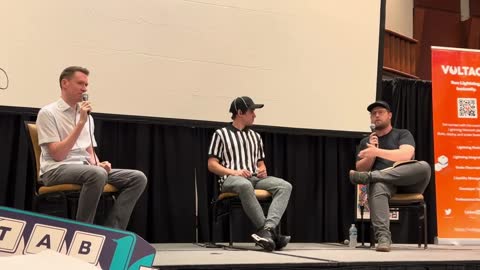
0:00 Hi, you're listening to Stefan Levera Podcast, a show about Bitcoin and Austrian economics 0:05 brought to you by swan.com. 0:07 Today we're talking about Drivechains, we're having the great Drivechain debate. 0:11 Now for those of you who are not familiar, Drivechain is a proposal from 2015 relating 0:16 to hashrate escrow and creating sidechains, aka sidecoins. 0:21 The basic mechanism is that people could peg in Bitcoin and withdrawals could be done via 0:26 peg out on a slow basis, escrowed by the miners, by the hash rate. 0:31 Now this is a contentious topic, there's a lot of back and forth, so today's debate is 0:35 between the creator and the main proponent of this idea, Paul Sztorc, and the, on the 0:40 other side, one of the earliest and well-known critics of this idea is Peter Todd. 0:46 Now there's a little bit of context required in this debate so I will just link the earlier 0:50 episode I did with Shinobi where you get a little bit of the context on some of the 0:56 outlines of this debate. 0:58 So that earlier episode is with Shinobi, it's episode 512, you can see that in the show 1:02 notes or we'll put a link here for those of you watching the video. 1:06 So with that said, let's go on to the great Drivechain debate. 1:21 Paul and Peter, welcome. 1:23 We are going to do the great Drivechain debate, so welcome to the show both of you. 1:29 Thanks for having me on. 1:30 Thanks for having me. 1:31 Great, okay, so let's, you know, we're just going to talk through a little bit around 1:36 the structure. 1:37 So the topic is Drivechains should be implemented in Bitcoin, obviously Paul's taking positive, 1:42 Peter will be taking negative. 1:44 We're going to start with some timed segments, so it'll be a 10 minute opening argument from 1:48 Paul, 10 minute opening argument against from Peter. 1:51 We'll have a few rounds of rebuttals and then we'll have a segment where you can both challenge 1:55 each other. 1:56 I may throw in some questions here and there, but I'm going to try to do my best to be impartial 2:01 and let the two debaters make their points. 2:04 Listeners, you are big boys and girls, you can make up your own mind. 2:08 And so that's the format. 2:10 If we're all ready to go, I'm going to start my timer. 2:13 When you start talking, Paul, you've got 10 minutes on your clock when you start. 2:17 Okay, great. 2:18 Thanks. 2:19 I think, you know, this conversation has gone a long time, so I'll give a tiny overview, 2:24 but then we'll sprint right to the cutting edge because that's what people really deserve 2:29 is something they can't get anywhere else. 2:31 And we want to, we want to be at that cutting edge. 2:33 So this, this idea is very old. 2:36 This is the origin of Blockstream and their fundraising is in this sidechain idea. 2:41 And it has enormous potential because it allows, for example, 8 billion people to be 2:47 onboarded to Bitcoin more or less immediately, and they can obtain Zcash level privacy. 2:54 And we can have, for example, an EVM chain and we can just, anything that an altcoin 2:57 can do, we can just copy. 2:59 So we no longer have to fight this kind of like media battle against which coin is better. 3:04 You just have everything at your disposal and then the user just chooses what they want. 3:09 And we have a competition for developers. 3:10 So it's a very old idea. 3:12 And Peter has always been like the chief critic of this idea, which has always fascinated 3:16 me. 3:17 And long ago he did a Let's Talk Bitcoin podcast on his tree chains idea in which he critiqued 3:25 the sidechain idea. 3:26 And so, so he's, he's always been kind of the chief critic of this idea, which has always 3:30 fascinated me. 3:31 And I've always been trying to figure out what is it about this idea that Peter doesn't like. 3:37 And I have to say, and to some extent I still don't know, but we did, we hired Peter in 3:43 the summer to write it down. 3:46 What is it that he doesn't like? 3:47 And then he produced this piece of writing and I have replied to it in this giant image, 3:52 which is sort of an unconventional way to reply to something. 3:56 But I go through like line by line and I just replied to the whole thing because I didn't 3:59 want anyone to say that I missed something or that something's more important than somebody. 4:03 And I just replied to the entire thing. 4:05 And then at the bottom I have some questions. 4:07 So I'm just going to read the questions and then that'll be the end of the opening statement 4:11 because the questions I think are just, that's the, that takes us to the cutting edge that 4:17 I mentioned before. 4:18 So the question number one is a two-parter. 4:22 I snuck two in at once. 4:23 It's kind of unfair, but it's that on his two most important points, I think Peter contradicts 4:29 himself completely. 4:30 So the first is that, can miners defer to someone else's full node? 4:36 At first, Peter says that the answer is yes, and that there's a, the pool can pay this 4:42 fixed cost and then distribute the cost downstream to a number of different clients who all reuse 4:49 the same node. 4:50 And so the cost is shared and divided among them. 4:52 But then later he says that it's absolutely, he makes it, he has a whole section of his 4:57 piece where he makes a big deal about claiming that it's impossible and that everyone needs 5:00 their own full node. 5:02 So can people defer to someone else's full node? 5:04 I think the answer is clearly yes, but, but the point is he says both things. 5:08 So we should just figure out which one, what he's trying to say. 5:12 And then the second part of part one is that Peter gives, he makes a big deal about mining 5:16 centralization, which is the entire critique against this idea. 5:20 But he proposes, as far as I could tell, eight different definitions and measurements of 5:26 this idea, none of which are that consistent with each other. 5:29 Some of them overlap a little bit, but some have absolutely nothing to do with each other 5:33 at all. 5:34 And more than half of those have nothing to do with what BIP300 does. 5:37 So the things about like the distribution of heat or distribution of resources on the 5:43 geography of the planet earth that have nothing to do whatsoever with BIP300 activating. 5:47 So we should just get, what is the actual definition of mining decentralization or centralization? 5:54 When does it go up and down? 5:55 What are the examples? 5:58 Section two is his section about how Drivechain affects Bitcoin, which would be the only basis 6:03 for rejecting it from Bitcoin, is it had a negative effect. 6:05 He only mentioned miners costs. 6:07 So my question is, is it really limited to that or intentionally, or is there something 6:13 else that's not in the piece of writing? 6:16 Or is he tacitly agreeing with me that the regular user who doesn't mine and who just 6:21 runs a full node or is a Bitcoin user, they are not negatively affected by BIP300. 6:27 He's only saying that it has some mysterious effect on minor costs. 6:30 So that's question two. 6:32 Question three at Baltic Honey Badger in September, Peter said, quote, no one has written code 6:38 unquote to do this, but the software, including a fully functional Zcash sidechain has been 6:45 on drivechain.info for more than two and a half years. 6:48 So the download button is right at the top of drivechain.info. 6:51 So the question is, Peter, have you actually visited the website drivechain.info ever? 6:57 And if not, isn't that sort of negligent to be commenting on it after we even hired you 7:03 to write this critique? 7:04 You are on stage having not visited the website one time. 7:08 Question number four, Peter complains that there's no math at the very end of his post 7:12 to make this complaint. 7:13 But in the original 2015 article, there was an entire section labeled some math and it 7:18 contains mathematical arguments. 7:21 So has Peter not read that or is he not interested in that or does he reject it for some other 7:26 reason? 7:27 And question number five, Peter complains almost all of the complaint in his writing 7:33 centers around the terms fixed costs and economies of scale. 7:37 But Peter doesn't use these phrases the way they're correctly, because they always are 7:43 inherent to one single decision-making context and they're not something that you just have. 7:50 They depend on the time frame and they depend on the current scale and they depend on sort 7:53 of a given scenario. 7:55 They're like choosing between A and B, but there's not something that you just have. 8:00 And then question number six, I would like to know if Peter agrees with me that miners' 8:05 long-run total costs equal their long-run total revenues, which in the field of economics 8:11 is uncontroversial. 8:12 So if Peter's complaining about fixed costs rising, which is most of the complaint, then 8:17 he's just complaining that Bitcoin is very successful and that the miners are earning 8:20 a lot of money in transaction fees and that the network is doing really well. 8:24 And so shouldn't we just, isn't that an illegitimate complaint? 8:28 And then question seven, I would like to know if Peter really doesn't understand why he 8:32 complains about this in his piece. 8:34 Why does the sidechain kicks things off by committing to the hash or the full node software? 8:39 That is not that, it's not even that wasteful, all things considered, and it solves an immensely 8:45 important problem very easily. 8:47 But he complains about it in the piece, I don't know why. 8:49 He says it's like an amateur mistake or something like that. 8:52 And then question eight, I'd just like to know if Peter actually believes that if sidechains 8:56 are a good idea, does he actually see any benefit on the other side of this? 9:00 Does he agree about the planetary scale and does he agree of achieving Zcash-level privacy 9:06 and does he agree that we can just let people use different pieces of software where we 9:10 just have people competing over which software they run, and yet all of these projects are 9:16 Bitcoin projects that use the same 21 million coins. 9:19 Like, does he actually believe that that has any benefit? 9:22 Because mostly I would say probably a Blockstream type prototype of a person would have said 9:27 something like, this would have been amazing benefits if we had achieved this, but we hadn't 9:31 achieved it yet. 9:32 But I don't, maybe Peter doesn't think that there is any point in pursuing this goal. 9:35 And nine, I'm actually, I'm curious, Peter is free not to answer this at all. 9:39 I mean, it's free not to answer anything, of course, but I would like to know more about, 9:43 I just personally would like to know more about what, what the conver-, maybe conversations 9:49 Peter had with Blockstream in 2015, or if Peter just has any idea or any guess about 9:54 why it is that, because he does talk about this in his piece, he talks about why it is 9:59 Blockstream has sort of abandoned the original sidechains idea and has kind of retreated 10:03 to liquid, which is a lot like, you know, Ethereum doing these L2s and retreating to 10:07 just something, this is a multi-sig or something. 10:10 This is a big regression in my view and a very significant event in Bitcoin's history. 10:14 So I'm just, honestly, I'm very curious to know what he's up with that. 10:19 And then the question 10 is, you know, like, does Peter think that his own arguments are 10:25 what stalled the sidechain idea from moving forward? 10:29 And does he think that as a result of what he said, we have had all these altcoins 10:34 proliferate and we've had all these other things happening directly, such as the rise 10:39 of the exchanges and the rise in activation drama and the toxicity and the paralysis 10:44 that has plagued our, our project. 10:48 And I think set us back on the task of taking on all the banks. 10:52 So I don't know how much time that was, but I just read my 10 questions. 10:54 You've got one minute left, Paul, one minute left. 10:56 Well, I think, you know, I don't, then I surrender the minute. 10:59 OK, fair enough. 11:00 But just say that that's just this conversation has been going on a long time and that's just 11:05 where it left off as far as I'm concerned. 11:07 OK, well, thanks for that. 11:09 And Peter, let's hear your, I guess you don't necessarily have to respond to all of Paul's 11:15 points here. I mean, you can make your own kind of opening argument. 11:18 And then if you want to kind of have the rebuttal time afterwards where you guys are going to 11:23 go back and forth on this. 11:24 So, Peter, I'll let you take, you know, go for your 10 minutes when you, I'll hit start when 11:29 you start talking. Yeah, let's go. 11:32 So, you know, I think like the way I'll go and talk about this is, you know, start at 11:38 really the big picture, which really comes down to, you know, well, what kind of thing 11:43 does this really bring to Bitcoin? 11:45 And I'll actually start at the very last thing Paul mentioned there, which was the sort of 11:50 idea of toxicity and, you know, figuring out how to go negotiate changes and all this. 11:55 I mean, in reality is like so much of this toxicity we go see is driven by financial 12:01 motives. And this is not something that Drivechains can fix. 12:05 I mean, the fact is that people create altcoins because they want to go make money. 12:09 And how do you make money? 12:11 Well, the easiest way to go do it in the crypto space seems to be creating a new 12:16 currency, pre-mining that currency, or at least, you know, issuing it, investing it and 12:21 hoping the price goes up and then dumping it on other people. 12:24 Like you just cannot get away from that. 12:27 Nothing us Bitcoiners will ever be able to go do will go change that other than us maybe 12:31 like cozying up to the SEC and like giving them tips or something. 12:34 I mean, you know, it's just inherent to the nature of cryptocurrency and it's, you know, 12:40 it's just not relevant to Bitcoin. 12:41 Now, what is relevant to Bitcoin is, well, what do we use Bitcoin for? 12:46 I mean, of course, some people use Bitcoin to go and upload JPEGs and, you know, go trade 12:51 them. But mostly what Bitcoin gets used for is sending and receiving money. 12:57 And secondary to that, or potentially, you know, potentially on how you look at it, first 13:03 of that is just holding money. 13:05 I mean, that's really what it comes down to. 13:07 And the applications that have really caught on for that is good ways to send and receive 13:13 money. And, you know, that's all well and cool. 13:17 So then the question is, well, what is a good way to go send and receive money? 13:21 And, you know, I think there was this idea with Blockstream initially that sidechains 13:27 would be cool. We'd have all these interesting new features. 13:30 And, you know, I can speak to that a couple of ways. 13:32 But say like the number one thing that happened there was Lightning went in, like killed 13:37 all these ideas because it's just so incredibly effective. 13:40 You know, Lightning isn't perfect, but like the fact that you could just send money 13:43 around the Internet instantly really took the wind out of a lot of sails. 13:47 I mean, that's that's just a fact. 13:49 But then the bigger issue for like Blockstream was, well, what was the original idea? 13:53 Well, it was a fairly complex proposal of merge mine sidechains with some kind of 13:57 undefined fraud proof, you know, some way of making that miners were not fully in 14:03 control of the money on a on a sidechain. 14:06 And they thought they could do this. 14:07 And the fact is that they failed, you know, and eventually Blockstream realized, you 14:12 know, institutionally as well as like individually, the people there that this idea just 14:16 didn't work. And that's why they abandoned it and gave up and decided to go do liquid 14:22 instead with functionaries. 14:23 And, you know, liquid is a compromise between like what people wanted to do and what's 14:28 actually possible. But, you know, that's kind of how that ended up. 14:31 Well, and then, of course, finally, you got to go out and go and talk about, well, why 14:35 is like why is this so hard? 14:37 And what it really comes down to is in Bitcoin, full nodes are the things that prevent 14:43 money from being stolen. 14:44 You know, miners go and create an ordering. 14:48 Miners go and create some kind of consensus. 14:51 But the most important thing is that. 14:59 Your full node actually goes invalidate signatures, you know, once you have like some 15:05 kind of proof of work, that's really what keeps money from getting stolen. 15:09 And a lot of people would love to go find clever ways to avoid that, you know, 15:13 Drivechains is an example of someone trying to find a clever way to avoid that kind of 15:17 system. But, you know, there's no getting around the fact that you need, you know, you 15:23 need people validating signatures in some way to be able to go and pull off that kind of 15:29 independence. And then, you know, you can then get into the more technical weeds of, 15:33 well, all right, how exactly does all this fail? 15:35 All right. So what is this minor centralization thing we don't care about? 15:39 I mean, you know, we can go back up and say, well, why don't we just increase the block 15:43 size? All right. 15:44 That's an obvious thing to go do if you want more transactions per second. 15:47 And, you know, that was really what the block size wars were all about and increasing the 15:52 block size. Oh, well, cool. 15:53 But even if you ignore people's ability to run a full node, even if that's problem is 15:58 magically solved, you run into this issue that the more data miners have to go deal 16:03 with, the harder it is to be a minor. 16:06 And, you know, funny enough, like since we last started talking about this, Ocean is a 16:12 new mining pool now getting started. 16:14 You know, unfortunately, Ocean just faces so many issues trying to get their mining pool 16:22 off the ground. And this is even when running a Bitcoin node is relatively simple these 16:28 days. You know, you can easily run one with high enough performance and so on. 16:32 But the problem with things like Drivechains really comes down to the fact that they make 16:36 running mining more difficult. 16:39 And, you know, I was taking some trying to take some notes earlier and, you know, Paul 16:44 went and mentioned, you know, fixed costs and overhead and so on. 16:47 And this is really what it comes down to. 16:49 It's like when you think of, you know, you try to run a mining pool, you have a certain 16:53 you've a budget, right? 16:55 Some of that budget is going to go to fixed costs. 16:56 The things that don't that, you know, more ties over how many hashers you have at your 17:03 mining pool, the higher those fixed costs are, the bigger barrier to entry it is to run a 17:07 mining pool at all. That's really as simple as that. 17:10 And most of the things that I think Paul is going to talk about with mining costs are 17:14 things that are not like that. 17:16 In fact, you know, mining is inherently decentralized at the hashing level for a lot of 17:22 reasons. And one of the big ones is that the access to cheap energy is inherently 17:25 decentralized. You know, solar power, you know, flare gas, like all these things that 17:31 are cheap energy, stranded hydro. 17:33 These are all things are not in one place in the world. 17:35 They're inherently in many different places around the world. 17:38 So we got very lucky with that. 17:40 But the mining pool side of thing, everything we add to mining pools to make them more 17:45 complex to run, that increases fixed costs, makes it harder to get into the mining 17:48 business. You know, if you don't like that, like, say, you know, F2 pool, as an example, 17:54 started censoring OFAC transactions. 17:56 Well, one of the ways you respond to that is by spinning up a new mining pool and not 17:59 censoring those transactions. 18:01 And the harder we make it spin up a new mining pool, the harder it is that we, you know, 18:06 the job that we have to go keep Bitcoin decentralized. 18:09 That's really what it comes down to. 18:11 And Drivechains, because they act like a block size increase, inherently they have this 18:17 problem of increasing the fixed costs for all miners. 18:20 Of course, they're even worse than a block size increase because Drivechains are 18:24 different pieces of software. 18:25 Like at least with a block size increase, I can throw hardware at the problem. 18:29 You know, I can get a faster computer, I can get a faster Internet connection. 18:33 You know, it's not a great thing to go have, but at least it tends to be things where, you 18:37 know, money kind of solves the issue. 18:40 But when you're talking about a Drivechain and now there could be like a hundred 18:43 different Drivechains, well now I have to go and hire guys, go run a hundred different 18:47 pieces of software to try to eco profit, to make my mining pool competitive with a 18:52 much bigger one that happens to be censoring transactions. 18:55 You know, we don't want Bitcoin to be in that place. 18:57 We want running new mining pools to be easy. 18:59 You know, that's how we get ourselves in a position where the response to censorship 19:04 can be, well, screw you. 19:05 We're going to start up our own thing, not, well, oh shit, how am I going to get, you 19:08 know, $10 million to go set this up? 19:11 And notably, I mean, Ocean, apparently the initial budget, including software 19:15 development, was like a $6 million investment. 19:18 You know, that's already kind of worrying. 19:20 And hopefully that investment will actually get open sourced and it will be easier for 19:24 the next guy. But we'll see, you know, last thing we want to do is make this problem 19:27 even harder. So, yeah, I think... 19:30 One minute left, Peter. 19:32 I think that kind of sums up my opening argument, if you will. 19:36 Like, that's, I'd say, the most important thing. 19:40 OK, so then that's the opening arguments from each side. 19:44 So let's now have, we're going to do five minutes of rebuttals and we'll start with 19:49 you, Paul. 19:51 OK, sure. So he started by saying, like, Drivechain wouldn't necessarily stop people 19:56 from issuing their own altcoin. 19:59 And I agree with that, although I think it's a strong deterrence because it gives you, 20:03 it makes it so that the altcoin person isn't adding anything except their own 20:07 investment. They're not adding any new ideas. 20:09 So you see what I mean? Mostly what an altcoiner will say is, oh, I would have wished, I 20:12 would like to do this on BTC, but I couldn't because of such and such. 20:15 So that's what, for example, Vitalik said, that is what, whatever, Roger Ver, all these 20:20 people, David Vork, Namecoin people, all the people with a good, the Monero people, 20:25 often in writing, they'd say. 20:27 So, but this is a very minor point. 20:30 Really, the 10 questions were in order from sort of most important to least important. 20:34 So the mining centralization one, Peter did repeat that he was saying that sometimes 20:40 it's energy costs distributed around the globe, and then sometimes it's the fixed costs. 20:45 The question of whether or not Drivechain significantly increases fixed costs or makes 20:49 it more difficult to start a pool, I think maybe we should just focus on that because 20:54 I'm absolutely certain that the answer is no. 20:56 And in fact, it has a negative effect. 20:58 So, for example, the pool operator, just as the individual clients would defer to the 21:04 pool's node, the pool can defer to someone else's node. 21:07 And that is exactly what BIP301 does. 21:09 And even without BIP301, BIP301 just makes this like a trustless relationship. 21:14 Even if there was no BIP301, they would do that anyway, just for reasons of 21:18 economics, for more or less the exact reasons that Peter has outlined just in 21:22 reverse, which is that no one wants to pay a cost that they don't have to pay. 21:26 Again, Peter repeated this thing about the fixed costs, where he's right that a fixed 21:31 cost is something that you can amortize over people. 21:34 But to some extent, it depends on the context and the time frame. 21:38 So an individual ASIC is a fixed cost in a timeline that most people would just assume 21:45 that Peter and I are talking about. 21:46 And then on a long enough timeline, all of the fixed costs become variable costs. 21:51 So if you just take a huge view and you say you're the dictator of the continent and 21:55 you're going to rule for 200 years, whether or not you build eight hydroelectric dams 22:00 or 10, that's a variable cost to you. 22:03 You just think, how much is it going to cost to build each dam? 22:05 How much electricity are we going to get? 22:06 But of course, when you zoom in, the hydroelectric dam is, almost everyone would 22:12 say, a fixed cost. 22:13 So it depends on the context. 22:15 But even in any context, the whole idea that the fixed cost of starting a new pool 22:21 would be significantly increased by Drivechain is incorrect because the pool doesn't 22:26 need to run a sidechain node at all. 22:28 So I don't know if we're ever going to walk it. 22:31 This is like the most important contradiction of all. 22:32 And so I said it first. 22:34 The fact that Ocean is having trouble competing, I think Peter and I both know 22:37 there's a bunch of other reasons tacked on with that, but even if Peter were right, 22:42 it would just say, demonstrate that it's very difficult to start a new pool if none 22:47 of the other pools are doing anything wrong. 22:49 And that despite not having Drivechain is still difficult. 22:54 And so Drivechain doesn't have any marginal effect on this type of thing. 22:58 But a pool is a proportional, you know what I mean? 23:01 The pools add up to a hundred percent. 23:03 So a pool is a special kind of thing where you won't automatically be able to, like 23:07 if 100% of the pools that currently exist are behaving optimally, then there's no 23:13 reason for you to be able to break in, you know? 23:16 So I don't know. 23:17 I think those are the important things. 23:19 Like I did ask about the history. 23:22 I'm very curious about exactly what Blockstream decided. 23:25 I mean, it is really as true as Peter says that people just thought Lightning was a 23:29 lot better than I think with Anthony Riard and other people, a lot of people, 23:35 Rene Picard, these people, the author of Mastering Lightning, they are now trying to 23:39 kind of walk a lot of things back. 23:42 So I suppose that's kind of good news for me, as I think Lightning, the sun is 23:47 starting to set on it, so. 23:48 You got one minute left on this round, Paul. 23:51 Well, I think I'd just like to emphasize that the questions, I didn't, I should 23:56 have mentioned this, but I didn't, but the questions are sort of in order from how 23:59 important they are. 24:00 So the question of what is mining centralization and do people need to run, can 24:06 you defer to someone else's full node? 24:08 The answer is certainly yes, that you can defer to someone else's full node. 24:12 And that is why the effect on mining pool costs is basically zero, because they can 24:17 just use a sidechain node that someone else, someone out there is running. 24:20 And the one, the reason why it may actually improve mining decentralization is that 24:31 unlike Lightning and unlike Ocean, you can just pay people out on the transaction that 24:37 nets out all the hashers pay per share every 10 minutes. 24:41 That is just a normal transaction on a BIP300 L2. 24:44 It's no different than buying a cheese or whatever. 24:48 So you just pay them out every 10 minutes. 24:49 And that is what Ocean aspires to do. 24:51 But that is what we could do with BIP300 tomorrow if we had. 24:55 OK, great. So that's the first round of, well, first rebuttal from Paul. 25:01 And now, Peter, you've got five minutes to have a round of rebuttals. 25:05 Yeah, I mean, like, if you're going to go for most important, I mean, the simple fact is your claims about, you know, BIP301 and BIP300 are just wrong. 25:09 Like, if I'm going to go and speak to an audience, I mean, I think the thing I need to go speak to is really what, why? And, you know, BIP301 and BIP300, they really don't have very much to do with each other. 25:23 BIP301 is sort of this idea of, well, somehow we'll kind of go do Blind Merged Mining and we'll go pay, you know, to go create a consensus on a sidechain and so on. 25:34 And, you know, it's a way to think of it as kind of like an auction per block, per chain. And you go pay money and you go get a hash. And that's considered to be consensus. 25:45 But none of that has anything to do with the money on the chain. You know, that's what BIP300 is about. And, you know, I personally made this mistake when I read about sidechains. 25:54 You know, for the longest time, I just assumed, oh, yeah, obviously, the way that we decide how this pot of money assigned to the chain gets split up and withdrawn and so on. 26:03 Obviously, you go and have that related to this BIP301 idea of Blind Merged Mining. 26:08 But the reality is it purely is miners are in control. You know, that is the Drivechain's proposal. Miners are in control. 26:15 You have to have a majority of miners to do anything to money on a chain. And the only way a majority of miners and, you know, really the miners themselves can actually validate what's happening is to go run Drivechain nodes. 26:26 And if they don't validate what's happening, they can be participants in theft, which poses enormous problems. 26:32 And equally, if they want to be malicious, well, they can just go take the money and that's that. 26:36 Like, there's just no getting around that problem. And, you know, I think where this kind of comes from is people have this dream that surely we can create some easy way to go and somehow have new consensus rules without having new consensus rules. 26:50 But people just haven't figured this stuff out. Now, obviously, I think with moon math, as we like to call it, with, you know, recursive zk-SNARKs and all this other clever stuff. 26:59 Yeah, we can absolutely do things like Drivechains that actually work properly and go and have this kind of withdrawal. 27:06 But that's not what the Drivechain's proposal is. It just takes the shortcut of saying, let's just assume miners are trustworthy and honest. 27:12 And the honest, trustworthy miners, the only thing they can do with Drivechains is either not participate, which case money just gets frozen, or they run a Drivechain node, which creates all these fixed cost problems. 27:25 I mean, you know, and like talking about like dams and all this, I mean, the definition of fixed cost is simple. 27:31 It is a cost that is not related to how much hashing power you have. 27:36 Like, this is a pretty simple thing. The node that I go run for mining pool, that's a fixed cost because that's unrelated to how many hashers you have. 27:46 Like, it's a pretty simple thing. Talking about like hydro dams, that's just a bunch of nonsense. 27:51 I mean, you know, talk about like an ASIC. I mean, an ASIC is obviously a variable cost. 27:56 An ASIC produces a certain amount of hashing power, and the cost is proportional to the hashing power. 28:01 Like, I don't know why we're arguing about this silly stuff. Like, these are very basic economic terms. 28:07 And, you know, I would hope that we would be in agreement on this, so we could move on to a substantial thing to go talk about. 28:13 Okay, you've still got another 1 minute 45 on this, if you have anything else you want to get to here. 28:18 I mean, I guess the one thing I could quickly say is like, you know, in terms of all this stuff about, you know, altcoins having new ideas and so on. 28:27 I mean, again, the biggest, you know, altcoin drama that's happening right now is about putting pictures, like low resolution pictures on Bitcoin. 28:37 I mean, you know, there are altcoins out there that have interesting ideas, but they are very, very rare. 28:43 I mean, the vast majority of this stuff is just marketing, and that's just the nature of it. I mean, it's a scammy thing. 28:48 You want to go make money, you scam people into buying into an idea that doesn't quite work, but it's different from other ideas. 28:55 You know, and that's just the nature of altcoins. 28:57 And, you know, if a couple of coins exist, like Monero, where they actually have an interesting idea in a different model, that's fine. 29:04 And it's probably fine if they aren't actually the same monetary base as Bitcoin. 29:08 After all, like Monero involves different tradeoffs. 29:10 Monero is fundamentally more vulnerable to losing everything due to crypto mistakes than Bitcoin. 29:16 And it's fine if those people choose to have their own currency to go do that on. 29:20 I mean, I'm OK with that. 29:22 Like, if anything, there's arguments that this is actually a good thing, that they're firewalled off Bitcoin and that their failures don't affect us and vice versa. 29:29 But certainly the vast majority of the stuff is just scammy nonsense. 29:33 And, you know, Drivechains aren't going to change that. 29:37 Back to the show in a moment. 29:39 With Bitcoin, we need hardware that can help us secure our coins. 29:43 And CoinKite.com makes some of my favourite hardware in the space. 29:47 Most notably, the cold card, which I use as part of various setups that I have. 29:52 The cold card is a very reliable device. 29:54 It's very secure and you can use it in all kinds of different configurations. 29:58 Now, if you are a beginner, don't be concerned. 30:00 You can just get a cold card and get a USB-C cable and you can plug that into your computer and use it easily with software such as Sparrow Wallet or Spectre Desktop or Electrum. 30:10 Now, on the mobile phone, you can also use Nunchuk. 30:13 And for those of you looking for a cheaper device, you can get the TapSigner. 30:16 So this one is a cheaper device. 30:18 Obviously not as secure as the cold card, but it is a more accessible option for those of you who want something a little bit different. 30:25 And you could even potentially use them together in some kind of multi-signature setup. 30:30 Now, as you learn about Bitcoin, you can start out in a more basic way and then advance to more secure setups. 30:37 So, for example, you can start out with a single signature basic 12 or 24 word setup and later do things like migrate into a passphrase setup or use a multi-signature setup or Seed XOR. 30:49 There's so many options, but it starts with having hardware that you can use to help you secure your coins, which you can get over at CoinKite.com. 30:56 So go get your cold card at CoinKite.com. 30:58 Use code LEVERA for a discount there. 31:00 And now, back to the show. 31:02 Okay. 31:03 All right. 31:04 Well, that's sort of concluding the more timed, more formally timed segments. 31:08 And now we're going to have more of a, let's call it gentlemanly back and forth. 31:12 But let's start with Paul. 31:16 And so, Paul, you can Socratically question or challenge Peter on something, perhaps one of the questions that maybe you believe it was not answered or was not answered well. 31:27 Perhaps you want to ask a question now and challenge Peter. 31:31 Yes. 31:32 So if someone wants to profit from running the site, if they're a miner and they want to profit from take advantage of the revenues generated by the sidechain, they don't need to run a node. 31:45 They can just get information from someone else's node. 31:48 And the fact that nodes, again, it's the exact same contradiction as always, which is it can't be a fixed cost that is split among multiple people unless it's possible for one full node to be used by more than one person. 32:03 If it were the case that I have to run a full node and then if someone else, if a friend of mine walks into the room, if they don't run their own full node, then they just like burst into flames or something, then it would be the case that running the full nodes is mandatory. 32:17 But it's because it's split. You're determined to have it both ways. 32:22 You're determined to say this is a fixed cost that is split among multiple people. 32:27 And then you also have to say everyone has to run the full node. 32:31 So I don't know how to resolve this contradiction. 32:35 But I would say if a client of the pool is deferring to the pool's full node, then what happens if a pool just decides to defer to a different pool? 32:45 I mean, this is the basis of the block size debate. 32:49 I mean, that's really what it comes down to. 32:51 The block size debate was about saying, hey, we should go set block size low enough that running a full node is not a significant overhead for anyone. 33:00 You know, that is really what it comes down to. 33:03 Right, but that's not what this is about. 33:05 What the block size debate was about was that different people wanted to pay different costs. 33:11 Roger Ver really wanted the full node to cost more. 33:14 I mean, I think you understand that perfectly. 33:16 Look, what you want to do with Drivechains, especially the scaling argument, which is really like how Drivechains competes with Lightning, is to go have big blocks. 33:25 I mean, that is the reality of that. 33:28 And this is how Drivechains competes with Lightning. 33:32 Well, look, as long as people go and actually go validate rather than just blindly trusting other people to run the system, you have to go and run a full node. 33:41 There's no shortcuts to this. 33:43 And when people stop doing that, things fail in very bad ways. 33:47 You know, you can't get around that. 33:49 Well, the great example being if you're trusting someone else to go run a full node, those people are in control of the money on the Drivechain because they can go lie and they can go approve withdrawals or they can be pressured to go approve withdrawals and money gets taken. 34:02 I mean, in Bitcoin, we always try to keep so far away from this by keeping the cost to go run fully validating nodes low. 34:12 I fully agree with that. 34:14 We want every node to be as cheap as possible. 34:16 But some people, not everyone agrees on how much it should cost, which is the whole point, is how to make it cost more expensive for some and less expensive for others. 34:24 If you don't agree, I mean, you're welcome to go and sell Bitcoin and go buy a different currency. 34:29 I think that's a very good example. 34:31 That's exactly the problem that my chains are supposed to solve, though, is that someone who disagrees doesn't have to do that. 34:35 I mean, Roger really did not want to convey that. 34:37 It would be lovely if we could solve that problem, but the technology doesn't exist. 34:41 I mean, my trade chains… 34:43 Peter, you're the only one. 34:45 I've searched high and low for the reason why this technology can't exist, and I think everyone is deferring to you, and all you have is this contradiction on whether or not… 34:54 People are deferring to me. 34:56 I'm just some dude who has the patience to go sit through this stuff. 34:59 I mean, the vast majority of devs have work to do. 35:02 You're the original. 35:04 Yeah, because I am the original guy who went and had the patience to sit down and write arguments about this. 35:09 The majority of devs are not interested in going on social media or writing blog posts explaining to a general audience. 35:16 The majority of devs want to actually get real work done. 35:19 I specialize in this kind of communication. 35:22 Well, you know that we have a list, LayerTwoLabs.com, slash friends, and it's full of a lot of very technical people, including Rene Picard, author of Mastering Lightning, and Robin Linus, who invented the camera. 35:35 Your quotes are very optimistic how much support you actually have. 35:41 Yeah. 35:42 I've read that. 35:43 It's optimistic. 35:45 Okay, guys, let me just jump in here. 35:48 I think we're sort of veering off into who supports Drivechain and who doesn't. 35:52 It's not a good argument. 35:54 Let's keep this to the specific point. 35:56 But he's the one who actually said, though. 35:58 He says, like, I'm trying to ask him about why doesn't he like this idea, and he's saying, well, I'm the only one who's bringing this up or something. 36:06 No, I didn't say that I'm the only one who, say, is against Drivechains. 36:11 I'm saying I'm the only one who has the patience to go do things, like sit through 35-minute-long interviews about this silly topic. 36:18 The fact is so many devs are just tired of this subject and don't want to have anything to do with it because it's dumb. 36:24 Like, you know, that's what you're up against. 36:27 Let me try to explain it. 36:30 Guys, let me just jump in here. 36:33 I think what we're trying to get to the bottom of on this particular question is do miners have to run, you know, so as the concept of Drivechains, there are 256 Drivechain slots, and there would be, you know, Zcoin and so on, some of these other coins. 36:50 And I think the criticism, as I'm hearing, as I'm understanding from Peter and others, is that you would create this additional, let's say, burden or fixed cost, as we've been talking about. 37:00 And I think Paul's answer to this point is, no, the miners do not have to run these sidechain or side, you know, side Drivechain nodes. 37:10 They can delegate that capability. 37:13 And as I understand, Peter, your counterargument here is more like, no, part of the whole point of Bitcoin is that you need to be able to validate everything because otherwise the pools can lie to you. 37:23 Is that sort of a fair… 37:25 I think you're missing my point a little bit. 37:27 So what it comes down to is that if Drivechains are to work properly, you need miners to be running Drivechain nodes and properly validated, because otherwise you don't actually have separate miners. 37:38 What you really have is a very small number, potentially just one dude, you know, running nodes that actually go do stuff. 37:45 And then the Drivechains start working properly. 37:48 So you don't, like, I think the thing is here is Paul's trying to get it both ways. 37:52 He's trying to go say, well, you can go have this thing that works properly. 37:55 We don't actually need to do the hard work of validating anything. 37:58 That's OK. 37:59 You know, you can just trust the other guy to go do it. 38:01 But Peter, I do. 38:02 I have it both ways. 38:03 You just don't… 38:04 Well, you don't have it both ways. 38:06 Why? 38:07 Yes, because the people… 38:08 Because Roger wanted to run a more expensive node, but Luke Dashjr. did not. 38:13 So the question is just how can we exploit the fact that Roger was actually willing to run the more expensive node and thus only have them synchronize very rarely with this tiny hash once every three months, thus making it very unbelievably impractical for anyone to lie. 38:31 Because everyone who's running the sidechain node is going to report the same hash for three months. 38:35 So it's going to be extremely impractical for anyone to get away with the lie. 38:38 The slow synchronization, which would be way too slow for anyone to actually make use of as an actual feature. 38:46 But since it's synchronizing an entire three months' worth of blockchain history, no matter what the sidechain's block size is, that is what would allow anyone to have whatever, Bitcoin SV node or Zcash node or Monero node or whatever else. 38:57 For starters, I mean that's not even what the thing is. 39:00 Like you have to go put in these hashes every block for anything to go happen. 39:06 And also, hang on, hang on, hang on. 39:10 And also, remember, we're not talking about one sidechain node. 39:13 We're talking about hundreds of them potentially. 39:16 Like you've allowed for that. 39:18 So hundreds, even in your hypothetical example, still a lot of work constantly that miners have to be doing to be updating this. 39:27 Like that's just not feasible in a decentralized environment. 39:30 For each one, people have to make a decision on whether or not they want to try to lie. 39:35 And for each one, it takes three to six months' worth of lying. 39:39 It's too impractical. 39:40 It's too much of a deterrent. 39:41 You know what I mean? 39:42 There is no deterrent here. 39:44 Like there isn't a deterrent. 39:46 There's nothing in Drivechains that stops this. 39:50 Well, why do you say that, though? 39:52 Because there is, of course. 39:53 The fee revenue to the miners is enormous. 39:55 So they have some incentive to get it right. 39:58 Well, it would be like $100 billion a year. 40:01 Fee revenue in Drivechains is not enormous because there is no block size limit. 40:05 This is the security model of Drivechain, though. 40:08 If the fee revenue is not low, then the chain will not be secure or viable. 40:12 So this is fully admitted by me, 100 percent. 40:15 But the good news is that every reason to suspect the fee revenue will be 10,000 times higher than what is currently available. 40:22 I mean it's clearly not because the fee revenue of Drivechains doesn't have a block size limit. 40:25 And just like those arguments with Bitcoin itself, there will obviously be a race to the bottom, and there's not going to be fee revenue. 40:33 I mean there's no getting around that. 40:35 But Peter, you don't understand. 40:37 It's a basic math question of height versus area. 40:40 Do you really not know the difference between price and revenue? 40:43 Look, I am well aware of all these arguments. 40:46 But the fact is that in Drivechains, there isn't a block size limit. 40:50 So that there is no incentive for there to be any fees at all. 40:54 You can always undercut the next guy. 40:56 That's just the fact of how Drivechains go. 40:59 This is not true. 41:01 Each individual chain has its own limit. 41:04 So it's no different between Ethereum and BTC today. 41:09 There is nothing in Drivechains that actually goes and makes it happen. 41:13 Yes, of course, Peter, there is. 41:17 Because the designer wants their sidechain to be popular. 41:20 So they want their sidechain full node to be a reasonable cost. 41:23 If you want your Drivechain to be popular, you have to have low fees. 41:29 Yes, that's exactly why we have something like Ethereum. 41:32 Which pushes the race to the bottom. 41:34 You can't get away from that. 41:36 But Peter, we have to emphasize this point though. 41:41 Peter is saying race to the bottom. 41:43 He's referring to the fee rate. 41:45 Like a dollar per apple or something. 41:47 And it doesn't matter if you sell a trillion apples to Peter. 41:50 It certainly does. 41:52 This is elementary school math. 41:54 That's why I'm saying it does matter, Peter. 41:56 The revenue is the total area of the rectangle. 41:59 This is a very simple point. 42:01 So do you understand that the race to the bottom of the fees can be what maximizes the total? 42:06 The price can go down and the revenue can go up. 42:09 Which is exactly what will happen. 42:11 If you're going to have a large amount in total. 42:13 You need to have some mechanism where fees do not end up at zero. 42:17 Why aren't they zero on something like Tron or whatever? 42:22 Ethereum, anything. 42:24 Any other alt network. 42:26 Because Tron is a centralized system. 42:28 So that the people who run it can just decide what the fee will be. 42:30 It doesn't make any difference. 42:32 The sidechain can be fully centralized or decentralized. 42:34 It can have an expensive node. 42:36 It makes absolutely no difference in my argument at all. 42:38 Look, Tron is able to have non-zero fees. 42:42 Because they can go pick an amount. 42:44 And because Tron is something that people have to buy into. 42:47 Rather than competing like Drivechains would with each other. 42:50 A better example is actually something like Ethereum. 42:52 Where that was the idea. 42:54 But because Ethereum has technical limits. 42:57 Because it does actually have a block size limit. 42:59 It's still wound up with non-zero fees. 43:01 But that's the same reason why Ethereum doesn't go work properly. 43:08 Drivechains can't get away from that. 43:11 But a sidechain of Ethereum will also have its own block size limit. 43:15 That will just be similar to what Ethereum's is. 43:17 And then when that one shows up. 43:19 Someone will just create a second one. 43:21 That has a different block size limit. 43:23 Hang on. 43:25 Which is a process. 43:27 The rates will be going down all the time. 43:29 Yes. 43:31 But the total revenue will be going up. 43:33 It's just such a bizarre argument to try to go make. 43:35 Oh yeah. 43:37 I have something where there is no cost to it. 43:39 But I'll go make it up in volume. 43:41 Exactly. 43:43 But Peter, the argument is literally that it's one chain versus one plus N. 43:50 So it must go up. 43:52 But I'm already admitting to you that if the revenue isn't there. 43:55 Then the chain won't be secure. 43:57 But the problem is the chain can easily be sufficiently secure. 44:01 To go and screw over Bitcoin. 44:03 Remember, all this stuff ends up competing with lightning. 44:07 In a lot of the visions of the Drivechain proponents. 44:10 In lightning at least. 44:12 Hang on. 44:14 In lightning at least has an easy to understand fee model. 44:18 Which does at some point go back to miners. 44:21 Now of course I argue that on top of all this. 44:23 We should have a belt and suspenders option. 44:25 With some kind of security tax. 44:28 Like either influence with deflation or inflation. 44:31 Either way it doesn't really matter. 44:33 But this idea that Drivechains will just bring magical fever to miners. 44:38 Just doesn't work. 44:40 I'm sorry but it just doesn't. 44:42 And you have the overhead problem. 44:44 Peter, you go to cryptofees.info or some sites. 44:47 This is just the reality of what is happening every day. 44:51 And you can just see. 44:53 Here's a bunch of projects that pay these fees. 44:56 Maybe the data is not reliable. 44:58 Maybe whatever. 45:00 For many, many years Ethereum has been collecting like $10 million a day in fees. 45:06 And I think that the Ethereum version is more unpopular. 45:10 Than would be a unified thing. 45:13 Where we have one coin behind all these different blockchains. 45:17 I think people would like that even more. 45:19 They would say I don't. 45:21 A lot of people I think are waiting on the sidelines saying. 45:23 I don't know. 45:24 If you talk to a normal person at Thanksgiving or something. 45:26 They have no idea. 45:29 You guys will all think this is funny. 45:31 I brought up Bitcoin and then he asked about Bitcoin Cash. 45:34 And then he was clear that he thought they were the same thing. 45:36 And he was like oh I didn't even know that. 45:38 And then he's like isn't that fraud or something. 45:40 Well that's what he said. 45:42 And he's actually loyal. 45:43 It is fraud. 45:44 But he's a smart guy. 45:45 And so this is what. 45:46 The layperson is very confused by all this. 45:48 And I think that it would actually be more popular. 45:50 If we just had completely the act together 100%. 45:53 And we said no Bitcoin can literally do any software operation. 45:57 And that is a total pie in the sky. 45:59 Because you cannot make those people go away. 46:02 You will always go have that problem without government interference. 46:06 Like that's just irrelevant. 46:08 Let's stop that segment there. 46:10 Back to the show in a moment. 46:12 If you're concerned about where things are going money wise. 46:15 Swan.com can help you with stacking sats. 46:18 Over at Swan.com or using the Swan Bitcoin mobile application. 46:21 It's available for iPhone or Android. 46:23 You can buy Bitcoin and also learn about Bitcoin. 46:26 Swan tries to do the best thing for Bitcoin and for Bitcoiners. 46:30 Now with Swan you can do what's called a smash buy. 46:33 You can just buy a lump sum. 46:34 Or you can set up an automated recurring purchase plan. 46:37 Now most people do some combination of those two things. 46:40 This helps people deal with the longer term. 46:42 With the volatility. 46:44 Because they are stacking sats for the longer term. 46:46 And those people who have been stacking for the long term. 46:48 Five years or longer. 46:50 Have often done well out of this. 46:52 Now with Swan it's easy for you to set up to buy Bitcoin. 46:56 And also withdraw to your own self custody for free. 47:00 Swan makes it easy for you. 47:02 And there's a range of different services available here. 47:04 Swan can help you whether you are an everyday individual stacking sats. 47:08 Whether you are a high net worth individual using swanprivate.com. 47:12 Or whether you are a business using the business service line available. 47:16 You can find all of this over at swan.com. 47:20 This show is also brought to you by mempool.space. 47:23 This is the leading Bitcoin and blockchain visualizer. 47:26 So you can use mempool.space to see the state of the blockchain. 47:31 You can see the mempool. 47:32 You can see which transactions are unconfirmed. 47:35 And which are confirmed. 47:36 You can search existing transactions. 47:38 And see okay what fee rate was this sent at. 47:42 What is the replaced by fee history. 47:44 You can see a range of information around it. 47:46 As well as other tabs that are available on mempool.space. 47:49 Such as the lightning explorer or the mining tab. 47:52 Now also upcoming is the mempool.space transaction accelerator. 47:57 So if you are interested in this. 47:58 There is a wait list that you can go and sign up for. 48:01 It's over at mempool.space slash accelerator. 48:03 This will be a great tool. 48:05 We can't confirm when the timing of this is coming out. 48:08 But get on the wait list. 48:10 And you will be one of the first to know when this is coming out. 48:13 And this is going to be a great feature for those of you. 48:15 Who need to accelerate your bitcoin transaction. 48:18 By paying out of band to mempool.space. 48:21 So if you're interested. 48:22 Sign up at mempool.space slash accelerator. 48:25 And now back to the show. 48:27 Segment there. 48:28 Like I think let's count that as Paul's chance of questioning Peter. 48:32 Peter let's now. 48:33 You have a chance to challenge Paul. 48:36 You can ask a question. 48:37 And you know use a Socratic approach. 48:40 Or approach to challenge him there. 48:42 I mean. 48:43 I'll be honest. 48:45 I look at this and think like. 48:47 I think we've covered all. 48:49 Like Drivechains is not a complex thing. 48:51 We've covered all of the interesting points there. 48:54 You know. 48:56 Like there really isn't much to Drivechains. 48:58 It is two bips that are extremely simple. 49:01 And the simplicity. 49:03 Unfortunately isn't you know. 49:05 Isn't such a way that doesn't work. 49:08 Like I mean bitcoin happens to be something that's extremely simple. 49:11 At the core. 49:12 But fortunately it works. 49:13 Drivechains. 49:14 What's a little bit too simple. 49:15 And it doesn't work. 49:17 But too simple. 49:18 It doesn't work. 49:19 So. 49:20 So let me. 49:21 Let me ask it one or two questions. 49:22 Just for the sake of the listeners as well. 49:23 So that people can. 49:24 You know. 49:25 Because they may have these questions as well. 49:27 As an example. One of the. And to some extent. You gentlemen. You both touched on this idea. This question of. If miners were to try and steal. Now Paul. I believe your argument is that. They would not have an incentive to do so. Unless the chain was insecure. But I suppose. This is one area that I've been curious about as well. That I've seen it be said that. Okay. Imagine if the miners were trying to steal. And the response I've seen. Is that miners are trying to steal. 49:54 Is this idea that somehow. The network would try to do a soft fork. To try to stop that miner. Or that group of miners from stealing. Would that not create a lot of soft fork. You know. Cacophony. And craziness of people saying. Well. I need to run this node or that node. Because I want to reject this particular. You know. Stealing attempt. And maybe there'll be. You know. In the future that could get more complicated. I'm curious. How are you both seeing that. Is that a. You know. Is that a problem. For this. Drivechains approach. Would that. 50:24 Create more. Politics and drama. Where currently. It's not there. I'm glad you asked that. Because. This is unfortunately. A misunderstanding. Where it is another case. Where we actually do have it both ways. But people just kind of don't really see why. But what I mean by that is. The security model of Drivechain does not rely on. People from L1. Taking some. Sympathetic action. UASF or something like that. If it did. Just as a kind of a side note. If it did. 50:54 Then notice that those people could already. The sympathetic L1 people. They could already. UASF to force Drivechain into existence. And then force the specific Drivechain into. So you see what I mean. If you had this group of people who are like. 51:05 Willing to take extraordinary action. I guess the point would be. It's very hard to coordinate that kind of action. Indeed. Right. And that is. So the model of Drivechain is. That the fees will outweigh. 51:16 The what can be removed. And so for example. Let me just give you a tiny example. And all the math in the original November 2015 post. 51:26 That Peter said didn't exist or didn't enjoy or whatever it is. Whatever the case may be. That was all that math is about this question of what will the miners decide to take the funds. 51:38 And just on a completely separate tangent. The miners can basically steal from anything. They can hold liquid funds hostage or UTXO hostage or even the Lightning Network hostage. And plenty of people have admitted that that's the case. But that's sort of a tangent. 51:50 The math like. So for example. If you took like what ETH is earning each day. Which is like. It depends on the day. But I did one example recently with the $7.2 million per day math. 52:03 You can go to cryptofees.info and see if it's a good day or bad day today. Or whenever you visit the site. But that is $216 million a month. 52:13 And if you just discount that with the NPV. Net present value. Then it depends on kind of like how many months do you want to go out before you just truncate and say that the life of a tech project ends after 18 months or whatever. But that's like $4 billion. 52:28 So that's like tens of thousands or 100,000 BTC. Depends on the price any given day. But the point is you could fit like 50,000 BTC in something like that. 52:41 And that's just what Ethereum is currently doing today. And if you do that. Then the miners will kill the goose that lays the golden eggs by stealing from the chain. And that is exactly why they won't have any motivation to do it. 52:53 And this is actually far superior security model than what people are trying to do is get some kind of technical thing where it's impossible for the miners to steal. 53:02 But that always means if there's ever some kind of bug, or if there's any some kind of glitch or misunderstanding or whatever, some kind of like psyop campaign or something. If there's ever some way then the miners are always waiting to steal. 53:14 Whereas if the miners have an incentive not to steal, and they just want to grow the network, and what they're really thinking about is how can we get more people paying a Bitcoin transaction fee and grow the size of the Bitcoin economy and the network. 53:28 That's always better than to have them be them not want to steal. And of course, the steal, the reason why it's threaded is many reasons why it's threaded into this one withdrawal every three to six months, which is unbearably slow. 53:41 But that's in part because it makes it impossible for anyone to lie about what the withdrawal is supposed to be since it's just this one hash. And so it's just anyone who would try to lie is just, you know, not going to succeed and they will only embarrass themselves. 53:55 And but another reason is that the mining who the composition of hashing and which hash belongs to which, which pool, those are things that can change enormously in three months, they could even react, you know, the pool operator may be doing something that the individual hashes don't know about or don't want to have happen. 54:13 And so three months is more than enough time for them to stab the pool on the back. 54:18 So this is what I was saying before about the pool being proportionate. 54:20 I mean, I think you're I think you're kind of getting a little far from like where Stefan started here. 54:25 And I think, first of all, with regards to the UASF stuff, I mean, I think, you know, the simple answer to what Stefan said is absolutely, yeah, this can create enormous amounts of very, very, very disruptive drama. 54:37 You know, we did our well, at least arguably, we did a UASF to get SigWit activated. 54:42 But that was very, very risky. 54:44 You know, we could have in the Bitcoin community, we could easily be in a position where the UASF had failed, but not clearly failed, or had partially succeeded, but not clearly succeeded. 54:55 And all hell would have broken loose because you would have different parts of the Bitcoin network out of consensus with other parts without a clear way to go deal with that. 55:03 You know, if we'd be in a position where some big exchanges have decided, you know what, we do want SigWit to happen, some miners who've gone along with that and created SigWit blocks and some other miners hadn't, it would have been a real disaster for Bitcoin. 55:15 And, you know, I could see the arguments that for SigWit, this was worth it. 55:20 I would make the arguments that with SigWit what actually happened was people threatened that scenario, said, hey, if you don't go along with this miners, this may actually go happen. 55:30 You would be much better off just activating SigWit. 55:34 You know, I think that's actually the more accurate interpretation of what happened there. 55:38 But the bigger picture there is that's dangerous as hell. 55:42 And you really want to be doing this for a very, very good reason. 55:46 Now, inviting that kind of failure to happen more often just because... 55:50 Yeah, but I don't mean... 55:50 Hang on. 55:51 Hang on a second. 55:52 Hang on a second. 55:53 So inviting the failure to... 55:54 Hang on a second. 55:55 So inviting a failure to happen more often just because some Drivechain potentially failed is really ugly. 56:01 And one of the ugly things Drivechains does is because miners are now in control of money on the Drivechain, it is actually feasible to do things like give them court orders and say, hey, you know, you damn well better go comply and take this money and reassign it to someone else. 56:16 You know, of course, I personally am the target of a lawsuit from Craig Wright trying to go do basically that and redefine the Bitcoin protocol to go give him a couple billion dollars that, well, he's never proven that he actually owns. 56:29 And right now, it's very... 56:30 Hang on a second. 56:31 Hang on a second. 56:31 Hang on a second. 56:33 Hang on a second. 56:34 And hang on a second. 56:35 And right now, it's very easy to go and say, look, this lawsuit is nonsense because I personally do not have the ability to go do this. 56:44 You know, from miners' point of view, it's very easy for them to go say, hey, we do not have the ability to go do this. 56:50 Drivechains fundamentally changes that. 56:52 Drivechains means that miners can go seize money. 56:54 They can go move it to other people. 56:57 And that's a very sketchy thing to be involved in. 57:00 Who exactly would be sued, though? 57:01 Foundry or like every miner, you know? 57:04 Oh, it would be very easy to sue like Foundry and Antpool and give them a court order to go do that. 57:09 And the problem is that... 57:11 Peter, you know perfectly well that's a good example because of how bad it is, though. 57:13 Well, but hang on. 57:14 Because think about it. 57:15 Think about what would really happen in that scenario. 57:17 Foundry would just be able to say, well, we think we'll probably lose all of our clients if we do this. 57:22 I don't think that would happen at all. 57:24 We're going to keep the clients. 57:25 They could say we gain less amount of Bitcoin by moving. 57:28 Think about what it means, Peter. 57:30 If I'm saying that... 57:32 With Drivechains, it is not a disaster for Bitcoin. 57:35 It's just one Drivechain failing. 57:37 This is essential to the security model of Drivechains. 57:40 So I'm saying that the miners earn a certain amount of money each period, 57:45 such that the net present value is like $100 billion. 57:48 And maybe there's $20 billion in the chain. 57:51 And the court order is going to be... 57:53 But think about what it means, Peter. 57:55 Just pick anything. 57:56 Say it's $100 then and $20 total. 57:58 There's $20 total in the Drivechain. 58:01 And then it's worth $100. 58:02 It's worth, you know, like a dollar a day. 58:03 And that comes out to a net present value of $100 or whatever. 58:06 These are made-up numbers. 58:07 The point is the miners are getting a certain amount of money. 58:10 It's a magic money tree. 58:11 This is a goose that lays the golden egg. 58:13 That's worth $100 to them. 58:15 The court order says you have to take that $20 out and give it to some other guy. 58:19 Then the miner can just say, well, I'm just... 58:21 You're asking me to just delete $100 for no reason. 58:25 You are giving a very lovely... 58:27 Everything went exactly the way you want the scenario. 58:30 Much more like taking your own example. 58:32 Look, that wasn't my example. 58:35 No, no. 58:35 The example... 58:36 I'm telling you, the expression only applies... 58:38 Can I go talk? 58:39 Are you going to let me talk? 58:41 Thank you. 58:42 So, the example that's actually much more likely is that 58:45 if Drivechains activate, they don't really catch on. 58:48 You know, you get a bunch of people interested in some Drivechains. 58:52 They put a bunch of money in. 58:53 Something more like Liquid. 58:55 Wait, no, sorry. 58:55 Something more like Liquid where there's some transactions. 58:57 People basically, because, well, you know, it's kind of sketchy to go and steal money. 59:02 Don't steal the money even though there really isn't that much incentive not to. 59:07 And some court order comes along and says, 59:08 oh, yeah, we've got to go and change this. 59:11 And something like Ant, Pool, and Foundry are probably going to say, 59:13 well, you know, we can go to jail for failing to comply. 59:17 We can comply because we've changed the Bitcoin protocol 59:20 to allow this to happen in the first place. 59:23 And we might as well go with it because it's really only like, you know, 59:28 $50 million and this is a tiny part of our actual business. 59:32 And now you get the whole mess of people then going and saying, 59:34 no, no, we've got to UASF it. 59:37 Or worse, like you get another court order saying you've got to UASF it in a different way. 59:41 You know, this all invites an enormous amount of drama for, frankly, very little benefit. 59:45 You know, like Drivechains is a model where- 59:47 The security model is that the fees will be enough to dissuade the miners from not wanting to. 59:53 If you're just going to say that the miners can just become a victim to various lawsuits 59:57 demanding that they change this and that. 59:58 I mean, you yourself gave an example of yourself 1:00:00 being hit with a totally frivolous lawsuit that's based on- 1:00:03 Only because the Bitcoin protocol is such that I genuinely can say I can't do that. 1:00:11 Right now for miners, you know, mining pools can genuinely say 1:00:15 we are not in a position to go seize money. 1:00:18 That is not something we can do. 1:00:20 But you want to change the Bitcoin protocol to let them go do that. 1:00:23 That is why this is so sketchy. 1:00:25 And this is why I think it's in miners' own interest 1:00:28 to definitely not allow Drivechains to go happen 1:00:30 because they don't want to be in a position where they can go steal money. 1:00:33 Like, if you're in that position, you can be told to go do it. 1:00:36 You can be coerced to go do it. 1:00:37 They're very limited because they have to declare the- 1:00:40 It's like being buzzed through a gate that takes three months to get through. 1:00:45 So they have a very, very limited ability to direct the eventual destination. 1:00:52 All they have to do is go put a number by court order into their, you know, 1:00:58 into their coin bases and the money will get stolen. 1:01:01 Like, there is nothing in Drivechains that actually disincentivizes this. 1:01:05 You've got a bunch of stuff that we're saying about fee revenue, but like- 1:01:10 You see, that's the point is if the sidechains have their own fate 1:01:14 where they rise or fall on their own merit. 1:01:16 So if something about a sidechain attracts a court order that destroys it, 1:01:20 then that's the sidechain's business. 1:01:22 I make no claim. 1:01:24 I don't even really- 1:01:25 You know, I don't make any claim about what people should do with their own money. 1:01:29 I think if people want to use a Monero sidechain, then they should. 1:01:32 And if they don't want to use that, then they shouldn't. 1:01:36 As long as you've involved Bitcoin miners and the Bitcoin consensus, 1:01:40 you have got involved the rest of us. 1:01:42 Like, you would have a good argument if you were talking about creating a new proof of work coin. 1:01:46 Monero itself is independent to Bitcoin. 1:01:49 You know, they can go do their own thing. 1:01:51 And it's really not very relevant to us. 1:01:53 It's its own coin. 1:01:54 We'd rather have all the flexibility of launching new software, 1:01:57 but with all the same coin. 1:01:58 That's the whole idea. 1:01:59 That's all well and good. 1:02:00 But you have not come up with technology that lets that happen without affecting Bitcoin. 1:02:04 You know, that's really what this comes down to. 1:02:05 When you say affecting Bitcoin, you only mean- 1:02:06 I agree with your goals. 1:02:09 I agree with your goals, but you haven't succeeded. 1:02:12 You only mean that the- 1:02:14 Like, even in- 1:02:16 You're even wrong about this. 1:02:17 You're not right about almost anything that you say. 1:02:20 But even this one thing that you're wrong about, 1:02:23 of the idea that miners might have an incentive to pay the full node cost, 1:02:29 even that is absurd. 1:02:31 Because you know full well that that must be one billionth of what the eventual mining costs will be 1:02:36 as Bitcoin continues to become more popular and difficulty adjusts upward. 1:02:42 Marathon alone, you can look this up. 1:02:44 They have like a selling general administrative cost or something. 1:02:47 That was like $57 million a year. 1:02:49 So the full nodes already are utterly minuscule, 1:02:54 and they are not significant cost to anyone. 1:02:56 Even the regular people who are running the full nodes, 1:02:59 just as end users who have 0% hash rate and derive no income. 1:03:03 What matters is how- 1:03:05 How large is not a significant cost at all under any circumstance. 1:03:08 So even if it were the case that the miners were required to run full nodes, 1:03:12 even that would make no difference whatsoever. 1:03:14 The cost of mining, including the electricity and the ASICs and stuff, 1:03:19 they're not in the- 1:03:20 Someone has to pay $3,000 for a Solana node, 1:03:25 only in the event of a withdrawal dispute also. 1:03:30 Paul, what you are arguing is that it's okay to go and increase the block size. 1:03:35 That is your argument. 1:03:36 Absolutely not. 1:03:36 The whole point of the action is to differentially increase it for some people and not others. 1:03:43 Everything you said is an argument that because mining costs money, 1:03:50 it's okay to go increase fixed costs. 1:03:52 That is your argument there. 1:03:54 And the simple fact is we are trying hard to go keep fixed costs down. 1:03:59 I mean, in particular, to allow things like- 1:04:01 Paul, Paul, let me finish. 1:04:02 It has nothing to do with- 1:04:03 Paul, let me finish. 1:04:06 Mining costs. 1:04:07 Let me finish. 1:04:08 So why we want to go keep these fixed costs low 1:04:11 is because we want to go decentralize mining. 1:04:13 We want actual hashers, the people pointing hash power at things like OceanPool 1:04:19 to be able to go run actual full nodes and actually go validate what they're mining. 1:04:24 That is why we're trying so hard to do this. 1:04:28 Zero effect on that. 1:04:29 It certainly does because if you want to go and validate what you are mining, 1:04:34 you have to either trust someone else to go do that, 1:04:38 potentially exposing yourself to all kinds of problems when that person lies, 1:04:41 fails, or whatever, or run nodes. 1:04:43 You can't get away from that. 1:04:45 No, I choose the first option. 1:04:47 So let's say the sidechain nodes are all designed 1:04:50 so that the header of the sidechain has the withdrawal hash in them for three months 1:04:56 so that you can just look at the head SPV mode 1:05:00 or you can just look at anyone who's on the network, 1:05:02 any block explorer or anything like that. 1:05:05 Look, your argument is that it is okay for people to go and sit there 1:05:13 manually going and copying, pasting hashes, hoping it's correct. 1:05:17 That is just not something we want to go add to the Bitcoin protocol. 1:05:21 That is something miners shouldn't want. 1:05:23 Yes, you are. 1:05:25 No, of course not. 1:05:26 The Bitcoin rules are just counting to 13,000. 1:05:29 You're advocating for a soft fork. 1:05:31 You are advocating to add this to Bitcoin protocol. 1:05:33 To take off not five so that the people who want to spend block coins to this, 1:05:38 the hashrate escrow can do so. 1:05:39 It's a soft fork. 1:05:40 If you do not follow those rules, your blocks are invalid. 1:05:43 Like you are advocating for a change to Bitcoin protocol to add this kind of voting. 1:05:46 Well, I actually don't really care if people don't. 1:05:50 But you're just evading the issue completely. 1:05:53 I think you're evading the issue. 1:05:54 Like this is why this is such a crazy argument. 1:05:59 But let's say I'm a miner and I want to start up a new mining operation 1:06:03 and I don't run, we have a bit Solana and I don't want to run a bit Solana node. 1:06:12 But I just use the withdrawal hash that I think my other miner friends are using. 1:06:16 What's the disaster scenario in that case? 1:06:20 I mean, the fact is, if that is what's happening, you're in a situation where... 1:06:25 If this is what's happening, you're in a situation where 1:06:28 Drivechains aren't going to go work properly. 1:06:30 On the other hand, if they're actually doing their job... 1:06:32 How do they not work properly? 1:06:34 Because people start going and copying, pasting hashes and something goes and fails. 1:06:38 Because people aren't validating. 1:06:40 Like you can't get away from the fact that people need to be evaluated if it's going to work properly. 1:06:44 It's just you that just doesn't understand how it works, Peter. 1:06:47 Which is that the end users, those are the people, the Roger Ver type people. 1:06:52 They wanted the block size, the BitPay, Coinbase. 1:06:55 They wanted to pay. 1:06:57 You are not making a technical argument. 1:06:59 And they have a completely full node. 1:07:02 And that node gives them the ability to find out... 1:07:05 You are not making a technical argument now. 1:07:08 Like you are making a, I hope things will work this way. 1:07:12 Well, in fact, you're talking about what Roger Ver wanted. 1:07:16 No, you don't get it, Peter. 1:07:17 Some people want to pay the higher node costs. 1:07:20 So the question is, how can you have some people pay small costs and some people pay large costs? 1:07:25 That's the whole idea. 1:07:26 That is the idea. 1:07:27 Yeah. 1:07:28 And your idea didn't work. 1:07:29 I mean, you know, a good counter example here. 1:07:32 You don't even realize that a lot of the things you say are contradicting yourself. 1:07:37 I mean, I think you're just making shit up. 1:07:39 Like you saying all this stuff contradicts. 1:07:41 Like there's nothing I can go say that will make you not say that. 1:07:45 I mean, this is just silly. 1:07:46 Now, hang on. 1:07:47 How can it be a fixed cost that's amortized if people can't defer to... 1:07:50 What do you think is happening when the mining pool runs a full node and then they have all the other people not running a full node? 1:07:57 They're trusting the mining pool. 1:07:59 But they have reasons for trusting the mining pool. 1:08:01 They have reason to believe that the process that gives them information from the mining pool is accurate. 1:08:08 If we could apply the exact same argument in an inverse sense, what would you say? 1:08:12 What are you even talking about there? 1:08:14 I mean, like... 1:08:15 Peter, we have been discussing this one topic the whole time of whether or not you can defer to someone else's full node. 1:08:21 And what does it even mean to run a full node? 1:08:24 Because you could run a full node and then you could actually conclude, 1:08:28 you know what? 1:08:28 Actually, this full node is bugged. 1:08:29 There's something wrong with my computer. 1:08:31 And so even running the full node is not enough to gain a full amount of confidence 1:08:36 that you are actually looking at the blockchain the right way. 1:08:39 Now we're just getting into the metaphysics. 1:08:41 Like this is very silly. 1:08:43 There's nothing metaphysical at all. 1:08:44 This is... 1:08:44 We are talking about epistemology, Peter. 1:08:46 Because we are talking about epistemology because what a full node does is give you information. 1:08:52 You are getting into metaphysics around the nature of full nodes. 1:08:57 You are just trying to evade answering this one question because this contradiction just 1:09:01 obliterates your argument. 1:09:02 And I've been very polite by letting you meander around and around. 1:09:05 But now it's time for you to just either admit that you're wrong about this or... 1:09:08 I think out of the two of us, there's one of us that's meandering and not the other. 1:09:14 Yes, because two. 1:09:16 So I guess I'm not sure if I'm making a lot of progress here. 1:09:19 I'd like to ask Stefan, do you think that you can defer to someone else's full node 1:09:23 or not to get information from it? 1:09:25 Like what happens when you visit a block explorer? 1:09:27 Does the universe just burst into flames when that happens or what? 1:09:32 So the question I think you're getting at is, can you defer to someone's node? 1:09:36 Obviously, yes, you can. 1:09:38 But the question... 1:09:38 But I think the point, the counter-argument is more about how easy it is for people to 1:09:44 self-verify and to do it themselves, right? 1:09:46 And I think, as an example, there's a lot of progress now in the ecosystem around Stratum 1:09:51 V2, as an example, this idea that you can sort of separate the mining pools from the 1:09:58 individual miners and let those individual miners create their own block template and 1:10:03 select which transactions go into the block. 1:10:05 And I guess people could have a concern that Drivechains could cut against some of that 1:10:12 progress or potentially in the future we're going to get maybe a break pool or some of 1:10:15 these other ideas. 1:10:16 I think this is the only way that that idea will succeed, is if you can pay out the miners 1:10:21 on L2. 1:10:22 And in fact, the miners getting paid out every 10 minutes on L2 is a fantastic deal for them 1:10:26 because this reduces the leverage of the pools. 1:10:31 If I'm understanding you here, you're sort of saying you would have like a big block 1:10:35 Drivechain and this would allow the miners to get paid out onto that. 1:10:38 But I guess that still doesn't... 1:10:40 Because think about it, the miners, they're very confident that they'll eventually get 1:10:43 paid if they get paid on BIP300. 1:10:46 Yeah, but I think that to me, that doesn't quite answer the question of... 1:10:50 BIP300 doesn't involve payment. 1:10:52 No, but I'm saying it does what Stratum V2 and Ocean wish they could do, which is you 1:10:58 can do pay per share and you can get paid out every 10 minutes. 1:11:01 And in that way... 1:11:01 Yeah, this is why Ocean is working towards Lightning. 1:11:05 I mean, that's not anything necessary there. 1:11:09 I mean, Lightning is far worse. 1:11:11 Peter, do you really not understand that the Lightning has tremendous onboarding costs 1:11:16 and liquidity costs and tremendous channel risk, which each person, if you want to onboard 1:11:20 someone to Lightning... 1:11:20 Sorry, that's just nonsense. 1:11:23 I'm sorry. 1:11:23 It was nonsense of mine. 1:11:25 There are not tremendous liquidity costs around Lightning. 1:11:31 Paul, Ocean adding Lightning is a very simple thing for them to do. 1:11:38 I'm not sure. 1:11:39 You should get your stories checked with them, because people who are there asked them and 1:11:42 they said running LN infrastructure is complicated and we have no intention of doing it. 1:11:47 So I'm not saying that maybe... 1:11:48 Well, I mean, Ocean is doing a lot of very weird stuff. 1:11:52 So I wouldn't be surprised if they don't understand what they're doing. 1:11:54 But the fact is, for Ocean to go pay miners out with Lightning is very easy. 1:11:58 They have coins. 1:11:59 They open new channels. 1:12:01 They go pay the miner. 1:12:03 You have to have the money that you plan on paying someone. 1:12:06 This is an anonymous question. 1:12:07 Oh, my God, Paul, Ocean has money coming in whenever they find a new block, right? 1:12:16 Paul, let me speak. 1:12:21 Paul, let me speak. 1:12:23 Ocean, whenever they go find a block, they have a pile of money that comes in. 1:12:26 They can use that money to open channels and they can go pay miners over those channels. 1:12:31 If they choose to go set up the economics such that payouts still happen when they find blocks, 1:12:37 that's exactly how they can go do it. 1:12:39 They find a block, they open a channel. 1:12:41 Once the 100 block, you know, unlock period has come up, 1:12:44 they go use that money to go pay miners. 1:12:47 And they can just close the channels. 1:12:49 And all that money will go flow to miners. 1:12:51 I mean, this is not a hard problem. 1:12:53 Oh, Paul, Paul, Paul, let me, let me speak. 1:12:58 And on the 300. 1:13:00 And on the incoming side for miners, 1:13:03 all they have to go do is have a channel to them and money will flow in on that channel. 1:13:09 And they can go spend that money out on that channel. 1:13:10 I mean, there's nothing difficult about this. 1:13:13 And this is much easier than trying to go and say, 1:13:15 oh, by the way, which of the 256 possible Drivechains do you want to go have money on? 1:13:21 Oh, by the way, you also go need to run a token owner. 1:13:24 If you want to go verified, of course, it's going to be a big blocker thing. 1:13:27 So you got to go run a full node and all this stuff. 1:13:28 I mean, like lightning is a very simple solution here, you know, 1:13:33 and I've never understood why people try to go add so much complexity to this. 1:13:37 It's not a hard problem. 1:13:39 Lightning is a way of amortizing multiple transactions over one transaction. 1:13:46 It's really a pretty simple thing. 1:13:48 It really can't though. 1:13:49 So if we can easily compare the two scenarios where in one scenario, 1:13:53 we have my proposal of just paying them out, pay per share every 10 minutes on L2 sidechain, 1:13:59 just pick whichever one is the biggest. 1:14:02 And so there will only be one. 1:14:03 And then you compare that to lightning. 1:14:04 In the case of a new miner joining, which is this is exactly what you wanted, Peter. 1:14:09 This is the low barrier to entry, low fixed costs, little guy. 1:14:13 Nope, you are talking about something different right now. 1:14:15 You are talking about Azure is not mining pools. 1:14:17 Let's have Paul finish that answer and then you can go back. 1:14:21 This new person wants to join. 1:14:23 In my scenario, they just point their hash at the pool and they can get paid in 10 minutes. 1:14:27 Pay per share. 1:14:28 Paul, you are talking about hashers, not miners here. I am talking about mining pools. You want to change the topic to go mislead people. 1:14:32 Well, I honestly have no idea what you are talking about. 1:14:35 You know full well. I am talking about mining pools here for barriers to entry. You now change the topic to hashers. 1:14:44 I don't know. I honestly was not trying to mislead anyone, but I thought we were talking about the idea of Ocean to pay the hashers. 1:14:52 The pool paying the hasher out every 10 minutes. Is that what we are talking about or not? 1:14:58 When you went into it, we were talking about overheads there. Now for Ocean to go pay miners, all they have to do is pay. 1:15:05 If Ocean wants to go pay miners over lightning, all they have to do is do lightning transactions to these miners. 1:15:12 Paul, if they choose to do lightning transactions on a pay per share basis, that is their choice. 1:15:19 Currently, Ocean doesn't do that because they know that they do not have the financial resources to go deal with full pay per share. 1:15:27 A lot of mining pools choose not to do it. 1:15:32 A lot of mining pools choose not to do it. 1:15:37 You're the one who cut in and said I was – now you're saying I was not at all being misleading, and I was talking exactly about what we were trying to talk about. 1:15:45 You tried to sneak in overheads over here. 1:15:48 For the poor people in the audience, I would like the poor people in the audience to at least learn something from this. 1:15:54 I don't know what you're going to say after I'm done, but I would like to just give everyone something that they can take home at least, which is in the scenario I outlined, the people connect. 1:16:04 They do some hashing. 1:16:06 They don't find a block because their hash rate is very, very small. 1:16:09 Of course, statistically, it's very unlikely that if you have a tiny amount of hash, you actually find the block, but they find some shares at the pool. 1:16:15 The pool pays per share. 1:16:17 That's what I've been saying, pay per share. 1:16:19 They pay those people out every 10 minutes, taking the absolute theoretical minimum custody possible. 1:16:26 They just pay them out on the L2 chain. 1:16:29 It's no different than buying cheese or alpaca socks or whatever. 1:16:33 They do that. 1:16:35 In the scenario with Lightning, what the pool has to do is they have to make a decision when someone connects to them. 1:16:41 They have to say, if we want to pay this person, we must broadcast a transaction on L1 with a new 2 of 2 multisig output, paying the L1 fee, and we have to fund this channel with about as much money as we think we are going to be paying them over the next time horizon or whatever this is. 1:16:59 Paul, you know that is not how Lightning works. 1:17:02 That is exactly how it works. 1:17:04 Let me just jump in and explain something here. 1:17:06 I think I agree a little bit more with Peter on this point. 1:17:10 It's not that the mining pool has to have direct channels with every participating hasher or miner in this case. 1:17:16 Someone has to open those channels when some of the person is new. 1:17:18 Remember, you could put that obligation on the individual hasher or miner in this case and say, hey, it's your responsibility to have inbound liquidity. 1:17:26 Because remember, Lightning has multi-hop, so it's not like you need direct channels between the mining pool and the miner in this case. 1:17:35 You're right about that. 1:17:36 That's true. 1:17:37 But anyone who wants to join the Lightning network at all must do that with someone. 1:17:41 I guess that's what I'm saying. 1:17:42 Correct. 1:17:43 You need at least a channel. 1:17:44 Whereas in my scenario, they don't have to do that. 1:17:47 Paul, you know that Lightning is a routed network. 1:17:50 I know you know this. 1:17:51 Don't try to obfuscate it for our audience here. 1:17:54 The fact is, if I was to go join Ocean and start getting money in, I would go tell them, all right, which Lightning account you want to go pay out to. 1:18:09 And they can go do it on the wallet I would go have. 1:18:12 And if I choose to go and set up a wallet with some inbound liquidity that's running 24-7 because I might want to do it, that's fine. 1:18:20 I do not have to get a channel open with Ocean specifically. 1:18:23 I can use that same wallet for anyone. 1:18:26 That's true. 1:18:27 But the point is, you have to open some channel somewhere that has some inbound liquidity for this project. 1:18:31 And you have to hope that you have enough threaded through the whole route. 1:18:35 There's nothing hard about that. 1:18:37 Lightning solves that problem. 1:18:38 But that is more expensive than what I propose. 1:18:41 Look, what you're proposing is… 1:18:43 I'm making mining more decentralized. 1:18:45 No, you're not. 1:18:47 And it means that probably people like Foundry would not want to touch it. 1:18:50 So, I'm further decentralizing mining by offering them this set of revenues. 1:18:56 I'm not sure people would agree there because, I mean, ultimately, if this person is a miner, they are likely to want to use Bitcoin. 1:19:03 And they may be earning and spending over Lightning anyway. 1:19:05 So, it may not really be a big deal for them to earn over mining in this example from Ocean. 1:19:11 Well, yeah. 1:19:12 But I'm just saying it is better. 1:19:13 My scenario is actually more advantageous to a small miner in every scenario because they have less total setup cost. 1:19:21 I just think it's an irony that it happens to be… 1:19:24 It's not essential to my argument, but it's just ironic that it happens to be better in a way that is a fixed cost. 1:19:30 Okay. 1:19:31 So, here's how I'm thinking about this. 1:19:33 What we're talking about here is the advent of Stratum V2. 1:19:38 We're talking about this idea because it's going to help mining decentralization. 1:19:41 It's going to help more individual hashes actually be miners instead of merely hashes. 1:19:47 Yep. 1:19:48 But part of what's predicating there is that person being able to run a Bitcoin full node. 1:19:53 And in the Drivechain context, that now means running a Bitcoin full node and up to 256 Drivechain nodes if they want to be validating everything. 1:20:03 Not to me because they could still only run the Bitcoin core node if they only wanted to run that. 1:20:08 People are still imagining that there's some enormous negative consequence of them not getting the node. 1:20:14 It's because the node synchronizes so slowly that you can rely on… 1:20:21 Think about it like this. 1:20:22 The network is either going to be this huge successful network like Ethereum where it's going to have $7 million a day in fees being paid and has huge amounts of users. 1:20:32 And that's really the only case that I'm interested in because if something else happens, then it won't be secure, but I don't really care. 1:20:37 I'm kind of like I'm dropping that. 1:20:39 So, I skim the vital few. 1:20:41 So, I'm saying like most new restaurants fail, you know. 1:20:44 So, I'm saying, okay, maybe a lot of these ideas will fail, but I don't care. 1:20:48 We're talking that if it's really big, then all those people, you know, there's going to be a huge number of users and some percentage of them will have full nodes and some percentage of them will have big projects. 1:20:59 And it will just be very, very implausible since the node calculates for everyone the same hash every three to six months. 1:21:06 It's just going to be available information. 1:21:08 It'll be much easier to get that information than it will be to do other things that the miner has to do such as like keep up to date on which ASIC technology is being invented or something like that. 1:21:18 Miners do not have to do that. 1:21:19 There's no fundamental difference between the other ways that miners compete, which involve a huge mixture of fixed and variable costs. 1:21:26 They compete over getting the ERCOT demand management credits, new weird mining cooling ideas are invented. 1:21:34 So, they compete on millions of dimensions. 1:21:36 Probably it's not an understatement to say millions of dimensions in some form or another. 1:21:42 And this is just some random thing. 1:21:44 And there's just a prejudice against this dimension, I think, because it would be so good for Bitcoin that people can have trouble wrapping their heads around it. 1:21:53 We care because you're adding fixed costs that miners will have to go in and add. 1:21:58 All this stuff. 1:22:00 Paul, when you go talk about things like, you know, they got to go pay for the latest ASIC, that's just not true. 1:22:06 You know, if I go have a hashing set up and I go set up with Stratum V2 and I go to that bit of effort, I can just let the thing sit there indefinitely and it'll continue to work. 1:22:16 I mean, I've done this before. 1:22:17 You know, back in the day when… 1:22:19 Paul, let me finish. 1:22:21 Back in the day when I was mining myself, I set up with P2 Pool, which was decentralized hashing. 1:22:26 And P2 Pool, other than one or two technical reasons, would work just fine these days. 1:22:31 And all I had to do was set it up and just leave it there. 1:22:34 I mean, that is the world we want to be in. 1:22:36 We do not want to be in a world where hashers like me now have to go track down websites and block explorers and copy and paste hashes for Drivechains to go work and for fees to keep coming in. 1:22:46 Like, all that's nonsense. 1:22:48 Well, we're not living in a world of hobbyist miners ever because the difficulty adjustment hires the bottom half of performers. 1:22:54 And so it will get more and more specialized over time. 1:22:57 And these days, every miner has a business plan and things like that. 1:23:01 If you're really trying to say… 1:23:02 That's not what's happened. 1:23:03 It's about whether or not the miner can compete profitably. 1:23:06 We don't want the mine… 1:23:07 If someone is sitting there and they have the ASIC plugged in and they're losing money every month because they spend a certain amount on electricity and what they get in is less than that, that is not setting it and forgetting it. 1:23:17 They're lighting their own money on fire when they pay their electricity bill. 1:23:20 That's irrational. 1:23:22 It's probably fair to say. 1:23:24 Go on. 1:23:26 You're ignoring the actual model of mining, which is you go find an opportunity you have, such as a cheap source of power. 1:23:33 You have to find the opportunity. 1:23:34 That's a fixed cost. 1:23:35 Paul, Paul, Paul, let me finish. 1:23:37 Is it not true that searching for the opportunity is a fixed cost? 1:23:41 Is that the case or not? 1:23:43 No, it's not because opportunities go in varied by amount of hashing power. 1:23:47 You know, and again… 1:23:48 But searching for an opportunity is a fixed cost. 1:23:51 No, it is not. 1:23:52 No, it is not. 1:23:53 That is fundamentally wrong. 1:23:54 How are you searching for it if you don't find it? 1:23:56 Paul, your effort to go find these things scales with amount of hashing power. 1:24:00 I mean, you're just throwing out nonsense here. 1:24:02 Yeah, but the fact that it covaries with the scale doesn't change the fact that it's a fixed cost. 1:24:06 Yeah, you're just talking nonsense now. 1:24:09 Anyway, so what we go see miners go do is they go find an opportunity, which tends to be a source of cheap power and or a thing to go do with the heat. 1:24:22 Now, as we know, those things inherently are decentralized because they come in small quantities. 1:24:27 And you see things such as flare gas, where people go run a small number of miners on a location with some flare gas. 1:24:33 We want those people to be able to actually participate in an actual block creation. 1:24:38 That's really what all this comes down to. 1:24:40 We do not want there to be a high barrier to entry for that person to go do that. 1:24:44 You know, and again, in my case, let's just say I had access to cheap power up to a certain amount. 1:24:50 There's a lot of people in that same position as I was for the same reason as me. 1:24:53 Yes. 1:24:54 And we want those people to be able to, without very much effort, set up something like P2 Pool or at least Stratum V2, do their setup once and just let it run. 1:25:04 That is just incompatible with Drivechains. 1:25:06 How is it incompatible? 1:25:09 Because you are asking for a system where that person like me would have to go cut and paste Drivechain assets for the system to work. 1:25:16 Well, you have to download P2 Pool and you have to poke in every now and then to make sure it didn't crash or something. 1:25:21 You have to do some work. 1:25:23 And all of these things are software which we can make reliable in a way that we cannot make a bunch of Drivechains just automatically do this. 1:25:30 Nothing is completely software, though, as you know, Peter. 1:25:33 Because this does cut back to what I was getting at before, which is that even if you run the software, you could still think, oh, I've run the software. 1:25:41 And then you would think, wait a minute. 1:25:43 Did I run the right software or is there a bug in the software or do I have to update? 1:25:47 And this has happened in Bitcoin's history also where they've been made. 1:25:50 So I'm just trying to sketch out that there's no – you don't have this like fundamental thing. 1:25:55 What is fundamental, though, is that the miner puts in effort and they get paid money. 1:26:00 That is fundamental. 1:26:01 Paul, you are arguing that because the world isn't perfect, we should make it a lot worse. 1:26:06 That is what your argument boiled down to there. 1:26:09 Because the world isn't perfect, because occasionally we screw up and people have to – 1:26:12 I'm saying that you – 1:26:14 Paul, Paul. 1:26:16 What the miner must do – so let's take the flare gas thing. 1:26:19 They have to research opportunities to take advantage of the flare gas. 1:26:23 They have to measure the flare gas and all this other stuff. 1:26:27 And then they have to pay for the ongoing costs like physical security. 1:26:31 As I'm saying, the miner has an enormous number of costs on different dimensions. 1:26:36 Everything you mentioned there scales with hashing power. 1:26:40 It is not a fixed cost. It is a marginal cost. 1:26:43 Everything there, even searching for the opportunity – 1:26:46 Yes, because opportunity scales relative to how much search effort you go into. 1:26:52 You're really trying to say that if there's ever any cost, no matter how small it is in an absolute term, 1:26:59 like it could be like $0.10 a year, that will irrevocably centralize mining. 1:27:05 Nope, that's not my argument. 1:27:07 My argument is that we want to keep these costs as minimal as possible. 1:27:11 Running the fixed node is a fixed cost, but we do not want that to be an expensive fixed cost. 1:27:17 We want to keep these things small. 1:27:19 The idea that miners' costs will be low is incompatible with proof-of-work, which forces the cost to be high. 1:27:26 Sorry, that has nothing to do with my argument, and you know it. 1:27:29 It is the exact argument. 1:27:31 No, it is not. The idea that miners' costs will be low – 1:27:34 I am talking about fixed costs here, not variable costs. 1:27:38 Obviously, proof-of-work will scale to variable costs. 1:27:41 We do not want the fixed costs to be high to allow things to just end up purely on variable costs. 1:27:46 Do you think that when Marathon pays $57 million a year in general and administrative costs, 1:27:52 which you can look up on their site, is that a fixed cost? 1:27:54 Well, chances are, the majority of that is not, because it is related to the scale of their gigantic hashing system. 1:28:02 But isn't it also the case that Marathon could just say, 1:28:10 What if they misplaced – they ran the sidechain tool node? 1:28:13 Paul, we know that it is not – Paul, we know that it is not – 1:28:16 And they accidentally put it in that line, and they said, oh, we'll put it in here. 1:28:20 Paul, let me finish. 1:28:21 We know that Marathon's $57 million is a variable cost, not a fixed cost, 1:28:26 because I myself have been a miner creating blocks on the same level as Marathon, 1:28:32 and I did not pay $57 million, because the cost to me scaled with the amount of hash power. 1:28:39 If Marathon lights a briefcase of $100,000 on fire, then that was a mandatory cost. 1:28:46 It was inherent to Marathon. 1:28:47 Nothing in the Bitcoin protocol says Marathon means to light a briefcase on fire. 1:28:51 I don't know what to say, Peter. 1:28:52 I think you really hate this idea, and I think you kind of just won't explain why. 1:28:57 And I would like to know why. 1:28:59 I just spent an hour and 30 minutes explaining why. 1:29:02 Maybe Stefan can translate for me. 1:29:06 This is not real. 1:29:07 This idea that mining costs may increase hypothetically by the need to run some free open-source software 1:29:13 sometime that other people are running and where the producer is extremely slow, 1:29:16 moving information that is readily available on the internet, 1:29:19 that is much easier to obtain than even stuff like troubleshooting P2Pool 1:29:23 or other basic stuff like how to make sure that the investment you put in mining pays off, 1:29:31 which involves some kind of planning and independent business modeling 1:29:35 and running forecasts of costs and things. 1:29:38 The idea that that would be definitive enough to block a technology 1:29:42 that would transform Bitcoin from something that's very niche 1:29:45 and reliant on a bunch of other stuff like the Lightning Network, 1:29:49 which is not going anywhere near as well as people thought, including myself, 1:29:54 over the last eight years, 1:29:55 and that would give us tomorrow global scale and privacy and unlimited flexibility 1:30:01 and immediately humiliate all of our rival coins by allowing us to copy them. 1:30:07 I mean you laugh, but what is your alternative? 1:30:12 I'd just like to say, what is the alternative to global 8 billion people? 1:30:16 Paul, my alternative is to go continue to work on technology that actually works. 1:30:20 You just gave a bunch of goals, and that's great to have goals, 1:30:24 but your tech doesn't work. 1:30:25 It's not really relevant what your goals are if your tech doesn't work. 1:30:29 You don't literally claim that it doesn't work. 1:30:31 You say it will work, and it will affect mining costs in some way. 1:30:34 So you actually say that it does work. 1:30:36 And in the trade-offs that we are willing to make in Bitcoin, it doesn't work. 1:30:39 I mean in SQL database, Paul, putting everything in one giant SQL database 1:30:45 would go achieve all this stuff that you're talking about, 1:30:48 but without achieving the goal of decentralization and censorship resistance. 1:30:53 Well, I think a full node is slightly more expensive than Bitcoin 4. 1:30:57 We've all been going for a while, 1:30:59 so I think it's probably a good spot here to have closing thoughts from each side. 1:31:03 We've covered a lot of different aspects, but ultimately let the listeners decide. 1:31:09 But let's have each of you just take a few minutes 1:31:13 and give your closing thought or your closing argument. 1:31:16 If there's one key argument that you want listeners to take away from this, 1:31:21 what would that argument be? 1:31:23 So Paul, do you want to start off there? 1:31:25 And Peter, you'll go after Paul. 1:31:27 Okay, I'd just like to talk a little bit about why I'm doing this, 1:31:30 which is that I think that it's not that I actually want any of the individual sidechains, 1:31:37 with the exception of one that Peter already knows about, 1:31:40 which is that I'm very interested in one. 1:31:42 But I would launch that as an altcoin if I absolutely had to. 1:31:45 I would prefer it as a Bitcoin sidechain, of course. 1:31:47 But that's not really the point. 1:31:50 I believe in the individual sovereignty and freedom of different people. 1:31:55 And I felt sorry for the large blockers, and they wanted something. 1:32:00 And I thought, what can we do to give them something that's almost everything that they want? 1:32:06 They have to deal with the withdrawal, the three-month delay. 1:32:10 And so we can give them something that's almost what they want, 1:32:14 and it will not have any cost to the L1 participants. 1:32:18 And this is why I'm kind of, frankly, obsessed with – 1:32:21 because Peter says that there is a cost to L1, but I really think that there is not. 1:32:25 And that is why I poured so much research into Peter's ideas, 1:32:31 and I wrote this post to Mirage of Mining Centralization in January 2017, 1:32:35 and why I follow him on Twitter, and why we hired him to write these thoughts. 1:32:41 Because he really says that he has found some way that this affects L1 in a bad way. 1:32:47 Yeah, in some kind of net way also, because don't forget, 1:32:51 it's also part of my claim that all the hard fork drama will also go away when you have this, 1:32:55 because Roger would never have wanted to campaign, 1:32:58 Vitalik and all these people wouldn't campaign for changes to Bitcoin 1:33:01 if they just had this as an alternative. 1:33:04 They would just do it over there. 1:33:06 So I'm very, very motivated to try to figure out, 1:33:11 leaving no stone unturned as to what is the negative impact that this idea has on L1, 1:33:18 because I really don't think that there is any. 1:33:21 And now I just kind of think that, I don't know, Peter has started this argument, 1:33:28 and now he just kind of doesn't want to admit that he was wrong or whatever, 1:33:33 and instead he has produced this piece of writing that it has these contradictions in it 1:33:37 that are immense, including the big one about whether or not you can defer to someone else's full notes. 1:33:42 So that's just my side of the story, for lack of better words. 1:33:48 Okay, great. Well, thank you, Paul. 1:33:50 And Peter, a couple of minutes from you on your closing arguments. 1:33:53 Well, I mean, I've made a bunch of sort of more technical arguments and so on, 1:33:58 but I think maybe what I should close on is, with all this tech, 1:34:05 I mean, people love to go talk about what their goals are, what their vision is, et cetera, et cetera. 1:34:10 But tech has to actually work. 1:34:13 And, you know, I myself, I had an idea for something that, frankly, Lightning does a lot better. 1:34:20 And, you know, my idea was Fidelity Bonded Banks, and I had a bunch of cool ways to do things. 1:34:25 And the fact is, Lightning just out-competed me in every single way. 1:34:29 And my response, which I think was the same response, was to say, yep, they solved it. 1:34:34 My Fidelity Bonded Bank thing is basically entirely obsolete. 1:34:37 It was never even given a chance to really prove itself. 1:34:40 But, you know, great. Lightning can go do its thing. 1:34:43 And, you know, the goals may have been the same, but the reality is I lost because my tech didn't work. 1:34:50 You know, and I think this is really what comes down with Drivechains, 1:34:54 is that Paul has been unwilling to admit that his tech, you know, doesn't really work. 1:34:58 It's something that's very simple, but it's not sufficiently complex to actually, you know, solve the big problems it goes and has. 1:35:05 And, you know, people got to go look at it, not with like starry eyes, like what Bitcoin could be, 1:35:10 but with the hard reality of, well, does this thing actually work? 1:35:13 You know, and I also think this gets back to all these ideas like competing with altcoins and stuff. 1:35:18 It's that, look, the tech has to work well enough to compete with altcoins. 1:35:22 You know, you have to work well enough to compete with something like Ethereum. 1:35:25 You have to work well enough to compete with something like Lightning. 1:35:27 And if you're talking about, well, we'll just put money on this Drivechain, which miners absolutely can go steal, 1:35:33 or potentially even more likely, miners will just fail to do anything about it because, well, shit, 1:35:39 now a majority of hashing power has to go and move money around on this Drivechain. 1:35:43 Well, it's not even sure that's really going to happen now the price crashes. 1:35:46 I mean, there's a lot of ways these things can go fail. 1:35:49 And it's much more likely that if somehow the soft fork does get activated, 1:35:53 nothing much will really happen in terms of working. 1:35:56 And we open up Bitcoin to a bunch of ugly attacks. 1:36:00 Whereas, you know, things like Lightning genuinely are dependent to Bitcoin. 1:36:04 And they've proven themselves. 1:36:06 And finally, I mean, maybe I can go say, you know, Paul Sztorc, he owes me like $1,250. 1:36:12 And I should send him a Lightning invoice. 1:36:14 Because last time he went and paid me, he went and paid me on chain. 1:36:17 I'm not sure Paul's ever actually going to use Lightning. 1:36:20 So this would be a good opportunity for him to actually get a wallet and go and try this out. 1:36:25 I paid him from a legacy Bitcoin. 1:36:27 Yeah, yeah, I noticed that. 1:36:29 Obviously, he had a very old wallet. 1:36:31 And it might be time for you to actually use some of this tech. 1:36:34 You know, like the biggest Lightning transaction I've ever done, I think was like, what, $4,000 or $5,000 US? 1:36:40 And it worked. 1:36:42 I mean, this tech works pretty well. 1:36:45 I mean, I think there's edge cases that we'd love to go solve. 1:36:47 I think there's definitely things where we'd have to improve to go scale better. 1:36:51 But, you know, to go and like present all these images of, well, Drivechains will do this, Drivechains will do that. 1:36:58 I mean, you got to go prove this tech in ways that are actually convincing. 1:37:02 And I just... 1:37:03 The fact is, like, Drivechains hasn't done that. 1:37:05 And frankly, my advice to Paul is to move on. 1:37:08 Is there anything that would convince you? 1:37:11 With Drivechains right now, probably not. 1:37:13 Because the idea itself is just broken. 1:37:15 Like, you've tried very hard and you've just failed. 1:37:19 You know, whereas as a counter example, Lightning was something where... 1:37:23 I remember when I first looked at it, I wasn't totally clear it would go work. 1:37:26 But, you know, I read more about the tech and thought through it. 1:37:28 Yeah, yeah, this obviously could go work. 1:37:31 You know, and of course, it did go work pretty well. 1:37:34 It's not perfect. 1:37:35 Can't necessarily scale to the entire world. 1:37:37 But there are plausible ways to go fix this. 1:37:39 And we see this with Arc as an example right now. 1:37:42 Which is a plausible way that Lightning could scale to a much bigger venue. 1:37:47 I'm not entirely clear that works, but it's plausible enough. 1:37:51 And these things convinced me because they're good technical ideas. 1:37:54 They may not be perfect, but they're reasonable. 1:37:56 Well, you know, there is one... 1:37:58 Not to keep going off, but the creator of Arc, he has said that Lightning is... 1:38:02 He created it because he thought that Lightning is broken. 1:38:04 And he says that in the beginning of his Arc Masterclass whiteboard video. 1:38:07 But to be clear, even in the case of Arc, 1:38:09 Arc has also said that ASPs would also be LSPs. 1:38:12 Yeah, he wants to transform Lightning into that. 1:38:15 But, you know, he's not like so super sanguine on Lightning. 1:38:19 I think that remains to be seen. 1:38:21 I think there's a range of different views on how far Lightning can scale. 1:38:25 And potentially with other soft fork ideas. 1:38:27 I mean, he's got the Lightning light right behind him, so... 1:38:30 Well, of course. 1:38:32 Yeah, so look, I think it's been a good debate between you two. 1:38:38 I agree. 1:38:39 Hopefully, listeners have had a chance to hear both sides. 1:38:42 I've done my best to be impartial, even if I have a view. 1:38:45 But obviously, listeners, you're big boys and big girls out there. 1:38:48 You can hear both sides. 1:38:50 As in the show notes, I'll put the links to obviously to Peter Todd's post, 1:38:56 as well as to Paul's response. 1:38:58 And listeners, you can make up your own mind. 1:39:01 Paul and Peter, thank you for joining me today. 1:39:04 Thank you. 1:39:06 So I hope you enjoyed the discussion and you found it informative. 1:39:09 Make sure you leave your comments below 1:39:11 or share the show out there with family and friends 1:39:14 so they can also learn about this. 1:39:16 If you're watching on YouTube, give us a thumbs up if you enjoyed the show. 1:39:19 Thanks, and I'll see you in the Citadels.