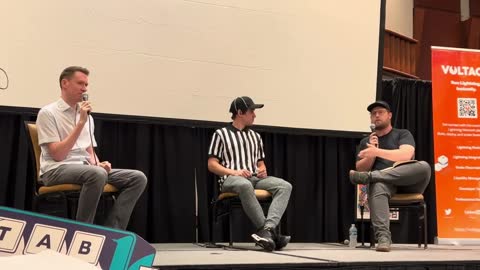
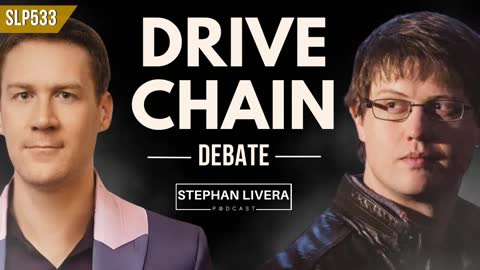
0:02 Hello and welcome to Drivechain Twitter Spaces hosted by LayerTwo Labs. 0:07 Today is Friday, August 11th, 2023. 0:10 We're thrilled to have another conversation about Drivechain today with you, 0:14 our audience on Twitter Spaces who listen live, as well as those who listen on demand. 0:21 These are recorded spaces. 0:24 We save them on our Twitter feed so that anyone who wants to listen and join 0:29 and learn about Drivechain can do it. 0:32 Drivechain is an idea that's many years in the making. 0:36 In 2015, Paul Sztorc published a blog post on truthcoin.info, his blog on crypto economics, 0:44 and that blog post introduced Drivechain to the world. 0:47 Since then, the sidechain vision has evolved and developed with extensive testnet engagement, 0:56 theoretical analysis, and so much more. 0:59 At this moment, we have more support and discussion than ever before 1:04 on the ways that peer-to-peer sidechains can strengthen Bitcoin. 1:09 Welcome to the stage, Paul. How's it going? Happy Friday. 1:13 Hello. Happy Friday. 1:16 I wonder if any of the people who are critics of Drivechain will be too cowardly to show their face here, 1:25 as is what they normally do. 1:29 Yeah. 1:31 They talk a big game on Twitter, hiding behind tweets, 1:38 and then, when they're invited to debate, they refuse. 1:47 So we'll see what happens. 1:49 Yeah, because we all know that Drivechain is the same as BSV, so not even worth discussing. 1:55 That's why we have so many supporters at layer2crypt.com. 2:03 Anyway, don't we have a guest? I thought we had a guest MC. 2:06 Oh, something came up, but he will co-host at a future week. 2:11 Oh, okay. 2:12 Yeah, I just learned that. 2:13 So he's busy today, but hopefully he'll be able to join us next week or another time soon. 2:19 Today he'll just be listening, he mentioned. 2:22 Okay, great. 2:24 Yeah, there are some critics of Drivechain, like Shinobi, who goes by BrianTrolls on Twitter. 2:32 I reached out to him in a tweet months ago, saying, 2:35 we invite you to debate, Paul, you can have… 2:39 Yeah, I said it on Twitter for years. 2:41 I said, I will do a space, I'll do a podcast. 2:43 Yeah, I tweeted to him saying, 2:46 you can decide with us on a fair venue and neutral moderator, all that. 2:53 I offered him whatever terms he wanted to propose, 2:56 and he just declined, saying that Paul would… 2:59 If I recall his response, it was a tweet, it's still up. 3:02 It was something like, Paul will just use clever tricks to try to win the debate. 3:09 So he thinks you're too tricky, too many complicated details to discuss. 3:15 Yeah. 3:18 Yeah, if only I should instead use really, really dumb arguments that aren't good. 3:27 That would help him win. 3:28 Yeah. 3:29 Well, there you go. 3:30 I mean, again, this is part of why we do the space, 3:34 is to just say, to make ourselves vulnerable, in a sense. 3:38 So it's like, if you want to come here and say whatever, 3:44 like Bob McElrath has come many times, sort of still isn't convinced. 3:48 I literally believe it is literally true that he is having some kind of mental breakdown or something. 3:55 Nothing of what he says really makes any sense to me. 3:59 People have tried to message him and ask him what he's talking about. 4:05 He is convinced. 4:06 This is like, if Drivechain were like a big chapter, like a huge book with many chapters, 4:10 and I'm over here on chapter eight, trying to get us to prediction markets, 4:18 really cool stuff, ending the age of scams completely, 4:22 and ushering in a new media economy built on Bitcoin, 4:28 everything from Namecoin, prediction markets, CoinNews, etc., 4:32 full infinite scale, infinite privacy. 4:35 I'm trying to do this. 4:36 I'm trying to have this whole book, and it's literally the first paragraph of chapter one, 4:42 that the difference between a block size increase and Bitcoin 300. 4:49 So it's like, unfortunately, because of people like that, 4:53 I really feel like the entire world has to suffer. 5:00 But maybe, yeah, he's right. 5:01 Maybe I'm wrong about the first chapter of the first sentence of the first book, 5:05 which is this very, very, very simple idea that what's considered required 5:10 is what is mandatory for running a full node. 5:15 That's what that means. 5:20 And other stuff could, might, or might not be required in some other unrelated sense. 5:25 Like, if you want to run Lightning, you have to run a Lightning node. 5:33 That's required to accept Lightning. 5:35 But it's not literally required that you use Lightning in order to use Bitcoin. 5:41 And, of course, also, it's not literally required that you mine in order to use Bitcoin. 5:46 So a lot of people have these weird views of, like, 5:49 they're just trying to connect all these weird dots. 5:52 None of those dots are there. 5:55 It's just like keeping everything. 5:57 So a lot of people mix up to this day. 6:00 layer one and layer two, which is, like, you would think would be the thing to get right. 6:06 That's the whole point. 6:08 The whole point of the entire thing is that the large blockers wanted large blocks. 6:12 They want to pay. 6:15 That is what they wanted. 6:16 And the small blockers did not want to pay. 6:18 So if you can't keep those two things separate, then, like, 6:23 what are you even doing in this conversation? 6:26 I don't understand it. 6:27 Welcome to the stage, Dallas. 6:28 Yeah. 6:29 People come up. 6:30 It's much better when people come up and ask. 6:32 Whatever is on their mind. 6:34 Go ahead, Dallas. 6:35 Yeah. 6:36 It's only after months and months and months of nonsense from Bob McElrath that I'm eventually just like, listen, this guy's crazy. 6:41 And same with Shannot. 6:42 Like, you know, I actually do believe, I hate to interrupt and go on a rant here, 6:48 but it's like if you actually look up these people, like, no offense, all the drivechain supporters, 6:54 like, you know, and it's like one out of every 10,000 people has, like, literal schizophrenia or something. 6:59 And it's like, what is that ratio on Twitter? 7:01 And what is that ratio in the Bitcoin community? 7:03 Like, this is just the these are like people who are just I honestly just think they're crazy. 7:09 And there's only like four or five, six of them. 7:11 But anyway, with that ominous ad hominem attack in mind, why don't you bravely ask your question or whatever? 7:21 Yeah. 7:22 Thank you guys for the invite. 7:23 I mean, obviously, and just for what it's worth, I'm coming into this with like a super open mind, just looking to learn. 7:29 You know, Paul, you were nice enough to answer some of the questions I had for you that, you know, I had initially. 7:35 And those may be good points of discussion. 7:37 I think like I'm coming through this, you know, I'm building a product myself. 7:40 And so a lot of times I'm thinking about this through kind of what is the experience like for the end user? 7:45 Where do the risks exist for the end user? 7:48 And that might or may not be helpful context. 7:52 At some point you mentioned Paul, right? 7:53 And not to like and I know it's sort of nuanced. 7:56 You just said like, you know, obviously drivechains would help like end the scams. 7:59 Obviously, I think you'd agree like the scams could continue, obviously, just happening on, you know, different sidechains. 8:07 Right. But I think the point you're probably getting at is that, you know, scams attached to like another token presenting saying, oh, there's some need to launch whatever. 8:15 Solana, Matic, some other kind of bullshit where it's like ultimately not really needed. 8:19 Is that kind of a more accurate framing? 8:21 What I've been doing lately is I go back and I find my greatest hits, tweets, and now you can add them to the highlights. 8:29 And I think this is an ingenious decision by Twitter slash whatever Elon Musk slash X, whatever we're calling it. 8:36 I'm going to continue to call it Twitter, I think, because I still call it the Sears Tower and I still call it the Tappan Zee Bridge. 8:43 Anyway, so I have one recently that I added to the highlights about this topic. 8:47 And the scam, the idea of the scams is people have always scammed and people always will scam. 8:55 And it has nothing to do with us to some extent. 8:58 But there is a specific type of scam that is unique to our place in time, which is like the crypto token scam. 9:08 Now, every single – to get people to buy something, they need a reason. 9:14 I hope that this is 100% clear. 9:16 They need some kind of narrative that says right now you have $200 of cash and you need to swap that for my thing, $200 worth of Bitcoin or $200 worth of let's just say Solana. 9:28 Because Solana is a case where like A16Z was involved and they gave themselves like 40% or whatever and they like went on a big spending spree. 9:37 And it's like EVM, fast block time, no one cared about the long run fate of the chain is my take on the situation. 9:47 So they need a reason. 9:50 And that reason is, well, this thing is like Bitcoin but different. 9:55 So I hope still you're like kind of more or less 100% on board with all this. 10:00 So every time – you need a reason. 10:03 And that reason is always – it takes this form where it says this thing is like Bitcoin or it could be the next Bitcoin or whatever. 10:11 But the reason is why don't I just buy Bitcoin if Bitcoin is so great? 10:17 Okay, this thing is like Bitcoin but it has smart contracts. 10:19 This thing is like Bitcoin but it has privacy. 10:23 So the argument always takes this one form of saying, well, this thing is like Bitcoin but underscore blank. 10:33 And the side undermines that narrative completely because it just says, well, if you wanted but underscore blank, you could just – there's a Bitcoin sidechain for that. 10:43 Or it's such a dead feature that no one even bothered to make such a thing. 10:49 The other way in which it kills the scam narrative is that if my – the proper organization of all of this would be to have the BitAsset sidechain. 11:02 Sidechain all by itself to issue assets, which we have already made. 11:06 And it just has a little button you can click and you can issue things. 11:10 This is a good thing. 11:12 This is exactly what is done whenever anyone starts a corporation. 11:17 So unfortunately, because of the high percentage of scams in Bitcoin, people in Bitcoin have started to unfortunately fall into sin and disrepute. 11:27 Because instead of doing normal things like respecting investor sovereignty, we say that – because you can't say like we're going to ban pump and dumps. 11:36 But what if it relies on someone saying that the investor cannot choose what they do with their own money? 11:42 If you have a briefcase full of cash, you can light it on fire or you can use it to buy goods and services. 11:48 And if you want to invest it in a scam, then that is your right as an investor. 11:55 This is the principle of investor sovereignty. 11:57 It's your money. 11:58 If you violate that principle, then no one – you'll never be able to invest in Bitcoin at all. 12:04 Someone will tell you that's a pump and dump scam and you're not allowed to buy it. 12:09 So we Bitcoiners especially should know that we must respect investor sovereignty. 12:15 But then, of course, people – they see someone buying Ethereum and they think, oh, that person is being scammed. 12:19 And in many cases, they're right. 12:22 But the point is it's not up to you. 12:24 So this is kind of a rambling answer, but I hope that you're getting sort of something out of it, which is to say that my configuration involves there being a bid-asset sidechain where Bitcoin is money and Bitcoin pays every transaction fee. 12:37 But where you can also issue stuff, which is exactly how the stock market works. 12:41 It's how the bond market works. 12:43 It's how the art market works. 12:45 And these things are not DAOs or they're not like cryptographically superior things. 12:52 They're not like amazing things. 12:53 But it is a place where you can trade these assets. 12:58 And in the real world, people pay thousands of dollars a year for a carta to manage a cap table. 13:04 And you also have to pay a fee in Delaware when you will register a corporation to see how many shares are there so that everyone knows how many shares there are so that you know what percentage of the company you own. 13:14 And you also have to do – Bruce Fenton, who is a leading expert in this field, can tell you there's all kinds of problems with just moving the shares around. 13:26 You never legally even own the shares. 13:28 They're held by intermediaries, and you actually have no legal rights, and there's terrible tax vulnerability. 13:37 And so in these ways – I'm not saying it jumps from being zero to 100% perfect immediately. 13:46 But it is certainly an incremental improvement if nothing is lost for the right type of person. 13:51 So in this configuration, all of the new tokens, the new assets, they're either replaced by sidechains or there's a BitAsset sidechain where all of them are trapped in like a little zoo, and they can then be compared to each other but not to Bitcoin. 14:07 You see, you're in the zoo. 14:09 You're walking around. 14:10 You're a human. 14:11 You can come and leave the zoo. 14:13 But the BitAssets are all trapped in the BitAsset sidechain, and anyone can make them at any time, and this is a good thing. 14:20 And many of them may be scams, but you know that's really not the point. 14:24 It's unfortunate that if you advocate for freedom ever, you often end up defending people who do bad things. 14:32 But that's – it kind of comes with the job. 14:35 If you defend privacy, you defend people who misuse that privacy, and they do things that maybe are illegal or maybe things that you wouldn't agree with personally. 14:47 But yeah, we want there to be the idea of having all this other stuff. 14:52 People do it anyway. 14:53 They already do it in – they've done it with Counterparty. 14:56 They did it with colored coins. 14:57 They've been doing it for years. 14:59 They're not going to stop. 15:00 If they're going to do it, we don't want all of – you know, Ethereum takes all that now, and it's kind of – what it comes down to is this philosophy of like do we want Bitcoin to win, or are we just going to be – 15:16 really complacent and overconfident and say, well, Bitcoin has already won, and whether or not it does things that people like, we don't care about. 15:25 So I'm opposed to that idea that when you have a lot of happy people using Counterparty, and then they become unhappy, and then they go to Ethereum ERC20, I see that as Bitcoin failing. 15:40 But a lot of people say the important thing is that Bitcoin continued to be a digital rock, and no one ever do anything else with it, even if you respect the digital rock thing 100%. 15:52 Like Neighbor A uses it as a digital rock, and Neighbor B uses it for something else. 16:00 No, what these people are saying is that Neighbor A has got to come into Neighbor B's house and kick down their door and hold a gun to their children's heads and say, you can never use – this can only be used as a rock. 16:12 I don't care that you want to use it to cure cancer or to make beautiful sculptures. 16:20 You can only use it as a rock. 16:23 Never do this again. 16:25 And that's how I see these other people. 16:27 It's ridiculous. 16:28 We want all these people to be using Bitcoin. 16:30 They're not harming any other use, and they're using it their own way. 16:34 They have the sovereignty. 16:35 It's like they have the briefcase full of cash. 16:37 So that's kind of a long answer, but maybe – because there's so many different types of scam, you see. 16:42 There's like a Litecoin-shaped scam where it's like, this is Bitcoin, but with faster block time. 16:47 But then there's also just stuff that's like an ICO or an NFT. 16:51 The NFT stuff is really more arch. 16:54 It's not even – 16:55 So the NFT stuff, that's better if that's all in its own chain somewhere because then it won't be really compared to Bitcoin, even though, of course, it's a rival investment with Bitcoin, but it's not really. 17:06 So, yeah, that's kind of like my big speech about that, which is that it won't end all scams. 17:14 And it won't – the scammers are not just going to stop scamming and start using sidechains. 17:18 Those are caricatures of my belief. 17:22 My belief is that the scams are only because things are mimicking Bitcoin. 17:27 It's a Batesian mimicry. 17:29 It's like the animals. 17:31 You have the moth that looks like a face, and it's poisonous, and then the other moths resemble it. 17:37 They free ride off of it. 17:39 They say, this is like Bitcoin, but different in this way. 17:43 So that's kind of some of my ideas about that. 17:48 Yeah, I think that makes sense, Paul. 17:50 I appreciate the thorough answer, and I agree with it. 17:53 I think freedom means freedom to do things that aren't correct or freedom to fail or whatever, and I'm all for people having choice. 18:00 And I can understand sort of the lens through which people are viewing drivechains. 18:07 It's like – I'm not saying it's like ordinals, but it's like something that you could either be a part of or not. 18:13 And if you want to just be on chain and not be bothered, then you don't even need to acknowledge and be hindered sort of by what happens over there. 18:20 And I think that's – if a setup like that can win, then that's kind of what you – that's kind of the best option you could hope for, right, because you're free to participate or free to opt out. 18:29 I have a couple of other – I mean, I have many questions for you, but I want to try to keep them brief and not hog the mic, obviously. 18:36 So question, whenever there is a sidechain via drivechain – I don't know. 18:43 I always struggle with the proper terminology. 18:45 You're not launching drivechains, right, although that seems like the natural thing to say language-wise. 18:50 But who's actually – what other costs sort of come into play with maintaining the action of what happens on a sidechain, right? 19:01 Because if you move on to Lightning, you obviously got Lightning nodes and people pay a cost to run those nodes. 19:06 But if – and this kind of piggybacks on the question I asked you with what percentage of fees that happen on one of these sidechains would be earned by miners. 19:16 And you said it should be 100 percent. 19:18 And the question's like, okay, what percentage would be taken by the creator of a sidechain? 19:22 And you said that should be zero, right? 19:24 So there's essentially kind of like no financial income, let's say, earned by somebody who wants to launch a privacy chain. 19:31 And then there's a bug, right? 19:33 Is it just basically – are we sort of relying just on like pure incentives for motivated individuals to go ahead and like fix that? 19:41 And or like are there any other costs associated with like maintaining all the action happening on that sidechain until it comes time to kind of stamp whatever back on chain? 19:53 Does that make sense in the way I'm asking it? 19:55 If not, I'm happy to give more clarity. 19:57 It's many different things. 19:58 So first of all, the terminology, like unfortunately the terminology is what you might call foobar. 20:04 What I think the correct terminology is to say that there are – there's Bitcoin mainchain and there are sidechains. 20:11 And then there's like a bridge – there's a technique for moving back and forth. And the technique is whatever. 20:18 And so one of those techniques was Blockstream had this skip list thing that they never really built. 20:23 And then there's the federated technique, which I regard as like basically fake, but we can get into that if you want. 20:31 And then drivechain is like the technique for going back and forth. But now what has happened is that all the terminology has been ruined. 20:38 And at this point, we should probably just start calling them drivechains, like the thing that you send your money to under BIP300. 20:47 So the question of the developer compensation or the – well, let's do the blocks progressing, like the nodes. 20:55 Everyone's going to run full nodes if they want to use this service. And if there are no nodes, then the network will just go away and die, which is like – 21:06 but the people who want to use the service, they should be running the nodes. It should be a lot like how Bitcoin was where there's many people who – 21:13 the only real way to have a wallet is to have a node. So node and wallet kind of really mean the same thing. 21:20 But for some reason, it's not. For various historical reasons and people selling wallets, I could go into a long tangent about this, 21:28 but the short version is like there's not a lot of good business models in Bitcoin, so people started to get into the wallet business. 21:34 They sell like hardware wallets. They sell like steel wallets, crypto steel or whatever. 21:43 So wallet started to mean like a thing that you could buy that was not a node, but really it's like a thing that's just like a key store. 21:51 But without going into too much of a tangent there, the nodes will be the users, and they run and manage everything. 22:00 Occasionally, every 10 – they need to have blocks, so those blocks are timestamped on L1. That's the merge mining part. 22:08 So merge mining was invented by Satoshi in 2010, and it's been used in Namecoin ever since. 22:15 And it is – I don't know. There's like a different set of mysteries about that because I believe only like 25 people ever really understood what it was. 22:27 So we could get into that slightly if you're curious about that. 22:32 As a developer compensation, I have a very, very different view on it than like – so yes, it's true that software has to be maintained and has to be created by genius individuals, sort of. 22:45 I mean that's just kind of how it is. 22:48 However, right now, not only is there no – like the frame that you kind of give is like these people need income, so they must get money from the sidechain or something like that. 23:02 Really, I don't think it actually works like that per se because if we relied on paying these people – if it was fee for service, it would never work because software is too complicated for normal people to read and audit, and it's too easy for them to just steal everyone's money. 23:20 So the selfish motivation of someone saying like, I will pay you $80,000 a year or $800,000 a year to build and maintain this sidechain, that just doesn't exist because it's impossible to actually build – it's impossible for you to understand if you've been given the software or not because software is just very hard to understand. 23:44 So that whole avenue is just dead anyway. 23:46 The real cost to making the software is that right now you have to go through the Bitcoin Core development process, which is basically an impassable concrete wall that no one can get through. 23:58 So basically no one can get through. 24:00 I mean if you have like 12 years of experience and you know the right people and you have a great idea that no one else thought and you blah, blah, blah, do all these other things, you are independently wealthy and you can like wait, then you can get through the process, but really no one else can. 24:15 So what sidechains do is they lower that cost like 98% because right now it's infinite, and then you merely need to be a very remarkable person to just write the code and do it. 24:30 I could go on more and more rambling tangents about this, but the process of writing code is a creative process that is very similar to like a musician making a piece of music or an author writing a book, which is like you enjoy having accomplished it, and part of the thought of having – you say, oh, there could be more privacy. 24:56 Part of that thought is incomplete until the code is written and tested, and so it kind of – there's kind of like no proposal until the code exists. 25:07 So the difficult thing is getting from the open source code exists to Bitcoiners can use it. 25:17 There's an impassable concrete wall that's 12 feet thick and 500 feet high between those two things, and the other things are really not that important. 25:30 The reason the miners get 100% of the fees is because they control either which transactions make it into the L1 block or they control indirectly what happens on L2 since the hash has to be inserted in L1. 25:46 So since they control it, there is a theorem in economics about ownership and control always have to go together because if they don't, then there's an incentive misalignment. 25:57 So the miners control which transactions make it in. 26:03 The transactions control the transaction fee of the block. 26:06 They're the fuel powering all this. 26:09 So they will get in this setup – and probably in every setup, really. 26:15 This is the irony is that even something like Liquid or a ZK-proof thing, the miners can always censor any of the return messages or any of the check-in messages. 26:26 So the irony is that everything has the 51% are stealing assumption. 26:33 Paul, can I ask then, related to that, isn't there another factor at play? 26:38 Maybe it's small, maybe not, but the cost of the capital needing to be in the sidechain for that time period, considering that the sidechain miner will be paid on the sidechain and need to pay the mainchain miner on the mainchain? 27:02 Yeah, they won't necessarily. 27:04 I mean it's like they exchange at a one-to-one peg in one direction. 27:08 So it's kind of a little bit like you have an ATM. 27:11 I think a good metaphor for sidechains is like the drivechain is like the ATM. 27:15 And then like checking account is like take your pick. 27:19 You have checking account and cash. 27:21 One of those is the mainchain. 27:22 One of those is the sidechain. 27:23 It doesn't really matter which. 27:26 Now, it's true that if you have cash, you're sort of theoretically paying the interest rate you could have gotten on your checking account or your savings account. 27:34 But there's also this concept in finance called the convenience yield, which is saying you keep a certain amount of cash in your pocket to deal with unexpected needs to pay for things. 27:48 And same for things like oil, like people keep heating oil in their house because they don't know when the weather will be cold. 27:53 So it's true that if instead they could invest that money in the stock market and then when it's cold, they could buy heating oil, ship it to their house, and turn it on. 28:03 But this just takes too long. 28:05 So the idea that you derive the convenience yield. 28:08 The people who have coins on the sidechain, they move the coins over there for the same reason that you would withdraw from an ATM or deposit to an ATM. 28:16 It makes no difference. 28:17 Because whatever it is, you prefer the money to be in the other form. 28:21 But exactly like the ATM, you don't have to overthink it too much. 28:26 You don't worry about it too much because it's not like cash has a floating exchange rate that crashes against checking account money or checking account money could be worth – $20 in a checking account could be worth a $10 bill today and then a $50 bill tomorrow. 28:42 That doesn't happen. 28:43 So that is the analogy. 28:46 And so there really is no – if the cost of capital is too high in one or the other, then that person will just move the coins across. 28:56 And so actually at any given point in time, the coins should be wherever they are most valuable. 29:02 And no one is really paying a cost or even an opportunity cost of capital I think in any real sense. 29:10 But maybe you're asking about something else. 29:13 I don't know. 29:15 Aaron Paul, can I ask you just to drill in on one of those points? 29:19 So one of the things I had asked you was about sort of maintaining supply integrity. 29:27 And you obviously I think clearly answered, look, if you've got Bitcoin sitting in the UTXO that is for that sidechain, obviously write that. 29:37 If there's 20 Bitcoin sitting in there, it's not like you can create more Bitcoin on chain. 29:42 I totally get that. 29:43 The other point in there, the nuance is like you said, hey, there could be a bug on a particular sidechain that could have an inflation bug. 29:50 And even though people playing around with it think there's 20 Bitcoin, there's a bug. 29:54 And then on that sidechain, there ends up being more. 29:56 And then there's sort of like you said, there's a bank run. 30:01 And then that sidechain's credibility is sort of destroyed. 30:04 But obviously, be sure. 30:05 In that case, there'd be some people who would get negatively impacted, no doubt. 30:10 In a scenario like that, or even a scenario of catching a bug that could lead to that, how does the dynamic work between the live version of the most up-to-date version, let's say the code for a sidechain? 30:25 And who could actually update that? 30:27 And do users of that sidechain have to sort of opt into the new version? 30:31 Could a malicious actor just update that? 30:35 How does that dynamic actually work? 30:37 That's a very interesting and advanced question. 30:40 So that's much better than the question I normally get. 30:42 So first of all, it's the idea of like the not my problem idea is the bank run situation where it's kind of like the sidechain has an inflation bug. 30:51 The sidechain itself only has like let's say it has 200 coins on it or something, 200 Bitcoin on it. 30:59 There's an inflation bug. 31:02 And the theory of BIP300 is that if you own coins on L2, you will be able to withdraw them on L1 if nothing goes wrong, which is similar for every L2, everything including Lightning, including Liquid, especially custodial things like an FTX. 31:23 You have coins, and in your mind you have a theoretical hope, an aspirational hope that the coins will be able to come back. 31:31 Now, the way that works is the sidechain broadcasts this with one withdrawal hash. 31:36 All the withdrawal information is compressed to one hash. 31:40 And the sidechain calculates all that sort of perfectly and automatically, the same for everyone. 31:46 It's deterministic, procedurally generated by the rules of the sidechain. 31:51 Now, if there's an inflation bug, that will suck because the rules of the sidechain now mean that everyone has infinite coins. 31:58 And so whoever is going to withdraw the 200 first is going to get it, even if the hashes are in a perfect agreement. 32:05 So there will be no basis for anyone saying that someone should get the coins on L1 versus someone else. 32:10 It will be whose ox is gored, so to speak. 32:14 And at that point, you have a really big problem because before you had something that showed exactly who should get the coins, but now there's no way of knowing who should get the coins. 32:24 And this is the bank run situation where you just – everyone will probably try to withdraw instantly, and there may be drama about this. 32:33 The point, though, is that this doesn't affect L1. 32:36 People on L1 can just sleep soundly at night. 32:41 They don't necessarily need to – they may take an interest in caring about it the same way we might care about any catastrophe that happens anywhere. 32:48 So sometimes people have a weird critique where they say, well, this drama will affect Bitcoiners. 32:53 But it's kind of like anything could affect anything else, like that horrible – in Maui, that horrible fire. 33:00 We could all be affected by that in an emotional or sympathetic way. 33:06 So there could be – anyone could be affected by anything. 33:09 The point is the BIP300 rules will just let – they'll let someone withdraw the 200 coins on L1. 33:15 And so that is the bank run. 33:18 Now, the question is – a separate question is how does a sidechain update perhaps to fix that bug or other bugs or just to do upgrades? 33:27 Well, it happens to interestingly be the case that the sidechain can do its own version of the soft fork, which is to say there can be a line, version 1, version 2, version 3, version 4. 33:38 One unique line – so it can't be like version 1, version 2, version 2B, 2A, 2C, and then version 3 of each of those. 33:51 That doesn't work. But what does work is if you have iterated versions, a line, 1, 2, 3, 4, 5, 6, 7, 8, 33:58 where if each of those ensures that they always calculate the same hash, the BIP300 return hash, that is basically the equivalent of the Bitcoin UTXO set, 34:12 and that is the equivalent of the sidechain's equivalent of a soft fork. 34:15 You release a new version of the software. 34:17 It's fully compatible with the old version because they give the same withdrawal hash. 34:23 So in the important way that matters, which is who gets the L1 coins, it's the same. 34:30 However, it can be different in other ways. 34:32 So you can have stuff where it's just like what we do with Bitcoin where we have the op-nops. 34:36 You can have sidechain stuff. 34:38 You can have blank stuff that says this op always works in every case. 34:45 It's to anyone who can spend or whatever. 34:47 It never throws an error in the script interpreter. 34:51 This is how Bitcoin soft forks mostly work. 34:54 But then we release a new version where we say, under these conditions of rule breaking, the script interpreter will throw an error and the block will be invalid. 35:05 And then if enough people upgrade, including 51% of the miners, the blockchain will never admit a block that breaks those rules. 35:14 And in that way, we have a new op code that enforces new rules. 35:19 And the sidechain can do something similar. 35:21 Whether or not they can fix the inflation bug with a soft fork in time is, of course, totally up to circumstances of that specific case. 35:35 It may not be possible. 35:43 Yeah, I think I'm tracking what you're saying. 35:47 But if I'm just a user, let's say you're just a non-technical user. 35:54 There's some sidechain that has a utility use case that you like. 35:59 You want to move some coins over. 36:01 The current version of it works great. 36:05 Is it really up to whoever deployed the code for that sidechain to be able to push a whole new version? 36:15 Do you have any way of not being an inheritor of bad updates that they may push over there? 36:22 I'm not saying that that's necessarily unique in this case. 36:26 There's actually several different definitions of soft fork. 36:31 And anyone who reads my blog knows that actually I have written two and a half posts exactly on this topic, 36:39 complaining that actually the terminology has multiple definitions and is not consistent. 36:44 And some of the definitions are actually even opposite of each other. 36:49 And what we should have done a long time ago is we picked new words and redefined everything so that it actually made sense. 36:55 But no one agreed with me back then. 36:57 But the soft fork, the way I use it, it has the property that you don't have to upgrade. 37:02 Because as I said, they release a new version, and that version does whatever. 37:07 But your version will get the same withdrawal hash. 37:10 So you don't have to upgrade. 37:13 And your ability to – the fact that you aren't forced at gunpoint to upgrade, 37:20 that actually protects you against bad future updates because you can decline them. 37:31 But this is a view that is, for example, not shared by Luke Dash, Jr. 37:34 and other people who have views that I think are not incoherent. 37:40 But the soft fork I view as a tool to resist the tyranny of the developer, 37:46 and also the soft fork has the property that it helps the developer also. 37:52 Because no one can go to the developers. 37:55 You could say all the developers are five people, and their names are known, and they're all arrested. 38:00 And they say, you guys must release this new software. 38:04 Well, the developers can rightly say that won't make any difference. 38:10 But if people are forced to go along with upgrades, then they can't say that. 38:14 Whatever they ship will be – makes all the difference. 38:18 So in that sense, the soft fork protects you from – you don't have to take any of the updates. 38:28 And whenever anyone releases an update, it's sort of like a ratchet where it's only turning one way. 38:34 It's kind of like either the upgrade will just be generally better in every way, 38:40 in which case people will voluntarily adopt it, or it will not be. 38:45 Come on up, Mr. Hoddle. Don't be shy. You're welcome to speak here. 38:50 Come on up, Mr. Hoddle. You're welcome to speak here. You'll get a fair hearing. 38:55 Speak your mind. You'll have plenty of time to make your points clearly. 39:02 Yeah, or remain cowardly in the audience. 39:04 Yeah, just stay down there cowardly, listening. 39:10 Paul, while we wait on his decision or indecision to come up – oh, there he is. 39:14 Paul, that was the case. SegWit, I mean, people that didn't upgrade still have a burden of a bigger block size. 39:21 So it's not entirely fair to say if you don't upgrade, you're not affected. 39:24 You're most definitely affected with the soft fork if you don't upgrade. 39:27 It's just we can't upgrade Bitcoin through hard force. 39:31 So we have to do it through soft force. It's the only choice we have. 39:36 Mr. Hoddle, this is just a perfect example of you being very unfair, because what we were talking about before you joined was sidechains themselves upgrading through their own version of a soft fork, which works differently than mainchain soft forks. 39:54 But you freely assume, you just join, and you freely assume in the middle of the conversation that we're talking about Bitcoin L1 soft forks in the context of activating BIP300. And just like so many of your other assumptions, presumptuous and incorrect, you make a mistake because you're just so hasty to be negative and you're so unfair in your appraisal of conversation. 40:19 Yes, you literally had no idea what you were talking about. 40:22 You're right. I heard soft forks and then I heard you don't have to upgrade and it doesn't affect you. And then you're right. I immediately thought about L1s. I didn't really think about it. You were talking about sidechains at the time. So you're right. My apologies on that. 40:35 You should get used to repeating that you're right phrase because you're going to be saying it a lot. 40:40 Well, as of right now, you've been wrong a lot. So, so far, I'm on the right side of history here, not you. 40:46 What's the next thing I'm wrong about? 40:48 I mean, dude, we could go back from 2015 about the having not increasing the price, about the whole small block, big block argument. You thought Jehan and the miners were going to be able to pull it off. 41:00 But Mr. Haro, do you work for Garzik? 41:03 I work for Garzik. 41:04 You can go down the list. 41:07 Mr. Haro, do you recognize that a drivechain enabled Bitcoin is the only real way at this point where we can actually share? 41:18 There's no we. That's the thing. There's no we here. You might have people that are for drivechains and they are running nodes. 41:26 They might be economical nodes and you might have some exchanges that are pushing it, but there is no collective here. 41:32 Like I won't be doing it. There's gonna be many other people that won't be doing it. Or I don't even honestly. 41:36 So I'm not one of the guys that you would be a talker. You would be a talker in that case. 41:42 Whatever you want. I mean, if you want to call me a blocker, fine. Like, I'm not one of those guys. 41:46 I mean, you support small block. Like, what do you think that we should? I mean, all things being equal, do you think that it would be better if Bitcoin had smaller blocks? 41:55 Not through a drivechain, not through a sidechain that miners validate or a pool operator validates. 42:02 But that's besides the point. I don't I don't personally. Hold on. 42:05 Literally everything you said has been mistaken. 42:07 Let's make sure he gets plenty of time to make his points. 42:10 Yeah. Like I'm not against drivechains upgrade. I personally don't care if they get upgraded or not. 42:17 I'm not a I'm not champion drivechains, but I. 42:21 But you see, unlike SegWit, you don't have to care and it doesn't it doesn't affect you at all. 42:26 It's not a. 42:29 And I personally think it's going to be the same way. 42:32 Like, you know, we have Rootstock. I didn't care that Rootstock got implemented. 42:36 And not many other people care that Rootstock got implemented because there's no usage of Rootstock. 42:41 Same thing with Liquid. I don't give a shit that Liquid got implemented. 42:44 Nobody cares about Liquid. No one cares about sidechain. So, like, I think it's one big nothing burger. 42:49 So if it does get implemented, if we know miners do decide to enforce it, I don't think there'll be any real usage on it. 42:57 So I personally don't really care so much. Like there's other people that are flat out against it. 43:02 Like, you know, you have people that know that they don't want to see it on Bitcoin. 43:05 You know, I'm aware that there are evil soft forks. I'm aware that you can't stop them. 43:09 If you could coordinate a bunch of pools to run your software and some exchanges to run your software, then so be it. 43:16 I'm not one of those guys that's going to say, oh, it can't happen. 43:20 What I think is going to happen is if it does get implemented, I don't think it's going to have any usage. 43:24 I think it's not going to put a damper on shit coins. I think shit coins are still going to exist. 43:28 I don't think people are going to really use it. So, like, it's going to be one big nothing. 43:32 So you're indifferent on drivechain activation. 43:37 Listen, if you start beautiful, if you start talking about evil soft forks and flag days, then, you know, that's a different conversation. 43:44 But, I mean, if you have your signaling and you get activation and it activates them, so be it. 43:52 I don't think there's going to be usage on it. So, like, I really don't care. 43:56 And if there is usage on it and people do decide to send their Bitcoin on it and they lose their Bitcoin. 44:01 Well, that's a lesson they're going to learn to not do that again. 44:04 Oh, beautiful. Well, you know, I'd say that then you're definitely not in the in the category of the Bitcoin, Karen, trying to decide for others what they should or should not be able to do with their Bitcoin. 44:16 And I count your indifference as as being on the supporter side of the demarcation. 44:22 I mean, that's kind of odd to say I'm a supporter of it, but sure. 44:26 OK, no problem. 44:27 Well, the indifference, the indifference are supporters, because unlike SegWit, this is a super, super smooth, soft sway. 44:35 It's a sway like soft. 44:37 You have to understand, SegWit was needed. We needed to fix malleability to have a trustless lightning. 44:41 Like, that had to happen. Like, there was no way around it. 44:43 Maybe the block size increase that SegWit gave us was a mistake, but fixing malleability was needed. 44:50 That's not what I'm talking about. 44:51 I'm talking about the fact that although sold as a soft fork, as I believe, I believe you would agree when I say that it is not really a soft fork. 45:01 It was actually a block size increase and a mandatory block size increase at that. 45:06 What do you mean, SegWit? 45:08 Yeah, I mean, yes, the blocks definitely got we got bamboozled. 45:13 Drivechain. Yeah, we got bamboozled. 45:15 And drivechain is very different because unlike that, which, you know, is maybe has a veneer, a soft veneer. 45:22 But as soon as you scratch at it, you realize it's as hard as a rock underneath. 45:26 Unlike that, drivechains is a silky smooth, super soft plush fork that those of those that are indifferent don't even have to care about what's delivered. 45:39 There is a situation here where SegWit was agreed by 95 percent of the network for a year and a half. 45:47 Like every node on the network for over a year was ready to activate BIP 141. 45:52 That's the whole reason of UASF. 45:54 That was the whole point of it was that the network was ready and you had one entity, Bitmain, that was blocking it. 45:59 Well, yeah, of course. 46:02 In this case, we have a very different situation right now. 46:05 We have a very, very different situation. 46:07 Nobody even fucking knows what drivechain is. 46:09 Most of the network does not know what drivechain is or even heard of it. 46:12 So it's completely different scenarios that we're talking here. 46:15 Like one had wide consensus. 46:17 The other one doesn't. 46:18 No, I agree. 46:19 I agree. 46:20 They're different scenarios. 46:21 But I just want to take this opportunity for the audience to point out something very important, which is that SegWit, although the softness of the soft fork that was SegWit, is not equivalent to the softness of the soft fork that is. 46:40 Well, you had miners blocking it. 46:43 What I'm trying to say is the indifferent parties, when we're talking about SegWit activation, they had something to lose. 46:53 They lose a degree of decentralization by SegWit activation should they not upgrade their node. 46:59 They are no longer neutral participants in the network if you're running a pre-SegWit node. 47:09 But with drivechains, with BIP300, that's not the case. 47:12 You can run a node that does not include BIP300, and unless you want to participate in those sidechains, it affects you not at all. 47:22 Yeah, but you as a miner, if I was mining, then it would affect me because if there was a sidechain that became more profitable to mine, I would be obligated to look at it because you want to try to make as much money as possible. 47:34 Now, a whole miner… 47:36 You want to try, yeah. 47:38 If Bitmain is making $100,000 a year selling their t-shirts, as we all know, then Foundry is going to need to look into the t-shirt business as well, are they not? 47:52 Yeah, but why are they mining Ethereum if Ethereum is profitable to mine? 47:58 Just because something is profitable to mine, something else, doesn't mean a Bitcoin miner is going to go and mine it. 48:03 Why aren't SHA-256 miners mining low-cap shitcoins throughout the day? 48:09 I mean, there's money to be made there, but they're not. 48:12 They're not doing it. 48:15 A t-shirt shop is selling t-shirts. 48:17 They're not going to start selling coffee just because selling coffee is profitable. 48:21 So, I mean, it's not fair to say it doesn't affect Bitcoin users. 48:26 It most definitely affects Bitcoin users, especially if you're mining. 48:30 You said many things. 48:33 I grabbed my pen in time. 48:35 All right. 48:36 Let's hear what I got wrong. 48:37 You got seven things, all of them wrong or at least totally irrelevant. 48:42 Okay, let's hear it. 48:43 I've been trying to do them in order of how obviously wrong they are. 48:46 So, why do you say that 95% of the nodes were signaling for SegWit for a year and a half? 48:54 Why do you say that? 48:55 That's very curious to me. 48:57 Because version 0.1.4 was pretty much the dominant version that enabled SegWit. 49:03 BIP-141, I mean, you had basically the entire network that was ready to upgrade. 49:07 That's why. 49:08 Mr. Huddle, I remember it very clearly. 49:10 It was October 2016, the hackathon after Scaling 3, where SegWit was shipped in the first place. 49:17 And that's October 2016. 49:18 Okay, what version was that, 0.1.6 or 1.7? 49:22 August 2017, which is less than a year later. 49:25 So, how is it possible that anyone could have been signaling for more than a year? 49:29 For a year. It was a year. 49:30 It was about a year. 49:32 You said just a year and a half. 49:35 Okay, my mistake. 49:37 That was what I messed up with, the six-month difference, the five-month difference. 49:41 That was the biggest mistake I made. 49:44 If you were there, it's like October to August is obviously not more than a year. 49:48 Regardless, the entire network was still ready to upgrade BIP-141. 49:51 I mean, the whole network. 49:52 It was just Bitmain that was kind of blocking it. 49:55 What's wrong about that? 49:57 What I was pointing out was wrong is that you obviously… 50:01 Messed up the date? 50:02 Yes. 50:03 Oh, all right. I apologize. 50:05 If that's what I got wrong, then no. 50:08 I thought it was a lot worse than that. 50:10 Okay, one thing is you said Flag Day is bad, but the SegWit was itself activated by miner activated software kind of at Flag Day UASF run point. 50:20 No, no. 50:21 BIP-148, no. 50:22 It was supposed to activate on Flag Day with August 1st with BIP-148. 50:27 But James Hillard created BIP-91, and then it got activated like weeks before August 1st. 50:33 There was no Flag Day. 50:35 Go ahead, next. 50:36 My question is that do you support the UASF or not? 50:39 Because the UASF was Flag Day activation. 50:42 Yeah, yeah. 50:43 At that time, when Bitcoin was being hijacked by Bitmain, yeah, of course I supported it. 50:46 I was ready to split off. 50:47 I was ready to have BIP-148 tokens at that point. 50:50 Can't there just be a different version of the story where in Drivechain story, you're the Bitmain? 50:56 Okay. 50:57 I'm not blocking it, though. 50:59 Bitmain was actively blocking it. 51:01 Yeah, but let's say you're the only person who disagrees with Drivechain, then you would be the Bitmain of this story. 51:08 No, Bitmain was literally blocking SegWit with hash power, and they were selling ASICs to people that were only mining certain chains. 51:16 They were actively blocking it because you had – 51:18 Yeah, but don't you understand what I'm getting at? 51:20 You either think Flag Day is a good thing or not. 51:23 No, Flag Day is a good thing. 51:25 So there you go. 51:26 I'm not trying to block Drivechains. 51:29 If you heard me from the beginning, I said I don't care for it. 51:32 I don't think there's – if it does get implemented, there's going to be no usage on it. 51:35 What? 51:36 Okay, yeah, that's good. 51:37 Then we'll move on to the next thing. 51:39 All right. 51:40 Oh, yes. 51:41 So you claim that I believe – 51:43 Hold on, hold on, hold on. 51:44 Let's just make it clear. 51:45 SegWit didn't get activated with Flag Day. 51:47 Let's just make that clear. 51:48 We agree with that, but the UASF – 51:50 Okay. 51:51 But the Flag Day was like – 51:52 Yeah, UASF was supposed to – if miners didn't activate SegWit by August 1st, then you would have Flag Day. 51:58 But we never reached that. 51:59 BIP-91 happened weeks before August 1st. 52:02 Also, this is a thing that not a lot of people know because a lot of people out there just in Twitter-verse, they just say UASF – 52:08 Yeah, but that's not my problem. 52:10 I don't care what people know or don't know. 52:12 I completely agree with you about that. 52:14 I'm just pointing it out for the audience. 52:15 They may take something away from this. 52:17 Yes, yes. 52:18 BIP-148, UASF did not activate SegWit. 52:21 It was BIP-91 that activated SegWit. 52:23 Okay, next. 52:24 Great. 52:25 So now you said that I believe that – I was a large blocker in 2016, and I believe that Gihan and whatever would get away with large blocks. 52:31 That's what you really think? 52:33 Yeah, yeah, I really do. 52:35 I mean you were working with Garzik for a while there. 52:39 Weren't you getting money from Bitmain at some point? 52:42 No, I never got any money from Bitmain. 52:44 It was Garzik? 52:45 I turned it down. 52:47 Oh, okay. 52:48 My mistake. 52:49 Sorry for putting it down there. 52:51 I thought – 52:52 Gihan did offer me – I think it was consensus 2016 in May. 52:57 I had a little tiny little conversation with him in a little room, and he was talking along the lines of RSK. 53:03 I think he was talking about merge mining and money and something like that. 53:08 I got a question for you. 53:09 I got a question for you. 53:10 What makes you think that Drivechain would be different from RSK? 53:14 I can get into that if you like, but we just added more points to the list. 53:18 I think RSK is one specific example of a sidechain. 53:24 No, I know, but that's the closest one to Drivechain. 53:27 That's why I'm asking you. 53:28 Drivechain is like a technique. 53:30 So Drivechain is like the Lightning Network, and RSK could be like LND or something or whatever, Eclair or something. 53:36 It would be like one wallet. 53:38 So RSK is just copying ETH, but I'm saying this is a general technique that anyone can reuse to release any software. 53:46 It can drop add any sidechain. 53:48 So that's – and that way it's a little bit more like Spegwit. 53:53 It's like if you said – 53:55 Can I say something about Paul's position in the block size war? 53:59 Because I'm not sure if he would get to this himself, and also maybe, I don't know, some third-party verification. 54:05 The reality was is that in the block size war, Paul was an adamant and aggressive small blocker, but trying to avoid the entire split with – 54:17 I mean, one of the kind of key momentum points of Drivechain, although maybe the timing was off and it was too late. 54:27 But many people were on kind of Paul's side, including – I believe he's talked about this publicly, but Adam Back was speaking to Roger Ver, Jihan Wu, and all these – 54:39 the figureheads of the big block movement, positioning Drivechain as kind of the solution to maintain the coalition. 54:50 So not only is that not the case, it's like kind of 180 degrees not the case, where Paul was actively working with the most prominent small blockers to try to avoid the entire drama to begin with. 55:06 And that's – I mean, there's many people who are actually involved know this, but somehow one person tweets, 55:14 Paul gets money from Jihan Wu, which is like a complete fabrication. There's absolutely no evidence to that, and that becomes the narrative. 55:24 I mean, I thought – yeah, you're 100% right. I thought that Jihan Wu was paying him to help with the block. 55:32 But the reality was at that time, Paul had the solution to prevent the block size war. 55:38 I mean, Drivechains came from Adam. This was an idea, Adam's idea for a long time. We were all talking about it. 55:44 But once we saw the centralization of mining, just to allow – not to allow, but to even give people an option to think that sending money to a chain that miners just validate at a time when miners were literally trying to hijack the network. 56:01 It's not miners. I shouldn't say miners. I should say Bitmain. It's not the miners that were doing it. 56:06 I thought it was crazy. I thought that was just insane to allow – give miners more power, giving up your coins. 56:13 Now, again, I'm not the one that will send coins to an extension block or a sidechain. I wouldn't be doing that. 56:20 But then again, I won't be sending coins to Coinbase or Kraken either, so I'm not that everyday user that will – 56:27 So do you think the network is stronger, more secure, more valuable because of the civil war or less so? 56:36 Because usually, at least in the meat space, when you have a civil war, all sides are the losers, and if any sort of victory is – 56:47 I don't – dude, man, it wasn't a war. It was – you had a certain individual or a few individuals that tried to block a certain upgrade because it affected their pockets. 56:59 I wouldn't really consider that a war. And eventually, they gave in. So no one died. No one got hurt. Bitcoin at that time was just going up during all that drama. 57:09 Everyone was – it wasn't a war. It was – 57:13 Okay, Bitcoin was going up, but Bitcoin should always be going up, and Bitcoin should be worth a million dollars right now. 57:18 Sure, but people – 57:20 And you want to know one of the reasons why it isn't worth a million dollars right now? 57:24 Because it's not a coalition. 57:26 No, it's because instead of building coalition, instead of snowballing, it sheds coalition with events like that. 57:35 Phenomenon like the block size war sheds massive – it sheds coalition. It sheds capital. It sheds security. 57:42 No, really, man. I mean it happened for a little bit. 57:45 Yeah, really. Really. 57:46 It happened for a while. 57:47 Yeah, really. $30,000 Bitcoin is pathetic. It's pathetic. 57:51 Bitcoin should be worth well over a million dollars right now, and it would be worth significantly more had the block size war never happened and you still had crazy optimistic Roger Ver evangelizing. 58:02 Life sucks. Life's not fair, and that's the way the world works. 58:05 No, it's not the way the world works. That's why you grab life and the world by the horns and you steer it. You don't just sit there as a passive observer. 58:15 That's why we will get drivechains merged, and that's why Bitcoin will be worth $15 million. 58:20 And I'm tired. I'm not taking no fucking vow of poverty. We're going all-time high. We're going far beyond whatever you think. 58:30 Whatever you think Bitcoin is going, we're going beyond that. We're going to be so fucking rich it's going to be absurd. 58:35 That's what I'm doing. I'm not going to sit there and say life's unfair. Life's not unfair. 58:40 The only thing that's unfair is Bitcoin is $30,000. 58:44 Look, at Bitcoin $30,000, I'm fine, but it's not enough. 58:48 Bitcoin, the only important piece of information when it comes to Bitcoin is the price, and $30,000 is nothing. It's a joke. It's literally a joke. 58:57 We're going to millions of dollars. Everybody in the whole world is going to be foaming at the mouth. 59:02 Everyone's going to be your best friend. The inevitable incredible future where we're headed, it's unbelievable. 59:11 And the rocket ship that takes us there has drivechains penciled right on the side, stenciled on the side. 59:19 Guys, could we, if possible, just kind of get back to either some of the key points about how a drivechain works or doesn't work? 59:27 Because I think the block size wars from like six, seven years ago are fun, but not super productive. 59:32 That's a great point. 59:33 Paul seems like a nice guy. I'd love to ask some questions. 59:36 I think at the moment we should let Mr. Hoddle share his thoughts with Paul and others about. 59:43 The substantive concerns and historical matters. I think that's a valuable direction. So why don't we continue with Mr. Hoddle and Paul and Paul had a list of comments in response to Mr. Hoddle's remarks. 59:57 Let's go forward from there. 1:00:02 Grab the pen, because more and more just keep coming, of course. It's hard to even know where to begin, but I mean, maybe like you understand that it doesn't, you said that the idea of drivechain gives more power to the miners, but surely you understand. 1:00:17 Oh, actually, we lost him. Did we lose him? We may need to wait for him to come back. Should I say it and then repeat it? Probably not. 1:00:28 Paul, while we wait on him, could you talk about how does the fee markets actually work on a drivechain? That's something that's not super clear to me and maybe would be helpful for other people, because if miners are the recipients of fees paid, what actually dictates doing a transaction costs on a drivechain? Can you help illuminate that? 1:00:49 Well, each market has – so every sidechain has its own block space, and that works basically the same way as mainchain block space. And so each miner would set like maybe a min fee rate. 1:01:02 So I think one thing that I've learned, which has shocked me honestly, is the number of people who confuse price and revenue, where it's like if you have a watermelon stand and the watermelons are $10 and you sell 50 watermelons and you have $500. But it's like $500 is different than $10 per watermelon. One is gallons, miles per hour, and one is hours or miles. Take your pick. 1:01:32 But this is apparently like a completely new concept to many people on Bitcoin Twitter. They just think fees – they use the word fees for both things, and this is not a good thing. 1:01:42 So I say fee rate is the price, like $0.50 per transaction fee rate, and then fees is the total amount of money in the block. But you can see that when the blocks are not always the same size, some are smaller than others, these numbers are completely different. 1:01:58 It's like if you sell your watermelons for $50 and you sell 10, then you have $500. And if you sell the watermelon for $3 and you sell 10 million watermelons, then you have $30 million worth of revenue. So it's completely different. 1:02:12 It's important to keep these numbers straight. It's like miles per hour versus miles versus hours. So the way the fee market works is basically the same as the way it works on L1, but there's a new blockchain with new block space, and it can do whatever. 1:02:32 It can do its own new features, and it has its own min fee rate and maximum block size. Those are basically the same thing if you set the – because there is no supply curve in Bitcoin. 1:02:46 I don't know if this is going to make any sense to anyone, but the miners can just pick a block of whatever size they like. So if they pick a small block, the fee rates will be up and some transactions will be lost. 1:03:00 If they make the block much smaller, the fee rate can collapse, and the fee rate will be small. The fees, as with the watermelon example, the fees could go up as the fee rate goes down. Anything is really possible. 1:03:12 So what the miners will probably do is try to maximize the area of that rectangle, same as everyone else who sells something. They'll try to pick the fee rate that maximizes their revenue, which is probably pretty low. 1:03:27 And then the sidechain designer will need to pick their own block size limit for the exact same reason that it's picked in Bitcoin Core, which is that the unlimited growth of the chain is annoying to the chain's users who have to validate and process every message that is expensive. 1:03:43 And it makes the chain dark if there's too much work required to validate the chain, then you can't see into the chain anymore. 1:03:51 So I don't know if any of this is helping actually answer your question, but I would say it's kind of like altcoins, where there's Bitcoin fees and then there's Litecoin fees. 1:04:05 It would be kind of like that, where there would be much cheaper fees, probably a smaller rectangle, but not necessarily. 1:04:13 I mean, it's possible that someone will release a huge blockchain where the fee rate is $0.02 per transaction, but the blocks are very big and it's possible they'll be viable. 1:04:24 Whether or not it's viable is an act of creativity and entrepreneurship on the side of whoever releases that chain. 1:04:33 It may be viable for a short time. Solana is viable for a short time, but then doomed. 1:04:39 Are drivechains compatible with each other to where, whatever, if you've got some coins on a privacy drivechain, but you want to move it over to, I don't know, whatever use case of a different one? 1:04:49 Or is it required to sort of do that kind of swap with somebody on L1 who has some coins? 1:04:56 Maybe you pay a little convenience fee for that and then you have to kind of re-bridge over to a different chain. 1:05:04 Does that make sense? 1:05:06 Actually, I was distracted because I was looking to see if Mr. Hoddle is coming back, and I was trying to figure out what happened to him, but I don't know where he is. 1:05:13 I guess he's maybe not coming back. 1:05:15 Maybe he lost reception. I hope he comes back, and if he does, we'll make sure he gets plenty of time to make his point. 1:05:22 Also, the Spaces app, it has been kind of buggy for me. 1:05:26 Sometimes it's clearly filling up some kind of cache with RAM, and then it will sometimes crash if we talk for a while and have to rejoin. 1:05:34 I don't know. Maybe Elon can fix that. 1:05:36 Sorry about that, but could you repeat the question? I honestly didn't even take it. 1:05:39 The question was just about drivechains sort of being compatible with each other. 1:05:44 If I'm a user and I have coins on whatever privacy chain, and I want to move them over to, let's say, a different one to do something else, 1:05:52 do I have to either kind of wait the time length to bridge them back to L1, or do that kind of swap with somebody and pay a convenience fee to do so, 1:06:01 and then bridge over to that other chain, or is there some world where they could be compatible with each other? 1:06:14 It looks like Paul had to leave and rejoin just for a second. 1:06:19 The app, and I think – so hopefully if you have a buggy speaking, then just wait for it to crash and then rejoin. 1:06:29 I've noticed that the – and this has also happened – this happened to Adam Beck, too. 1:06:32 I've noticed that the three little lines that move when you speak, at some point those will freeze, 1:06:38 and then you have about eight minutes until the app crashes for me. 1:06:43 But I guess with Adam it just didn't crash. 1:06:45 He could speak uninterrupted for three hours. 1:06:48 Anyway, sorry about that. 1:06:49 That was weird. 1:06:50 But I think the question was are they interoperable. 1:06:52 The answer is both yes and no in a way. 1:06:55 It's like if you have a computer, you can run an application that asks for both of those things in the same way that you could run an application like Steam, 1:07:06 the Steam launcher, and it could launch like two games or something, and it knows which games you are playing and what games your friends are playing. 1:07:14 So in that sense, everything is interoperable with everything. 1:07:17 You could also use a similar thing where you say I have an Ethereum altcoin node and a Bitcoin node and whatever. 1:07:24 You have some piece of software that uses both of those. 1:07:28 There's another sense in which the answer is no, which is to say you can send coins from one sidechain to another, but in order to do this yourself, 1:07:39 you would have to walk them back using the three, six-month thing to L1 and then deposit them, which is instant. 1:07:46 Deposits are always instant. 1:07:48 You can get around that since it's kind of like in the sidechain world, it's kind of like every single human being is an ATM because some people are bound to have a little coin. 1:08:01 Some people out there, not everyone, but some people out there are bound to have one of the coins you want or both, and for a price, they will just swap the coins. 1:08:11 So it would be like when you go to an ATM that's not in your network or in a different country and you have to pay $5 or $6. 1:08:17 You can swap the coins instantly, and this would be a very competitive service since basically anyone who owns either coin… 1:08:27 There could be demand in another chain to where enough people want to do this, and then there becomes a market where some people have coins on both sides, and they kind of act as liquidity to facilitate that for people and take a fee, right? 1:08:48 Yeah, exactly. 1:08:50 So my guess is that in practice, they will be interoperable, but they aren't like by themselves they are not, but my guess is that in the ecosystem, they will be. 1:09:04 It's kind of like how you can go on YouTube and just rent a movie, pay $3. 1:09:10 It would be like that. 1:09:13 That would be the level of practical interoperability. 1:09:16 If all this works, this all may not work, of course, but I've always been an advocate for this idea because it's like it costs very little to try and the upside is enormous. 1:09:26 And it does seem like the things that we do instead, like our activation drama and having other hard-fork communities of Bitcoin and having altcoins, letting the altcoins be undisturbed to just do whatever they want, it really just seems like this is a huge and strict improvement over there with no risks. 1:09:44 And I think that you see a lot of demand for the new features. 1:09:47 If you look, you find it. 1:09:49 If you just look at Giacomo's slide and it says everything inside Bitcoin is a scam and then you stop looking, you won't find it. 1:09:55 But like many darknet markets are Monero only. 1:09:58 There's lots of things. 1:09:59 People have tried to get the name system to work for a long time, Namecoin, Ethereum name, the Stacks name. 1:10:04 There's always like not what we deserve, which is something that is not corrupted by an altcoin. 1:10:11 But we could have that with the sidechain and the existing DNS system just isn't very good. 1:10:17 It could easily be replaced. 1:10:18 It is the existing Internet is like secured by like some kind of like five or seven multi-state or something, which we all of mankind deserves better than that. 1:10:28 You shouldn't. 1:10:29 It shouldn't be possible to seize domain. 1:10:30 You should own the domain. 1:10:33 People should be able to go to whatever Edward Snowden dot bit and they should always be able to message him. 1:10:40 Or send him money or whatever. 1:10:42 Or Zelensky dot bit or whatever. 1:10:43 Putin dot bit. 1:10:44 Whatever you prefer. 1:10:46 So there's a lot of demand for this. 1:10:50 We have a new speaker. 1:10:52 Great. 1:10:53 Hi, Yuri. 1:10:54 Welcome to the stage. 1:10:55 What's your comment or question? 1:10:56 Hello, Lair. 1:10:57 Hello, everyone. 1:10:59 Sorry for the interruption, but I'd like to ask. 1:11:04 What is the problem? 1:11:06 What is the technical objection against you simply claim bearing, you know, I mean. 1:11:16 For instance of return. 1:11:18 And then since, of course, blockchain is ordered, you know, there's a system, a natural system for ownership. 1:11:27 But the first to claim is the owner. 1:11:29 And then it can transfer through an, you know, a regular transaction just, you know, with an annotation also in your return. 1:11:40 So why wouldn't that be a good system for naming within Bitcoin? 1:11:46 Yes. 1:11:48 That's a very good idea. 1:11:50 But it's not, it wouldn't be like quite as good as it could be. 1:11:54 So in a way, counterparty is kind of like that. 1:11:57 Because counterparty lets people name assets and then send them to each other. 1:12:00 And if you just had a new counterparty asset that had a, each of the things only had one quantity. 1:12:08 You know, each new thing. 1:12:10 Each Spells of Genesis or each RarePAPA only has one quantity. 1:12:13 Then you say that's the person who owns the name. 1:12:15 And that would work. 1:12:17 But it would not be, you can see that it would have many steps that would not be totally optimized. 1:12:22 So like, for example, you have to do some kind of hash reveal. 1:12:26 Otherwise, the miner would fight you on a valuable name when you register it at the beginning. 1:12:33 And there is also the case that people may release a competing version. 1:12:38 Of course, they could do that with a competing Namecoin sidechain also. 1:12:41 But the, I think like one of the questions is how to import the ICANN names. 1:12:50 Which I think is the key disadvantage of all the previous attempts at replacing DNS. 1:12:56 So I wrote a post about this that is called BitNames. 1:13:00 And it's called a sidechain for name or Namecoin sidechain or something like that. 1:13:04 You can find it on my blog, truthcoin.info. 1:13:07 And there I write exactly what I think should happen and why. 1:13:12 And this includes a bunch of other stuff. 1:13:15 But I think your idea would, it could work. 1:13:19 And it would be, I would refer to it as like a counterparty based. 1:13:22 Like it's kind of like counterparty is putting stuff in the transactions. 1:13:26 We do run into the idea that L1 should have a small block size limit. 1:13:33 And it should not, it should not, all the, every application probably should not be on L1. 1:13:40 L1 should just be moving the coins among the different like layer twos. 1:13:44 And so actually we run into the same sort of block size limit that not everyone can have a UTXO. 1:13:51 Because you just multiply and divide how many, you know, whatever, 8 billion people. 1:13:57 Multiply and divide and not everyone can have a UTXO. 1:14:00 But you could have the sidechain UTXO. 1:14:03 And we would want people to have many different names. 1:14:06 You know, you should have a name for your personal account. 1:14:11 You should have like a career account. 1:14:13 And then if you start a business, the business needs a name. 1:14:15 You need a Google name. 1:14:16 You need a whatever, Papa John's Pizza name. 1:14:21 So I actually think that it's partly the block size limit would interfere with that application being good. 1:14:28 And so that is an issue that we want the layer one block size to be small. 1:14:33 And yet we also want usage to be. 1:14:37 But that is a good idea that technically would work. 1:14:41 And as I say, I would kind of relabel it as like using counterparty as the name scheme. 1:14:51 I mean you want the names to do a lot of things. 1:14:53 Like you want the names to like be associated with the key pair owner. 1:14:57 That helps. 1:14:58 And you want like there to be one canonical list of names. 1:15:01 You want people to be able to like buy and sell the names. 1:15:03 You want, maybe you want the names to be triggered by like different events. 1:15:08 Like you have like your friends' social key recovery and other things like that. 1:15:12 So I think my view, my tentative view, is that it would be better to put the names in their own piece of software that is optimized for this purpose. 1:15:22 And kind of let that community just go off and forge its own path, so to speak. 1:15:32 Since I think they will gain a bunch of knowledge along the way. 1:15:34 And they should actually – it's because I don't want layer one to be bothered by all this stuff that I think that they should go on their own piece of software. 1:15:41 But I think your idea would work. 1:15:43 But I think it's like the – one of the things that that idea does not have is the way of taking on the ICANN, the existing ICANN DNS database. 1:15:52 Which the idea that I wrote about in my BitNames post does have. 1:15:57 And I think that idea is the key. 1:16:01 You have to somehow respect the property rights of Google.com. 1:16:04 But also it has to be a blockchain where everything is only self-referential. 1:16:09 And there are – so I have thoughts on the best way of doing that. 1:16:13 But that's certainly like an open question as to what the best way is. 1:16:17 I would guess, though, that if there were sidechains, people would just – there wouldn't be like such a long debate. 1:16:23 Like someone would have just done it by now. 1:16:26 Well, as far as respecting already existing names in legacy systems, well, I actually think this is a way of monetization. 1:16:37 Because then if you go appropriate Google.com, of course, should the system prosper and catch on, you of course would be able to resell that name to Google. 1:16:48 Or to whom else is willing to pay a good price for it anyhow. 1:16:53 Yeah, I don't actually agree with that. 1:16:54 I think that that is – what people will do if they see that is they'll say, I reject this naming system because it creates too much conflict. 1:17:04 They'd say – it's a case of network effects where people want to be on the same naming system as everyone else. 1:17:11 That's their primary goal. 1:17:13 And they would also like it to be better. 1:17:16 But their primary goal is to be on the same name system as everyone else. 1:17:20 And they think if they screw over Google, then they could come for my name next. 1:17:24 And it's kind of a live by the fork, die by the fork situation. 1:17:27 But that is, of course, a difference of opinion. 1:17:29 You may be perfectly right about that. 1:17:31 And I think it would be better to say when you upgrade to this thing, Google.com is already waiting for you in the software. 1:17:40 Which you could sort of try to do with – you could take like a snapshot and do the counterparty version. 1:17:46 You could try to do that. 1:17:47 But I have in my post the way that I think would be the best way of doing it. 1:17:51 But I could easily be wrong about that. 1:17:53 I'm just kind of throwing out ideas to some extent. 1:17:57 But I do think this idea is one that, again, has enormous potential and is very easy to try. 1:18:07 And it would be really good to have cryptographic – 1:18:12 I mean, one thing to point out is that when Namecoin was coming out, when BitDNS was invented, no one wanted to – 1:18:19 they didn't want to do it inside of Bitcoin L1. 1:18:23 Instead, Satoshi invented merge mining to put it on a different chain. 1:18:27 And the thinking of the time was that there would be lots of different chains that just did different things. 1:18:34 So I don't know. That doesn't necessarily mean that they were right. 1:18:38 But that's just kind of like the direction I would personally think it should take. 1:18:45 OK, thank you. This is, in fact, an interesting topic. 1:18:48 I have more to say about it. 1:18:50 But I, of course, prefer to conversate and talk about that privately to not to diverge too much of this space. 1:18:59 Thank you. 1:19:02 Thank you. 1:19:07 Everyone is welcome to come on up with your questions or comments. 1:19:09 Raise your hand and we'll bring you to the stage. 1:19:12 I don't know if – should I try to reply about what was said by Mr. Hoddle? 1:19:24 Yeah, it's possible his phone lost power or maybe he left just because of not enjoying the space. 1:19:33 I don't know why. But, yeah, why don't you – 1:19:36 Well, I said didn't I see two Mr. – I saw some weird glitch of two Mr. Hoddles and then they both disappeared. 1:19:42 Oh, I don't know. But probably that's just – if he can rejoin, he's welcome to. And I will make sure to give him time to make his points. It was a good conversation up until he left. And he's welcome to come back. 1:20:01 We meet every week. So, Mr. Hoddle, if you're listening, come back next week and speak if you'd like. Paul, why don't you review the things he said that you made notes of and what your thoughts are on them? 1:20:21 okay. mean, some of are obviously not relevant. 1:20:25 One, said that I was wrong about the having not affecting the price, which obviously 1:20:31 has nothing to do with anything. 1:20:32 and obviously there's no way of knowing what affects the price with certainty. 1:20:37 I Don't know like some of these were just like so weird But I think one was that the 1:20:41 idea of my BIP300 giving miners more power is not really true at 1:20:46 all. it allows, it gives people an option 1:20:51 to move their coins into something where the 1:20:57 miners have like a smidge more power. 1:20:59 But every L2 has the 51 percent honesty assumption anyway. And if you stay on L1, then you're not using BIP300. So there's no change at all. There's no like giving miners more power. I don't know where that meme comes from. 1:21:12 I think that is just another conflation of the L2 with the L1. Which again, if you don't understand the difference between the L1 and the L2, you missed the point completely. The whole point is that there's people who disagree and they get what they want only on L2 but not on L1. That is the entire point of the whole idea. 1:21:32 Probably what he's saying comes from those Greg Maxwell Bitcoin dev email list emails to you publicly. In 2017 when he wrote that he had changed his mind on the idea of sidechains being a central part of Bitcoin's roadmap and that the 2014 paper – I'm just recalling what Maxwell wrote. This is not an exact quote. But everyone can find all the emails publicly. 1:21:59 The 2014 side paper from Blockstream, he said in 2017 in that email I'm recounting that it's no longer part of his vision and it wasn't intended originally even to be a roadmap for developing Bitcoin. Maybe that's sort of the source of these criticisms. 1:22:20 I don't know. That doesn't really sound that related. But I don't know. The paper contains an important mistake which is I think it's either 3.4 or 4.3, the mining centralization argument which says that basically whenever a miner collects a transaction fee from merge mining then that is bad. 1:22:40 Right. 1:22:42 That is clearly mistaken. 1:22:44 Yeah, that's what he seemed to be saying. 1:22:46 Unfortunately at this view this is the whole problem though which is that Peter Todd and Greg Maxwell are held in such enormous esteem or at least they sort of were most of the time that this one mistake is like enough to kill the whole idea and just it's bad luck that the idea happens to be the most important idea probably in Bitcoin. 1:23:09 So it's not it can't really go away. And there are other things that are kind of like substitutes. But the things that are substitutes even things like roll ups or whatever they're very they have that same property the 4.3 property where miners collect revenue from merge mining them. 1:23:27 So everything that would save Bitcoin honestly conflicts with that section and it's just weird momentum. 1:23:35 Mostly that many people are really spineless which is they look the other way. They didn't investigate if it was true or false and they just said I would rather not disagree. 1:23:48 And this is all because of the block size war anyway where it forced people into two groups and any disagreement with your group was seen as disloyalty or whatever. 1:23:56 So it's a long kind of weird story. 1:24:00 What do you think of this framing that Drivechain is aiming Bitcoin towards a multi-chain feature instead of being a monolithic chain. Do you agree with that framing multi-chain versus monolithic? 1:24:13 I guess I would. Yes. You have the option to use the other chains but it's not necessary. But yeah I would say that the future I would say that we would only want the monolithic chain if we somehow if we could somehow understand that we had gotten it perfect right now. 1:24:33 If we wanted to steal men the opposition maybe they think that the best use case of blockchain is saving digital gold and therefore the monolithic chain would by limiting Bitcoin to a monolithic architecture it would leverage the simplicity narrative that Bitcoin has over its main competitor. 1:24:56 And therefore the simplicity would and this single mandate of digital gold simple payments nothing else saving and payments that simplicity narrative is is something to bank on. Is that maybe their view. Do you think. 1:25:13 It's possible. My blue lines have stopped moving again so this app will probably crash and I'll have to rejoin. But I think that argument is set up in a way that goes something like this where it says we want Bitcoin to be used for saving. 1:25:28 That's like the people who use it as a paperweight. And then if they if someone else discovers that they could use gold as a paperweight but it can also be used in dentistry or in electronics or in jewelry then. 1:25:41 You know in the private use it they use it in electronics in the privacy of their own home. You know but then someone who's using it as a paperweight they want to come in and say you can't do that. 1:25:52 And the mistake is this view that drivechain somehow reduces the paperweight. Yes. When actually it's the reverse. It actually it's what what's what's at risk of changing Bitcoin into something else. 1:26:10 It was stuff like the SegWit2x and the large blockers living in the Bitcoin community. They were the ones who were going to try to change it completely. And then the really big change would be if we if Bitcoin is flippant somehow by something else and we lose the number one spot then the whole project would basically be dead. 1:26:33 So those are the things that really change. If you're worried about if you want to ossification and you want savings and you want Bitcoin to only be used for a narrow subset of things for example not ordinals. 1:26:46 The whole reason that there's ordinals is basically because people couldn't have fun on the other L2s. They couldn't. There's no BitAsset sidechain. There's no partially it was to troll of course and get attention. 1:26:59 But again the inability to get attention was just because we don't have things like CoinNews or something and we don't have the trolling was only because the toxicity is so irrational at this point that it must be mocked. 1:27:14 And as a result all three reasons were just basically the lack of sidechains was the whole reason that ordinals happened. Three different reasons but they're the same cure. 1:27:24 So Paul quickly can you speak to what do you think the price of Bitcoin would be if drivechains had been activated years back. 1:27:33 Well I definitely think it would be we painted a completely different picture where someone like safety and Amos would go on stage and they would say Bitcoin is the best and he would give all his normal reasons. 1:27:46 And then without without skipping a beat he would say and we have all the best and brightest minds from all around the world come to work on Bitcoin and you can look at this. 1:27:54 We have this one whiz kid Vitalik Buterin who has these smart contracts on Bitcoin. 1:27:59 And then he started talking about Nick Szabo and smart contracts and whatever and he wouldn't even realize that in a parallel universe there's a version of himself that describing Vitalik as like a complete scammer and like a fraud and doesn't know anything or whatever. 1:28:14 So that's that's an idea of like how different it would start to be. 1:28:18 Roger Ver and these other people would never have left. 1:28:21 The Bitcoin community would never have been preoccupied with distinguishing itself from the large blockers which is an enormous distraction. 1:28:29 It should all just be Bitcoin versus the banks. 1:28:31 Bitcoin versus fiat. 1:28:33 But instead Bitcoin has to do all the jump through all these hoops to distinguish itself from the other crypto currencies. 1:28:40 I think none of this would have happened. 1:28:42 So it's the world would be very very different. 1:28:44 The Zcash technology the privacy technology would be in Bitcoin already. 1:28:49 The EVM would be part of Bitcoin already. 1:28:52 The prediction markets project that I was interested in and that I had more or less completed by 2015 or 2016. 1:29:00 That would already be on in Bitcoin. 1:29:02 So this is that idea that I mentioned at the very beginning of like I'm trying to write like a book. 1:29:07 And the book has like eight nine ten chapters. 1:29:10 But we're stuck. 1:29:12 We're very much stuck on like the first sentence of the first paragraph with everyone else catching up. 1:29:18 I think the descent is very bad. 1:29:20 I think the handled very badly like the activation is handled very badly. 1:29:26 So I think many things would be night and day different. 1:29:29 There would be like there would already have been something like ARK would have already existed for years. 1:29:34 Because Jeremy Rubin had finished his CTV idea in like 2018 or so code. 1:29:42 I'm guessing here. 1:29:44 So that already would have existed and people had already been trying lightning and large blocks. 1:29:48 Everyone would have been on the same team. 1:29:50 Probably Roger Ver would just been giving out money to all these devs or whatever. 1:29:54 It would be very aligned. 1:29:56 And we would have set the precedent that reasonable people can disagree in Bitcoin while still being united. 1:30:01 With a common mission of replacing banking with open source software. 1:30:07 Which is something basically everyone supports and which is itself such enormously different. 1:30:12 So I mean the whole thing we would have the scale privacy extensibility all sorted out. 1:30:18 By now. 1:30:20 And that would have been like 20 whatever 17 2018. 1:30:24 None of that Bitcoin.com would point you to the Bitcoin Core. 1:30:27 So it's hard to say but I think probably it would have taken over many small countries by now. 1:30:35 And it would be it would be in wide use. 1:30:38 The other thing about sidechains is they reward the programmer for making a piece of software that generates the transaction fees. 1:30:45 Because the sidechain is only relying on the fees. 1:30:48 You cannot pump and dump the coin. 1:30:50 So there's no marketing. 1:30:52 There's no like market cap of the sidechain really. 1:30:54 I mean there's the number of coins there but that's not the same thing. 1:30:58 So people know there would be impossible to have the narrative that you currently have. 1:31:03 Where it's like someone like Bill Maher who is normally a pretty smart guy. 1:31:07 There are people like that are absolutely convinced that Bitcoin has no use. 1:31:12 But not only is that idea false but in the sidechain world it would be literally laughable. 1:31:17 It would be impossible to believe. 1:31:19 Everyone would be people be using it every day. 1:31:20 There'd be new media involving organization of attention. 1:31:25 So it would be like night and day difference in terms of everyday usage as well. 1:31:32 And there would of course be people accepting it in their individual transactions. 1:31:37 So yeah I think it's I think it's definitely possible that Bitcoin could have already. 1:31:42 I mean because it's a long time but 2015, 2016 and then that's where we would have been in 2018 or 2019. 1:31:48 ARK and everything would have already existed. 1:31:51 And then so that's what that is saying is in that parallel universe. 1:32:03 Inflation and lockdowns I think that actually we could have already had hyper Bitcoinization. 1:32:08 And the price would have been 15 million dollars or 20 million dollars. 1:32:13 Some likelihood of that. 1:32:18 I heard some noise so I muted. 1:32:21 So can I say saying knowing that or saying that and knowing that drivechain activation is inevitable. 1:32:29 So you know I don't know what it is 18 months 36 months but relatively soon we're going to see drivechains activated. 1:32:38 What do you think may happen to the those metrics and then the price. 1:32:44 The metrics you were just talking about in terms of utilization and activity and all that post activation. 1:32:53 How do you think the trajectory might look. 1:32:57 Well I mean it's possible that like an enormous amount of damage has already been done and we'll only recover a little bit. 1:33:03 But it's also possible that it's kind of like there's pent up demand. 1:33:07 It's also possible that many people have learned about Bitcoin and they will learn like the simplistic version. 1:33:14 And they're kind of will be like ready to go out of the gate. 1:33:18 And so it's kind of like a lot of the other stuff. 1:33:21 So for example with drivechain you can clone an altcoin. 1:33:25 And so like stuff like Zcash has done a lot of R&D for their altcoin. 1:33:30 But when it becomes a drivechain you can just copy that. 1:33:33 So in that sense it's kind of like we'll be playing catch up. 1:33:37 Like somebody who's doing a marathon and they pull a hamstring or something and they wait. 1:33:45 It's kind of like do they get demoralized and give up. 1:33:50 Or it's possible that they you know it would be a different metaphor where it's kind of like a balloon is inflating or something or something. 1:34:01 Maybe that's not good but something is like being pent up. 1:34:03 The pressure is building. 1:34:05 The temperature in the oven or in the steam engine is going up. 1:34:08 But there's like a blockage. 1:34:10 And so there's a temporary blockage. 1:34:12 And when the pressure reaches a certain amount it just bursts through and we catch up everything that we lost. 1:34:18 And maybe even then some because the momentum would be so spectacular. 1:34:22 That would itself be shocking to people that they would have to confront such a. 1:34:27 It would take them into a whole new world where all these things are possible. 1:34:31 So they would have to like they would be more open minded maybe. 1:34:37 But I also think it's unfortunately I think it's possible that it's some possibility that an enormous amount of damage has already been done. 1:34:43 And people just think of they don't think of like Bitcoin anymore. 1:34:47 If you go to like at the Miami conference and they did that stunt and they said how many of the people here own ETH or whatever. 1:34:55 And like all those people own ETH. 1:34:57 So they're like you know which is which is a consequence of the lack of sidechain. 1:35:02 So so I think it's both are possible that we only recover like 20 percent of what we could have had or that we get 110 percent. 1:35:10 And it just shoot that when people realize that it's not just toxicity and kind of closed mindedness. 1:35:18 It's really just it's this huge revolution that encompasses everything. 1:35:22 Anyway we have someone with a hand. 1:35:24 Yeah. 1:35:25 Go ahead with your question or comment. 1:35:27 Thanks for joining the stage. 1:35:28 Bitcoin is the revolution. 1:35:32 So I certainly would like to push back on that a little bit and and just say you know certainly a lot of the things you're saying is is true. 1:35:44 Like maybe we could have more innovation on the Bitcoin chain. 1:35:49 But the thing is like Bitcoin is such a special thing. 1:35:54 That everyone that runs nodes and everyone who's developing Bitcoin Core are very careful not to break this thing because if we break it then it's over. 1:36:09 And so we have to move slowly and decide like which things we're going to integrate and which things we're not. 1:36:16 Like I I've dug into drivechains a little bit and bet 300 a little bit. 1:36:24 But I still don't have an opinion after about nine months of looking at drivechains. 1:36:31 I'm still having like small discussions with people regarding like whether or not we should move forward with it. 1:36:40 If there's any true innovation that is going to help Bitcoin move forward or not. 1:36:47 So I'm just giving you a little feedback and a little pushback on on those points. 1:36:53 But also I'm going to recognize a lot of the things you're saying could be true. 1:36:58 It's kind of like a what if situation. 1:37:02 So just a little pushback there. 1:37:06 That's my opinion. 1:37:08 I think that is very fair and I think you're right that it isn't. 1:37:12 Certainly I agree with you that it's a special thing and we don't want to break it and everyone is very careful. 1:37:16 And you know I think I was including me. 1:37:19 I was very careful when I was designing it back in 2015 which was a long time ago to make sure that it would have all the properties that people wanted. 1:37:30 So namely that it gives the large blockers what they want so that they don't campaign and have this hard fork that the small blockers don't want. 1:37:37 And so also that the small blockers are not negatively affected in any way by the optional large blocks. 1:37:47 And that was very careful when I designed it and then I took time to try to communicate it with my post in November 2015. 1:37:55 And then I did some presentations about the drivechain and the sidechain risks in 2016 in June and then in September. 1:38:07 And then I was invited to present at Scaling 3 which I did on sidechain scaling. 1:38:13 And so yes I did do all that and I think it's just like it's perfectly fair for you to say well I've been looking at it for nine months. 1:38:20 But yeah I think if you would look at it from my point of view nine months for me was like June 2016. 1:38:28 As after having like you know come up with it from scratch from a blank piece of paper. 1:38:33 So I think it actually has moved very slowly. 1:38:37 And I think now it's just actually it comes in and out. 1:38:40 But I think what is happening is that I think what really is a bunch of other ideas are maybe falling slightly out of favor like ideas come in and out of favor. 1:38:52 And I think it's just one that is slowly accumulated and it is starting to get more traction now. 1:39:01 But yeah I would say if someone is I do think that's kind of a depressing thought that it could take someone nine months. 1:39:07 Like someone could be I don't doubt your scholarship or effort. 1:39:13 But yeah I do find to me it's just a little counter that counts up to 13,150 plus a bunch of other ideas that everyone already accepts. 1:39:22 And but that doesn't mean that you know it's apparently very counterintuitive. 1:39:28 I think some of the things about it that are counterintuitive are like psychological or social which is not trying to. 1:39:34 I'm only trying to explain to the audience why it is the case that such a good idea would have gone. 1:39:42 Like underrepresented for so long. And part of it is that I never actually made like a pull request or anything like that. So it's kind of always although I'm working on that now I still to this day we have not actually done that although we are working on that. 1:39:58 I kind of thought we should discuss the idea first exactly what you're saying about being careful. I kind of thought well I'll discuss the idea first then everyone will agree that we should do it. 1:40:07 Then we'll do the pull request into the newest version of Bitcoin Core and then we'll have to do it and rebase it or whatever. 1:40:14 So I completely agree with you with all that but I think these some of these social and psychological reasons involve the block size war where people just they have a heuristic that is like if the large blockers get what they want then the idea must be bad which is kind of the opposite of the truth because the whole point was this is a way of both people both groups getting what they want. 1:40:36 And that was the idea. And that's sort of why I was hated by both sides. And in fact if you come to the spaces two spaces ago or whatever we had people from Bitcoin SV in here saying that you know then I shouldn't my way it shouldn't be good and it should all be on L1 large block infinite L1 blocks. So I get it from both sides. 1:41:00 But yeah I just I do think it's fair for me to point out that I 100 percent although I 100 percent support being careful at a certain point I do wonder like so much time will time passes and you know it's like now this is like eight years which is like two high schools. 1:41:23 It's kind of like one hand there's being careful and then the other hand is like there is like being a bubble boy and you're so careful and then really the thing that gets you is some other some completely different thing like you know what I mean like we could have central bank digital currency or WeChat pay when Bitcoin was first invented there were no QR codes. 1:41:47 I remember the QR code thing. I remember I think it was a 2010 or 2011. Someone someone at the business school that I was at they were saying the business school I was near they were saying like we're doing this thing with QR codes and I was like this this sounds silly. 1:42:07 He's like yeah. He's like I actually think it's pretty dumb but I think they will catch on eventually. And that was the first time I've ever heard of QR codes. And I don't remember when I first heard of Venmo but I think it was pretty sure it was years after that. 1:42:20 And so this idea of just being able to send money to people that was very very new. Like Bitcoin could have gone in a different direction if we had been slightly more bold maybe we would have had different problems that would have been worse but I don't think it's the case that automatically being more cautious is always the safest thing actually is very very possible to be too cautious and actually to be killed. 1:42:50 By doing that there's no real like there's no real way of avoiding risk. And so the picture I'm trying to paint is like Bitcoin could have we could have had phone wallets and QR codes we could have we could have had all that like right out of the gate of like 2012 or something. 1:43:07 And then maybe there would be no Venmo today. Maybe there would be no WeChat pay today. Maybe. Or maybe not. Maybe everything would have been worse. I don't know. I'm just trying to paint a little bit of a picture of where caution gets you which is sometimes great and sometimes not. 1:43:25 So another one last thing I'd say is you know I designed it from scratch to be it's it's supposed to be cautious. It's supposed to not have any negative effects on L1. That is the whole point. And people say it is frustrating to hear like year after year. People say well what about the negative effects on L1. But it's like it's designed not to have any. 1:43:51 So it's like those people those people are kind of irritating because they haven't read anything that I put out. They haven't tested the software. They don't know anything. I mean they ask a valid question but it's like you know it's like what if you went to someone says you go up to Henry Ford invents the Model T and then people say well I mean how do you get it to move. 1:44:17 And you're like well have you ever seen one. You know did you have you seen one anywhere. Did you come to the shop and just look at one you'll see it moves. And they say how does it move without a horse. They say it moves as an engine it has gasoline. They say well that's too complicated. I'm not going to look into that. 1:44:35 I placed in the nest super test nets essay. Bitcoin is a revolution. Thanks for your question or comment. Please follow up with more now if you have any more thoughts. But in the meantime I just wanted to point out this essay from Super Testnet might speak to some of the ideas you mentioned. 1:44:56 He Super Testnet is a developer focused on Bitcoin Nostr and lightning. And he wrote this great essay this year explaining why he is emphatically in favor of drivechain. And he does a steel man analysis of the critics and their concerns and why those concerns aren't right. You should check it out if you'd like. 1:45:20 I will. I just followed him and I've never seen any of that research before. So it's it's it's really hard to keep up with everything. And I I definitely haven't dove in to running it running a test net node. I'm sorry. Yeah. A test net node. And I have not done anything with drivechain. 1:45:50 I have not done anything with drivechains hands on myself. So again I've got a lot of work to do. I've just been listening to different opinions and kind of keeping up with you know what what people are saying about it one way you know versus the other. So way too much stuff I think forever to keep track of. I completely 100 percent agree with that. 1:46:17 That's another reason why I think drivechain is actually a good thing because the idea that in the past it was it was the case that people like Greg Maxwell knew literally everything about the crypto industry. And it was the case that 100 percent of the ideas out there were either good and they had not been there in Bitcoin or it hadn't been tried anywhere or they were terrible ideas. And in the terrible ideas were in some kind of altcoin. That was the that was the picture you could paint. 1:46:47 From 2011 or whatever until maybe 2017 or 2018 was when it started to fall apart because it's now not it's just impossible for anyone to know about all the stuff that exists and how it whether or not it has product market fit is a completely different question for whether or not the cryptography works or whether or not people will find it to be worth the risks or worth the cost benefit or whatever. 1:47:15 So now it's literally no one on planet Earth can know all of the ideas that are out there. And that is partly why it is such a bad system. We have a Bitcoin Core where you have to justify the idea. A new idea to everyone that will just not work. There's too much stuff happening and an enormous percentage of that is worthless garbage. 99 percent of that is worthless garbage. But that is not really the point. 1:47:42 But the point is there's so much that some of it is actually pretty good. You certainly see that with the Monero taking over darknet markets for example. And there's plenty of other ideas that I think are good. 1:47:58 Paul, could you comment on the upcoming halving and what do you think its significance is, if any, regarding Bitcoin, Ethereum, and all the other things that are going to happen in the near future? 1:48:28 Its community, its price, its narratives, miner revenue, things like that. 1:48:34 Well, it will certainly cut miner revenue in half. Well, I suppose not quite because they get paid the subsidy plus the fees. But it will be cut, you know, about in half. 1:48:47 I don't know why. People have like a preoccupation with it, which I poke fun at. I am a believer in the efficient markets hypothesis, which is to say publicly available information is priced in. 1:49:00 Now, I don't necessarily believe, like, society is creating new information every day all the time and information spreads from mind to mind. You know what I mean? Like, it's not like you have heard every single song in the universe and you know your favorite song to listen to today. 1:49:18 At some point there will be a first time you heard a piece of music, that will be the first time you ever heard that band in your entire life. 1:49:24 So, the information, it spreads slowly. It's like a little sphere. It's generated and it spreads around the world, you know, in a little circle. So, new information is created all the time and it moves at a non-infinite speed, a slow speed from mind to mind. 1:49:44 But, you know, I make fun of people. The halving, people say, oh, the halving reduces, cuts the supply in half. But that's not true, you know. It's like that would be cutting the supply from 21 million to whatever, 10.5 million. 1:50:00 Yeah, the effect of each halving is half as much as the prior one. So, whatever effect halvings have, it's all known in advance and each one is half as significant as the prior one by nature of what halvings are. 1:50:18 Do you think that it's perplexing and just incredible that the major, the leading objection to drivechain is that the miners will make a lot of money from it when that's like the fact that miners won't make money in the future threatens Bitcoin's viability in the long term? 1:50:36 Yeah, and it's also just mean-spirited and it's against growth, it's against usage, it's against people enjoying Bitcoin. So, it's a very anti-Bitcoin position in many different overlapping ways. But I think it's kind of, it didn't really happen that way. 1:50:52 What happened was people were arguing, Peter Todd was arguing against large blocks correctly and valiantly. So, back in 2013, he made this video, Keep Bitcoin Free or whatever. 1:51:04 And he made it just slight, 99.9% of what he said was correct and very important and I was in full agreement with him at the time. But he kind of overstepped slightly one notch and I can get into that slightly if you wish. 1:51:22 But it's not really important. The point is just that this led to Peter Todd's mysterious critique of merged mining. And this is just kind of a historical accident. 1:51:36 It's my view that he had this Let's Talk Bitcoin interview in April 2014 and then Blockstream had their sidechains white paper in October 2014. And that's where this section about merged mining I think popped in there, is my guess. 1:51:53 Because one of the reasons why I know that to be the case is that the episode when that happened was I think called Tree Chains. Peter Todd had a competing idea to sidechains called Tree Chains that he sort of abandoned. 1:52:05 I think I know why or I think I know how that idea slowly transformed into RGB, which we can get into, but this is all like very nuanced. So the point is it didn't really start this way. 1:52:19 What happened was there was a negative comment about merged mining that was incorrect, but it was a tiny detail in the old context of L1, large blockism. 1:52:32 And then that led to merged mining and then people generalized the wrong way. They just said like eventually Blockstream started to say sidechains can't happen, even though they were previously the originator of the sidechain idea. 1:52:47 They said that it couldn't happen. And then what happened was people just assumed they said it was what they call motivated reasoning where they said the conclusion is sidechain is bad and then they just started making stuff up. 1:53:00 And what I have been doing over the last few years and what the other people who support drivechain have been doing is we have been pushing back against all that and then those people have just retreated to the original point. 1:53:16 So it's not like that was the reason the whole time. It was really just a bunch of vague, poorly thought out mistakes, which is fine. Of course, in any technical discussion, there's going to be innovation and back and forth and mistakes and things. 1:53:33 But that's just what happened. It was like people slowly retreated towards this. And then this last idea will eventually fall. The last idea is that merged mining is bad, but the reality is merged mining is just mining. 1:53:48 It's just miners doing what they were doing before and collecting money for doing it. The fact that it doesn't affect L1 but still pays the miners money, that is just what makes it merged mining instead of regular mining. 1:54:02 But there's no difference in principle and there's no difference even in the miners loyalty because their loyalty to L1 is whatever that amount is. In fact, their loyalty to L1 increases because L1 is the only chain that has the block subsidy. 1:54:17 So for the next 100 years or so, merged mining will be boosting the value of all coins, including the block subsidy coins. So it's just a purely good thing in every way and there's nothing bad about it at all. 1:54:31 But I think merged mining is just mysterious to people and only 25 people understood it. In context, it really wasn't so much of a mistake because they were saying large blocks are bad because it's harder to run a node and also it's harder to mine. 1:54:48 And they were right about that because every miner needs to run a node. So the only mistake was to notice that if something does not make it more expensive to run a node, this is the important part, if it does not make it more expensive to run a L1 node, then it doesn't matter if it's a mining cost. 1:55:07 Because the mining costs are driven by the difficulty, they're driven by ASICs, they're driven by finding cheap power and they have all kinds of economies of scale and diseconomies of scale. 1:55:19 So it was kind of a tiny detail that accidentally expanded and has now contracted back to that and that detail will eventually fall away and miners will eventually – I mean I think the halving is a perfect example of miners will look – miners have been cutting costs their whole lives and I think now some of them have turned to the idea of can we get more revenue. 1:55:46 And the answer is yes, they can get 1,000 times, 10,000 times more revenue eventually from merged mining and that is why BIP300 is basically inevitable and it's a good thing that they get – it's honestly frankly a very good thing that they get the merged mining revenues this way and not in some kind of other way that someone else hacked together, someone who did not really care about protecting L1 and protecting Bitcoin. 1:56:14 So it's a deep irony that people think that Drivechain would have a negative impact on L1 when in reality if I had not been working hard this whole time probably L1 would be in danger of some kind of worse version of Drivechain that does not protect L1. 1:56:29 So it's just an irony but you're welcome. 1:56:32 Yes, Mr. hand again, Bitcoin revolution guy. 1:56:37 So do you think there's very much of a risk of the potential of more or less diluting value through Drivechains? 1:56:54 Well not really because that would imply that like when you take $20 in cash out of an ATM that that is like diluting the value of the US dollar or something. 1:57:07 Could I also take a quick stab at responding to that Paul? 1:57:12 Sure. 1:57:13 The essence of a sidechain is that it shares Bitcoin's monetary policy and miners. 1:57:20 So when there is demand to use a Bitcoin sidechain that necessarily boosts the price of Bitcoin because it's demand for Bitcoin. 1:57:32 The only way to have synthetic Bitcoin on a sidechain is by locking up Bitcoin in a hash rate escrow at a one to one ratio. 1:57:45 So if there are 10,000 Bitcoin circulating on a large block sidechain and another 10,000 Bitcoin circulating on a privacy sidechain and another 10,000 Bitcoin circulating on an Oracle sidechain. 1:58:01 All of these different interesting and exciting experimental ideas for sidechains. 1:58:06 If any of them or all of them are very successful, that means that Bitcoin's price will have risen and Bitcoin's miner revenue will have risen because the sidechains share Bitcoin's monetary policy and miners. 1:58:27 Thank you for that answer. 1:58:28 I know that was certainly one of my biggest concerns was just are we printing more money? 1:58:36 Like is this kind of. 1:58:37 But you know what actually is diluting and what actually is printing more money is just the mere presence of altcoins in a way. 1:58:44 In fact, Gavin Andresen had a tweet that I really liked and I thought he was right. 1:58:49 And I remember saying this at I think it's around table three. 1:58:53 And there was a wide agreement that it's like the altcoins are a sneaky way of getting around the 21 million coin limit. 1:59:02 And probably someone can still find that. 1:59:04 But it's actually the altcoins that do the dilution. 1:59:07 And the whole point of a sidechain is that when you launch the new piece of software, there are no coins there. 1:59:13 There's nothing there. 1:59:15 And you move the coins back there and back. 1:59:17 It's the same 21 million Bitcoin. 1:59:19 So it's the sidechains are the anti dilution technology, really. 1:59:24 Yeah, it's exactly as Adam Back once put in a tweet on a drivechain thread. 1:59:29 He wrote that drivechain is innovation without seigniorage. 1:59:33 So your question about dilution is a great question. 1:59:37 The answer is no. 1:59:38 There is no dilution. 1:59:40 It's the opposite that the sidechains enable people to opt in to features not available on Bitcoin's main chain while still using Bitcoin's monetary policy and miners. 1:59:55 And we believe as drivechainers that if this is not part of Bitcoin's roadmap, then Bitcoin is at a much higher likelihood of failure. 2:00:06 Bitcoin's success in the future is not guaranteed. 2:00:11 And the probability of total failure of the project is not zero. 2:00:18 But with drivechain, we think the probability of success is higher. 2:00:24 So it's worth doing for that reason. 2:00:32 Everyone's free to come on up and ask questions and share comments or criticisms. 2:00:38 Oh, I see we have a distinguished guest in the audience, Mr. Brian Trolls, who I enjoyed meeting in Miami. 2:00:45 Why don't you come on up and speak if you'd like. 2:00:48 Don't no need to hide down there in the audience. 2:00:51 You can join us, but we'll make very sure that you'll have plenty of time to make your points, you know, speak at length if you'd like. 2:01:01 Or just listen if you prefer. 2:01:09 Come on, Shinobi. Don't be shy. 2:01:11 I certainly like the idea of of miners being able to capture more revenue because that just it just gives the entire network more security. 2:01:26 I yes, it does. 2:01:30 So so that I mean, I certainly see that as a benefit. 2:01:33 I guess I hate to say I go back to that question that a lot of altcoins, you know, throw around that utility word a lot. 2:01:48 So. 2:01:48 What's the biggest benefit? What's what's the utility? What's that? What's that killer app that you see drivechains going after first? 2:01:59 lot. 2:02:02 So, what's the biggest benefit? 2:02:07 What's the utility? 2:02:09 What's that killer app that you see Drivechains going 2:02:14 after first? 2:02:18 That's a question. 2:02:19 think there are actually many, but in a way, I'd like to evade 2:02:25 answer. I'm going to answer the question. 2:02:27 I'm going to give you more answers than you even want. 2:02:29 But first, kind of evade the question by saying the fact that you can tolerate 2:02:35 disagreement, that in itself is pretty cool. 2:02:41 And we don't even know what future disagreements there are or what future new, great 2:02:45 ideas people will come up with. 2:02:48 that's what I say. 2:02:49 first, killer app is solving the problem of a heterogeneity, the fact that people are 2:02:53 different and transactions are also different. 2:02:57 if Ross, you have a Ross Albright situation 2:02:59 situation where he's running Silk Road, is this drug empire, illegal drug empire, 2:03:04 he's Bitcoin only website, the first Bitcoin only website, which 2:03:10 I said, that's just a little bit of humor and irony, 2:03:13 you can live in a world where he's doing that and in a world where he's 2:03:19 doing that as Dread Pirate Roberts, but then as Ross Albright, the person, he's buying 2:03:24 coffee in San Francisco. 2:03:28 Well, those are very different types of transactions. 2:03:31 So not only are people different, but transactions are different, and we want to expand 2:03:34 to fill every space and every type of thing. 2:03:41 so that's kind of like the just that in itself is pretty important thing. 2:03:46 would say scale is another answer where I didn't really plan this to be the case, but 2:03:50 it just turned out that scaling Bitcoin is very hard. 2:03:54 And you could have large block versions and small block versions and medium block 2:03:58 versions and unlimited black versions, they could all coexist and if they screwed up 2:04:03 and picked a larger, too large block size and destroyed themselves, it would only 2:04:06 affect themselves. because the block size war was about such a simple thing of one 2:04:11 parameter, 2:04:14 but there were so strong feelings about it and it warped the 2:04:18 community, I think, forever. 2:04:22 It's impossible not to point that out. 2:04:24 think privacy is big, too, and one of the first sidechain I made was the Zcash 2:04:28 sidechain after the test one that we made, 2:04:33 me and the other people who worked for and also support me and they were 2:04:38 Labs people. I think the Zcash sidechain, that one, I wanted to do that one first 2:04:43 because I thought, the more this project goes on, the harder it is to advocate for 2:04:47 privacy openly. So it's like, it seems shady. 2:04:52 But if you just do it first, then it's a faint accomplice. 2:04:56 It's over. a done deal. 2:04:58 We have 2:04:58 a special guest on the speaker stage, legendary Bitcoin or Fiatjaf, welcome. 2:05:05 Yes, so privacy, I think, is big. 2:05:08 Like, how can you be a Bitcoiner and not support increased privacy? 2:05:13 I think, though everyone who doesn't support the ZCash sidechain, at least in 2:05:17 principle, maybe they 2:05:18 don't use it or maybe they don't, it's not their number one thing. 2:05:22 But I think if you don't support that in principle, that's kind of suspicious almost. 2:05:26 I wonder about these people. 2:05:29 And similarly with the block size war, say, do these people really want what's best for 2:05:33 everyone or are they just kind of like on a power trip and 2:05:38 they just want to win you know if you give people what they want then it seems like 2:05:43 you're highly motivated to help Bitcoin and help Bitcoiners but if you just want small 2:05:48 blockers to suffer or large blockers to suffer I always thought there's something weird 2:05:53 about that I think the the confusion part of the thing holding Bitcoin back is 2:05:58 confusion. regular normal person shows up to this market and they see, they go on 2:06:03 CoinMarketCap.com and they see all these options and they think, and I have friends who 2:06:07 are pretty smart, know, I would say, they come up to me and they ask me, you know, what 2:06:12 do you think about Cardano or whatever, you know, what do you think about Chainlink? 2:06:17 And you know, 2:06:20 I think that holds Bitcoin back. 2:06:22 think it would have been better if none of this stuff had been invented and it would 2:06:26 have been suppressed, would have been greatly suppressed if there were sidechain 2:06:29 versions of everything and there's none of, I think that is the dilution and that 2:06:34 confuses many normal people. 2:06:36 And why shouldn't they be confused? 2:06:38 After 2:06:38 all if it's their first day hearing about it They to them they go to a Bitcoin site and 2:06:43 they read something they go to a Cardano site and they read something and it's just 2:06:46 equally perplexing to them on day one. 2:06:49 So I think the scam reason is a big reason 2:06:54 I think also the security budget is a good reason which is that it's 2:06:58 is it. Unfortunately, when I bring this up, have to wander through this swamp of like, 2:07:03 which misunderstandings do people have? 2:07:05 But I wrote a big post about this. 2:07:08 fee rates are low and we only use L1 blocks and the L1 block size is small and fixed, 2:07:14 then the total amount of money paid to miners is going to be small. 2:07:17 And that 2:07:18 means that we won't I think Satoshi understood this. 2:07:22 Per transaction, you're only going to be getting like 50 cents or 75 cents. 2:07:27 That's just the way it's going to go. 2:07:30 And I think Satoshi knew that and he knew that, you know, in the future there will be 2:07:35 many, many transactions. 2:07:37 And he knew that there would be 2:07:38 merge mined. He explains all this on Bitcoin Talk, but it's just not remembered as 2:07:42 easily. Because of the scaling war and the altcoin scams, it became very unfashionable 2:07:48 to bring up other chains or other use cases. 2:07:51 so all this was sort of buried, but it's all still there. 2:07:54 Just look it up or just read my merge mining post about security budget. 2:07:58 I think that's a great reason. 2:08:02 think the fundamental value is a... 2:08:06 I think one reason is also the ossifying L1. 2:08:09 A lot of people want to do that, but they don't know how. 2:08:12 They clearly want it. 2:08:14 Like a Michael Saylor type person wants ossification of L1, 2:08:18 but they don't really know, they just think the way to achieve it is to kind of look 2:08:22 the other way or just kind of bury your head in the sand or just kind of declare that 2:08:27 it has already happened. 2:08:29 I don't think that will work in a world where you have open source software and 2:08:33 tremendous technological progress in all dimensions, 2:08:38 including stuff like faster internet, faster hard drive space. 2:08:41 Because the more the internet speeds and hard drive increase, the more the optimal 2:08:46 block size also increases. 2:08:49 And so then it just means more disagreement and debate, restarting the block size war 2:08:54 yet again. And that means that's a bad thing. 2:08:58 would be better to have the small block fixed, but also have other chains with 2:09:02 different block sizes able to come into existence and then out of existence. 2:09:06 So all of that would be great. 2:09:10 I think that's L1. 2:09:12 Freezing L1 is big. 2:09:13 We don't want L1 disagreement. 2:09:16 I can go into lots of detail about that. 2:09:17 give 2:09:17 presentations about that. 2:09:21 Fundamental value. I'm coming to the last two reasons. 2:09:24 value of the coin, the Bill Maher thing I mentioned before. 2:09:27 the final reason is that there's really no risk. 2:09:30 It's a thing you can try and then just shut off. 2:09:33 So there's really no downside. 2:09:35 But the fundamental value point is 2:09:37 also I run into opposition because ever since the block size war 2:09:43 it has become fashionable to mock people who want to 2:09:49 use the coin. 2:09:50 You mock them as Roger Vira people. 2:09:54 But this is obviously a mistake. 2:09:57 We want us 2:09:57 for to be a store of value, the best store of value it can possibly be, and the best 2:10:03 medium of exchange and everything else, used for everything. 2:10:08 And there are many use cases that I think clearly have value, including the bit names 2:10:14 and the prediction market, the bit DNS name coin idea and the 2:10:17 prediction market. I think I have enormous value and my personal belief is that 2:10:21 prediction markets are the like that will the history of 2:10:27 mankind will be something like fire was invented, writing was invented, the printing 2:10:33 press was invented, the internet was invented, and then prediction markets will be what 2:10:37 were invented. 2:10:38 That's my personal opinion. 2:10:42 And so I think all that's big and then I think there's no risk. 2:10:46 So I gave you a giant list there. 2:10:51 Fiat, Jeff, welcome. 2:11:05 If you ever can't hear you're muted, also my thing is frozen again and it will probably 2:11:09 crash. It looked like his connection might have glitched, unfortunately. 2:11:14 think unfortunately it happens to a glitch here in the last 2:11:17 few weeks, which is kind of weird because we've had such great people. 2:11:22 What can you do? 2:11:23 It's also possible he just came up to help the space get more views and can't... 2:11:29 But what about his? 2:11:30 He has the best podcast in all of Bitcoin and now he's ending it. 2:11:34 Which is a big... 2:11:36 It's a sad day for everyone. 2:11:38 only... the only honest... 2:11:40 the only... the only high IQ, high alpha... 2:11:44 no, just kidding. 2:11:44 But he has a great YouTube... 2:11:47 go on YouTube and look up FiatJofenConstant, they have a great show. 2:11:52 It's really good. 2:11:53 I was on it once to talk about Drivechain, they did the Drivechain episode. 2:11:57 But 2:12:02 We have a new speaker also, Isaiah, welcome. 2:12:07 Before you go ahead, just want to mention to the audience, we meet every Friday here on 2:12:10 Twitter Spaces at 1pm Eastern. 2:12:13 and anyone who's interested can learn more 2:12:17 about Drivechain at LayerTwoLabs.com and also Drivechain 2:12:22 .info, 2:12:25 where you can download software, participate in the testnet, read analysis, and 2:12:30 talk about it in our Telegram group. 2:12:34 Everyone's free to join. 2:12:35 We have over 700 members in a Telegram 2:12:37 group. 2:12:40 Bitcoin, Isaiah, what is your comment or question? 2:12:42 Thanks for joining. 2:12:44 thank you for inviting me to the stage. 2:12:46 Yes, I have a very open mind when it comes to this stuff. 2:12:50 I haven't, you know, done a lot of research on drivechains. 2:12:57 it comes to mining, 2:13:00 miners, let's say the soft work goes through and everything, would miners be in charge 2:13:05 of choosing what sidechains they're including in what you're calling a merge 2:13:11 mine block? Are they selecting, let's say there's 100 Drivechains, do they get to 2:13:16 choose 2:13:17 which ones to mine or are they all gonna be mined at once? 2:13:21 Or I don't know how that will really work. 2:13:25 Yes, they get to choose. 2:13:28 With blind merge mining, they're kind of choosing to include a high fee 2:13:33 paying transaction on L1. 2:13:35 So that's not really like a big 2:13:37 The But I think it's quite likely that the mining pools will just run the software of 2:13:42 all the sidechains to, or at least most of them, to look into. 2:13:46 I don't think there will really be 100, but there may be. 2:13:50 That would be kind of cool if there was. 2:13:53 Because the sidechains kind of rely on popularity. 2:13:56 And 2:13:57 there's just not that many novel ideas, but then this is cue the part in the future 2:14:00 where they play this audio clip, and then next to the future where there's 200 2:14:06 sidechains. yeah, the answer is yes, they would pick, and in fact, that's 2:14:12 unavoidable, they actually pick everything, because the miners, whether they 2:14:17 want this power or not, choose whether or the lightning channel is open or whether or 2:14:22 not the liquid peg out comes back. 2:14:23 They can block any message they want from the blockchain. 2:14:27 can move it, at least delay it to the next block. 2:14:30 in every given block, have total control over the block they make, even though they 2:14:34 don't know if they will win the block or not. 2:14:37 that answer your question? 2:14:38 Yeah yeah definitely. 2:14:40 So like let's say someone who's anti BIP300 and they're also 2:14:46 mining basically if you're anti this you don't have to mine these other blocks but you 2:14:50 would just be losing you just be getting less money basically because you're not 2:14:54 getting the money from the sidechains but you can still just 2:14:57 mine Bitcoin regularly without worrying about any of that. 2:15:01 Yeah, that's right. 2:15:02 It's very similar to if they just refused to include a transaction in a block because 2:15:07 they didn't like it. 2:15:09 It's really just that, like times a big number, you know, times the whole sidechains 2:15:14 block. You just say, I censor 2:15:16 all those messages. 2:15:18 It's slightly different because they, if they want to know anything about what those 2:15:22 messages are, they have to run the sidechain software. 2:15:24 But they don't actually need to know that. 2:15:26 There's no reason with blind merge mining especially, which I can get into why blind 2:15:32 merge mining is sort of inevitable is 2:15:37 blind merge mining is not as much an act of like creativity on my part necessarily. 2:15:42 It is like the inevitable equilibrium of merge mining anyway. 2:15:47 Blind merge mining just makes it sort of official and it stops people from scamming 2:15:52 each other. So it's actually great and it costs like a couple bytes, like 2:15:56 100 L1 bytes or so. 2:15:59 Got it. and what I really like about this also, like so far at least from what I'm 2:16:04 hearing, is it does sound like this is a little bit of middle ground because for people 2:16:10 who just want to regular L1 Bitcoin just for their savings, 2:16:16 when it comes to all this other stuff they don't really have to worry about these other 2:16:20 chains because Bitcoin itself it doesn't really change much you know it's 2:16:26 like all these other sidechains right all right yeah you have it exactly 2:16:32 the bib 300 rules uh which are 2:16:36 also optional via the soft fork. 2:16:39 if you want to run a fully validating L1, Luke Deskinier, fully approved, you 2:16:44 are always running the latest version in his paradigm. 2:16:49 And I don't know, I actually really like Luke a lot, but I don't agree with this part. 2:16:53 think it's not fully logically consistent, although 2:16:56 he has some very creative answers if you have a dialogue with him. 2:17:01 He's a fascinating guy. 2:17:02 even if you enforce the BIP300 rules, the BIP300 rules are only about 2:17:08 the deposits and withdrawals following a certain format, basically. 2:17:14 So this is a mistake, is actually 2:17:16 have, for some reason this is much harder for people to keep straight in their minds 2:17:21 than I would have thought, but if you have a piece of pen and a piece of paper, or if 2:17:25 you actually write the BIP300 code, which obviously, 2:17:30 if you understand the technical details, can't not know this. 2:17:35 But 2:17:36 there's running the sidechain and processing every sidechain message in every block. 2:17:41 That's one level. 2:17:43 then there's only enforcing the L1 BIP300 rules, which are like this counter that 2:17:48 counts up to 13,000, keeping track of the 256 slots and how much Bitcoin is in them. 2:17:54 These tiny, tiny things that 2:17:56 are very small compared to what Bitcoin is already doing. 2:18:00 The full node is already tracking every block. 2:18:02 It indexes all the blocks. 2:18:05 It manages the UTXO set, is like enormous, you know, 7, 8, 9 gigabytes. 2:18:11 The block stores the L1 blockchain which is like 600 gigabytes 2:18:18 So you're doing all that. 2:18:20 This is a tiny, tiny, tiny, tiny thing that is comparable to previous softwarks like 2:18:26 Check Lock Time Verify or whatever. 2:18:27 It's not like, you know, it's really not doing that much more. 2:18:31 But even doing that is technically optional because it is a softwerk. 2:18:34 You could just stay on an old version that doesn't 2:18:39 BIP300 rules, BIP300 2:18:45 rules, BIP300 rules, rules, rules, rules, rules, BIP300 BIP300 BIP300 rules, rules, 2:18:51 BIP300 BIP300 BIP300 rules, 2:18:55 BIP300 2:18:56 a blockchain that has a block with those rules violated so the whole thing is really 2:19:02 optional and yeah the middle ground is that is the whole point and as hopefully you're 2:19:07 getting a small picture of not everyone likes the middle ground actually because there 2:19:13 are people who want to only get their own way 2:19:16 and they don't like the other person getting their way at all even though this gives 2:19:20 everyone you know like 99.999999 % that it's just some people view it 2:19:26 as in terms of purity and contamination the L1 small blocker 2:19:32 people really get what they want because the whole BIP300 partisan 2:19:36 an optional softwerk and they really yield nothing. 2:19:40 It's the large block of people that get only 98 % of what they want or whatever. 2:19:46 still people complain and there's a whole military industrial complex type of people 2:19:52 who are like the enforcers, 2:19:55 The cultural enforcers, they will sort of be almost put out of a job by this, is sort 2:20:00 of partly how I think about it now. 2:20:03 think some of these people, they just really like being toxic, and the toxicity will be 2:20:08 replaced with cooperation and creativity. 2:20:10 And I think that some people don't particularly like that. 2:20:14 But yes, I think you have a very 2:20:27 were arguing against people on Twitter, people that 2:20:33 have said that the security budget is a fallacy. 2:20:40 I don't understand. 2:20:42 I just want to ask if you know someone knows what, because 2:20:46 they don't answer me when I ask why. 2:20:48 I'm very confused about that. 2:20:50 What I do is I thing. 2:20:52 And I don't know what to say to those people. 2:20:56 think they have a different, I think the definition is like, I think the definition 2:21:01 mutates. So to me, the security budget is a very, 2:21:04 very, very simple thing. 2:21:06 It is the total amount of money that we pay to miners. 2:21:10 everyone says that surely everyone agrees that that exists. 2:21:14 It's just not that people don't about 2:21:18 Because the ASICs are going to be low in price and then we can have less miners 2:21:23 mining, so the security budget is a fellas. 2:21:26 if it was just this guy, I guess I could say he's crazy or something, but there are 2:21:32 many people that say the security budget is a fellas. 2:21:35 I think they may be taking that from somewhere, repeating some argument they didn't 2:21:39 understand or something. 2:21:42 but you don't know. 2:21:43 I I kind of have experience with that as well. 2:21:45 mean, I don't know if I, what side I really land on this entirely, but obviously 2:21:51 there's some people that think security comes from nodes and not miners. 2:21:56 they think, you know, miners are just in charge of constructing the blocks, whereas 2:22:01 the actual node runners, and as long as it's distributed across the world, the rules 2:22:06 don't really change because of that. 2:22:08 That's kind of their argument. 2:22:12 Yeah, but the problem with that is that as we've known from the very first day of 2:22:15 Bitcoin, if a majority of the hashrate is controlled 2:22:19 by parties that are collaborating to attack the network, 2:22:26 reorging at every opportunity, if they reorg at every opportunity and they 2:22:31 have a compelling majority of the hashrate under their control, then 2:22:37 they can 2:22:38 effectively block the transactions of every other user in 2:22:43 perpetuity. that's the security budget problem. 2:22:48 think there's two, nodes, the security comes from nodes, right? 2:22:53 I agree, I just want to... 2:22:56 can go 2:22:56 What can I try to get Another question I have or comment that 2:23:02 I've seen some people insisting on the point that miners stealing 2:23:08 from lighting channels is different from miners stealing from a drivechain. 2:23:13 And I think they have a point. 2:23:15 It's not the exact same phenomena, although the miners can do very bad 2:23:21 things if they have control over the vast majority of their hash rate. 2:23:27 But I think it's a different kind of... 2:23:33 Oh no, I lost him. 2:23:34 He's just connecting. 2:23:36 I lost him too. 2:23:37 this app has unfortunately been very buggy lately, but I'm sure it be bad. 2:23:41 We're very lucky to have Fiatjaf here in case anyone's not aware in the audience. 2:23:45 Joff is the creator of He doubled, yeah, created of Noster. 2:23:50 Well, sort of. 2:23:52 That's kind of overgeneralizing a little bit, more or less, yeah. 2:23:56 When Jack Dorsey wanted to give millions of dollars to Noster, he gave it to... 2:24:01 He may have given it. 2:24:02 I've doxxed him now. 2:24:05 Yeah, John may have some Noster funding. 2:24:07 It's publicly available information, but maybe he doesn't want me talking about it. 2:24:10 it. 2:24:13 He has crashed and now he's back. 2:24:15 So we'll have him back up. 2:24:16 first, I want to get into what he, the nodes versus miners 2:24:22 security thing. Those are two different flavors of security completely. 2:24:28 The nodes fully 2:24:30 validate each block in the blockchain, 2:24:34 but the nodes do nothing to advance the blockchain. 2:24:37 do nothing to solve double spending. 2:24:40 Absolutely nothing to solve double spending, is a completely different problem, and 2:24:45 that is solved by the mining process. 2:24:47 It's not really solved by the miners. 2:24:49 it's solved by the mining process. 2:24:50 Satoshi invented this process, has no identities. 2:24:53 Anyone can join or leave the mining team at any time. 2:24:57 We have no way knowing who has joined or left, in fact. 2:25:00 That's how possible it is. 2:25:03 the decentralized peer -to -peer mining process, anyone could find a block, 2:25:14 We want the full node cost to be low. 2:25:18 That is what the person was referring to when they say security comes from nodes. 2:25:22 block size dispute was about people disagreeing on how low that number should be. 2:25:26 Some wanted it 2:25:27 low, and some wanted it low, but kind of also high. 2:25:31 So that's why Drivechain solves that problem, because it lets you run whatever node you 2:25:37 want. Ophia, Java is back. 2:25:39 Yes, app is crashing sometimes. 2:25:41 It crashed for me like five seconds ago. 2:25:42 Yeah, this thing is completely broken. 2:25:45 Yeah, 2:25:46 I kind of asked the question here, but I guess I was offline, so no one here heard me. 2:25:51 was... different cans, can steal. 2:25:55 This important word, can, which is screwing up the conversation, I think. 2:26:00 Yeah, was just saying there is categorical difference 2:26:05 between the actions of the miners. 2:26:07 if you have a cabal of evil miners, of course they can do many bad things, 2:26:13 but these things, they are in different categories. 2:26:17 I think we should recognize that maybe, or maybe I'm completely wrong here. 2:26:23 And would you say 2:26:29 you guys are making? 2:26:31 No, I think the miner centralization thing if I could get my way I would just 2:26:35 obliterate that that phrase because the centralization is the cost of the layer one 2:26:41 full node That is the only useful definition of centralization If it's impossible to 2:26:46 run a layer one 2:26:48 priced out, you're on the outside looking in, and you can never figure out what's going 2:26:53 on. And that's like what Bank of America is, or Visa or something. 2:26:58 But as that cost falls from infinity towards cheap, now you are a participant, you're a 2:27:04 peer on the network, 2:27:06 you see everything that's happening on the network, and you also can single -handedly 2:27:11 regenerate the network if other people bring the other nodes down. 2:27:15 when you show people the network, they know that you are not cheating them because the 2:27:19 proof of work. 2:27:21 That is the thing that shows 2:27:24 everyone else that you did not arbitrarily rewrite the chain. 2:27:27 that one version of is the longest chain available. 2:27:31 And that is the canonical history. 2:27:36 If the total amount of money paid to miners is small, 2:27:40 then all it means is that 2:27:47 The security budget is the quantitative, numerical measurement 2:27:53 of how much proof of work we have. 2:27:55 It is actually measured not in hashes, but in dollars. 2:27:58 hashes is a confounding 2:27:59 variable. It's confounded by the fact that ASIC technology improves. 2:28:06 if you believe in proof of work, you believe in security budget. 2:28:09 So I think there must be some kind of miscommunication because I agree with Fiatjaf 2:28:12 that plenty of people just say that this concept isn't real. 2:28:17 They say they 2:28:17 believe this security budget isn't real, but they clearly believe in proof of work. 2:28:22 So there must just be some problem of language. 2:28:25 I don't know, do believe that there's a hash rate, a hash rate, and you increase the 2:28:30 hash rate by making more more ASICS. 2:28:33 And that somehow makes some sense for them. 2:28:36 I think that's probably where the argument is. 2:28:40 But they don't realize that the actual costs in things like in dollars or 2:28:46 valuable things is what matters. 2:28:51 I think it's just a mistake. 2:28:53 think it's just hard. 2:28:53 hard, like, it's just weird, like, a lot of, there's so many units that change. 2:28:58 think that's also it. 2:28:58 Like, I think one thing is that if people are averse to pricing it in dollars, 2:29:03 purchasing power dollars, because they think we hate dollars, we love Bitcoin, hate 2:29:07 fiat. But the reason that it's priced in dollars is the same reason that we're speaking 2:29:12 English, 2:29:19 It's the same amount of persuasive force. 2:29:25 could be, you could describe it as $20 or whatever, Bitcoin or whatever, yen. 2:29:30 It's that amount of force that 2:29:33 is... 2:29:35 You put that in dollars just because the same reason why we're speaking in English, 2:29:38 because people understand that. 2:29:41 But it literally makes no difference if it's in dollars or Bitcoin or in hashes. 2:29:45 Makes no difference. 2:29:47 the critics on Twitter, the Drivechain critics, 2:29:52 some of them right. 2:29:54 If Bitcoin doesn't have enough transaction fee revenue in the future to 2:29:59 adequately secure the chain, then Bitcoin has simply failed 2:30:04 and that's all there is to say about this matter. 2:30:08 They don't want to entertain, it seems, the possibility that an 2:30:13 upgrade that would encourage merged mining would strengthen Bitcoin. 2:30:18 They prefer to say, well, if the design as it is today without any encouragement of 2:30:23 merge mining through drivechain activation, if that design isn't going to suffice... 2:30:28 for economic security, 2:30:31 Bitcoin has failed. 2:30:33 say that. What is your response to that line of thinking? 2:30:37 Well, it's basically exactly the same as something like where if you live in a world 2:30:42 where Bitcoin is succeeding and then the miners decide to censor all of the merge mind 2:30:48 transactions. decide we are going to censor all these transactions for no real 2:30:54 reason. They pay a fee, but they all just agree to do that, and then they have no 2:30:58 money. They have a greatly reduced income, so they have to scale back their operations 2:31:03 because this is the logic of the security budget for those of who don't know. 2:31:07 We'll go through it kind 2:31:08 is 2:31:10 a 2:31:14 small amount of money paid to 2:31:20 put it in dollars to make it easier to understand. 2:31:22 it literally makes no difference. 2:31:23 It's the same thing if it's in dollars or hashes or Bitcoin. 2:31:27 it's the same amount. 2:31:28 just multiplying and dividing by the same number. 2:31:29 It's literally like switching the conversation to Spanish and then back. 2:31:34 So the security budget is the total amount of money paid to miners 2:31:39 the total amount of money spent by the miners on hashing on proof of work 2:31:45 That number must, in equilibrium, 2:31:49 The total amount of on of 2:31:54 work 2:32:04 is the total amount of money miners receive, 2:32:08 That's the total amount of the miners spend on all their costs, themselves included. 2:32:14 And that is the total amount of cost. 2:32:16 That is how much it would cost either to rent 100 % of the 2:32:22 Bitcoin miners in perpetuity, or to build a parallel mining 2:32:27 industry that is the exact same size. 2:32:31 They're all just the same, it's just the same number. 2:32:34 Some of these numbers are per time and others are not, whatever, however you do it, 2:32:38 it's all completely equivalent. 2:32:41 So this is just the security budget idea. 2:32:44 And all of that to me seems not only self -evident 2:32:46 -evident but incontrovertible, but I think it is definitely mind bending for some 2:32:51 people. 2:32:53 this is pretty straightforward. 2:32:55 what it would be like is, to answer your question, does the miners decide to censor all 2:33:00 the merge mining revenues? 2:33:02 Now the total amount of going to them has plummeted. 2:33:06 know, it's 2:33:06 not necessarily but possibly the merge mine revenues will be a thousand times or 2:33:12 even ten thousand times higher than the total L1 revenues 2:33:17 especially once more havings kick in so they're so this means the mind the whole 2:33:23 mining industry will shrink by a thousand X or whatever 2:33:26 And then it will be 1000X cheaper for any adversary to just troll the blockchain by 2:33:31 rewriting it, at which point we either have to abandon proof of work and find some 2:33:35 other way of figuring out which chain is active, which is the longest, heaviest chain. 2:33:41 We abandon proof of work. 2:33:42 or if, you know, or we just 2:33:46 admit that the double spend problem is not solved by Bitcoin and that Bitcoin has 2:33:51 failed in that way. 2:33:53 And the network just kneels down and dies. 2:33:57 So that's the story, that they just minus decided to just kill themselves by just 2:34:01 censoring. But they have no incentive to do that. 2:34:03 fact, their incentive is actually just to 2:34:06 ignore fake Twitter drama that isn't real, 2:34:12 collect all merge mining revenues they can, then maximize those. 2:34:16 that is what they will do. 2:34:17 it's really kind of Satoshi's design, which Satoshi himself was the inventor or co 2:34:22 -inventor of merge mining. 2:34:24 he clearly understood 2:34:25 all of this. 2:34:27 Satoshi's design, what's really happening is Satoshi's design is so good that it will 2:34:31 survive mistaken people on Twitter. 2:34:35 And even the paralysis of the toxic maxi culture will not 2:34:41 be enough to bring down Satoshi's idea. 2:34:44 It's just that he just, 2:34:46 idea is just that good of just transaction fees being 2:34:51 miner revenue. So that's how I see it. 2:34:57 While I agree about the Drivechains potentially adding lots of 2:35:03 revenue for miners, 2:35:05 At the same time, I do see fees increasing on Bitcoin L1. 2:35:10 I know you mentioned you think they'll stay 75 cents or something, which that part I 2:35:16 don't agree with. 2:35:16 I do think long term if Bitcoin is successful, you will see fees continue to rise and 2:35:22 we see them, you know, average into the 2:35:25 $50, $100 range in today's value. 2:35:28 And I know Michael Saylor, even though I definitely don't agree with this, he's out 2:35:32 there saying there will be like $100,000 fees, which is just completely absurd. 2:35:36 But I do think they will rise overall. 2:35:41 because people will pay a to have their savings on 2:35:44 Bitcoin L1 relative to these sidechains. 2:35:48 I think that'll always be true because Bitcoin is the most secure. 2:35:52 It will always be that way and people will be willing to pay a premium. 2:35:56 But you're right that Drivechains might add a lot more fee revenue overall. 2:36:02 I actually completely agree with you. 2:36:04 was being maybe a 2:36:04 little hyperbolic, I could, it depends on the time frame or whatever, but I could see 2:36:08 the fees going up, I don't see them going up to $50, $100, like 24 -7, $365. 2:36:15 I don't see that happening, but I do think that the L1 fee rate will be higher than the 2:36:20 sidechain fee rate. 2:36:21 The sidechain fee rate will probably always be around like something 2:36:24 something really low, 10 cents for 200 bytes or something. 2:36:29 The L1 fee I think could be like, they could be like $5, $6, $7 maybe 2:36:35 in a world where Bitcoin is really, really, really, really adopted everywhere around 2:36:39 the globe. I mean, I just think it's going to be kind of difficult because even the L1 2:36:43 block space as it 2:36:44 is is like 2500 transactions per 10 minutes, blocks per week. 2:36:49 that's actually a lot of fun. 2:36:53 Clarify. Can you clarify? 2:36:54 seemed that as I was saying that he thinks fees will rise, whether or not Drivechain is 2:36:59 activated. Paul, do you believe fees will rise for Bitcoin if Drivechain is not 2:37:03 activated? If merged mining is not embraced, do you think fees will rise on layer one 2:37:08 Bitcoin? Well, actually, in that case, I actually think the answer is no, because I 2:37:11 think part of what keeps them down now, this is a little bit of a nuanced nonlinear 2:37:16 sort of point, but part of what keeps them now is that everyone, I think, is still in a 2:37:21 kind of wait and see mode. 2:37:23 They're trying to say, this Bitcoin thing going to pan out? 2:37:28 I think in the sidechain merged mining world, see that obviously it like when it has 2:37:32 already taken over, then that question isn't in anyone's head anymore. 2:37:35 So they just think, well, Bitcoin is that's what we've got on planet earth. 2:37:38 That's what we use. 2:37:40 in that case, there's no one really fighting 2:37:43 the $4 $5 fee. 2:37:45 They're just saying that's what it is and I do most of my transacting on a cheaper 2:37:49 chain or I have a custodial solution or have a tab or I have a credit card where 2:37:55 it's its own system and then I pay the credit card bill with Bitcoin or whatever. 2:37:58 So people aren't really fighting the $5 fee in that world, but actually I think 2:38:03 it's 2:38:12 a bubble and people pay money, 2:38:19 but then the bubble ends and people get annoyed with paying the fee and 2:38:22 they cut back their usage of L1 and the fees come they do come back down and even today 2:38:28 they are whatever they're not a lot of money they are for a transaction that selects 2:38:33 four or five inputs which would be a much larger than average transaction is still like 2:38:39 you know six seven 2:38:42 dollars to get into the next block that's a bigger transaction for a normal one one 2:38:47 input to output transaction i think that fees are still low 2:38:52 today or if you adjust for actual inflation like actual us dollars 2:38:58 printed inflation and you readjust all the bitcoin 2:39:02 fees that way, you remove all the, like a 2:39:07 fee that is frivolous, like a fee that is less than five cents. 2:39:12 You say if a fee was ever less than five cents, then it equals five cents, because 2:39:16 frankly, no one's counting. 2:39:18 It's either zero or it's five cents. 2:39:19 It's either zero or it's something. 2:39:22 So if you make some simple common sense adjustments, then the fee rate, I think is 2:39:28 really, has been, it has been like 50 cents per transaction, 2:39:34 kind of like the whole time, in my humble opinion. 2:39:38 Yeah. It's under a million dollars a day. 2:39:40 Last time I checked a couple days 2:39:41 ago. That's paid to miners. 2:39:45 $9 a day is course nothing to do with that. 2:39:48 Paul, what would you say to someone who acknowledges that merged mining would 2:39:54 increase miner revenue strengthening Bitcoin's network in the future? 2:39:58 But that person is also concerned 2:40:02 about so -called miner centralization. 2:40:04 What would you say to that person who's trying to balance in their assessment of 2:40:07 Drivechain, trying to balance on the one hand the goal of strengthening the 2:40:13 network by having more miner revenue and never having to resort to inflation, 2:40:19 which some Drivechain critics 2:40:24 The that person is trying to balance on the one hand the goal of expanding Bitcoin and 2:40:30 strengthening it another on the other hand this concern of so -called miner 2:40:34 centralization. 2:40:37 Yes, well as I said the miner centralization phrase is has 2:40:41 done far more harm than good and it would be better if it had never existed and if 2:40:46 people would never use it again. 2:40:48 Because the centralization dimension is how expensive it is to run a full node. 2:40:54 That is the centralization dimension and the correct dimension for miners is the 2:40:59 security budget dimension, which is how 2:41:00 much money are we paying the mining industry as a whole? 2:41:03 How much proof of work are we getting? 2:41:06 The bizarre thing is that if you investigate this, you ask people, are they talking 2:41:10 about when they mean miner centralization? 2:41:12 What they mean is more fees being paid to miners. 2:41:16 What they think is a bad thing is actually a good thing. 2:41:18 security budget going up 2:41:20 is the complaint. 2:41:25 It's a very tortured and weird road that these people walk. 2:41:28 It's very hard to follow what it is they're talking about, I have undertaken this 2:41:34 arduous task many times. 2:41:37 And you ask people like, what do you mean by 2:41:40 mining centralization? what people say is, well, the miners will pay some small 2:41:45 cost to run the sidechain node or to look into sidechains. 2:41:50 They'll pay some attention to sidechains. 2:41:53 And in a result, they'll make tons of money. 2:41:57 And they'll say, well, if that costs too much, then they just won't do it. 2:42:00 So it doesn't harm them at all. 2:42:03 They only do it if the revenue exceeds the costs. 2:42:06 And then they say something like, aha, that's exactly what I mean. 2:42:10 The miners get more profits and, and therefore the, all this activity 2:42:15 becomes like a mandatory activity or something. 2:42:20 you can see it, this is the problem, what they're saying is mining profits are bad, is 2:42:26 security budget is bad. 2:42:28 And then they have this very confused, the other half of that is to have this very 2:42:31 perplexing scenario where they say, it's bad if miners 2:42:37 profit by like 2:42:39 spending money or something, which is kind 2:42:44 of meaningless. It's a bizarre thing 2:42:50 because miners have to spend a lot of money. 2:42:54 That's the whole point of proof of work is that it's not free. 2:42:58 It's a 2:42:59 a little bit of a contradiction, but I think the only way of steel manning it and 2:43:02 getting something out of it at all, because I think a lot of it is confused and wrong, 2:43:08 but you could say something like this. 2:43:12 The presence of merge mining alters what the optimal miner 2:43:16 is. So the 2:43:19 someone who buys an ASIC, who buys cheap power. 2:43:23 It's like pre -emerge mining, they only did that, whereas now they do 2:43:29 a new thing, which is they get the gas tax credit. 2:43:33 No, I'm just kidding. 2:43:34 That's a joke. 2:43:35 the full coin is, of course, has happened many times. 2:43:37 the new thing is 2:43:38 not that they get the tax, natural gas tax credit, flaring revenue, or the demand 2:43:44 management, but is that now they have a greenhouse where they are drying, growing 2:43:50 plants and drying fruit. 2:43:52 post -emerge mining, they also can do these other things, heat a swimming pool. 2:43:59 No, I'm joking, of course. 2:44:00 the real thing that I'm actually saying is that post -merge mining, what these miners 2:44:05 can do is they will get money from merge mining, which is to say they have some 2:44:10 new thing, like the swimming pool, or like heating their house, whatever. 2:44:16 This new thing they do. 2:44:18 what people are concerned about is the optimal miner changing into that thing. 2:44:23 But that doesn't really make any sense if you think about it because the merge mining 2:44:26 thing is effectively free because of this argument I have about the inevitability of 2:44:31 merge mining that I can get into if people are interested. 2:44:34 But it's basically free and the activities it 2:44:38 encourages the miners to do is to maximize transaction fees. 2:44:43 other words, turns miners into like a Roger Vere type, people that are to be out there 2:44:48 evangelizing for Bitcoin, possibly hiring developers to make sidechains that they think 2:44:54 people will use. 2:44:55 So it's actually a very, very good thing. 2:44:59 And that's the situation. 2:45:01 I think what people are, one way of summarizing, if it's so good, do people still 2:45:07 complain about mining centralization is because their thought process 2:45:12 is, 2:45:15 like if it ain't broke, don't fix it. 2:45:17 but like multiply by infinity because in practice what they mean by that is 2:45:22 I know that mining has always changed and always will change, 2:45:27 and it constantly drops and adds new dimensions like whether or not it heats a swimming pool 2:45:31 and whether or not it has natural gas tax credits 2:45:34 and whether or not it uses hydroelectric power, 2:45:37 and I know that that has always happened and that always will happen, 2:45:41 but this new thing that, Paul, you have correctly forecast will happen is about to happen, 2:45:51 and I want to at least make a big deal about complaining about that thing 2:45:55 because I want the mining industry to change as little as possible, like end quote. 2:46:01 That is what those people really sort of mean at the end of the day, 2:46:06 but it's just as ridiculous as trying to stop miners from heating swimming pools. 2:46:13 I'm going to talk a little bit about the inevitability of blind merge mining 2:46:17 because part of the critique of merge mining is that merge mining isn't free. 2:46:23 They say, oh, miners have to do something to merge mine. 2:46:25 Sure, they get free. 2:46:27 When push comes to shove, now this is where the drivechain critics are really against the ropes, 2:46:32 and they have lost so much territory already that they cling to these last few things, 2:46:36 which they're also going to lose. 2:46:39 So at first they said, well, it's bad if miners earn revenue ever from sidechains. 2:46:47 How weird is that? 2:46:48 But then all you have to do is point out that that's the same as them earning revenue on L1. 2:46:53 Like what if everyone on L1 just decided to pay more money in transaction fees one day? 2:47:01 That is the exact same effect as collecting new transaction revenue from merge mine sidechains. 2:47:07 So they have to admit that they had to retreat from that and say, well, I can't do anything about that. 2:47:14 That was sort of sometimes incorrectly labeled as MEV in a very misleading 2:47:19 and absurdly confusing way that helps nobody achieve anything, 2:47:23 but that is sort of miners earning more money, 2:47:27 so miner revenue going up was sort of mislabeled as that. 2:47:30 But then the people say, well, okay, sure, the miners all make money. 2:47:35 That's good. 2:47:36 We now admit that that's good, but they have to do something. 2:47:39 They have to do the merge mining. 2:47:41 They have to run the software, and aha, the software might do something bad somewhere to someone. 2:47:49 Of course, again, it can't do something bad to the miners that is worse than the revenues that they get. 2:47:57 I mean, that should be obvious. 2:48:00 And then people say weird things like, well, maybe the software will do something bad merely by existing. 2:48:05 It will draw the miners into data centers and blah, blah, blah, 2:48:10 because you can have the sidechain node in a data center, 2:48:13 but you can have all the other mining stuff happen in a completely different computer. 2:48:18 And this is why merge mining, blind merge mining, is an inevitable equilibrium. 2:48:22 It's not like a weird new idea like Schnorr Signatures or SHA-256. 2:48:28 It's not like its own thing. 2:48:30 It's just an inevitable terminus. 2:48:33 It's an inevitable conclusion because the miners have an incentive to maximize their revenue and minimize their costs. 2:48:40 And so whatever the cost is for the merge mine chain, miners will set themselves immediately towards minimizing it. 2:48:49 So if the sidechain software has the property that it requires you to cut off your arms and legs and cut out your eyes and stuff, 2:48:55 like it's really bad somehow, or it requires you to call the government 2:48:59 and then put a revolver to your own skull and blow off your head, dying instantly. 2:49:06 Like if somehow that was required, the miners would get together and they'd say, 2:49:10 how can we beat this? We like earning this money, but we don't like paying this cost. 2:49:15 So how do we beat the cost? 2:49:18 And the miners would just say, well, the same thing with pools or whatever. 2:49:21 They'll say the smart thing to do is we'll have only one person pay the cost, 2:49:26 and then we'll all use whatever the result is of that thing, like whatever made that mandatory. 2:49:33 We'll just interface with that. 2:49:35 Then we'll have basically one person run the sidechain node, and then all of us will use that. 2:49:42 And this is supposedly some kind of centralization or something, but it's not. 2:49:47 Because the idea that centralization is the cost of running the sidechain node, 2:49:57 and the fact whether or not it costs an arm and a leg, that is centralization, 2:50:01 but it has nothing to do with the miners. 2:50:05 The miners want the node in order to obtain the fee revenues. 2:50:10 And I don't know if I'm making any sense here, but the part where blind merge mining becomes inevitable 2:50:15 is the miners just say, hey, wait a minute. 2:50:18 There are already a bunch of people running the sidechain node. 2:50:23 So no matter how expensive it is, these people already have the sidechain node. 2:50:30 They are regular users of the sidechain. 2:50:34 For them, the benefit already outweighs the cost of running it. 2:50:38 That must be the case always. 2:50:40 If that were never not the case, then it would just mean the sidechain network was a failure 2:50:43 and it didn't have users and it didn't exist. 2:50:46 So in order for the sidechain network to exist, there have to be people over there running the nodes. 2:50:50 As soon as that stops, then the network just falls out of existence. 2:50:55 In the world where these nodes are really, really expensive, the miners want to minimize their costs. 2:51:01 They just cut a deal with someone who's running a node. 2:51:03 They just find someone and they say, hey, you tell me what's going on. 2:51:07 It's like in FIRA. 2:51:09 You tell me what's going on with this node, and then I won't have to do that. 2:51:14 This only affects the people who are on the sidechain. 2:51:17 People on L1 are totally unaffected by this, but the miners are getting their cake and eating it too. 2:51:24 They get all the benefits of the merge mine fees, and they have reduced the cost to just having one relationship with some node. 2:51:32 And the reason why this works, and what BIP301 does is it just makes it so that no one can cheat anyone in this 2:51:39 and that all the roles are sanitized and standardized so that every miner can interface with every sidechain node if they wish. 2:51:47 The sidechain node just sends a tiny message with the hash and with the total fees. 2:51:52 I package this block up for you. 2:51:54 Here it is. 2:51:56 Take it and take all of the fee revenue, but leave just a tiny little bit for me. 2:52:02 And this amount should basically be the difference in value between L2 coins and L1 coins. 2:52:08 So it should be the exact same U.S. dollar value. 2:52:12 Very interesting. 2:52:14 DJ, thanks for being on stage. 2:52:17 What's on your mind? 2:52:18 What's your comment or question? 2:52:20 Just a quick question to Paul regarding the centralization point. 2:52:24 Wouldn't this then potentially incentivize users to, like the masses, to use only one sidechain? 2:52:30 And then because of that, everyone would simply centralize to that one sidechain? 2:52:35 Well, I actually know, because think about it. 2:52:38 If everyone – the way the blockchain works is the full node – 2:52:42 this is ironically that sidechains solve a problem that people think that they still have, which is this N-squared problem. 2:52:49 So the configuration where everyone is on one sidechain makes the sidechain node more and more expensive. 2:52:57 So at that point, people who want to run a full node on L2, it's better for them to start the new sidechain that has cheaper node costs. 2:53:09 Now, of course, all kinds of people can have all kinds of different beliefs about how badly they want to run the L2 node at all. 2:53:16 Right, but the thing is, wouldn't that then make it not – that wouldn't incentivize the masses to move to a new sidechain? 2:53:23 Because they would want to stay where the fees are cheapest for them, so they only care about their bottom line. 2:53:28 And so because of that, they would want to stay on the bigger sidechain. 2:53:31 I think that is the case that many people will not care about running nodes of any kind at all. 2:53:39 And my defense here is to say something like, if we don't have the BIP300 sidechain network, 2:53:46 then those people end up with fully custodial wallets because they don't care about nodes. 2:53:52 And so it's actually better to have a huge block – to try and catch all those people in a net that is the large block L2. 2:54:03 And I would hope – my appeal to the audience is, please don't compare that to L1 because that would never have happened. 2:54:10 Those people would have instead been custodial. 2:54:13 So instead, my appeal to the audience and to historians or whatever, to history book writers, 2:54:21 is I say, these people are not – at least these people are on – they have a UTXO on an L2 blockchain. 2:54:31 And they have a not-your-keys-not-your-coins UTXO, and they're not on custodial. 2:54:39 But don't we currently have that already with Lightning and with something else potentially in the future? 2:54:47 Well, on Lightning, we certainly do not have all the people. I'm thinking like 8 billion. 2:54:51 When I say the masses, I'm saying the Lightning network has very, very small adoption, like 0.025% or something. 2:54:58 Right, but that's because Bitcoin's adoption is still less than 1% of the world. 2:55:03 Well, I mean that's true, but I'm saying Lightning's adoption in terms of the number of coins, the percentage of coins of BTC is already small. 2:55:12 Lightning is a tiny minority of BTC. It's like a microcopic less than one-tenth of a percent. 2:55:17 Right, but then that would change as more people come to understand the reason to use Bitcoin. 2:55:25 Well, yeah, I hope that more people use L2s if they get something out of that. 2:55:30 I think that we would all agree that the L2 that most people use, unfortunately, is just that they buy coins on an exchange and they just keep them there. 2:55:40 They just think of it as TD Ameritrade or something, you know. 2:55:45 Yeah, but most people that do that are just simply using Bitcoin as an investment tool right now. 2:55:51 They're not using it as Bitcoin. 2:55:53 I agree. 2:55:54 Yeah, so I'm saying that the people actually using it, I would say those people would probably – Lightning, there's many differences between Lightning and the large block sidechain. 2:56:08 It's not also about – people are different, but again also the transactions are different. 2:56:15 So it's quite possible to me that someone will use Lightning for a certain use case a lot, and they'll use the L2 large blockchain for a certain use case a lot, and then they'll use the L1 chain for other different use cases. 2:56:30 The heterogeneity will be big. 2:56:34 I don't necessarily think – with L2s and with anything where there's a one-to-one peg, there's not necessarily a network effect. 2:56:42 So there could be lots of different things of all different shapes and sizes. 2:56:45 Yeah, like the way I see it kind of is like Bitcoin's L1 seems to be where people would want to keep their savings. 2:56:52 It's the most secure, the most decentralized, where Lightning is the payment network built on top of Bitcoin. 2:56:58 And the sidechains would just be pretty much everything else in the shitcoin world, which I don't really have an interest in. 2:57:07 But if that is bringing revenue to miners, that could benefit Bitcoin. 2:57:13 And part of the reason I think you don't have an interest in it is because it's 99% scam, and so anyone who does anything is guilt by association, and sort of rightly so to some extent. 2:57:26 But it's a tragedy that we have lost the ability to speak about making Bitcoin useful because all the alt projects, 99% of them are scams. 2:57:40 And so it's like to even bring it up, it's kind of like doesn't that person – what is that person? 2:57:44 Right, well, so Paul, I heard you mention earlier, right, saying that like how could people be so against this? 2:57:51 And I think to answer for those people, and I know this is dangerous because I can't assume and then be wrong here, 2:57:58 but I think most people that are against sidechains and drivechains are against it for the trade-offs to security and the trade-offs with potential centralization. 2:58:10 So I don't think it's that people don't understand that something like this could open up more use cases for Bitcoin besides just being a store of value in a medium of exchange and open it up to, like you mentioned, perpetuals and other things. 2:58:29 But I think the trade-offs are really the more important conversation to have. 2:58:35 On L1, though, there is no trade-off. There's no – the mining centralization isn't a real concept, and it doesn't get worse. 2:58:41 The thing that is – the things that are real are the node centralization, which is unchanged, and in fact improved because there's no hard fork campaign to increase the block size on L1 ever anymore, and L1 can ossify. 2:58:56 So that's not changed. And then the miner centralization, they either split it off into node centralization, which is unchanged, or you split it off into the security budget, which is improved. 2:59:05 So those are both improved, so far from being a trade-off. That's just an improvement. 2:59:10 And then as far as the security, again, security, it either means node cost, which again is unaffected or improved in the form of no one doing hard fork campaigns anymore, or unaffected because the L1 cost of running a node does not increase by having to validate the BIP300 rules because the BIP300 rules are just a tiny, completely negligible, like one millionth of a percent of what the computer is already doing to do the node. 2:59:40 You can do all this signature checking or whatever. 2:59:43 And that or security, I mean, it's referring to the security budget, which increases from merge mining. 2:59:48 So there really are no trade-offs, and there really is no mining centralization – there's no trade-off. It's just an improvement. 2:59:57 And I think that's where a lot of your critics disagree, is you saying there are no trade-offs, and they see it as there are trade-offs. 3:00:04 And so I think this is kind of what my point was to reply to Adam and you. 3:00:08 And you mentioned that you did create some videos explaining – and I think I just don't see there the cons or the negatives and the trade-offs. 3:00:18 I only see you promoting the positive side of it. 3:00:25 What negative effects are they referring to? 3:00:29 I think that's what I was saying I would want to see from you, is you just telling us what you see as some of the trade-offs. 3:00:38 You see in 2016, if you go on drivechain.info and you go to the bottom and you click literature, or if you open it on desktop, it's in the sidebar. 3:00:46 You can click literature and scroll to the very bottom. 3:00:49 And in June 2016, I did a presentation called Sidechain Privatization, which is basically – I'm referring to this idea that the miners will use the sidechains to make money. 3:00:59 It's the same idea we've been talking about today. 3:01:01 And then I had one in September called Sidechain Risks, and the subtitle is The Case Against Worrying. 3:01:10 And so that one, I think, has 350 PowerPoint slides and is six hours long of just me speaking for an entire day. 3:01:17 And in fact, I literally am speaking, and the sun sets, and then day sets, and then it is night. 3:01:25 And so I speak for like… 3:01:28 So you spoke for two days. 3:01:30 It's like many hours, hours long. 3:01:32 And that was the state of affairs in September of September 2016. 3:01:40 And honestly, those two presentations are still – unfortunately, I went to the cutting edge first. 3:01:46 And everything since then has been me going back to deal with much simpler misunderstandings such as Bob McElrath not being able to keep L1 and L2 costs in different columns and things. 3:01:58 Silly things like that. 3:01:59 Or people saying that merchants need to pay for miners to make more money. 3:02:02 And I think his point with that is simply that to run the L2, the drivechain, you're going to have a very centralized set of nodes running it. 3:02:11 And so that would be the centralization. 3:02:13 Yeah, but that is the whole point though. 3:02:14 Of course, that is the entire point is that the people who want the more expensive node, that's what they want. 3:02:20 And if you do not want the more expensive node, we no longer have to play tug of war or play politics on what the one size fits all node is for everyone. 3:02:30 The L1 node can stay small, and then Roger Ver and Brian Armstrong and all these other people who are all billionaires who are some of the hardest working, most dedicated to Bitcoin people in the world that we kicked out or they chose to leave. 3:02:44 And there's lots of nuance and lots to say about that. 3:02:47 A lot of that was their own fault. 3:02:49 Well, so the thing is, that's what my point was though, Paul, is that those rich folks who are incentivized and able can actually then go ahead and pull that net and capture the masses to a centralized chain, a centralized drivechain. 3:03:09 And then that would then defeat the whole purpose of Bitcoin. 3:03:13 No, no, no, no, no, no. This is a good thing. You have to keep in mind that right now there are no coiners and they have no Bitcoin and they don't run any node. 3:03:20 So when we want to move as many of them, like say that those people, they have no node, they're on the left or something, and we want to move them as far to the right as possible. 3:03:30 So the ideal thing would be if they all came on to somehow, if they could all get on to L1 node and they could all get on to Lightning and somehow we live in a weird, really weird world where every L1 transaction is just one rich guy opening a Lightning channel with like this one transaction and you open, I guess it'd be 43 bytes for a tap pay to tap root output. 3:03:53 So you just divide and that would be 1 million divided by 43 and you try to onboard as many people to a Lightning channel as possible. That would be like the ideal thing. 3:04:01 But if you can't do that and those people are all the way on the left and they don't own Bitcoin, they don't run any Bitcoin node of any kind, SPV, Lightning, full node, they don't own anything, then it's wrong of you to critique me for moving them somewhat to the right. 3:04:21 Every time they move to the right there's more points for us and we want to maximize our score. 3:04:27 And I would argue that regardless of these sidechains, there's going to be centralized chains with or without these sidechains. Just right now they're not sidechains on Bitcoin. 3:04:39 Correct. And I get that. But the thing is, Isaiah, the whole problem here is that I think that we don't want them to be on Bitcoin in the sense that we don't want to – it's not that we care if they're on Bitcoin or not. 3:04:54 It's that we care about the incentives that that will then create for the miners who are really kind of the backbone, right? Because if we kind of screw up the incentives for the miners on Bitcoin, then that would ruin everything for Bitcoin. 3:05:11 So I think that's really the biggest pain point on figuring out that piece of it. 3:05:16 I think your assessment is accurate, but you see why I don't agree at all. Because what they mean by screw up incentives for miners is pay the miners more money. That's what I just kind of had a long speech about. 3:05:28 Correct. 3:05:30 It's equivalent to just paying more transaction fees on L1, which is a good thing. So it's exactly equivalent to a thing that we already do and that we already say is good. So I think this is a torturous, confused path. 3:05:41 But there's something – I will let you speak, but there is something you said about the backbone that I think is a very important point. 3:05:47 Oh, no, please. Go ahead. 3:05:50 No, no, no. Yeah, I mean I think that's the biggest myth. 3:05:54 The idea of the miners being the backbone is upside down, and in fact is contradicted by what those same people will say. 3:06:00 The same people will say miners don't matter. SegWit2x proved that the miners are enslaved to the nodes and the miners are losers, in fact. 3:06:11 I'm paraphrasing, of course. But this idea is – this is an upside down idea that people have, and if they flipped the idea so that it was right side up, then they would understand why drivechain is good for L1 ossification, why it doesn't affect incentives, and why actually everything is working as it should, and they would be very happy if they did. 3:06:32 So the upside down idea is to look at causality and say the pool assembles the block, they pass the block to the miner, the miner stamps the block, and then the node gets the block and validates it. 3:06:51 And this is sort of literally what happens in time, but this is a mistake. This is like saying that umbrellas cause rain or something, because it's not actually what really happened. 3:07:04 It's kind of like saying that – it would be weird. It's like saying that cooking food in a restaurant causes people to appear or something like that. 3:07:12 But the umbrella causes rain is a better example, because people take their umbrellas with them when they think it's going to rain, and then the rain happens later. 3:07:20 But the true way of looking at it that is not mistaken is to flip it and say the nodes – running a node is what you do first. 3:07:32 If you want to be a miner, one of the many things you have to do is run the node. 3:07:39 So everyone who's running a node is on the network, but only some people who mine – only some of the nodes are used for mining. 3:07:47 And the miners must build a block that the node will give the green check to, will validate. 3:07:57 The miners are replaceable, but the nodes – the rules of the nodes are absolute. 3:08:02 The nodes will fire the miners, so to speak, if the miner sends an invalid block. 3:08:09 So the miners are working for the nodes. 3:08:13 And similarly, it's also reversed that the pools are working for the miners. 3:08:19 It appears as though the pools – so the pools are actually at the bottom. 3:08:22 It sort of appears as though the pools are at the top, because the time causality puts them first, but that is misleading. 3:08:31 The pools are actually at the bottom, because the pool knows that really all they have is their brand and like an IP address and some software. 3:08:39 Whereas the hashers have invested. 3:08:41 They have invested in like ASICs, and they have a setup that they've put a lot of money into. 3:08:48 And they can – at the drop of a hat, they can point their hash rate to a different pool. 3:08:52 So the pools – and someone could spin up a new pool at any time. 3:08:58 So the pool needs the miners much more than the miner – the hasher, you know, the hasher miner, much more than the hasher needs the pool. 3:09:09 The hasher does not need any individual pool, even though pool is very, very helpful for the miners, because it reduces what would otherwise be a crippling cost, which is the cost of the variance. 3:09:21 So the miners like having a pool around, just like they like having cooling and they like having electricity around. 3:09:29 This is one of the many things that a miner needs to be profitable and effective. 3:09:33 But they don't need any particular pool. 3:09:35 They could just switch to some other pool instantaneously. 3:09:38 And so the pools are, in fact, vulnerable, and the miners are, in fact, vulnerable, and the nodes are not. 3:09:43 So the idea is the miners are the backbone. 3:09:47 If we screw up the miners, it will affect Bitcoin. 3:09:51 But this is actually the reverse. 3:09:54 Is SegWit2x actually proved correctly that the miners are not in the driver's seat? 3:10:01 If the miners are screwed up, the nodes are, in fact, unaffected. 3:10:08 So it's actually a flip. 3:10:10 And if you confront the people on this, they'll have to at least admit to being in a contradiction, because they do say that miners don't control anything, and SegWit2x proved that, and they're right. 3:10:21 But then they also say if mining is screwed up, then the whole network is screwed up. 3:10:26 But that's not correct. 3:10:27 The network will just continue to ignore any wayward miners. 3:10:32 And so it's because the nodes outrank the miners that the whole design is sound. 3:10:39 And that is, in fact, when I started with a blank piece of paper, when I was going to design BIP300 back in, like, summer 2015, that is exactly how I set it up for that exact reason. 3:10:52 I said, well, listen, there's actually some node costs that we care about, such as the block size limit. 3:10:59 And then there's also things that are just folded into the difficulty adjustment, but we don't see. 3:11:04 Like, we don't see whether or not people are using ASICs or FPGAs. 3:11:08 We don't see exactly where the miners are getting their power. 3:11:11 We have no idea where that is. 3:11:13 We already don't see those costs. 3:11:15 So I said what we can do is we can fold the large block thing that Roger Ver wants into the difficulty adjustment. 3:11:25 And then it won't be in the L1 costs, and it must be the case that this is allowed, because we already do it. 3:11:33 And that is exactly how I came up with the idea in the first place. 3:11:40 So this question is quite very much at the heart of the matter. 3:11:44 This is also why I was never deterred by people who said, but that's kind of a different, people misunderstood the idea. 3:11:49 I knew from the ground up that it must be sound, so I just kind of knew that they were just confused about something or something else. 3:11:57 So now BigCode has had his hand up for a while. 3:12:02 Hi, guys. 3:12:03 Thank you for having me. 3:12:05 Paul, I have a question for you. 3:12:07 You're mentioning this node or running a node cost. 3:12:12 Can you explain what do you mean with this? 3:12:14 Is it hardware or how much you pay for the hardware? 3:12:20 That's a very good question. 3:12:22 I know that is a block size and how much data we consume. 3:12:28 But why I'm bringing this, because, you know, the technology, like, go far with the storage sizes and stuff like that. 3:12:39 So I don't think so that any problem will be in the future, because we see now that the SSDs or NVMEs are going even 30 terabytes and even more. 3:12:52 And Bitcoin is very small in that comparison. 3:12:56 Like, I mean, the storage per terabyte, it's going down all the time. 3:13:02 And I don't think so that will be any problem in the future. 3:13:07 Thank you. 3:13:08 This is an excellent question. 3:13:10 By cost, I mean cost. 3:13:13 So let me tell you a story about Milton Friedman, a tiny story, where Milton Friedman once on television, he was on the Phil Donahue show. 3:13:20 And he was talking about gas, gasoline. 3:13:22 And he was saying the price has gone down, but the cost has gone up because you had long gas lines. 3:13:28 So the price of the pump was low, but the cost, which included having to wait in line and the possibility of not having enough gas for everyone, that was so annoying that the cost had actually gone up. 3:13:42 So that's the sense in which I mean a cost. 3:13:44 I mean literally everything inconvenient about running a node, which would include possibly the idea that because for a long time, and I think to some extent this is still the case, 3:13:56 the node has a very unique bandwidth signature, which is that it's collecting transactions and then a block is found and the whole thing pulses to the point where our friends at the NSA who are listening to everything that we say and do 3:14:09 and other people in presumably who are excellent hackers in Russia and China and Japan and France, they're watching the internet. 3:14:19 They probably know the physical location of the nodes. 3:14:22 So I include that as a cost. 3:14:24 I mean the cost. 3:14:26 I mean however much it costs for you to get the software, run it on your hardware. 3:14:31 I mean the cost of the electricity you're using in the CPU that is running the Bitcoin Core. 3:14:38 I mean the cost you pay when you try to figure out which software is Bitcoin Core. 3:14:46 You know, whatever. 3:14:47 A Bitcoin SV guy could say you could go to Bitcoin.com and accidentally think that Bitcoin cache is the same as a BTC network even though they're different networks. 3:14:57 So I mean the whole cost inclusive of everything. 3:15:01 And maybe that's… 3:15:03 Yeah, even dividing. 3:15:05 Or maybe that's evading the question. 3:15:08 So you also mentioned that costs change over time. 3:15:12 This is another very important point, which is that the cost of something today is not the same cost next year. 3:15:19 And in economics we have things like interest rates, discount rates to account for that. 3:15:24 Is it easier to buy a car today or buy a car next year? 3:15:27 Well, if you have $100 today, you could whatever, invest it in the stock market or invest it in a certificate of deposit or something. 3:15:34 You get an interest rate and then next year you have more money. 3:15:38 So costs in 2023 are not the same as costs in 2024. 3:15:43 And in fact there's other things, GDP deflator, CPI, whatever, regular inflation, blah, blah, blah. 3:15:49 And as you say, hard drive space is plummeting in cost and bandwidth is also plummeting in cost. 3:15:56 It's very good for that one cost I mentioned about the NSA being able to find the physical location of the node. 3:16:03 It's very good if more people are using the Internet and actually using lots and lots of Internet. 3:16:08 Like if more people are streaming video, more people are using Zoom, more people are working from home. 3:16:13 Well, that means that all the network traffic is just more – there's just more traffic and it's just harder to log everything. 3:16:21 And it's easier for you to say build a Bitcoin Core node that transmits the blockchain over Zoom or something. 3:16:29 It's a weird Zoom QR code video or something like that so that it just looks like an encrypted Zoom. 3:16:37 So in all these ways the cost is coming down and the decentralization of Bitcoin is going up. 3:16:43 It's becoming more decentralized. 3:16:45 But of course every week 1,000 blocks are added to the blockchain. 3:16:51 And when you re-sync the network from scratch, to start up a new full node you need to connect and get the whole blockchain from scratch, 3:16:58 download and validate everything. 3:17:03 So this problem becomes more difficult to the tune of 1,000 blocks per week, every week. 3:17:11 So in that sense the decentralization is going down. 3:17:14 And there's a sort of war between these two things, and of course reasonable people disagree. 3:17:18 Luke has calculated that 350 kilobytes should be the block size as of around 2019. 3:17:25 And then he says it should be slowly growing. 3:17:29 And yeah, I think there's some truth to that. 3:17:32 We want the L1 blockchain to be very, very, very easy for everyone to get. 3:17:36 It's partly because I'm very firm in my belief that it's viable for people to get as much block space they want on the upper layers. 3:17:43 That I say, well let the people have the space they want on the upper layers and we can shrink L1, which I support. 3:17:52 And in fact back in scaling 3, that was my October 2016 presentation, that is what it was about. 3:18:01 Paul, do you and Luke and others who support this 300 kilobyte block size limit, is that because with SegWit it would effectively achieve the original block size of Bitcoin? 3:18:19 Well it depends on how you account for the witness discount. 3:18:23 Because the witness discount only applies some of the time, but now ironically with Ordinals and with other things, it's kind of weird. 3:18:38 Because on one hand you have the amount of actual data you need to download. 3:18:43 Whereas if you were downloading a file in your web browser and it went into the downloads folder, that can sometimes be 4 megabytes in the case of an Ordinal. 3:18:52 But it has no signatures to check. 3:18:56 And so the SigOps is another thing that is difficult. 3:18:59 So it's not actually, it's not necessarily one dimensional, but having the block size is sort of a good proxy for that. 3:19:09 So one of the reasons why there was the 4 to 1 discount is because your average Bitcoin output that adds to the UTXO set, which is something that you have to keep in memory. 3:19:20 The average Bitcoin output is about 4 times the size of an input. 3:19:26 The input is actually very big. 3:19:27 So if you bought $50 worth of Bitcoin, you have one UTXO and you want to pay like 100 people. 3:19:39 That costs the network something like, I don't know, I can just do it off the, 3:19:45 it's like 100 bytes, 120 bytes in, and then maybe 100 times, it depends, 3:19:52 maybe 40 bytes or so. Depends on what output type, but that is like whatever that is. 3:19:59 So that's like a 4,000, what did I just say, 100 times 40, so 4,000. 3:20:05 Now, if those 100 people, if they all get together and they want to sign one transaction 3:20:11 that takes in 100 inputs and pays all that back to you as one output, 3:20:21 that cost will be enormous. It will be, each of the inputs will be whatever, 3:20:26 like 100 something, and then there'll be one output. 3:20:31 So it'll be whatever, 10, 20, 30 times the size, and the signature has to cover all this. 3:20:37 Depends on details, but the point is that having them go in and come out is different cost. 3:20:44 So I don't remember now why I brought that up, but now Isaiah has a hand up. 3:20:49 It was because of my question. Paul, we've been going for over two hours now. 3:20:53 Would you like to continue, or should we? 3:20:56 I'll continue. 3:20:57 Okay, sure. Isaiah, go ahead with your comment or question. Thanks for being here. 3:21:03 Oh yeah, no, for sure. I just have to say, I do have to go, but yeah, thanks for inviting me to the stage. 3:21:08 I came in here, I'm still pretty neutral when it comes to this whole BIP300, 3:21:13 but I do think Paul did a really good job of convincing me in saying that L1 won't really change much. 3:21:21 When it comes down to it, Bitcoiners, we just want to run our full node. 3:21:25 We want to have our savings on L1. We want to use Lightning. 3:21:28 All of that stuff seems to be pretty unchanged by that. 3:21:33 I will look into this more after, because I haven't done too much research on this yet, 3:21:38 but yeah, thank you for inviting me. 3:21:42 Yeah, thanks a lot for coming, and I will say that I think some people, 3:21:49 they're really not going to be happy unless nothing is changed anywhere at all, 3:21:53 and hopefully you in the audience can see that, well, of course we could get nothing to change at all if we just did nothing, 3:22:01 but the point is to change nothing on L1 while still having something cool happen on L2. 3:22:09 Some people, I think, just have this idea in their head that anything that changes at all, 3:22:16 even if someone broadcasts an L1 transaction that pays a high fee, that is a change or something, 3:22:23 but it's not in principle a change. 3:22:26 One thing that also I think is the case is that people think, like, Bitcoin right now is small and niche, 3:22:34 and if it becomes mainstream, then it will, you know, that will be different, 3:22:40 which is, of course it will be different. It will be way better. 3:22:44 That's what we're all hoping to achieve. 3:22:47 And if we don't achieve that, unfortunately, I think it's likely that something else eventually will, 3:22:51 and then Bitcoin will go to zero, which, of course, is what everyone would prefer to avoid at all costs. 3:23:03 All right. People who've just joined the stage, go ahead with your comments and questions. 3:23:08 Hey, Paul. So, I wanted to just chip in and say, isn't it amazing that we're now in 2023, 3:23:16 and the BTC discussion is still stalled out, as we just heard, on what's the cost of a node? 3:23:24 Does hardware improve? Does bandwidth improve? 3:23:28 That was literally all discussed and predicted from 2015 to 2017, 3:23:34 and you still have people today joining the BTC discussion wondering what are the answers to that stuff, 3:23:40 and they can't get an accurate answer because the BTC community has all in on this, 3:23:46 we're never going to raise the block size kind of strategy. 3:23:50 And the more discussion there is about this, you know, everything's just stalled, 3:23:55 and I think it's amazing that after six years, that's where we are. 3:24:00 So, what I want to know, I guess, is how you're going to break the deadlock to convince people that drivechain is sort of necessary. 3:24:13 I'm not sure everything is stalled, but yeah, I'll let Paul answer. Sorry. 3:24:17 Yeah, I think partly, one thing that I do think is stalled is I wrote the post measuring decentralization in September 2015, 3:24:29 and that was all about how decentralization is the cost of running the node. 3:24:33 And everyone kind of accepted that definition at the time. 3:24:37 Even made it onto like Bitcoin Wizards IRC chat and other kinds of like prestigious places. 3:24:43 But then, so I kind of went directly from that post in my brain to like inventing drivechain, 3:24:52 because I was like, okay, drivechain will be a thing, it'll be a large block that is not part of the L1 node cost. 3:24:59 And I think, I don't know, no one really like followed me into that. 3:25:04 But that seemed kind of simple to me, but people only now following me to that. 3:25:09 I think partly what you might be, I think part of the anxiety, because you have your nice Bitcoin Cash logo, 3:25:19 I think it's like part of the anxiety around BIP300 is that it would make, 3:25:28 like something very weird happened with the block size debate where those people would normally, 3:25:35 the small blockers and large blockers would have cooperated to activate BIP300 and both get what they want. 3:25:43 But what instead happened was the large blockers left. 3:25:48 And so now my, I was kind of, the drivechain is left as kind of a solution without a problem, 3:25:56 because instead of how do we stick together, it was just everyone fork off and make your own coin. 3:26:05 And this led to people criticizing each other's ideas in exactly this way, 3:26:11 the toxicity of saying other ideas aren't good and of the large blockers also saying that the small blockers ideas aren't good 3:26:19 and that small blockers are lame, which also happens. 3:26:23 And that is all because, all this is just because of the split. 3:26:28 And this now puts people who are supporters of Bitcoin Cash in an awkward point of view where if BIP300 activates and large block, 3:26:37 you know, like there could be like a Bitcoin Cash sidechain of BTC that is exactly the same software as Bitcoin Cash. 3:26:47 I think that's what people are afraid of. That seems to be the discussion. 3:26:51 People are saying, well, we don't want to activate drivechains because they're worried that the mining incentives will be changed by a sidechain. 3:27:02 And what they mean is, what if a sidechain, for instance, a Bitcoin Cash sidechain was actually better than Bitcoin BTC? 3:27:10 What if more of the mining revenues was coming on the sidechain? 3:27:14 Like what if it did scale and, you know, in some far future, right, you had like 10x the mining revenue just on the sidechain to the main chain, 3:27:25 and now you've got the tail wagging the dog. 3:27:27 And at a certain point, you might be able to make the opposite argument and just say, look, let's fucking ditch this small block main chain. 3:27:35 Like we'll just do another hard fork and we don't need it anymore. 3:27:38 So that seems to be why everybody is anxious about it on BTC. 3:27:43 And also why the BCH side don't really see the utility of joining a large block thing. 3:27:49 Because if it worked out, it would come around to the same point it's already at, which is that you just don't need the small block sidechain, like main chain plus sidechain. 3:27:59 Yeah, I think from my earlier question is, is it going to cause dilution? 3:28:07 And yeah, but it won't, though, because my point right there is, you know, it's going to cause dilution no matter what. 3:28:19 It's going to cause basically it's just more money printing. 3:28:24 And right there, that's all I need to hear right there. 3:28:29 Bitcoin is a revolution. I explained to you earlier that the sidechain shares the monetary policy of the main chain. 3:28:36 Do you understand what I mean when I say that? 3:28:38 I do, but only as more or less a gas fee. 3:28:43 It doesn't prevent dilution. You're just paying it as a gas fee. That's all that is. 3:28:51 Can I just ask everyone to just not speak? 3:28:55 Address the last point, which is that the idea that the one chain will displace another chain is not really possible. 3:29:05 Because the hierarchy of the way it's programmed is that the sidechain nodes, they're exactly like lightning nodes where they don't even exist. 3:29:14 And they won't even be able to function unless they can find a layer one Bitcoin Core node. 3:29:22 So the fear that L2 could replace L1 is unfounded and not possible. 3:29:28 Of course, one thing that is possible is it's possible that L2 chain could be so great. 3:29:33 I mean, this is the problem. This is the problem, which is that people disagree and then they think I'm right and everyone else is wrong. 3:29:42 And that is the immaturity that everyone has to retire if they're ever going to understand this idea. 3:29:48 Because it's possible that in the future, no one will disagree and everyone will say large block ism was the way to go. 3:29:56 And in that case, it's possible that everyone will switch to one large blocker network. 3:30:03 But you see, that's kind of assuming the whole game right out of the bag. 3:30:07 You know, it's just saying everyone is going to know that I'm right and then I'll be right. 3:30:14 And then everyone will do what I said, which is like, well, that's all well and good if that's the case. 3:30:21 But what's far more likely is that people will continue to disagree. 3:30:24 And in fact, I think we can confidently predict that people will only disagree more and more and more and more. 3:30:32 And some people will actually be adamant that they want the smallest chain possible always and they want no changes to it at all. 3:30:39 And other people will want infinite block sized things as experiments, some of which may crash and burn. 3:30:45 And so that last part there of that speech wasn't from the green Bitcoin. 3:30:53 That was not correct. 3:30:58 But it is certainly I think there is a part of it that is true, though, and that everyone should probably hear and consider, 3:31:04 which is that I think part of the opposition to drivechains is the idea that someone could demonstrate an idea. 3:31:12 They could launch a sidechain that everyone thinks at first won't work, which could be a large block sidechain. 3:31:17 But it could just be anything like a theorem or whatever. 3:31:19 It could just be something. 3:31:21 And people are now thinking, well, I'm already on record. 3:31:24 I'm on podcasts. I've sent millions of tweets saying that Bitcoin Core is the only good thing. 3:31:30 And like a theorem is a scam or something. 3:31:33 If we activate BIP300, then someone does Rootstock or they do a bit Ethereum or they do bit Z cash or they do Bitcoin Cash as a sidechain. 3:31:43 If they do that and then it's a big success, I'm going to look like such an idiot for opposing this chain back when it was an altcoin. 3:31:51 And then so I think that that part of it is true. 3:31:56 The idea that some people are afraid of experimentation because the experiment might be run and it might be a success. 3:32:04 And then and then everyone who is saying, well, clearly that's a bad idea based on theory will be humiliated. 3:32:12 So DJ Satoshi had a hand. 3:32:14 Thanks, Paul. Yeah, I'm just curious. 3:32:16 So what do you think in a case like is mentioned where there is a big block layer two? 3:32:22 What do you think the benefit of such would be? 3:32:26 Well, it has different tradeoffs. 3:32:28 So, again, people are different, like the coffee transactions are probably fine for the L2. 3:32:34 You know what I mean? 3:32:35 Like because this is always people are always talking past each other. 3:32:37 So what about the coffee transactions? 3:32:38 How are we going to get? 3:32:40 I buy coffee with my visa, but this L1 is not going to work for that. 3:32:44 Therefore, Bitcoin won't work. 3:32:45 And then people said other on the small block camp, they would say Bitcoin isn't for coffee. 3:32:51 Bitcoin is for whatever. 3:32:53 Edward Snowden fleeing the country and uploading important files. 3:32:58 So my point is, I guess you could use Bitcoin for both things. 3:33:02 You just you choose the right chain for the job. 3:33:05 And the large blockchain would have a lot of utility that would otherwise probably have not happened on Bitcoin at all. 3:33:13 It would probably have been on Visa or custodial thing. 3:33:16 And so in that way, we're still moving people to the right, which is good. 3:33:20 We're moving people into Bitcoin. 3:33:22 You know, if total Bitcoin cypherpunkness is the far right and then total fiatness is the far left, CBDC is whatever is the far left. 3:33:30 We want to move people further. 3:33:33 And then my guess is also that it's someone who it's a big ask to ask someone to run a full node of Bitcoin. 3:33:40 First, it's probably better to ramp them up and say, listen, use Bitcoin for a little bit. 3:33:45 Oh, Bitcoin is cool. Then they run the SPV wallet. 3:33:48 Then they then later they run a full node of L1 or they run a full node of L1 and L2. 3:33:55 And then maybe they switch to L1 later. 3:33:57 It's better to ramp people up versus give them a big wall. 3:34:01 Now, I don't know what to do because I was talking to DJ Satoshi and he raised his hand after green Bitcoin. 3:34:08 And so I don't know if we should do it in order. 3:34:11 Let's continue the thread. 3:34:14 I'll just ask real quick, Paul. 3:34:17 What is it that you're most excited for or want? 3:34:21 What's the reason you really want BIP300 and BIP301? 3:34:24 Well, it's no secret that I designed my own blockchain for peer-to-peer Oracle and prediction market thing, which was my original – 3:34:35 I wouldn't say my original – like I got into Bitcoin separately, but I was interested in prediction markets my entire life. 3:34:42 And I do think that people will really enjoy this. 3:34:44 It's very experimental. 3:34:46 So I thought, well, how can I do this? How do I attach this to Bitcoin? 3:34:49 And that is how I arrived at the sidechains idea in 2013. 3:34:52 And that is sort of what motivated me to work on it. 3:34:55 Originally, it was that I actually built the prediction market sidechain. 3:34:58 I built the alt chain, like the blockchain first, and then I was trying to attach it to Bitcoin. 3:35:04 And I discovered the sidechains research, and then I discovered that it was sort of incomplete. 3:35:08 And this is all like publicly known or whatever. 3:35:11 But I will say that even though that was how I arrived at this idea, I think I'm more interested today because I see exactly how much disagreement there is. 3:35:25 And I think that Bitcoin will be – since it relies on network effects, it must have some way of resolving this disagreement if it is to truly become something larger than niche, something that a lot of people really use. 3:35:43 And people really – I've seen so many people who are really motivated. 3:35:48 There's a lot of blockchain scammers, but there are a couple people. 3:35:51 There's five or six people, and they have some really great idea that they really want to bring to the world. 3:35:57 And I think that these ideas are pretty good. 3:36:00 And I think it's crazy for us to fraction these all into different altcoin communities that all hate each other. 3:36:06 But would they actually come and do it on Bitcoin if BIP300 was enabled? 3:36:12 And also my main question of asking that is what is it that you want BIP300 to be enabled for that's stopping you from continuing to build on Bitcoin right now? 3:36:21 That's what I mean by why are you so interested in BIP300 and BIP301 being enabled? 3:36:27 Most of the other L2s, with basically one exception, they require – in order to onboard a new user, you need to first have already done something on L1. 3:36:42 Every L2 works like that. 3:36:44 But with BIP300, one person can move the coins over and then onboard people to L2. 3:36:49 That's one thing that is very different about BIP300. 3:36:53 It's a hugely different – night and day different from the Lightning Network. 3:36:56 In fact, if you think that blockchains don't scale and you think – which is the common mantra, then you really think the Lightning Network doesn't scale because to onboard people to the Lightning Network, you need an L1 transaction. 3:37:06 But if you think that blockchains don't scale, then paradoxically, the large block sidechain is what you think does scale because – but I can get into that if you want. 3:37:15 It's a little bit of a paradox. 3:37:16 I would say that's not the main reason, and poor green Bitcoin hand has been up for a long time at this point. 3:37:22 But I'll say the real reason is that I think one programmer can get a lot done if people get out of their way. 3:37:29 And I think consensus is actually kind of a bad thing in humans. 3:37:34 I actually think consensus – 3:37:42 Uh-oh. 3:37:43 Did we lose Paul? 3:37:44 I think we did. 3:37:45 Okay. 3:37:46 Paul, try rejoining to get your connection back. 3:37:49 I guess the consensus didn't warm him up. 3:37:52 Yeah, Elon Musk, someone is interfering. 3:37:55 But DJ, you asked a really great question. 3:37:57 What was his original motivation for creating Drivechain? 3:38:00 And I think he answered it was HiveMind, formerly called TruthCoin, a fascinating project that you can all read about at BitcoinHiveMind.com or .info. 3:38:11 I forget which one. 3:38:12 But you can read the white paper. 3:38:15 Sorry about that. 3:38:16 You're backed many times over the last few weeks. 3:38:19 Sorry about that. 3:38:20 So I think it was – I don't remember what it was. 3:38:22 We'll just blame Elon for it. 3:38:23 People who think in herds, behave in herds, or something like that. 3:38:26 But it was something like consensus isn't actually good. 3:38:29 The way – all human progress is with dissent, actually. 3:38:33 It's some entrepreneur saying the way it's currently done is wrong, and I have a better way. 3:38:39 And dissent is the key. 3:38:42 It's not consensus. 3:38:43 What has unfortunately happened is Bitcoin is consensus software to solve the double spend problem, which is a very narrow technical problem. 3:38:53 It has nothing to do with human beings disagreeing with each other. 3:38:56 It is just saying if two transactions are broadcast, which one takes precedence? 3:39:00 And unfortunately, people have used this word consensus, I think, to give it a little bit more friendliness than it deserves. 3:39:07 In the real world, there should not be consensus. 3:39:10 In the real world, we need dissent. 3:39:12 In the free market, it takes place in the form of entrepreneurship. 3:39:17 And in politics, it takes the place of two warring political parties that hate each other and want to destroy each other and compete for a government. 3:39:26 So competition is good for the end user. 3:39:28 We want competition among many different ideas. 3:39:31 We want many forms of art. 3:39:34 We want many ideas about the way the future should be. 3:39:38 And I think that's really – I had no idea when I designed – I thought when I 3:39:44 put published Drivechain in November 2015 that people would just see it for what it was, 3:39:48 which was a solution to their problem. I had no idea that there would be so much of this 3:39:54 idea that the disagreement is illegitimate. This is a false idea that the disagreement is – a lot 3:40:01 of people are saying, those large blockers are just wrong, and the large blockers are saying, 3:40:04 the small blockers are just wrong. And it's very easy to just say, I'm right. 3:40:10 So is that what it comes down to, then? 3:40:13 I'm going to give it back to the green. It was a poor green. 3:40:16 Yeah, no, I know. But the thing is, isn't that what it all comes back down to, then? And I think, 3:40:20 isn't that what Bob and you kind of had that little debate about, where this all comes back 3:40:25 down to, is this just another way to get a block size increase on Bitcoin? 3:40:29 Of course it's not, though, at all. It's a way of giving the people who wanted a block size – 3:40:33 But then why does it keep coming back to that? Why does it keep coming back to the 3:40:37 layer two with a bigger block size? 3:40:39 I think it gives the people who wanted a larger block something that is 3:40:45 very, very similar and at a cost to them that they probably wouldn't notice. 3:40:50 Right, but then if that was the case, if Satoshi wanted there to be a big block, 3:40:54 wouldn't he have originally designed it that way? And the reason that he created 3:40:58 the consensus mechanism on the original time chain was because he knew that it needs to be 3:41:05 a small block, otherwise there would be an issue of centralization. And so I think that's the 3:41:11 biggest problem that most people that I hear have this issue with, right? Because they're saying 3:41:17 that this is just another way to increase the block size. 3:41:19 Yeah, but it's not, though, because again, the block size is an L1 node thing. It is not a miner 3:41:27 thing. The miners have to do all kinds of stuff, that is, they have to run a Bitcoin node and they 3:41:34 have to do a long list of other things. 3:41:38 Correct, but the point being is that by enabling 300, then you're enabling a larger block size 3:41:43 availability on a layer two. 3:41:45 On L2, but not on L1, but that's the whole point. And I'll talk about Bitcoin in a second, 3:41:50 but let me finish this one. Satoshi's vision is actually very, is pretty clear that he first 3:41:56 launched it with no block size. And first, it's clear that at first he had no, he had the 3:42:02 intention of allowing the block size to grow in an unlimited sense. And he believed in this log 3:42:06 M scaling of the Merkle tree. And he believed in this Usenet analogy. So at first there was no 3:42:12 block size at all. And then eventually Satoshi himself, he inserted the block size. And he has 3:42:17 lots of comments that historians disagree on whether or not he said like, we will remove this 3:42:21 soon, or we may, we could remove this later if we wanted to. So he later inserted the block size 3:42:27 limit. And around the time he had done that, it literally within months, he was talking about 3:42:36 BitDNS, which later became Namecoin and merge mining. So the way it's set up, you have many 3:42:44 chains that have different block sizes and different fee rates. Right. But then maybe 3:42:49 with that logic, it might be right. 3:42:51 Is exactly what he advocated for. 3:42:53 Correct. But, but Paul, shouldn't we first fill the current block size before we go ahead and 3:42:59 increase it and then make it so that it's basically potentially unlimited block size and therefore 3:43:04 like unlimited centralization? 3:43:05 The price has been full many, on many occasions. And then it's because people don't like the fees, 3:43:11 the fee rate goes up, they, they stop transacting as much and then it slightly unfills. 3:43:17 Right. But that's my point is that there just isn't enough use yet. 3:43:21 DJ. 3:43:22 DJ. 3:43:22 Yeah. I'll stop. 3:43:23 I thought it was unfair to the other people. We did have two hands while we were speaking that 3:43:27 went up and then timed out, I think. 3:43:29 Yeah, yeah, yeah. It's okay. We'll let the, we'll let the, yeah, we'll let the guy go. 3:43:33 Sorry about that. It's just, I think this is very interesting. And I think that like, 3:43:37 this is kind of getting to the root of the, of the problem here. 3:43:40 It is. And that's the ironic thing about it. I don't know if DJ Satoshi knows this, but what 3:43:45 they're saying is the same debate that we've had from 2015 to 2017. Well, we'll let the blocks get 3:43:51 full. They did get full. The fees went up, people moved into altcoins. Then it happened in the next 3:43:56 bull run, the kind of the exact same thing. And the, it was hitting on a very valuable point to 3:44:02 say that the reason that large block size is the number one thing that everyone wants to discuss 3:44:07 about drivechains. Although I know Paul likes a Monero sidechain as well, too. I think that 3:44:12 would be pretty cool. But the reason everybody keeps coming back to large blocks is because that 3:44:17 is the one critical unsolved issue of the community picking wrong back in the day. And you said, Paul, 3:44:23 that you don't think there's a scenario where the large block sidechain came to replace the 3:44:29 small block sidechain because the small block nodes, you know, can ignore it. And I agree with 3:44:34 that. But what you're missing is that it could happen because the clout is really what matters, 3:44:41 right? Let's say if of the 21 million bitcoins, let's say the large block sidechain was so 3:44:48 successful that 16 million of the 21 million bitcoins moved onto the large block sidechain. 3:44:54 Well, then you'd be in a position where the large block sidechain devs, whoever they were, 3:45:00 would have more clout than Bitcoin Core. And they could say, look, screw Bitcoin Core. We're just 3:45:05 going to fork the network. We're going to just, you know, delete the, we're going to change drive 3:45:10 chains or whatever. And we're going to swap it around. So we're now the layer one and the side 3:45:15 block, the small block is the layer two, right? And if you had 16 million or 18 million or, 3:45:21 you know, any amount of coins or clout at a certain point, if 95% of people are on the 3:45:27 large block sidechain, then they would be the ones driving the ship. That's how it would go 3:45:32 down. And that fear is within the psychology of the small blockers that you're trying to convince 3:45:38 of this idea, which is why they're not having it. 3:45:42 Well, I think you might be right about that being a fear that people have, 3:45:46 but I think it's not actually a very realistic scenario. I mean, there's many cases, like if, 3:45:51 what if you own a restaurant and you, you serve, I don't know, whatever, I'm honestly don't, 3:45:57 you serve chicken Parmesan and, and that you, and you make whatever, a hundred dollars a night 3:46:05 selling chicken Parmesan. And then one day you decide to sell pizza and then you sell whatever 3:46:12 it is, 16 out of 21, 16, 21st of the, of the people coming in, you open like a new, you have 3:46:21 a pizza, you put chicken parm and pizzeria and you sell just as much chicken parm as before. 3:46:28 But you also now sell a lot of pizza and eventually you sell more pizza. You get more money coming 3:46:34 from pizza than chicken parm. In the scenario of a restaurant, you might say, well, I'm not 3:46:40 going to serve chicken parm anymore. But I think in the, the real analogy is just, am I still making 3:46:45 money? I don't make a profit from selling chicken parm the same way I make a profit from selling 3:46:52 pizza. And if so, you would just continue to do both. You just say, well, I get, I, this is the 3:46:57 thing that I do. I make a lot of money doing both things. I think the sidechain world is the world 3:47:03 that protects the L1. If in a world where the large block, some kind of large block altcoin 3:47:10 takes over, the L1 is destroyed completely. In a world where the L1, there's like some kind of 3:47:18 competing hard fork, then the L1 is destroyed. So really drivechain is protecting the L1 the, 3:47:24 to the best extent it can. The scenario where BIP300 never activates and large block turns 3:47:31 out to be so outrageously popular, then I think that's terrible news for small block L1 BTC, 3:47:39 which would probably just be completely replaced and obliterated by then. I think the clout point 3:47:45 is important. And like I mentioned already, some people would be maybe humiliated or embarrassed. 3:47:51 But again, I don't think that, like, what reason do they have for getting rid of the small 3:47:58 blockchain if there's 4 million coins there? Like, what's the, what's the reason? 3:48:07 Well, it doesn't matter. Well, it could be, it could be anything, you know, we can't predict 3:48:10 the future. So we can't know what, what people are doing. But the reason this pushback is there 3:48:15 is, is because of this thing. I think that's a little bit mean though, because I think that it's 3:48:23 like, it goes something like this. The, the people, like, in a world of sidechains, 3:48:31 everyone can have whatever chain they like. So why is any chain getting destroyed? 3:48:39 Well, this is what, this is what I'm saying is, I think drivechains would be a great upgrade 3:48:44 to BTC. But I know that the current people who are, you know, in the, in the community, 3:48:49 you have clout, who maybe have most of the coins, you have most of the access to development, 3:48:53 they're worried about getting out-competed. And that's, that's why they're never going to allow 3:48:58 this. Yeah, the clout part of your point, I think is right. Whereas right now, the, the big devs, 3:49:05 or big people in BTC, they get invited to the conferences, they get on the main stage, 3:49:11 they get VC money, they get people buying them nice plane tickets around the world, 3:49:16 they get attention, they get people flattering them. And they will be huge losers in a world 3:49:23 where there's competition. Because especially if they compete and lose, that would be worse. 3:49:28 But just to have any competition at all, would be bad. So I guess I agree with you about, 3:49:33 about that. But now let's go to Bitcoin Revolution hand. 3:49:37 So why haven't you implemented on Bitcoin SV or Bitcoin Cash as a proof of concept? Like, 3:49:45 yep, this is working. Like, I would be willing to do that. But I don't. Like, that's sort of up to 3:49:51 them. You know what I mean? Like, I'm not really a member of those communities, per se. If people 3:49:54 message me, and they say, there has there has been someone, someone did it in an altcoin. 3:49:59 And luckily, for me, which I support, they did it, they gave it with a funny name that doesn't 3:50:04 take itself too seriously, which I really like about it. So that way, it's not too. It's just 3:50:10 sort of fun. It's called altcoin version of BIP300. And I don't know, like, I honestly don't 3:50:18 know that much about, but they hang out in the drivechain group, and they are very, 3:50:23 but they hang out in the drivechain group, and they are very, they're fond enough. And so, 3:50:27 so I would be totally in favor of activating BIP300 and other things, such as Litecoin. But I 3:50:33 think, I don't know how much it would prove because the point of BIP300 is to solve the 3:50:38 problem of altcoins, and to have small block L1, optional large block L2s. So to have it on Bitcoin 3:50:47 is perplexing, because you already have large block L1. And so putting a small block L2 doesn't 3:50:53 really make much sense, because the L2 requires the L1 node, as I said, like a couple comments ago. 3:50:59 It doesn't really make sense to have a small block L2 on top of a large block L1. 3:51:02 It makes a tiny amount of sense. But really, in principle, it's bizarre. It's like saying that 3:51:07 you have, you have an air conditioner and a heater. But like, do I have an air conditioner 3:51:14 and a heater, but you live in like Antarctica or something. It's like when a clown rides a 3:51:18 little bicycle. It's lopsided that way. Right. So we want to preserve small block L1 forever. 3:51:26 That way, people who want only that can get only that. The problem with the large block 3:51:32 forks of Bitcoin is that everyone who uses those has to like large blocks. 3:51:39 So that's why drivechain is great, is because you can opt into a sidechain or not. You don't 3:51:45 have to use any sidechain ever. So if you like Bitcoin the way it is, you just keep on 3:51:50 sticking with that. Okay, let's go to TechMix's hand. And if people have more things to say, 3:51:56 just keep raising your hand and I'll try to remember what order they were on. 3:51:59 Hello, can you hear me? Yeah. Okay. Thank you for the discussions. I've been 3:52:11 following this for some time. I really appreciate these series of talks. 3:52:16 I just wanted to share that, well, I don't see the drivechain's proposals like 3:52:24 a merely as a tool to increase the throughput of transactions, but 3:52:31 I want to look at it as a way, like an alternative way to do two-way pegs, 3:52:37 basically through some sort of a hashrate scroll. So my question is that, could you 3:52:49 maybe outline some of the benefits or downsides of drivechains in comparison to other 3:53:01 two-way peg proposals, such as CTV or APO? Because to me, drivechains are these safe 3:53:13 covenants that, like for example, there's always this condition inside CTV that you can 3:53:22 bring out your money and come back to L1. So yeah, I just wanted to know your opinion on this. 3:53:34 Thanks. Yeah, sure. So I mean, I don't see CTV and APO as two-way pegs, but at this point, 3:53:41 the definitions are sort of anyone's game. It's a free-for-all, I think. But CTV is, I think, 3:53:50 something that is, I think it's a very good idea and we should activate it. And what you now see 3:53:58 is that no one ever actually had, you see the politics at work, because Jeremy Rubin had this 3:54:05 idea and then everyone hated it, and then now they've decided they don't like it. 3:54:10 So it's kind of, you see how arbitrary it is. So preview of coming attraction for all other BIPs, 3:54:16 you know, basically including this one, because people hate it for no reason. 3:54:22 They kind of throw up a big fight about it. But I mean, downsides of drivechain, 3:54:30 drivechain doesn't really compare necessarily to those things, but drivechain does have 3:54:34 downsides. One is that, like anything, it's kind of hard to test drivechain and like, 3:54:40 similar with taproot, you don't really know exactly what the demand out there is, 3:54:45 how popular will it be. But there are some clues, which is like wrapped Bitcoin on ETH being 3:54:51 five, six billion dollars, which is 40 times the size of the Lightning Network. 3:54:57 That's a clue. The coin market cap being more value being in altcoins than in BTC. 3:55:06 BTC dominance index being below 50%. That is another clue. The fees on Ethereum being 3:55:13 50 times the Bitcoin fees. That's another clue. All the different things that people invent, 3:55:20 but they can't really try or they're afraid. I think the slowed Bitcoin development process 3:55:24 that seems to be making nobody happy. That is another clue. So yeah, there's no guarantee that 3:55:30 people will actually like this idea or that it will work. This idea aims to maximize, 3:55:36 this idea aims to maximize the flexibility of L2. You can write any software you want, 3:55:42 it can be in a completely different programming language, it can be in Rust, 3:55:45 it can be in JavaScript, it can be in whatever. Basic, you can write it in, 3:55:53 you can write whatever you like. It aims to maximize that and it aims to hold firm to the 3:56:00 idea that the L1 should be unaffected by what happens on L2. So those are the two design 3:56:06 criteria. As a result, it introduces the ability for miners to just take all the coins in the 3:56:13 chain. But I've never really been that worried about this because even though it is a problem, 3:56:20 it's the same problem that exists everywhere. The miners really can hold any UTXO hostage and they 3:56:26 can hold Lightning Network funds hostage, they can hold ZK-SNARK proofs hostage. So that kind of has 3:56:32 always been the case and it always will be. And if you believe in proof of work, then that's just 3:56:36 sort of what's happening. The incentives are supposed to be aligned so that in order to steal 3:56:43 money from the VIV300 sidechain, the miners have to broadcast this code that is obviously wrong, 3:56:51 where the sidechain has been screaming for three months a certain code and the codes don't match 3:56:55 and then they have to keep this going. Day after day, block after block, they have to keep this 3:57:00 going where it just doesn't match. The stigma alone would, I think, be palpable. And so it's 3:57:08 a situation where the miners really cannot take coins unless they are really giving a hard thumbs 3:57:13 down to this whole idea. But I think there's a good reason. By this whole idea, I mean the 3:57:19 sidechain idea. But I think there's pretty good reasons to imagine that the idea is a good idea, 3:57:24 which is that people release all these different chains, the miners would get money, they farm the 3:57:29 chains for all this ongoing stream of transaction fee revenue, and the coin, you know, the Bitcoin 3:57:36 coin is gaining value as it obtains new abilities. So I personally think the downside is very low. 3:57:47 The risk is very low. You can turn the software on, you can turn VIV300 on with a soft fork and 3:57:52 then later on just disable that opcode with a soft fork. So the risks are basically zero. 3:58:00 Whereas in contrast, I think the risks of not doing this are pretty high, honestly, 3:58:07 because I just think we're all, we live in a toxic world instead of the fun, creative world. 3:58:14 We live in a world where everything's split into their own altcoins, so we have a lot of 3:58:17 pointless competition on variables that are not the core feature. We want to live in a world 3:58:25 where people compete on only the core feature. So it's the sidechain world lets you compete 3:58:32 large block versus small block and nothing else. And so then you have a merit, that is a meritocracy 3:58:40 of those two things. And of course, it's not necessarily that this shouldn't have to be one 3:58:44 size fits all, because as I've been repeating, people are different and transactions are 3:58:49 different. The coffee transaction is not the same as the, I'm saving my money, I'm hiding my money 3:58:56 from the North Koreans and I'm on the run and they're trying, they have my family at gunpoint 3:59:01 and whatever. It's not the same scenario. So I just don't, I don't particularly see, I think we 3:59:08 should certainly try this as soon as possible. And then if this doesn't work, we would learn a lot 3:59:11 about what to try next. I think that that's the way to go. And I think that, so I can talk more 3:59:18 about CTV and APO later, but maybe we should go to bitcode hand. Yeah, I want to ask Paul something 3:59:26 and make a point. 3:59:29 Why drivechains are important to be enabled. 3:59:34 May I ask you, do you have this kind of a concept for sidechains? 3:59:39 Or I understand that even smart contracts are like a lower level from a sidechains, 3:59:47 but in a concept is kind of, you know, can match or be similar. 3:59:52 Do you have this idea, because you started this in 2013 and I know that even Satoshi supported some kind of project 4:00:03 that wanted to enable smart contracts on Bitcoin. 4:00:08 Do you had this idea first? It's not that you was a first or second, but I want to make a point that if you started in 2013 4:00:21 and the Bitcoin community looked more in details about this idea and implemented in the early days, 4:00:32 then even what you said, in addition to what you were talking about, the market cap of Bitcoin would be the whole total market cap of crypto today 4:00:45 and not diluted to other chains and, you know, other altcoins. 4:00:50 And another thing is I can tell you that your idea is proving and it's already proven because exists another blockchain, 4:01:00 which is in altcoins, that it's very similar to sidechains. 4:01:05 It has the layer one, which is, you know, the security, the centralization and stuff like that. 4:01:14 And then has the similar product or way to bring, you know, entrepreneurs or companies or anything to create sidechain or they call a different name. 4:01:32 So as I know, and I follow this and I compare that, why I want to say this, because Bitcoin community and this is mostly for the Maxis, 4:01:42 because, you know, they probably want only the price to go up. 4:01:48 And this is the solution for everybody, for everything, for small block, big blocks and et cetera, et cetera. 4:01:57 So that was my question. And I want to make this comment. 4:02:03 Do you have this concept of idea first in overall before Vitalik coming with Ethereum and all others and all forks? 4:02:16 Because when I was reading your blogs, I went back to your first blog and I said, like, oh, my God, 4:02:25 this guy probably came first with this concept of kind of having sidechains or smart contracts on Bitcoin. 4:02:36 Yeah, a lot of in fact, a lot of the stuff that I wrote about was later taken by Ethereum. 4:02:42 And I think that this is not really an exception, although, of course, Ethereum was doing lots of trial and error. 4:02:50 But yeah, it's certainly the case that Ethereum was exploring an idea called sharding around the time of the block size war. 4:02:56 And actually Vlad Zamfir spoke at Scaling One in Montreal. 4:03:00 And I spoke about like measuring. Well, it doesn't really matter, but you can look it up and it's all recorded. 4:03:08 And I encourage everyone to do that because it's very neat. 4:03:10 But what I'm driving at is that Vitalik and I, you can even actually go to Truthcoin was the name of the peer to peer Oracle thing for Bitcoin. 4:03:21 So this was a long it was from a time before even there were altcoins that had the little blank coin name. 4:03:29 It was a long time before that. So I just thought Truthcoin. 4:03:32 I was like, this is a funny reference to Bitcoin. And then people won't have to spell my name. 4:03:36 So that's why I think this is one of the things that has held this idea back is that the Twitter handle is a Truthcoin. 4:03:43 And it looks like an altcoin or something, but people can't really spell my name. 4:03:46 So it's kind of the problem of having a bad name. 4:03:49 I could have had a maybe I could have picked a different name or something, but I don't really care now at this point. 4:03:53 So anyway. So, yeah, I started with lots of different ideas and many of them. 4:04:01 Vitalik was posting on the Truthcoin. I had a Truthcoin talk forum in 2014 and plenty of people from Ethereum were there and we exchanged lots of ideas. 4:04:11 And the sidechain, I think the drivechain idea made its way into Ethereum and it took various forms. 4:04:18 Some of those forms were not good. So I think the wormhole one was that was where it only took two hours to instead of three months like what I had. 4:04:28 And then people just drained that. There was like a hack of millions of dollars worth of ETH or something. 4:04:33 So they had like various versions of it. And I think they trial and error have indeed approximated it. 4:04:41 And yeah, lots of people. Vitalik actually hangs out on the drivechain. 4:04:45 I don't know how active he is recently, but he hangs out in the drivechain telegram and you just control F and you can find it's all real. 4:04:55 So I think there was lots of sharing of the ideas. I certainly think I came up with mine all by myself from first principles. 4:05:04 So if that makes them first, then that makes them first. But I think there was something else. 4:05:13 Didn't you say something else after that about the. 4:05:18 Yeah, one of the forks from Bitcoin after 2017, which I'm giving the timeline and you can check that on Reddit and exist. 4:05:28 I think it was a Bitcoin ABC. And after that, they created Avalanche. So Avalanche is multi chain. 4:05:39 I was talking about monolith and multi chain. So they scale horizontally and also they have subnets. 4:05:46 Subnets are specific application blockchains. 4:05:54 I think it's a pretty straightforward idea because on the blockchain, everyone has to agree about everything. 4:05:59 But obviously people don't like that type of thing all the time because, you know, it's like only one person. 4:06:05 Only one group is going to get what they want. So the smart thing is to try to give every group what they want. 4:06:12 Yeah, yeah. But it's a good example that this way of. 4:06:19 Because I see is very, very big similarities between drivechain and this product, which Avalanche has. 4:06:29 And like you can see if you research, you can see who is coming to them. 4:06:33 They are not promoting this product. The companies, the big companies, AWS, Alibaba, Tencent, the biggest insurance companies in the world for settlement transactions. 4:06:47 They all come to this concept, which tells you that it tells you that, you know, Bitcoin need this way back, not now, even way back. 4:07:01 Yeah, I think if we had had it way, way back, as I discussed earlier in the space, I think things would have been different. 4:07:08 We would have 100 percent of the crypto market cap. 4:07:11 And in fact, we Bitcoin basically did for a while. It was 95, 96 percent, which was very, very healthy. 4:07:20 Everything else was just like a more overtly an experiment. 4:07:24 And in fact, it was acknowledged that way. And that was kind of a good thing for everyone. 4:07:28 And it was not until Bitcoin didn't like plummet in terms of what is today called the Bitcoin dominance index. 4:07:36 Ethereum was like one percent of BTC or something. 4:07:39 And there were plenty of other things that were also tiny, tiny things, even things that were relatively big, bit shares, NXT, whatever. 4:07:49 There were all these different coins of which many were very, very small and some were big. 4:07:55 And by big, I mean they were like one percent of Bitcoin or less. 4:07:59 But then Ethereum shot onto the scene. 4:08:02 And that was not until the scaling debate had really become like a kind of crisis. 4:08:09 And I think it's not a coincidence. I think it's exactly what happened where it was like Bitcoin is just going to destroy everything. 4:08:16 There were like Michael Saylor's of Bitcoin back then. 4:08:19 And they were like Bitcoin success is preordained. 4:08:22 It's not a matter of if, it's a matter of when we're going to destroy everything in our path. 4:08:25 And it's a runaway train. 4:08:26 It's a runaway train. 4:08:28 And then the block size debate happened and scaling one was September 2015. 4:08:33 Scaling two was December 2015. 4:08:35 There was the agreement that SegWit was the way to go. 4:08:39 And it would be April 1st was this like date that someone picked out of a hat somehow. 4:08:46 April 1st, 2016. 4:08:48 And that deadline kind of came and went. 4:08:49 And it became very obvious that in the Bitcoin community, there was a very serious disagreement among lots of very serious people who are all not happy. 4:08:57 And that was the moment when people thought, well, maybe Bitcoin doesn't have it all figured out. 4:09:02 Maybe the success is not inevitable. 4:09:04 And that's when Ethereum broke out onto the scene. 4:09:08 It became like one third of Bitcoin. 4:09:10 It was a huge difference. 4:09:12 This created all this anxiety and it was a kind of self-reinforcing spiral to some extent. 4:09:18 So I agree with that about it would be much better to have it the whole time. 4:09:23 I think we should now go to Bitcoin revolution hand. 4:09:29 Actually, DJ had his hand up before me. 4:09:31 I'll wait for DJ. 4:09:33 Sure. 4:09:34 Thanks. 4:09:35 I'll go real quick. 4:09:36 This is just a question that I think a lot of people have. 4:09:41 Is there a different way to accomplish the same goals, the 300 and 301? 4:09:47 Are proposing. 4:09:50 Well, that's a very good question. 4:09:52 And I honestly think the answer is no, because I put all the pieces there for like some reason. 4:09:57 And I think people misunderstand a lot of what I was trying to accomplish. 4:10:03 And I think it's just that I think it's just misunderstandings that drive people's tinkering with it. 4:10:10 But I think it must be possible. 4:10:12 But let me reset and tell you what I'm getting at, which is. 4:10:16 The sidechain idea relies on the SPV proof concept, which is. 4:10:25 Saying that we know is all about separating L1 and L2 costs, as I've been repeating this whole time. 4:10:33 So it's saying we don't want the L1 to process the sidechains blocks. 4:10:42 Or its messages. 4:10:43 We leave that up to the sidechain. 4:10:45 You can make a ZCast sidechain and put ZCast blocks, blah, blah, blah. 4:10:48 So that part's easy. 4:10:51 However, the L1 can't process nothing. 4:10:56 If the L1 processes nothing new, then the two-way peg will never work. 4:11:01 The two-way peg is about sending coins in over there and then sending them back. 4:11:05 So you need to have something to do the withdrawals. 4:11:08 And the idea of sidechains that Blockstream came up with. 4:11:11 And they are correctly so and ingeniously so. 4:11:15 And that other people came up with, I'm sure, on Bitcoin Talk. 4:11:18 And there's a thread, December 2013, about two-way peg that I think people can look up. 4:11:22 And you can look up old Bitcoin wizards, IRC logs, if you're interested in this. 4:11:26 But the idea is it's possible. 4:11:31 And Bitcoin has SPV mode where each header is 80 bytes. 4:11:34 And independent of what's happening in the block, you can prove the work with the header. 4:11:39 And so the idea of sidechains is the SPV proof. 4:11:43 That is the idea. 4:11:44 And that means that basically the sidechain idea is a miner courtesy. 4:11:49 The proof of work will be able to determine the summary of the sidechain that is brought to L1, 4:11:56 which is the withdrawal transaction. 4:11:58 Is this making any sense? 4:11:59 Because I feel like I'm going through a lot of very bizarre things. 4:12:01 Is that making sense so far? 4:12:03 Yep, yep. 4:12:04 So the miners have the overt kind of control over the summary. 4:12:10 Now, as I've been saying this whole time, the miners kind of always have a significant amount of control. 4:12:16 They can always veto messages and things. 4:12:18 So they can always hold things hostage. 4:12:19 And so they have kind of a lot of control. 4:12:21 So I was never really worried about that, per se. 4:12:23 But I'm just trying to tell you that these – because you're asking about maybe an alternative to BIP300 that does the same thing. 4:12:31 I'm saying what BIP300 does is sidechains. 4:12:34 Sidechains is this miner courtesy thing. 4:12:37 And so actually what the BIP is supposed to be doing is keeping the miners on a very, very short leash 4:12:45 and protecting L1 from drama on the sidechain. 4:12:49 So that is what it's supposed to do. 4:12:52 And in that way, it's not quite the same thing as something like what you might say like a Schnorr signature is 4:12:59 or something like SegWit is or something where it's not like a – it's not so much a technical thing. 4:13:07 It's not like how do we do long division or something. 4:13:10 Like there's many different ways of dividing or multiplying numbers. 4:13:13 Like maybe you've seen that thing, the way that Japanese school children are taught to multiply numbers. 4:13:18 They draw a bunch of lines and stuff. 4:13:20 There's many different ways. 4:13:21 The way a computer multiplies two numbers is very different from the way a human being would multiply two numbers. 4:13:28 And so I'm saying like the point of BIP300 is to keep the miners on a short leash, make it very hard for them to steal coins. 4:13:41 That's the whole point of it. 4:13:43 And also make it so that L1 doesn't have to deal with all this drama or any kind of like confused like interpretation of what's happening. 4:13:53 It's a clear standardized rules. 4:13:55 And that is what it is. 4:13:57 And I think what would happen is to improve on that, you would just make a better version of BIP300 that would have like some details changed. 4:14:07 And the idea of trying to do it with something else, it would just end up being like BIP300 with a lot of disguise 4:14:15 or BIP300 with an enormous amount of extra overhead that is totally pointless and bad for L1. 4:14:24 So people are trying to say something like – it's kind of like going to the blockchain, not Bitcoin thing in 2016 where people are like, 4:14:31 oh, we really like this blockchain thing, but we don't like the Bitcoin part. 4:14:34 But the Bitcoin part is – it's kind of like – I don't think the answer is yes, but it's possible that someone will come up with something. 4:14:45 One candidate would be if there was some kind of really cheap ZK-SNARK thing that proved – a prover that you could have on L1 that was very, very resource intensive 4:14:57 and there was no bike shedding over what ZK-SNARK thing to use and what language the sidechain has to be written in like a special like ZK-SNARK way that has a ZK-SNARK hash and stuff. 4:15:11 And if all of this is kind of – that would kind of try to solve the miners can steal problem, but it actually would not because the miners can still just block the hash. 4:15:21 But it would still – that would be kind of like an improvement. 4:15:24 And instead of BIP300, it would be like ZK-SNARK thing, but I don't think that that actually matters because I don't believe – 4:15:37 I think that would kind of be better, but I think the ZK-SNARK stuff has its own other problems that make it much worse, which is that very few people understand it. 4:15:45 It's a total black box to most people, and it still relies on a ZK-prover being added to L1, which I think is many more years away than BIP300, which is just a simple integer. 4:16:00 It also doesn't really address the problem of like the sidechain slots, the ZK-prover of like who assigns the slots, like which sidechain gets slot four or are there just infinite slots? 4:16:10 And if there are, then like how are we like counting up to that? 4:16:19 It seems like I don't think that – but I think if there would be anything, it would be like a ZK-SNARK like unstealable sidechain would be a different idea. 4:16:29 That would be an improvement, but I think that is many more years away. 4:16:32 I think what people are driving at when they ask that question is something like, Paul, we really like your idea and the conclusion, but can you just do it in something else that doesn't require a soft fork? 4:16:46 But the answer is yes, but the whole point of the soft fork is to keep the miners on a short leash. 4:16:51 So the soft fork is protecting the L2 users. 4:16:56 The soft fork is not to benefit the miners. 4:16:59 It just happens to be a weird coincidence that this soft fork does benefit the miners because the whole BIP300 model involves miners getting paid money from merge mining. 4:17:09 That's just like a weird coincidence. 4:17:12 The miners could just do it as a courtesy today, which would be like a soft fork. 4:17:16 They would just be like doing it. 4:17:17 They could just announce we will allow – we will process deposits and withdrawals to our – they could create a federated sidechain tomorrow, just announce that it exists. 4:17:28 But what would be the point of that? 4:17:32 You'd be trusting the miners. 4:17:34 So the BIP300 soft fork is to greatly reduce the ability of the miners to steal. 4:17:39 They have to walk through the three to six-month gauntlet, whereas before it's literally like an FTX situation where they just have the coins. 4:17:48 So is it possible to maybe just test out kind of drivechains for now, like before enabling 300 and 301 and kind of show the concept? 4:17:57 Yeah, I think it would be good for that. 4:17:59 I absolutely – and we have testnet software, which we constantly improve, and we're on version 45 now, which we're going to release hopefully today. 4:18:11 So don't download it yet because the new version is much better. 4:18:14 Wait until Monday or wait until tomorrow or whatever. 4:18:17 But I think we have testnet software that you can run, and I think people should test it. 4:18:23 Testing it is by far the best way to learn. 4:18:25 It is a million times better than going around on Twitter and listening to people who have never run the software and they've never read the BIP. 4:18:33 And many of these people also – yeah, running the software is a good thing to do. 4:18:39 Yeah, I already tried. 4:18:41 I already was using – I was using the mainnet and even the kind of mining with the CPU. 4:18:52 I know it's a test, but you can see it's following the old blocks from the L1, and it's working perfectly. 4:19:00 It's like I was running for 15, 20 days without any issue. 4:19:05 So it's great. 4:19:07 Right, but I think the point I was making is like testing it, meaning like people can build on it to prove the concept of it being needed 4:19:16 and kind of seeing how the game theory of it being used could potentially work. 4:19:21 I mean, especially now with like AI and everything, couldn't testing some use cases actually prove to be easier and therefore show the kind of utility of potentially needing it? 4:19:32 Because I think this goes back to kind of the point earlier where it's like... 4:19:37 Is it really needed right now? Is it really what the market wants? 4:19:41 I fully agree with you that the right thing – this is what I've been doing this whole time. 4:19:46 So is like try to build the cool sidechains that people would want to use. 4:19:51 I think that's the way to go, and I think you have a Zcash sidechain that really makes people – 4:19:57 I think that proves – I don't know if people agree with this or not, but when I go to sleep at night, 4:20:01 I prove to myself that I care like more about Bitcoin privacy than like 99% of whatever other people working in the space. 4:20:09 The thing is just better. But I think I agree with you that we want to build this. 4:20:16 We can't really test it with real money without doing that on an altcoin. 4:20:21 Can I interrupt real quick? I would like to know like kind of at a 40,000-foot view, 4:20:25 like what do you think the problem that most of us Bitcoiners are most eager to solve with using Bitcoin? 4:20:40 Well, I can speak for myself. I mean, when I discovered Bitcoin, I thought – 4:20:46 what I thought was – I first thought this is the stupidest idea I've ever heard in my entire life, 4:20:50 and then obviously I regret thinking that now because that was much earlier, of course. 4:20:56 And then I heard about it again and again, and I heard about it whatever, and I was like, okay. 4:21:00 And then I heard about the Silk Road, and I thought, oh, interesting. 4:21:05 People are already using this illegally, like it already works. 4:21:09 And I thought if a drug addict can get this to work, they would want to – 4:21:14 they're highly incentivized to maximize the amount of drugs they receive, 4:21:17 so it must be secure, it must be coherent, and the guy running the drug site is making money doing this. 4:21:27 So it's already – it exists in the world, and I thought how interesting is this? 4:21:31 It's something that other people such as the government cannot interfere with. 4:21:37 It has its own objective existence, and I thought that is very interesting. 4:21:42 And I was like, this is fascinating, and I was like, I can own this thing privately. 4:21:45 No one will know that I own it, and it will just continue to exist forever, 4:21:51 and it's like this indestructible gold that can teleport. 4:21:55 And I was like, that's neat, indestructible teleport gold. 4:22:00 And I honestly thought I'm already way too late because the regular people are using it on Silk Road like in commerce. 4:22:08 So it's already being used, and it's like a bank. 4:22:10 And the one thing I always thought was, of course, the Social Security and other entitlements are eventually going to bankrupt. 4:22:18 The U.S. fiscal situation is like unsalvageable. 4:22:23 And I always thought, what are we going to do when that happens? 4:22:26 Probably we'll just print a ton of money, and there will be a lot of inflation in the future to deal with these government deficits. 4:22:33 So I thought if I buy this asset, I'm going to make a killing, and of course I was mostly right about that. 4:22:38 So I don't know if that's answering your question. 4:22:41 Where I think most people are like me… 4:22:43 Well, I was more interested in hearing what you think that most of us Bitcoiners who are Maxis, 4:22:51 what do you think it is that we think is the main problem that we're solving by being Maxis? 4:23:02 Because that was all a lot of things that we all thought kind of in early days. 4:23:10 Like you had your ideas similar probably to mine, and I had my own ideas. 4:23:16 But, you know, ideas change and problems change. 4:23:23 But I think I'm more aligned with Satoshi Nakamoto in the problem that I'm solving right now. 4:23:32 And I don't care so much about privacy in the sense that you do. 4:23:44 Like certainly I think there's things that you can do to be more anonymous. 4:23:51 But the main problem that I'm trying to solve is moving away from U.S. dollar and the Federal Reserve Bank, 4:24:04 and that control and that slave system money that is currently in place right now 4:24:10 and controls literally every piece of money on the planet right now. 4:24:16 So I don't understand how I would benefit from drivechains in that sense. 4:24:24 And I don't see how it would help me in my mission to keep money from being printed to oblivion in the future. 4:24:36 Like I just hear basically sidechains are money printing, sidechains are privacy, sidechains are good for speed. 4:24:46 But I don't hear anything about how it makes Bitcoin stronger against a state attack, 4:24:52 which we're always going to see. 4:24:57 Well, let me ask you this. Why do you think sidechains are money printing? Because they're not that. 4:25:03 Well, when you can put other competing tokens on a sidechain and move that value around, that's not helping the problem. 4:25:17 Well, why not? There's plenty of things you can buy in the stock market that you move around and they have U.S. dollar price. 4:25:25 And those things don't really harm the U.S. dollar. In fact, quite the reverse. 4:25:31 They are part of the financial infrastructure that uses the dollar. 4:25:35 The forex markets are like the U.S. dollar is one leg of the foreign exchange market in like 86 percent or so. 4:25:45 But would you say that moving Apple stock around is money printing? 4:25:52 If so, then it's going to be hard for you to stop money printing. 4:25:56 Well, certainly they can create more stock and they can sell more shares. 4:26:00 And that essentially is like credit, but it's not like credit from a bank, but it certainly is credit. 4:26:09 But it's just another thing. 4:26:11 There's going to be a fair amount of that, but also like that stock price is going to be related to like the sales of what Apple's doing, like everything that lives on their ecosystem. 4:26:25 So there is an underlying value there, even though like sometimes they sell shares and dilute their shareholders because they're making an investment or they're buying a company that they see that could fit under their umbrella. 4:26:45 And they're doing it because their shareholders are going to get that value back on the other side of this transaction. 4:26:52 But I don't see it as them doing money printing. 4:26:56 Right. 4:27:00 Yeah, it's because it's not money printing to have Apple stock. 4:27:04 And so if we had something else, if we had a block stream stock on a BitAsset sidechain, why would that be any different? 4:27:12 I mean, that's that's a good point. 4:27:15 And again, I'm considering all of the ideas that I've heard today. 4:27:21 It's been a pleasure to be a listener and a speaker. 4:27:26 And again, thanks for hosting this room. 4:27:29 Not saying I'm leaving yet, but. 4:27:31 No, you should think that's great. 4:27:33 I think that's really good. 4:27:35 I appreciate all your. 4:27:36 I just want to make the point that, you know, if. 4:27:41 If sidechains are going to be a way, I just don't see any way of necessarily controlling, you know. 4:27:50 Who puts a company on there and. 4:27:54 Yeah, but you don't want us to do that, though, right? 4:27:56 That's like the New World Order nightmare world. 4:27:58 If someone controls who can issue stock and who can form a. 4:28:03 A company, that would be the kiss of death to all entrepreneurship. 4:28:07 We would instead want to live in a world where anyone can create a corporation if they wish. 4:28:13 But look what's happened to. 4:28:16 The alt coins and all of those markets. 4:28:20 It's been the Wild West and it's been like a super drink. 4:28:24 Like a super drain on the value of US citizens, more or less from like rug pulls and. 4:28:30 I agree. 4:28:32 That's one of the reasons. 4:28:34 Sidechains, though, you know, is because I thought, well, what do we do about this? 4:28:38 And the wrong thing is just to try and shame people or try to. 4:28:42 Tell people that, oh, no, you're going to really regret that or whatever. 4:28:46 The right thing is you just change reality so that is that model is obsolete. 4:28:51 Right now you get an awful lot of money. 4:28:52 If you launch an alt coin and you say this alt coin is like Bitcoin, but it's different. 4:28:57 You are a parasite on Bitcoin if you do that. 4:29:00 But the whole reason that they can do that is because Bitcoin. 4:29:04 There's some difference between Bitcoin and the coin. 4:29:07 But with sidechains, there is no technical difference. 4:29:10 You have. 4:29:12 This is why the Bitcoin Cash guy can come in here and say, listen, everyone's going to regret. 4:29:17 Everyone's regretting small block L1. 4:29:19 Small block L1. 4:29:21 Isn't it better on Bitcoin Cash or whatever? 4:29:24 No, that's him. 4:29:27 That's just him coming in here and talking about a narrative. 4:29:31 And but that's that's not. 4:29:33 Sidechains, I think, are put a bullet in every narrative, basically. 4:29:42 Because the narrative is always this thing is like Bitcoin, but something else. 4:29:47 But with sidechains, there is no but something else. 4:29:50 It's like, you know, it's like a theorem. 4:29:52 It's like, oh, it's like Bitcoin, but it has smart contracts. 4:29:54 That's what people say. 4:29:56 So I'm going to push back here again on the privacy thing and say, well, if we've got more privacy on sidechains. 4:30:02 Like, aren't the US government and and anyone else going to come right after and push back against those sidechains and say, you know, you can't have privacy. 4:30:13 That that's one of the big things about privacy coins that people have always been worried about is, you know, the US government's never going to let that exist. 4:30:23 But that's the beauty of it. 4:30:25 That's why we have it as part of a part of the protocol, BIP300, that you can interface. 4:30:32 So it's not the same thing. 4:30:34 It's it's separate, but different. 4:30:36 But but it's still running on Bitcoin miners. 4:30:40 People on Coinbase can say you're more like hijacking Bitcoin miners. 4:30:46 Well, I don't think so, because the miners can always say we don't mind. 4:30:50 They can always pass on the Zcash revenues and say we're not. 4:30:54 So the fact that it's separable is actually the clever, the clever thing about it is you say Coinbase can say we don't allow anyone to trade the Zcash altcoin or Zcash sidechain. 4:31:04 But it doesn't matter. 4:31:05 You just buy Bitcoin and now you're in. 4:31:07 You have BIP300 is the ATM machine that converts it all freely. 4:31:12 So that's it. 4:31:13 You just as soon as you get your hands on Bitcoin, now you can transmute it. 4:31:16 You can go into the privacy of your own home and you can transmute it into Bit Ethereum or Bit Zcash. 4:31:21 And you don't need you don't need anyone else to support it. 4:31:24 You just need somehow somewhere to get something that touches the network. 4:31:28 It doesn't even matter. 4:31:29 You can start with the BIP300, a Bitcoin Cash sidechain or whatever. 4:31:36 As long as you get BTC somewhere on the network, now you can transmute it back and forth. 4:31:42 Totally. 4:31:44 At 40,000 feet, this is doing nothing to solve the problem that I'm going after. 4:31:50 So I don't agree with that at all, because the traditional banking system is this big hierarchical thing made of many layers. 4:31:58 Where at the top is something like the Bank of International Settlements. 4:32:02 And then there's all the different Federal Reserve Banks of each country. 4:32:06 And then there is within that people have an account of the Fed at like, you know, we have like a Wells Fargo, Bank of America, JPMorgan Chase. 4:32:17 It's this big pyramid. 4:32:19 And then Visa, I'm sure they have a bank account at Chase or whatever. 4:32:24 And then I pay for things with Visa. 4:32:28 And money for me is the method of payment for me. 4:32:31 And I, you know, it's undivorceable the idea that I save and spend in the same currency. 4:32:38 I save, spend and earn. 4:32:40 And in my head I'm thinking about dollars just like I speak American English. 4:32:44 So I'm speaking – I'm thinking in American English. 4:32:47 And this is the – I know that I cannot live outside the dollar world realistically. 4:32:54 I mean I can give it a good try, but I have property taxes. 4:32:58 I have whatever, income tax. 4:33:00 I have stuff. 4:33:01 Glacier Labs is a Delaware C Corporation. 4:33:04 So it's like the U.S. dollar is baked into everything. 4:33:08 And if people right now – think of what would have to happen right now if people are using Lightning. 4:33:13 My friend Cody was just tweeting about how he wishes that Lightning could send and receive dollars. 4:33:20 Because to send and receive BTC there's an enormous number of tax and accounting steps. 4:33:25 So this is – so the dollar world is fully installed, this gigantic pyramid. 4:33:31 Bank of International Settlements, Federal Reserve, Wells Fargo, Visa. 4:33:35 And then I'm at the bottom because I use Visa when I buy things. 4:33:39 I have my Visa card. 4:33:40 It's my Amazon card. 4:33:42 It's from Chase. 4:33:43 So it's great because I shop on Amazon a lot and you get 5%. 4:33:49 This is now an Amazon commercial, but you get 5% off of everything you buy on Amazon. 4:33:54 So I'm just giving you – I'm trying to give you a realistic picture of this is reality as I see it. 4:33:59 And it has this enormous amount of layers. 4:34:02 And all the serious people in Bitcoin, every single one of them, as far as I'm aware, 4:34:08 they believe that Bitcoin will also scale in layers, and it will also evolve in layers, 4:34:14 and that the final product will be this layered cake that is like this big kind of pyramid-shaped thing 4:34:23 that is exactly like with the Bank of International Settlements being L1 Bitcoin on top, 4:34:27 and then there will be Layer 2s, then there will be Layer 3s, and there will be more and more and more stuff. 4:34:33 And eventually it will be in all shapes and sizes, 4:34:35 and it will include a lot of custodial stuff and a lot of large block stuff that maybe we don't prefer. 4:34:41 It will include all that stuff that we don't prefer, but it will also include lots of stuff that we think is great, 4:34:46 and we will be empowered as users to travel along the spectrum as much as we desire. 4:34:53 And I totally agree with you that this is another thing that I thought of when I was first learning about Bitcoin, 4:34:59 because you asked about that earlier, which is that I actually had a kind of like image or a dream 4:35:04 or an imaginative kind of scenario where I was like imagining – 4:35:08 because I'm from the economics is my background actually, 4:35:11 and I used to work for someone who was a Fed chairman. 4:35:13 I used to work for a university economics department and in research. 4:35:18 So I was actually – I had this big background in economics, 4:35:22 and I imagined like a guy with a trench coat beckoning me into an alley, 4:35:29 and then he's explaining to me Bitcoin. 4:35:31 He's saying that thing that the Fed does and that the Bank of International Settlements does, 4:35:36 that thing that they do, like you could do that too. 4:35:42 You could be the person who controls like the ledger, and the person is like, 4:35:47 are you in for that or what, and they reach into a trench coat, 4:35:50 and they pull out this like magical orange substance. 4:35:54 That was like honestly kind of part of how I saw it was like this thing that exists 4:36:00 that is totally arbitrary, which is this pyramid. 4:36:06 It would be remade just with open source software, and it's like how can you turn that down? 4:36:14 That is just much better in every way. 4:36:17 So I don't know if that speech inspired you at all, 4:36:19 but I think that PIV300 is part of this layering thing that is going to be mandatory. 4:36:29 I understand, but I'm not sure it is at this point. 4:36:40 I know you put a lot of work into this, and I know it would be hard for you to let it go, 4:36:48 and I'm not saying you should necessarily. 4:36:51 I'm not asking you to let it go if people give a reason though. 4:36:54 But I want to make that clear also. 4:36:56 I don't know if people believe me. 4:36:58 If you're skeptical of this, I think that's totally fair game, 4:37:00 but I made a lot of money with Bitcoin, and I don't really need to work anymore. 4:37:05 Long story short, sorry. 4:37:08 But I am interested in this idea because no one has given a reason why it should not be attempted. 4:37:17 So there's no really like I don't have too much. 4:37:20 But there's another thing that I am very interested in, and that is this prediction markets thing. 4:37:24 And that is I do think that is the difference between like enormous prosperity 4:37:29 and confusion and misery for everyone. 4:37:32 So I'm actually highly motivated by that in particular. 4:37:36 I'm very, very motivated by that to the point possibly of self-delusion. 4:37:40 But whether or not drivechain should happen on Bitcoin is honestly like to me – 4:37:45 it goes back to what I said before in 2015 when I designed it. 4:37:48 I said, listen, this is not in an L1 cost, but it is folded into the difficulty adjustment with all the other costs. 4:37:53 So it's clearly fair game. 4:37:55 That is the idea. 4:37:56 It seems clearly right. 4:37:58 Now, what you're saying is something else. 4:37:59 You're saying something like it doesn't matter to me if Bitcoin stays the way it is. 4:38:04 But I don't think that's true. 4:38:06 I don't think you really believe that. 4:38:08 I think if you could choose right now between one world where the world is – the world as we see it right now, 4:38:19 and then it is a different world where Bitcoin has the same market cap and everything, 4:38:23 but is widely accepted. 4:38:27 Plenty of people accept Bitcoin. 4:38:29 When you go to Walmart, you can pay with Bitcoin. 4:38:33 If some landscaper comes to mow your lawn or the kid is shoveling your driveway, they take Bitcoin. 4:38:40 What you're asking me to believe is that you are totally indifferent between those two worlds, 4:38:45 and I just don't believe you. 4:38:46 You want Bitcoin to be bigger. 4:38:48 You want Bitcoin to be adopted by a wide variety of people. 4:38:51 We all do. 4:38:52 That's what we all want. 4:38:55 And in order to do that, we want more people to use it, 4:39:01 and those people have different thoughts on whether or not they're willing to run nodes of different sizes 4:39:05 or whether or not they're willing to run Lightning Node or whatever. 4:39:08 And the Lightning is not the perfect thing for everything. 4:39:12 Large block sidechain is not the perfect solution for every problem. 4:39:15 Lightning is not the perfect solution for every problem. 4:39:17 Layer one blockchain is not the perfect solution to every problem. 4:39:19 Just like you do not today, you do not use the Bank of—you do not have an account at the Fed. 4:39:25 You do not send Federal Reserve reserves around. 4:39:30 You do not use Bank of International Settlement. 4:39:32 You only use Visa or checking account or cash. 4:39:35 You move somewhere in the lower— 4:39:37 which would be the upper layers in the Bitcoin world, the L3 or something. 4:39:41 But you don't really—you don't use the L1, and most people will not— 4:39:49 people will use a different thing as it suits their needs. 4:39:52 And we want everything to be available to everyone. That's what we want. 4:39:56 The current world is kind of upside down, where your ability to use the Bank of International Settlements is basically 0%. 4:40:03 But in the Bitcoin world, it would be flipped. 4:40:05 The easiest thing for you would be to get to L1, because it would have the smallest blockchain node. 4:40:09 And then the other things would be harder for you to have self-sovereignty on, but maybe cheaper to transact on. 4:40:17 But yeah, I think we want Bitcoin to grow and succeed, and we want lots of people to use it. 4:40:25 And where it currently is right now is people go on Coinbase, they buy some, they don't use it. 4:40:32 In fact, our community makes fun of people who use it. 4:40:35 They make fun of people who use Bitcoin for spending. 4:40:37 They compare it to Roger Ver, and they make fun of people even who use the block space in novel ways, the ordinals and stuff. 4:40:45 They do not—that is seen as so bad that it can't even be discussed at the Bitcoin conference in Miami without it being— 4:40:54 how could they even consider discussing that or something? 4:40:58 So right now, the usage is discouraged. 4:41:03 So have you ever visited mempool.space.pool very much? 4:41:09 Mempool.space or something else? 4:41:13 I'm sorry, yeah. 4:41:15 Yeah, it's funny that I'm— 4:41:18 It's funny that everybody gets what you're saying, because I honestly was thinking, what is this, some other thing? 4:41:22 Yeah, mempool.space, yes. 4:41:24 I've been there, and in fact, I kind of know the guy who sort of made that somewhat or sort of funded it. 4:41:29 Well, and if—I mean, you can view it on a node. 4:41:34 If you run a node, you can view all those transactions. 4:41:38 So it's being used on Layer 1. 4:41:45 Because, of course, I want it to be continued. 4:41:47 I want it to be used on Layer 1 and also on many other layers. 4:41:53 I want the usage to go up. 4:41:56 Correct, yeah. 4:41:58 So it's really more about educating people on why and what it is to grow that utility, that usage. 4:42:13 That I can go buy some fruit and pay in Bitcoin. 4:42:16 I can go get services around my community and pay in Bitcoin. 4:42:22 But why are they going to do that? 4:42:25 Why are people going to accept Bitcoin? 4:42:29 Why are they going to use it? 4:42:32 Is it because it's a better money? 4:42:35 Like, it's more efficient? 4:42:40 I have an answer for you, if you like. 4:42:43 No, I didn't know if that was a rhetorical question or not. 4:42:46 I would definitely say no. 4:42:48 So, at some point, people are going to use it just because there's a chance that they're going to hold some Bitcoin and it's going to go up in value. 4:42:58 And they're after the value. 4:43:02 They're there for that number to go up, right? 4:43:05 Some people are, yeah. 4:43:08 More people are going to use Bitcoin because the value of the dollar is going down and it's the safe place to go. 4:43:18 And, or, people recognize the Federal Reserve for what it really is. 4:43:24 And they're going to start using the money that is rule-based and it's a money for the people, by the people. 4:43:33 Well, I think there's a lot of truth to that. 4:43:38 I mean, I don't… 4:43:39 That's why I think people are interested in the details. 4:43:43 I think, so like, I would never have joined the Bitcoin community if I had not read the Silk Road article. 4:43:49 Because I had heard about Bitcoin many times and I was like, this idea is stupid. 4:43:53 You can't just make your own money. 4:43:55 That is, why would, if you could just successfully make your own money, then there would just be copycats and it would just never end. 4:44:01 I'll just point out something real quick. 4:44:04 Dollar go down is number go up. 4:44:07 You can't like, be like, have this like, moralizing self-righteousness that, oh, those people are in it for number go up. 4:44:16 But me, you know, the righteous one, I'm in it because the dollar is going down. 4:44:23 It's the same thing. 4:44:25 Okay, but I was saying that like the, so why did the people on Silk Road use it? 4:44:32 Well, they had literally no other choice. 4:44:34 So that was an interesting event in the history of Bitcoin because of course they were buying and selling illegal drugs for the most part. 4:44:43 Well, they were very illegal for sure. 4:44:45 And I didn't know this at the time because of how young and naive and I lead a sheltered life, you know. 4:44:51 I don't know how obvious that is from talking to me, but I lead a sheltered life. 4:44:55 And I got, my parents got me a checking account when I was 16 and I got a credit card when I was 18. 4:45:01 It was before Obama changed the rules to stop like predatory. 4:45:05 And I got a credit score and I was so happy when I had my checking account at 16 that I had real adult, I called it real money because I thought the adults have checking accounts. 4:45:15 I knew nothing of the world, you know, and of its many sins and disagreements and misunderstandings and things. 4:45:22 So, but the point I'm saying is I didn't know this at the time. 4:45:25 I was like, why can't Silk Road, why can't they just use a credit card? 4:45:28 Because a credit card has always worked for me. 4:45:30 So I didn't know any of that at the time and I had to look into it and I was like, oh, of course, the credit card like they have your name and your address. 4:45:37 And I was like, why don't people just use a fake name or a fake address when they apply for the card? 4:45:41 I had so much to learn, you know. 4:45:43 I knew very little. 4:45:45 So, but the point is Silk Road, they had to use Bitcoin. 4:45:49 They had no other choice. 4:45:50 So the adoption is going to be like that. 4:45:52 It's going to be a bell curve, you know. 4:45:54 Some people, it was the only choice. 4:45:58 Remember when Backpage got rid of Bitcoin? 4:46:00 It became huge on Backpage back in the day because Backpage had this thing where you could pay to boost. 4:46:07 It's a lot similar to this thing that I like that I sort of invented called CoinNews, but you could like pay to boost your ad a little bit. 4:46:14 And this was closed down because of prostitution. 4:46:18 All the payment processing was closed down. 4:46:21 So they switched to Bitcoin. 4:46:23 And this is like amazing day for Bitcoin, you know, like. 4:46:26 And then I don't know exactly what happened after that. 4:46:29 But but then, yes, things like Edward Snowden had to use Bitcoin for the servers that he bought to host the files that he sent to Glenn Greenwald. 4:46:37 There were the Snowden leaks. 4:46:39 So so there's a few people who they absolutely have no other choice. 4:46:46 And as you say, then there's other people who are in it for primarily for a number go up and they don't really care about that. 4:46:53 Some of these people are truly apolitical and they don't even vote and they don't care who's in power. 4:46:57 They just want what's best for them. 4:46:59 God bless them. 4:47:01 There are other people who are like libertarians. 4:47:03 But this is my point is it's a big bell curve, actually. 4:47:06 And the network effects are strong enough that I actually don't think I think you run a risk pointlessly for no reason of losing the eCash. 4:47:18 I mean, just think about it like this. 4:47:19 There's WeChat pay in China, which has enormous network effect. 4:47:24 They're using WeChat pay for literally everything over there. 4:47:27 They have the social credit score already in place. 4:47:30 They have already installed all the cameras everywhere. 4:47:32 You know what I mean? It's like too late. 4:47:36 So if we check pay like spreads, then it because network effects are very strong. 4:47:45 I'm certain that you do a lot of your thinking in dollars if you're American. 4:47:49 I don't know if you are or not. 4:47:51 But I think, you know, like when you it's difficult to beat the network effects. 4:47:57 It's very strong. 4:47:58 And so we want to have lots and lots of different people each be Bitcoiners and be using the same 21 million Bitcoin and pricing everything in Bitcoin. 4:48:07 That is a big advantage. 4:48:09 And it's very it's very bad if we lose that advantage to some other thing. 4:48:14 And I'd like to just, you know, I love to hear your monologues, Paul. 4:48:18 But let me point out something out that it seems like I didn't realize maybe the the latest cohort of Bitcoiners don't understand. 4:48:26 The price is the catalyst for that. 4:48:29 When you have with Bitcoin, you have people who are motivated to the very core to their to their to the core of their self-interest to further the cause. 4:48:43 And these people can be, you know, in all walks of life and every corporation now and every bank all over all through society of people that are holding Bitcoin. 4:48:53 And maybe other people don't know they are to the scale that they are. 4:48:56 But the the self-interest in that number go up is is like the it's like the you know, the the silver bullet that in the in the head of of the central bank. 4:49:10 It's it's the key to the growth of Bitcoin. 4:49:13 It's what it means that people, you know, they have to have a observed, a real motivation where whatever the alternative is, it doesn't drive them like that. 4:49:27 So it's very important to understand that the price is not like just like a something to be scoffed at. 4:49:34 It's not it's not something that's irrelevant. 4:49:37 It is part and parcel to the to the cause. 4:49:40 But I mean, you say Bitcoin is the revolution. 4:49:43 Well, Bitcoin, the Bitcoin price is the fuel for that revolution. 4:49:47 I mean, I didn't quite understand until, you know, we've been talking about this the last few weeks, how many people kind of are in this like poverty cult where we're talking about the price. 4:49:59 Like the reality that the Bitcoin price motivates the growth is somehow seen as like a is somehow seen as, you know, not lacking the moral righteousness of of of, you know. 4:50:15 Anyway. Yeah, like I would just say, like, Coinbase is so rich because all these people have so much money because money is involved in like Bitcoin's price appreciation is made, made people have a ton of money that they would not. 4:50:33 And then they have this money and then they go to war against the SEC or the higher huge teams of lawyers and stuff. 4:50:40 That's kind of helpful for us. 4:50:42 We that we we will. How how would we have this? 4:50:44 We have like some senators and representatives helping us now. 4:50:47 They would not be helping us if this was like the Mozilla Foundation or something. 4:50:51 And we had no money and we're just like, you know, asking people to donate or whatever. 4:50:56 That would be a completely different situation. 4:51:00 Yeah. And they would not be helping us if it was not if there was no money in it for them. 4:51:06 And luckily, you know, they have this this plausible deniability where they can say, oh, I'm not in it for the money. 4:51:13 I understand it for the for the revolution or what have you. 4:51:17 But, you know, at all different scales, at all different levels all over the world, it's like we have double agents all over the place in all sorts of institutions, from all the way from the highest levels of the US government to the tellers at the failing banks of Latin America. 4:51:37 They're everywhere. 4:51:38 Yeah, there is. I can tell this app is about to crash. 4:51:41 But there is a great essay called Bitcoin's Subtlety in Allure, Bitcoin's Shroud of Subtlety in Allure by Daniel Krawitz. 4:51:49 And now I'm sure this app is going to crash. So I'm just going to close it and restart it. 4:51:52 But then we can hear from BitCode. I want you to read that. It's great, though. 4:51:55 BitCode, go ahead with your comment or question. 4:52:08 Yeah, I wanted to make a comment about the previous questions and the comments. 4:52:15 I would say for the people who are Marxists and want that, you know, to go and move out of the any fiat institutions or central banks and stuff. 4:52:30 First of all, if anybody uses the Bitcoin as uses through centralized exchanges or stuff like that, that's using the same system. 4:52:41 The only way you can achieve that is through utilizing the note, running a note and, you know, have control over your economic activity. 4:52:53 And that's the way how how Bitcoin is giving that power. 4:52:58 And another another comment I want to I want to make on I don't know who said about the price. 4:53:06 For example, I don't I don't have concern about the price because I know that Bitcoin is designed to always increase in value. 4:53:16 So through, you know, the intrinsic value, through mining, through the cost, through through the cycles, through the having and stuff like that. 4:53:23 So, you know, the. The different than that, like speculation and some markets, ETFs and stuff like that, that doesn't doesn't make any sense because Bitcoin is designed to do what is designed to do. 4:53:39 And that's from the beginning. And we have a history of 14 years that it's all the time doing the same thing and repeating itself every single cycle. 4:53:49 So. Paul, we're coming up on the five hour mark. 4:53:59 Do you feel we should aim to wrap up? Oh, we have David Bailey turning the stage. 4:54:05 Welcome. Hi, David. 4:54:13 Yo, I think it's going pretty well. 4:54:16 Well, I just joined the spaces, so I've only heard a few minutes of it, but, you know, I wanted to highlight one one point on the network effects of Bitcoin. 4:54:27 And, you know, I really agree with with Austin's point about like the power of number go up and, you know, that kind of what number go up tells us about, you know, is the technology working? 4:54:43 Is it in demand? Are people valuing it? And like for a system that's so, you know, on its, you know, at its very base, very foundation to be this like pure free market form of money, you know, I do agree. 4:54:58 It seems a little bit in conflict for people to like demonize number go up when, you know, number go up really like reflects the value of what we're doing. 4:55:10 But I guess my my my question or comment is like, you know, people we just went through a change not that long ago to enable lightning network. 4:55:24 Now, I know people have different kind of views on where lightning is and what its potential is going forward. 4:55:31 But let's say you're bullish on lightning network. Let's say that SegWit never happened on Bitcoin. 4:55:39 We didn't change. We didn't soft fork in order to enable lightning network. And instead, somebody else created a fork of Bitcoin that was exactly the same as Bitcoin, except it did have SegWit and it did have the lightning network. 4:55:58 You know, is it do like do people not think that, you know, a clone of Bitcoin with some feature that makes it more scalable or more usable could in time outgrow and outscale the original Bitcoin? 4:56:14 Well, I actually think it's a pretty interesting question, because I can kind of it's this is an interesting like I don't really know, because I think the the question of I think the network effects are like if you people make a fork, you don't automatically get half of the market cap. 4:56:39 Right. Like the fork, the new coin is at a huge disadvantage, which is the Bitcoin Cash. People tried to resist, but they tried in vain because they were inescapably new because they had a new date. 4:56:52 They had a new number, which was eight megabytes instead of one. And they had a new date, a new block height that they forked off of. 4:56:58 But they tried to take like the ticker symbol and stuff and they were unsuccessful. But the market cap doesn't just split in two and stuff doesn't just split in two. 4:57:07 People mostly prefer the old network. And in fact, the status quo punches way above its weight in game theory world. 4:57:17 I think the question is like if there was a new fork with a new feature, the question is like, why doesn't the bigger network just adopt the feature? 4:57:27 And the question is like, is it because people have decided that the first network is just stuck where it is? If so, I would say then the first network probably is doomed. 4:57:41 But then there's a whole separate question of like, is SegWit and Lightning enough to like make any difference? 4:57:47 Like you have stuff like Esperanto, where it's supposedly a better language, easier to learn, but no one really cares because it's too small. 4:57:55 Yeah, I guess my point is just like if people use the same logic they're using against BIP300 against Lightning, you know, I don't know how someone who's now like bullish on Lightning could make the case that like that's not an existential threat to like the old Bitcoin, so to speak. 4:58:17 I feel like there's a completely incoherent like lens at which people like look at Lightning and praise it and are excited about it and like think it's the future of Bitcoin, but yet simultaneously have the view that like Bitcoin has ossified, it doesn't need any change, it'll never need change and, you know, change is bad. 4:58:43 Yeah, I think that's 100% right. I find it interesting, like something I always think about is I'm like, there was a day before Michael Saylor had ever heard of Bitcoin. 4:58:52 And, you know, he thought his life was going really well. Little did he know this amazing news was going to crash into his brain, you know. 4:59:03 And the reason I bring that up is because there can always be even more better news, you know, no matter how well you think your life is going, you can always be like, wow, little did I know something really cool is about to happen. 4:59:17 And yeah, I do think that BIP300 sidechain and Lightning Network have a lot in common and should be thought of mostly the same way. 4:59:25 It's honestly kind of sort of an accident since SegWit and the drivechain blog post that became BIP300, they were both like kind of come up with around the same time. 4:59:36 It might even be plausible that SegWit as a soft fork is actually a newer idea than, I don't know the exact date, but an old version of drivechain. 4:59:47 So they're really very, very similar and they had like similar timelines and everything. 4:59:51 And it was just I think the SegWit as a soft fork happens to increase the block size by about 2.3x, which was kind of what people wanted anyway. 5:00:00 So it was kind of seen as this compromise. 5:00:03 But yeah, I don't understand. Yeah, people like they understand that it happened once. 5:00:09 SegWit enabling Lightning or low trust Lightning. 5:00:15 And so BIP300 enabling low trust L2. 5:00:19 As always, I play armchair psychologist and I say that this is because the scaling war broke everyone into teams. 5:00:28 And now if you critique the Lightning network, you sound like a Bcash saboteur. 5:00:35 And if you say, well, what if we do this instead of Lightning, then it's seen as a critique of Lightning. 5:00:41 So this is to all of our detriment. 5:00:43 All of us, everyone in Bitcoin I think is just worse off because of all this is just pointless. 5:00:50 Yeah. And then I guess my last comment would be like, you know, we talk about like what's valuable from crypto, like the crypto versus Bitcoin dynamic. 5:01:00 And like, you know, part of BIP300, I don't think it's like inherent to BIP300, but part of BIP300 is this concept of like, hey, it might be worthwhile to experiment with, you know, different applications of Bitcoin. 5:01:14 I know that's a wild idea that that that may be mere certain things are being done in the broader crypto ecosystem. 5:01:20 And I think there's like an immediate like, like, you know, people just react negatively to that because there's so much built into this. 5:01:28 Like Bitcoin is different and it's not crypto. 5:01:32 But when we talk about like number go up and we talk about free market, like the market cap of crypto has gotten massive. 5:01:41 And I know there's a lot of fraud in the space, but it's also been around now for a really long time. 5:01:47 And, you know, there's a lot of no-coiners that look at Bitcoin and, you know, see the same fraud that Bitcoiners point out about crypto. 5:01:56 So it's like the market to a degree is speaking that people are valuing, you know, for better or worse, Ethereum as a 200 billion dollar network. 5:02:08 And it has survived multiple, you know, bear cycles. 5:02:13 I feel like to reject what the market is saying completely and to say like there's no value at all and there will never be value there is to kind of reject also some of the underlying free market ideology that underpins Bitcoin's value to begin with. 5:02:32 So I don't know if you have any comments on that. 5:02:36 I completely agree with that. 5:02:37 I think that's it is part of what happened was. 5:02:41 Historically in Bitcoin, like. 5:02:45 Part of it is like these these many people work on Bitcoin Core the whole time. 5:02:50 They don't own that much Bitcoin and they have to watch like Roger Ver, these other people get rich and then they see other people like maybe like a Dan Larimer or someone like that. 5:03:00 They see other people, the alt coiners make a ton of money. 5:03:03 And this has led to a kind of culture, the toxicity culture, which is partly honest and very helpful to try and stop people from being scammed. 5:03:14 But it's also partly just it's a kind of morality to it, which is which is valid, which says like those horrible people are launching alt projects just so they can get rich. 5:03:26 And most of that is correct. 5:03:29 But the point is, it's like a pressure cooker that's cooked all these beliefs. 5:03:34 And so the idea of leaving Bitcoin Core for a different piece of software is seen as like this completely crazy idea because it's just all scams. 5:03:44 And that's what the 300 is saying, something like, oh, we can finally escape from this prison. 5:03:48 It's kind of negative in a way. 5:03:50 But but, yeah, the experiment, if you if you're pro science, you're pro experiment, if you're pro entrepreneurship, if you're pro capitalism, you're pro trial and error. 5:04:00 You know, like that. That's a good thing. 5:04:02 If that is what. And, you know, you're in favor of open source software and you're in favor of just individualism versus collectivism. 5:04:12 You want lots of ideas to be tried. 5:04:15 And that is what it is. It's people. Part of what makes it difficult to understand is that it's leaving the Bitcoin Core for a different piece of software. 5:04:23 People say, well, why? Why would we ever want to do that? Because Bitcoin is perfect. 5:04:28 And, you know, part of the reason why people are averse to the scam is because, you know, you're enriching. 5:04:36 People see it as, you know, I mean, I don't see it as it's like they they're right to see it as this, but that somebody is enriching themselves at the expense of some plebs that. 5:04:51 But to the plebs, Bitcoin could look that way as well. 5:04:55 You have people that have been into Bitcoin, holding lots of Bitcoin for a decade plus. 5:05:02 And so if you're coming at it today and somebody's trying to argue with you that say, oh, it's a scam because it was 70 percent pre-mined. 5:05:12 Well, to that person, what difference is that? What difference is it to that person? 5:05:18 It might as well, Bitcoin might as well be the same way because 90 something, whatever it is now, 95 percent of the supply is out there. 5:05:25 And it's held by the David Bailey's and Paul Storch's of the world. 5:05:30 So it might as well have been pre-mined. 5:05:34 I think people do. I think that's right about this. 5:05:38 The idea about one man's fraud is another man's great investment or something. 5:05:42 I definitely think you're right, Austin, about the the fact that the number go up has happened that. 5:05:52 It makes it so that like before people could just say that's a scam, but now what they have to say is, oh, my neighbor fell for the scam and now he bought every house on this street. 5:06:03 So it's kind of like it's just like it's very validating for people to make a ton of money, of course. 5:06:10 And that kind of validation is important. 5:06:12 And, you know, we have to respect investor sovereignty. 5:06:14 People want to try these things. They want to pay a transaction fee. 5:06:18 For a certain type of message, they want to invest. 5:06:20 Yeah, it's very difficult to see. 5:06:23 But we had Adam back two spaces ago or last space or something, and he was still using that line about the theory was pre-mined or whatever. 5:06:30 But I don't think I think that only applies like year one, year two. 5:06:35 I agree with David Bailey that. 5:06:39 But at this point, it calls out for some kind of different explanation. 5:06:43 If you want to say Ethereum is just a big scam, but it's like it's been growing year after year and it's not dead. 5:06:49 It's like it's kind of like, well, do we want people to just say that about Bitcoin? 5:06:55 I mean, that's what plenty of people say that about Bitcoin. 5:06:57 We say, well, it grows year after year. 5:06:58 It grows all the time. 5:07:00 We like it. 5:07:01 And then they say, well, it's only a matter of Peter Schiff or whatever. 5:07:04 It's only a matter of time before it goes to zero. 5:07:07 So you always get those people. 5:07:09 You get these people who whine no matter what happens, you know. 5:07:13 Just whine about everything. 5:07:15 Hey, guys, I want to share something, if I may. 5:07:19 So basically, we all love the properties of Bitcoin and like it's censorship resistant, immutable. 5:07:29 It's scarce. 5:07:31 And the barrier to entry for running a full node is very low. 5:07:36 And we all love those properties. 5:07:40 And if we want to look at like a different coin as a scam, for example, the dollar is, you know, we might all agree that, you know, 5:07:47 there's scammy properties to the dollar. 5:07:49 But the dollar obviously has some kind of use case and utility that is useful. 5:07:53 You know, people can use it and use it in various different ways. 5:07:57 So even if we call out different protocols and, you know, different asset coins as scams, we shouldn't be blind to their actual utility. 5:08:04 You know, people can have a utility, for example, Ethereum. 5:08:07 It solves their use case and they use it. 5:08:09 You know, even if, you know, we might not like maybe how it started or how it's, you know, how it's whatever it's doing. 5:08:15 Like we can't be blind that it actually does have utility. 5:08:18 And that being said, you know, for example, Lightning is definitely potentially adding utility and use case to Bitcoin asset. 5:08:26 As long as it doesn't compromise on the properties of the base layer that we all love. 5:08:30 I think that any added functionality, any added utility is a net positive. 5:08:35 Like, for example, drivechains, as long as drivechains does not actually, you know, as long as it doesn't compromise any of the properties, 5:08:43 the base layer that we all love and care about, then, you know, there should be no reason against it. 5:08:48 Now, the moment it does actually compromise on any base layer properties that we care about, then we should be skeptical, you know, skeptical about it. 5:08:57 Because then it's changing, you know, something that we care about. 5:09:00 But as long as it's not, I think, you know, it's a benefit to everybody. 5:09:04 And if like you use Bitcoin, like Shuli was saying, you know, why would Bitcoiners use Bitcoin? 5:09:11 For what's their, you know, reason? 5:09:12 And one reason or another, you know, one person might use Bitcoin for one reason, another person might use it for another. 5:09:17 That's totally fine. But if there's more use cases, then more people are using Bitcoin. 5:09:21 And, you know, it might be a different use case that they're using it other than, you know, currently people are using it. 5:09:26 And I think it's really important that it does not compromise any of the base layer properties that we find important, 5:09:32 like the barrier of entry, running a full node, immutability, scarce asset, you know, all the properties. 5:09:38 And I just wanted to share that. 5:09:42 Yeah, I agree. 5:09:44 Well, of course, Mr. Satoshi and Joy, not only it actually, those are those last few properties you mentioned, 5:09:51 it actually enhances those properties. 5:09:54 I don't know if it would happen, but I think we could reduce the block size in a drivechain enabled Bitcoin 5:10:01 with very little, with very little local consequence that we would have today. 5:10:06 Today we reduce the block size when you have this layer one, then you have to substantially reduce transaction throughput. 5:10:14 But in a drivechain enabled Bitcoin, you don't. 5:10:17 So you actually could make node running even more decentralized. 5:10:23 And as far as a barrier to entry, it could substantially reduce the barrier to entry now and in the far future, 5:10:30 because you have many different networks where you could actually enter the Bitcoin ecosystem through 5:10:38 with different attributes, potentially, you know, much cheaper, much easier, 5:10:45 depending on what person and when they're entering and the like. 5:10:50 Yeah, I agree with this too. I like Luke Dashjr's talk on why small blocks are important. 5:10:57 I would be a proponent for lowering the block size limit, even if we didn't have something like drivechains. 5:11:03 I think it's a net benefit for the block size to be lower because of that barrier to entry. 5:11:08 And there's a lot of other reasons that Luke Dashjr. explains in that talk. 5:11:14 But definitely with drivechains, it would enable a lot more usability and utility while still having the ability to lower the block size. 5:11:23 Yeah. And, you know, maybe the ship has sailed and, you know, we can't ever lower the block size. 5:11:28 But what we could do is enable drivechains and make sure that there will never be any pressure at all to ever increase the block size again, 5:11:37 because you could potentially see that coming. There could be a lot of. 5:11:41 Sorry, there's a background noise. I have my children loving, loving their life. 5:11:47 They're really enjoying themselves. And the reality is, is we could get if we get sustained. 5:11:56 I mean, if it happens, if we get a sustained fee pressure and Bitcoin transactions are one hundred dollars for a long period of time, 5:12:05 you could definitely I could see some potential resurgence for arguments that we should increase the block size. 5:12:13 If you don't have any other way to vent that pressure like drivechains. 5:12:19 I just want to say that. Thank you to everybody making these spaces. 5:12:26 I remember when like Henry was here alone talking to himself, literally nobody would join the space. 5:12:30 And it feels like it was just a few weeks ago. And I definitely like I hope that we would talk more about the technical aspects where. 5:12:39 Because I feel like a lot of Bitcoiners are they feel like drivechains can actually compromise on the base layer properties. 5:12:46 And I think that that's their concern. And, you know, it's a right concern. 5:12:50 So that's why I feel like talking about their concerns and, you know, airing them out and, you know, discussing them and seeing how potentially it's really not a concern. 5:12:57 I think that's really important. And I think that that's the biggest barrier from what I see. 5:13:01 You know, Bitcoiners think that, you know, it's actually, you know, it could compromise the base layer. 5:13:06 So if we can, you know, have any people that are thinking that, you know, come out and give their concerns and, you know, we could talk about them. 5:13:12 I feel like it would be a huge step forward. And I do. I really do think everybody that's putting in the work and making these spaces and out out here publicly talking with everybody. 5:13:22 Yeah. Thank you, guys. Thanks for those kind words. David, did you have any further comments to share? 5:13:32 Yeah, I just wanted to piggyback on what Austin was saying, like, you know, if you do have the worldview that Bitcoin is going to the demand for Bitcoin is just going to grow exponentially and we're going to have billions of people who want to come onto the Bitcoin network, then absolutely fees are going to go astronomical. 5:13:54 And lightning is not a panacea silver bullet for those scaling problems. It's just not. I mean, you can talk to the CTOs of the biggest lightning companies and they can tell you the biggest challenges that they have. 5:14:10 And so I agree that that, you know, as we onboard people in the cycle and we see hundred dollar transaction fees, that's a hundred dollar transaction fees are a good thing. Like there's going to it's going to drive a lot of investment into scaling solutions. 5:14:25 I'm bullish on transaction fees going up, but it's going to create a lot of pressure for people to push for shortcuts. And you're going to see a lot of old arguments resurfaced and there's going to be, I think, a very. 5:14:45 Did we lose David? I can't hear you. 5:14:49 I think we did. He says it says it's connecting, but. 5:14:54 It was a pretty good point, though. I think he's right. 5:14:58 And I agree with most of everything you guys are saying. I think. Who was it? 5:15:11 Bitcoin is the revolution. Are you still speaking? 5:15:15 Yeah, I was. I just got a call. But no, I agree. And I appreciate the conversation. I've got to get going myself here. But I just want to say thanks. And I'll be back again. I've got to go do a little homework and I'll let David have it back. 5:15:34 But yeah, like I'm I'm certainly a skeptic at this point, but I'm open to ideas. And that's why we're here is listening to the ideas. And I really appreciate that, guys. 5:15:48 Thanks for the Mr. Revolution. Thank you for your participation. Thank you. 5:15:55 So we have on the stage a large blocker, Hector. Welcome. Please share your question or comment. 5:16:03 What's up? I think my yeah, I am the elusive unicorn big blocker that drivechain aims to please. I think you guys are going about it all wrong. 5:16:13 You're you're asking the big blocker, right? The one that you think is going to come to your sidechain to use you to use you guys as a sidechain when they've gone as far as creating their own network, which you deem is illegal, irrelevant, you know, breaking the idea of Bitcoin. 5:16:32 Like what? Why would a why would they come back as a second class citizen on? 5:16:38 Well, it's not that we deem it irrelevant. I mean, it's the market has deemed it irrelevant. 5:16:44 I'm saying it's we are in the position that we don't care. Right. We don't care that you think we are irrelevant. 5:16:50 We'd rather build on an irrelevant L1 than build on your quote unquote relevant L2, because the whole notion of why we exist is because we believe L1 is the way. 5:16:58 Well, that's like the words of a religious minority. That's not like a long term. 5:17:04 The thing is, you're looking for us to come and create activity on your sidechain. We don't need you. That's what I'm saying. 5:17:09 Let Austin make his response. 5:17:12 I mean, that's not yeah, that's not anything sustainable long term. It's like that's the that's the that sounds like, you know, dogma from a religious minority that may maintain for many years to come. 5:17:28 I'm sorry, but your entire belief is on dogma. 5:17:33 Well, yeah, but the dogma, the dogma of the one true coin is many, many billions and billions of dollars and the dogma of the of the... 5:17:44 Austin, just cut to the chase, though. You're telling me that I'm a religious belief, but you guys are over here telling us that in order for you guys to... 5:17:52 Well, of course, but there's a big difference between the Catholic Church and, you know, the Amish Mennonites or whatever. 5:17:59 Wait, just let me finish. You're the whole the whole premise of why you guys are not willing to increase blocks is because you're, quote unquote, wanting for everyone to have a copy of this blockchain. 5:18:07 But in the same breath, you're telling that these fees are going to be astronomical. Therefore, you're not going to be able to bank the unbanked and do everything else. 5:18:12 You're quoting that you could have done because you only have 600,000 opportunities per day. 5:18:15 Well, but of course, what we have is an incredible structure here where you can have a... 5:18:20 No, you don't have anything. You don't have anything. 5:18:23 Well, you can have the large and all the benefits of the large blocks optionally on top of... 5:18:29 No, I just told you, you can't have them. 5:18:31 Well, I hear you saying those words, but let me just for the audience, just to give a basic layout of the architecture here. 5:18:38 You can have a optional large block on top of a mandatory small block, but the inverse is not possible. 5:18:43 So you can have the optionality for the users to have an option of what trade-offs they want to make. 5:18:52 But when you have the inverse... 5:18:54 Where do I make this choice that you're saying is an option? 5:18:58 If I want to use large block bitcoin today, where's the option? 5:19:01 Well, that's what we're talking about. The process we're talking about here is merging BIP300 into Bitcoin. 5:19:10 Okay, but me as a user, right now I have VTC coin, right? I have Bitcoin, whatever you want to call it. 5:19:16 Where in this process will then I be able to option into the idea of using the big blockchain? 5:19:21 You'd be able to send it to... 5:19:24 Yeah, there's a different piece of software that would be very similar to... 5:19:30 Bitcoin Cash Node or Bitcoin SV Node, except that it is instead of having its own coin there, it would be a sidechain of Bitcoin, BTC. 5:19:38 Right, so there must be some sort of settlement, right? Some sort of settlement of me moving from like... It's basically like doing cross-chain stuff or using a bridge to move to somewhere else, correct? 5:19:46 You start with the L1 coins in your example, then you click a little button and they show up on the L2. 5:19:52 So there's a transaction that must occur on L1 for me to then get L2 coin, right? 5:19:56 If you start with L1 coins or you could just... 5:19:58 Right, that's what I'm saying. If I'm a self-sovereign individual who has Bitcoins and wants to say, oh, I want to do some big block stuff, I must do that, right? 5:20:05 If you start with L1 coins, then yes. You can also just buy the L2 coins. 5:20:09 Right, right. But I'm saying I believe in Bitcoin, right? You're telling me to believe in this coin called Bitcoin, which is only 21 million. 5:20:14 The reason I should hold this is because the majority of my wealth should be stored in that. Therefore, I should use a minority of that amount for L2 stuff, right? 5:20:21 You understand the distinction between savings and spending that a lot of people... 5:20:27 That's what I'm saying, right? That's the belief, right? The majority of my wealth should be held in the L1 coin and then the minority of whatever I want to do in L2. 5:20:34 Okay, cool. So if that's the case, if that's what we believe, then... 5:20:38 And there's only 600,000 opportunities for me to get onto the L2 per day, right? 600,000, 600,000, whatever you want to call it, roughly. 5:20:45 But then there's also people doing lightning stuff. There's also the people who want to move, you know, just do Bitcoin transactions back and forth because they like Bitcoin and don't care about anything else. 5:20:52 They just want to hodl, right? If you just extrapolate that idea that if you said, okay, let's have the United States workforce hodl every two weeks, that's 150 million people who are hodling every two weeks, 5-10% of their paycheck. 5:21:03 Now do that every month because they get paid twice a month. That's 300 million people doing it. 5:21:07 Or 300 million transactions occurring every year, every month, times that by 12. In a month, that's 435 days worth of transactions that are occurring just to do the L1 to L1 transaction. 5:21:16 Not to do this, not to do this onboarding to small block to big block, not to do the lightning transaction, not to do anything else. 5:21:21 Just to do 10% of your hodl bag back to L1 and just do this cold storage, not even to pay economic activity, just to go move your coins to your cold wallet from your fiat, right? 5:21:30 Just to do that one simple thing, that's 435 days of transactions in a month. 5:21:34 Now you're trying to times that by 12 because you're over a year. When are we ever going to be able to go to the L2 that you're so famously trying to tout and say it's a good thing? 5:21:42 Well, I don't really understand your question because it seems to outline the purpose of the L2 very clearly, which is that people get paid on L2. 5:21:49 They'd mostly save on there. And then how often they settle to L1 is a function of their willingness to pay the L1 fee, which if it's very crowded and a lot of people are coming back, as you say, then only the blocks on L1 will be full and only so many people will be able to do it. 5:22:07 But there's an important distinction between BIP300 and the Lightning Network that you don't need to start on L1. 5:22:14 You don't need to start on Lightning either. You can go get Lightning coins from like Strike or something, right? And then go back and go to L1. 5:22:19 Those aren't really Lightning coins, actually, in my opinion. They're definitely not. For Lightning, you actually do need to start on L1. You need to open a channel on L1. 5:22:28 No, you don't have to. You can go to Strike right now and get tokens that are on their network, right? Yeah, it's a third layer network that's built on top of Lightning. 5:22:36 It's misleading to call that. That's no more Lightning than FTX had. FTX said it had a lot of whatever, ETH, but it didn't really have that. That's not actually Lightning in my humble opinion, but my opinion is certainly a minority opinion. 5:22:49 A lot of people just say, what's the difference between custodial Lightning and not custodial Lightning? 5:22:53 But for Lightning, you go on Strike and you get Lightning. What the Lightning Network is literally defined as is there's a multi-signature output on L1, a two-of-two multi-sig, and you have one of the keys. 5:23:07 So if that didn't happen on L1, then it's not Lightning. 5:23:10 Right, but then that's like saying Coinbase transactions aren't real transactions. Yeah, sure, and I agree with you. I understand what you're saying, but to say that those aren't actual transactions. 5:23:19 They're real transactions, but they're not real Bitcoin transactions. 5:23:22 Right, but you are subject to the exact same problem that Lightning is. You're saying is a problem because in order for me to create a payment channel with you, I must put up liquidity to do so, right? 5:23:32 Or we have to put up liquidity to create a payment channel, but I'm saying creating that payment channel requires an L1 transaction, just like you're saying. 5:23:39 On Lightning, yes, but not on BIP300. 5:23:41 But how is it any different? Those are not Bitcoins, right? Those are derivatives of the Bitcoin that you must then move back to L1. 5:23:49 Well, there's always some aspiration, even with the L1. It's true that it's not quite the same. You're right about that, but I'm saying it's very, very close. I would think it would beat going on to BCH or BSV. 5:24:04 But look, the reason you're creating this, you're wanting to create this because you believe that there is a bottleneck, and the bottleneck is there because there is a limitation, and the limitation is there because there's an ideology there. 5:24:13 The ideology there is because everyone should have a copy, but then you're telling everyone to have a copy, but at the end of the day, you're saying not everyone's going to be able to actually have stuff on this L1, so you need L2s, L3s, LNs, whatever, because it's going to be just too expensive. 5:24:25 So what's the point of running the L1 if you're never going to be able to use it? 5:24:30 Well, because there's a hierarchy of possibilities, and you want the small block to be the L1, and you want the optional... 5:24:38 But why? You're not telling me why, though. You're not saying why. 5:24:41 It's kind of like how a Honda Civic has four wheels and it has a radio, and then you can go from there up to a Lexus or a Lamborghini or something. You know what I mean? A Lamborghini also has four wheels, but it's optional. 5:24:56 You want to go in one direction, you want to go optional. You don't want it to be that everyone has to buy a Lamborghini first. 5:25:01 No, but the precedent has said that there must be an ideology of a very small, fixed size, and that size is backed on the idea that so everyone could have a copy. 5:25:12 But the reason everyone should have a copy is so they can verify the processing of what's happening on that network. But if everyone is too expensive to be able to use that network, what's the point of having the copy? 5:25:22 These are different costs, though. You raise a very good point, but these are different costs. You understand that it's like you buy a house, and the rent is cheap, but you have to pay for your own heat. 5:25:33 And it depends on if it's cold, and if you care about being warm, and if you have a jacket. You know what I mean? These are different costs. 5:25:41 Exactly what I'm saying, but it's to the same end. In a very weird way, you're kind of telling me that you don't actually believe in the game theory of Bitcoin. 5:25:49 The game theory of Bitcoin is adversarial parties are able to agree on a source of truth because of economic incentive, and that economic incentive is what allows these miners and these people to be able to tell you the truth instead of lying to you. 5:25:59 But you're saying, I don't believe in that because I'd rather have these random people who have a copy of a $200 machine to tell me the truth rather than the people who have the most incentive to tell me the truth. 5:26:09 The miners thing, yes. I think you're right about that. 5:26:12 But you understand that it's not even my complaint. I don't even really… 5:26:16 No, I mean in general. You're kind of supporting the complaint because you're willing to say that L2s and L3s are… 5:26:21 Well, they seem earnest to me, the L1 people. The small blockers seem earnest to me, and so do the large blockers. 5:26:27 Hey, isn't it unfair for me? You say, how dare you take the small blockers seriously? But one of them could show up. Adam Back could show up and you could say, Paul, how dare you take the large blockers seriously? 5:26:38 So I think you should cut me a little slack for at least just trying to make everyone happy, which is what I would… 5:26:44 But you're not… Hector, I don't think we can hear you. I think you're… 5:26:51 Hey, Paul, quick question. Can you go between drivechains without creating a Layer 1 transaction? 5:26:59 Yes, but this requires – not technically, like not unilaterally, but all you need to do is partner with someone. 5:27:07 So it's kind of like if you go to an ATM in a different country or in a different bank and they charge you $5, they say, like, we'll figure it out behind the scenes. 5:27:15 We'll give you your $60, but we're going to charge you, like, $5 or whatever. 5:27:19 So what you do is you just basically – if you have four BTC on one network, sidechain three, and you want to have four Bitcoin on sidechain four, you do some kind of like HTLC or some kind of transaction, or it could just be an over-the-counter transaction, really, where you just tell the person, I'll send you mine over here and you send me yours over there. 5:27:41 So in practice, it's possible, but the technical operation is that you can only – only the deposits – you can only move into the coin by depositing it. 5:27:51 So you have to – in order to deposit it, it has to be on L1. 5:27:54 So not unilaterally, but if all you need is someone else out there in the world who is willing to be market maker for this and charge you a tiny fee. 5:28:03 But again, it raises the question, why? 5:28:06 Like, why are we doing this? 5:28:08 You're going to tell a massive amount of people that you are better off on L2, L3, rather than being on L1 because you're not rich enough, you're not important enough. 5:28:16 Like, who makes – why is that decision made? 5:28:19 Why can't everyone just be the L1? 5:28:21 I don't understand that part. 5:28:23 But the L1 is – you're imposing a cost on your fellow man, though. 5:28:28 But the cost is – I just told you. 5:28:30 The cost will be bared by no one because the majority of people won't ever be able to pay that cost. 5:28:34 Therefore, they're not willing to run the node. 5:28:36 So the cost is irrelevant. 5:28:38 We're talking about the node cost. 5:28:40 Exactly. That's what I'm saying. 5:28:42 The node cost is going to be so high, who cares, right? 5:28:44 Because the node cost – the transaction cost outweighs the node cost. 5:28:48 Well, that's sort of a theory though, but I don't actually think that that's the case. 5:28:51 I don't think that – I think what David Bailey was saying before was that if you poured all of that activity on L1, then the fees would be enormous. 5:28:59 But it's not necessarily the case that the L1 fee will be higher than – but it doesn't matter if it is. 5:29:04 Do you understand? It doesn't matter if it is because the dispute was about the node cost, not the transaction fee. 5:29:10 The transaction fees are high. 5:29:12 But I would like to say one thing before we go to Ryandale, which is do you actually understand why BIP300 is very different from the Lightning Network in terms of onboarding people without Layer 1 bytes? 5:29:28 Because this is a very important difference. 5:29:33 Hector, did you hear his question? 5:29:37 Hector? 5:29:39 Sorry, I was going through an elevator. 5:29:42 I actually just came up to try to maybe say Hector's question in a different way. 5:29:47 And Hector, tell me if I'm capturing your question correctly, which is if the whole premise of call it four megabyte blocks is we want to make sure that anybody in the world can run a Raspberry Pi to validate L1. 5:30:02 But if the central premise of the BIP300, post BIP300 future is that in the future, there's going to be so much demand for L1 that there's going to be a large swap of the population who's going to be unable to use the L1. 5:30:20 They're going to be using a big block sidechain instead. 5:30:24 What's the value of making it so that the L1 can be validated by a $100 computer if the people who can actually use the L1 are not the people running $100 computers? 5:30:39 If you are too poor to afford a bigger computer to run an L1 node, then you will also be too poor to actually use the L1 because of all this demand. 5:30:54 If you onboard straight to the sidechain, if you get paid in sidechain coins, you pay for your coffee in sidechain coins, you pay for your mortgage in sidechain coins, you offboard with sidechain coins and you never actually touch the main chain because the main chain is just for settlement between sidechains, then why is it important that the main chain is validatable with a $100 computer? 5:31:20 Hector, is that the thrust of your argument? 5:31:23 Yeah, pretty much. 5:31:26 Well, I think it's a very good argument, but I have to understand that I don't actually see it in any of these terms at all. 5:31:30 But I will answer the question anyway, which is that the L1 full node cost, it's not necessarily monotonic because we discussed this in detail earlier, but the point is it's the same for everyone and it's going up and up and up as time goes on. 5:31:45 So it's kind of like this looming problem that is common to everyone, whereas the fees, I don't see the fees as being like the fees come and go. 5:31:55 So the fees are like particular to a certain place in time. 5:31:59 And if you're willing, if you're patient, then the fee rates will probably go down. 5:32:03 It's my personal belief that the L1 fees will not ever be more than like five or six dollars per L1 transaction, although reasonable people disagree about that. 5:32:12 I just think the demand won't be there for that. 5:32:14 I think the only way the demand could possibly be there for L1 would be if Bitcoin is outrageously successful and it has many sidechains and other L2s, state chains, lightning, whatever, where those are all incredibly successful and very secure also. 5:32:33 But yeah, I don't believe the L1 fees will rise. 5:32:37 The L1 fee rates will actually rise, but other people do. 5:32:40 But it sort of doesn't matter if they do or if they don't, because to me they're separate questions. 5:32:45 The cost of running the layer one node must be borne by everyone or the network stops existing for both the regular users and the miners. 5:32:58 So in that way, it deserves to take precedence over the fee, which only affects someone who's trying to transact today. 5:33:04 Because, of course, if everyone just stops transacting today or tomorrow, then the fee will plummet to zero. 5:33:09 So the fee will kind of – there's some tiny sense in which the fee has a little bit more feedback and will sort of work itself out and is more privatized and internalized. 5:33:19 It hits only the people who – it hits only sort of individuals, whereas the node cost hits everything. 5:33:28 But I want to stress that I don't see it this way at all. 5:33:31 What I saw was the block size debate. 5:33:34 There were two people who wanted different things, small blocks and large blocks. 5:33:40 The large block people were perfectly happy with extremely high reliance on SPV. 5:33:46 Drivechain is an idea that is only like 2% of the SPV that the large blockers already said. 5:33:55 Because as you already heard, Hector, you've just said it already. 5:33:59 You said we trust – the miners have an incentive to get it right or whatever. 5:34:03 So you guys are the ones who place far more trust in miners than BIP300 requires, which is tiny percent. 5:34:11 I think it's the same trust that Satoshi – the reason he was able to solve the Byzantine general problem. 5:34:17 That's the point of it. 5:34:18 To say adversaries of the generals were able to trust each other because there's an economic incentive to do so. 5:34:24 That's Bitcoin. 5:34:26 But that's great, though, because what you say – you say I'm in for this much trust. 5:34:31 But I'm saying BIP300 only requires 2% of that, small amount of that. 5:34:37 I suppose you could find an exact percentage because you could divide six confirmations into three months and find whatever that is. 5:34:44 But something like that. 5:34:45 That's the only hit you guys take. 5:34:49 And in return, you get something that's basically the same. 5:34:52 The blocks are just extended to whatever size you want from your point of view. 5:34:56 You're not really second-class citizens if you trust the miners as much as you do. 5:35:01 You're the same class you were before. 5:35:03 You don't even notice. 5:35:04 No, because I have no L1 history of what's going on. 5:35:07 You still have the L1 history? 5:35:09 No, you have the L1 history. 5:35:11 It's the same thing, though. 5:35:12 You could think about – if someone was a large blocker and you just told them, 5:35:17 we have hard forked to add a mandatory extension block. 5:35:20 Here is the new software. 5:35:23 If you just told them that and you never told them, and you said this is how we move coins, 5:35:28 moving coins back to the small block world takes three months, 5:35:32 but you're never going to do that anyway because you hate that world. 5:35:36 That's the second-class citizen part. That's exactly it. 5:35:38 But you don't want to be there, though. 5:35:41 To you, the two places are the same. 5:35:44 It's like you're a magical hermit and you don't feel the cold or something, 5:35:48 and it's like, well, here's a house that has no heat, but it's bigger. 5:35:51 But look at yourself. You're selling me this L2 that I'll never go back to L1 for. 5:35:56 What is that any different than using my current, quote-unquote, other network? 5:36:00 Then go back to that L2 that I'll never be able to go back to L1 to. 5:36:03 It's the same thing. There is no persuasion. 5:36:05 This is what I'm saying, though. 5:36:07 You're saying that Bitcoin SV is the same thing as the large block on L1. 5:36:11 I know. That's how you view it exactly. You view it that exact way. 5:36:14 I'm saying that you would view it. 5:36:16 This is important. You're right about this. 5:36:19 To some extent, I worry that the people will not come back, 5:36:24 and I think that this is actually killing large blockism and Bitcoin. 5:36:28 So I have yet another weird counterintuitive view from Paul that probably everyone will hate, 5:36:34 but then two years from now everyone will say, I always believed that. 5:36:37 So the view goes something like this. 5:36:40 It says something like, you split the vote. 5:36:43 When you make a new project, you split the vote, 5:36:46 and you reduce the incentive to solve the original problem on BTC, 5:36:49 which we would all prefer is to have everyone in the same network, 5:36:51 everyone be happy, united, Bitcoin versus the banks. 5:36:54 But when you split off, now the two networks go to war with each other, basically, forever, 5:36:59 and they come into each other's Twitter space. 5:37:01 They say things like, you have the wrong answer and blah, blah, blah. 5:37:05 You'll regret this. 5:37:07 They start to work at each other's thing, 5:37:10 and the process of reunification is delayed perhaps forever. 5:37:16 And because it's delayed, what it means is that we will never be able to cooperate 5:37:22 as united people against the banks, 5:37:26 and we will then be at a huge disadvantage relative to what we could have had, 5:37:30 possibly a permanent advantage and possibly one that is so decisive 5:37:33 that it means the entire Bitcoin project fails, where instead it would have succeeded. 5:37:37 So splitting the vote is a big deal because you're right. 5:37:43 What would be best for you would be to have the L1 blockchain be large block 5:37:48 and for that to succeed and defeat everyone else. 5:37:51 That would be what's best for you. 5:37:53 But what's not good for you is to launch your own project, 5:37:57 and then the market cap falls, and it sort of works for you, 5:38:01 but it is number 76 on coinmarketcap.com. 5:38:04 And the problem is never solved on BTC. 5:38:08 The problem of disagreement is never solved on BTC of what to do about the fact that people disagree 5:38:14 because what they do is just like the libertarian community splits the vote all the time. 5:38:18 It can never get organized. 5:38:20 If the libertarian community were smart, they could rule the country. 5:38:24 They would be literally the dictators of the country. 5:38:27 All they have to do, since they have 5% of the vote, I hope everyone is listening. 5:38:32 Someone send this recording. 5:38:34 This is the easiest thing in the world to do, but it can't be done because of, unfortunately, 5:38:38 I hate to say this, people like you, Hector, I don't mean this in a bad way, please hear me out, 5:38:42 which is what I'm saying is the winning strategy is the libertarians have 5% of the vote. 5:38:48 The margin of victory in a presidential election and most of these other elections is pretty narrow 5:38:54 such that the libertarian could decide unilaterally who would win. 5:38:58 So the libertarians all caucus. 5:39:00 They all meet, and they all agree to my plan, which is this is the part that doesn't work, so preview. 5:39:08 But they all agree to my plan, and the plan is we elect someone who negotiates, and they say, 5:39:15 I will meet – all of us will give 100% of our vote to whichever party gives us the most of our demands. 5:39:22 And we will put that person into power unilaterally. 5:39:26 So then you just go to the two people, the Democrat and Republican, and say, listen, 5:39:30 I have basically a big voting bloc. 5:39:32 It's 5% of the population. 5:39:34 It's enough for you to win. 5:39:37 Give us the most – what's the best you can do? 5:39:40 And the party will – the two, the Democrats and the Republicans will understand if this 5:39:44 is all believed. 5:39:45 They'll understand that they have to agree to everything on the list. 5:39:53 Because if they don't, they'll just lose the election, and the other person is outbidding 5:39:56 them. 5:39:57 So then by this logic, the libertarian party would become the – now, this is not going 5:40:02 to work in practice. 5:40:04 Why? 5:40:05 Because when you go to the convention and we say, what should be on the list, there's 5:40:08 all these people who say, well, this should be on the list, this shouldn't, and they 5:40:11 say, well, I'm – this is the party of principle, and I have to – and the principle 5:40:14 is losing elections. 5:40:16 That's the – the libertarian party is the party of principle, and that principle 5:40:20 is not getting what you want, splitting the vote, ensuring that neither the Democrats 5:40:26 nor the Republicans care about the libertarian vote, nor do they fear losing the libertarian 5:40:32 vote to their rival, because the libertarian vote is just not in play. 5:40:35 It's as if all libertarians were disenfranchised and lost the right to vote. 5:40:41 And that is what happens when you launch Bitcoin SV and you go off on your own. 5:40:44 You split the vote out, and now no one will care about large bloc-ism, because they know 5:40:49 you're not even in play. 5:40:51 You're not trying to get what you want in a cooperative way on L1, using my idea, which 5:40:57 gives you everything that you want, just don't realize it, no offense. 5:41:01 And you also aren't trying to – you also aren't trying to fight and move the whole 5:41:06 community, the BTC community, into large bloc-ism either. 5:41:08 You're just off on yourself, and you have a libertarian caucus, and every year the liberty 5:41:14 movement falls further and further behind. 5:41:16 If it weren't for people like whoever invented the internet and Satoshi and whatever, like 5:41:22 people who invented encryption, the liberty movement would suck. 5:41:26 Luckily for us, it's sort of going well, because like seven inventors are single-handedly 5:41:31 carrying it on their shoulders. 5:41:33 But that's what happens when you're on number 56 coin, is you split the vote out, and you 5:41:39 just ruin it for – you ruin it not only for yourselves, but also anyone who wants 5:41:43 competition. 5:41:44 It's exactly like the libertarian movement. 5:41:45 Well, it's kind of funny to think that we're ruining it, yet you guys are the ones still 5:41:48 trying to solve a scaling solution, yet meanwhile, in the same week, when you have this conversation, 5:41:54 BSV managed to do 110 million transactions in a 24-hour period, showing that Bitcoin 5:41:58 itself is a scalable solution, yet the ideology is getting in the way, not the technical limitations 5:42:04 of the protocol. 5:42:05 If you understand that it's not the technical limitation, it's not the issue. 5:42:09 You understand that? 5:42:10 Exactly. 5:42:11 It's going back to your ideology, and then your ideology breaks when you try to – 5:42:14 The ideology is not the issue. 5:42:16 The ideology is not the issue either. 5:42:17 The issue is they don't want to pay – 5:42:18 What's the issue? 5:42:19 Why are you raising the block size? 5:42:20 The issue is the blocks – people don't want to pay money to validate blocks of an 5:42:26 unlimited size. 5:42:28 Every transaction you broadcast is a cost. 5:42:31 It is a grievance against everyone else participating in the network. 5:42:34 That is the issue. 5:42:35 Hey, Paul, to your point about the libertarian party, about a month ago, I went to the biggest 5:42:47 libertarian conference in the United States, and I was expecting some DNC, RNC-type event, 5:42:56 and it was straight-up pitiful. 5:43:00 It was not even 20% the size of the Bitcoin conference, and I realized the Bitcoin has 5:43:07 eaten the libertarian party. 5:43:09 We are not a libertarian party, and so speaking to Austin's point earlier about number go 5:43:15 up and how important the price is as a Schelling point, Bitcoin has done with the ideas of 5:43:27 the libertarian party that they haven't been able to get done in 100 years. 5:43:30 We've done it 10 times more in a decade. 5:43:34 I completely, 100% agree. 5:43:37 It's unfortunate that I think most people view politics as a kind of venue where they 5:43:41 can perform. 5:43:42 If you're on the left, you let everyone know that you are very compassionate and you care 5:43:45 about the poor. 5:43:47 If you're on the right, you care a little bit more about being hardworking and standing 5:43:54 on your own two feet and not needing help from anyone, stuff like that. 5:43:58 In the libertarian community, the virtue signaling is you're willing to edgelord, or you're just 5:44:03 very creative, or you're just so independent that you would never need help from the government. 5:44:09 The reason Bitcoin has succeeded is because we actually have everyone united. 5:44:15 We have an actual plan. 5:44:16 In politics, you can't beat something with nothing. 5:44:19 You have to actually have something that you're supposed to do. 5:44:26 It's either something you do or you don't do. 5:44:28 In this case, it's like buy Bitcoin, own some Bitcoin, learn about Bitcoin, get connected 5:44:34 with the Bitcoin movement, and understand why it makes paying taxes a lot more voluntary 5:44:40 and why that matters, and why deputization of the SEC or banks has a stranglehold on 5:44:50 many other things, everything from art to the political parties and stuff. 5:44:54 We have an actual thing that people are united behind. 5:45:00 Teamwork is just too valuable. 5:45:01 There's no way you can win if you don't have a big team. 5:45:05 What Bitcoin does is it lets all kinds of people cooperate with each other. 5:45:08 If they may hate each other, they may really not like each other at all or not agree with 5:45:13 each other. 5:45:15 Since the Bitcoin node is only checking people's signature for each transaction, all of us 5:45:19 can cooperate. 5:45:20 Also, Satoshi's ingenious design of each transaction pays a different fee, but the fees add up 5:45:27 to one block header, which adds up to one chain, so it's all literally like a strength 5:45:31 in numbers thing. 5:45:33 Its design, of course, has many ingenious elements, and that is one of them. 5:45:40 The Libertarian Party is like therapy, really. 5:45:45 You go there and you feel better. 5:45:48 You feel good that people agree with you, but it is the party of principle, and that 5:45:53 principle is losing the election. 5:45:55 I just outlined how people vote Libertarian because they want to express dissatisfaction 5:46:00 with the two options, which I fully support, but I have something else to say, which is 5:46:05 as a game theorist, something you could do is better. 5:46:09 Don't ever vote third party. 5:46:11 Just always vote the incumbent out. 5:46:14 Every day when you go to vote on election day, everyone, this is Paul's wacky idea. 5:46:20 Just think to yourself, do I believe that this politician worked really hard every day 5:46:26 to do what's best for me, and they resisted corruption to the greatest extent possible, 5:46:31 and they worked so hard during their term, and the party told them to do whatever, but 5:46:38 they were like, I need to do what's best for my constituents, which could include cooperating 5:46:44 with the party, whatever. 5:46:46 If you're confident that they worked hard, then keep them in. 5:46:50 Otherwise, vote the incumbent out and vote the challenger in, and if everyone just did 5:46:56 that, then the whole country would improve. 5:47:00 This is much better than voting Libertarian. 5:47:02 Never vote, don't vote Libertarian as a protest vote. 5:47:06 Always vote the incumbent out. 5:47:08 Just bite the bullet if you don't prefer that party. 5:47:11 This is too important because it's not about that election, it's about setting a precedent 5:47:16 that lasts 10, 20 years that says our standards are very high, and if they're not met, you're 5:47:24 fired. 5:47:26 That's my other wacky thought. 5:47:28 Again, I don't know. 5:47:30 I see the world in a very, very different way. 5:47:32 A lot of people just say, well, I think this idea, this blockchain is better, so I'll just 5:47:37 go with it. 5:47:38 I have this weird view that involves a lot of stigma, shame, other people, network effects, 5:47:44 politics. 5:47:45 I have this really weird other view. 5:47:47 Some people say, oh, that's really interesting. 5:47:49 Other people say, that guy's crazy. 5:47:52 I think that's fine. 5:47:53 I'm fine with that. 5:47:54 But yeah, I don't think that when you're a Bitcoin SV and you go out into the wilderness 5:47:59 and you're the 56th coin or the 4,000th coin or whatever, all that does is make it more 5:48:07 difficult to actually achieve the philosophy and to have the two ... We want us to reduce 5:48:18 the cost of having the different philosophies compete. 5:48:20 We want it to be just like an ATM. 5:48:23 You can go there and get cash. 5:48:24 If you go into the strip club, you get some cash. 5:48:28 If you have too much cash because you've been working at the strip club, you deposit it, 5:48:31 you get checking account balance. 5:48:33 You go back and forth. 5:48:34 This helps everything cooperate and compete. 5:48:38 We don't want competition on irrelevant dimensions. 5:48:41 With Bitcoin SV, it's weighed down by the stigma of losing. 5:48:46 It's weighed down by the stigma of Craig is right. 5:48:49 All that should really be irrelevant. 5:48:51 It should not actually be important. 5:48:54 And the question about how to get the large blockers back. 5:48:57 I worry about that question back into BTC because now you sell and you are a bag holder 5:49:03 of something else. 5:49:05 I would say though that all the open source software is going to be copied. 5:49:10 So that's a big point is that not everyone is going to come willingly. 5:49:17 Some people will. 5:49:18 They work really hard and they'll paint the Sistine Chapel and then we'll control C, control 5:49:23 V, copy paste, and we'll have our own Sistine Chapel, except it'll be in Bitcoin, the number 5:49:28 one coin. 5:49:29 And you're not held prisoner there. 5:49:33 You can come and go as you please. 5:49:35 And so people will like that one more and then whatever, Michelangelo or whoever painted 5:49:39 that. 5:49:40 I think it was Michelangelo, but they'll go and maybe they'll shed a tear, but they'll 5:49:48 hang out in the Sistine Chapel because it's popular there and it's a Sistine Chapel. 5:49:55 So you could build whatever you want on Bitcoin SV and process 110,000 transactions per nanosecond. 5:50:04 That is going to be control C, control V, copy pasted. 5:50:08 So you can't copy and paste everything, but you know what, it's going to be a lot easier 5:50:13 to copy paste the software, open source software written by other people. 5:50:19 That's going to be easier than it is for Bitcoin SV to achieve the BTC network effect, you 5:50:24 know. 5:50:25 The network effect that you're wanting is the big blocker network effect. 5:50:31 You wish that they would come here, that's why you're creating BIP300, because you want 5:50:35 them to come here. 5:50:36 But yet you're just then discrediting their whole idea because for some reason the market 5:50:41 has chosen against them, which is, you know, I would say questionable at best based on 5:50:45 what we've seen in terms of the market. 5:50:47 So I don't think that people have chosen against large blockism, the philosophy. 5:50:52 I think what they've really chosen against is what I'm talking about. 5:50:54 They don't want people voting third party. 5:50:56 They don't want 50,000 different monies. 5:51:01 It's better to have a team. 5:51:03 And I think that's the problem with Bitcoin Cash. 5:51:06 It had many problems that we could put into a giant list, which I did. 5:51:09 And then I went on that Bitcoin Cash podcast recently so that people are still retweeting 5:51:12 it so people can find it. 5:51:14 You can hear all about my list of the huge problems with Bitcoin Cash, of which there 5:51:18 are very, very many. 5:51:19 But one of them, the big one, is the hard fork. 5:51:23 Your biggest problem, you're trying to solve the biggest problem with Bitcoin right now. 5:51:27 Your BIP300, you feel, is the thing that's going to take Bitcoin to the next level. 5:51:31 Otherwise you wouldn't be doing it. 5:51:32 Therefore, that's your biggest problem, existential threat of Bitcoin. 5:51:37 If you guys don't get past this hurdle, you'll never be able to be usable. 5:51:42 I think people are coming around on this and they will eventually... 5:51:47 I think it's only a matter of time and I'm trying to speed it up because I have nothing 5:51:53 else to do with my time, I guess. 5:51:54 But I think that... 5:51:55 I'm not saying that's great. 5:51:57 You think that's your way of solving it because you believe Bitcoin is Bitcoin and whatever. 5:52:01 But I'm saying to me, as an outsider looking in, it's like trying to watch people travel 5:52:07 without using their feet. 5:52:08 You're using your hand, you're sliding, you're gliding, but everything but using the most 5:52:12 obvious thing. 5:52:13 And I don't understand why. 5:52:14 Yet for some reason, you guys think that you cannot walk with your feet. 5:52:18 It looks weird from the outside. 5:52:19 And that's what really... 5:52:20 If you guys had done what you guys have done, scaled the blockchain and allowed for this 5:52:24 ability to happen from the beginning and keep it going, you would not have had this big 5:52:28 issue that you guys call crypto, this whole altcoin issue. 5:52:32 And I repeated several times why people are not using their feet, so to speak. 5:52:39 I have explained many times that it's the difference in the cost of running the layer 5:52:43 one full node. 5:52:44 That is the point. 5:52:45 That's exactly what I'm saying. 5:52:46 You kill your own point, though. 5:52:47 You kill your own point. 5:52:48 But nothing else is in dispute, though. 5:52:51 Right. 5:52:52 I understand that. 5:52:53 I'm saying, but you making that point, you're saying that's the reason why. 5:52:55 And I understand. 5:52:56 That's exactly, I agree. 5:52:57 That's exactly the reason why. 5:52:58 But you guys are going to kill that exact point that you guys are advocating for today. 5:53:02 I mean, it's a 600,000 every single, you know, every single backlog, the backlog is continuously 5:53:06 full forever. 5:53:07 The mempool is always full and constantly being full, right, constantly added to, you 5:53:11 know, and, you know, killing non-mining nodes off because they can't keep up with the with 5:53:16 the memory requirement or whatever. 5:53:17 Right. 5:53:18 Like you just have that massive influx. 5:53:19 Like I just said, I laid out the American workforce doing that every two weeks huddle 5:53:21 thing, like just the huddle thing. 5:53:23 That knocks you back years. 5:53:25 Just the American workforce doing a huddle, not even making any sort of economic transaction. 5:53:31 You said every two weeks. 5:53:32 Yeah, sure. 5:53:33 Exactly. 5:53:34 So they just change it to every six weeks or something and then it works perfectly. 5:53:37 But I'm saying, but, you know, I'm taking the idea of what people get paid. 5:53:40 They get paid every two weeks. 5:53:41 And I'm saying that, you know, they put some in savings, put some in check. 5:53:43 But now, if it doesn't work, as you pointed out, that rate doesn't work, but they'll do 5:53:47 something that works. 5:53:48 How often do people, there's plenty of people who only contribute to like a brokerage account 5:53:51 like a few times in their entire life, but many people never can make any contribution. 5:53:56 Was it the point of Bitcoin being a savings account? 5:53:58 And that's where you put your hard money, your sound money? 5:54:00 Yeah, but you could do that. 5:54:02 You don't have to do it. 5:54:03 There's no law that says you have to do that. 5:54:05 Look, you're already trying to justify the inability of its scalability because you're 5:54:08 saying, oh, we should be doing it every month. 5:54:10 So I'm willing to lose price appreciation for 30 days because I only can only do it 5:54:13 every 30 days because I'm not rich enough to do it every day or every two weeks or every 5:54:16 six weeks. 5:54:17 Why would you lose price appreciation? 5:54:18 Why would you lose price appreciation? 5:54:19 Because you're telling me to wait 30 days to do the next purchase. 5:54:22 There's a one to one peg, though. 5:54:24 It's exactly the same. 5:54:25 You earn your Bitcoin on L2. 5:54:27 It's the same. 5:54:28 There's no loss of anything. 5:54:30 Yeah, that's it. 5:54:31 It's like you're also you're also the assumption that transaction fees won't go up. 5:54:35 But we obviously see through history any sort of usage. 5:54:38 His transaction fees go through the roof. 5:54:40 They go higher every time. 5:54:41 Hector, did you understand the point he just made about the one to one peg? 5:54:45 Yes. 5:54:46 You can buy L2 coins and then eventually make them L1 because they're good as they're good 5:54:49 as L1 coins is what he's saying. 5:54:51 Yeah, they exchange at the same rate. 5:54:53 It's like putting a $20 bill into an ATM. 5:54:57 There's no price appreciation. 5:54:59 There's no question of like, oh, I better I need to put this $20 bill into the ATM fast. 5:55:04 It doesn't matter. 5:55:05 Hector, if there's a large block sidechain, everything that a large block Bitcoiner wants 5:55:11 will be available on the sidechain on an opt in basis. 5:55:15 And they will have the option to peg back into main chain if they want to. 5:55:22 They don't have to. 5:55:24 So everything you like about BSV or BCH will be available as a sidechain. 5:55:29 Plus, if you ever want to keep some or all of your money on main chain because it's cheaper 5:55:36 to validate there and therefore more decentralized, you'll have that option. 5:55:40 So drivechain just gives people more options with no mandatory change to what they currently have. 5:55:48 But you guys got to, again, realize that you're doing it for that for that idea that you should 5:55:53 be able to have a copy of the main chain. 5:55:54 But then you guys are even you guys have even admitted that in that event where there's 5:55:58 a lot of usage and that ability to be able to move back to L1 is probably very difficult 5:56:03 or very expensive. 5:56:05 What is the point? 5:56:06 What is the point of having the ideology of being able to have a copy when that copy is 5:56:09 too expensive for me to even use? 5:56:11 Yeah, I can make a copy of it and have it here and look at it and, you know, admire 5:56:14 it from afar. 5:56:15 But I can't pay you already. 5:56:18 He already addressed that when he explained. 5:56:20 Yeah, but his assumption is that Bitcoin will be five dollar transactions, which I think 5:56:23 is a very, very bad assumption. 5:56:25 May I? 5:56:26 Because you address that point squarely when he said that some people want a Honda Civic 5:56:32 and others want a more expensive car. 5:56:35 So let people choose which car they want rather than force everyone into Honda Civics. 5:56:41 No, no. 5:56:42 You guys are forcing people. 5:56:44 You guys are forcing people into GeoMetros when everyone should be having the same car 5:56:47 is what I'm advocating for. 5:56:48 You're saying, no, no, no. 5:56:49 You're not good enough. 5:56:50 You need to get on the bicycle instead of getting on the actual car. 5:56:53 That's what you're telling people. 5:56:54 What do you think is so bad about being on L2? 5:56:57 You're the one who is in favor of the L2 experience. 5:57:01 You're in favor of the large block experience. 5:57:03 Why do you think L2 is bad? 5:57:05 To me, it's exactly the same thing. 5:57:07 You could rewrite. 5:57:08 I could write you a piece of software that just staples the L1 block and L2 block together 5:57:14 and calls that a block. 5:57:16 And it would look exactly the same as Bitcoin SV. 5:57:18 And I don't understand why you have some kind of problem with that. 5:57:21 It's exactly the same as what you say that you want. 5:57:23 What is so bad about being on the L2? 5:57:25 Why do you even want to go on L1? 5:57:27 Because then what is the point of the L1? 5:57:30 What makes you so protective of L1 that you need to keep it at its side? 5:57:36 There's obviously some properties that you care for. 5:57:38 A bunch of people complained about it. 5:57:39 And I thought, well, listen to this. 5:57:41 These two people. 5:57:42 You think there's no benefit to L1? 5:57:44 These two people that are each complaining can both get what they want. 5:57:46 They're fools. 5:57:47 And this is a multibillion dollar industry that I own an enormous percent. 5:57:51 And so then I wrote a little post about it in November 2015. 5:57:54 But I would appreciate if you'd answer my question. 5:57:56 Why do you even want to go back to L1? 5:57:58 To you, it's the same thing. 5:58:01 Well, the idea of Bitcoin, right? 5:58:03 The idea of Bitcoin is the self-sovereignty, the ability to do things as you please. 5:58:06 You still have all that. 5:58:07 You still have all that. 5:58:08 How do you have all that if you're not on L1? 5:58:10 Well, why do you say that you don't have it? 5:58:13 Because L2 is also a blockchain. 5:58:15 I don't understand why you don't understand that you have it on L2. 5:58:18 It's like saying you just merge together. 5:58:20 Like show me strike transactions as L1 transactions on my interface, but they're not really L1 transactions. 5:58:24 They're actually Lightning transactions, but don't tell the end user that. 5:58:26 Like that's what you're telling me you're going to do. 5:58:28 That's not really what's occurring. 5:58:31 Like being technically dishonest. 5:58:34 Not at all. Not at all. I don't know. I don't think so at all. 5:58:38 The sidechain is an L2 of L1, but it is an L1 of its own network. 5:58:44 It has its own blockchain. 5:58:46 Exactly. It's its own network. Why do I want to be on a secondary network? 5:58:49 Why are you so adamant about Bitcoin yet telling me that L2 is just fine? 5:58:54 You're for some reason protecting Bitcoin for some reason, but yet you're saying it's just as good as L2. 5:58:59 Then you either believe that L2 is superior or equal to Bitcoin, and therefore Bitcoin is not worthy, therefore I should just make it L2. 5:59:05 Or you somehow are wanting to just not want to agree that Bitcoin is superior to your L2. 5:59:12 Like you have to pick one. 5:59:14 No, you don't. 5:59:16 I don't understand what you're talking about in the slightest, which I find to be very interesting. 5:59:20 From your point of view, you're saying I run software called Bitcoin SV, the software, whatever. 5:59:31 Or you don't. And the really weird thing is the Bitcoin SV people are not in favor of people running nodes unless they are also miners. 5:59:40 So presumably you run some kind of version of, you run Electrum SV or something, right? You get a Merkle path. You don't even have the blockchain. Right? 5:59:49 Right. 5:59:51 So to you, I could give you a version of Electrum SV that does exactly the same thing that it's currently doing. 5:59:59 You wouldn't even notice that it was an L2 instead of an L1. 6:00:03 Exactly. I wouldn't notice it through the interface. But what is it querying? Where is it getting the source? It's not getting it from the Bitcoin network, is it? 6:00:10 We get it from a piece of software that is very similar to Bitcoin SV. 6:00:14 No, no. But where is the software getting the source from? Where is the data coming from? Where is it being fed from? Is it being fed from the Bitcoin network or your secondary network? 6:00:20 I'm honestly racking my brain to try to think of anything that will even be different about the Bitcoin SV. 6:00:26 Well, the source. The source of the data. Where is the source of the data coming from? 6:00:30 It's the other nodes, of course. Whoever is locked on L2. 6:00:34 No, but where is the ultimate source of truth of this data? It comes from somewhere. It origins somewhere. You can't just say another node doesn't. 6:00:40 To use the drivechain node, you need to run the L1 node. 6:00:46 I will tell you why it's the same and why you should consider this. 6:00:52 Because I'm listening to the fees, the fees, the fees. 6:00:56 But if you are on drivechain, running a drivechain node, actually you must run the L1 node. 6:01:04 For what you're questioning is there. You get the security, you have the source from the L1. 6:01:11 So even the mining is drivechain using the same mining. 6:01:15 The escrow deposit is the Bitcoin, is BTC. 6:01:20 And you use BTC on L2. 6:01:24 It's no different than L1. Just you remove the overload of what you are saying, paying high fees. 6:01:34 Because I have a question for you. What do you think will happen if all the activity goes to drivechains? 6:01:41 What will happen with the fees on L1? 6:01:47 I have a question for Hector that I think might help. 6:01:51 Can he first answer my question, please? 6:02:00 Hector, did you hear the question from the speaker? 6:02:04 Yes, people wouldn't do that. There's plenty of L2s already existing everywhere. 6:02:08 Ethereum has L2s. You had Liquid on it. 6:02:11 Can you please answer clearly my question? 6:02:16 What will happen if all the activity from L1 or all the activity goes to drivechains? 6:02:23 And what will happen with the fees on L1? 6:02:26 That's my question. 6:02:27 Like I just told you right now, like Ordinals became a thing and it boosted L1 transactions. 6:02:30 You've had blocks, you've had all these L2s and no one wanted to go there. 6:02:34 Because they're showing that they want L1 activity. 6:02:36 Can you please just answer? Okay, if you don't want, I will answer. 6:02:39 The fees on L1 will go to zero. 6:02:43 If fees to L1 go to zero, Bitcoin breaks. 6:02:47 Your mining infrastructure goes to zero. 6:02:49 The fees from the drivechain going back to L1. 6:02:51 But I want to say this to Hector, with all due respect. 6:02:55 If you believe that a bigger blockchain is enough security for you, 6:03:00 and then in a drivechain world, what's wrong with just staying on the bigger blockchain? 6:03:05 Like, what's wrong with that? 6:03:08 You can completely ignore the idea that some people go to L1. 6:03:12 You can completely stay in the bigger blockchain because you believe that that's enough security for you. 6:03:16 Which is fine. It's okay. People are different. 6:03:19 They can believe that certain security is enough for them. 6:03:22 So if that's enough security for you, to have a bigger blockchain, 6:03:25 and you believe that that's enough, you can just completely stay in that one. 6:03:28 You can completely ignore what's going on in L1 as if it doesn't even exist. 6:03:32 Exactly though. You just made the point. 6:03:35 If you believe that the majority of people will have to use this. 6:03:38 What I want to say is, what's the benefit then? 6:03:41 Your question is, well, what's the benefit of even having an L1? 6:03:43 And I would say the benefit is, some people believe that a bigger blockchain is not enough security for them, 6:03:48 and they want to have a smaller blockchain. 6:03:51 So what benefit do you get? 6:03:53 There you go. You just answered the question. 6:03:55 I'll just finish, then I'll answer. I promise. 6:03:57 So you get the benefit of having the same asset that both people can choose. 6:04:02 For example, somebody might believe that a smaller blockchain is important to them, 6:04:06 and you might believe, no, that's not needed, and you have a bigger blockchain. 6:04:10 You can stay on your chain, you can get everything you want, 6:04:13 plus you get the same asset that other people want on a smaller chain, so everybody wins. 6:04:18 I don't see any negative for you in a drivechain world to completely stay in a bigger blockchain, 6:04:24 except you do get a benefit. 6:04:26 Your benefit is, now other people can use the same asset in other ways that you might not. 6:04:32 Because they have to accept the L2 version of that to be able to do that asset thing, right? 6:04:37 I'm sorry, what was that? 6:04:39 He said you have to accept the L2 version. 6:04:42 He thinks that there is something about a large block sidechain, 6:04:48 which is inferior to a large block layer 1, even though… 6:04:53 You can completely ignore it, as if to you it's the L1, right? 6:04:58 You don't even use any other chain. 6:05:00 To you, that's the L1, and that's the only chain that matters to you. 6:05:03 It's arbitrary that there is even another layer. 6:05:07 You don't even have to care about it. 6:05:09 You just said though, if L2 is good enough, which means it's inferior to L1, 6:05:13 therefore you believe there's a trade-off there. 6:05:15 To you it might be, but to somebody else it might not be. 6:05:18 So you don't believe L2 is inferior then? 6:05:20 I think that other people can have their choice, and if it's inferior to you… 6:05:25 The question is direct. Do you believe L2 is inferior to L1 or not? 6:05:28 It depends on your security trade-offs. 6:05:31 I'm asking you. Do you believe that? 6:05:33 That's what I'm saying. It depends on the security trade-offs. 6:05:36 Hold on. I just wanted to give a chance, because we've been going back and forth. 6:05:41 This has been very interesting, but let's give the mic to Reindahl, 6:05:44 because he hasn't spoken in a while. 6:05:48 I… 6:05:55 Reindahl, are you there? 6:05:58 Yeah, can you hear me? 6:06:00 Yes. Go ahead. 6:06:01 Okay. Yeah, so I was coming up to talk about where does the information come from 6:06:06 for your Electrum SV node in alert block sidechain. 6:06:12 I assume that you would still have sidechain nodes that have to aggregate transactions 6:06:18 and assemble blocks, and then they, instead of doing proof-of-work mining, 6:06:22 they bid for inclusion in the main chain through blind merge mining, right? 6:06:28 So the same way that right now in something like Bcash or Bitcoin SV, 6:06:33 you can have lots and lots of users that have SPV clients, 6:06:39 and they connect to full nodes that are also mining, 6:06:42 and those full nodes serve them SPV proofs, 6:06:45 and then those full nodes receive transactions from them, 6:06:49 aggregate them into blocks, 6:06:51 and then grind on nonces to try to get them included in the chain. 6:06:54 You'd have the same architecture in a large block drivechain or sidechain, 6:07:01 where you would have some number of full nodes that actually see all the transactions, 6:07:07 they aggregate all the transactions, they put them in blocks, 6:07:10 but then instead of grinding nonces for SHA-256, 6:07:14 they just bid for inclusion in the main chain, 6:07:19 but those nodes have the whole big block sidechain, 6:07:22 so those are like the big BP servers, 6:07:24 and they serve SPV proofs to users of the sidechain that don't want to run full nodes. 6:07:32 So if your use case is one where you're comfortable with SPV-level verification, 6:07:41 then that could be a really great scenario for you 6:07:44 because you get the throughput and the capacity of large blocks, 6:07:47 and if you're happy with SPV-level verification, then you're good. 6:07:50 If you want to be able to validate the whole chain from Genesis on low-end computers, 6:07:57 then that's not a good sidechain from you. 6:08:00 In terms of why have a common main chain, 6:08:05 it could be that lots of people are using the big block sidechain for payments and coffee 6:08:10 and just normal payment activity, 6:08:12 but maybe there's another sidechain which does interesting ZK stuff for privacy, 6:08:17 and it has a different block size, it has different capabilities, 6:08:20 or maybe you have another sidechain that's just really, really optimized for assets, 6:08:25 and it has lots of really cool capabilities for doing interesting DEXs 6:08:30 or doing interesting derivative markets or something. 6:08:33 And maybe these different networks have different block sizes, 6:08:37 they have different validation requirements, they have different semantics, 6:08:41 but if you have N different sidechains, each one of them have to run the main chain node, 6:08:48 so you still want to keep the main chain node cheap to validate 6:08:51 because the big block sidechain, you're going to have big blocks to validate plus main chain. 6:08:57 The crazy ZK sidechain, maybe you need lots of GPUs to be generating proofs, 6:09:02 and you also need main chain. 6:09:04 The crazy asset thing, maybe you need lots of storage to store all this asset metadata 6:09:09 and also the main chain. 6:09:10 And so the main chain ends up being the common thing that everybody has to validate, 6:09:16 so you need it to be cheap, 6:09:17 and then it ends up being the settlement layer between all of them. 6:09:20 I think that's the theory. 6:09:22 We'll see how it actually plays out. 6:09:25 That was beautiful. 6:09:26 That was perfectly right. 6:09:29 Thank you, Reindahl. 6:09:31 So then how does that cross hopping happen? 6:09:33 Say I have asset layer version and I want to use big block version, 6:09:37 how do I get my asset layer token to big block token? 6:09:39 So I think what would happen is you're going to have market makers 6:09:45 who hold assets on both sidechains and they just do cross chain swaps. 6:09:50 So you're going to fragment the market, right? 6:09:53 Yeah, I think so. 6:09:55 I think you're going to have liquidity providers that say, 6:09:58 yeah, I'm going to hold some asset coins and I'm going to hold some big block coins, 6:10:02 and if you come to me, I charge 10 basis points to do a swap or something, 6:10:07 and it ends up looking a lot like cross chain swaps that we have today. 6:10:11 You can go right now and do a cross chain swap from Bitcoin to Ethereum. 6:10:16 It's a little bit more expressive on the Ethereum side, 6:10:20 but you can do it and there's a provider that will provide that liquidity 6:10:25 and they take a fee. 6:10:26 I think you'd have a similar thing if you don't want to do it yourself. 6:10:29 I mean, I think that that's how all peg outs are going to happen on drivechains 6:10:32 because trustlessly moving your hash rate escrow, 6:10:37 moving funds out of a drivechain takes three months. 6:10:40 So normal users aren't going to do that. 6:10:42 What's going to end up happening is you're going to go to, 6:10:46 I'm going to say exchange, but I mean like lower E exchange. 6:10:50 You're going to go to like, it could be a company, it could be a person, 6:10:53 it could be a decentralized program or some shit, 6:10:58 but you're going to go to some liquidity provider who has main chain Bitcoin 6:11:03 and is willing to buy your sidechain Bitcoin 6:11:06 and you're going to give them your sidechain Bitcoin 6:11:09 and then one block later you're going to have main chain Bitcoin. 6:11:12 And what's going to happen is they are going to provide liquidity exiting the sidechain 6:11:18 and then when they need to refill their bags 6:11:21 and they're going to go and do the actual three month long withdrawal. 6:11:25 So most people are never actually going to do hash rate escrow. 6:11:29 Some people might actually do the trustless peg into a sidechain 6:11:33 because you can do that in probably six blocks or something. 6:11:37 But the three month long peg out is probably mostly going to be done 6:11:41 by liquidity providers who aggregate demand 6:11:45 and then four times a year they do a big peg out. 6:11:51 Exactly right. 6:11:53 One thing, Hector, you... 6:11:54 Sorry, really quick. 6:11:55 By the way, I'm not trying to make a value judgment 6:11:58 about whether or not this situation is good or bad. 6:12:01 I'm just trying to describe the way that it's intended to work. 6:12:05 That is so helpful. 6:12:07 Obviously it's much more important to understand something 6:12:11 than to have an opinion either positive or negative about it. 6:12:15 So your comments and the nature of them is perfect. 6:12:18 Hector, you used the word fractured referring to the fact 6:12:23 that there would be in this drivechain ecosystem multiple blockchains. 6:12:28 The layer one and then a multitude of layer twos 6:12:31 and you said they'd be fractured. 6:12:33 But that's not quite true 6:12:35 because they're sharing some of the most important experiences. 6:12:40 All these blockchains in a drivechain system for Bitcoin 6:12:44 are sharing monetary policy and they're sharing miners. 6:12:48 Well, no, because if I have asset layer, asset blockchain 6:12:52 and then I have, you know, ZK Rollup blockchain, 6:12:55 like to move from asset to ZK Rollup, there might not be a direct bridge. 6:13:00 I understand what you're saying exactly. 6:13:02 But it's also worth mentioning 6:13:05 if you're going to think about them as fractured, 6:13:07 that they're not fractured in important ways. 6:13:11 They're sharing the monetary policy and the miners. 6:13:15 Every drivechain sidechain shares the monetary policy 6:13:19 and the miners of Bitcoin. 6:13:21 And that's why it's a powerful idea 6:13:24 because it enables people who have very different values and preferences 6:13:28 to use Bitcoin instead of using 6:13:32 a multitude of totally independent blockchains. 6:13:36 So it brings together people who have different values. 6:13:39 Some value privacy more than others. 6:13:41 Some value low fees more than others. 6:13:44 Some value playing poker on the blockchain more than others. 6:13:48 Some people have all different kinds of values. 6:13:50 Drivechain enables people to opt in to the software they prefer 6:13:55 while still using Bitcoin's monetary policy and miners. 6:14:02 I want to add to this. 6:14:04 Hector brought up that it would fragment the market. 6:14:07 But I want to compare it to like the current model that we have, 6:14:10 you know, with different protocols that have different assets. 6:14:13 And you can say it's currently fragmented, right? 6:14:16 If I wanted to do something, 6:14:18 like let's say if I wanted to do something on Bitcoin Cash 6:14:21 because of higher throughput, lower on-chain fees, 6:14:26 then I would have to switch to that asset. 6:14:29 And if I wanted to have some Bitcoin on a small block, 6:14:32 just because for one reason or another, 6:14:34 I might want to have a copy of that whole ledger. 6:14:37 And I might want to have some on a small block. 6:14:39 I would have to switch from there to there. 6:14:41 So it's currently fragmented. 6:14:43 But wouldn't it be beneficial if I can have both options, 6:14:46 but use the same asset? 6:14:48 And I think that that's where the benefit is, 6:14:50 where people can use, you know, for whatever use case that they have. 6:14:53 But using the same asset, it brings everybody together. 6:14:56 It brings everybody under the same umbrella. 6:14:58 Nobody really has to argue with each other. 6:15:00 We can all do whatever we want and share the same asset, 6:15:03 which is, you know, one asset that it's 21 million limit. 6:15:06 And that's it. No difference. 6:15:08 Yeah. He just means sharing monetary policy. 6:15:11 Right. So you don't share the same asset in a sense. 6:15:14 You can't use a ZK token for an asset blockchain, right? 6:15:18 Vice versa. 6:15:19 Right, right. I meant by the monetary policy. 6:15:21 But I also want to say that people would have like atomic swaps 6:15:25 where you can trade from one to another, 6:15:27 probably almost instantly in a trustless manner, you know, atomically, 6:15:30 because there will be a market for that. 6:15:32 So, yes, there will be some fragmentation, 6:15:34 but I think it will be better than the current model 6:15:36 because there's benefits. 6:15:37 Also, for anyone who likes the historically oriented idea of Satoshi's vision, 6:15:43 it's worth noting that Satoshi explicitly said once, at least in writing, 6:15:48 that every blockchain would pay fees to Bitcoin. 6:15:54 So if people are enthusiastic about Satoshi's ideas, 6:15:57 which is, of course, not necessarily correct. 6:16:01 He made mistakes. Everyone does. 6:16:03 But if you love Satoshi's ideas, 6:16:05 it's worth noting that he liked the idea of merge mining 6:16:08 and said that every blockchain would pay fees to Bitcoin miners. 6:16:12 The only thing he didn't also add is that, you know, 6:16:15 if there were two APEG sidechains, 6:16:17 then all the blockchains could share the same monetary policy, 6:16:20 which is, of course, a superior thing than simply having a multitude of merged-mined altcoins. 6:16:25 It's better to have a multitude of merged-mined sidechains. 6:16:28 That way, there's greater network effect by sharing more than just the miners, 6:16:32 sharing the monetary policy as well. 6:16:35 Well, if you love that about Satoshi, you should love everything about Satoshi, 6:16:38 which includes the 32-megabyte initial block size 6:16:40 and also the idea that running a Notion would end up on server farms 6:16:44 and not the idea of people running their own copy of a blockchain. 6:16:46 So if you want to take Satoshi, you've got to take the whole Satoshi, not the half Satoshi. 6:16:52 Well, as Paul explained earlier, Satoshi was a small blocker, arguably. 6:16:56 He placed the blocks. 6:16:57 No, he even created a function of how to increase block size over time when we reach limit. 6:17:01 Like, he wrote that in the forums. 6:17:03 Anyway, I mentioned that only as an example. 6:17:05 No, it's a fascinating question, and it's very close. 6:17:08 But what he wrote into the forums is saying that we could phase in removing it later, 6:17:15 but he never did that, and he clearly knew how to do it 6:17:19 because both the halving and the difficulty adjustment are like a phased-in thing. 6:17:25 So he knew all about how to do that, but when he left the project, he didn't do that. 6:17:29 So you can either argue he left the project in a hurry 6:17:33 and he was unable to get to it, but he planned on doing it, 6:17:36 or you can argue he never planned on doing it, 6:17:41 but he just answered someone's question in a forum. 6:17:43 But the strongest evidence that Satoshi was a small blocker 6:17:47 is that he himself inserted the block size limit, and he did not phase it out. 6:17:52 He could have just put it in and said, 6:17:54 the limit doubles every year or something, but he didn't do that. 6:17:59 So then why did he put 32 at the beginning then? 6:18:01 Why do you think his intention was of doing 32 initially? 6:18:03 It doesn't actually matter, though, does it? 6:18:05 Because the later thing must take precedence, shouldn't it? 6:18:09 No, no, no. 6:18:11 One thing he said, oh, we put this because this is the original thought and reason. 6:18:15 If you believe that Bitcoin was the reason initially, 6:18:18 he initially said it with this parameter, 6:18:20 but then he said, oh, yeah, let's temporarily fix it to here, 6:18:23 and then we'll change it again when we see it. 6:18:25 The 32 megabyte limit is sort of an accident of the message. 6:18:30 I mean, are you in favor of a permanent 32 megabyte block size limit? 6:18:33 Probably not, right? 6:18:35 No, no, no. 6:18:37 There's even evidence of him suggesting increase over time. 6:18:40 There's never this belief that one was the ambiguous correct reason, 6:18:46 or one megabyte is a very ambiguous number that he chose, 6:18:50 and it means more so to reason that it's a temporary measure 6:18:53 for some sort of a nascent network that's coming up, 6:18:56 than this permanent fixture that we should adhere to 15 years, 20 years, 100 years later. 6:19:01 Like, it doesn't make sense. 6:19:05 I agree that it's ambiguous, but that doesn't mean that you're right, of course. 6:19:08 It means that both sides are sort of murky. 6:19:10 This is a simple question of what Satoshi believed was best. 6:19:13 But he did. 6:19:15 It's clear that the later thing, what if you write a last will and testament, 6:19:19 and then you go through three or four, 6:19:22 and then you do a fifth one? 6:19:24 Only the last one counts, right? 6:19:28 It's pretty straightforward. 6:19:31 And what if someone goes on, you know, they go up and they give a speech, and Richard Feynman gives a speech, and then at the end he says, oh, wait, wait, wait, before I said the coefficient of friction was 12, but it's actually 1.2. 6:19:47 And then he says, wait a minute, that was wrong, it actually was 12. 6:19:52 You guys are trying to bring in, like, what if Satoshi had, like, you guys are trying to take... 6:19:57 I'm taking it on principle. Do you buy my principle that the later thing takes precedence? In every other circumstance it basically does, unless someone is, like, you know, under duress or something. 6:20:07 So then why has everything changed away from Satoshi, then? If you guys agree that 1.2 is true, why are you guys adding these discounts to these temperate transactions and adding additional abilities that were not there? 6:20:17 Hector, that's a bit of a non sequitur because, as I clearly said, I mentioned the point about Satoshi only as a matter of historical interest. 6:20:25 And therefore it was directed towards someone who purports to be interested in Satoshi's vision. 6:20:32 And it is not the same thing as discussing what is best for Bitcoin. 6:20:37 What Satoshi thought is one thing, what's best for Bitcoin is another. 6:20:41 And the only reason why I mentioned the historical point about his explicit advocacy for merged mining was that it's notable in a conversation with anyone interested in his historical ideas. 6:20:54 I generally find appeals to Satoshi to be really unconvincing. 6:20:59 Satoshi left the project over a decade ago. 6:21:02 If he or she or they had an opinion about what the protocol could be doing, they could speak up. 6:21:09 Or they don't care or they're dead. 6:21:14 Any of those things, software projects evolve, software projects change. 6:21:18 They have to respond to the market and their users and all these things. 6:21:21 So I just generally don't find a 13 years ago Satoshi put this on the Bitcoin talk forum. 6:21:28 That doesn't really tell us anything about what the software should or should do. 6:21:33 I think most people agree with you, actually. 6:21:37 And it's a very reasonable position to take. 6:21:40 I don't completely, I have a kind of, first of all, I'm fascinated by Satoshi, of course, as many people are. 6:21:47 And second of all, there is an idea, like I was talking about before, splitting the vote or like what is the status quo or like who, like what is the deal? 6:21:56 What is the social contract of Bitcoin? 6:21:59 And yeah, I guess if you could say there was this guy, I think he was Edmund Burke or whatever. 6:22:04 And Burke had this interesting idea. 6:22:07 He wrote this famous essay about the French Revolution. 6:22:11 And he had this essay about how he rejected the social contract completely, which I don't suggest. 6:22:19 I mean, he rejected like a Lysander Spooner anarchism, but I'm not suggesting. 6:22:24 I'm just bringing this up in case someone finds it interesting, which is he has this line about society is a contract. 6:22:31 And we, it binds people who are ancestors, the people who came before us and people who are already dead, the people now living and those yet to be born. 6:22:43 And he said, no man can kind of violate this because it's only because we've all agreed to live in peace, not killing each other, that we're alive. 6:22:52 And so I have a kind of a similar take on the Bitcoin situation. 6:22:55 And so in that sense, it does matter which what was sort of first. 6:22:59 What was the thing that was kind of first? 6:23:02 And I just think that's a neat idea. 6:23:04 And I think it does kind of matter to me, although in practice, it also doesn't matter because in order to beat the limit, you would need a hard fork. 6:23:11 And I also believe in game theory and like coordination and stuff like that. 6:23:15 So I think it's quite an interesting idea. 6:23:18 But ultimately, I think the problems of the hard fork are so vast that raising the limit. 6:23:23 I mean, I'd love to hear from David Bailey. 6:23:26 I'm going to continue to ramble, though, just a tiny amount, because it's like what I was saying before, but you can't beat something with nothing. 6:23:34 What the large blocker said, it was something like, we will hard fork now to eight megabytes, and then we'll hard fork more later. 6:23:44 And I was just kind of very weak. 6:23:46 But at least some people in Bitcoin SV at least bite the bullet and say, we tear out the block size limit completely. 6:23:51 But I clearly remember the spirit of the times in 2015. 6:23:56 In particular, I remember Gavin Andresen saying many times, no one is crazy. 6:24:02 And he said, no one is advocating an unlimited block size. 6:24:05 And he was implying that anyone who did think that was completely crazy and out of left field. 6:24:12 And Gavin Andresen was a large blocker. 6:24:14 So the spirit of the times was that no one would remove the block size limit. 6:24:18 And I just thought moving from one to eight or one to two, and then we reset this problem. 6:24:25 I thought that's not worth the drama of the hard fork. 6:24:28 I'm pretty sure I ended up being sort of vindicated by that. 6:24:31 But anyway, David, take it away. 6:24:33 So not to open up the can of worms of the conversation we're just having, but I thought Hector's question of why would someone be incentivized to run a full node if they can't afford to use the network was a good question. 6:24:52 I haven't heard it phrased exactly like that. 6:24:55 So I asked Twitter that question, and I got an answer that I think is a pretty solid answer. 6:25:00 Worth bringing up, which is it only costs money to send a transaction. 6:25:09 It does not cost money to receive a transaction. 6:25:12 And so a user may want to run a node so that they can validate an incoming payment to themselves where the fee was paid by the other user. 6:25:22 So you can still be a potential user of the network waiting for your on-chain sugar daddy to come and pay you. 6:25:34 And so having the cost of running that node below would be an important thing to someone who maybe doesn't have the money today to send a transaction, but is hoping to earn money or have money come to their company or startup or whatever their service is. 6:25:52 I think it's a valid answer to that question. 6:25:55 No, but then that means that that transaction must be substantially greater than that fee rate. 6:26:00 Because if it costs $1,000 and I'm sending $1,000, I'm not going to do that as a user even though I'm rich. 6:26:05 Because it's going to be 100%, 50%. 6:26:07 It has to be substantially higher. 6:26:09 And then me as the recipient that you're saying is willing to happily accept that now, I'm going to take a huge haircut whenever I use that. 6:26:15 So I think that whoever said that is wrong. 6:26:16 No, I think whoever said it did pretty well. 6:26:19 But I think that partly you're right that no one is going to want to send this stuff if it's $1,000. 6:26:27 But that's exactly why the fee rate won't be $1,000. 6:26:31 I mean that's a pretty hard assumption to believe that. 6:26:35 It's a simple demand curve sort of situation. 6:26:38 Who are these people out there? 6:26:40 What you're saying is that more than 2,500 people per 10 minutes are going to be willing to pay $10,000 per transaction or $1,000. 6:26:48 Well, in the US we have the wire system. 6:26:51 Wire system does about 850 to a million transactions per day that are averaging over $4.5 million each. 6:26:57 So yeah, you can just take the wire system and that's $1.5 million done. 6:27:01 And now you have no one else's ability to do anything else. 6:27:04 It doesn't cost $1,000. It only costs like $50. 6:27:08 No, I know. But you're saying no one is willing to do more than $10,000 of transactions. 6:27:11 No, no, no. I was saying that no one is willing to pay the fee. 6:27:15 If you did charge $1,000 per transaction fee then people would like that more. 6:27:20 Like your two week example would become six weeks. 6:27:23 People would just naturally become annoyed by that. 6:27:25 Exactly. But I'm saying that's the thing. 6:27:27 You guys are not willing to walk on your feet because for some weird reason. 6:27:30 You just told me, why would I use Bitcoin when I can use Fedwire to send lots of money? 6:27:35 Even though I just gave you an example. 6:27:37 No, that's not what I did. I was just telling you. 6:27:39 I'm just trying to give you an idea of the demand curve for payment. 6:27:41 Exactly. 6:27:43 That's the demand curve. 6:27:45 There is no value there. 6:27:47 That's the point at $75. But what's the point at $1,000? 6:27:49 Exactly. I just told you. 6:27:51 I gave you the example of a million people every single day using this thing called Fedwire, 6:27:55 which is in the United States, which is an average of $4.5 million per transaction. 6:27:57 You just told me there is no incentive for them to use Bitcoin because it's going to be too expensive. 6:28:02 Because they do it right now with Fedwire for only $45. 6:28:05 You're just assuming that some fee will happen. 6:28:09 No, it has to happen. 6:28:11 Otherwise your argument of we have the most secure network goes down because no one's willing to mine this transaction because it's way too cheap. 6:28:19 Because there's not enough money to go around because you're moving it off to L2s and L2s of L2s and everything else. 6:28:24 You're moving it to Lightning and all that fee is being sucked away. 6:28:28 Because Bitcoin, which is the reason why Bitcoin exists, 6:28:32 because there's economics in it for adversarial parties to agree on a source of truth because the economy is there. 6:28:37 The money is there for them to be trustful. 6:28:40 But you're trying to siphon that away. 6:28:42 Effectively, you're advocating to kill Bitcoin is what you're doing. 6:28:45 I'm going to just clarify my expectation that I would think in a future successful world of Bitcoin, 6:28:51 there will be lots of L2s, including some large block chains. 6:28:58 And those are going to be charging like $0.10 to $0.15 per transaction, but have an enormous number of transactions. 6:29:06 A very, very high number so that the revenue is enormous, 10,000 times higher than the current. 6:29:13 And it was something like that. 6:29:15 I think that's possible. 6:29:16 And I think on L1, there will still be some fee pressure and it will be like it might approach in the craziest scenario. 6:29:26 At certain times, it might approach $50, but very temporarily. 6:29:30 I think normally at like 2, 3 a.m. when the sun is over the Pacific or something or whatever, I think the fees will not actually. 6:29:40 I don't think, my guess is we will never see a time when a one input, a two input, two output Bitcoin transaction costs more than $100 for like more than one week straight. 6:29:55 I think that will literally never. 6:29:57 I think that would literally never happen, although it's difficult to figure out how to account for the inputs, the ratio of inputs to outputs and that changing over time. 6:30:06 But I think that people just don't like that. 6:30:09 When it happens, it will be because of some other nonsensical thing like a huge price bubble. 6:30:14 The price bubble, I got to tell you, you can't count that because what's happening there is people are buying Bitcoin. 6:30:20 The Bitcoin is going up 20, 30% in a week. 6:30:23 So they just made thousands and thousands of dollars on their Bitcoin investment. 6:30:26 The last thing on their mind is whether or not the transaction fee is $200. 6:30:29 They couldn't care one bit. 6:30:30 That's not a real fee. 6:30:32 And that bubble activity is not, that is not indicative of people's willingness to pay for L1 block space. 6:30:38 That is a complete illusion. 6:30:40 But we want to go, well, I mean, if someone wants to reply, just real quick. 6:30:45 So I agree with you that it's not a real number, but it's driven by the demand because more people wanted to settle transaction on that network. 6:30:52 You can give it for whatever reason, maybe be a bubble or whatever. 6:30:54 I agree with you that it might be a bubble, but they were racing to get settled and therefore fees went up. 6:30:58 If you have any sort of same type of behavior, fees will continue to go up. 6:31:03 You're telling me that you're kind of net short on the network as a ability to be a settlement layer for the world because you're not seeing a lot of volume or a lot of possibility because no one's going to drive to this network to do settlement. 6:31:16 You're telling me that people are going to offset instead of going, instead go to L2 networks instead of using the L1, which is you guys are advocating for. 6:31:23 And the reason you're protecting is because it's the self-sovereign, the settlement layer, the you can't mess around with layer. 6:31:30 You guys are giving me this reason as to why it exists. 6:31:33 You're telling me that no one in the future will really use it. 6:31:36 What's the point of that? 6:31:38 Could you give me again the number, what is the number for the total quantity of wires sent? 6:31:44 What was that number? 6:31:46 Roughly between the day, like 850 to 1 million, 1.1 million a day. 6:31:49 But this is the quantity of wires? 6:31:52 The number of wires, yes. And roughly each wire is about four and a half million dollars. 6:31:56 And so that's, what was it like you said, about 900,000 a day? 6:32:02 Sure, yeah. 6:32:04 So the current Bitcoin network is 2,500 per minute. 6:32:08 But how close is it? Because it's 144 blocks? 6:32:12 It can handle about one third of it because already one third of, so 350 transactions, 320 transactions a day are already occurring with ordinals and all that stuff, right? 6:32:22 So if that exists or that subset still exists. 6:32:24 3,400 or so, it's the same. And then can you send a wire on Sunday or something? 6:32:30 Your wire would just be, well, now there's the new fed wire is coming in, which is 365. So yeah, you can do that every single, at any point. 6:32:37 Yeah, they finally got around to that. But you see that, of course, if it's, if it's actually dividing it by, you have to divide Bitcoin by five sevens to multiply by seven over five. 6:32:48 If it's, if it works 24 seven, it's not quite the same. 6:32:51 Yeah, now it works 24 seven. Yeah. So yeah, you could, you can make that argument divide by five. 6:32:56 Maybe we should see the number. Maybe it will be a smaller number per day. 6:33:00 But my point is, it's actually, it's very close, actually, as it is to that without anyone doing anything. 6:33:04 Sure. So then now you've just taken up the fed wire system. Now, nobody else, no workforce, no hodl, swan Bitcoin is effectively dead because they can't use it. 6:33:13 I'm saying like everything else is dead, terminals are dead, every single possibility that you could have existed on L1 is gone now because fed wire system exists. 6:33:20 And Bitcoin has taken over that. 6:33:21 But you see that, like, don't you, let's go back. I think the important point that would really make you a very, very happy person, if you understood it, or maybe there's some more interesting thing happening here, is that this is exactly the point we've been trying to make, which is that most regular people. 6:33:41 Think of that regular person you mentioned. 6:33:44 Okay, how many wires is he sending in your thing, in your paradigm? 6:33:49 Yeah, not very often. Not very often. I agree with you. 6:33:52 Right. So maybe none, in fact, because I know a lot of people in my life, I bet they've never sent a wire. 6:33:57 And Paul, I know where you're going. You're going to go with the exact idea that this is great for, they're great for L2, they're great for people that do the casual stuff. 6:34:03 But then again, but yet you're telling me in the same breath again, that I should be, that that same person should have a copy of the Bitcoin blockchain. But yet you're not willing to. 6:34:10 No, no, no, no. No, I'm not saying that. No, I'm not saying that because I'm not saying that everyone should run a node, actually, either. I'm just saying, I'm just saying problem solution. And I'm wondering why it is that you don't, this question has been asked by a couple other people now, especially me, which is, why do you even draw a distinction between the L2 and L1 at all? 6:34:35 To you, they should be the same thing. I can't even think of a reason why, other than you, someone suggested that. I don't know, I think it was maybe Bitcode. He said, why don't you just ignore it? Or someone said, you don't need to actually, you don't need, if this is causing you mental distress and anguish. 6:34:55 What do you lose by just ignoring the fact that there is an L1 there? I mean, we could make, in Bitcoin Core BTC, we could make like an L0 or like an L-1. That's like the first 10% of the block or something. Like, what difference does it make? 6:35:10 I know, and I could throw that right back at you. What difference does it make if we just increased it? 6:35:15 No, but it does make a huge difference because… 6:35:17 No, but I just told you, the same people, the same people, you said, you agreed with me, the majority should not be running nodes. So it doesn't make a difference. 6:35:23 No, the cost of running the L1… 6:35:27 You just told me the majority should not be ever doing that. So what's the cost? 6:35:31 No, no, no, I didn't say, I didn't, no, no, no, I said I'm not advocating that. 6:35:34 Hector, can you answer his question? Hector, can he ask you a question? 6:35:37 No, I'm saying, the way, the same way that BIP300 is able to make a distinction that there's a secondary network is the same reason I'm able to make the distinction that it's a secondary network. 6:35:45 If you guys are saying that this is not a secondary network change or a secondary network proposal, then therefore we're both saying that we're talking about L1. 6:35:52 But since we're both able to make that distinction, you and your proposal, and me advocating against your idea of this proposal, therefore we both agree that it's not Bitcoin, it's not the same layer. 6:36:01 Hector, if everyone who likes large blocks were to use a large block sidechain, in what way would that be inferior than using a large block layer 1? 6:36:13 Because we're using a secondary network. 6:36:17 Other than that. Other than that. 6:36:21 But I'm saying, my point is exactly your point. 6:36:24 No, it's not that at all. It's not at all the same. 6:36:28 In what way is it inferior? 6:36:30 Other than the label. Other than the label on the network that says layer 2. Other than that. 6:36:35 The same, oh my gosh, I just lost the word. The same limitations, the same concessions that you're making for willing to have a secondary network to do these types of transactions. 6:36:51 There's a difference. 6:36:53 One second. One moment. 6:36:55 You don't want the ultimate settlement. You want the idea that I… 6:36:59 I just want to make sure we have a clear exchange of ideas. 6:37:03 What is your answer to the question of how it would be inferior for every large blocker to use a large block sidechain on Bitcoin? 6:37:16 How would they have in any way an inferior experience from a technical perspective? 6:37:23 Because I cannot come back to the L1 as easy. 6:37:26 Because I have this fragmentation of blockchains that my coin, even though, yes, it's backed one to one, whatever, on asset blockchain, L2 of my drivechain, to then move it to go pay someone because they're not willing to accept asset layer token. 6:37:39 And they want to accept Bitcoin. They want to accept ZK's token. 6:37:43 That fragmentation is what kills me to move around this network. 6:37:46 Okay, the merchant may demand payment on L1. 6:37:49 Now, what if I only demand Monero? 6:37:51 That's exactly the problem. 6:37:52 What if I only demand Monero and Bitcoin Cash is not going to help though? 6:37:56 There's no difference. 6:37:57 Absolutely right. 6:37:58 It is going to help. 6:37:59 They could just say, I only accept Visa or I only accept ZCash or I only accept whatever. 6:38:04 It's better because it's all one to one. 6:38:08 You're almost certainly going to be able to find someone who will swap the coins or whatever. 6:38:11 No, there's always going to be a premium delta on the person who's willing to exchange you and the other person willing to wait those three months to then get those actual Bitcoins back. 6:38:18 Because otherwise they're not going to put their money up to not provide a premium service. 6:38:21 That's the premium they're willing to pay you. 6:38:23 But it doesn't matter though. 6:38:25 As you say, like if the L1 chain is a thousand dollar transactions and the merchant is not even going to want to accept on L1. 6:38:31 Exactly. 6:38:32 You just killed your point. 6:38:33 You said Bitcoin is not good for transactions. 6:38:35 Certainly did not kill my own point. 6:38:36 I'm making my own point very well. 6:38:38 So what's the point of Bitcoin then? 6:38:39 If there's not good for transaction, you just said it's not good enough to use this transaction from everyone. 6:38:43 So what's the point of it then? 6:38:44 What are we doing with it then? 6:38:46 You think like it's not Bitcoin and you think like this is some kind of horrible injustice visited on you. 6:38:51 But I'm giving you everything you want. 6:38:53 The injustice is that smart, dedicated people who love Bitcoin are on Bitcoin SV, no offense, mostly wasting their time being counterproductive to the mission. 6:39:04 That is the sad thing. 6:39:06 This is all just a giant tragedy. 6:39:09 It is a tragedy. 6:39:12 I don't understand. 6:39:15 What it is about, so you're saying like a merchant is only going to accept the L1. That's what you're saying. 6:39:21 No, merchant might not accept my L2. 6:39:24 Yeah, they won't accept L2. Yes. 6:39:26 That was my L2, my whatever L2. 6:39:29 Yes, that's the only thing I could glean out of what you said. 6:39:32 Or I might not be able to get L2 because L1 is not an ability for me to go from L1 to L2. 6:39:38 If I am primarily focused on the L1 aspect of this thing and then wanting to dabble or do a subset of money into the L2s, which require me to do the conversion. 6:39:49 Well, let me tell you a little story here, though, because it goes back to my friend who's never sent a wire transfer because no offense, he's just a normal guy and he's lived in the same town his whole life. 6:39:58 And I bet he's never done any complex business operations or whatever. 6:40:03 And most people, you know, again, let me paint my little picture of like Bank of International Settlements is on top. 6:40:10 Then you get like a bank in the next layer. 6:40:12 You've got Bank of Japan, the Fed, European Central Bank, you know, whatever. 6:40:19 And then from down from the Fed, you have Wells Fargo, Bank of America. 6:40:26 I wish I knew foreign banks, but I don't really. 6:40:30 So I only know American banks, so I can't sketch out the whole pyramid here. 6:40:34 But then beneath that, Visa and MasterCard certainly have an account at whatever Chase Manhattan. 6:40:39 So we keep going down. 6:40:41 We have this big triangle. 6:40:43 And I don't operate at all levels of the triangle. 6:40:46 I operate at just whatever level I prefer. 6:40:48 And in fact, the edges of the triangle, like the Visa and the cash and stuff, those are easier for me to transact with. 6:40:57 And it's not like my life is some horrible injustice, because the fact that I can't have an account at the Fed or at the Bank of International Settlements, that isn't the problem with the banking, you know, it's like, so I'm saying your person, everyone could just be staying on L2, that's what they already do today, that is, that's reality. 6:41:18 Paul, perhaps at the heart of the problem, I'm going to go into whatever, Harrison's Hardware, I'm going to go into Subway Sandwiches, and I'm going to say, we only take special drawing rights from the Bank of International Settlements, like that has never happened to anyone. 6:41:39 Paul, because he mentioned the at, when he said the word assets, like an hour ago, I think maybe what he has in mind is the apparent simplicity of an economy in which there is only one blockchain asset, and instead of one, as to use his words, again, like a fractured or fragmented array of different synthetic bitcoins on different sidechains. 6:42:05 So, as we discussed earlier, some people seem to want a so-called monolithic system in which there's only one blockchain, and maybe that is at the heart of the large blocker opposition to merged mining, because merged mining is multiple blockchains sharing monetary policy and miners, and that means giving up on the simplicity of a single blockchain, single asset system. 6:42:30 Do you think that might be at the heart of their perspective, Paul? 6:42:35 Well, it certainly might. I think that could be the case. 6:42:38 Although, of course, the whole point is the one-to-one peg that you have exchanging at par. 6:42:46 The idea that, like, when you send a wire transfer, again, like what I'm saying is cash is different from your visa balance, which is different from your checking account balance, which is different from your savings account balance, which is different from an account at the Fed, which is different from an account at the Bank of International Settlements, which is different from gold coin or whatever. 6:43:04 You can have $20 worth of those things. You have $20 worth of quarters. $20 worth of quarters to go to the laundromat or switch them out. Maybe you own the laundromat and you switch the $20 worth of quarters for one $20 bill, or you switch that for one hamburger and fries or something, if that's what it costs these days. 6:43:24 It's $20 worth of thing. So it shouldn't – the whole point of having the one-to-one peg is to enable all this complexity without having it negatively impact anyone. 6:43:37 The way to have it negatively impact everyone is to have it not positively impact anyone either since it's a zero-sum game in some sense. So that's why it's the one-to-one peg is the way to go, and that's why when you go to the ATM and you withdraw $20, it gives you one $20 bill and it moves your checking account balance down by $20. 6:43:56 The $20 unit is an abstraction that cuts across these different instantiations of it. It's instantiated physically in cash, and then is it instantiated in the checking account, and it could be instantiated in all these other ways. 6:44:12 So I think you're probably right that people say, well, this is starting to get complicated now. But again, the regular financial system is enormously complicated, and we are going to have to just have a tiny bit of approximating that if we are going to just replace it completely root and branch, which is exactly what we must do if we want to succeed. 6:44:33 We have to replace the whole thing top to bottom and present people, regular people, with an alternative that meets every need they currently have, which as Hector rightly points out includes whatever, hundreds of thousands of wire transfers per day. 6:44:49 Notice it's hundreds of thousands of wire transfers per day, but it's not that many cash payments per day, and it's not that many checking account, and it's not that many Zelle. These are all different things. They all have different numbers. 6:45:04 What are the numbers for the clearinghouses that the banks use to settle amongst themselves, and what are the numbers for the transactions at the Fed to settle among the different banks? And what is the number used when the Fed settles with the Bank of Japan? These are all different numbers. They all need their own block size or whatever you want to call it. 6:45:26 They're all different things, so they all need different numbers, and that's the complexity, and if you don't want that, then I don't know what to tell you. Maybe someday someone will come up with something that replaces all of that and is also simple enough to cater to someone's preference for simplicity, but it's already a big project. 6:45:52 Right, and that was the reason for Bitcoin, but then you're basically saying, I'd rather recreate the banking system and have this fragmentation all over again, rather than just succumb to this idea that the majority is not going to be able to use L1, therefore I should cater to the majority, not the vast minority who has this weird perception of reality of wanting a copy of the blockchain for whatever reason, and cater to that whole world and allow them to... 6:46:15 Can you really not think of a reason why someone would want a copy of the blockchain? 6:46:21 There is no reason. There is no ability they have. They have no ability anyway. 6:46:26 The one reason is to know whether or not you've been paid. Whether or not you've been paid in Bitcoin. 6:46:32 Well, that's what Satoshi said we should have an SPV for, right? You don't need to know if everyone got paid. You just need to know if you got paid. 6:46:38 You know, with SPV, you know if a message has been included in the blockchain, but you do not know that the blockchain is free of errors. You do not know if you are on the Bitcoin blockchain. 6:46:48 That is why you trust the miners to do that for you, right? 6:46:52 Yes, but then you think, well, I'm a miner for some reason, like if it was an unethical reason, but that is a reason. 6:46:59 The majority today and the majority of the people you're speaking to are willing to do that, are willing to make that trade-off like you've been speaking about. 6:47:07 Yet, for some reason, there's a small, small, small group of people who you think have some sort of power, yet they're powerless. 6:47:12 Like we saw with Ordinals, right? All they could possibly do is disrespect and not relay the transactions, but yet they would have to take the blocks that had those transactions in them, even though they disrespected them. 6:47:21 Why? Because the miners said so, and that was it. 6:47:25 All they do is come here to Twitter and complain because they can't actually do anything on the network. They can't signal anything on the network to stop what they're doing. 6:47:32 Well, I mean, if you think they're so powerless, then it doesn't really add up. 6:47:37 It doesn't add up like, why would you be here talking to me? Why is it that Bitcoin SV is beneath Bitcoin Core BTC? 6:47:50 It seems like they had enough power to drain billions of dollars from the large blockers and sort of cast them out. 6:48:01 That's how it's going to look to most people. 6:48:03 Still, I wish you would just understand that it's not actually catering to a minority over a majority. I'm saying I am catering to both. 6:48:12 If you have 600,000 possible people and you expect billions of people or millions of people, that's a minority. 6:48:18 No, but I'm saying, let's say a minority wants Chinese food and a majority wants to get Italian food takeout. 6:48:27 I'm saying everyone can just order whatever they want, and then they have that, and now everyone gets what they want. 6:48:35 And you're saying, why does everyone have to eat Chinese food? I'm saying they don't. 6:48:39 I'm saying you can get your Italian takeout. 6:48:42 And you're like, oh, but I don't want Italian takeout now. 6:48:47 And I said, you just said you wanted large blocks. I'm giving you large blocks. 6:48:50 You don't even notice the difference between it's the same food. 6:48:53 And you say, well, I want large blocks. 6:48:56 And then you get Italian takeout and it says Layer 2. 6:48:59 There's a little label on it, and you say, goddammit, why didn't I just tear that label off? 6:49:03 It's the exact same food you would have eaten before. 6:49:06 Layer 2, I don't like this. I don't like that other people are getting Chinese food. 6:49:11 Well, they don't like the fact that you're getting Italian takeout. 6:49:15 So you're kind of painting it into it. You're making it completely, no offense, immature, impossible. 6:49:21 So you're expecting less than 600,000 people to use sidechains, because otherwise it's a majority. 6:49:26 Some people want small blocks for real. They really do want that. 6:49:30 Right, and they're a vast minority of the world. 6:49:31 For real. So both people get what they want. 6:49:36 You're just saying, I'm not going to show it in the interface of what actually is occurring. 6:49:40 And even you, your own proposal says it's a different network. 6:49:44 So how can you tell me it's the same thing? 6:49:46 You're just willing to opt to separate that from the user. 6:49:49 Bitcoin SV is also a different network than Bitcoin Core Layer 1. 6:49:52 Yes, but Bitcoin SV, all these transactions on there are from the same network. 6:49:55 Yes, but so is all the ones on the large block Layer 2. 6:49:59 They are all on the same network also. 6:50:01 You just told me that drivechains are secondary networks. 6:50:06 I describe them as a Layer 2, because by that I mean, when coins are first deposited there, 6:50:13 the way the Layer 2 sidechain would start off is with zero coins. 6:50:18 And then someone like a Roger Ver or whatever, they would move like 50,000 coins over there. 6:50:22 And then they would start onboarding people over there. 6:50:24 They give people the coins over there. 6:50:26 And now you have coins over there, and the coins could be brought back to L1. 6:50:31 In Bitcoin SV, there's no L1 for them to be brought back to, because they're already on L1. 6:50:35 So that's the whole reason. 6:50:37 That doesn't mean anything like inferior or whatever about that. 6:50:41 It's not supposed to imply any kind of like... 6:50:45 Like, from your point of view, it really is the same. 6:50:49 I think so. 6:50:51 What you're saying is, I might meet someone who doesn't take the coins on my network. 6:50:57 But that could already happen. 6:50:58 You could already meet someone who says, I only take Monero, or I only take Bitcoin Core. 6:51:03 And at least in the sidechain case, you have the one-to-one peg. 6:51:07 Smoothing this whole difficulty over, you say, oh no, that's awkward. 6:51:12 If they only take Monero, now there's a floating exchange rate. 6:51:15 You've got to think, oh, can I even afford this? 6:51:17 Question mark, question mark, question mark. 6:51:19 You take out your calculator. 6:51:21 But with the one-to-one peg, it's just like, oh, okay, let me see if one of you swaps it or something. 6:51:28 You swap it one-to-one, and then you give them to him. 6:51:33 If you're willing to run Electrum SV and the large blockchain, then it shouldn't really matter. 6:51:38 Within that, you'll have Electrum BTC. 6:51:43 And within that, and so it will keep them separate for you, but you already have the software you need. 6:51:49 So there's really not a way that you're injured. 6:51:53 There's no injury that is done to the large blockers. 6:51:58 By just staying on the L2. 6:52:00 None whatsoever. 6:52:02 That's why it's irrational. 6:52:04 Because you're the one who wants to cater to a small minority of people who are on the number of 7,000 coin that no one is adopting. 6:52:11 And you want everyone else to, literally for no reason whatsoever, not get what they want. 6:52:17 Well, I say that's childish. 6:52:19 You have two groups of people. 6:52:21 They have a dispute. 6:52:23 I try to give each of them what they want. 6:52:24 You can't just say, I'm going to have my way. 6:52:27 Because you know what? 6:52:29 They say they're going to have it their way. 6:52:31 And then now you're the number 7,000th coin. 6:52:34 So that's just the way I see it. 6:52:42 That has been a really interesting exchange. 6:52:45 Maybe we should move on from the large block, small block debate. 6:52:49 Michael, Tidwell, welcome to the stage. 6:52:52 Hey. 6:52:54 First, I want to say anyone in Bitcoin with a real heart that's been in the space for a while. 6:53:02 Whatever. 6:53:04 I guess when BitPay was cool. 6:53:09 A lot of friends got split off into Bitcoin Cash and Roger Ver stuff. 6:53:16 I just want to say, it's still my belief that I want to bring everyone back into the fold. 6:53:23 That left for, in my opinion, not necessarily bad reasons. 6:53:27 I think Hector might be one of those people that maybe left for ideals that aren't necessarily incorrect, in my opinion. 6:53:35 But they're obviously, it's kind of like a lost war at this point. 6:53:40 And I want to say that what Paul is recommending is almost like the best compromise that you could possibly get for something that is similar to what you want and similar to ideals. 6:53:52 It's not going to be perfect, but at this point, it's the best you can get. 6:53:57 Because it's pretty much decided that Bitcoin Cash isn't really going to somehow just magically take over BTC. 6:54:04 I really don't believe that. 6:54:05 It was very much a toss-up when it first happened. 6:54:10 And I would say, arguably, most people that are probably self-claimed as Bitcoin maxis nowadays had no fucking clue whether or not Bitcoin Cash was the real Bitcoin and would overtake or if BTC was. 6:54:22 I would say everyone was just kind of like, wait and see. 6:54:25 And I would say at this point, there's no reason to really kind of fight this fight. 6:54:32 I think the real fight isn't really, no offense Hector, it's not really with people that think the way you're thinking. 6:54:39 It's with people that are on the small block side that want to push back because they actually feel like it is what you want. 6:54:48 So the people that Paul is really up against are people who completely disagree with you and they actually think that you're getting what you want, even though you're not. 6:54:56 Because you want, ideally, layer one to be the scaling layer, which I totally understand. 6:55:02 Unfortunately, it's just not going to happen. 6:55:04 I really don't believe it's going to happen. 6:55:06 So I really think that Paul is giving the best shot at the best of both worlds. 6:55:11 It's like the best compromise you could probably ask for. 6:55:13 And my question is, what is the current, like, it's hard for me to keep up, right? 6:55:22 I'm working my ass off in TabConf and blah, blah, blah, blah. 6:55:25 What is, Paul, from what you've seen, or whoever LayerTwo Labs, Henry, or whoever this is, 6:55:31 what's the latest argument from like a Bitcoin error log, John Kerbala kind of person? 6:55:37 Is there any novelty in the current conversation against Drivechain, or is it the same old, same old? 6:55:44 That's what I'm curious. 6:55:46 I kind of missed the beginning of this. 6:55:48 I just jumped in recently. 6:55:50 I personally do not feel that there's really anything new. 6:55:55 I think Alex B. tried to, like, confuse MEV. 6:55:59 He tried to basically kind of confuse everyone with MEV. 6:56:03 But that turned out to just be miners earning more money. 6:56:06 It's the same two things it's always been. 6:56:08 It's either miners can steal, so they say no one will ever want to use the L2 chain 6:56:15 because miners are just inherently evil and untrustworthy, 6:56:18 and they don't even care about their own transaction fee revenue or the value of Bitcoin, 6:56:21 which is, I find, very implausible. 6:56:23 Or they say, lately, the people, the small blockers on Bitcoin Core, 6:56:28 they know that the miners can steal is a fake argument because it only affects people who opt in. 6:56:32 So they have since retreated to the whole affects mining incentives argument, 6:56:39 which, if you drill down into it, is just an argument against all merge mining, 6:56:44 which we've been doing. Merge mining was invented by Satoshi in 2010, 6:56:47 and we've been doing it with altcoins, such as Namecoin, ever since. 6:56:52 So it's weird to make that work. 6:56:55 So then they say, well, okay, merge mining is bad, and we don't want it to get any bigger, 6:56:59 but there is no merge mining. 6:57:00 There's nothing bad about merge mining at all. 6:57:03 What it comes down to is miners are earning more money, 6:57:06 and that is exactly the same as if the 2,500 people 6:57:10 who had included a transaction in the most recent Bitcoin block, 6:57:13 if they had just paid a fee that was, whatever, 50 cents more or 10 cents more, 6:57:19 then miners would be earning more money. 6:57:21 So there's no basis for excluding merge mining revenues. 6:57:25 Miner revenue is a good thing. 6:57:28 And then from there, people say weird stuff like, 6:57:31 well, having miners be interested in sidechains, 6:57:35 or have miners be interested in running merge mining software is bad. 6:57:42 And then I point out that that already inevitably leads to a kind of merge mining 6:57:48 that happens naturally, kind of blind merge mining that happens naturally, 6:57:51 and my BIP just erases that completely. 6:57:54 But it wouldn't matter even if that were the case. 6:57:57 So even if that merge mining were very expensive, 6:58:00 it wouldn't matter because it's no different than any other thing that miners buy in principle. 6:58:04 And in fact, it must be very, very cheap, 6:58:07 and it must be something that is basically ignorable, 6:58:13 particularly because the pool may do it. 6:58:16 So I think there is nothing. 6:58:18 I think actually all that's happened is that more and more people are just realizing 6:58:22 that this is just like a lot of anxiety for no reason, 6:58:26 I think, over all the last few weeks. 6:58:31 If I could also add to that. 6:58:34 Yeah, that was perfectly said. 6:58:37 But to add to that in a simpler vocabulary, 6:58:41 Mike, this is Henry speaking. 6:58:44 The discourse on drivechain, in my personal view, 6:58:47 it stems from, as Paul says, an opposition to merge mining, 6:58:51 a belief that merge mining is bad. 6:58:54 For example, Peter Todd has tweeted that Rootstock is an attack on Bitcoin. 6:59:00 So I think it's a few OGs who think that merge mining is bad and harmful to Bitcoin. 6:59:07 I think it's a few OGs who think that merge mining is bad and harmful to Bitcoin. 6:59:10 And they would say it introduces different miner incentives and complexity. 6:59:14 Those are the two kind of things they talk about. Complexity, miner incentives, that's the concern. 6:59:21 And it's not surprising that Peter Todd is also an advocate for an inflation fork, 6:59:29 as he's tweeted many times. He advocates for that, for tail issuance, as he calls it. 6:59:35 Yeah, it is a weird thing that people take him so seriously. It's weird because he also agrees 6:59:41 that the security budget is real. And he says that we should violate the 21 million coin. 6:59:47 So LayerTwo Labs reached out to Peter. We somehow got to talking. He was very cordial and engaging. 6:59:56 And we communicated with him and we were paying him some money. He agreed to a modest payment 7:00:03 in exchange for having a debate with Paul. And first, he's also going to write an essay on his 7:00:09 blog. So any day now or any week now, he'll publish his blog post where he sets forth his 7:00:14 criticisms that we paid him to set forth on his blog. And then he'll do a two hour debate with 7:00:19 Stefan Levera. And then separately, Mike, I think he's agreed to do a debate with Paul at TabConf. 7:00:25 So we'll have two debates, it seems, between Peter Todd and Paul regarding merge mining and 7:00:31 drivechain. And maybe if Peter Todd were to ultimately decide that he has been wrong 7:00:39 in any way about this, I think there'd be a waterfall effect where the other people who 7:00:45 are vocal advocates would realize that the person... There's no way they could 7:00:53 disagree with Peter Todd after in that context, because most people are uncomfortable even. 7:00:59 And he's so critical of everything. So yeah, I agree that I think that if he were to change his 7:01:05 mind, I don't know. Who knows if he will? Because the thing about Peter Todd is his job is kind of 7:01:10 to find the critique of whatever idea, whatever idea, no matter how good Peter Todd will reign 7:01:17 on your parade, he is the devil's advocate. So he's a very good devil's advocate. I like Peter 7:01:24 Todd, of course, very much. I think he's great. I think he's wrong about this one thing. I think 7:01:32 that... I don't know why the audience always seems to always just take Peter's side, no matter... 7:01:40 Because the audience just loves it. It's like an S&M club or something. They just love 7:01:44 that Peter Todd discipline or something. I just think it's really funny sometimes. 7:01:49 So I don't know. But yeah, but he did do that thing and I haven't heard anything yet. I haven't 7:01:56 heard any questions, comments, whatever. So I don't know what he will write, but my guess is it will 7:02:03 end up being not substantial. Maybe it'll be a bunch of details like, we do not have a whatever 7:02:11 poll request, so this is not a serious thing, which is like because making the poll request is 7:02:16 annoying and it takes a while. It's the most labor-intensive part that you would only do 7:02:23 after everyone kind of agreed that they weren't going to immediately veto the idea. So yeah, 7:02:29 but we haven't heard anything. And I have actually been tweeting a lot, partly to 7:02:37 destroy his... I mean, I give him my entire playbook because I think I'm going to win. So 7:02:44 he has a thing from April 2014 and he makes a mistake. He divides the costs. He amortizes or 7:02:51 he divides the cost of the merge mining among all the members of a pool, but he doesn't divide 7:02:56 their revenues, which is his whole argument. But the whole argument is wrong and nor would it even 7:03:04 matter if that part of the argument was right because caring about miner costs is irrelevant 7:03:10 to layer one node. Your layer one node does not become more expensive when miner costs increase. 7:03:16 It doesn't become cheaper when miner costs decrease. So it's all just... So I think it's 7:03:20 just a big mistake and I think... But who knows? But that was a while ago. I think that was 7:03:28 four weeks, three, four, five weeks ago that we actually paid him even. So I don't know. 7:03:37 I haven't heard anything yet. But yeah, everyone should anxiously await such a... 7:03:43 Hey, Paul. 7:03:43 I think he was traveling. He had a conference or something like that. So we should continue to 7:03:50 be patient and I'm sure in the coming days or weeks, he'll publish his blog post as agreed. 7:03:56 Yeah, but TabCom is coming up though, right? Isn't it soon? Very soon. 7:04:00 Hey, TabCom. September 6th through 9th. Be there. TabCom.com. T-A-B-C-O-N-F.com. 7:04:08 Getting tickets now for the live action debate between Paul and Peter Todd. 7:04:16 It's in September, right? When is it? September 9th or something? When is it? 7:04:20 September 6th through 9th. 7:04:22 September 6th through 9th. So that one may be the first debate as far as anyone knows. 7:04:27 I thought that he would do the thing and then whatever. 7:04:32 Yeah, he... 7:04:32 You never get the second half until after the podcast with Stéphane Levera. 7:04:36 Yes. In our dialogue with Peter, offline, in our dialogue with him, with me, actually, he said, 7:04:45 I recall, it would be done in August. I forget if he said early August or late August, 7:04:51 but we didn't ever commit him to an exact timeline. So I think probably he'll do it this month or soon. 7:05:00 Yeah, of course. And he doesn't have to be committed to whatever. He can do it 7:05:04 whenever he likes. But of course, the suggestion is out there that 7:05:09 when you actually have to put pen to paper, now you have to get really serious. 7:05:14 And then he will realize that sometimes when people, when you don't have to write 7:05:20 your idea, a certain type of thinking is only possible when writing. 7:05:24 I believe that to be the case. And, you know, it's easy to just talk and say, blah, blah, blah. 7:05:28 But then you take out the pen and you write it down and you realize that it doesn't, 7:05:31 what you're saying doesn't make any sense. 7:05:33 Oh, Paul, wouldn't you say that to some degree, and correct me if I'm wrong, but to some degree, 7:05:41 like, let's say I'm making a video game, which I am making a video game called Satoshi Settlers. 7:05:47 And in part of the game is using the block hash and making that potentially valuable in my game. 7:05:54 And it's almost like some sort of miner extracted value or some sort of like way that 7:05:59 potentially like not saying this would ever get popular enough, but like miners could potentially 7:06:04 have a hash that they would manipulate based on what they could get in the game and the value 7:06:09 of the game that is taking it to an extreme, right, that probably people would be okay with. 7:06:15 Like, that's something where it's like drivechain is going too far. But what I'm saying is, 7:06:19 like, they would probably, those same people would probably be like, yeah, it's not a big deal. 7:06:23 Or would they also say that's an attack on Bitcoin? Does that make sense? 7:06:29 Yeah, I think, you know, I think they probably might because, but also it's within the context, 7:06:34 what part of what it is, is that the BIP300 is a soft fork. So everyone has become a corrupt 7:06:41 politician overnight because they say, oh, they think they need consensus. So everyone says, 7:06:47 oh, what's Paul going to do for me? I need to get bribed, or I need to get sucked up to, 7:06:51 or whatever. But with ordinals, there is no one to suck up to. So they just do it. 7:06:57 And similarly, BIP300 may go that way as well. It may just, the miners may just do it. And people, 7:07:02 people think that they can't, but, you know, like, they draw incredibly erroneous parallels to 7:07:12 SegWit2x, which was a hard fork, which is night and day opposite. But the point is, 7:07:18 probably no, even though it would be the same thing, people wouldn't complain, because you 7:07:21 could just do it. No one stops you from using the block hash as a source of randomness in your game. 7:07:26 Although it does give miners an incentive, any miner who's playing your game, they would maybe 7:07:31 want to, if they find a certain block hash, they'd have to compare how much money am I getting 7:07:36 from the whole Bitcoin transaction ecosystem? What am I getting in the game? And if I need, 7:07:43 if I need this block hash for the game, then maybe they'll just let that block, they won't, 7:07:49 they won't tell anyone about that block. And that block never happens. 7:07:53 Especially if it's something where they have like 100 Bitcoin on the line, and the next block has 7:07:57 to end in a certain hash, and they decide not to mine that block, you know, blah, blah, blah, 7:08:01 blah, you know, whatever. Yeah, a better way to do that would be to have the randomness depend 7:08:08 on a way that is like, there's some other, I mean, you talked to like a real cryptographer, 7:08:15 but there's something where like two or several different parties can each contribute to the 7:08:20 randomness. And maybe if the block hash is only one part of like three or something, 7:08:25 then it would be so much that it would not possibly be worth it to like, you need like 7:08:29 some kind of two out of three or something. All right, we'll optimize later. But you're 7:08:34 mentioning just now that, you know, drivetrain is a software, right? And that it might happen 7:08:42 anyways. But I tweeted out recently, sort of like a joke, but sort of serious, half and half, 7:08:50 where I'm like, hey, you know, is this going to happen with dev buy in? Because that's what I 7:08:55 think I'm most interested in, as I'm trying to at least attempt to be more on the technical side 7:08:59 of Bitcoin, right, for my life. And what I what I kind of the people I look up to in the space, 7:09:06 right, not only are the people building, you know, businesses and stuff, but some of the core devs, 7:09:11 right. And, and I know Jeremy Rubin spent a lot of effort and time trying to get that list of 7:09:19 a somewhat various technical people. I know his list was open to a lot of people, but he he really 7:09:26 focused on trying to at least say, like, are you neutral against or for, you know, CTV and, you 7:09:34 know, covenants that I'm working on. And he had like an entire, you know, almost like an entire 7:09:39 list of devs, you know, you know, I'm talking about right has a, have you attempted? Is that 7:09:46 even worth your time? Have you attempted to at least try to see who is like for and against, 7:09:51 like, in terms of like, like, really trying to nail that down? And because those are the people 7:09:58 I'm kind of interested in their opinions on it. And I've missed, you know, Peter Todd isn't 7:10:02 necessarily a Bitcoin Core contributor. Like, he's not necessarily an active Bitcoin Core 7:10:07 contributor anymore. I'm really interested in the people that are currently active, 7:10:13 not just thought leaders in the space, like you're, you know, Peter Todd's or whatever, 7:10:18 but people who are actually reviewing and committing code, what, what are their opinions, 7:10:25 right? And who are who, you know, we obviously know their usernames and some of their identities, 7:10:29 right on GitHub and stuff, but I'm really interested in that. I'm wondering what's 7:10:35 been done there. Yes, well, you know, we have this, this layer two labs.com slash friends 7:10:41 list, which is kind of like that, but it's not, it's just that I'm like, anyone we think is a good 7:10:46 Bitcoiner. It's not necessarily someone who has contributed to Bitcoin Core. I think that, 7:10:53 you know, it's a good idea. Well, I mean, how much did it really help Jeremy? Like, 7:10:58 well, that's my math game. But it didn't help. And I feel like it was a lot of effort. 7:11:04 And I'm wondering, do you, do you even consider that worthwhile? Like, is it even working? 7:11:12 Because we're already, you're already kind of talking to the point where it's like, you know, 7:11:16 we technically don't need devs. Right. And I've even, I've even talked to Bitcoin Core devs. 7:11:20 And, and, and one very prominent one, I don't want to dox this person, but one very prominent 7:11:25 one said he was not for drivechains to be clear. He was not necessarily super against it, 7:11:32 but he was against it. But he said, the worst part about drivechain is there's nothing we can 7:11:36 do to stop it because it's a soft fork. That's what he told me. And, and I'm just wondering if 7:11:42 it's something where it's like, well, it doesn't matter if the devs want it or not. But I would 7:11:47 say if the, if, if you, if, if drivechain is brought in like it or not, you know what I mean? 7:11:54 It's, it's, I wonder if it's only, only going to be something like a flash and pan where it's like, 7:11:59 well, we can't really stop ordinals from being written to the blockchain. It is what it is. We, 7:12:02 we don't like it, but we're going to deal with it. And maybe it was this big kerfuffle, but 7:12:08 now it's just kind of part of Bitcoin. And we don't like, it's not like something we complain 7:12:12 about too much, but, or if it's going to create this like gigantic war where now they're somehow 7:12:18 trying to actively somehow sensor drivechain kind of transaction by doing some really obscure, 7:12:25 crazy shit, you know, right. Chain disrespect to her. 7:12:31 Well, you know, making Bitcoin Core software actively tried to sensor any kind of activity 7:12:38 with drivechain potentially. I'm just saying like extreme situations, you know what I mean? 7:12:42 Yeah. But you see, if they're going to be against the idea, they should have some kind of reason 7:12:46 and they should just give, come into this space and explain the reason. 7:12:50 Well, I can speak on the, from what I've heard is the main reason I'm hearing is 7:12:57 similar to probably what John Kravala honestly says. I don't know what he's actually saying, 7:13:02 but something along the lines of it's a block size increase and that's bad for Bitcoin's 7:13:07 decentralization. Something along the lines of that is the argument, right? So 7:13:14 it just means they haven't looked into it though. 7:13:16 Right. But I, I mean, it's hard for me to believe that they're all like, it's hard for me. I'm not 7:13:22 saying they're right or wrong. I'm just, it's hard for me to believe that there isn't at least 7:13:26 some nuance there with their argument. And maybe it's true that they just don't understand that. 7:13:31 It's like, Hey, it's like, these are completely optional, you know, stuff like this. I don't know. 7:13:36 It kind of goes back to what was that guy's name that had that big thread with you recently? 7:13:42 Had that big thread with you recently? No. Oh, Alex B. 7:13:47 Yeah. It's kind of, it kind of goes to like a more understandable version of what Alex B. I 7:13:52 think was trying to say. I don't actually fully understand what Alex B. was trying to say, 7:13:56 but I think some, it's almost like there's, it's, it's, it's, uh, it's, it's there, I think, 7:14:02 but it's not very, it's, it's hard to make concise, you know, bear though. 7:14:08 It's what's there. I'm not saying it's valid. I'm just saying that the argument block size war, 7:14:14 and it is just, uh, it's people thinking that because it is a block size increase for the 7:14:22 people who want it, but that's the whole point, but it's not a block size increase. It doesn't 7:14:27 affect something is only the layer one block size node does certain things. And that's what 7:14:37 it does. And if you run a full node, then you, you have validated all the networks transactions 7:14:43 and you know, you can measure confirmations accurately. 7:14:47 So you, you know, what it seems like you're probably going to do is you're going to reach 7:14:51 out to all the miners secretly. And then at TabConf, you're just going to announce, Hey, 7:14:54 by the way, we've already been running drivechain for two weeks. And, uh, no one even knew. 7:14:59 At scaling three, I asked Matt Corallo that exact, well, it's Chatham house rules, but, 7:15:03 but it was a long time ago. So, but I said, as far as you know, there's already a, there's, 7:15:08 as far as you know, there's already like an eight gigabyte mandatory extension block. 7:15:11 There's all these things that you don't know about. And you'd also don't know the content 7:15:15 of someone's lightning channel. That's only between the two of them. So I said that exact 7:15:20 same thing back then. And yeah, I think what it is is I don't think that it is actually about the 7:15:26 block size debate, uh, actually at all. There is an important, very sinister incentive, but I may 7:15:32 be wrong. If I'm wrong, these people should present their reason. I mean, it's, it is flatly 7:15:38 wrong to say that it is a block size increase. It's just flatly wrong. Like you understand why, 7:15:45 right? Like it's just not a block size increase. The L1 node will only download the L1 part 7:15:52 and it is not affected by the deposits and withdrawals. It validates, but the withdrawal 7:15:59 is this thing that is sanitized to just one hatch that's in a layer one coin base. So there's 7:16:06 zeros. That doesn't even bother me. The fact that layer one, I mean, is, is untouched most, 7:16:12 I mean, particularly here. And even, even if you abstractly and, you know, want to take that, 7:16:20 take that leap and call it a block size increase, this just your definition of block size increase 7:16:24 doesn't bother me now. So that's kind of my opinion. 7:16:30 Oh, right. So yeah, the L1 node is not, you're saying they have defined a block size 7:16:36 increase as just someone getting what they want. I would, I would say that they're, they're, 7:16:44 they're, they're pretty abstract with their definition of block size increase and 7:16:49 they're, they're making a stretch, obviously. Like it's, it's obviously not using a 7:16:54 traditional kind of definition that we've historically used. 7:16:59 Right. Which is all the stuff that your node must do in order to know if the block is a valid 7:17:05 Bitcoin block. And if it is, if so, if it's a valid Bitcoin block, then not only are the, 7:17:09 all the rules being followed, the 21 million coin limit is being, no one is stealing anyone else's 7:17:13 money. No one is printing money. It's not counterfeiting, but also you need to know 7:17:18 if the block is valid because each new block is how many confirmations you have. 7:17:24 That's the only real way to measure confirmations is to run the software. 7:17:29 And that was what the whole thing is about. So anyone who says that they just, 7:17:32 they haven't read the BIP. If they read the BIP, they would know, 7:17:36 they would just literally know it does not change the, 7:17:38 there's a line of code that sets the block size or now the block weight limit. 7:17:45 And that line of code does not change. They would just literally know that that to be 7:17:50 factually the case. So if they're against it, then they have to 7:17:55 state a reason why they're against it. I can give you a very sinister interpretation 7:17:59 of a lot of these people. Like the right now there's a big monopoly on Bitcoin Core development 7:18:08 people cannot break in, but post sidechain world, anyone is allowed to just launch a chain. 7:18:14 And so that means the sort of monopolist guild is kind of over and they have to compete. 7:18:20 Developers post sidechain world would be a little bit like miners are now where it's like 7:18:26 every two weeks, it just, the game resets and you have to, you know, 7:18:30 no one would ever have to come to Peter Todd again for like his critique or Greg Maxwell. 7:18:37 It would be completely over. The gatekeeping would be over. 7:18:41 And that would mean that they are just not as prestigious. 7:18:45 Whereas right now it's this big process. You see the process is like Jeremy Rubin has to 7:18:50 survive this process. But if in a sidechain world, they would just launch one 19 chain 7:18:55 and then there'd be no reason to, you know, whatever, get anyone's opinion. 7:19:00 It would just be trial and error. So like right now, 7:19:04 it's like there's only one kitchen and only cooks one kind of food and we all 7:19:07 have to agree. And what if the food is poisoned or whatever? 7:19:10 But in a post sidechain world, 7:19:11 you're allowed to leave the kitchen and you can walk down the street to the food 7:19:14 court and you have McDonald's and you have the Italian restaurant and you have 7:19:19 the fancy French food restaurant. 7:19:23 So it would be, there are some people who are, and one of the people, 7:19:27 a similar type of person who loses quite a bit 7:19:30 would be like a, like a John Carvalho type gatekeeper enforcer person. 7:19:34 Sinobie and John Carvalho, they have a sinister, 7:19:37 I don't know if this is what actually motivates them or not, 7:19:41 but they are sort of military industrial complex. 7:19:44 They would be obsoleted to some extent. 7:19:48 And also it's very bad for anyone who has invested a lot in some kind of 7:19:52 competing thing. Take your pick. 7:19:56 But there are a lot of different, 7:19:57 a lot of different companies have been started and people poured a lot of 7:20:00 money into and what, 7:20:03 like what about the value of people's stock options would, would change. 7:20:08 So I don't know if that, you know, I hate to impute any sinister, 7:20:12 but I think it is fair for anyone in the audience to say, well, 7:20:18 why, why are people against this idea if it's so good? 7:20:23 And I just say, 7:20:24 I just humbly suggest that there are some some sinister motives mixed in with 7:20:31 what is most, I think what's most of the cases, 7:20:33 it's just very difficult to keep up with everything and people are too busy 7:20:37 and they haven't looked into it. And I think most people don't, 7:20:40 most people are of course complete. 7:20:46 People are just like, they are phonies and they don't, you know, 7:20:50 they're bullshitters and they just, 7:20:51 they hear something on Twitter and they just repeat it. 7:20:54 So those are the usual suspects of course, 7:20:57 but there are some sinister motivations mixed in. I mean, 7:21:00 I think it would be sort of embarrassing for Blockstream if to some extent if 7:21:05 the sidechain idea came from somewhere else and turned out to be like a big 7:21:10 hit. So I don't know if, you know, we could, 7:21:15 we could, I think it would be fair to ask like who, 7:21:20 which people own like Blockstream stock options or something, but I don't, 7:21:24 you know, 7:21:25 I bet it's possible that that could be important or maybe it's not important 7:21:28 at all. 7:21:32 I think the, I think there is something to like the, 7:21:36 a lot of it is like a purity contamination access where people think 7:21:41 something like, can, 7:21:44 we don't want this thing to be contaminated by any large block ism. 7:21:48 So even though BIP300 sanitizes that perfectly, 7:21:51 then it's not necessarily the case that people would want to be in favor of it. 7:22:01 Hello, Mr. Roz, go ahead with your question or comment. 7:22:12 I guess he doesn't have one. 7:22:16 Okay. Anyone else? We have been going for a long time. 7:22:23 Paul. Yeah, we think it's ours. 7:22:26 Yeah. 7:22:27 With you guys in the beginning and a surprise to see you guys still going. 7:22:30 Yeah. 7:22:31 Yeah. 7:22:32 Yeah. 7:22:33 Yeah. 7:22:34 Yeah. 7:22:35 Yeah. 7:22:36 So I think, you know, 7:22:37 you were just talking about like some of the critics, right. 7:22:40 And you know, some people, again, 7:22:43 I told you mentioned to you guys earlier, 7:22:44 have the... it. 7:22:46 This will be the last question. 7:22:47 Go right ahead. 7:22:47 Thank you so much for your... 7:22:49 Sure. For your presence here. 7:22:51 Yeah. appreciate your guys' as well. 7:22:53 Yeah, question. mean, so I think, you know, you were just talking about, like, some of 7:22:58 the critics, right? 7:23:00 you know, some people, again, 7:23:03 I told you, I to you guys earlier, I'm coming into stuff with an open mind, happy to 7:23:06 learn, know, I hope that this can be something that can be cool. 7:23:09 So if that is the case, I'm for it. 7:23:11 And if there's holes and, you know, issues, then I'm against it, right? 7:23:14 I think it's kind of that simple for me. 7:23:16 I agree with you. 7:23:17 Some people may have, you know, other incentives and that kind of, you know, infers 7:23:21 kind of 7:23:22 reason to be against stuff. 7:23:25 But one thing that I know that's sort of tough to convince a lot of people, Like I'm a 7:23:30 big believer that it's easier to sell people on things if they can obviously tangibly 7:23:36 see something or play around with something, right? 7:23:39 Like with what we're doing, it 7:23:42 I'm if have 7:23:47 any 7:23:48 or 7:23:56 I I'm you guys questions or 7:23:59 this inaction for themselves? 7:24:03 think the ability for it to tangibly actually feel and seem real before 7:24:09 it is, think could be helpful in a direction of point critics to actually try it for 7:24:14 themselves if that is possible. 7:24:17 No, you're absolutely right. 7:24:18 the 7:24:18 to learn is to try the software. 7:24:21 The software is dangerous in the Bitcoin community to run software that you don't 7:24:25 understand. safest thing is create a virtual box or something. 7:24:31 If you don't have any Bitcoin keys stored on this machine, which of course 7:24:37 I don't advocate anyone having any keys on any internet connected machine, but this is 7:24:42 a long story for another day. 7:24:43 But we have this, we have software that you can try. 7:24:46 go to, I said like a LayerTwoLabs.com and it's also a Drivechain.info slash 7:24:51 releases. 7:24:53 And the software we have lets you just play 7:24:56 around in regtest mode with PlayMoney, which is great. 7:25:00 we're releasing a new version very soon, so it's probably better if you don't go this 7:25:05 exact moment, but go on Monday or go whatever on Sunday. 7:25:10 Do it tomorrow because we a new release coming out. 7:25:15 that is definitely the best way to see for yourself exactly what is happening. 7:25:21 And I think you're absolutely a thousand percent right. 7:25:23 If people actually see it all, see there's like the Bitcoin Core window, and then they 7:25:29 see the window in a different software application 7:25:33 that just like looks different and it's like a Zcash thing and they click the button 7:25:38 and they say, the coins moved from here to there. 7:25:40 They see the coins move. 7:25:43 The coins have moved over. 7:25:45 Well, then you kind of get a much better idea of what's really happening, which is it's 7:25:49 spending your coins to 7:25:52 a BIP300 script, depositing them to a sidechain, you're sending them to a different 7:25:56 piece of software. 7:25:58 Well, that's not really different than you just sending them to like a merchant or 7:26:02 sending them, you know, you send and receive coins on L1, but this is like L1's problem 7:26:08 and then there's L2. 7:26:09 And then you can see, you 7:26:11 see the coins move in one direction the deposits work instantly and then you can see 7:26:15 the withdrawals and since it's in reg test mode you can just click a little button to 7:26:18 mine a block whenever you like and I think you're 100 correct that people that running 7:26:23 the software is by far the best way to learn what is actually happening. 7:26:28 What about for like non 7:26:30 people? I know that I can understand some of the challenges maybe there, right? 7:26:34 some of it is like you sort of need obviously technical people to take the base level 7:26:38 software and then build something that's much more user -friendly. 7:26:41 But is there anything like that that can help sort of non -developer? 7:26:47 Well, I think 7:26:55 Paul I think we lost you there I 7:26:59 Can't hear Paul No me neither Yeah, think he's broken 7:27:05 Yeah, Paul. Could you leave and rejoin? 7:27:09 great This 7:27:11 space has been going on for seven and half hours now. 7:27:22 Anyway, so we're trying to get Mac and Windows versions so that they're just like click 7:27:27 button level. And that would be, that's basically as non -technical 7:27:31 as it's realistically going to get. 7:27:33 So have some of that and yeah I think people will then get it like it's like you know 7:27:38 if you send coins from like Microsoft Word to Microsoft Excel 7:27:42 it's kind of like you understand oh I get it Word and Excel are just the different 7:27:47 things and I hope 7:27:50 that Hector would get it also. 7:27:55 What he wants is Microsoft Excel, and that's exactly what he gets. 7:28:00 Microsoft Word is somewhere else off to the side, but that doesn't really matter. 7:28:05 I 100,000 % agree with you. 7:28:07 Running the software is the best way. 7:28:09 We've actually worked 7:28:10 kind of, I would say pretty hard on the GUI even, to have it explain what's going on. 7:28:16 have like buttons and stuff that mouse over text. 7:28:22 Before we wrap up this seven and half hour space, I wanted to give a 7:28:28 moment for a speaker 7:28:29 to ask a question or share a comment. 7:28:33 Roz, would you like to say something? 7:28:38 I don't see him. 7:28:40 only see block 6x. 7:28:44 Oh it seems like he went back to listening. 7:28:46 about block? I thought he was on the speaker stage. 7:28:48 Block 6x. 7:28:49 why don't you have the last word, or the last thing, or whatever. 7:28:54 Go ahead Block. 7:28:57 Yeah, I just wanted to see the integration with working with DAPPS, I noticed that on 7:29:03 the light paper. 7:29:05 Is there any way that we can work on some integration to be able to test 7:29:09 test this or we're pretty much just focusing specifically on getting this thing 7:29:14 on LiveNet here shortly with the new dev that you're bringing on. 7:29:21 I think now there's plenty of testing that could be done. 7:29:24 We can download the software and test to your heart's content and 7:29:28 and hang out in the Telegram group also. 7:29:31 That's good. So all that's fine. 7:29:35 Should be lots of testing. 7:29:36 Testing is good. 7:29:39 All right, perfect. 7:29:42 Where's the Telegram? 7:29:44 that on layer two's Twitter? 7:29:46 It's t.me slash 7:29:48 dcinsiders. It's kind of a joke. 7:29:51 Yes, Twitter bio. 7:29:53 our LayerTwo Labs Twitter handle bio has a link to the Telegram group as well as 7:29:59 our YouTube channel which has lots of lectures and anyone can go to 7:30:05 layer2labs.com and 7:30:08 download the testnet software and participate in the testnet. 7:30:12 There is also a lot of literature available and essays and analyses at Drivechain 7:30:18 .info. 7:30:22 Thank you everyone who's been here for this space. 7:30:24 This is probably one of our longest spaces ever, 7:30:27 over seven hours long. 7:30:28 Thanks for all the questions and comments, participation and support. 7:30:34 We'll see you all next week right here on Twitter. 7:30:37 Every week on Friday we talk here on Twitter. 7:30:41 We welcome all of you back, whether you're a critic or a supporter or a newcomer. 7:30:47 any final thoughts before we wrap no I think it's been really great thanks everyone 7:30:52 remind remind if you see any haters on Twitter in 7:30:58 Friday to Friday you know just everyone's invited there's no one is not invited or 7:31:03 whatever who's invited so they can come up and say whatever 7:31:06 whatever they want to say did we not we had mr. 7:31:11 Hoddle we invited you know be then come up so yeah I wish mr. 7:31:14 Hoddle I wish mr. 7:31:16 Hoddle had stayed longer if he's welcome to come back and he'll be given the stage and 7:31:22 the open open mic for him to only have time to say like six things that were just 7:31:26 flatly wrong and then he later admitted that they were wrong basically. 7:31:29 he was out of here pretty quick. 7:31:31 He was, well, he was very reasonable, thought. 7:31:35 seemed like his phone, his thing did the double icon thing, which often happens before 7:31:40 someone crashes. So I think his thing actually crashed. 7:31:44 Yeah, it could 7:31:45 have happened. Speakers have issues joining and rejoining sometimes, Mr. 7:31:50 Hoddle's Mr. Hoddle's welcome. 7:31:52 Shinobi's welcome. Peter Todd is welcome. 7:31:54 Everyone is welcome to come and debate. 7:32:00 Okay, great, cool. 7:32:01 See everyone later. 7:32:03 Thanks a lot. 7:32:04 Bye, everybody. 7:32:05 see you next week.